.svg)

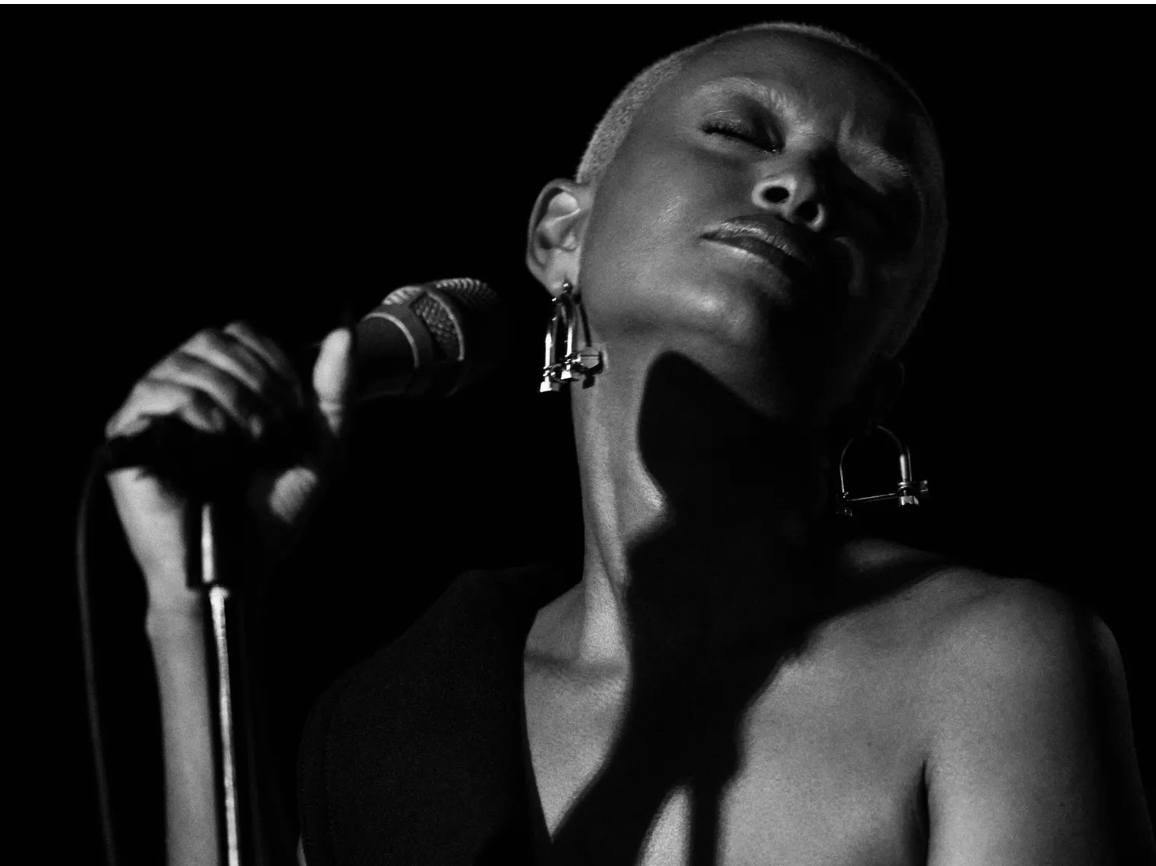
Kelela Mizancristos is an American singer with Ethiopian hertiage who creates dance/electronic music. Her first project was released in 2013 ‘Cut For Me’ , a daring project that serves as an interesting introduction to her and her work. What stood out from the beginning was her fearlessness in production choices and hard-hitting lyricism. This is then exercised throughout her discography as she is constantly innovating herself.
‘In The Blue Light’ is a jazz reimagining of Kelela’s discography. What it explores is the many facets and layers of her vocal and writing capabilities. What I love most about this project is how it reframes your perspective of what these songs meant by also fusing her love for black music as a whole. In the accompanying documentary she speaks about how reimagining is a black tradition within music. Through this album she wanted to extend her discography. To me, this album combats the need to constantly produce under capitalism. The arts have been falling victim to a world where nothing seems to ever be enough. But Kelela is asking us as consumers of her music to pause, and re-listen again and again in the hope that we could add another perspective to what she has created. To me, this album is a love letter to the legacy of black music created for artists in the present, to be able to create in multiple genres and embrace black art.
Jazz originated in African-American communities in New Orleans and Louisiana during the late twentieth centuries. Enslaved people would sing songs whilst working on plantations or spiritual hymns within the church. This style of music was heavily inspired by African music traditions, one of which being storytelling through instrumentation and lyricism. Traditional songs were handed down by word of mouth, lyrics were constantly adapted and reimagined. Jazz ultimately is a fusion of multiple cultures and influences, it seems fitting that Kelela would create a jazz album to reimagine her songs. In black music tradition, to reimagine affirms the spiritual experience of music.
Black music inherently involves the process of remixing music. The remix is a part of cultural heritage, through a dynamic blend of African roots and historical experiences of the diaspora and cultural exchange. In this album Kelela mentions this exchange, with her heritage lying in Ethiopia, she comments on how Africans and African Americans share many things within their culture. Due to the transatlantic slave trade that suffering may have looked diffrent. She says, “Though my people struggled in a different way” acknowledging how her jazz reimagining is a way of acknowledging this hybridity. In the accompanying documentary she mentions how this choice is “The tradition of reinterpretation in jazz has always influenced my work”. Her career has moved so much, starting an indie band, being a background singer, an experimental guitar period then landing at dance/electronic music. Ytasha Womack, filmmaker and author of ‘Afrofuturism’ discusses this concept of the imagination within creativity. The invention of jazz music is an aspect of afrofuturism because for enslaved people it created a medium for them to explore their liberation.
What makes ‘In The Blue Light’ special is that it takes music from across Kelela’s discography and makes them more sentimental than what they were to fans. She picks songs from the beginning of her dance music career to the most recent. Beginning with ‘Raven’, which says "through all the labour / a raven is a re-born”, over the soothing keys and harp, we’re able to sit into these lyrics that are about reinvention and growth. The raven, which is the name of her most recent album, represents wisdom and transformation. It makes sense that at this point that Kelela is more interested in this, rather than stagnation within Black music.
She then moves into the ‘Take Me Apart’ section of the album. This album is Kelela’s fourth project, this is the project that made her known to me. She effortlessly flows between the songs ‘Take Me Apart’, ‘Bankhead’ and ‘Waitin’, all of which are fan favourites. These songs originally had high synths and strong electric drum patterns but in this, it's stripped back with harmonious background vocals that fill the space.
This project also introduces fans who may not be jazz listeners to classic songs, like ‘30 Years’, ‘Furry Sings the Blues’ and ‘Love Notes'. ‘30 Years’ was first performed by Betty Carter, a legendary jazz singer. For Betty Carter this album and song was a celebration of her thirty year career and is a testament to her independence and artistic control, which Kelela represents as well. Throughout her career she has been nothing less than innovative. Consistently creating music that pushes the needle in writing and production, all whilst maintaining creative control. Kelela isn't running up against anyone, she has created her own lane and continues to grow within it.
The real standout for me in this album was ‘Better’ and ‘Cherry Coffee’. These are heartbreaking love songs that represent letting go of someone or something you love. The sequencing takes us on a musical journey. The crescendo that is ‘Better’s bridge, ”that we've been around once or twice / breaking down in the middle of the night / no ride? So how do we fix this?” sucks you in completely to this emotional breakdown with two lovers. But ‘Cherry Coffee’ is the acceptance that perhaps this lover is in something deeper, something that you as a partner or ex-partner cannot fix, “you’re in deep / I see what’s going on / it’s a twisted cycle you confuse with love”. This song is beautiful and really encompasses traditional jazz elements like dissonance, allowing us as listeners to sit with these lyrics and have an emotional experience. Love has a way of creeping in and leaving when we least expect it. These songs represent the aching feeling of releasing something when you don't want to.
To conclude, this project perfectly encapsulates the ways black artists can continue to reinvent themselves. Kelala isn't new to this, as throughout her discography she continues to remix all her musical projects. But, this one felt different and more special, especially since this was all performed live at the Blue Note, an iconic jazz club that has hosted a heap of musicians like Sarah Vaughan and Lionel Hampton. Now Kelela is one to add to this list.


.png)

