.svg)

From Bouyon, Konpa to Zouk: sounds of the French Antilles are taking over this summer
On July 1st 2023, Yardland was set to launch its first festival at Parc de Choisy in Paris, two days of a trailblazing line-up, which I hoped would be my big breakthrough as a freelance journalist. Unfortunately, due to the tragic murder of 17-year-old Nahel Merzouk on June 27th, followed by an outbreak of riots, the festival was cancelled altogether. I found myself in the middle of a French-Martinique household in the outskirts of the city, wondering how else I was going to spend the remainder of my trip in the comfort and safety of their home.
It was during this particular summer that I was formally introduced to Zouk, a musical style originating in the French Antilles, namely Guadeloupe and Martinique. Its slow pace and low-dance hip rhythmic felt familiar; however, nothing I could previously translate into words. With the guidance of the accommodating family, I spent my days listening through some of the Zouk classics, braising with the smell of rum in the background, fully unaware of the sonic world I had just entered.
Growing up in a French-speaking house, the Francophone diaspora was always within reach, and it wasn’t so long that one was listening to Confidence by Kim, for example, a French-Martinique singer who rose to prominence at the Fête de la Musique in 2004. In my naivety, I had convinced myself that any diasporic movement charting in France was Congolese-influenced, and anything remotely afro-inspired in the UK was Nigerian. Surely Jamaican riddims, such as Dancehall and reggae, made it through our cross-cultural environment back when I was still living in South East London. Legends like Bob Marley and Vybz Kartel were a staple in everybody’s diet, regardless of whether our background was Caribbean or African. Yet, I rarely remember Francophone Caribbeans receiving their flowers for the role they played in also reshaping modern Afropop.
Today, their musical resonance is everywhere in the work of the Queen of France, Aya Nakamura, who is of Malian descent, her French-Congolese protégé Theodora, underground rap act 63OG, of Cameroonian origins, French-Cameroon Tayc and his musical universe of Afro-love, and French-Congolese ‘Jaloux’ singer Dadju. Even all the way in Kenya, singer-songwriter Bien had become a recent participant. Not only are Caribbean music styles, like Dominican Bouyon, Haitian Konpa and Martinique Zouk, having a resurgence, but they have been quietly influencing some of the most popular Francophone Afropop music for decades. Deeds Magazine selected their top 3 picks that you may not have known were infused with the West Indies’ most popular dance music.
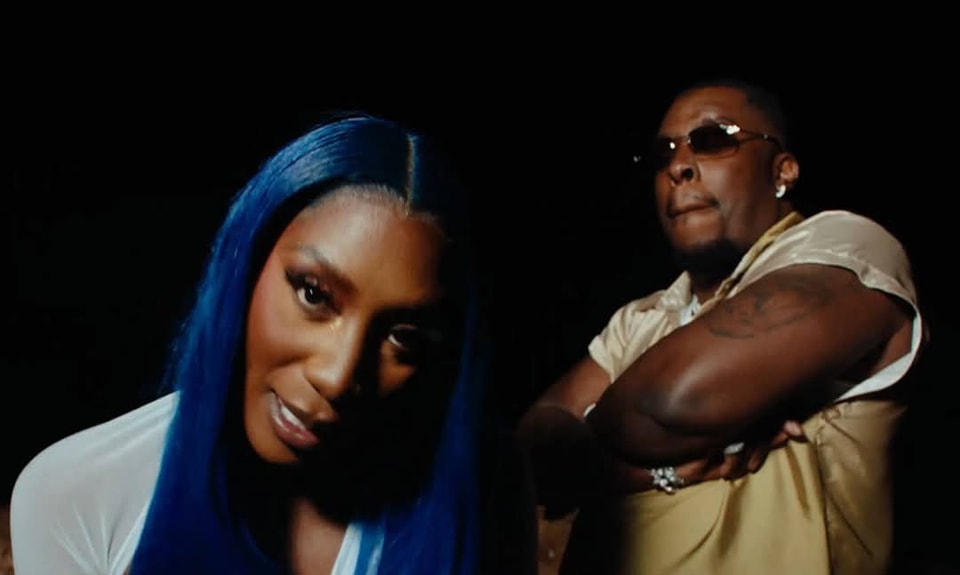
Aya Nakamura - Copines
Arguably, French-Malian Afropop singer Aya Nakamura’s 2018 breakout hit ‘Copines’ is the biggest song in her career thus far. However, did you know that the drums' soothing groove on the track can be traced to Zouk music? As one of the lead figures of modern Francophone Afropop, Aya has always made use of elements from both Zouk and Konpa to unveil her musical soundscape. Produced by powerhouse French-Congolese Julio Masidi, the multiple award-winning, breaking-hit track sits between Afropop, R&B, and Zouk. Some of the influences we could imagine a young Aya raised in Saint-Denis (also known as “93”) absorbed throughout its multi-cultural pot, where Caribbean and African influences due to its diaspora all intertwine.
Theodora - KONGOLESE SOUS BBL
One of French-Congolese Aforfusion singer Theodora's biggest 2024 hit songs to date, ‘KONGOLESE SOUS BBL’, has catapulted her ever since to major stardom. What many listeners may ignore, however, is that the track is deeply rooted in Bouyon music. Originating in Dominica in the late 80s, its distinctive, rapid drum pattern is almost always recognisable, sparking the interest of fellow collaborator 63OG in ‘ruiné (comme un dj),’ who revealed to have been his main inspiration. Despite its lyrical content clearly nudging Theodora’s Congolese roots, produced by her own brother Jeez Suave, the song fuses Dominica’s popular music to boost this cross-continental dance anthem.
Joé Dwèt Filé - 4 Kampé
Perhaps the song of last summer, ‘4 Kampé’ by French-Haitian Konpa singer Joé Dwèt Filé, shouldn’t come as a surprise that he is undoubtedly woven to his roots. Konpa, a dance genre that originated from Haiti in the late 50s, is Joé’s makeup through and through. With the mélange of R&B and Afropop, he is able to retouch the signature sound with a modern approach, making the genre’s rise to watch closely in the coming years. Joé can be vastly credited for the popularization of Konpa in the diaspora and beyond.
Talks Behind the Noise
One of the main online discourses surrounding the recent surge of the French Antilles regional sounds is that a lot of foreign artists are accused of copying their arrangements, however, without fully crediting the original genres. This has sparked Caribbeans and members of the diaspora to flood the internet with tweets, Instagram comments and TikTok reels demanding their influence to be rightfully acknowledged and legitimately recognized. Not only as a source of inspiration in the modern arena, but also as the main influence to popularize Francophone Afropop and beyond.
Nothing is new under the sun. I think what we’re seeing is different regions battling for international dominance. After the rise of Afrobeats in the early 2020s, it felt as though the skies were the limit. Any member of a niche community now has the opportunity to place their culture on the world map. Little do we need to be reminded that not too long ago, Dancehall was under a similar trajectory in the early 2000s. The answer lies not in our differences, but in coming together to amplify our communities.
Take Fally Ipupa’s feature ‘Doucement’ with Joé Dwèt Filé, for example; they have managed to garner more attention and make more noise together than they would have ever done separately. The collaboration doesn’t feel forced or imbalanced; it is a genuine mashup of two sounds, a heartfelt connection between two regions, Haiti and the Democratic Republic of the Congo, which have a long historical context and unbreakable synergy. The same can be said of Joé Dwèt Filé and Aya Nakamuru joining forces in ‘Baddies.’ It is almost like the world’s colliding from the back of decades of mingling and interacting with one another, both in the diaspora and each sonic landscape.
So are the sounds of French Antilles taking over? The truth is, they have had an imprint for decades, and it is only the rest of the world just catching up. One could say that they are finally getting the global recognition they deserve, and we are all here for it.
.JPG)


.png)

