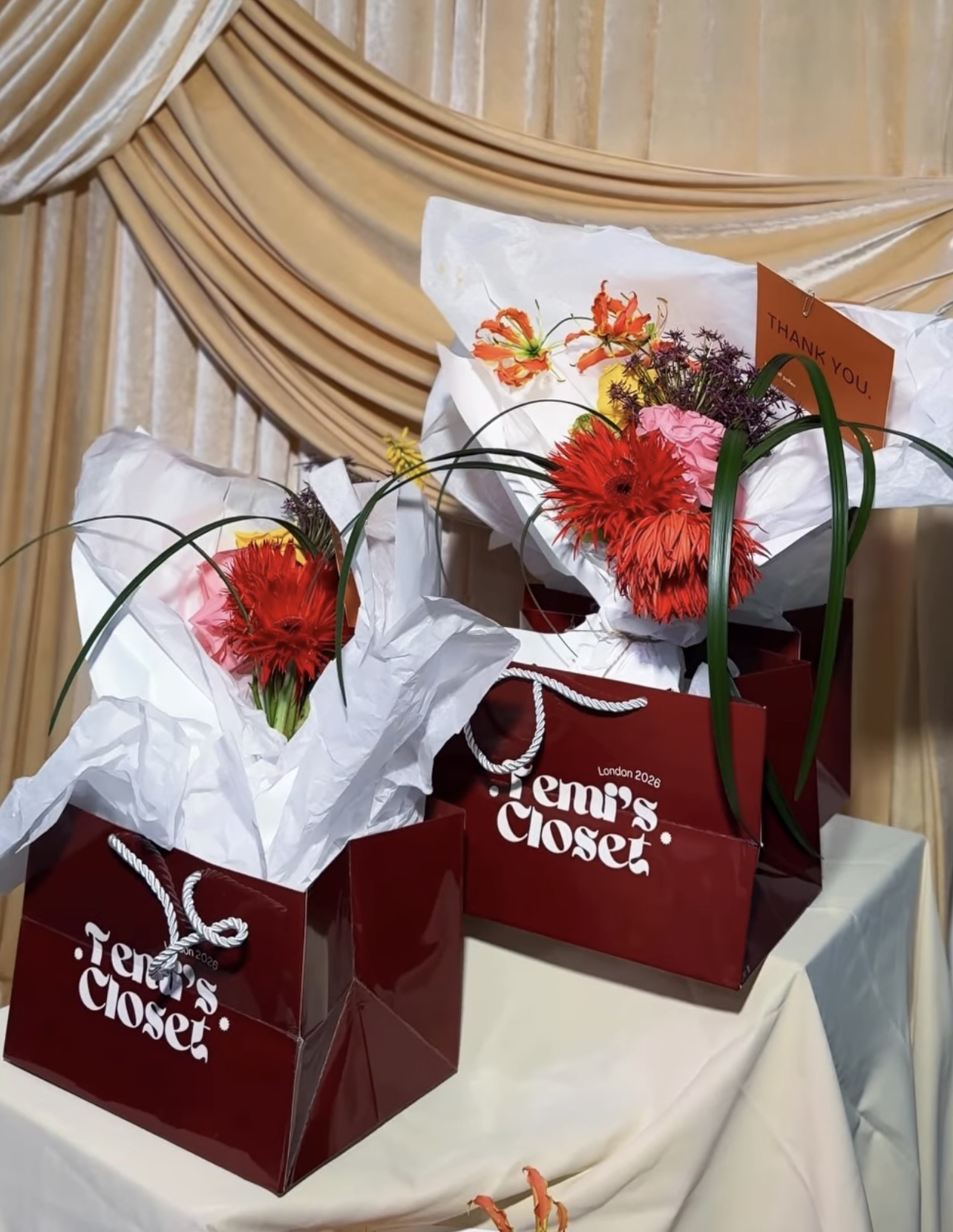
Ending the Diasporic Disconnect: How Temi’s Closet & Sauvryn Co. are rewriting the future of Africa’s fashion export

The quiet thrum of Afrobeats swelled as the sound of giddy laughter and excited gasps filled Indra Gallery as Lagos fashion infiltrated England’s capital. From May 1st to the 2nd of 2026, fashion stylist and curator Temi Akande landed in London with her brand Temi’s Closet to more than just the warm weather and sun greeting her. With over 600 RSVP’s and 21 brands on display, Akande’s message was simple: African fashion is here to stay - straight from the continent to the diaspora. 

A wardrobe and personal styling service known for its vast selection of brands and styles, Temi’s Closet used its two-days in London turned British to platform various clothing, jewellery, and accessories stores straight from Nigeria. Brands like Melira, Tuntunre, Flaunt Archive, and Mairachamp filled the space with colourful designs for the diaspora to devour, some in the UK for the first time. Shoppers found themselves in Shoreditch, one of the most creative bits of London, alongside flowing refreshments, small bites, and a curated experience that brought a little bit of Lagos to them.
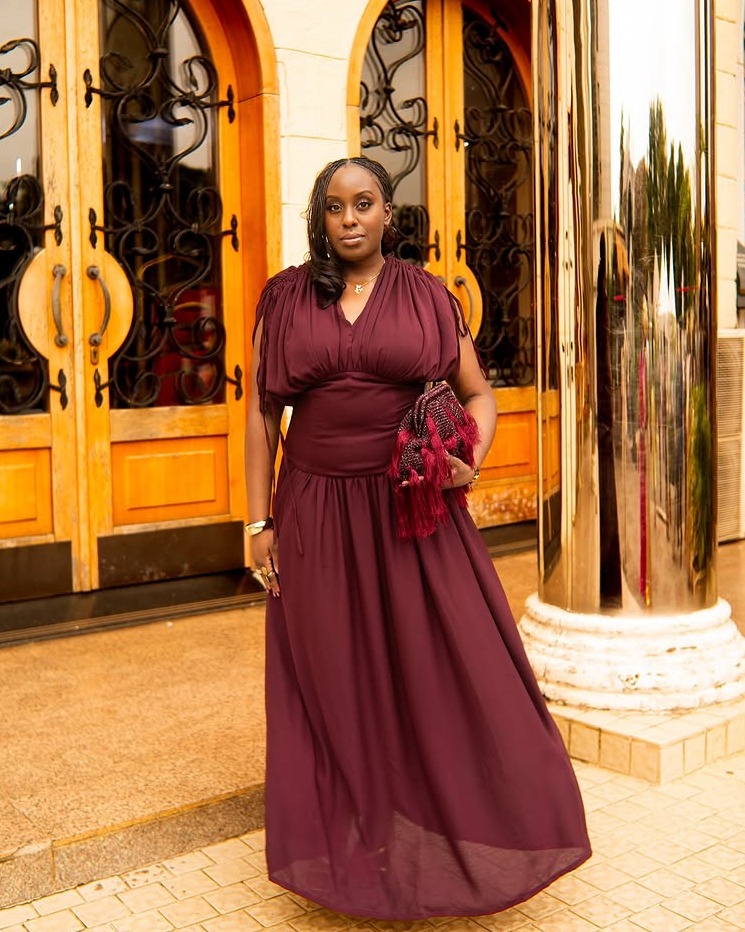
Credit: Temi Akande 

Akande’s goal? “Taking African brands everywhere.” Previously living in Atlanta and then Chicago for university, Akande relocated from the United States to Lagos with a specific interest in consuming Nigerian brands. After settling in, she knew she wanted to share the work being done by the abundance of designers and teams with the world.  “These clothes and items are made for us - I don’t have to worry about fit or sizing as I would with a Zara or H&M,” she said. “Every brand here brings something to the space that is valuable.”

What looks like a clear forecast now, though, was once muddled by red tape fueling domestic businesses' scepticism - and rightfully so. The bond between confidence, culture, community, and couture is at the core of clothing brands and consumers, especially in Africa. But where the continent grew in connection, the diaspora lacked. This symbiosis, shifted by international demand, needed a way to end the long disturbance of unreliable logistics, limited resources, and practical barriers. Enter Akande. This disconnect is what she has tasked herself with rewriting, through live events from New York to Lagos and, now, London. 

“The [United] States is my home and comfort zone, but I’ve found beauty in going outside of that zone,” she said. “London was just the right step - I have a community to support me, and it’s a fashion city. We’ve got our biggest turnout yet, and it’s all because people want this.”

As the influence of Africa’s fashion goes beyond its city streets and into ateliers and runways, the question of global scaling and reach has always been at hand - both professionally and personally. Diasporic communities, though left out of the continent’s industrial growth, took up bringing clothes to and from the continent themselves, until recently, when they’ve contributed over $15 billion annually. All the while, market potential has grown through various outlets, opening a gap for domestic brands to reach shoppers abroad. 

In an article by VOGUE Business in 2020, author Adedoyin Adeniji noticed this opportunity to reach the diaspora already being seized by companies, like Industrie Africa and Akrikrea (now known as Anka Marketplace). At the time, the markets had a growing demand for African designer goods globally, with e-commerce opportunities estimated to be $19.8 billion and the local manufacturing industry expected to grow to $930 billion by 2025.

Adeniji found that “African designers [were] hoping that these partnerships, in addition to offering benefits like better shipping rates and distribution, would introduce a greater pool of customers to African fashion.” Currently, e-commerce opportunities sit at $176 billion, and local manufacturing has continued growing steadily, allowing businesses like Akande’s and budding e-commerce platforms, like Sauvryn Co, to accelerate partnerships. 

Olive Anumba, founder of Sauvryn Co, founded the brand to create “Africa’s Revolve.” Revolve, a Western wholesale platform home to an array of luxury and designer brands, has climbed to recent fame and made its mark on the zeitgeist, appearing notably at Coachella as Revolvefest and expanding its accessibility worldwide. Anumba aims to replicate and build just that.  
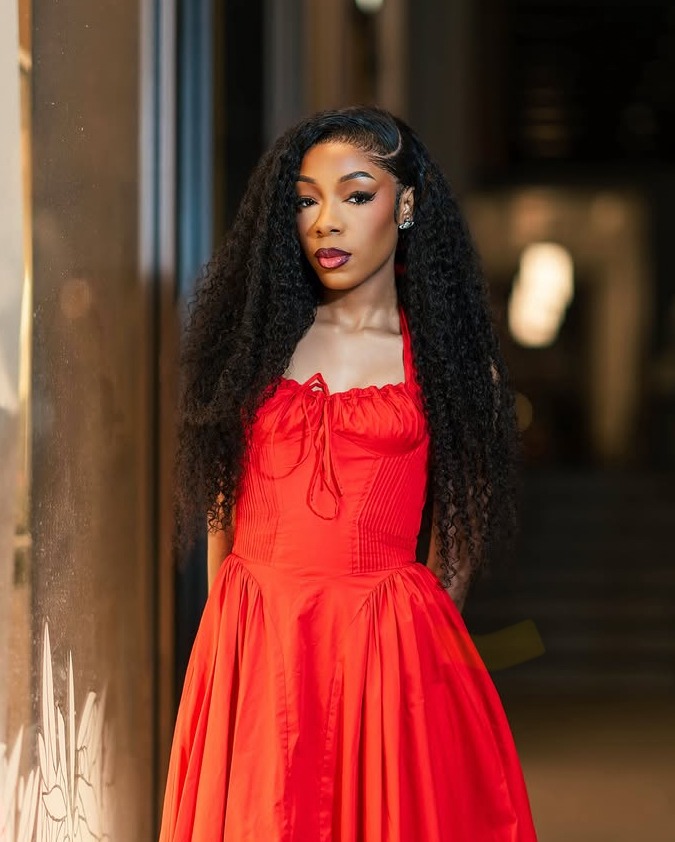
Credit: Olive Anumba 

“It started with a trip to Lagos for Fashion Week towards the end of last year,” she said.
I’ve always loved discovering new brands, and while I was there, I went deep, researching and shopping with as many Nigerian brands as I could find. What I kept running into was friction; some brands were DM to order only, others had websites that weren’t fully functional. Even when the pieces were beautiful, I was having to ask questions before I could even place an order, and this was while I was already there in Lagos.”

She continued, saying, “...if it’s this hard for me here, what happens when I return to London and want to keep shopping for these brands? And what does that experience look like for any diaspora customer who discovers them?” 

The rise in cellphone usage, known as smartphone adoption, has been revolutionary in the continued growth of both Akande and Anumba’s brands. The projected growth of e-commerce platforms by 80 per cent in 2030 has been a kickstart in allowing them to not only platform the designs, but also the teams of people behind them. 

“While there are more opportunities to connect with African brands in person, we need to be giving more resources to the brands,” Akande said. “Unreliability in shipping and handling has impacted brands here this weekend…even with plenty of time and care given to making things run on time. Brands are more than just the garments - they are real people with real problems fighting this every day, who have value.”

Anumba echoed the sentiment, saying, “The shipping costs from Nigeria to the UK are quite high, then customs on top of that, then sometimes weeks of waiting on a made-to-order piece. The journey from discovery to purchase seemed broken. It wasn’t a talent problem. The talent was there. It was just hard to access.”

Despite the wariness of 5 years prior, both women have found the response to their work to speak for itself. Akande’s curation of the event was in her signature polished and personal style: honouring the brands that started with or grew alongside her and continue to show up hungry for more. She continues to keep her eye out for more brands across the continent to feature and refreshes her continued drive with events like the pop-up and a “love of the game.”

Anumba’s work continues to give pan-African fashion a platform as accessible to a shopper as Western sites. She said, “Progress has been made. Content creators, myself included, before Sauvryn even existed, have been doing organic discovery work, finding brands, buying pieces, posting about them and putting them in front of diaspora audiences who may not have found them otherwise. Temi’s Closet and OmaHub have created curated shopping experiences that allow diaspora customers to discover and shop African brands face-to-face. That’s meaningful. But there’s still work to do. Menswear isn’t getting nearly enough attention; the conversation is almost entirely focused on womenswear. And so many incredible brands across East Africa, Southern Africa and North Africa aren’t getting the same visibility as West African brands. That’s something Sauvryn is actively working toward as we grow. The vision was never just West Africa. It’s the whole continent.”

ig: clunghao

Ending the Diasporic Disconnect: How Temi’s Closet & Sauvryn Co. are rewriting the future of Africa’s fashion export

This is some text inside of a div block.

The quiet thrum of Afrobeats swelled as the sound of giddy laughter and excited gasps filled Indra Gallery as Lagos fashion infiltrated England’s capital. From May 1st to the 2nd of 2026, fashion stylist and curator Temi Akande landed in London with her brand Temi’s Closet to more than just the warm weather and sun greeting her. With over 600 RSVP’s and 21 brands on display, Akande’s message was simple: African fashion is here to stay - straight from the continent to the diaspora. 

A wardrobe and personal styling service known for its vast selection of brands and styles, Temi’s Closet used its two-days in London turned British to platform various clothing, jewellery, and accessories stores straight from Nigeria. Brands like Melira, Tuntunre, Flaunt Archive, and Mairachamp filled the space with colourful designs for the diaspora to devour, some in the UK for the first time. Shoppers found themselves in Shoreditch, one of the most creative bits of London, alongside flowing refreshments, small bites, and a curated experience that brought a little bit of Lagos to them.

Credit: Temi Akande 

Akande’s goal? “Taking African brands everywhere.” Previously living in Atlanta and then Chicago for university, Akande relocated from the United States to Lagos with a specific interest in consuming Nigerian brands. After settling in, she knew she wanted to share the work being done by the abundance of designers and teams with the world.  “These clothes and items are made for us - I don’t have to worry about fit or sizing as I would with a Zara or H&M,” she said. “Every brand here brings something to the space that is valuable.”

What looks like a clear forecast now, though, was once muddled by red tape fueling domestic businesses' scepticism - and rightfully so. The bond between confidence, culture, community, and couture is at the core of clothing brands and consumers, especially in Africa. But where the continent grew in connection, the diaspora lacked. This symbiosis, shifted by international demand, needed a way to end the long disturbance of unreliable logistics, limited resources, and practical barriers. Enter Akande. This disconnect is what she has tasked herself with rewriting, through live events from New York to Lagos and, now, London. 

“The [United] States is my home and comfort zone, but I’ve found beauty in going outside of that zone,” she said. “London was just the right step - I have a community to support me, and it’s a fashion city. We’ve got our biggest turnout yet, and it’s all because people want this.”

As the influence of Africa’s fashion goes beyond its city streets and into ateliers and runways, the question of global scaling and reach has always been at hand - both professionally and personally. Diasporic communities, though left out of the continent’s industrial growth, took up bringing clothes to and from the continent themselves, until recently, when they’ve contributed over $15 billion annually. All the while, market potential has grown through various outlets, opening a gap for domestic brands to reach shoppers abroad. 

In an article by VOGUE Business in 2020, author Adedoyin Adeniji noticed this opportunity to reach the diaspora already being seized by companies, like Industrie Africa and Akrikrea (now known as Anka Marketplace). At the time, the markets had a growing demand for African designer goods globally, with e-commerce opportunities estimated to be $19.8 billion and the local manufacturing industry expected to grow to $930 billion by 2025.

Adeniji found that “African designers [were] hoping that these partnerships, in addition to offering benefits like better shipping rates and distribution, would introduce a greater pool of customers to African fashion.” Currently, e-commerce opportunities sit at $176 billion, and local manufacturing has continued growing steadily, allowing businesses like Akande’s and budding e-commerce platforms, like Sauvryn Co, to accelerate partnerships. 

Olive Anumba, founder of Sauvryn Co, founded the brand to create “Africa’s Revolve.” Revolve, a Western wholesale platform home to an array of luxury and designer brands, has climbed to recent fame and made its mark on the zeitgeist, appearing notably at Coachella as Revolvefest and expanding its accessibility worldwide. Anumba aims to replicate and build just that.  

Credit: Olive Anumba 

“It started with a trip to Lagos for Fashion Week towards the end of last year,” she said.
I’ve always loved discovering new brands, and while I was there, I went deep, researching and shopping with as many Nigerian brands as I could find. What I kept running into was friction; some brands were DM to order only, others had websites that weren’t fully functional. Even when the pieces were beautiful, I was having to ask questions before I could even place an order, and this was while I was already there in Lagos.”

She continued, saying, “...if it’s this hard for me here, what happens when I return to London and want to keep shopping for these brands? And what does that experience look like for any diaspora customer who discovers them?” 

The rise in cellphone usage, known as smartphone adoption, has been revolutionary in the continued growth of both Akande and Anumba’s brands. The projected growth of e-commerce platforms by 80 per cent in 2030 has been a kickstart in allowing them to not only platform the designs, but also the teams of people behind them. 

“While there are more opportunities to connect with African brands in person, we need to be giving more resources to the brands,” Akande said. “Unreliability in shipping and handling has impacted brands here this weekend…even with plenty of time and care given to making things run on time. Brands are more than just the garments - they are real people with real problems fighting this every day, who have value.”

Anumba echoed the sentiment, saying, “The shipping costs from Nigeria to the UK are quite high, then customs on top of that, then sometimes weeks of waiting on a made-to-order piece. The journey from discovery to purchase seemed broken. It wasn’t a talent problem. The talent was there. It was just hard to access.”

Despite the wariness of 5 years prior, both women have found the response to their work to speak for itself. Akande’s curation of the event was in her signature polished and personal style: honouring the brands that started with or grew alongside her and continue to show up hungry for more. She continues to keep her eye out for more brands across the continent to feature and refreshes her continued drive with events like the pop-up and a “love of the game.”

Anumba’s work continues to give pan-African fashion a platform as accessible to a shopper as Western sites. She said, “Progress has been made. Content creators, myself included, before Sauvryn even existed, have been doing organic discovery work, finding brands, buying pieces, posting about them and putting them in front of diaspora audiences who may not have found them otherwise. Temi’s Closet and OmaHub have created curated shopping experiences that allow diaspora customers to discover and shop African brands face-to-face. That’s meaningful. But there’s still work to do. Menswear isn’t getting nearly enough attention; the conversation is almost entirely focused on womenswear. And so many incredible brands across East Africa, Southern Africa and North Africa aren’t getting the same visibility as West African brands. That’s something Sauvryn is actively working toward as we grow. The vision was never just West Africa. It’s the whole continent.”

ig: clunghao
This is some text inside of a div block.

Ending the Diasporic Disconnect: How Temi’s Closet & Sauvryn Co. are rewriting the future of Africa’s fashion export

The quiet thrum of Afrobeats swelled as the sound of giddy laughter and excited gasps filled Indra Gallery as Lagos fashion infiltrated England’s capital. From May 1st to the 2nd of 2026, fashion stylist and curator Temi Akande landed in London with her brand Temi’s Closet to more than just the warm weather and sun greeting her. With over 600 RSVP’s and 21 brands on display, Akande’s message was simple: African fashion is here to stay - straight from the continent to the diaspora. 

A wardrobe and personal styling service known for its vast selection of brands and styles, Temi’s Closet used its two-days in London turned British to platform various clothing, jewellery, and accessories stores straight from Nigeria. Brands like Melira, Tuntunre, Flaunt Archive, and Mairachamp filled the space with colourful designs for the diaspora to devour, some in the UK for the first time. Shoppers found themselves in Shoreditch, one of the most creative bits of London, alongside flowing refreshments, small bites, and a curated experience that brought a little bit of Lagos to them.

Credit: Temi Akande 

Akande’s goal? “Taking African brands everywhere.” Previously living in Atlanta and then Chicago for university, Akande relocated from the United States to Lagos with a specific interest in consuming Nigerian brands. After settling in, she knew she wanted to share the work being done by the abundance of designers and teams with the world.  “These clothes and items are made for us - I don’t have to worry about fit or sizing as I would with a Zara or H&M,” she said. “Every brand here brings something to the space that is valuable.”

What looks like a clear forecast now, though, was once muddled by red tape fueling domestic businesses' scepticism - and rightfully so. The bond between confidence, culture, community, and couture is at the core of clothing brands and consumers, especially in Africa. But where the continent grew in connection, the diaspora lacked. This symbiosis, shifted by international demand, needed a way to end the long disturbance of unreliable logistics, limited resources, and practical barriers. Enter Akande. This disconnect is what she has tasked herself with rewriting, through live events from New York to Lagos and, now, London. 

“The [United] States is my home and comfort zone, but I’ve found beauty in going outside of that zone,” she said. “London was just the right step - I have a community to support me, and it’s a fashion city. We’ve got our biggest turnout yet, and it’s all because people want this.”

As the influence of Africa’s fashion goes beyond its city streets and into ateliers and runways, the question of global scaling and reach has always been at hand - both professionally and personally. Diasporic communities, though left out of the continent’s industrial growth, took up bringing clothes to and from the continent themselves, until recently, when they’ve contributed over $15 billion annually. All the while, market potential has grown through various outlets, opening a gap for domestic brands to reach shoppers abroad. 

In an article by VOGUE Business in 2020, author Adedoyin Adeniji noticed this opportunity to reach the diaspora already being seized by companies, like Industrie Africa and Akrikrea (now known as Anka Marketplace). At the time, the markets had a growing demand for African designer goods globally, with e-commerce opportunities estimated to be $19.8 billion and the local manufacturing industry expected to grow to $930 billion by 2025.

Adeniji found that “African designers [were] hoping that these partnerships, in addition to offering benefits like better shipping rates and distribution, would introduce a greater pool of customers to African fashion.” Currently, e-commerce opportunities sit at $176 billion, and local manufacturing has continued growing steadily, allowing businesses like Akande’s and budding e-commerce platforms, like Sauvryn Co, to accelerate partnerships. 

Olive Anumba, founder of Sauvryn Co, founded the brand to create “Africa’s Revolve.” Revolve, a Western wholesale platform home to an array of luxury and designer brands, has climbed to recent fame and made its mark on the zeitgeist, appearing notably at Coachella as Revolvefest and expanding its accessibility worldwide. Anumba aims to replicate and build just that.  

Credit: Olive Anumba 

“It started with a trip to Lagos for Fashion Week towards the end of last year,” she said.
I’ve always loved discovering new brands, and while I was there, I went deep, researching and shopping with as many Nigerian brands as I could find. What I kept running into was friction; some brands were DM to order only, others had websites that weren’t fully functional. Even when the pieces were beautiful, I was having to ask questions before I could even place an order, and this was while I was already there in Lagos.”

She continued, saying, “...if it’s this hard for me here, what happens when I return to London and want to keep shopping for these brands? And what does that experience look like for any diaspora customer who discovers them?” 

The rise in cellphone usage, known as smartphone adoption, has been revolutionary in the continued growth of both Akande and Anumba’s brands. The projected growth of e-commerce platforms by 80 per cent in 2030 has been a kickstart in allowing them to not only platform the designs, but also the teams of people behind them. 

“While there are more opportunities to connect with African brands in person, we need to be giving more resources to the brands,” Akande said. “Unreliability in shipping and handling has impacted brands here this weekend…even with plenty of time and care given to making things run on time. Brands are more than just the garments - they are real people with real problems fighting this every day, who have value.”

Anumba echoed the sentiment, saying, “The shipping costs from Nigeria to the UK are quite high, then customs on top of that, then sometimes weeks of waiting on a made-to-order piece. The journey from discovery to purchase seemed broken. It wasn’t a talent problem. The talent was there. It was just hard to access.”

Despite the wariness of 5 years prior, both women have found the response to their work to speak for itself. Akande’s curation of the event was in her signature polished and personal style: honouring the brands that started with or grew alongside her and continue to show up hungry for more. She continues to keep her eye out for more brands across the continent to feature and refreshes her continued drive with events like the pop-up and a “love of the game.”

Anumba’s work continues to give pan-African fashion a platform as accessible to a shopper as Western sites. She said, “Progress has been made. Content creators, myself included, before Sauvryn even existed, have been doing organic discovery work, finding brands, buying pieces, posting about them and putting them in front of diaspora audiences who may not have found them otherwise. Temi’s Closet and OmaHub have created curated shopping experiences that allow diaspora customers to discover and shop African brands face-to-face. That’s meaningful. But there’s still work to do. Menswear isn’t getting nearly enough attention; the conversation is almost entirely focused on womenswear. And so many incredible brands across East Africa, Southern Africa and North Africa aren’t getting the same visibility as West African brands. That’s something Sauvryn is actively working toward as we grow. The vision was never just West Africa. It’s the whole continent.”

ig: clunghao
Other Stories
London
London
Lagos
London
Newyork
London
Shop
Join the community.
You are now subscribed to receive updates.
Oops! Something went wrong while submitting the form.