.svg)

Where do I even begin?
We live in a time where, frankly, a lot of the music is about nothing. It has become background noise for parties, dancing around something mindless in a world where we desperately need our minds to be engaged. We need to see life clearly. As I get older, my search for music has shifted. I'm no longer just looking for a beat to distract me; I'm searching for music that makes me feel something. In a world filled with so much craziness and sadness, I want an escape, but I also want a connection. I want something positive, something I can be hopeful for.
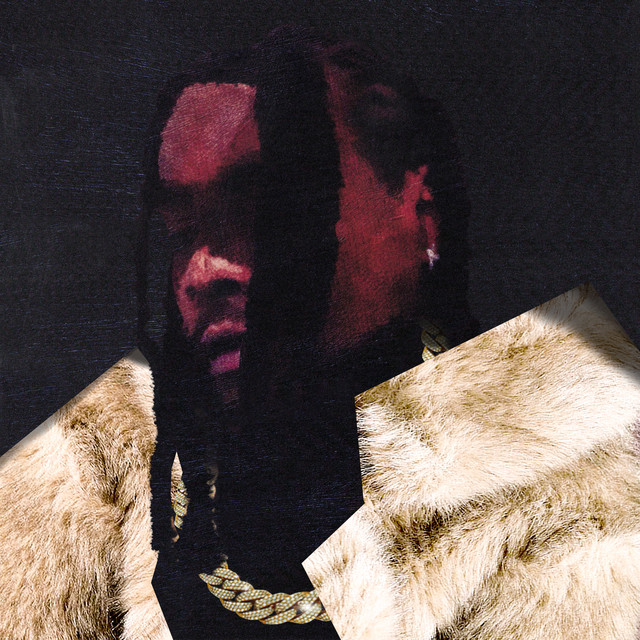
Finally, Wale has delivered exactly that. His new album, Everything Is A Lot, is everything and more. In an era of singles and skippable tracks, I don't know many albums you can play from start to finish without reaching for your phone. This is most definitely one of the rare exceptions. You can feel the intentionality from the very first song to the second. It makes me reflect on how being intentional is the only way to truly impact and connect with an audience, and to gain a new audience simply by being amazing at what you do.
It takes a special listener to truly hear this, to understand the levels and complexity of putting together a stellar album. To hit every single emotion that a person could feel over a lifetime in one project is pure genius.
An artist like Wale is extremely intentional with every line, song choice, melody, sample, and even his features. A perfect example is the song "Big Head" featuring ODUMODUBLVCK. This collaboration feels incredibly purposeful. Wale, who is Nigerian-American, bridges the gap between two worlds. Growing up in America with Nigerian heritage myself, I found this track profound. It always seemed as if you had to be either African-American or African, that there was no connection between the two. For a long time, it felt like society tried very hard to obscure our identity. When you take away someone's culture, you inevitably affect their identity.
There was a recent interview where Wale's African identity was brought into question. I don't know if that conversation happened before or after this song was recorded, but I find it very interesting, and powerful, that he decided to include a track that so boldly highlights his lineage. It serves as a reminder that just because someone may not have been born on the soil, they are still very much of the culture. He is still very much Nigerian.
He doubles down on this intentionality on the track "YSF," featuring Teni & Seyi Vibez. Here, I feel as if he got even deeper into his artistic bag by using Nigerian slang, specifically adding the "O" at the end of each line. In Nigerian culture, the terminal "O" acts as an audible punctuation mark that amplifies the emotional weight of a statement, signaling emphasis, urgency, or warmth depending on the context. In my opinion, this is a clear statement to let people know, as well as his audience, that "I am of the culture and I understand the language."
The production itself mirrors this journey of self-discovery. The transition in melody throughout the music almost acts like a pause or a reset button to help you regain focus. A lot of times in life, we are trying to do better and learn more, but we get distracted and thrown off track. The way the music and melody change here brings you back to center, reminding you of what you are trying to achieve. I'll admit it: I'm a lover girl at heart, so I naturally gravitated toward the tracks that speak to that side of me. "City on Fire" and "Watching Us" instantly became my favorites. There is something deeply nostalgic about "Watching Us." The moment the sample hit, it took me right back to a specific time and place. I could vividly see the room I was in; I could feel the exact emotions I was grappling with back then.
But beyond the romance and nostalgia, there is a raw humanity here that we rarely see. Before I started working with celebrities, I used to think they were superhuman, that they had no real emotions and every day was a great day. I've learned that celebrities are people, too. They laugh, they cry, and they enjoy life. The difference is the enormous pressure they are under. They have people staring at them, critiquing their lives every day, and holding an expectation that they must always be happy. What makes an artist like Wale so impactful is that he has found a way to be authentically himself while navigating that pressure. Often, as long as a creator is creating, no one really asks if they are okay. But in this music, you can see the full complexity of his life.
He is extremely honest and vulnerable, particularly on the song "Blanco." He talks about drowning his sorrows, touching on the unfortunate reality of the music industry where alcohol is often used to dull inhibitions or force a good time. He speaks on people "joining his section," highlighting how sad it is that people often use others just to be part of the mix, a fleeting sense of belonging. He also touches on being nervous and vulnerable in love. We often say that men have to be hard and tough, but this album shines a light on how men actually think. It proves that this album isn't just for men; his music is for everybody, because these are emotions everyone has felt at some point in their lives.
There is a heavy reality to the song "Power and Problems." It's an inside look at what artists experience: the stress of fame and the people who might exploit you. But even a regular person can understand the need to question someone's motives and the necessity of protecting your energy, your legacy, and what you are building. The saying "to whom much is given, much is expected" is a very real thing. Being multifaceted comes with a tremendous responsibility. Being extraordinary is a gift, but it is also a heavy cross and burden to carry, especially when you are sometimes still figuring yourself out while others see your potential before you do. That is why the people around you during your healing stages are so crucial.
Fittingly, the album ends with the song "Lonely." On first glance, reading the title, I assumed it was ending on a low note, a confession of isolation. But actually, it's not that at all. It is a profound realization. It is the understanding that "I would rather be lonely outside," meaning standing apart in an industry where there aren't a lot of people like me. It is a declaration that he is totally okay in his own space. He has done the work. Even though it's hard, there is too much at stake to settle for anything less. To end on that note was brilliant. Well done.
The title, Everything Is A Lot, makes complete sense to me. The world is heavy right now. We are constantly overstimulated. This album acknowledges that weight but offers us a place to set it down for a while. It is a reminder that even when everything is "a lot," there is still beauty to be found in the intentionality of art.


.png)

