.svg)


A thin line between the thunder of traditional Yoruba percussion and the mesmerizing pulse of South Africa’s log drum, a new sound is finding its footing. Fujipiano, the unlikely marriage between Fuji music and Amapiano sounds, which feels less like a passing experiment and more like a cultural conversation unfolding on the dance floor.
In a region where music is constantly reinventing itself, trying out every and any genre; Fujipiano happens to be the latest reminder that African sound has never been about abandoning its roots. Instead, it is reshaping tradition in a way that it speaks fluently to the present.
Nigerian music is known for reinvention as genres rarely disappear. Instead, they evolve, adapt and find new audiences in unexpected places. Ghanaian gave birth to Afrobeats, street-openers form the fusion of Hip-Hop, Fuji cadence and everyday Nigerian storytelling, and now, another hybrid is slowly carving out its identity; Fujipiano.
At its simplest, Fujipiano is the fusion between Fuji music, which is a widely accepted genre within the Yorubas and the globally popular Amapiano sound that emerged from South Africa. But reducing Fujipiano to a simple genre mashup misses the deeper story behind it. What we are experiencing now is not just a sonic experimentation, but it is a cultural bridge between two generations, a negotiation between heritage and modernity and a reflection of how Nigerian youths are interpreting the sounds they inherited.
To understand why Fujipiano matters, one must first understand the concept of Fuji itself. The genre dates back to the late 1960s through the world of Sir Sikiru Ayinde Barrister of blessed memory, who was widely regarded as the father of Fuji music. Having drawn his inspiration from Islamic devotional songs performed during Ramadan, Barrister transformed traditional chants into a rhythmic, percussion-driven style that resonates across the Yoruba communities quickly.
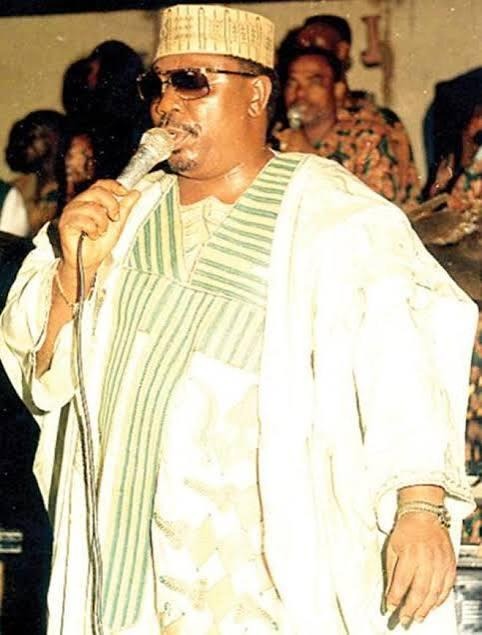
Fuji was more than entertainment; it was storytelling, social commentary and celebration wrapped in one aspect. In the years that followed, artists like King Wasiu Ayinde Marshal and Saheed Osupa expanded the genre’s influence as they started filling halls and street festivals with drums, layered percussion, and call-and-response vocals that somehow turned their audience into participants.

Fuji carried the weight of memory as it echoed through wedding celebrations, Ramadan gatherings and late-night street parties where the music felt inseparable from the community's social life. Yet for years, Fuji seemed to occupy a generational niche as younger generations gravitated towards Afrobeats, hip-hop and other globally oriented sounds, leaving Fuji to be largely associated with the older audience and traditional settings because it belonged to a world that moved at a different pace, one where music was experienced physically, collectively and often locally.
Then Amapiano arrived. Originating in South Africa in the early 2010s, it gradually transformed into one of Africa's most influential musical exports. Amapiano did not just enter in Lagos nightlife; it was absorbed into it. DJs reworked it, producers localized it, and the audience embraced it. During the time of absorption, Fujipiano was brewing quietly, less importantly but more culturally significant.
Fuji started to reappear.
But not in its original form, rather in fragments; in vocal cadences, lyrical patterns and unmistakable rise and fall of Yoruba chants embedded in contemporary production. It surfaced in Asake’s “Peace Be Unto You” and then his “Sunmomi”, after which it was noticed in Seyi Vibez, Fujimoto, which demonstrates that Fuji’s essence can exist within modern and digitized soundscape without losing its identity.
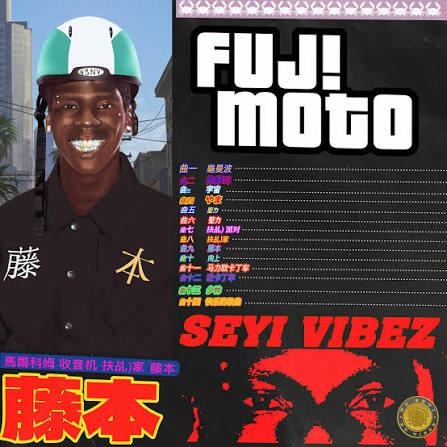
Fujipiano is the next step in that evolution. Or at least, it is trying to be.
At its best, Fujipiano is a meeting point between two rhythmic philosophies that share a surprising comparability as both rely on repetition, build atmosphere through rhythm and create immersive listening experiences that are more about feeling than they are about sound. But comparability does not guarantee cohesion. And this is where Fujipiano reveals its promise and limitations as a genre.

Presently, much of what is labeled as Fujipiano feels incomplete; it feels more like an aesthetic overlay than a fully realized genre. Amapiano beats feel like it carries the Fuji’s vocals. And street-pop structure borrows Fuji inflexions. The elements coexist, but they do not always integrate. Which raises an uncomfortable but necessary question: is this evolution, or is it appropriation of form without depth?
The distinction matters because cultural evolution requires more than proximity; it requires intention. It demands that artists do more than just reference tradition; it requires that they engage with it, understand it and reshape it in ways that preserve its essence while allowing it to grow. Without the depth, fusion risks becoming surface-level, something that looks like culture without fully carrying it, more like a caricature.
To dismiss Fujipiano entirely would be equally shortsighted. What it represents, even in its unfinished state, is still significant. It symbolizes that a generation raised in a hyper-globalized world is not entirely detached from its roots and culture. Instead, it is negotiating with them, translating and reframing them within the contexts of its own experiences.
This is not unique to the sound, but participating artists do it with no particular intensity. Its music has always thrived on collisions of genres, influence and histories. From Afrobeat’s fusion of jazz and Yoruba rhythms to Afrobeat’s fusion of dancehall, pop and hip-hop, the country’s most defining sounds have emerged not from purity but from hybridity.
Fujipiano fits within that lineage, but it also exposes a tension that feels distinctly contemporary, the balance between reinvention and preservation. For the older generation, Fuji represents continuity and a direct line to cultural memory. For the younger generation of listeners, it feels distant, tied to contexts and spaces that no longer define the everyday lives of people. However, Fujipiano tends to bridge the gap, but by doing so, it inevitably transforms what it touches. The question at hand now is whether that transformation deepens the culture or dilutes it.
There is no easy answer, but it is clear that Fujipiano reflects a broader truth on modern identity as it is layered, fluid and constantly in negotiation. Today, a young artist can move seamlessly between local and global influence, between tradition and trend, between heritage and innovation. Their music must reflect complexity. Fujipiano, in this sense, is less about sound and more about self-definition. It is what happens when a generation refuses to choose where it comes from and where it is going.
Whether it becomes a fully realized genre or it fades into the background of Migeria’s ever-evolving music scene is almost beside the point. Its existence alone reveals something essential; culture is not preserved by keeping it unchanged. Its existence alone survives by allowing it to be reimagined. But reimagination comes with responsibility. If Fujipiano is to become more than a passing moment, it is expected to move beyond experimentation and into intention. It must find a way to carry the depth of Fuji, not just its aesthetic, into new soundscapes. Until then, it remains what it has always been: Not a genre. Not a movement. Not yet. But a question, which perhaps is its most honest form.
Because in a world where culture is constantly sampled, remixed and redistributed at speed, the real challenge is not about creating something new, it is about ensuring that in the process of reinventing, nothing essential is lost.
IG: anuhola_





.png)

