.svg)

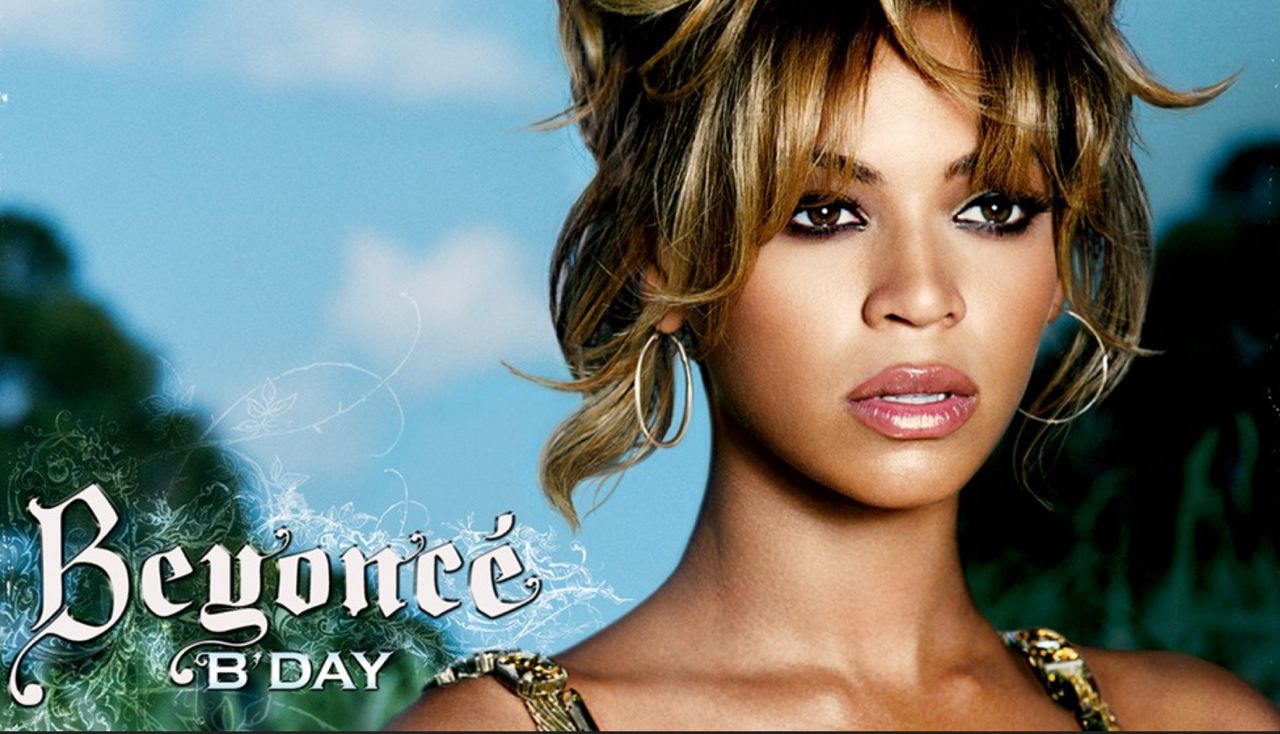
Today is the 45th birthday anniversary of one of pop’s biggest songbirds: Beyoncé. Somewhere in Lagos’ bustling Lekki suburbs a group of fans are planning a special party in her honour — a tradition they’ve held for years.
Elsewhere in Atlanta, some others from the ‘Beyhive’ are hosting something similar.
The same thing is happening across Paris, Mexico City, Dublin, Bangkok, Toronto, and Barcelona, thanks to her distro-publishers Sony Music. Beyoncé, herself, is expected at the London edition tonight, as she’s in town for Jay-Z’s concert as well.
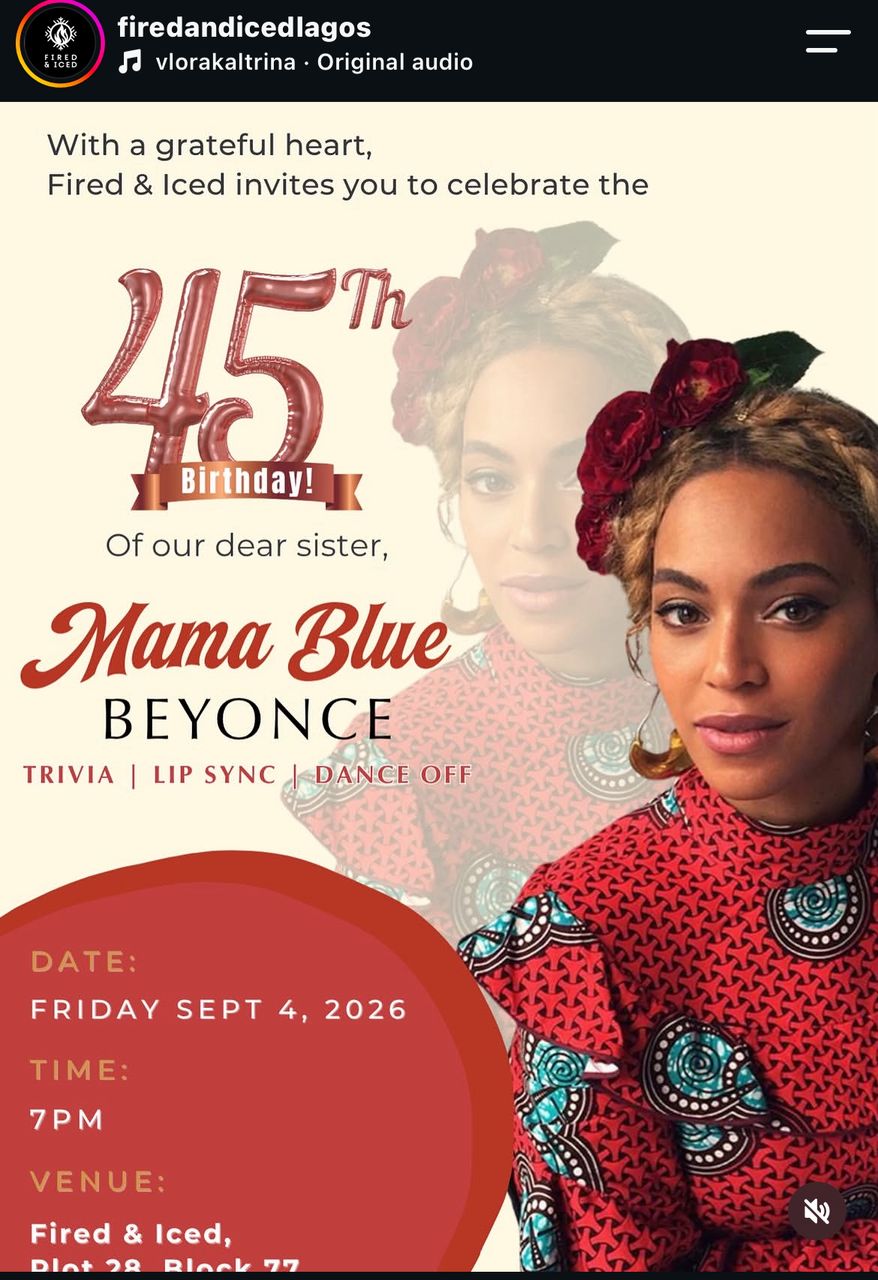
Social media is agog with fan updates on their own versions of celebrations across the world. Fan-pages are buzzing with tributes. A large slice of the internet is celebrating with the mother-of-three today, because to her large fanbase — one of the most dedicated among contemporary fandoms — it is kind of a big deal.
However, beyond the extravaganza tied to her birthday festivities tonight, the parties are also curated to celebrate her just-released 20th anniversary edition of her sophomore album, B’day.
This expanded digital version contains 31 songs, with guest features from late Mexican-American powerhouse Selina Quintanilla and Colombian rapper Maluma. Beyoncé clinched approval from Selena’s estate for the duet “Irreemplazable (Como La Flor)”, having popularly cited Selena as one of her biggest influences behind her 2007 Spanish EP, Irreemplazable.
The remastered version also melds B-sides, Spanish-language recordings, extended material, archival tracks and previously unreleased tracks like “Creole,” “Back Up,” “Lost Yo Mind,” and “Can I Watch You” featuring Pharrell Williams alongside other original tracks from 2006.
Arriving three years after she went solo, Beyoncé’s sophomore album, B’Day was a defining mark for one of popularCover Credit: Parkwood Entertainment music’s most recognisable women. Twenty years later, that is yet to change.
So far, Beyoncé has become an artist for whom music, fashion, choreography, photography and visual storytelling operate as parts of the same creative language. Her albums have become events, her performances extensions of their worlds and her visual choices subjects of cultural conversation in their own right.
The 35-time Grammy Award winner first teased the 20-year commemoration with, “Morning Dew (Donk)” – released earlier on July 4, a kick-off to the 60-day countdown that heralded the album’s unveiling.
The four-LP edition also includes a commemorative booklet and collectible prints, inevitably inviting nostalgia – while Beyoncé also remastered the accompanying videos, originally captured on 35mm, recoloured and finished in 4k Ultra HD. The reworked video for “Déjà Vu,” featuring Jay-Z and directed by Sophie Muller, was also released alongside the anniversary album.

Revisiting B’Day in 2026 shows a pristine moment when Beyoncé was learning how to make an album visible. Nonetheless, one thing we have to make clear right from the start though is that Beyoncé did not invent visual storytelling in pop, nor did she invent the visual album.
Long before B’Day, Michael Jackson, Janet Jackson, Madonna and more had explored strong visual identities for their music, while specific artists such as Missy Elliott had radically expanded what a Black artist could do with a music video. Missy's surreal environments, exaggerated silhouettes and playful approach to tech and fashion rivalled the status quo of music marketing around that era.
Kelis known for her 2003 hit “Milkshake” was similarly unwilling to remain visually predictable, using fashion, colour, sexuality and experimentation to construct an identity that was inseparable from her music. Ciara, meanwhile, made choreography fundamental to the experience of her early records. Her body was not simply present in the music video; movement became part of the music's vocabulary.
Still, Beyoncé arrived within that lineage and showed how these elements could be consolidated around one of the world's biggest pop stars.
B’Day was an unusually visual project for its time. Songs including “Déjà Vu,” “Ring the Alarm,” “Get Me Bodied,” “Freakum Dress,” “Suga Mama” and “Green Light” were accompanied by distinct visual identities, allowing Beyoncé to appear glamorous, confrontational, sensual, playful and commanding across the same album cycle.
The scale became even clearer with the B’Day Anthology Video Album, which gathered 13 videos connected to the album and its deluxe material. The project transformed the record from a collection of songs with promotional videos into a body of music that could be experienced visually as well as sonically.
That does not make B’Day the first visual album. It does, however, make it an important forerunner to the way Beyoncé would eventually approach the format of visual albums. When she would eventually release her self-titled fifth album seven years later, with a video accompanying every song, the visual album became an undeniable part of mainstream pop vocabulary.
C/O Parkwood Entertainment and Youtube
Seen from 2013, B’Day might have been an early prototype. Black pop's visual history is much older than Beyoncé, but her contribution is instead one of consolidation and scale.
Additionally, fashion was central to that construction. The clothes were not simply accessories to the songs; they helped establish the characters Beyoncé inhabited from video to video.
Choreography worked in the same way. A song such as “Get Me Bodied” was difficult to separate from movement, just as “Freakum Dress” became culturally attached to an idea of dressing, confidence and physical presence. The music could travel through radio, but the image gave it another life.
That relationship between music and appearance would become increasingly important throughout the next decade. Rihanna made reinvention a central component of pop identity, moving through radically different visual eras without losing her recognisability while Kanye West is revolutionary in the way he developed album campaigns in which artwork, fashion, stage design and public persona increasingly operated as one creative system. Together with artists who came before them, these developments have helped establish the expectation that a successful album should have a world around it.
But Beyoncé would take that expectation further. Take Lemonade for instance, where she would eventually turn the visual album into a vessel for autobiography, Black womanhood, Southern identity and historical memory; or on the world her 7th studio album, Renaissance constructed around Black dance music, queer cultural histories, fashion and liberation. Cowboy Carter would use the scale of a Beyoncé album to interrogate country music and the place of Black artists within American musical history.
Those projects are more ambitious than B’Day, but that underlying instinct is familiar. The music is never expected to exist alone. That may be the most enduring significance of B’Day. It arrived before the contemporary pop industry had fully embraced the idea of the “era,” but it understood its potential.
In that sense, B’Day belongs to a transitional period in global Black pop. Music television was still powerful, but digital culture was beginning to change how artists reached audiences. Fashion magazines, music videos, DVD releases, performances and celebrity photography all contributed to the construction of a star. Beyoncé was operating at the centre of that project and learning how to make those different forms speak to one another.
The result was not simply a successful album. It was a more expansive idea of what an album could be. That idea would eventually travel far beyond Beyoncé. Contemporary artists now, be it Ayra Starr, Tyla and more, release music surrounded by carefully constructed aesthetics, from photography and fashion to choreography, stage design and social media. Fans do not only stream albums; they study their visual languages, recreate their outfits and participate in their worlds. The “era” has become a standard way of organising pop culture.
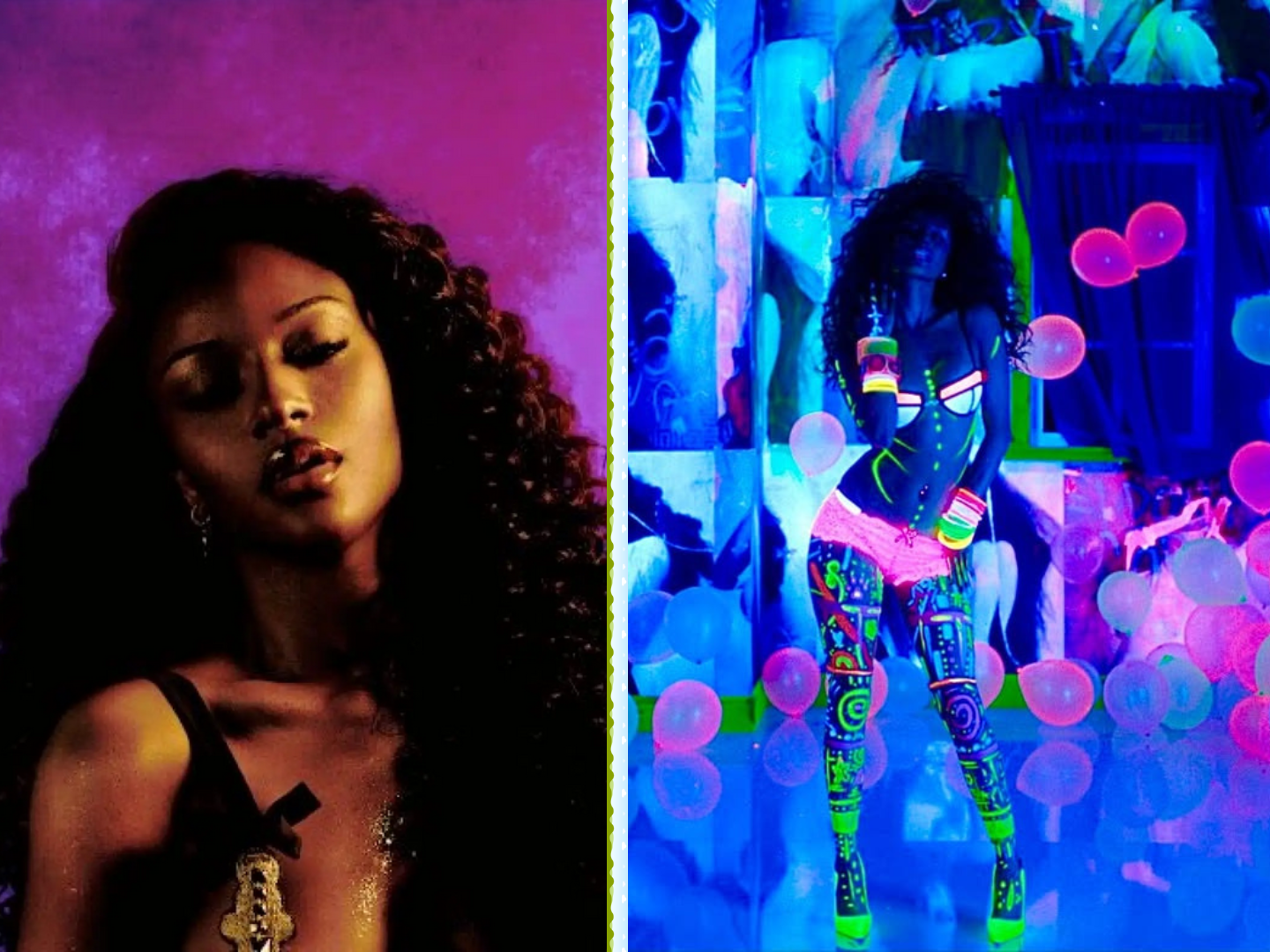
Ultimately, Beyoncé did not create that system alone. But B’Day shows how early she was in understanding its potential. Two decades down the line, that may be the most revealing way to revisit the album. Its legacy is not limited to the singles we can name off the top of our minds; more readily its deeper significance lies in the way Beyoncé began treating “visuals” accompanying a song as part of the song's cultural life and promoting that tradition across contemporary music.
Cover Credit: Parkwood Entertainment


.png)

