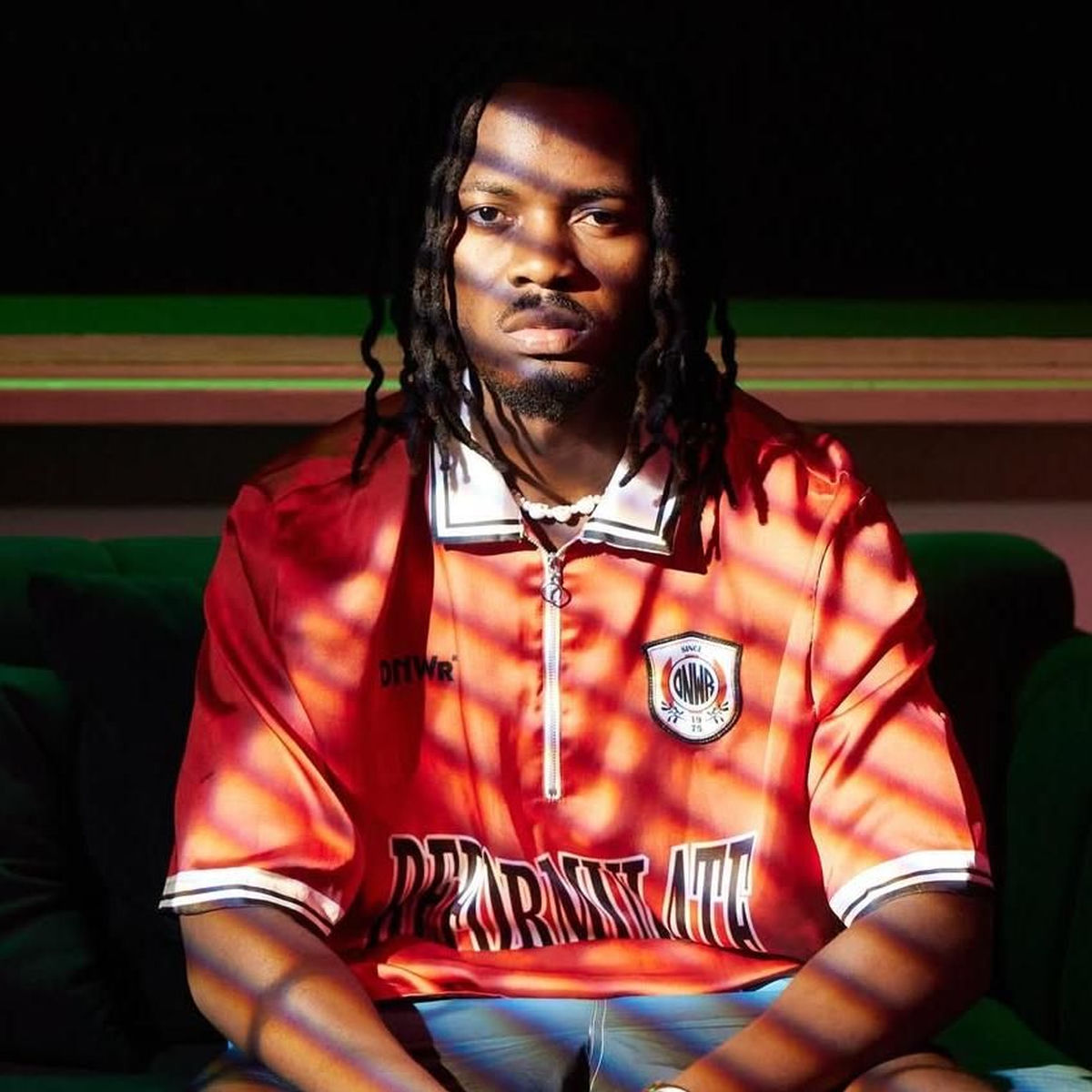
Pson: An Artist Bridging Modern Sounds with a Congolese Essence

Zubaboy is Aiming for Global Recognition

When you think of Congolese music and its artists roaming the continent, who are the first names that come to mind? Fally Ipupa? Koffi Olomide? Theodora? Tiakola? Well, let me introduce you to Pson, a Congolese artist who feels just like a gift that keeps on giving. Why does he stand out from the crowd, you may ask? While everyone else in the continent sticks to traditional sounds such as Soukous or Rumba, the Zubaboy adds a bit of flair to the mix, making him one of the most exciting acts coming from Congo.

Pson Zubaboy, or Pson in short, is a 30-year-old Congolese artist born in Kalemie, Eastern Congo. Growing up, Pson listened to a lot to the late Congolese legend Papa Wemba and American R&B icon Craig David. He is one of the founding members of Zubaboy Music, a label based in the region. Beginning his music career around 2017 with a few standout singles across the years, it was his debut album, ‘Classik’, in 2025; however, that really brought him to the limelight. For a small-town boy,  at first, his sole mission was simply to merge his hometown, Lumumbashi and the capital city of Kinshasa, bridging the gap between a long feud of different ethnics and native languages. As his career grew, so did his interest. He began incorporating sounds from Nigeria, Ghana and Tanzania, whilst choosing to sing in English, Swahili and Lingala.

Congolese people are naturally very formulaic; they stick to what they know and are very good at it. It is all in their avant-garde high-end fashion, best known as La Sape, their distinctive food like Kwanga and Pondu, or perhaps their naturally comedic appeal. Unfortunately, that leaves little room for innovation and evolution, which, for most, is a natural course of time that every genre or culture will inevitably be struck by. But not in Congo! You see, music enthusiasts still swaying some ndombolo steps to Koffi Olomide’s ‘Héros National’ or Fally Ipupa’s ‘Original’ like there’s no tomorrow, and rightfully so. Rumba is a dance music ingrained into Congolese culture, from the movements to the fashion sense, everything becomes like a second skin to the listener, deeply rooted in the cause. For a country that constantly faces persecution, an immense social gap, and general devaluation from all of its neighbours, pride is of great importance. In this case, it almost becomes a tool for survival, a way of life. And although Pson is experimenting, he is undoubtedly cut from the same cloth.

It goes without saying that Pson has a deep respect for traditional Congolese rhythms. Pson isn’t abandoning his musical roots. He fuses contemporary sounds, such as Jersey club and Afrobeats, with key Congolese elements, for example, Congolese popular singing cadence, to amplify them. Now, a whole world that only Congolese people and their diaspora could relate to opens up before an extended young and eager audience. Worlds are colliding, and it urges a cultural dialogue. The result? A sound that feels both familiar and refreshing at the same time. Take ‘Ebele’ for example, one of his biggest singles thus far, adored by anyone who enjoys fast dancing rhythms and a catchy hook. 

While perseverance is at the centre of African identity, pushing boundaries can contribute just as much greatness for the cause. Let’s take fashion, for example: although traditional clothing is still practised around the continent, the use of modernity, such as streetwear and online trends, not only is utilized to showcase wealth, but also makes African artists relatable to younger generations within and outside of the continent. Through carefully curated styles and visual aesthetic, it gets to target a larger pool of listeners, who perhaps wouldn’t have clicked on the song then, but now are more curious and willing to participate in a genre that wouldn’t have appealed to them otherwise.

As African music continues to gain international recognition, Pson plays a key role in pushing the movement to the world. In recent years, French Afropop, a diasporic subculture in France, has risen in popularity. As new listeners grow more and more curious about the Francophone African contribution, this also brings eyes to their country of origin, such as the Ivory Coast, Cameroon and Congo, where Pson is based. It is not about just participating in the global arena; it is about reshaping it. By effortlessly blending a Congolese essence with a modern soundscape, Pson is actively contributing to the conversation, making it possible for Africans to stand on the main stage. Although other regions, such as Nigeria and South Africa, have helped shed light on the continent, there’s still a long way to go. And we are confident that Pson Zubaboy is a key player in this phenomenon that is worth watching.
Pson: An Artist Bridging Modern Sounds with a Congolese Essence

This is some text inside of a div block.

Zubaboy is Aiming for Global Recognition

When you think of Congolese music and its artists roaming the continent, who are the first names that come to mind? Fally Ipupa? Koffi Olomide? Theodora? Tiakola? Well, let me introduce you to Pson, a Congolese artist who feels just like a gift that keeps on giving. Why does he stand out from the crowd, you may ask? While everyone else in the continent sticks to traditional sounds such as Soukous or Rumba, the Zubaboy adds a bit of flair to the mix, making him one of the most exciting acts coming from Congo.

Pson Zubaboy, or Pson in short, is a 30-year-old Congolese artist born in Kalemie, Eastern Congo. Growing up, Pson listened to a lot to the late Congolese legend Papa Wemba and American R&B icon Craig David. He is one of the founding members of Zubaboy Music, a label based in the region. Beginning his music career around 2017 with a few standout singles across the years, it was his debut album, ‘Classik’, in 2025; however, that really brought him to the limelight. For a small-town boy,  at first, his sole mission was simply to merge his hometown, Lumumbashi and the capital city of Kinshasa, bridging the gap between a long feud of different ethnics and native languages. As his career grew, so did his interest. He began incorporating sounds from Nigeria, Ghana and Tanzania, whilst choosing to sing in English, Swahili and Lingala.

Congolese people are naturally very formulaic; they stick to what they know and are very good at it. It is all in their avant-garde high-end fashion, best known as La Sape, their distinctive food like Kwanga and Pondu, or perhaps their naturally comedic appeal. Unfortunately, that leaves little room for innovation and evolution, which, for most, is a natural course of time that every genre or culture will inevitably be struck by. But not in Congo! You see, music enthusiasts still swaying some ndombolo steps to Koffi Olomide’s ‘Héros National’ or Fally Ipupa’s ‘Original’ like there’s no tomorrow, and rightfully so. Rumba is a dance music ingrained into Congolese culture, from the movements to the fashion sense, everything becomes like a second skin to the listener, deeply rooted in the cause. For a country that constantly faces persecution, an immense social gap, and general devaluation from all of its neighbours, pride is of great importance. In this case, it almost becomes a tool for survival, a way of life. And although Pson is experimenting, he is undoubtedly cut from the same cloth.

It goes without saying that Pson has a deep respect for traditional Congolese rhythms. Pson isn’t abandoning his musical roots. He fuses contemporary sounds, such as Jersey club and Afrobeats, with key Congolese elements, for example, Congolese popular singing cadence, to amplify them. Now, a whole world that only Congolese people and their diaspora could relate to opens up before an extended young and eager audience. Worlds are colliding, and it urges a cultural dialogue. The result? A sound that feels both familiar and refreshing at the same time. Take ‘Ebele’ for example, one of his biggest singles thus far, adored by anyone who enjoys fast dancing rhythms and a catchy hook. 

While perseverance is at the centre of African identity, pushing boundaries can contribute just as much greatness for the cause. Let’s take fashion, for example: although traditional clothing is still practised around the continent, the use of modernity, such as streetwear and online trends, not only is utilized to showcase wealth, but also makes African artists relatable to younger generations within and outside of the continent. Through carefully curated styles and visual aesthetic, it gets to target a larger pool of listeners, who perhaps wouldn’t have clicked on the song then, but now are more curious and willing to participate in a genre that wouldn’t have appealed to them otherwise.

As African music continues to gain international recognition, Pson plays a key role in pushing the movement to the world. In recent years, French Afropop, a diasporic subculture in France, has risen in popularity. As new listeners grow more and more curious about the Francophone African contribution, this also brings eyes to their country of origin, such as the Ivory Coast, Cameroon and Congo, where Pson is based. It is not about just participating in the global arena; it is about reshaping it. By effortlessly blending a Congolese essence with a modern soundscape, Pson is actively contributing to the conversation, making it possible for Africans to stand on the main stage. Although other regions, such as Nigeria and South Africa, have helped shed light on the continent, there’s still a long way to go. And we are confident that Pson Zubaboy is a key player in this phenomenon that is worth watching.
This is some text inside of a div block.

Pson: An Artist Bridging Modern Sounds with a Congolese Essence

Zubaboy is Aiming for Global Recognition

When you think of Congolese music and its artists roaming the continent, who are the first names that come to mind? Fally Ipupa? Koffi Olomide? Theodora? Tiakola? Well, let me introduce you to Pson, a Congolese artist who feels just like a gift that keeps on giving. Why does he stand out from the crowd, you may ask? While everyone else in the continent sticks to traditional sounds such as Soukous or Rumba, the Zubaboy adds a bit of flair to the mix, making him one of the most exciting acts coming from Congo.

Pson Zubaboy, or Pson in short, is a 30-year-old Congolese artist born in Kalemie, Eastern Congo. Growing up, Pson listened to a lot to the late Congolese legend Papa Wemba and American R&B icon Craig David. He is one of the founding members of Zubaboy Music, a label based in the region. Beginning his music career around 2017 with a few standout singles across the years, it was his debut album, ‘Classik’, in 2025; however, that really brought him to the limelight. For a small-town boy,  at first, his sole mission was simply to merge his hometown, Lumumbashi and the capital city of Kinshasa, bridging the gap between a long feud of different ethnics and native languages. As his career grew, so did his interest. He began incorporating sounds from Nigeria, Ghana and Tanzania, whilst choosing to sing in English, Swahili and Lingala.

Congolese people are naturally very formulaic; they stick to what they know and are very good at it. It is all in their avant-garde high-end fashion, best known as La Sape, their distinctive food like Kwanga and Pondu, or perhaps their naturally comedic appeal. Unfortunately, that leaves little room for innovation and evolution, which, for most, is a natural course of time that every genre or culture will inevitably be struck by. But not in Congo! You see, music enthusiasts still swaying some ndombolo steps to Koffi Olomide’s ‘Héros National’ or Fally Ipupa’s ‘Original’ like there’s no tomorrow, and rightfully so. Rumba is a dance music ingrained into Congolese culture, from the movements to the fashion sense, everything becomes like a second skin to the listener, deeply rooted in the cause. For a country that constantly faces persecution, an immense social gap, and general devaluation from all of its neighbours, pride is of great importance. In this case, it almost becomes a tool for survival, a way of life. And although Pson is experimenting, he is undoubtedly cut from the same cloth.

It goes without saying that Pson has a deep respect for traditional Congolese rhythms. Pson isn’t abandoning his musical roots. He fuses contemporary sounds, such as Jersey club and Afrobeats, with key Congolese elements, for example, Congolese popular singing cadence, to amplify them. Now, a whole world that only Congolese people and their diaspora could relate to opens up before an extended young and eager audience. Worlds are colliding, and it urges a cultural dialogue. The result? A sound that feels both familiar and refreshing at the same time. Take ‘Ebele’ for example, one of his biggest singles thus far, adored by anyone who enjoys fast dancing rhythms and a catchy hook. 

While perseverance is at the centre of African identity, pushing boundaries can contribute just as much greatness for the cause. Let’s take fashion, for example: although traditional clothing is still practised around the continent, the use of modernity, such as streetwear and online trends, not only is utilized to showcase wealth, but also makes African artists relatable to younger generations within and outside of the continent. Through carefully curated styles and visual aesthetic, it gets to target a larger pool of listeners, who perhaps wouldn’t have clicked on the song then, but now are more curious and willing to participate in a genre that wouldn’t have appealed to them otherwise.

As African music continues to gain international recognition, Pson plays a key role in pushing the movement to the world. In recent years, French Afropop, a diasporic subculture in France, has risen in popularity. As new listeners grow more and more curious about the Francophone African contribution, this also brings eyes to their country of origin, such as the Ivory Coast, Cameroon and Congo, where Pson is based. It is not about just participating in the global arena; it is about reshaping it. By effortlessly blending a Congolese essence with a modern soundscape, Pson is actively contributing to the conversation, making it possible for Africans to stand on the main stage. Although other regions, such as Nigeria and South Africa, have helped shed light on the continent, there’s still a long way to go. And we are confident that Pson Zubaboy is a key player in this phenomenon that is worth watching.

Other Stories
London
London
Lagos
London
Newyork
London
Shop
Join the community.
You are now subscribed to receive updates.
Oops! Something went wrong while submitting the form.