.svg)

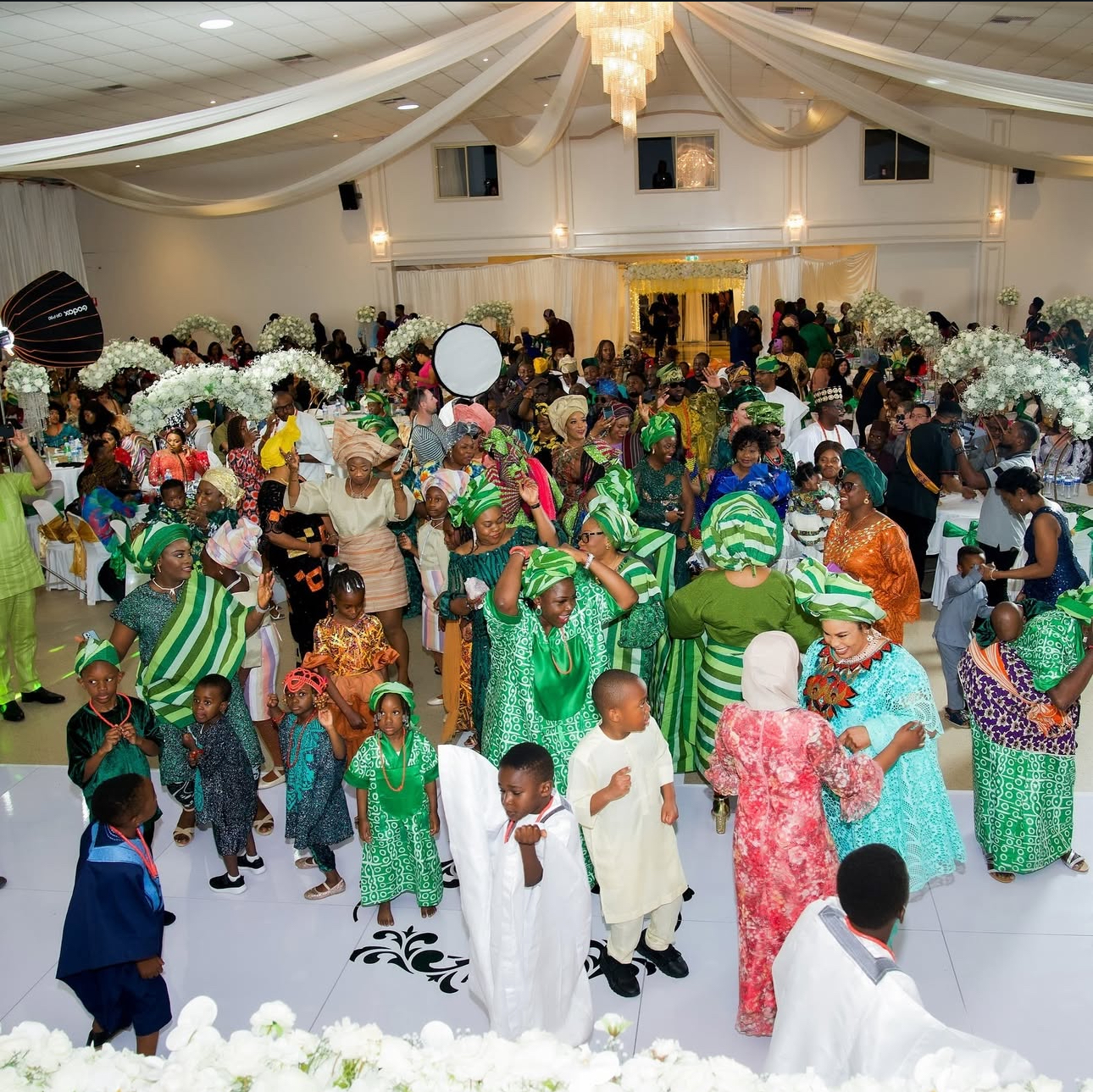
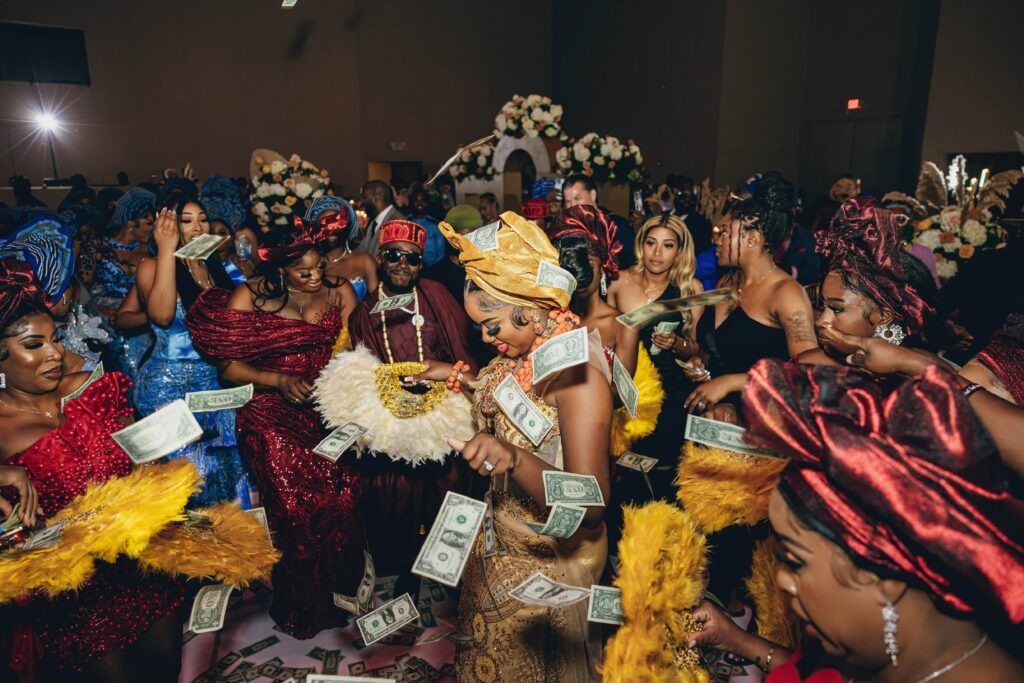
Showering the entire perimeter of the dance floor with dollar bills, the howling echoes of infectious laughter reverberate as heavy, ear-pleasing drum patterns blare from the speakers. A mesmerizing party jollof, ogbono soup, and baked chicken aroma fill the room, as kids run aimlessly through the crowded dance floor. We danced till 1 am. 2 am. 3 am.
From Nigerian engagements, weddings, graduations, funerals, birthdays, and anniversaries– these hall parties were strong fixtures in my childhood. You got to see your favorite cousins, your uncle who claims to have known you since you were a newborn baby, and your beautiful auntie, whose name you never really knew, but always recalled her warm spirit. The Nigerian Hall party stood the test of time. No matter the occasion, climate, or mood, it convened relatives and family alike with one singular objective: to just have a good time.
“My woman, my everything / My woman, I go fit buy you anything / My woman, my everything / My woman, I go fit give you anything / My woman oh, my everything
My woman oh, my everything!”
Collaborating with Paroranking on the chorus above in the 2015 hit ‘My Woman, My Everything’, Wande Coal’s voice dominated the Afrobeats scene since the mid-2000s. With his recently brilliant, timeless Afro+ Festival performance in D.C. this past summer, performing hits including ‘So Mi So’ and ‘Kiss My Hand,’ the coinciding online discourse began to coin him “The Nigerian T-Pain.” Oluwatobi Wande Ojosipe, a.k.a Wande Coal, was a mid-2000s fixture for Nigerian Hall Parties, along with sounds from P-Square, Styl-plus, D’Banj, Iyanya, Flavour, and Don Jazzy. Don Jazzy and D’Banj formed a powerhouse producer x artist partnership– working to expand the Afrobeats soundscape. These legends of the time were prominent in the scene, giving form to an African sonic sensibility that would build and expand significantly two decades later.
“As a pair, D’Banj and Donjazzy reimagined the eccentricities of Afrobeats superstardom, becoming continental superstars, earning the recognition of internationally renowned acts such as Akon, Snoop Dogg, and Kanye West, and helming the gateway for the careers of artists such as Wande Coal, D’Prince, and Kayswitch under their Mo’Hits umbrella. The release of the 2009 Mo’Hits compilation album, Curriculum Vitae, preempted Wande Coal’s 2010 rapturous explosion. The rise of Wande Coal was the precursor to a diverse ethos within Afrobeats. Shepherded by Don Jazzy’s multi-layered production, a frenzied uptempo version of Afrobeats emerged. It had a faster percussive rhythm, and the BPM (beats per minute) of the sound cranked between 110 and 140 BPM. The sound infused sonic influences from hip-hop, EDM, disco, and highlife. This era also marked the emergence of artists such as Wizkid, Davido, and Olamide.”

40-year-old Lagos-native Wande Coal's musical career began in the church, which is where he learned to sing and play the piano. ‘Olufe’, a beautiful ballad reminiscent of the Boyz II Men and N’SYNC boy-band era that influenced the Afrobeats sound at the time, was released on his debut album, ‘Mushing 2 Mo’ Hits.’ He went on to win five awards for this album at the 2010 Headies.
“Ololufe, jowo ma'i lo // Iwo ni mo fe ni aiye mi // Ololufe (ololufe), jowo ma'i lo (jowo ma′i lo,) // Iwo ni mo fe ni aiye mi”
In these Yoruba lyrics, Wande Coal tells his lover not to go, that “she is the one he wants in his life.”

In 2019, Gentility took the world by storm with Melvitto’s energetically resonant production, matching a smooth yet dancer-friendly cadence set by Wande Coal. This song gained stark popularity, reaching 19 million streams on Spotify.
“Gentility / Gentility o se stupidity / Gentility o se stupidity
Gentility o se stupidity / Mon wo e / Ton se mi bakan mon wo e / Ton se mi beyen mon wo e / Gentility o se stupidity”
The iconic “Stupidity” outro sung by Wande Coal, commonly sung spiritedly at the top of audiences’ lungs, is indicative of the resonant captivation Wande Coal fosters in his sound. Here, he emphasizes the importance of kindness and gentleness in relationships amid preconceived notions that vulnerability and openness are inherently “stupid” or naive. He combines his honest lyricism with an enticing, engaging production, whose upbeat, catchy energy led to its subsequent popularity. Melvitto emphasized that Wande Coal had an all-encompassing approach to music, noting that: “His process is crazy…He’ll just go in a room and lock the door and just be in there. You’ll hear him singing but you don’t know what he’s doing in there. Then he’ll come back with his laptop and there are 30 voice notes in there that are two minutes long, of just song after song. He’ll tell me to take them and find something that I like.”
‘Iskaba,’ a constant on repeat, iconic record played at Nigerian hall parties internationally since its release in 2016, currently amasses over 86 million streams on Spotify. Wande Coal, along with DJ Tunez, crafted one of the biggest, most quintessential Afrobeats songs of its time, whose chants:
“Iskaba, Iskele bete, Iskolo boto / Iskaba, Iskele bete, Iskolo boto / Iskaba, Iskele bete, Iskolo boto / Iskaba, Iskele bete, Iskolo boto”
evokes the freedom of the party – the importance of enjoying life and celebrating with ease.
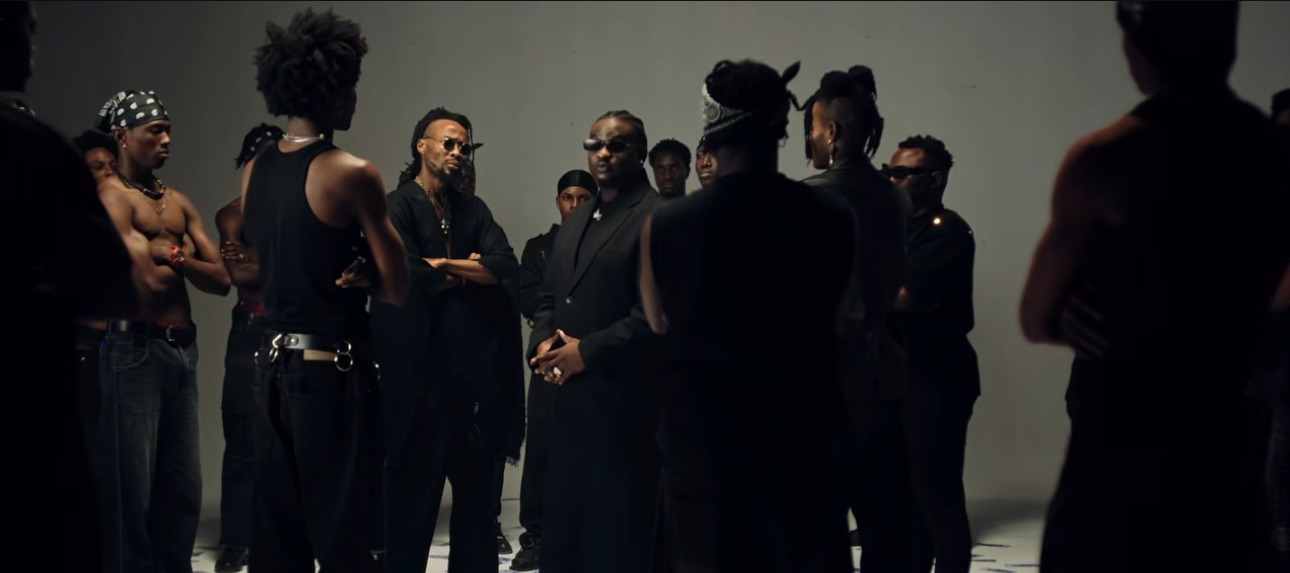
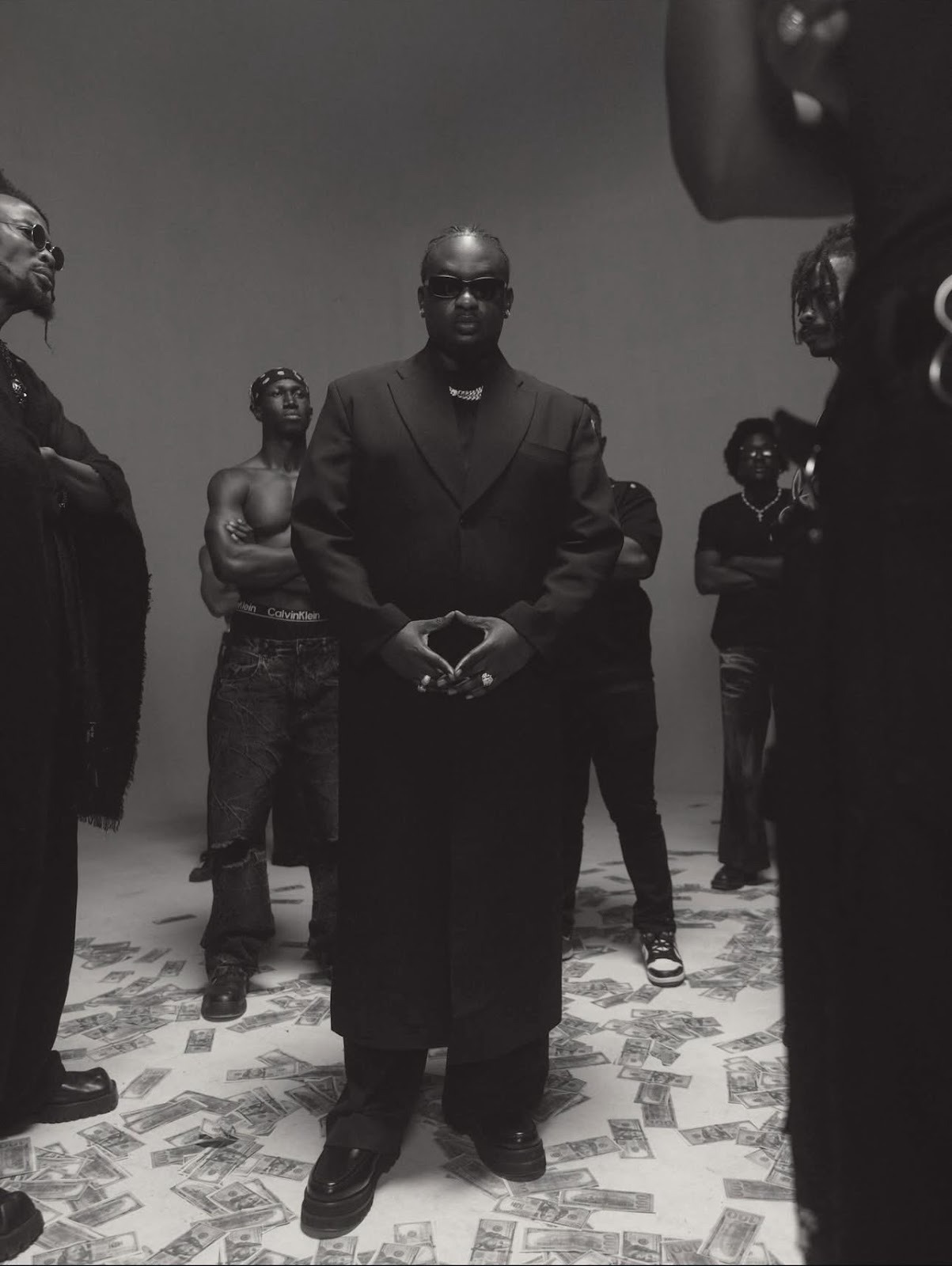
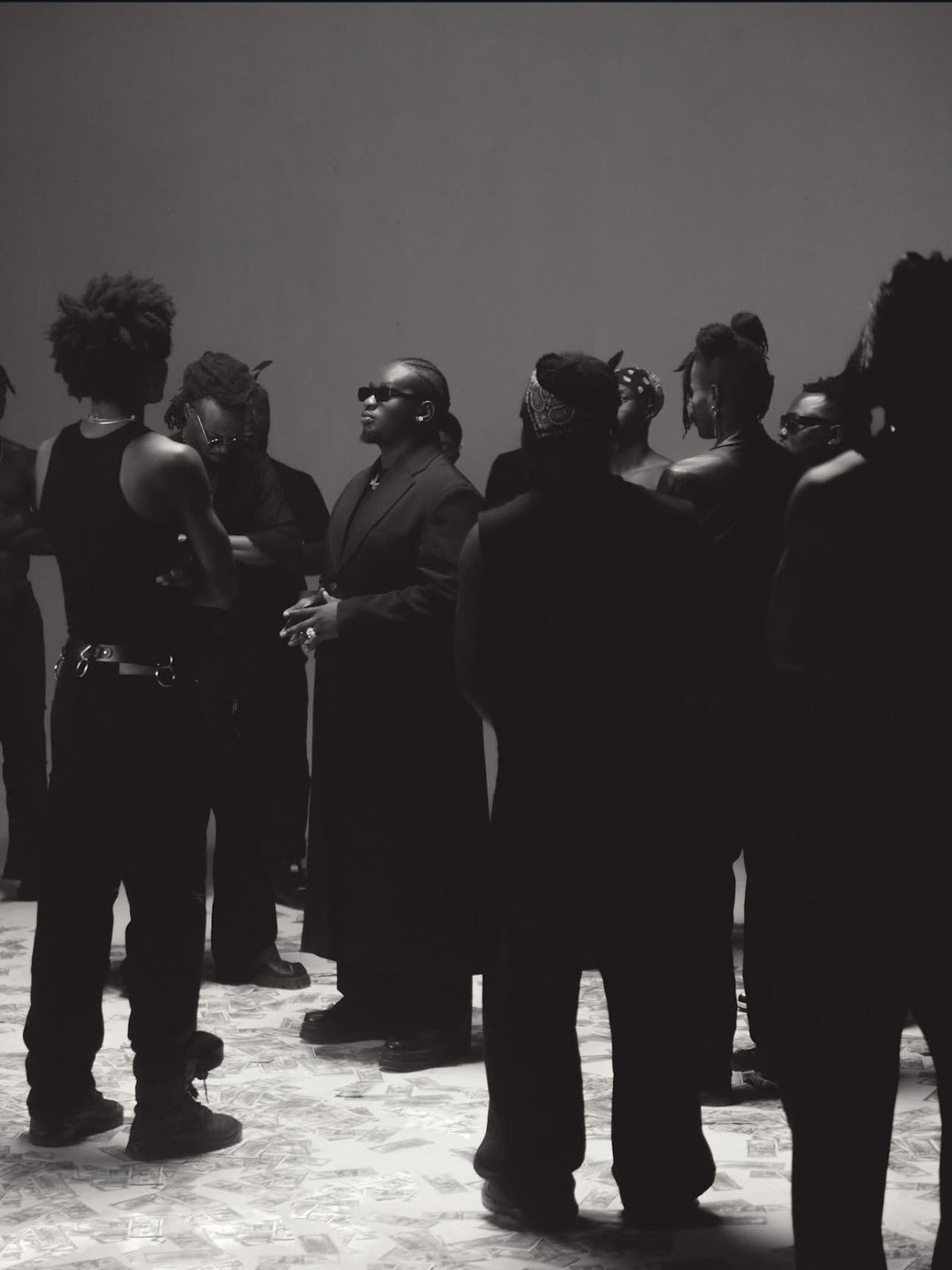
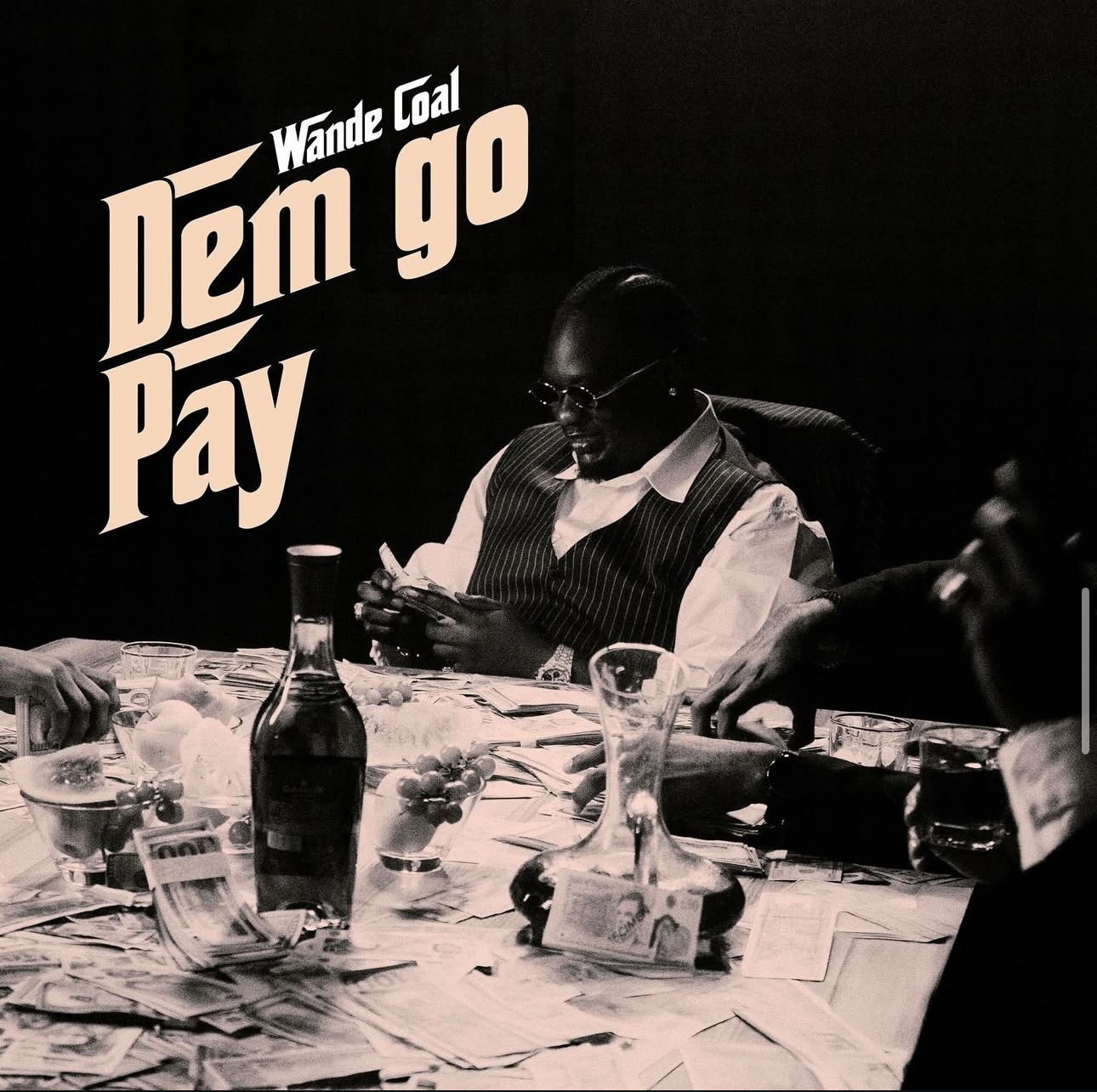
Wande Coal’s 2025 new track ‘DEM GO PAY’ invokes a similar energy. Giving a subtle nod to the Nigerian Hall Party and the importance of making energetic music that people can dance to, while this track primarily highlights Wande Coal’s growth and material success in the music industry, he folds catchy melodies and hooks to draw the audience into the party and visual aesthetic. The dark setting and figures dressed in black in the promo visuals highlight the precision of the song’s rollout. In this new age where there is always a constant influx of digital music, the promo is just as important as the record, as indicated by Wande Coal’s pristine photoshoot/visualizer for ‘DEM GO PAY.’
There’s something increasingly important about keeping the party alive. Not just in terms of clubs, but community gatherings, celebrations, and the like. This also hinges on the importance of diversified Afrobeats music that drives the fervor, energy, and life of these spaces. Wande Coal’s impact, in addition to a myriad of Afrobeats artists producing music that audiences can genuinely move to, cultivates communal spaces. In an increasingly digitized and individualized world, making music for the sake of community synergy continues to echo in importance.


.png)

