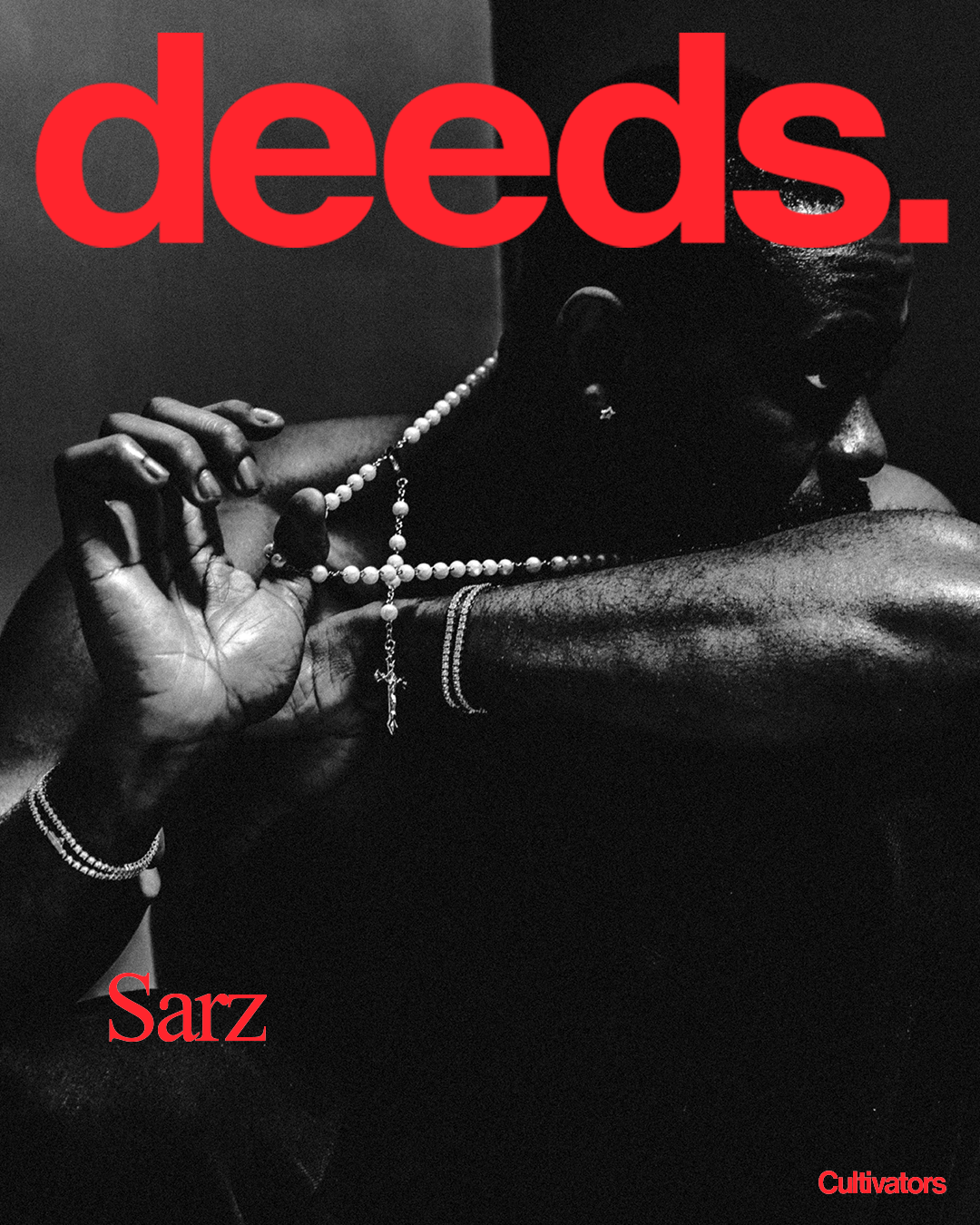
Sarz: The Cultivator Worth Protecting

Authored by

Sarz is more than a name in Afrobeats—he's a pioneer whose influence crosses continents. His legacy is built on innovation, mentorship, and relentless excellence. Sarz has shaped a generation's sound and inspired many artists. Protect Sarz at All Costs is more than a collection of songs; it celebrates his journey, creative evolution, and the resilience that fueled his rise from humble beginnings to global acclaim. As Sarz continues to push boundaries and uplift others, his story proves the enduring power of passion and vision.

Sarz’s sound is instantly recognisable—bold, innovative, and uniquely his. As a cultivator, he has built an inspiring career with a clearly identifiable sound. Wherever you hear it, you know it’s a Sarz beat. Now, at this pivotal point, he’s breaking boundaries, stretching his creativity beyond music, and redefining what it means to be an artist.

As part of our Cultivators Issue, we captured Sarz in London after the release of his debut album—a moment that seemed to crystallise the energy and vision he brings to everything he does. The photo shoot didn’t just showcase his style; it offered a glimpse into the creative force that has propelled his career for over a decade. Born in Benin City, Edo State, Sarz began tinkering with music software as a teenager, but quickly grew into the architect behind the soundtracks of Afrobeats’ biggest stars. His unique ability to identify, nurture, and elevate talent is evident in the careers he’s helped launch and sustain across genres. Now, as he steps into a new chapter, Sarz is not only pushing his own boundaries but is also empowering a new generation through the Sarz Academy—a platform that’s already produced some of the most sought-after producers in the industry. His influence extends beyond music, as he explores fashion, mentorship, and other creative endeavours, proving that his vision knows no limits. Far from finished, Sarz continues to shape culture and inspire, making this just the beginning of an even greater legacy. 

We've known you for a while, but this particular album feels like not even a career introduction, but more like another level. How do you feel this moment represents a particular point in your journey so far?

I'm so grateful to God for making this happen. Because sometimes, even with all the talents and all the connections and everything you have or think you have, if it's not going to work, it's not going to work for you. So I'm just grateful to God for this growth, and it's been an amazing journey. I feel like I still have so much to give, and not many people, especially on the Afrobeat side of things, have careers that are this long and still feel fresh. So I'm just really grateful for that. And, I also have to pat myself on the back for just working hard, staying consistent and evolving.  
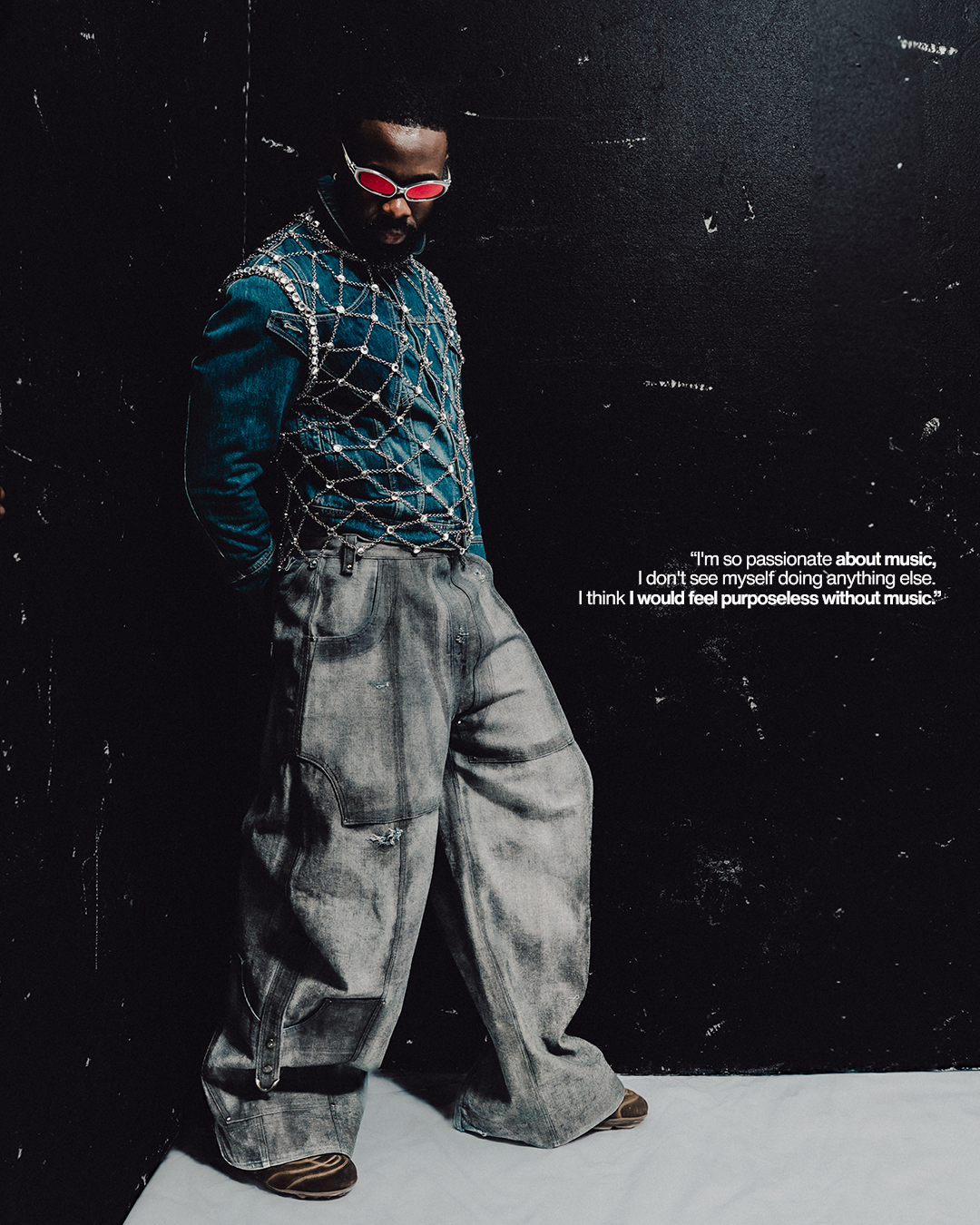
What would you say has been the main driving factor, or the thing that you felt has made you keep going, keep doing music and just keep going the way that you have?

It's a mix of passion and discipline. I'm so passionate about music, I don't see myself doing anything else. I think I would feel purposeless without music. And also the discipline to keep going even when I don't feel like it's because there are times where life happens, or even in the music industry, you things don't go your way and things happen, and it can rub you the wrong way, and you feel like quitting, but you don't, because you have discipline to keep going. I know I still have so many more ideas I want to put out into the world. I really feel like I want to empty this vessel before my time is up.

Was there a particular thing that made you feel like music was something you wanted to pursue and explore in terms of how you express yourself?  What was the motivating factor,  or is it just something that has always been a part of you?

Music wasn't a part of me when I was young. As far as I know, no one in my family has a musical background. I would say that, in my early teenage years, when I started to discover music for myself and developed a taste for it, I found myself drawn to producers. I listened to a song because a producer I liked made it, and I found myself more intrigued by music production. I didn't care much for lyrics; as long as the song had a great beat and vocal melodies to go with it, I was fine. So I've always just been that way inclined. A friend of mine introduced me to a certain music software, and I tried making a beat. That was a light-bulb moment in my life when I just knew I didn't want to do anything else but make music. That is how my journey started. I was so passionate about it that I would make 10 beats a day. That's all I did for a very long time until I found a foot in the music industry, and the rest is history.

just in terms of, like, now being the moment that you thought, Okay, I'm gonna, I'm gonna do this album now, as opposed to, like, I'll just put out a few songs, or, you know, maybe, like an EP or something. Why did you feel like you wanted to present like a body of work in this particular format, like in this current time?

I can't really explain why I chose now, but I think that, now that I've put it out, it will be easier for me to just keep expressing myself, you know, through albums and other things. I don't have a reason to do this now. I've been making EPS with some of my frequent collaborators, and I just think it's time to do things on my own. I've been producing music for a long time, and I'm exploring other ventures. It's part of growth, it's part of evolving.

Protect Sarz At All Costs was a special project in the fact that it's your debut album. What about the process of making this album felt different to the previous bodies of work that you've done?

because I'm very involved in producing music for other people. I don't just send beats and have them release the song. I'm very involved in the song arrangements, with ideas and sometimes with who's mixing the song. Like, I want to be very involved and hands-on. So the creative process isn't that different from what I'm used to. The process that was different was more about putting together a compilation or collab album with a lot of people on the track and trying to fit them together cohesively and make it make sense. Sometimes you have certain ideas for certain people on the track, and you play the track to them, and it doesn't resonate with them, so you have to go back to the drawing board to figure out something that works with them. which can then lead you to make other decisions for the other tracks, so that it makes sense as an album.  So that part of the process was different, having to think of this as an album rather than just a track, and producing for someone you know, collectively.

The opening track, Grateful, sets the tone for the rest of the album. How did it come to be, and why did you want to start the album with this particular song?

It just felt natural, and I felt right to start with being grateful. WurlD and I have collaborated on so many songs, so we usually just catch up on what's going on in our lives. The day we made this song, we were just talking about how far we've come and how grateful we are for everything.  Where we are,  the ups and the downs and sometimes conversations like that inspire songs. I remember, mid-conversation, he just started singing, and we just put it together. It just felt right for  the album to start that way,

How did you find it to whittle it down to these particular 12 songs and sort of craft, like the sound in terms of, like, even, not just thinking, like the tracklisting, but just like the sonic palette of the album, if you will. Like, how did you, how did you come to pull all of that together, to bring it together to these 12 songs?

There are two types of artists. They are the artists that make 100 songs and streamline to 12, and they're the artists that make 12 songs and know that those 12 songs are going to work.  I think I'm one of those who, if I'm going to make a 10-track album, I'm probably going to make, like, 15 tracks, just to have backup, because I really believe in my ideas. If I believe in an idea, I work on it until I'm satisfied. I don't like having a bunch of tracks just trying different things. If you just feel the slightest discomfort,you throw that away and be like, Oh, that's not working. It's really about being fluid and just, you know, making things work with the ideas you have. You know, you try someone on the track. If it doesn't work, you know, you try the next best person on. You just keep going until you find what works.

The intentionality, and even talking about this, this particular album, what was the intention that you had, or the intention that you set for what you wanted this album to be, if there was one at all?

My intention for this album was to inspire people, especially from where I'm from, from this side of the world, to know that you can do anything if you put your mind to it, and you don't have to be mediocre. You can really push yourself and set a standard.

What would you say has been like, the changes within yourself you've seen evolve over the years? When you talk about, you know, growth and evolution and things like that?

Music has opened doors for me that I would have never imagined would be open. Music has given me opportunities to be exposed, to be self-aware, and to become the person I am now. It has created opportunities to find these experiences and take what I need from them. I'm really, really grateful for that, and as we speak, it keeps, you know, it keeps opening doors. It keeps giving me a life worth living.

When you think about your background and how you grew up, what? Yeah, what is that done for your family and how they respond to that, and how they've seen what you've been able to do, what has the experience been like for you and then be able to see your career go as far as it has?

So there was a lot of friction with my choice of how I was spending my time, which was on music. As a young teenager, there was a lot of friction and kickback because my parents didn't understand that career path. And thinking about it, I guess they were projecting their fears that I wouldn't succeed, but the moment they saw I was serious, and I started making a living for myself, all that changed. And it has really shaped my family in a way that my nephews have been encouraged to do what they want to do, which I think is a byproduct of the success I've had in music. I'm just very grateful for choosing music. I didn't go to university, so I was up against the wall. I only had one option: to succeed in music. That gave me tunnel vision to make sure this career path I chose works out. So I'm just very grateful to God for everything. This is why I  chose that track as track one, it's very important, and meaningful to me, because I am very, very, very grateful for this life, because if it didn't work out, I don't know, maybe I'll be asking you for a job now.

Even for you and your legacy, and as you know, the impact that you have on people, I know you've got your academy that you do now. Even in terms of like yourself and thinking about that. How does that feel for the next generation of producers and artists? Is that something that you think about often, when you think about how far you've come, and you've reflected on your journey and like, when you see the next generation of young creatives coming up, and what that and what your impact has been on them?

I think about this a lot, and this is one of the reasons why I started my academy, just to help people who go through things like this, because it's very common in Africa for parents not to support the creative industry. Like, if you know your kids have a passion for the creative industry. I know how hard it was for me to get where I am, and it's easy for someone from where I'm from to look at me and say, if this guy can do it, then I can do it. Compared to a producer like Metro Boomin in America, for example, it feels far away and almost unreachable. But if you see that I can do this, you see me in Lagos, you know I'm human like you. You know that our struggles are very similar, so if I can do it, it inspires people like me to do the same. In our academy, we've been able to help a lot of creatives have careers, and some of them are among the best producers in the Afrobeat space today. So this is something I really think about, you know, and I'm here to be of service.

I know music is the hub. But in terms of your other creative pursuits, whether it be, you know, like your style and your fashion, and other sides of your creativity. How do you feel like you express yourself differently through the different creative things that you do?

Its expression. The more confident you become, the more you want to express yourself; the more exposed you are, the more you want to express yourself in different ways. I love expressing myself through fashion. I love expressing myself through fitness. I love expressing myself through anything that interests me.  Whether it's tech, gadgets, or movies. I have concept ideas, and I just love expressing myself in my own unique way.  I think that the more exposed and the more confident you are, the more you start to express these things, and not just for you, maybe just to inspire people. That's a big thing for me, I really just want to be myself so I can inspire other people to be themselves. In a world where you know everyone has a crowd mentality and wants to blend in with what everyone else is doing. I would want to express myself because I have that self-identity.

What are you looking forward to most in terms of what's coming next and what excites you about the future of the Sarz journey?

I'm really excited to see myself grow in so many ways, beyond music. I'm really excited to take my DJing career to greater heights. I have my upcoming show, Fabric Live, on April 24th, which will be a new experience for me. I have a lineup of exciting artists, and it's going to be a great night. I'm really excited to try out other genres of music, you know. Really excited to like, just, you know, diving into other creative ventures. I'm really excited to take my swimming lessons seriously and become a swimmer in 2026.  So many things I've just really opened up to growing, and not just in music. I feel like music is there; it's going to do its thing. Just the other pillars of what makes Sarz. I’m really excited to do a cultural collaboration with the academy and people interested in music across the world. You know, there are so, so many plans.

Credits:
Photography: Ahmed Idries @haruki.design
Creative Director: Zekaria Al-Bostani @zek.snaps & Ahmed Idries @haruki.design
Producer: Seneo Mwamba @seneomwamba
Grooming: Dalila Bone @dalila_mua
Fashion Stylist: Rhys Marcus Jay @rhysmarcujay
Styling Assistant: Annabel Webster @annabeljwebsterstylist
Co-Director: @_faysalhassan
Co Producer: Nadeem Ahmed: @nadderz_photography
Design: @shalemalone | @dianeadanna
BTS: Blair Watson @blairs_cornershop
Writer: Seneo Mwamba @seneomwamba
Studio: @plainwhitestudio_
Sarz: The Cultivator Worth Protecting

Authored by
This is some text inside of a div block.

Sarz is more than a name in Afrobeats—he's a pioneer whose influence crosses continents. His legacy is built on innovation, mentorship, and relentless excellence. Sarz has shaped a generation's sound and inspired many artists. Protect Sarz at All Costs is more than a collection of songs; it celebrates his journey, creative evolution, and the resilience that fueled his rise from humble beginnings to global acclaim. As Sarz continues to push boundaries and uplift others, his story proves the enduring power of passion and vision.

Sarz’s sound is instantly recognisable—bold, innovative, and uniquely his. As a cultivator, he has built an inspiring career with a clearly identifiable sound. Wherever you hear it, you know it’s a Sarz beat. Now, at this pivotal point, he’s breaking boundaries, stretching his creativity beyond music, and redefining what it means to be an artist.

As part of our Cultivators Issue, we captured Sarz in London after the release of his debut album—a moment that seemed to crystallise the energy and vision he brings to everything he does. The photo shoot didn’t just showcase his style; it offered a glimpse into the creative force that has propelled his career for over a decade. Born in Benin City, Edo State, Sarz began tinkering with music software as a teenager, but quickly grew into the architect behind the soundtracks of Afrobeats’ biggest stars. His unique ability to identify, nurture, and elevate talent is evident in the careers he’s helped launch and sustain across genres. Now, as he steps into a new chapter, Sarz is not only pushing his own boundaries but is also empowering a new generation through the Sarz Academy—a platform that’s already produced some of the most sought-after producers in the industry. His influence extends beyond music, as he explores fashion, mentorship, and other creative endeavours, proving that his vision knows no limits. Far from finished, Sarz continues to shape culture and inspire, making this just the beginning of an even greater legacy. 

We've known you for a while, but this particular album feels like not even a career introduction, but more like another level. How do you feel this moment represents a particular point in your journey so far?

I'm so grateful to God for making this happen. Because sometimes, even with all the talents and all the connections and everything you have or think you have, if it's not going to work, it's not going to work for you. So I'm just grateful to God for this growth, and it's been an amazing journey. I feel like I still have so much to give, and not many people, especially on the Afrobeat side of things, have careers that are this long and still feel fresh. So I'm just really grateful for that. And, I also have to pat myself on the back for just working hard, staying consistent and evolving.  

What would you say has been the main driving factor, or the thing that you felt has made you keep going, keep doing music and just keep going the way that you have?

It's a mix of passion and discipline. I'm so passionate about music, I don't see myself doing anything else. I think I would feel purposeless without music. And also the discipline to keep going even when I don't feel like it's because there are times where life happens, or even in the music industry, you things don't go your way and things happen, and it can rub you the wrong way, and you feel like quitting, but you don't, because you have discipline to keep going. I know I still have so many more ideas I want to put out into the world. I really feel like I want to empty this vessel before my time is up.

Was there a particular thing that made you feel like music was something you wanted to pursue and explore in terms of how you express yourself?  What was the motivating factor,  or is it just something that has always been a part of you?

Music wasn't a part of me when I was young. As far as I know, no one in my family has a musical background. I would say that, in my early teenage years, when I started to discover music for myself and developed a taste for it, I found myself drawn to producers. I listened to a song because a producer I liked made it, and I found myself more intrigued by music production. I didn't care much for lyrics; as long as the song had a great beat and vocal melodies to go with it, I was fine. So I've always just been that way inclined. A friend of mine introduced me to a certain music software, and I tried making a beat. That was a light-bulb moment in my life when I just knew I didn't want to do anything else but make music. That is how my journey started. I was so passionate about it that I would make 10 beats a day. That's all I did for a very long time until I found a foot in the music industry, and the rest is history.

just in terms of, like, now being the moment that you thought, Okay, I'm gonna, I'm gonna do this album now, as opposed to, like, I'll just put out a few songs, or, you know, maybe, like an EP or something. Why did you feel like you wanted to present like a body of work in this particular format, like in this current time?

I can't really explain why I chose now, but I think that, now that I've put it out, it will be easier for me to just keep expressing myself, you know, through albums and other things. I don't have a reason to do this now. I've been making EPS with some of my frequent collaborators, and I just think it's time to do things on my own. I've been producing music for a long time, and I'm exploring other ventures. It's part of growth, it's part of evolving.

Protect Sarz At All Costs was a special project in the fact that it's your debut album. What about the process of making this album felt different to the previous bodies of work that you've done?

because I'm very involved in producing music for other people. I don't just send beats and have them release the song. I'm very involved in the song arrangements, with ideas and sometimes with who's mixing the song. Like, I want to be very involved and hands-on. So the creative process isn't that different from what I'm used to. The process that was different was more about putting together a compilation or collab album with a lot of people on the track and trying to fit them together cohesively and make it make sense. Sometimes you have certain ideas for certain people on the track, and you play the track to them, and it doesn't resonate with them, so you have to go back to the drawing board to figure out something that works with them. which can then lead you to make other decisions for the other tracks, so that it makes sense as an album.  So that part of the process was different, having to think of this as an album rather than just a track, and producing for someone you know, collectively.

The opening track, Grateful, sets the tone for the rest of the album. How did it come to be, and why did you want to start the album with this particular song?

It just felt natural, and I felt right to start with being grateful. WurlD and I have collaborated on so many songs, so we usually just catch up on what's going on in our lives. The day we made this song, we were just talking about how far we've come and how grateful we are for everything.  Where we are,  the ups and the downs and sometimes conversations like that inspire songs. I remember, mid-conversation, he just started singing, and we just put it together. It just felt right for  the album to start that way,

How did you find it to whittle it down to these particular 12 songs and sort of craft, like the sound in terms of, like, even, not just thinking, like the tracklisting, but just like the sonic palette of the album, if you will. Like, how did you, how did you come to pull all of that together, to bring it together to these 12 songs?

There are two types of artists. They are the artists that make 100 songs and streamline to 12, and they're the artists that make 12 songs and know that those 12 songs are going to work.  I think I'm one of those who, if I'm going to make a 10-track album, I'm probably going to make, like, 15 tracks, just to have backup, because I really believe in my ideas. If I believe in an idea, I work on it until I'm satisfied. I don't like having a bunch of tracks just trying different things. If you just feel the slightest discomfort,you throw that away and be like, Oh, that's not working. It's really about being fluid and just, you know, making things work with the ideas you have. You know, you try someone on the track. If it doesn't work, you know, you try the next best person on. You just keep going until you find what works.

The intentionality, and even talking about this, this particular album, what was the intention that you had, or the intention that you set for what you wanted this album to be, if there was one at all?

My intention for this album was to inspire people, especially from where I'm from, from this side of the world, to know that you can do anything if you put your mind to it, and you don't have to be mediocre. You can really push yourself and set a standard.

What would you say has been like, the changes within yourself you've seen evolve over the years? When you talk about, you know, growth and evolution and things like that?

Music has opened doors for me that I would have never imagined would be open. Music has given me opportunities to be exposed, to be self-aware, and to become the person I am now. It has created opportunities to find these experiences and take what I need from them. I'm really, really grateful for that, and as we speak, it keeps, you know, it keeps opening doors. It keeps giving me a life worth living.

When you think about your background and how you grew up, what? Yeah, what is that done for your family and how they respond to that, and how they've seen what you've been able to do, what has the experience been like for you and then be able to see your career go as far as it has?

So there was a lot of friction with my choice of how I was spending my time, which was on music. As a young teenager, there was a lot of friction and kickback because my parents didn't understand that career path. And thinking about it, I guess they were projecting their fears that I wouldn't succeed, but the moment they saw I was serious, and I started making a living for myself, all that changed. And it has really shaped my family in a way that my nephews have been encouraged to do what they want to do, which I think is a byproduct of the success I've had in music. I'm just very grateful for choosing music. I didn't go to university, so I was up against the wall. I only had one option: to succeed in music. That gave me tunnel vision to make sure this career path I chose works out. So I'm just very grateful to God for everything. This is why I  chose that track as track one, it's very important, and meaningful to me, because I am very, very, very grateful for this life, because if it didn't work out, I don't know, maybe I'll be asking you for a job now.

Even for you and your legacy, and as you know, the impact that you have on people, I know you've got your academy that you do now. Even in terms of like yourself and thinking about that. How does that feel for the next generation of producers and artists? Is that something that you think about often, when you think about how far you've come, and you've reflected on your journey and like, when you see the next generation of young creatives coming up, and what that and what your impact has been on them?

I think about this a lot, and this is one of the reasons why I started my academy, just to help people who go through things like this, because it's very common in Africa for parents not to support the creative industry. Like, if you know your kids have a passion for the creative industry. I know how hard it was for me to get where I am, and it's easy for someone from where I'm from to look at me and say, if this guy can do it, then I can do it. Compared to a producer like Metro Boomin in America, for example, it feels far away and almost unreachable. But if you see that I can do this, you see me in Lagos, you know I'm human like you. You know that our struggles are very similar, so if I can do it, it inspires people like me to do the same. In our academy, we've been able to help a lot of creatives have careers, and some of them are among the best producers in the Afrobeat space today. So this is something I really think about, you know, and I'm here to be of service.

I know music is the hub. But in terms of your other creative pursuits, whether it be, you know, like your style and your fashion, and other sides of your creativity. How do you feel like you express yourself differently through the different creative things that you do?

Its expression. The more confident you become, the more you want to express yourself; the more exposed you are, the more you want to express yourself in different ways. I love expressing myself through fashion. I love expressing myself through fitness. I love expressing myself through anything that interests me.  Whether it's tech, gadgets, or movies. I have concept ideas, and I just love expressing myself in my own unique way.  I think that the more exposed and the more confident you are, the more you start to express these things, and not just for you, maybe just to inspire people. That's a big thing for me, I really just want to be myself so I can inspire other people to be themselves. In a world where you know everyone has a crowd mentality and wants to blend in with what everyone else is doing. I would want to express myself because I have that self-identity.

What are you looking forward to most in terms of what's coming next and what excites you about the future of the Sarz journey?

I'm really excited to see myself grow in so many ways, beyond music. I'm really excited to take my DJing career to greater heights. I have my upcoming show, Fabric Live, on April 24th, which will be a new experience for me. I have a lineup of exciting artists, and it's going to be a great night. I'm really excited to try out other genres of music, you know. Really excited to like, just, you know, diving into other creative ventures. I'm really excited to take my swimming lessons seriously and become a swimmer in 2026.  So many things I've just really opened up to growing, and not just in music. I feel like music is there; it's going to do its thing. Just the other pillars of what makes Sarz. I’m really excited to do a cultural collaboration with the academy and people interested in music across the world. You know, there are so, so many plans.

Credits:
Photography: Ahmed Idries @haruki.design
Creative Director: Zekaria Al-Bostani @zek.snaps & Ahmed Idries @haruki.design
Producer: Seneo Mwamba @seneomwamba
Grooming: Dalila Bone @dalila_mua
Fashion Stylist: Rhys Marcus Jay @rhysmarcujay
Styling Assistant: Annabel Webster @annabeljwebsterstylist
Co-Director: @_faysalhassan
Co Producer: Nadeem Ahmed: @nadderz_photography
Design: @shalemalone | @dianeadanna
BTS: Blair Watson @blairs_cornershop
Writer: Seneo Mwamba @seneomwamba
Studio: @plainwhitestudio_
This is some text inside of a div block.

Sarz: The Cultivator Worth Protecting

Authored by

Sarz is more than a name in Afrobeats—he's a pioneer whose influence crosses continents. His legacy is built on innovation, mentorship, and relentless excellence. Sarz has shaped a generation's sound and inspired many artists. Protect Sarz at All Costs is more than a collection of songs; it celebrates his journey, creative evolution, and the resilience that fueled his rise from humble beginnings to global acclaim. As Sarz continues to push boundaries and uplift others, his story proves the enduring power of passion and vision.

Sarz’s sound is instantly recognisable—bold, innovative, and uniquely his. As a cultivator, he has built an inspiring career with a clearly identifiable sound. Wherever you hear it, you know it’s a Sarz beat. Now, at this pivotal point, he’s breaking boundaries, stretching his creativity beyond music, and redefining what it means to be an artist.

As part of our Cultivators Issue, we captured Sarz in London after the release of his debut album—a moment that seemed to crystallise the energy and vision he brings to everything he does. The photo shoot didn’t just showcase his style; it offered a glimpse into the creative force that has propelled his career for over a decade. Born in Benin City, Edo State, Sarz began tinkering with music software as a teenager, but quickly grew into the architect behind the soundtracks of Afrobeats’ biggest stars. His unique ability to identify, nurture, and elevate talent is evident in the careers he’s helped launch and sustain across genres. Now, as he steps into a new chapter, Sarz is not only pushing his own boundaries but is also empowering a new generation through the Sarz Academy—a platform that’s already produced some of the most sought-after producers in the industry. His influence extends beyond music, as he explores fashion, mentorship, and other creative endeavours, proving that his vision knows no limits. Far from finished, Sarz continues to shape culture and inspire, making this just the beginning of an even greater legacy. 

We've known you for a while, but this particular album feels like not even a career introduction, but more like another level. How do you feel this moment represents a particular point in your journey so far?

I'm so grateful to God for making this happen. Because sometimes, even with all the talents and all the connections and everything you have or think you have, if it's not going to work, it's not going to work for you. So I'm just grateful to God for this growth, and it's been an amazing journey. I feel like I still have so much to give, and not many people, especially on the Afrobeat side of things, have careers that are this long and still feel fresh. So I'm just really grateful for that. And, I also have to pat myself on the back for just working hard, staying consistent and evolving.  

What would you say has been the main driving factor, or the thing that you felt has made you keep going, keep doing music and just keep going the way that you have?

It's a mix of passion and discipline. I'm so passionate about music, I don't see myself doing anything else. I think I would feel purposeless without music. And also the discipline to keep going even when I don't feel like it's because there are times where life happens, or even in the music industry, you things don't go your way and things happen, and it can rub you the wrong way, and you feel like quitting, but you don't, because you have discipline to keep going. I know I still have so many more ideas I want to put out into the world. I really feel like I want to empty this vessel before my time is up.

Was there a particular thing that made you feel like music was something you wanted to pursue and explore in terms of how you express yourself?  What was the motivating factor,  or is it just something that has always been a part of you?

Music wasn't a part of me when I was young. As far as I know, no one in my family has a musical background. I would say that, in my early teenage years, when I started to discover music for myself and developed a taste for it, I found myself drawn to producers. I listened to a song because a producer I liked made it, and I found myself more intrigued by music production. I didn't care much for lyrics; as long as the song had a great beat and vocal melodies to go with it, I was fine. So I've always just been that way inclined. A friend of mine introduced me to a certain music software, and I tried making a beat. That was a light-bulb moment in my life when I just knew I didn't want to do anything else but make music. That is how my journey started. I was so passionate about it that I would make 10 beats a day. That's all I did for a very long time until I found a foot in the music industry, and the rest is history.

just in terms of, like, now being the moment that you thought, Okay, I'm gonna, I'm gonna do this album now, as opposed to, like, I'll just put out a few songs, or, you know, maybe, like an EP or something. Why did you feel like you wanted to present like a body of work in this particular format, like in this current time?

I can't really explain why I chose now, but I think that, now that I've put it out, it will be easier for me to just keep expressing myself, you know, through albums and other things. I don't have a reason to do this now. I've been making EPS with some of my frequent collaborators, and I just think it's time to do things on my own. I've been producing music for a long time, and I'm exploring other ventures. It's part of growth, it's part of evolving.

Protect Sarz At All Costs was a special project in the fact that it's your debut album. What about the process of making this album felt different to the previous bodies of work that you've done?

because I'm very involved in producing music for other people. I don't just send beats and have them release the song. I'm very involved in the song arrangements, with ideas and sometimes with who's mixing the song. Like, I want to be very involved and hands-on. So the creative process isn't that different from what I'm used to. The process that was different was more about putting together a compilation or collab album with a lot of people on the track and trying to fit them together cohesively and make it make sense. Sometimes you have certain ideas for certain people on the track, and you play the track to them, and it doesn't resonate with them, so you have to go back to the drawing board to figure out something that works with them. which can then lead you to make other decisions for the other tracks, so that it makes sense as an album.  So that part of the process was different, having to think of this as an album rather than just a track, and producing for someone you know, collectively.

The opening track, Grateful, sets the tone for the rest of the album. How did it come to be, and why did you want to start the album with this particular song?

It just felt natural, and I felt right to start with being grateful. WurlD and I have collaborated on so many songs, so we usually just catch up on what's going on in our lives. The day we made this song, we were just talking about how far we've come and how grateful we are for everything.  Where we are,  the ups and the downs and sometimes conversations like that inspire songs. I remember, mid-conversation, he just started singing, and we just put it together. It just felt right for  the album to start that way,

How did you find it to whittle it down to these particular 12 songs and sort of craft, like the sound in terms of, like, even, not just thinking, like the tracklisting, but just like the sonic palette of the album, if you will. Like, how did you, how did you come to pull all of that together, to bring it together to these 12 songs?

There are two types of artists. They are the artists that make 100 songs and streamline to 12, and they're the artists that make 12 songs and know that those 12 songs are going to work.  I think I'm one of those who, if I'm going to make a 10-track album, I'm probably going to make, like, 15 tracks, just to have backup, because I really believe in my ideas. If I believe in an idea, I work on it until I'm satisfied. I don't like having a bunch of tracks just trying different things. If you just feel the slightest discomfort,you throw that away and be like, Oh, that's not working. It's really about being fluid and just, you know, making things work with the ideas you have. You know, you try someone on the track. If it doesn't work, you know, you try the next best person on. You just keep going until you find what works.

The intentionality, and even talking about this, this particular album, what was the intention that you had, or the intention that you set for what you wanted this album to be, if there was one at all?

My intention for this album was to inspire people, especially from where I'm from, from this side of the world, to know that you can do anything if you put your mind to it, and you don't have to be mediocre. You can really push yourself and set a standard.

What would you say has been like, the changes within yourself you've seen evolve over the years? When you talk about, you know, growth and evolution and things like that?

Music has opened doors for me that I would have never imagined would be open. Music has given me opportunities to be exposed, to be self-aware, and to become the person I am now. It has created opportunities to find these experiences and take what I need from them. I'm really, really grateful for that, and as we speak, it keeps, you know, it keeps opening doors. It keeps giving me a life worth living.

When you think about your background and how you grew up, what? Yeah, what is that done for your family and how they respond to that, and how they've seen what you've been able to do, what has the experience been like for you and then be able to see your career go as far as it has?

So there was a lot of friction with my choice of how I was spending my time, which was on music. As a young teenager, there was a lot of friction and kickback because my parents didn't understand that career path. And thinking about it, I guess they were projecting their fears that I wouldn't succeed, but the moment they saw I was serious, and I started making a living for myself, all that changed. And it has really shaped my family in a way that my nephews have been encouraged to do what they want to do, which I think is a byproduct of the success I've had in music. I'm just very grateful for choosing music. I didn't go to university, so I was up against the wall. I only had one option: to succeed in music. That gave me tunnel vision to make sure this career path I chose works out. So I'm just very grateful to God for everything. This is why I  chose that track as track one, it's very important, and meaningful to me, because I am very, very, very grateful for this life, because if it didn't work out, I don't know, maybe I'll be asking you for a job now.

Even for you and your legacy, and as you know, the impact that you have on people, I know you've got your academy that you do now. Even in terms of like yourself and thinking about that. How does that feel for the next generation of producers and artists? Is that something that you think about often, when you think about how far you've come, and you've reflected on your journey and like, when you see the next generation of young creatives coming up, and what that and what your impact has been on them?

I think about this a lot, and this is one of the reasons why I started my academy, just to help people who go through things like this, because it's very common in Africa for parents not to support the creative industry. Like, if you know your kids have a passion for the creative industry. I know how hard it was for me to get where I am, and it's easy for someone from where I'm from to look at me and say, if this guy can do it, then I can do it. Compared to a producer like Metro Boomin in America, for example, it feels far away and almost unreachable. But if you see that I can do this, you see me in Lagos, you know I'm human like you. You know that our struggles are very similar, so if I can do it, it inspires people like me to do the same. In our academy, we've been able to help a lot of creatives have careers, and some of them are among the best producers in the Afrobeat space today. So this is something I really think about, you know, and I'm here to be of service.

I know music is the hub. But in terms of your other creative pursuits, whether it be, you know, like your style and your fashion, and other sides of your creativity. How do you feel like you express yourself differently through the different creative things that you do?

Its expression. The more confident you become, the more you want to express yourself; the more exposed you are, the more you want to express yourself in different ways. I love expressing myself through fashion. I love expressing myself through fitness. I love expressing myself through anything that interests me.  Whether it's tech, gadgets, or movies. I have concept ideas, and I just love expressing myself in my own unique way.  I think that the more exposed and the more confident you are, the more you start to express these things, and not just for you, maybe just to inspire people. That's a big thing for me, I really just want to be myself so I can inspire other people to be themselves. In a world where you know everyone has a crowd mentality and wants to blend in with what everyone else is doing. I would want to express myself because I have that self-identity.

What are you looking forward to most in terms of what's coming next and what excites you about the future of the Sarz journey?

I'm really excited to see myself grow in so many ways, beyond music. I'm really excited to take my DJing career to greater heights. I have my upcoming show, Fabric Live, on April 24th, which will be a new experience for me. I have a lineup of exciting artists, and it's going to be a great night. I'm really excited to try out other genres of music, you know. Really excited to like, just, you know, diving into other creative ventures. I'm really excited to take my swimming lessons seriously and become a swimmer in 2026.  So many things I've just really opened up to growing, and not just in music. I feel like music is there; it's going to do its thing. Just the other pillars of what makes Sarz. I’m really excited to do a cultural collaboration with the academy and people interested in music across the world. You know, there are so, so many plans.

Credits:
Photography: Ahmed Idries @haruki.design
Creative Director: Zekaria Al-Bostani @zek.snaps & Ahmed Idries @haruki.design
Producer: Seneo Mwamba @seneomwamba
Grooming: Dalila Bone @dalila_mua
Fashion Stylist: Rhys Marcus Jay @rhysmarcujay
Styling Assistant: Annabel Webster @annabeljwebsterstylist
Co-Director: @_faysalhassan
Co Producer: Nadeem Ahmed: @nadderz_photography
Design: @shalemalone | @dianeadanna
BTS: Blair Watson @blairs_cornershop
Writer: Seneo Mwamba @seneomwamba
Studio: @plainwhitestudio_

Other Stories
London
London
Lagos
London
Newyork
London
Shop
Join the community.
You are now subscribed to receive updates.
Oops! Something went wrong while submitting the form.