.svg)

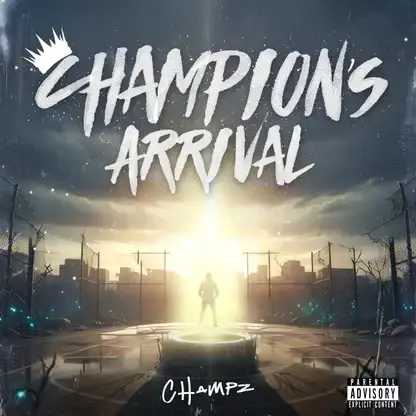
“Shout out to the OGs in the game, but it’s time to pass on the baton to Champz.”
Champz is fourteen. He is also Wizkid’s first son. Nothing about his entrance into music was ever going to be quiet, and this line arrives with the self-assurance of someone who has studied greatness closely. Someone who grew up watching it breathe, dress, make mistakes, and triumph. The entire EP, produced by Hosanna, sounded like Champz making a declaration while also claiming his inheritance. In the EP, the young Balogun doesn’t ask permission to exist in the lineage he comes from; he rather steps into it with the quiet conviction of a boy who knows that lion no dey actually born goat.
‘Champion’s Arrival’ is five tracks of confidence and clean production, filled with the kind of youthful boldness the industry rarely sees at this scale. The project rushed to number one on Apple Music Nigeria within hours. It charted across continents. Social media was a frenzy. Some people praised the skill, the delivery, and the ease. While some others called it what they believed it was, a masterclass in nepotism. When you listen to ‘Champion’s Arrival’, what strikes you first is not the polish (not that there’s a shortage of that), but the innocence of ambition. There is an eagerness here, the eagerness that can be found in children who have grown up backstage watching their parents transform into legends under stadium lights. Champz sings and raps like someone who has been absorbing a world he didn’t choose but is not learning to claim. Listening to him, you sense a boy stretching into a silhouette that already exists for him. He does not sound like his father – not quite. He sounds like someone attempting to rise from beneath the shadow without rejecting its shade. There is a familiarity in the cadence, but the intention feels new. A boy declaring he is here to be heard, even if the world first listens because of his last name.
The EP is littered with small, deliberate moments where you can hear a young artist trying to understand what it means to carry a legacy before they fully understand themselves. His lyrics wobble at times, but the audacity is there, shimmering beneath the boyishness. He knows that he has something to give. That the baton passed to him will not fall from his hands. Culture often treats nepotism and lineage as something not to be used, as though blood alone can script brilliance. But Champz’s entrance into music reminds us that inheritance is less about inevitability and more about courage. The courage to attempt, to sound unsure, to sound young, to grow in a space where everyone expects you to arrive fully formed. We are not witnessing the arrival of a prodigy; we are witnessing the beginning of a journey.
The Nigerian music industry is obsessed with origin stories. We love the dreamer from nothing who rises from the dust. We also love the ones who walk in with legacy behind them, even when we pretend we do not. Champz sits somewhere in the middle. What makes him interesting is that he is not running from the narrative. He is rewriting it. The conversation around nepotism will continue, and maybe it should. It forces the industry to ask who gets a fair chance and why. Still, something is compelling about someone who has every advantage and still puts in the work (we’ve seen that before). Someone who most people expect to fail loudly and chooses to rise instead. Champz seems eager to prove that talent can coexist with privilege. A famous surname sure can open the door for you, but it cannot keep you in the room. The EP shows a boy standing at the beginning of something huge, aware of the spotlight but not shrinking from it. If this is the baton he says he is ready to take, then the industry should keep its eyes open.



.png)

