.svg)

.jpg)
Let Me Introduce You to Davinhor and Her Alter Ego Karaba the Witch
Davinhor Makwala, better known to the world as Davinhor Pacman or Davinhor in short, is a French-Congolese MC; the hardest in her class, and at the highest of caliber. For long, she has completely been overshadowed by her male counterparts, often placed to the curb when speaking of female artists making moves in France right now due to her mingling with Rap music, a male-dominant genre where sexism persists. All took a sudden turn for the better; however, when Davinhor unveiled the breathtaking rollout to a much-anticipated project ‘Karaba Partie 2.’ This is part of a sequence to her 2024 sophomore album ‘Karaba Partie 1’ and continued narrative of the Karaba alter ego she has fostered.
Although there is much to uncover about the music itself and how both her album performing and cyphers are making rounds all over the internet. This article solely focuses on the message behind the music. You see, for much of her career, Davinhor has always used her field of expression as a means to combat patriarchy, uplift feminism and dismantle misogynistic norms in society. It goes without saying, her previous life in Kinshasa, the Democratic Republic of the Congo, where her family faced persecution during the war for her father’s political opposition, can be vastly credited to her spirit and unpapologetic approach towards life.
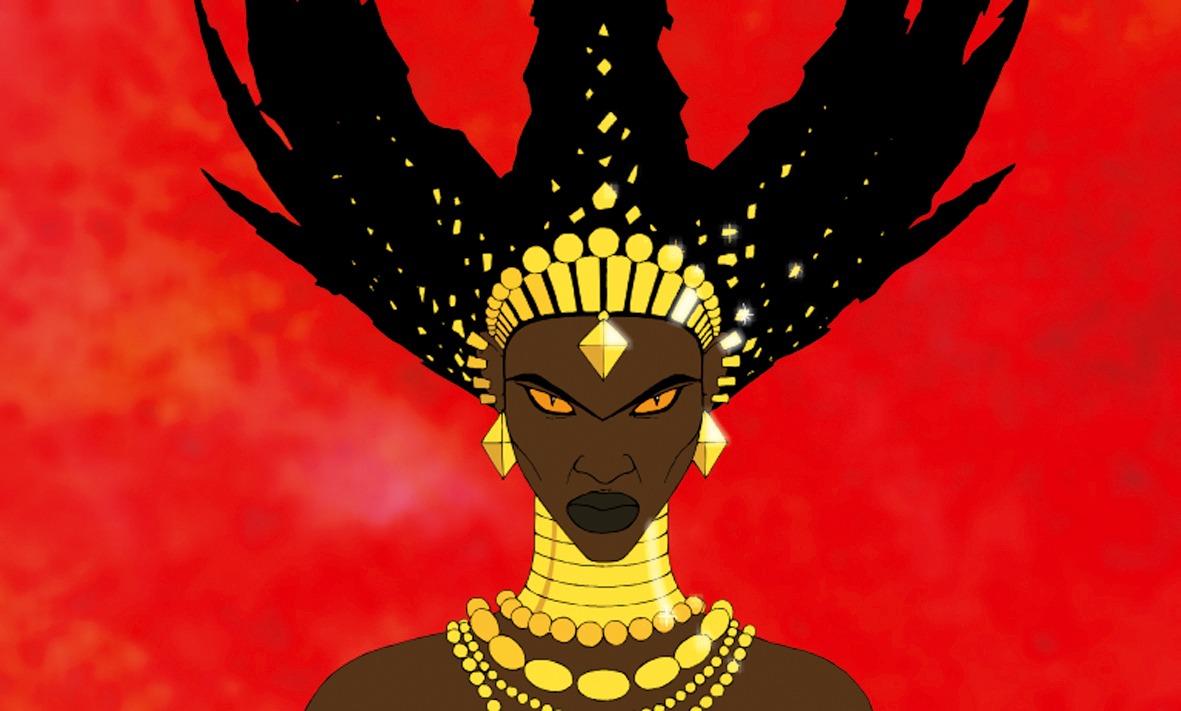
Taken from the 1998 French children movie ‘Kiriku and the Sorcioise’ directed by Michel Ocelot, Davinhor is able to bring la souffle de vie back into the infamous and highly-misunderstood witch character of Karaba. Parallely, Karaba in the movie is feared by all village people, with rumours swirling around her name that she captures and eats men. It only takes the youngest and bravest of the bunch Kiriku, who doesn’t feed into those lies, to face her mischievousness in person and ultimately free her from a kept secret. It is then as the audience, we must confront our misjudgment of her and realize that Karaba was tortured by a mob of men who pierced a poisoned thorn in her neck. This was the reason for her villain arc all along; she was hurt by men before she began projecting that hurt onto others.
In her rollout clip, Davinhor, dressed in a beautiful white gown and African head scarf, shares that there was a time people used to call her Karaba the witch. She explains it is due to her being perceived as arrogant, villainized, and just like the film portrays, people didn’t dare to uncover the truth. The reasoning behind her pain was never questioned and she wore the rumours like an armour. Unlike the hero Kiriku who saves the witch from her own demise, Davinhor goes on to elaborate that she had to liberate herself from the shackles of her past, and now as a mother, she will warn her daughter of the same dangers she overcame as a woman. This can all be boiled down to her powerful translated words and we quote; “Being a black woman is a combat for life.”
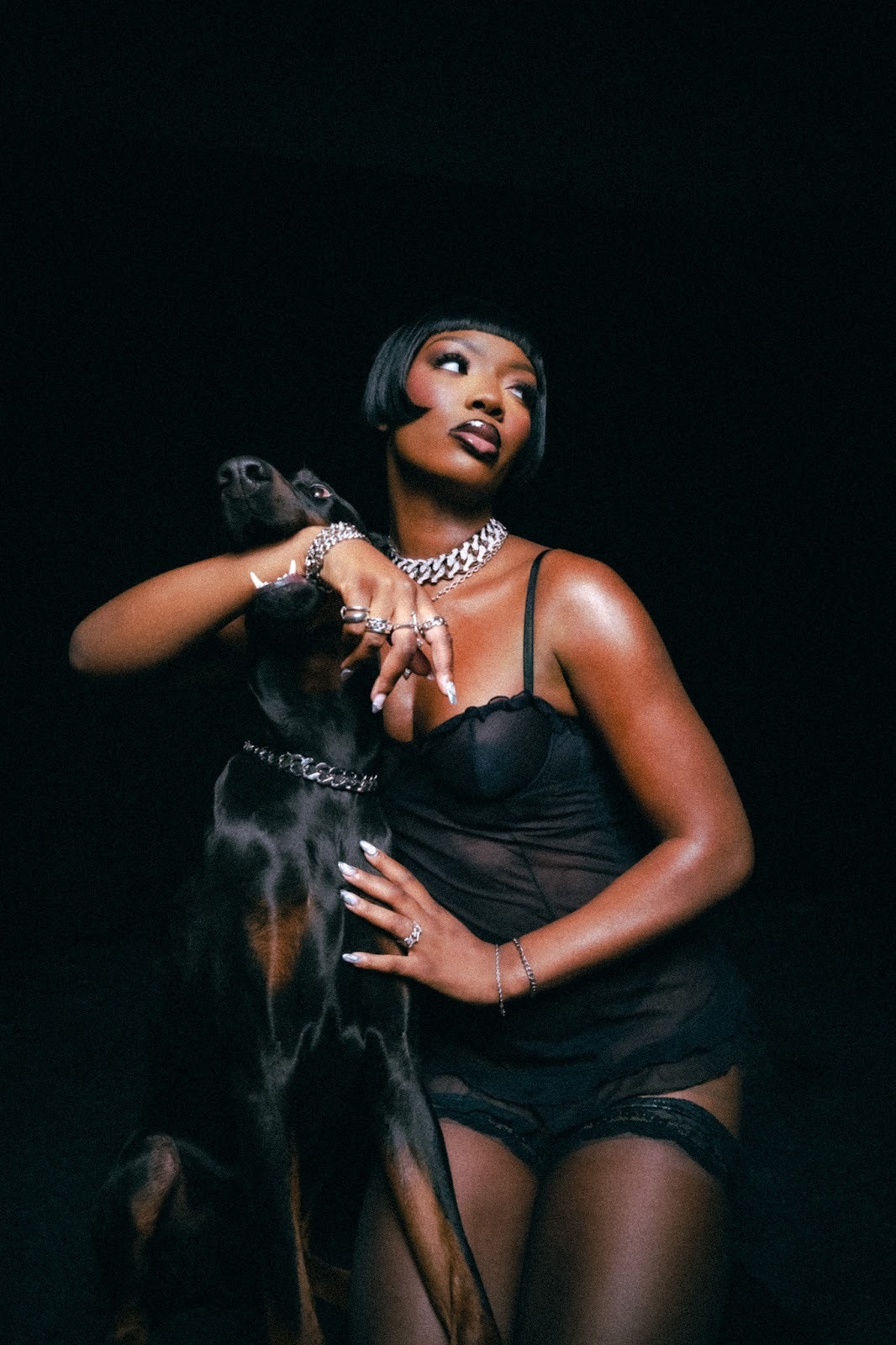
Black women facing scrutiny in the music industry is unfortunately nothing new in the space. From the Lijadu Sisters urging women autonomy in the 70s, only for it to be echoed by Tems decades later, who founded the Leading Vibe Initiative to challenge those same narratives against women in music, it is a vicious cycle that women of colour are forced to participate in. Davinhor is no stranger to this harsh reality, and perhaps under more scrutiny for being part of a French society who has made the norm to villainize black women without end.
When we state that Davinhor is the hardest French rapper right now, we meant it. She has all of the elements of a number one rapper; the personality, the bars, the storytelling… Then why isn’t she celebrated and praised to the same regard as male artists in the rap game? And this is where her character Karaba falls into place, not only to personify Kavinhor’s own villain arc and triumph, but also, exposing the industry for trying their best to diminish her light.
Just like the sun never fails to rise, Davinhor didn’t let it slow her down to the slightest. From her newly becoming a mother and the release of her album in February, the once-proclaimed-karaba-the-witch is resonating to the true power of womanhood at full display. Her rapping skills have only garnered more eyes to her music, circulating across the world wide web like lightning. Despite all odds against her, we are sure that Davinhor’s day will come and the world will have no choice but to recognize her reign as the hardest rapper on the mic in France right now.
Cover: Virginie Cherie



.png)

