.svg)

Pop girls do not simply release albums; they announce eras. An era comes with a visual language, a new posture, a shift in energy that tells the world who an artist is becoming.
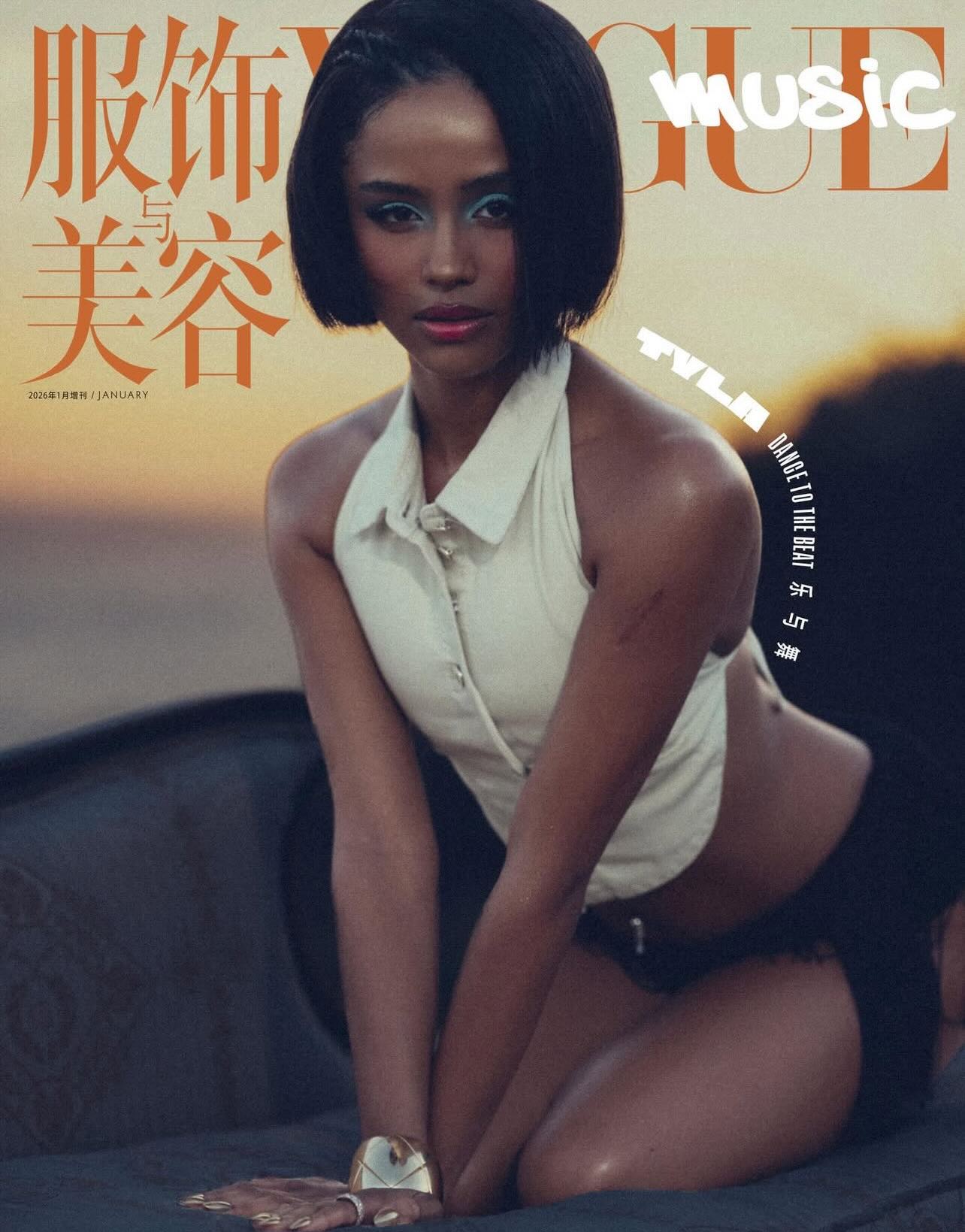
Tyla’s January 2026 Vogue China cover does exactly that. It does not scream reinvention, but it signals refinement. It’s a subtle recalibration of sound, image, and self as she prepares to usher in a new body of work.
Shot by the seaside in Malibu, California, the cover story situates Tyla in a liminal space: between land and water, innocence and intention, play and discipline. Water, a motif that first carried her into global consciousness, still flows through her visual world. But here, it is calmer, deeper, more deliberate. This is not the splash of emergence, it is an ode to her musical journey thus far.
Styled by Alvin Yu, Vogue China’s Fashion Director known for shaping Rihanna’s most iconic fashion chapters at Vogue, the cover direction leans heavily into the senses. Yu understands that Tyla is not an artist to be over-explained. Her appeal has always been physical, instinctive, bodily, rhythmic. In her own words, music does not need complexity. It is intuition. It is joy. It is indulgence. The styling mirrors this philosophy while quietly elevating it.
Tyla has described her voice as orange — sometimes neon orange — and her sound as dessert, sweet and indulgent. Yet the wardrobe tells a classic switch in direction story. Long silk satin white dresses, beach-towel constructions, floral chiffon, and a bright pink bikini form a palette that feels both sensual and serious. Gold jewellery punctuates the softness: bold, sculptural, unapologetic. The pieces do not overpower her; they frame her. This is a woman learning and shifting into calmer territories.
The sleek bob haircut further sharpens this message. Gone is excessive movement. In its place is clarity. Precision. A silhouette that allows her face, voice, and presence to do the talking. This is particularly striking in the editorial’s East-meets-West dialogue. In one frame, Tyla stands beside a motorcycle at dusk, dressed in a black bodysuit-style dress with a gold sculptural neckpiece; modern, cinematic, quietly dangerous. In another, she wears a bespoke white Chinese qipao adorned with red and purple multicolour Asian motifs, honouring tradition while asserting her place within it.
This is cultural exchange. It is alignment. Tyla’s global rise has never required her to abandon her roots, but it has asked her to translate them for other audiences. The Vogue China cover understands this translation instinctively. It positions her not as a guest in global pop culture, but as an active contributor shaping its future.
At the heart of this evolution is Tyla’s ongoing search for what she calls “music that belongs to me.” Her sound has always been stitched together: genres layered, rhythms borrowed and reimagined. As a teenager, she spent hours covering chart-topping songs, learning structure, testing range, absorbing influence. But it was the creation of Water that marked a turning point. That song did not imitate; it declared. It was the moment she recognised her own voice.
Now, with a new album confirmed, that voice is expanding rather than shifting entirely. South African rhythms remain foundational, offering a collective narrative rooted in celebration, movement, and communal joy. These are sonic references and they are emotional cues. The impulse to gather, dance, and lose oneself in rhythm is not a trend for Tyla; it is muscle memory.
Layered atop these rhythms is a more complex story: that of an ordinary girl navigating extraordinary visibility. Fame, for Tyla, is not the destination but the environment although dazzling, loud, disorientating. Her new work promises to explore what it means to find oneself not before the party begins, but in the middle of it.
This tension is what makes the Vogue China cover compelling. The styling may appear serious, but it does not contradict her sweetness. Joy can be intentional. Pleasure can be composed. A Joburg girl does not lose her identity by wearing silk instead of a bikini, she deepens it.
The short skirts, colourful swimwear, and tight crops that define Tyla’s core style are still present, still important. But they now exist alongside structure, heritage references, and editorial restraint. This is how pop eras mature. Not by abandoning what worked, but by understanding why it worked in the first place.
Tyla’s next era will likely be quieter in its confidence and louder in its impact. If Water introduced us to her instinct, this chapter promises mastery. Vogue China captured a moment of alignment between sound and sight, body and rhythm, girlhood and growth.
And if this is the visual prologue to her next album, then one thing is clear: Tyla is no longer just riding the wave. She is learning how to direct it.
Mbali Gene Sibeko @thegoodgirlgene
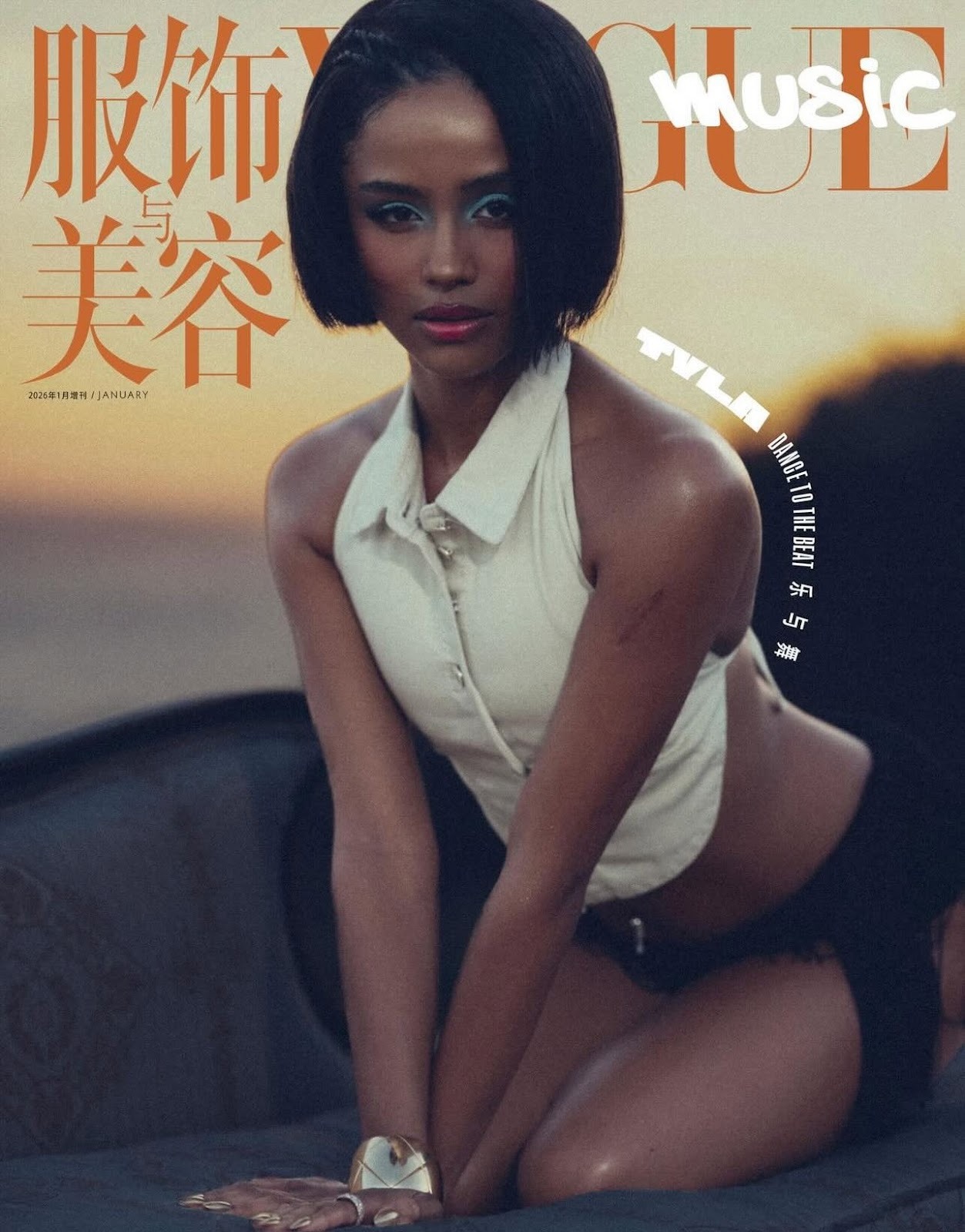
Image: “Tyla Vogue China Cover” cover shot by Kat Irlin supplied by Vogue China.


.png)

