.svg)


Close your eyes, and it’s 2005. The air in the club is thick, and the opening harmonies of Styl-Plus’s ‘Olufunmi’ glide through the speakers. For a moment, it wasn’t just about the voice of one man. It was about the synchronized magic of three distinct voices creating harmonies that capture true love. From the R&B smoothness of Styl-Plus to the infectious energy of P-Square, the early 2000s belonged to the collective.
But walk into a studio in Lagos today, and the room is built for one act. The "tribe" has been traded for the "titan". While Afrobeats conquers the world, it is doing so with solo superstars at the centre, which normally includes Wizkid, Rema, Tems, Burna Boy, and Davido. Boy bands are no longer just rare; they are functionally extinct. This is a structural weakening of the genre’s soul, not merely a shift in style.
To understand what we have lost, we need to start from the beginning. Long before the polished R&B of the 2000s, there was The Remedies. Formed in 1997, Eedris Abdulkareem, Tony Tetuila, and Tony Montana were among the first to "Nigerianize" Hip-Hop, taking American beats and layering them with Yoruba slang.
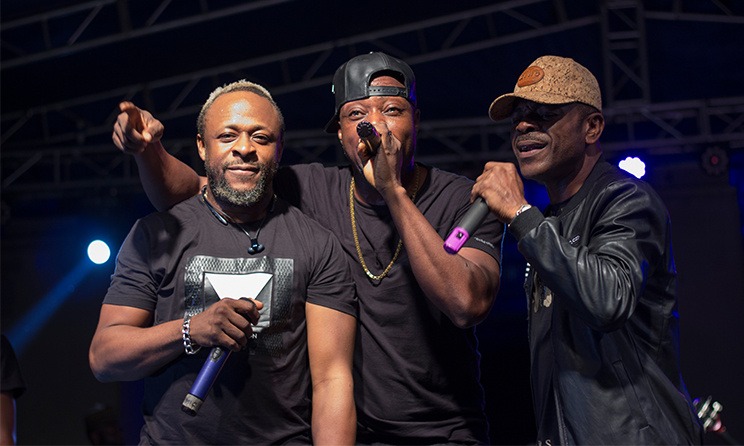
When their hit ‘Sakomo’ dropped, it wasn't just a song; it changed things. It proved that young Nigerians didn't have to sound like American rappers to be relevant. They were the engine of Kennis Music, the label that effectively built the modern industry. But their story also provided the first blueprint for the “Band Curse”. Their success was massive, yet their split was equally monumental and messy. The moment they went solo, the industry learned that three individual paychecks were more profitable for labels than one.
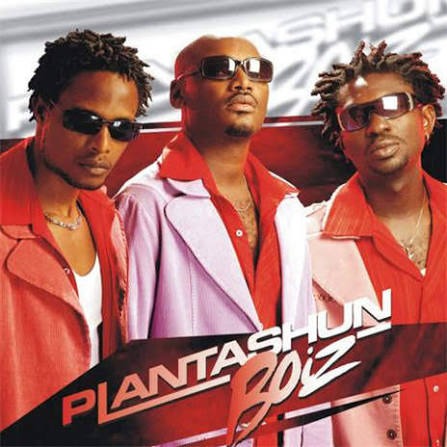
Emerging from Enugu were the Plantashun Boiz, made up of 2Face (now 2Baba), Blackface, and Faze. They didn't just sing; they lived together, forging a brotherhood that felt like a family. Their success was built on tracks like ‘Knock Me Off’, which proved that Nigerian boys could deliver international-standard vocals. According to Pulse Africa, their debut album ‘Body and Soul’ released in 2000, supposedly sold over 600,000 physical copies. Their dominance earned them numerous accolades just before their split. 2Face’s rise post-split became the dangerous precedent that haunted every group thereafter, proving a solo career could lead you to be a legend.

Another band was Styl-Plus; they brought elegance to the scene. Their debut album, ‘Expressions’ was a masterclass in vocal arrangement. Their emotional love songs, especially ‘Olufunmi’, made them one of the most recognizable voices in Nigerian R&B at the time. Their music was played at weddings, parties, and on radio stations across the country. Their impact was undeniable, sweeping the Channel O Music Video Awards and multiple award nominations at The Headies. Although they didn't break up with a bang, they faded into the background as the industry moved toward solo acts.

Another band from Enugu was Bracket, with ‘Yori Yori’ in 2009; they became the face of ‘Soft Afrobeats’. Their success was validated when they won Artistes of the Year at the 2012 Headies Award and two NET Awards nominations. Their success showed that sweetness and melody could win, but they were eventually pushed to the background. While they never had a messy breakup, they struggled as the industry changed.

P-Square was the only act that truly challenged solo dominance. Peter and Paul Okoye were a bloodline, turning music into a visual spectacle. They were the highest-paid act in Africa for a decade, winning a total of nine Headies and the MTV Africa Music Award (MAMA) for Group of the Year in 2008, 2009 and 2010. However, their public fallout was the final nail in the coffin. If even identical twins couldn't navigate the pressures of shared money and individual egos, the industry decided the collective model was simply too high-maintenance.
P-Square’s success showed that duos still had a place in Afrobeats. But it also marked one of the last moments where that band format felt central to the industry. Because after that, things began to change.
We can say one of the major reasons boy bands and duos struggle to last is creative disagreement. When more than one artist shares the same platform, they must constantly agree on important decisions. This includes the direction of their music and how they want their careers to grow. Over time, these decisions can lead to tension.
For example, problems within Plantashun Boiz eventually led to the group breaking apart. Each member later pursued a solo career. Something similar happened with P-Square. Even though they were extremely successful, disagreements between the brothers eventually led to their separation.
When these kinds of breakups happen, it reinforces the idea that working alone may be easier.
Money has also been a major factor in the decline of boy bands and duos. In a band or duo, income from concerts, endorsements, and music sales has to be shared between multiple members. As success grows, disagreements about money can become more common. In the early 2000s, physical CD sales and live bookings were the primary revenue streams. Today, the industry is fueled by Streaming Revenue, and the math simply doesn't favor boy bands. For example, on a solo track, the artist takes the entire "artist share" of a stream (roughly $0.003 to $0.005 per play). In a trio like Plantashun Boiz, that fraction of a cent is split three ways before it even reaches their personal bank accounts. This means a group has to work three times as hard to achieve the same individual "take-home" pay as a solo act.
Also, you might think this format works in K-POP, so why is it not thriving in Afrobeats? Groups like BTS or EXO are not accidents. They are built through structured systems, training, management, branding, and long-term planning.
Afrobeats doesn’t have that system.
It is more organic; although that freedom is part of its strength, it also makes it harder to sustain groups. K-pop builds groups from the ground up. Afrobeats lets artists build themselves.
The structure of the Afrobeats industry has also changed.
Today, the industry is built around the idea of a solo star. Artists are not just musicians anymore. They are brands. Artists like Wizkid, Burna Boy, and Rema have built global careers based on their individual identities. Their music, fashion, and personality all contribute to how they are marketed.
In boy bands or duos, attention has to be shared. This makes it harder for one person to fully dominate the spotlight. As Afrobeats expanded globally, the solo artist model became easier to promote.
Interestingly, while permanent boy bands and duos have become rare, collaboration is now more common than ever.
Instead of forming long-term partnerships, artists now work together on individual songs or even short joint runs that feel like temporary duos. We are also seeing more joint moments and creative pairings that go beyond just one song. Artists link up for multiple tracks, shared sounds, or even short project runs that feel like mini partnerships. Think of the synergy between Wizkid and Asake; creatively, this partnership works because it pairs two fully realized distinct voices. A group requires a "merged identity"; the voices must blend into a singular brand. But in ‘Real’, the power lies in the friction of two separate solo artists. They aren't trying to sound like one unit; they are two kings sharing an EP for ten minutes.
These collaborations give artists the best parts of a duo or group's creative exchange without the long-term pressure that usually comes with staying together.
In today’s Afrobeats, artists don’t need to form boy bands or duos anymore. They can simply recreate that experience when they want, and walk away when they’re done.
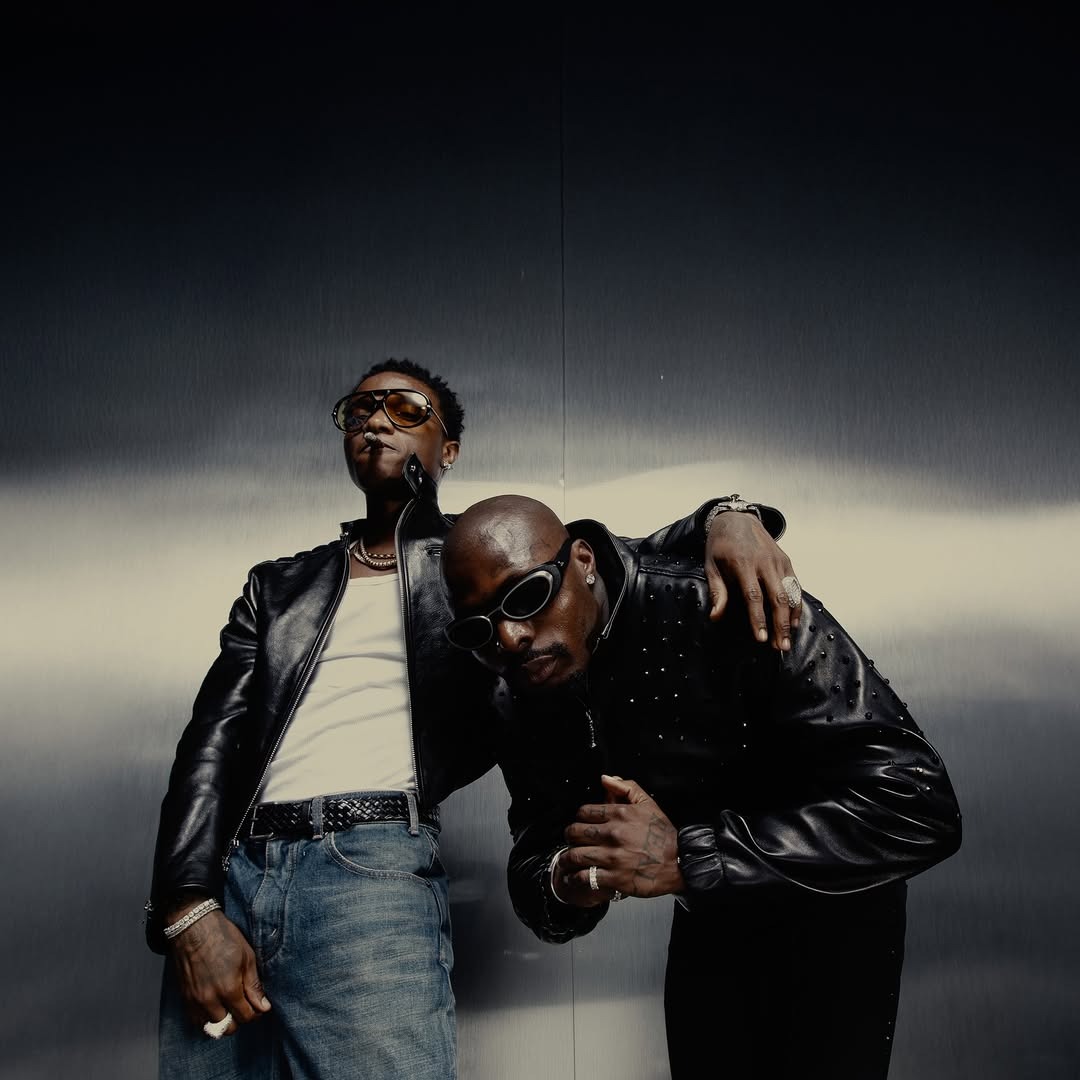
So, if you’re waiting for the next P-Square or Styl-Plus to walk through the door, don't hold your breath. Under the current regime of Afrobeats, the "group" as we know it is a dead model. It has been replaced by collaborations that offer the variety of a group without the commitment of a marriage.
For boy bands to actually return, the industry requires more than just "new talent"; it requires a structural change. We need labels to start investing in group development and not just individuals. Fans must also move away from main character worship, where they pick a favorite and pit them against the others. Until then, the system will keep producing solo stars.
What comes next depends on whether Afrobeats is willing to build a system that allows it to happen again.
Because the truth is simple, boy bands and duos didn’t stop working. The industry stopped working for them.
IG- @justcallmetobii



.png)

