“Artistes Must Veto Their Creative Process”: CEOJAY

Authored by

Speaking from Los Angeles at 6 a.m. local time, he said he had woken up unexpectedly in time for the call. Olajide Alabi, the film director and creative director known as CEOJAY, has been a longstanding advocate of “a percentage higher”, the very concept he was geeked to detail in our chat.  For Alabi, this simply means the artist should always have the final say in the creative direction of their projects. It’s important to him, so much that he applied it to Fireboy DML’s recent album, ZUKO!

CEOJAY isn’t actually just a creative director; he prefers to describe himself as a creator rather than tie his work to a single medium, moving between film, photography, fashion, music and interior design. 

He is also the founder of Panel Members, an invite-only collective for creatives who like to think out loud. His work includes directing the award-nominated video for Libianca’s People and working with Adekunle Gold. 

Still, the lore behind CEOJAY’s ascent into the world of art and multimedia is even more sizzling. 

A Life Turning Kitchen  

CEOJAY's route into film and creative direction began in a restaurant kitchen. Interested in entertainment since high school, he started a blog before moving to the United States, where he worked as a dishwasher and chef. He also photographed the restaurant's food and events, finding ways to practise his creativity alongside his day job. 

During the pandemic, he connected with a photographer friend known as 69views, who had recently left Lagos and showed him, he says, how much further he could take his creativity.  He began making self-portraits and filming himself, then started shooting for upcoming artists and brands in New York while continuing to develop his own ideas. One of those projects, a visual set to a song by Adekunle Gold, eventually reached the singer. They began working together soon afterwards, a collaboration CEOJAY describes as his gateway into the industry.
Credit: ZUKO! Cover

‍Method Man

CEOJAY’s method with an artist starts away from the work. He wants to know what makes them laugh, where they like to eat, and what they do for fun before he asks about the music. 

He then goes to the studio with his camera, which he says keeps him from looking as if he is hanging around, and watches them make songs to find out what inspired a lyric.  Ideas come out of those sessions and he pitches them in conversation, sometimes including lyrics. “It’s like meeting a friend for the first time,” he said. 

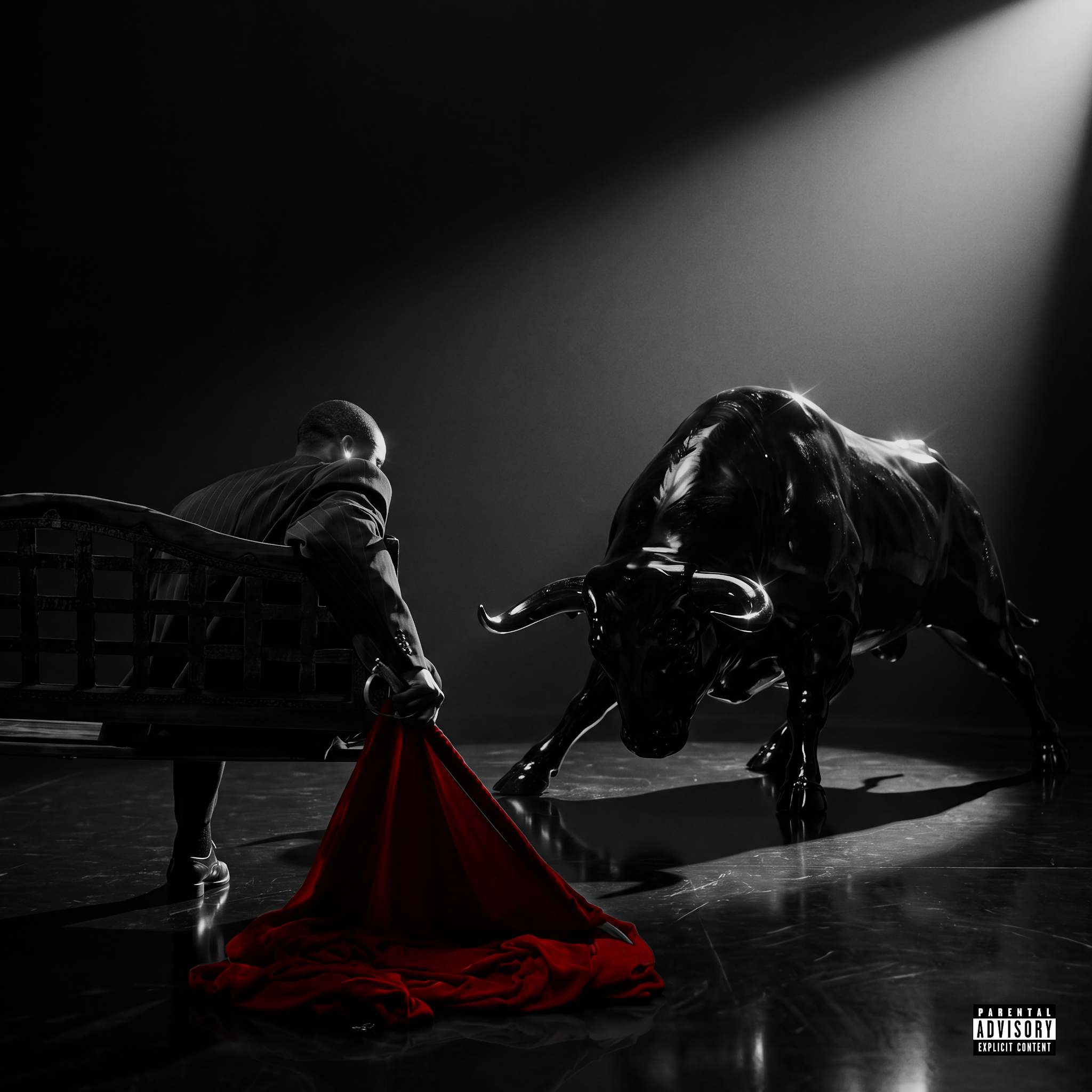
For instance, he continues, the image at the centre of ZUKO! came to him away from his desk. He and Fireboy had agreed early that the cover would “come to us,” and Olajide, who prefers taking walks to sitting in a working environment, found it during a FaceTime call with a friend who was showing him her art book. 

A painting of a man and a bull appeared on the third or fourth page. He asked her to send it, then called Fireboy, who agreed. The album’s title comes from the name rival fans use for the singer, and the painting gave Olajide a way to answer them: a man who sees the charging bull and stays seated. “I see my fear, but I do not care,” he said, describing a person who is scared and decides not to show it. 

He added that he once dreamed of a charging bull, moved a small distance, and the bull missed him, which he took to mean that fear is sometimes an illusion.

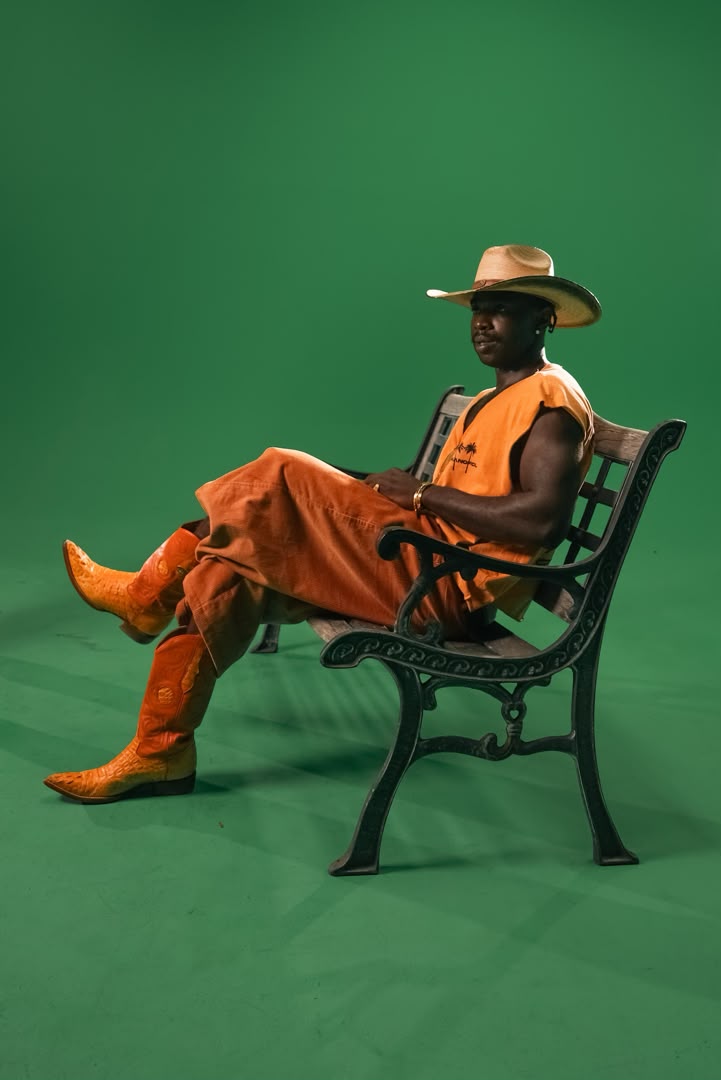
On the day the cover photograph was due to be shot, Asake posted an image of himself holding a red muleta, and Olajide’s first reaction was that the idea was ruined. He kept it on the reasoning that the two images meant different things. He shot Fireboy against a green screen so the surrounding world could be built afterwards, then made the bull look like shining ceramic rather than a living animal so that it would read as art. Fireboy called during the process with doubts about the cover, and Olajide told him that viewers would have to look at it three times to work out what they were seeing.

Fireboy gave the brief in April: the project should be gritty and angry and unlike anything he had released. Olajide studied the poses and styling from earlier eras so that the new ones would differ, and told the singer to treat the era as a role. He used Jackie Chan as the example, in a suit in one film and baggy jeans in another because the character changes, and said an artist who needs a new face has to cut their hair or grow a beard. The visual rule was black and white from beginning to end. Creative direction, in his words, is “just idea bubbles,” and the question is whether the artist can embody them. An artist who keeps bringing the old self into a new idea will find, he said, that “it’s not gonna work.”

The Mechanics of Creativity: Direction and Rollout 

Creative direction and rollout, he argues, are two different jobs, and in his view the industry tends to do only the first. For many projects it ends with an album cover and the images sent to streaming platforms, after which a theme is announced, then forgotten as releases drop at random. 

CEOJAY wants continuity from the announcement to the final release: if a cover is red, the posts that follow should not turn blue, and if someone sneezes in one angle of a music video, they should sneeze in the next. Some of the Fireboy rollout was shot in London while he stayed in California, so the team there had to follow the established direction without compromise. He treats the result as evidence that a story can hold across locations and time, and calls it “a marathon” for audiences who do not understand it at first.

His own exhibition, Ibadan Raised, NYC Made, opened on September 11, 2025, and he says working from his own idea changes the process. He does not second-guess an idea and goes straight to it, on the reasoning that the world has existed for billions of years and he will fade like everything else. With an artist he has to pitch, wait for approvals, deal with budgets, and sometimes hear from another team that an idea does not make sense. 

The title for the exhibition came to him while his father was ill with cancer and he was going through old photographs: a ball in the background, the backyard of the family house in Ibadan, the spot where the generator used to stand. His father died in March, and Olajide says he is glad he was able to tell him about the idea, let him see the result, and see his father’s pride.

His ambition is sized to what he calls a skyscraper, a position beyond carrying a camera or making decks. He has organised his work into three pillars of fashion, music, and production, with a company for each: Panel Members for fashion and culture, a production company for music videos and short films, and Caban Studios for music rollouts. 

The same curiosity extends to his hands. While speaking, he was trying to make lamps, though he does not know how to paint or do certain other things, because he prefers to learn by making. He sees himself eventually signing and managing an artist and possibly releasing an album of his own.

Cover Credit: CEOJAY
“Artistes Must Veto Their Creative Process”: CEOJAY

Authored by
This is some text inside of a div block.

Speaking from Los Angeles at 6 a.m. local time, he said he had woken up unexpectedly in time for the call. Olajide Alabi, the film director and creative director known as CEOJAY, has been a longstanding advocate of “a percentage higher”, the very concept he was geeked to detail in our chat.  For Alabi, this simply means the artist should always have the final say in the creative direction of their projects. It’s important to him, so much that he applied it to Fireboy DML’s recent album, ZUKO!

CEOJAY isn’t actually just a creative director; he prefers to describe himself as a creator rather than tie his work to a single medium, moving between film, photography, fashion, music and interior design. 

He is also the founder of Panel Members, an invite-only collective for creatives who like to think out loud. His work includes directing the award-nominated video for Libianca’s People and working with Adekunle Gold. 

Still, the lore behind CEOJAY’s ascent into the world of art and multimedia is even more sizzling. 

A Life Turning Kitchen  

CEOJAY's route into film and creative direction began in a restaurant kitchen. Interested in entertainment since high school, he started a blog before moving to the United States, where he worked as a dishwasher and chef. He also photographed the restaurant's food and events, finding ways to practise his creativity alongside his day job. 

During the pandemic, he connected with a photographer friend known as 69views, who had recently left Lagos and showed him, he says, how much further he could take his creativity.  He began making self-portraits and filming himself, then started shooting for upcoming artists and brands in New York while continuing to develop his own ideas. One of those projects, a visual set to a song by Adekunle Gold, eventually reached the singer. They began working together soon afterwards, a collaboration CEOJAY describes as his gateway into the industry.

Credit: ZUKO! Cover

‍Method Man

CEOJAY’s method with an artist starts away from the work. He wants to know what makes them laugh, where they like to eat, and what they do for fun before he asks about the music. 

He then goes to the studio with his camera, which he says keeps him from looking as if he is hanging around, and watches them make songs to find out what inspired a lyric.  Ideas come out of those sessions and he pitches them in conversation, sometimes including lyrics. “It’s like meeting a friend for the first time,” he said. 

For instance, he continues, the image at the centre of ZUKO! came to him away from his desk. He and Fireboy had agreed early that the cover would “come to us,” and Olajide, who prefers taking walks to sitting in a working environment, found it during a FaceTime call with a friend who was showing him her art book. 

A painting of a man and a bull appeared on the third or fourth page. He asked her to send it, then called Fireboy, who agreed. The album’s title comes from the name rival fans use for the singer, and the painting gave Olajide a way to answer them: a man who sees the charging bull and stays seated. “I see my fear, but I do not care,” he said, describing a person who is scared and decides not to show it. 

He added that he once dreamed of a charging bull, moved a small distance, and the bull missed him, which he took to mean that fear is sometimes an illusion.

On the day the cover photograph was due to be shot, Asake posted an image of himself holding a red muleta, and Olajide’s first reaction was that the idea was ruined. He kept it on the reasoning that the two images meant different things. He shot Fireboy against a green screen so the surrounding world could be built afterwards, then made the bull look like shining ceramic rather than a living animal so that it would read as art. Fireboy called during the process with doubts about the cover, and Olajide told him that viewers would have to look at it three times to work out what they were seeing.

Fireboy gave the brief in April: the project should be gritty and angry and unlike anything he had released. Olajide studied the poses and styling from earlier eras so that the new ones would differ, and told the singer to treat the era as a role. He used Jackie Chan as the example, in a suit in one film and baggy jeans in another because the character changes, and said an artist who needs a new face has to cut their hair or grow a beard. The visual rule was black and white from beginning to end. Creative direction, in his words, is “just idea bubbles,” and the question is whether the artist can embody them. An artist who keeps bringing the old self into a new idea will find, he said, that “it’s not gonna work.”

The Mechanics of Creativity: Direction and Rollout 

Creative direction and rollout, he argues, are two different jobs, and in his view the industry tends to do only the first. For many projects it ends with an album cover and the images sent to streaming platforms, after which a theme is announced, then forgotten as releases drop at random. 

CEOJAY wants continuity from the announcement to the final release: if a cover is red, the posts that follow should not turn blue, and if someone sneezes in one angle of a music video, they should sneeze in the next. Some of the Fireboy rollout was shot in London while he stayed in California, so the team there had to follow the established direction without compromise. He treats the result as evidence that a story can hold across locations and time, and calls it “a marathon” for audiences who do not understand it at first.

His own exhibition, Ibadan Raised, NYC Made, opened on September 11, 2025, and he says working from his own idea changes the process. He does not second-guess an idea and goes straight to it, on the reasoning that the world has existed for billions of years and he will fade like everything else. With an artist he has to pitch, wait for approvals, deal with budgets, and sometimes hear from another team that an idea does not make sense. 

The title for the exhibition came to him while his father was ill with cancer and he was going through old photographs: a ball in the background, the backyard of the family house in Ibadan, the spot where the generator used to stand. His father died in March, and Olajide says he is glad he was able to tell him about the idea, let him see the result, and see his father’s pride.

His ambition is sized to what he calls a skyscraper, a position beyond carrying a camera or making decks. He has organised his work into three pillars of fashion, music, and production, with a company for each: Panel Members for fashion and culture, a production company for music videos and short films, and Caban Studios for music rollouts. 

The same curiosity extends to his hands. While speaking, he was trying to make lamps, though he does not know how to paint or do certain other things, because he prefers to learn by making. He sees himself eventually signing and managing an artist and possibly releasing an album of his own.

Cover Credit: CEOJAY

This is some text inside of a div block.

“Artistes Must Veto Their Creative Process”: CEOJAY

Authored by

Speaking from Los Angeles at 6 a.m. local time, he said he had woken up unexpectedly in time for the call. Olajide Alabi, the film director and creative director known as CEOJAY, has been a longstanding advocate of “a percentage higher”, the very concept he was geeked to detail in our chat.  For Alabi, this simply means the artist should always have the final say in the creative direction of their projects. It’s important to him, so much that he applied it to Fireboy DML’s recent album, ZUKO!

CEOJAY isn’t actually just a creative director; he prefers to describe himself as a creator rather than tie his work to a single medium, moving between film, photography, fashion, music and interior design. 

He is also the founder of Panel Members, an invite-only collective for creatives who like to think out loud. His work includes directing the award-nominated video for Libianca’s People and working with Adekunle Gold. 

Still, the lore behind CEOJAY’s ascent into the world of art and multimedia is even more sizzling. 

A Life Turning Kitchen  

CEOJAY's route into film and creative direction began in a restaurant kitchen. Interested in entertainment since high school, he started a blog before moving to the United States, where he worked as a dishwasher and chef. He also photographed the restaurant's food and events, finding ways to practise his creativity alongside his day job. 

During the pandemic, he connected with a photographer friend known as 69views, who had recently left Lagos and showed him, he says, how much further he could take his creativity.  He began making self-portraits and filming himself, then started shooting for upcoming artists and brands in New York while continuing to develop his own ideas. One of those projects, a visual set to a song by Adekunle Gold, eventually reached the singer. They began working together soon afterwards, a collaboration CEOJAY describes as his gateway into the industry.

Credit: ZUKO! Cover

‍Method Man

CEOJAY’s method with an artist starts away from the work. He wants to know what makes them laugh, where they like to eat, and what they do for fun before he asks about the music. 

He then goes to the studio with his camera, which he says keeps him from looking as if he is hanging around, and watches them make songs to find out what inspired a lyric.  Ideas come out of those sessions and he pitches them in conversation, sometimes including lyrics. “It’s like meeting a friend for the first time,” he said. 

For instance, he continues, the image at the centre of ZUKO! came to him away from his desk. He and Fireboy had agreed early that the cover would “come to us,” and Olajide, who prefers taking walks to sitting in a working environment, found it during a FaceTime call with a friend who was showing him her art book. 

A painting of a man and a bull appeared on the third or fourth page. He asked her to send it, then called Fireboy, who agreed. The album’s title comes from the name rival fans use for the singer, and the painting gave Olajide a way to answer them: a man who sees the charging bull and stays seated. “I see my fear, but I do not care,” he said, describing a person who is scared and decides not to show it. 

He added that he once dreamed of a charging bull, moved a small distance, and the bull missed him, which he took to mean that fear is sometimes an illusion.

On the day the cover photograph was due to be shot, Asake posted an image of himself holding a red muleta, and Olajide’s first reaction was that the idea was ruined. He kept it on the reasoning that the two images meant different things. He shot Fireboy against a green screen so the surrounding world could be built afterwards, then made the bull look like shining ceramic rather than a living animal so that it would read as art. Fireboy called during the process with doubts about the cover, and Olajide told him that viewers would have to look at it three times to work out what they were seeing.

Fireboy gave the brief in April: the project should be gritty and angry and unlike anything he had released. Olajide studied the poses and styling from earlier eras so that the new ones would differ, and told the singer to treat the era as a role. He used Jackie Chan as the example, in a suit in one film and baggy jeans in another because the character changes, and said an artist who needs a new face has to cut their hair or grow a beard. The visual rule was black and white from beginning to end. Creative direction, in his words, is “just idea bubbles,” and the question is whether the artist can embody them. An artist who keeps bringing the old self into a new idea will find, he said, that “it’s not gonna work.”

The Mechanics of Creativity: Direction and Rollout 

Creative direction and rollout, he argues, are two different jobs, and in his view the industry tends to do only the first. For many projects it ends with an album cover and the images sent to streaming platforms, after which a theme is announced, then forgotten as releases drop at random. 

CEOJAY wants continuity from the announcement to the final release: if a cover is red, the posts that follow should not turn blue, and if someone sneezes in one angle of a music video, they should sneeze in the next. Some of the Fireboy rollout was shot in London while he stayed in California, so the team there had to follow the established direction without compromise. He treats the result as evidence that a story can hold across locations and time, and calls it “a marathon” for audiences who do not understand it at first.

His own exhibition, Ibadan Raised, NYC Made, opened on September 11, 2025, and he says working from his own idea changes the process. He does not second-guess an idea and goes straight to it, on the reasoning that the world has existed for billions of years and he will fade like everything else. With an artist he has to pitch, wait for approvals, deal with budgets, and sometimes hear from another team that an idea does not make sense. 

The title for the exhibition came to him while his father was ill with cancer and he was going through old photographs: a ball in the background, the backyard of the family house in Ibadan, the spot where the generator used to stand. His father died in March, and Olajide says he is glad he was able to tell him about the idea, let him see the result, and see his father’s pride.

His ambition is sized to what he calls a skyscraper, a position beyond carrying a camera or making decks. He has organised his work into three pillars of fashion, music, and production, with a company for each: Panel Members for fashion and culture, a production company for music videos and short films, and Caban Studios for music rollouts. 

The same curiosity extends to his hands. While speaking, he was trying to make lamps, though he does not know how to paint or do certain other things, because he prefers to learn by making. He sees himself eventually signing and managing an artist and possibly releasing an album of his own.

Cover Credit: CEOJAY
Other Stories
London
London
Lagos
London
Newyork
London
Shop
Join the community.
You are now subscribed to receive updates.
Oops! Something went wrong while submitting the form.
Subscribe