Bad Bunny’s Subtle Message of Resistance

Authored by

The first half of the Super Bowl game ground to a screeching halt and scores of workers appeared on the capacious pitch, working with dizzying speed to transform Levi's Stadium, Santa Clara to a set befitting Bad Bunny, this year’s Super Bowl Half Time Show headliner, and who by some metrics is the biggest musician in the world. Nervous excitement cascaded through the stadium and you could spot members of the crowd making light conversation and holding their smartphones up in anticipation of what would follow. The Seattle Seahawks’ defense had smothered the New England Patriots, leaving a staggering nine-point deficit but the question thrumming within everyone’s mind was: Would Bad Bunny, whose selection as this year’s halftime headliner had polarized America, offer a splashy critique of America and the Trump administration’s hawkish stance on immigration, which has disproportionately affected Latin Americans?
It was Bad Bunny’s first performance in the US in over a year. Last year, he skipped America during his world tour, citing concerns that ICE may target some of his fans. Instead, he ran a residency in his native Puerto Rico for three months, attracting a flush of tourist revenue to the Caribbean island and once again eschewing US centrism at a time when Trump has made no small show of asserting US hegemony over the Western Hemisphere, particularly in the Americas. Bad Bunny sings almost entirely in Spanish and its derivative dialects and has been openly critical of ICE. As such, many on the American right bitterly resisted his appointment to headline the Super Bowl, viewed as one of the few holdouts of a monoculture in a period when America, and much of the world, is riven by partisan politics and the atomization of culture precipitated by social media. Trump claimed to have never heard of him. “I don't know who he is, I don't know why they're doing it. It's crazy. I think it's absolutely ridiculous.” The manosphere influencer Jake Paul called him “a fake American citizen,” and Turning Point USA, founded by the late Conservative activist Charlie Kirk, organized an alternative Super Bowl halftime show in protest. 
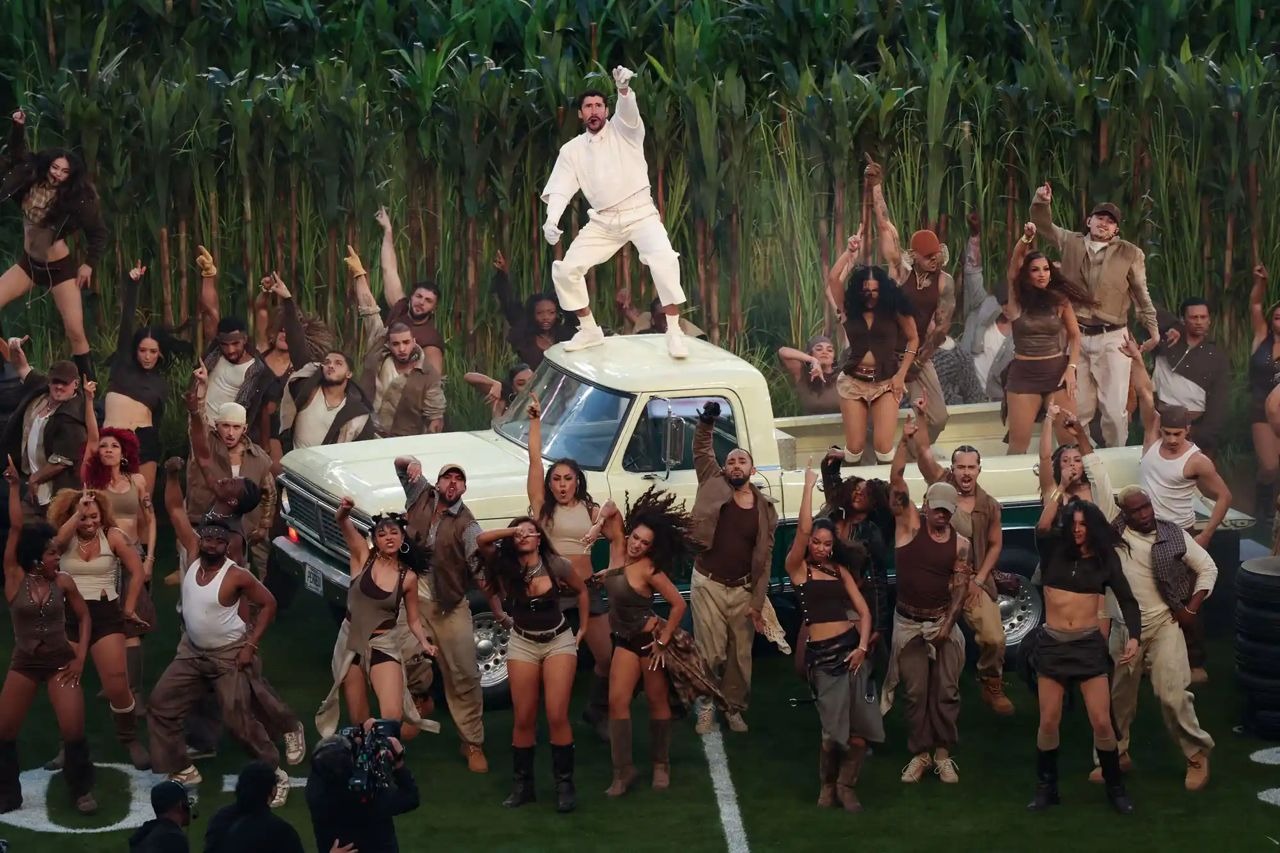
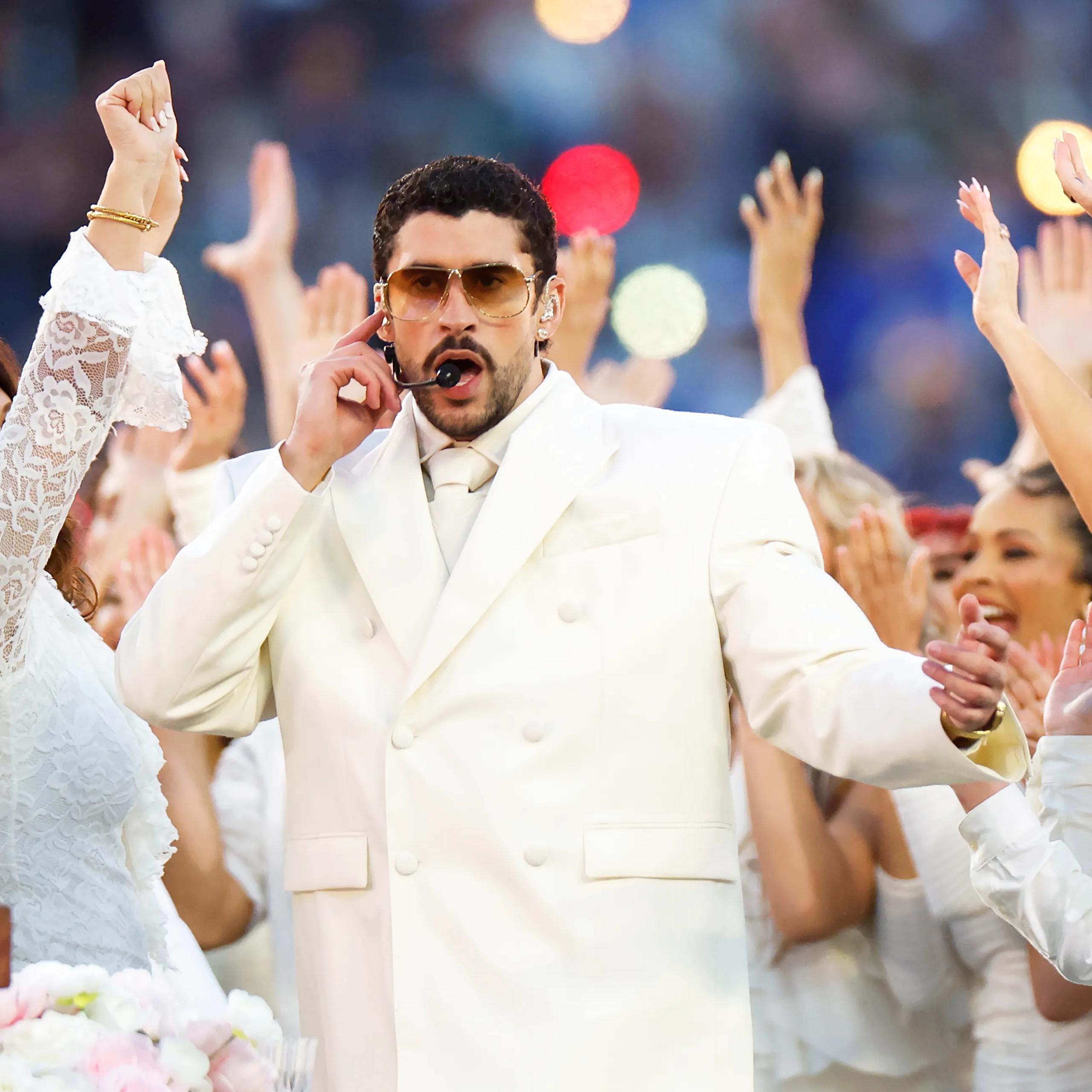
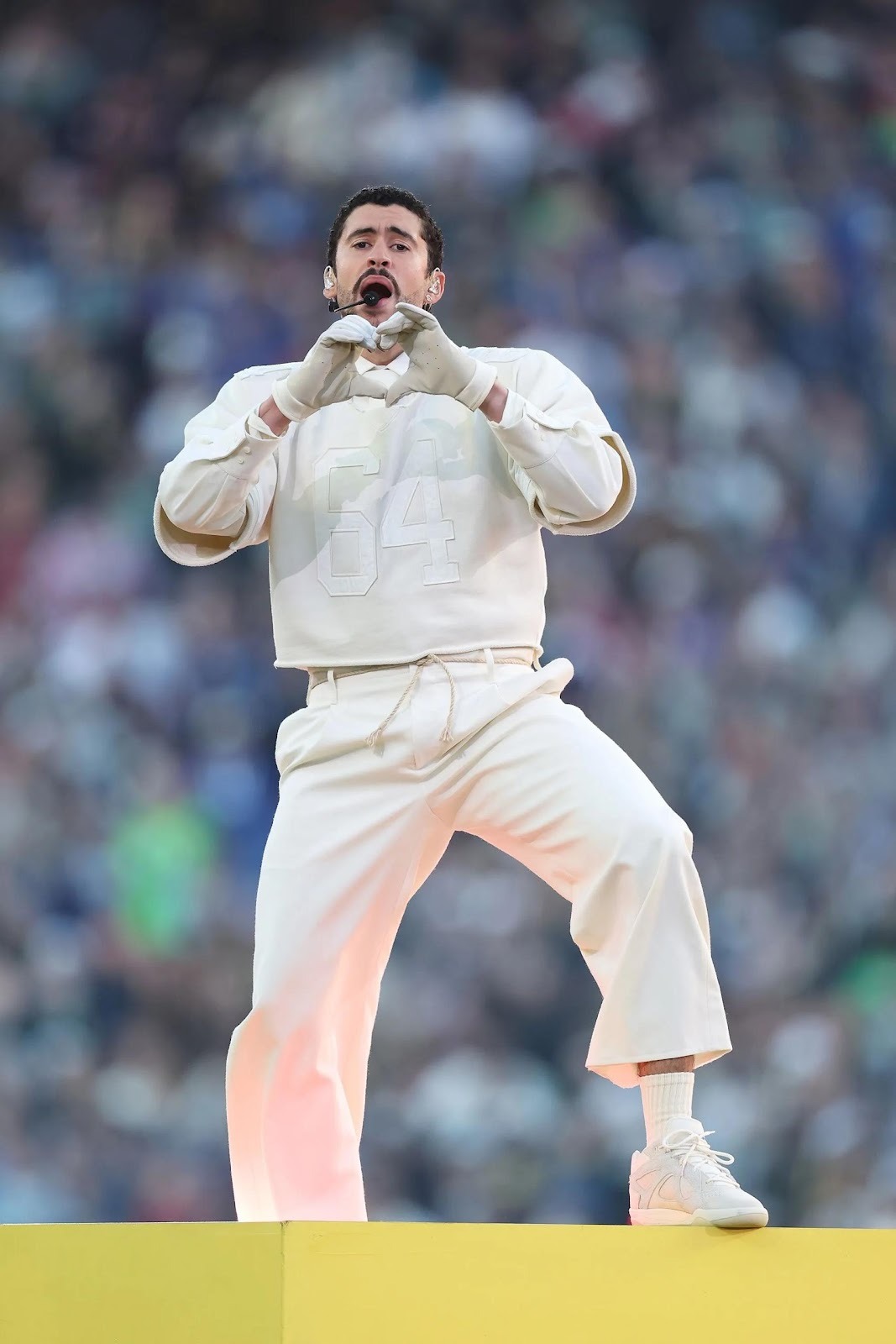
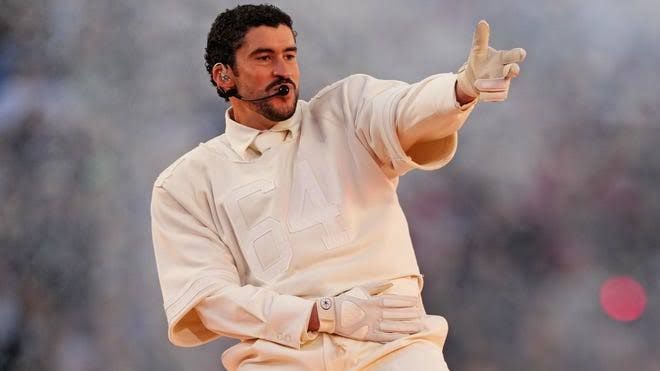
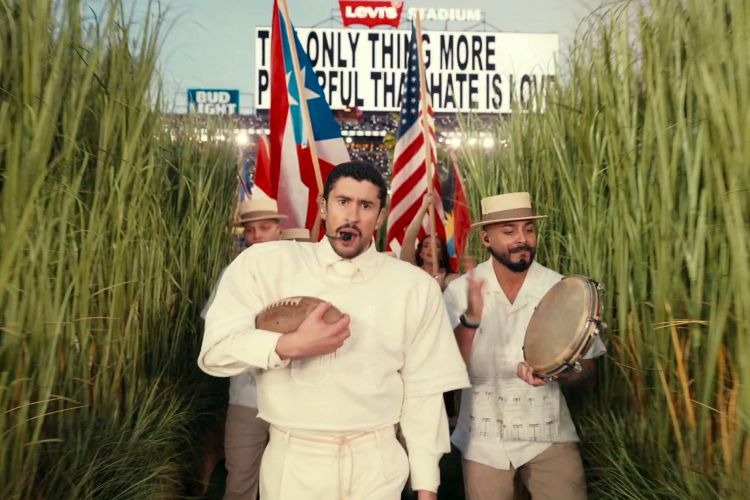
During Bad Bunny's Album of the Year acceptance speech at the Grammys, roughly two weeks ago, he trotted out an affecting message of love. “The only thing that's more powerful than hate is love,” he said. Albeit not without a dash of political commentary: “Before I say thanks to God, I’m going to say ICE out.” His 13-minute Super Bowl performance however circumvented explicit criticism of the US, he focused on delivering what can only be described as a celebration of Latino heritage packed with subtle political allusions and symbolism. Wearing a boxy white shirt and matching white pants, he emerged from a sugarcane farm—dappled with exultant farm workers wearing pavas, the classic straw hat worn by Puerto Rican farmers—performing his hit song Titi Me Pregundo. This scene recalled the thorny history of the Caribbean Islands and sugarcane plantations. Starting in the 17th century, colonial powers forced indigenous people, slaves, and indentured laborers to toil on these plantations which supplied up to 90 percent of the sugar consumed in Europe and America. 
Later in the show, Bad Bunny and the jibaros (farmers) from earlier climbed electric poles hoisting exploding power lines, gesturing at Puerto Rico’s ongoing electricity crisis. All these unfolded against the performance of El Apagón, a protest song speaking to the island’s infrastructural failures in the aftermath of Hurricane Maria, as well as the island’s history of government corruption and the roving wave of gentrification rapidly reshaping socio-political dynamics in Puerto Rico. The peak political moment of the performance arrived shortly. With the imperious grooves of El Apagón still rocking the stadium, Bad Bunny held up a red, white, and light blue flag: the flag associated with the Puerto Rican independence movement. Until 1952, displaying this flag publicly in Puerto Rico, still a US colony, was considered a criminal offense. 
Following this rare moment of explicit political symbology, the show once again dialed back to its measured register as it approached a close. Bad Bunny brought what had been one of the most memorable Super Bowl performances to a resounding close with Café Con Ron, during which he delivered a subtly radical statement: “God bless America.” Initially reading as a platitude or thinly veiled attempt to compensate for having waved the Puerto Rican independence flag, he proceeded to elaborate on his definition of America by listing every Latin American country, roughly from south to north, starting from Mexico, and ending with Canada, the USA, and Puerto Rico. 
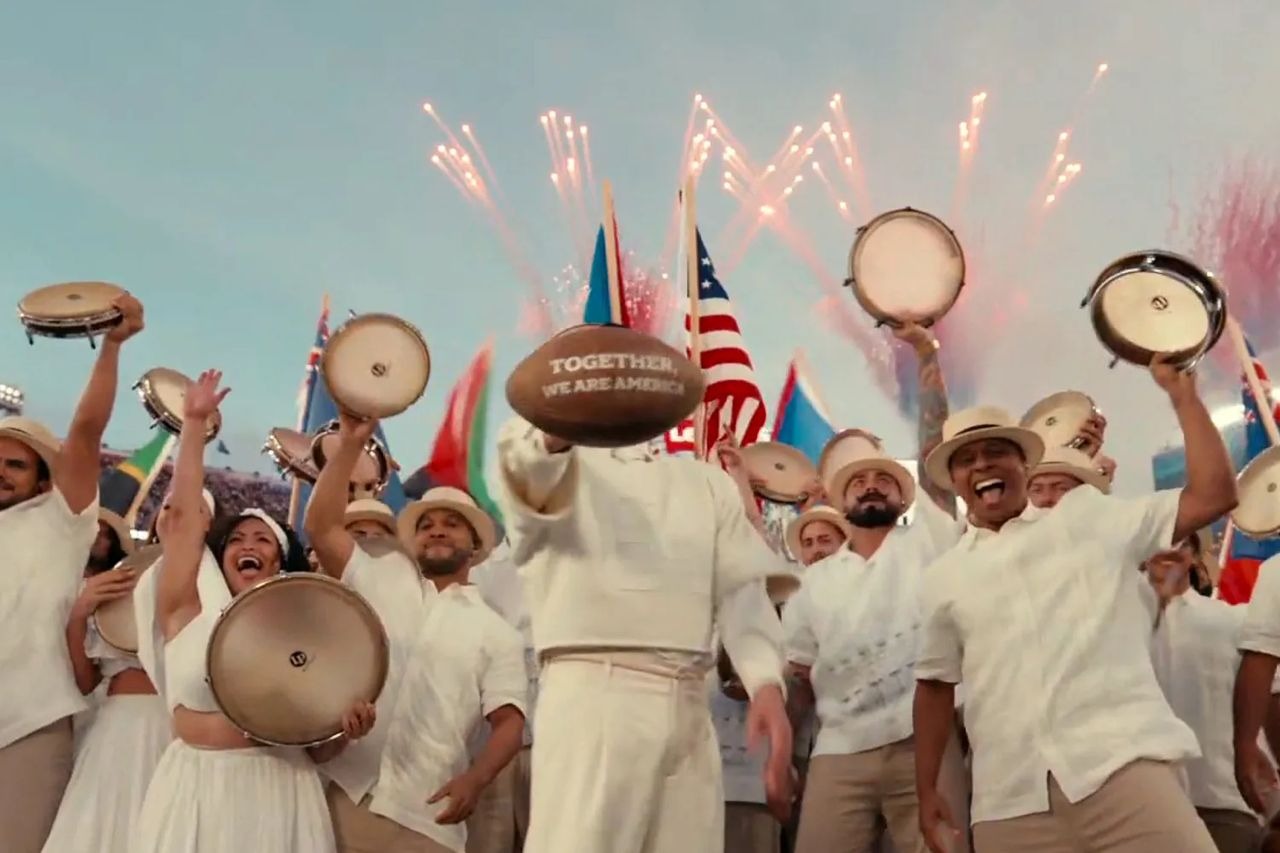
Since the performance, some journalists and commentators seem to have heaved sighs of relief at the show’s putative dearth of political statements such as People Magazine’s Daniela Avila and Meredith Kile who described the show as a “fun-filled dance party.” But anyone who truly watched the show with discernment knows how simplistic this assessment is. We need only to look at the show’s concluding moments to see without varnish Bad Bunny’s subtle message of resistance. His final act was holding up to the camera a ball inscribed with the message “Together we are America.” As he sauntered off the stage, the giant screen behind him reprised a portion of his Grammys speech: “The only thing stronger than hate is love.” In an era when strongman figures are increasingly dispensing with basic human rights, treating the rule of law and the constitution as suggestions as opposed to binding rules, and spreading a message of division and hate, perhaps the most radical statement one can make is calling for unity and love. 
Bad Bunny’s Subtle Message of Resistance

Authored by
This is some text inside of a div block.

The first half of the Super Bowl game ground to a screeching halt and scores of workers appeared on the capacious pitch, working with dizzying speed to transform Levi's Stadium, Santa Clara to a set befitting Bad Bunny, this year’s Super Bowl Half Time Show headliner, and who by some metrics is the biggest musician in the world. Nervous excitement cascaded through the stadium and you could spot members of the crowd making light conversation and holding their smartphones up in anticipation of what would follow. The Seattle Seahawks’ defense had smothered the New England Patriots, leaving a staggering nine-point deficit but the question thrumming within everyone’s mind was: Would Bad Bunny, whose selection as this year’s halftime headliner had polarized America, offer a splashy critique of America and the Trump administration’s hawkish stance on immigration, which has disproportionately affected Latin Americans?

It was Bad Bunny’s first performance in the US in over a year. Last year, he skipped America during his world tour, citing concerns that ICE may target some of his fans. Instead, he ran a residency in his native Puerto Rico for three months, attracting a flush of tourist revenue to the Caribbean island and once again eschewing US centrism at a time when Trump has made no small show of asserting US hegemony over the Western Hemisphere, particularly in the Americas. Bad Bunny sings almost entirely in Spanish and its derivative dialects and has been openly critical of ICE. As such, many on the American right bitterly resisted his appointment to headline the Super Bowl, viewed as one of the few holdouts of a monoculture in a period when America, and much of the world, is riven by partisan politics and the atomization of culture precipitated by social media. Trump claimed to have never heard of him. “I don't know who he is, I don't know why they're doing it. It's crazy. I think it's absolutely ridiculous.” The manosphere influencer Jake Paul called him “a fake American citizen,” and Turning Point USA, founded by the late Conservative activist Charlie Kirk, organized an alternative Super Bowl halftime show in protest. 

During Bad Bunny's Album of the Year acceptance speech at the Grammys, roughly two weeks ago, he trotted out an affecting message of love. “The only thing that's more powerful than hate is love,” he said. Albeit not without a dash of political commentary: “Before I say thanks to God, I’m going to say ICE out.” His 13-minute Super Bowl performance however circumvented explicit criticism of the US, he focused on delivering what can only be described as a celebration of Latino heritage packed with subtle political allusions and symbolism. Wearing a boxy white shirt and matching white pants, he emerged from a sugarcane farm—dappled with exultant farm workers wearing pavas, the classic straw hat worn by Puerto Rican farmers—performing his hit song Titi Me Pregundo. This scene recalled the thorny history of the Caribbean Islands and sugarcane plantations. Starting in the 17th century, colonial powers forced indigenous people, slaves, and indentured laborers to toil on these plantations which supplied up to 90 percent of the sugar consumed in Europe and America. 
Later in the show, Bad Bunny and the jibaros (farmers) from earlier climbed electric poles hoisting exploding power lines, gesturing at Puerto Rico’s ongoing electricity crisis. All these unfolded against the performance of El Apagón, a protest song speaking to the island’s infrastructural failures in the aftermath of Hurricane Maria, as well as the island’s history of government corruption and the roving wave of gentrification rapidly reshaping socio-political dynamics in Puerto Rico. The peak political moment of the performance arrived shortly. With the imperious grooves of El Apagón still rocking the stadium, Bad Bunny held up a red, white, and light blue flag: the flag associated with the Puerto Rican independence movement. Until 1952, displaying this flag publicly in Puerto Rico, still a US colony, was considered a criminal offense. 

Following this rare moment of explicit political symbology, the show once again dialed back to its measured register as it approached a close. Bad Bunny brought what had been one of the most memorable Super Bowl performances to a resounding close with Café Con Ron, during which he delivered a subtly radical statement: “God bless America.” Initially reading as a platitude or thinly veiled attempt to compensate for having waved the Puerto Rican independence flag, he proceeded to elaborate on his definition of America by listing every Latin American country, roughly from south to north, starting from Mexico, and ending with Canada, the USA, and Puerto Rico. 

Since the performance, some journalists and commentators seem to have heaved sighs of relief at the show’s putative dearth of political statements such as People Magazine’s Daniela Avila and Meredith Kile who described the show as a “fun-filled dance party.” But anyone who truly watched the show with discernment knows how simplistic this assessment is. We need only to look at the show’s concluding moments to see without varnish Bad Bunny’s subtle message of resistance. His final act was holding up to the camera a ball inscribed with the message “Together we are America.” As he sauntered off the stage, the giant screen behind him reprised a portion of his Grammys speech: “The only thing stronger than hate is love.” In an era when strongman figures are increasingly dispensing with basic human rights, treating the rule of law and the constitution as suggestions as opposed to binding rules, and spreading a message of division and hate, perhaps the most radical statement one can make is calling for unity and love. 
This is some text inside of a div block.

Bad Bunny’s Subtle Message of Resistance

Authored by

The first half of the Super Bowl game ground to a screeching halt and scores of workers appeared on the capacious pitch, working with dizzying speed to transform Levi's Stadium, Santa Clara to a set befitting Bad Bunny, this year’s Super Bowl Half Time Show headliner, and who by some metrics is the biggest musician in the world. Nervous excitement cascaded through the stadium and you could spot members of the crowd making light conversation and holding their smartphones up in anticipation of what would follow. The Seattle Seahawks’ defense had smothered the New England Patriots, leaving a staggering nine-point deficit but the question thrumming within everyone’s mind was: Would Bad Bunny, whose selection as this year’s halftime headliner had polarized America, offer a splashy critique of America and the Trump administration’s hawkish stance on immigration, which has disproportionately affected Latin Americans?

It was Bad Bunny’s first performance in the US in over a year. Last year, he skipped America during his world tour, citing concerns that ICE may target some of his fans. Instead, he ran a residency in his native Puerto Rico for three months, attracting a flush of tourist revenue to the Caribbean island and once again eschewing US centrism at a time when Trump has made no small show of asserting US hegemony over the Western Hemisphere, particularly in the Americas. Bad Bunny sings almost entirely in Spanish and its derivative dialects and has been openly critical of ICE. As such, many on the American right bitterly resisted his appointment to headline the Super Bowl, viewed as one of the few holdouts of a monoculture in a period when America, and much of the world, is riven by partisan politics and the atomization of culture precipitated by social media. Trump claimed to have never heard of him. “I don't know who he is, I don't know why they're doing it. It's crazy. I think it's absolutely ridiculous.” The manosphere influencer Jake Paul called him “a fake American citizen,” and Turning Point USA, founded by the late Conservative activist Charlie Kirk, organized an alternative Super Bowl halftime show in protest. 

During Bad Bunny's Album of the Year acceptance speech at the Grammys, roughly two weeks ago, he trotted out an affecting message of love. “The only thing that's more powerful than hate is love,” he said. Albeit not without a dash of political commentary: “Before I say thanks to God, I’m going to say ICE out.” His 13-minute Super Bowl performance however circumvented explicit criticism of the US, he focused on delivering what can only be described as a celebration of Latino heritage packed with subtle political allusions and symbolism. Wearing a boxy white shirt and matching white pants, he emerged from a sugarcane farm—dappled with exultant farm workers wearing pavas, the classic straw hat worn by Puerto Rican farmers—performing his hit song Titi Me Pregundo. This scene recalled the thorny history of the Caribbean Islands and sugarcane plantations. Starting in the 17th century, colonial powers forced indigenous people, slaves, and indentured laborers to toil on these plantations which supplied up to 90 percent of the sugar consumed in Europe and America. 
Later in the show, Bad Bunny and the jibaros (farmers) from earlier climbed electric poles hoisting exploding power lines, gesturing at Puerto Rico’s ongoing electricity crisis. All these unfolded against the performance of El Apagón, a protest song speaking to the island’s infrastructural failures in the aftermath of Hurricane Maria, as well as the island’s history of government corruption and the roving wave of gentrification rapidly reshaping socio-political dynamics in Puerto Rico. The peak political moment of the performance arrived shortly. With the imperious grooves of El Apagón still rocking the stadium, Bad Bunny held up a red, white, and light blue flag: the flag associated with the Puerto Rican independence movement. Until 1952, displaying this flag publicly in Puerto Rico, still a US colony, was considered a criminal offense. 

Following this rare moment of explicit political symbology, the show once again dialed back to its measured register as it approached a close. Bad Bunny brought what had been one of the most memorable Super Bowl performances to a resounding close with Café Con Ron, during which he delivered a subtly radical statement: “God bless America.” Initially reading as a platitude or thinly veiled attempt to compensate for having waved the Puerto Rican independence flag, he proceeded to elaborate on his definition of America by listing every Latin American country, roughly from south to north, starting from Mexico, and ending with Canada, the USA, and Puerto Rico. 

Since the performance, some journalists and commentators seem to have heaved sighs of relief at the show’s putative dearth of political statements such as People Magazine’s Daniela Avila and Meredith Kile who described the show as a “fun-filled dance party.” But anyone who truly watched the show with discernment knows how simplistic this assessment is. We need only to look at the show’s concluding moments to see without varnish Bad Bunny’s subtle message of resistance. His final act was holding up to the camera a ball inscribed with the message “Together we are America.” As he sauntered off the stage, the giant screen behind him reprised a portion of his Grammys speech: “The only thing stronger than hate is love.” In an era when strongman figures are increasingly dispensing with basic human rights, treating the rule of law and the constitution as suggestions as opposed to binding rules, and spreading a message of division and hate, perhaps the most radical statement one can make is calling for unity and love. 
Other Stories
London
London
Lagos
London
Newyork
London
Shop
Join the community.
You are now subscribed to receive updates.
Oops! Something went wrong while submitting the form.