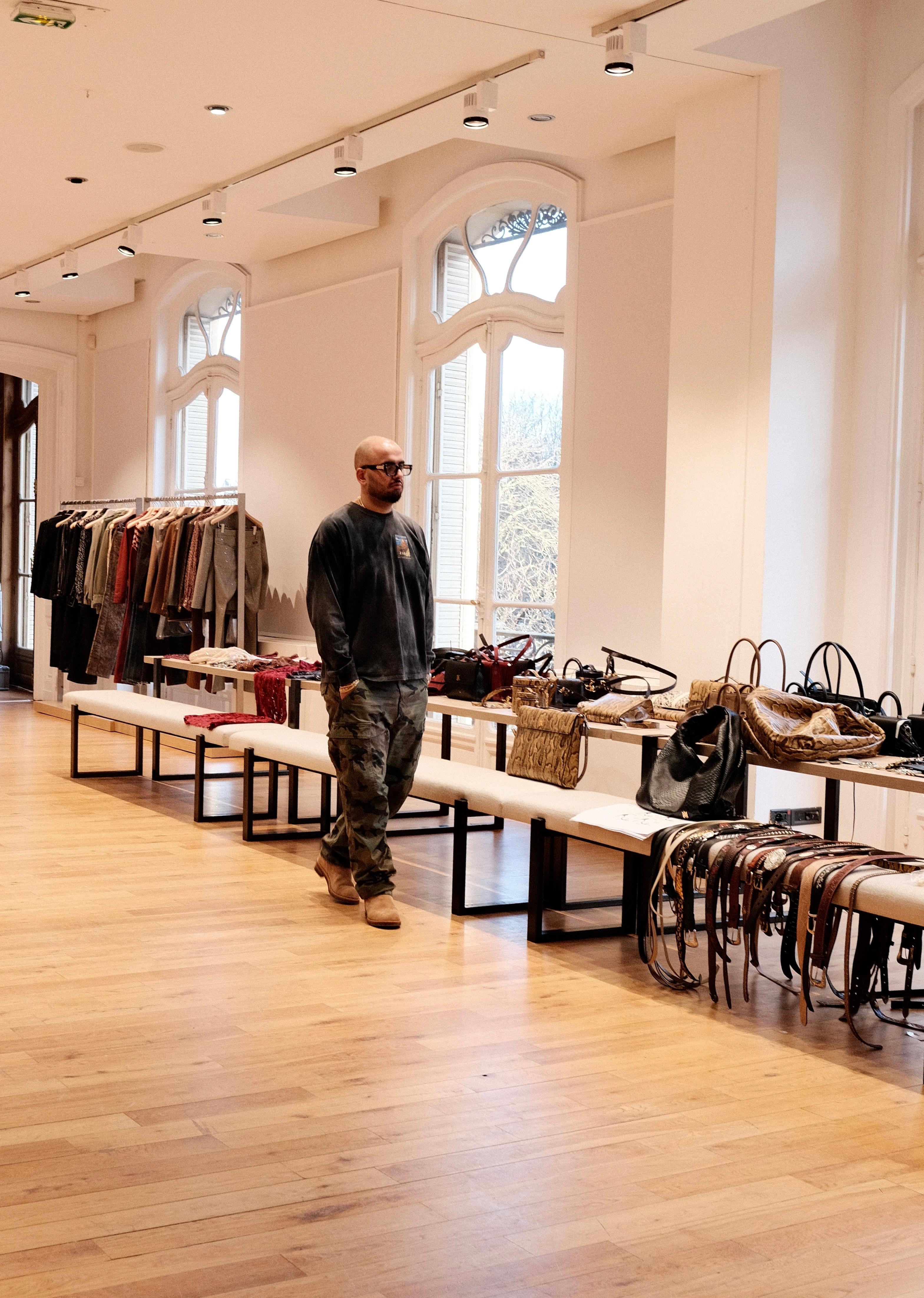
The Purist of Form: The Evolution of Fardin Hazratizadeh

Authored by

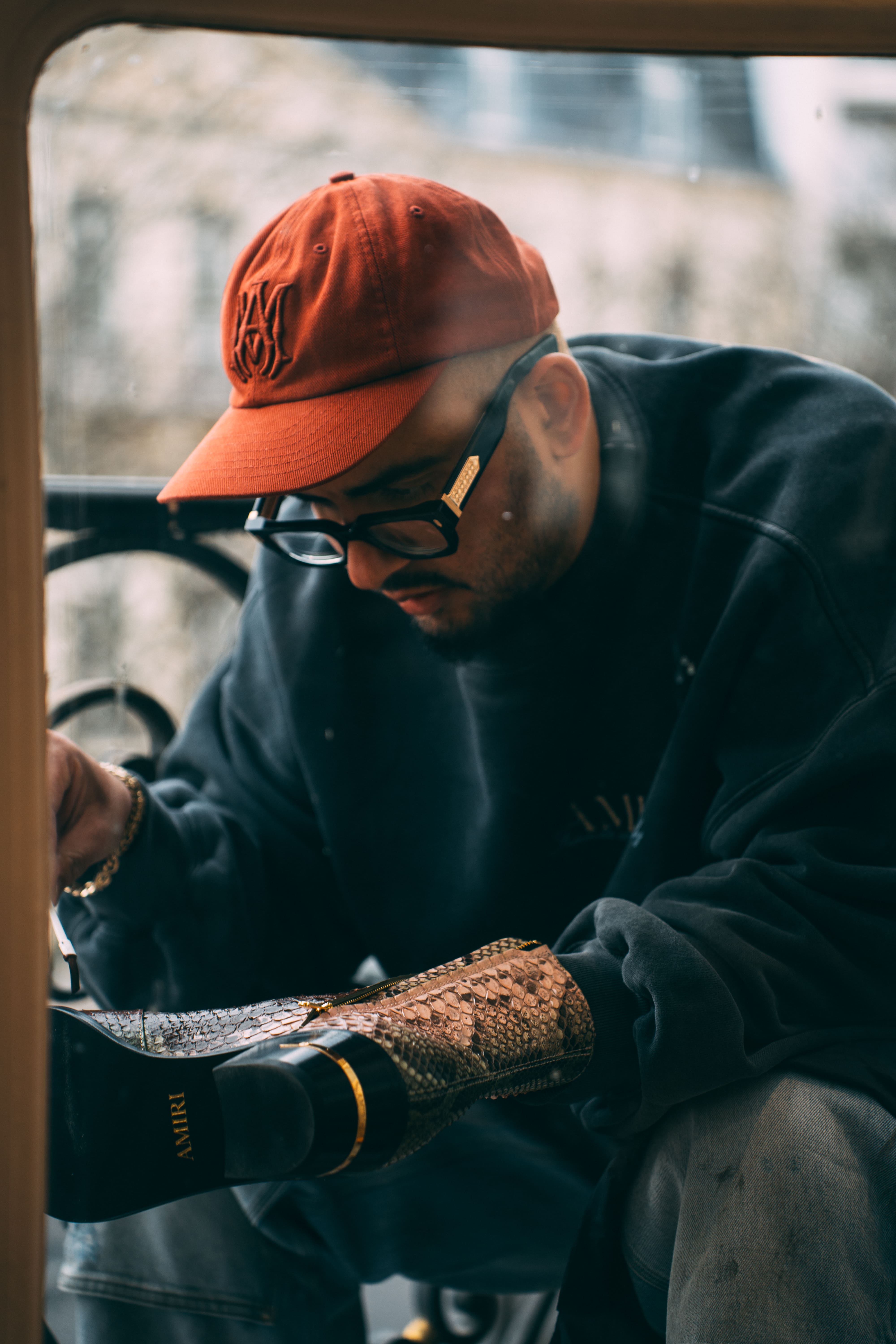
Fardin Hazratizadeh’s journey to becoming the Footwear Design Director at Amiri is a narrative of technical precision meeting high-fashion soul. His story begins not in the ateliers of Europe, but in the vibrant sneaker culture of the Bay Area. For Fardin, footwear was never just a hobby; it was a primary tool for connection and identity after moving to the U.S. at a young age. This early obsession with the “how” and “why” of product design was driven by technologies like Flyknit and Foamposite, which changed the way footwear performed and laid the foundation for the industrial design thinking that defines his work today. As he reflects, "That product-first curiosity naturally led me into design and continues to shape how I work today".

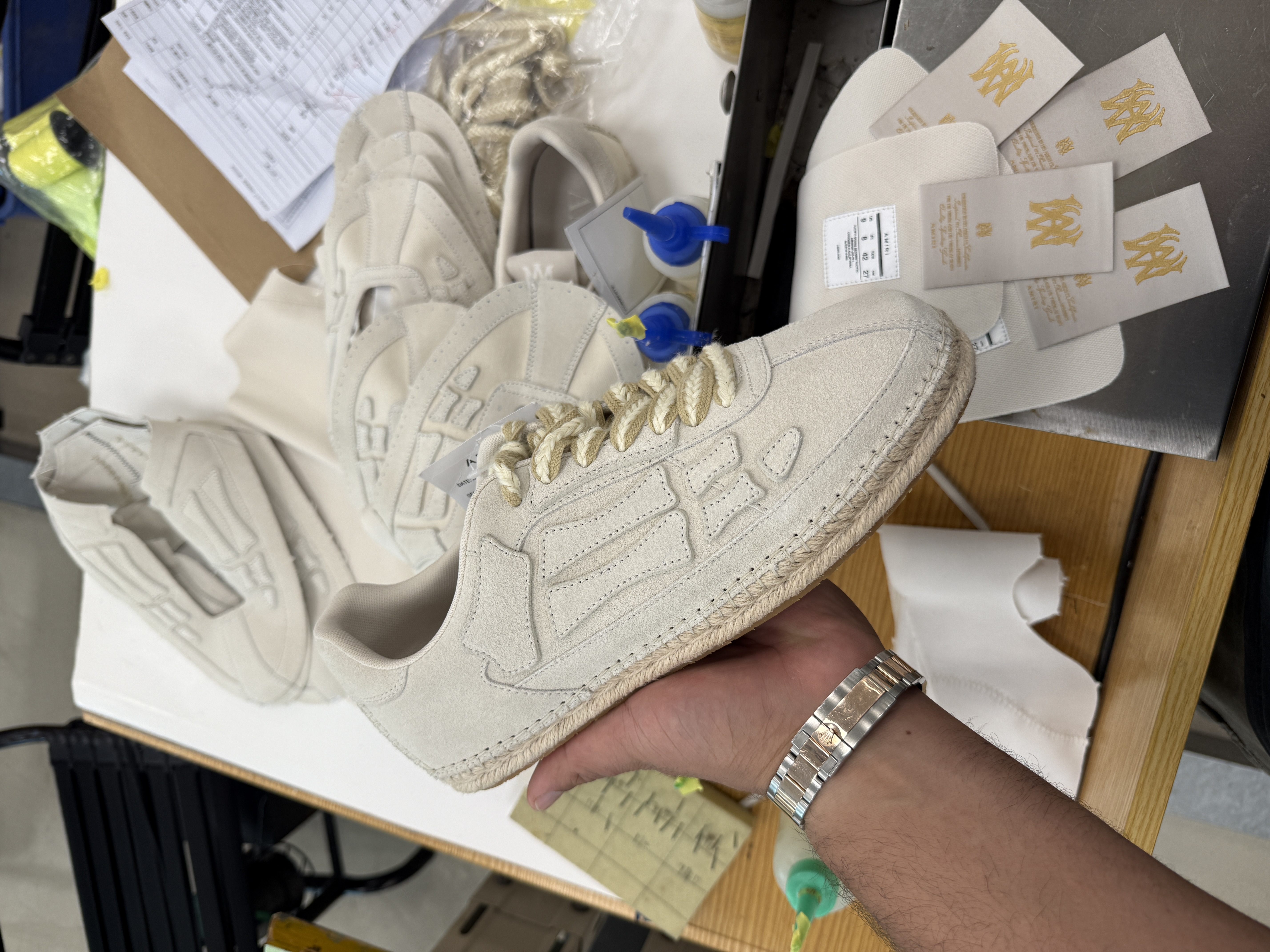
What sets Fardin apart is a genius level of foresight in his creative process. While many designers begin with a nebulous sketch, he starts with the "last": the physical mold that dictates the shoe's shape, volume, and posture. This approach is an exercise in reverse engineering: anticipating the end result before the first stitch is made. Because he has spent years mastering the technical nuances of construction, he can envision the final product with such clarity that the beginning of the process becomes a disciplined path toward a pre-defined excellence.
"I start with the last, the shape," he explains. "It’s the step from which everything grows and defines proportion, movement, and posture". This mastery of the last is why the structure of an Amiri shoe feels impeccable; he isn't just designing a look, he is engineering a foundation. By knowing exactly how the shoe will sit on the foot, he ensures the transition from a conceptual idea to a wearable masterpiece is seamless.

Fardin’s draw to footwear is rooted in a uniquely emotional perspective. He recognizes that shoes possess a singular power to define a silhouette and communicate who a person is before they even speak. "You can associate memories, identity, even nostalgia with a pair before you speak to the person wearing them," he notes. "They tell stories".

This storytelling capability makes footwear the ultimate conversation piece: a natural icebreaker that signals shared values or aesthetic tastes. Beyond the social narrative, there is a literal, physical grounding. As the only part of our wardrobe in constant contact with the earth, shoes serve as our primary interface with the world. They protect us from the elements and provide the balance we need to move through life. Because our feet are what keep us physically grounded, being intentional about what we place between ourselves and the floor is a matter of both health and self-expression. The right shoe doesn't just elevate a look; it provides a sense of centered identity.

Fardin’s philosophy mirrors this reality. Just as we only get one set of feet throughout our lives, footwear is the literal foundation of our daily existence. There is a shared understanding among fashion connoisseurs and those who prioritize function: you start from the bottom and build upward.

He understands that a shoe affects the wearer's whole day physically and psychologically. By blending his industrial design background with high fashion, He creates a piece that is as durable as it is beautiful.He believes that "form should follow function" and that every product must "earn its place and have a clear reason to exist". His commitment to technical excellence ensures that "everything is considered, from each seam to the rubber and EVA compounds".

This technical curiosity was refined through a career pedigree that spans the most influential corners of the industry. At New Balance, Fardin mastered "product honesty," an experience that taught him "discipline... and deep respect for performance and the end wearer". He then transitioned to the legendary house of Versace, where he learned how a strong design language creates "cultural impact beyond function". These two distinct perspectives one rooted in performance and the other in heritage luxury prepared him to lead at Amiri, where he now creates "luxury products with emotion and attitude that are also grounded in comfort".

Looking forward, Fardin is focused on building a heritage in real-time. He seeks to expand "Amiri’s footwear universe" until the brand is the first name that comes to mind when people think of footwear. His goal is to continue learning about himself as a designer and to "push my creativity beyond what it’s currently serving," finding new ways to tell deeper, more emotional stories through product.

For Fardin, legacy isn't just about the shoes on the shelf; it's about the knowledge left behind. He encourages the next generation to "build and nurture your portfolio like it’s your child" and to use social platforms as "living portfolios" to share their process, failures, and obsessions. "Consistency," he notes, "is what keeps you in the room". As he continues to evolve, Fardin Hazratizadeh remains a designer who understands that while a shoe must tell a story, it must first and foremost be built to last.

The Purist of Form: The Evolution of Fardin Hazratizadeh

Authored by
This is some text inside of a div block.

Fardin Hazratizadeh’s journey to becoming the Footwear Design Director at Amiri is a narrative of technical precision meeting high-fashion soul. His story begins not in the ateliers of Europe, but in the vibrant sneaker culture of the Bay Area. For Fardin, footwear was never just a hobby; it was a primary tool for connection and identity after moving to the U.S. at a young age. This early obsession with the “how” and “why” of product design was driven by technologies like Flyknit and Foamposite, which changed the way footwear performed and laid the foundation for the industrial design thinking that defines his work today. As he reflects, "That product-first curiosity naturally led me into design and continues to shape how I work today".

What sets Fardin apart is a genius level of foresight in his creative process. While many designers begin with a nebulous sketch, he starts with the "last": the physical mold that dictates the shoe's shape, volume, and posture. This approach is an exercise in reverse engineering: anticipating the end result before the first stitch is made. Because he has spent years mastering the technical nuances of construction, he can envision the final product with such clarity that the beginning of the process becomes a disciplined path toward a pre-defined excellence.
"I start with the last, the shape," he explains. "It’s the step from which everything grows and defines proportion, movement, and posture". This mastery of the last is why the structure of an Amiri shoe feels impeccable; he isn't just designing a look, he is engineering a foundation. By knowing exactly how the shoe will sit on the foot, he ensures the transition from a conceptual idea to a wearable masterpiece is seamless.

Fardin’s draw to footwear is rooted in a uniquely emotional perspective. He recognizes that shoes possess a singular power to define a silhouette and communicate who a person is before they even speak. "You can associate memories, identity, even nostalgia with a pair before you speak to the person wearing them," he notes. "They tell stories".

This storytelling capability makes footwear the ultimate conversation piece: a natural icebreaker that signals shared values or aesthetic tastes. Beyond the social narrative, there is a literal, physical grounding. As the only part of our wardrobe in constant contact with the earth, shoes serve as our primary interface with the world. They protect us from the elements and provide the balance we need to move through life. Because our feet are what keep us physically grounded, being intentional about what we place between ourselves and the floor is a matter of both health and self-expression. The right shoe doesn't just elevate a look; it provides a sense of centered identity.

Fardin’s philosophy mirrors this reality. Just as we only get one set of feet throughout our lives, footwear is the literal foundation of our daily existence. There is a shared understanding among fashion connoisseurs and those who prioritize function: you start from the bottom and build upward.

He understands that a shoe affects the wearer's whole day physically and psychologically. By blending his industrial design background with high fashion, He creates a piece that is as durable as it is beautiful.He believes that "form should follow function" and that every product must "earn its place and have a clear reason to exist". His commitment to technical excellence ensures that "everything is considered, from each seam to the rubber and EVA compounds".

This technical curiosity was refined through a career pedigree that spans the most influential corners of the industry. At New Balance, Fardin mastered "product honesty," an experience that taught him "discipline... and deep respect for performance and the end wearer". He then transitioned to the legendary house of Versace, where he learned how a strong design language creates "cultural impact beyond function". These two distinct perspectives one rooted in performance and the other in heritage luxury prepared him to lead at Amiri, where he now creates "luxury products with emotion and attitude that are also grounded in comfort".

Looking forward, Fardin is focused on building a heritage in real-time. He seeks to expand "Amiri’s footwear universe" until the brand is the first name that comes to mind when people think of footwear. His goal is to continue learning about himself as a designer and to "push my creativity beyond what it’s currently serving," finding new ways to tell deeper, more emotional stories through product.

For Fardin, legacy isn't just about the shoes on the shelf; it's about the knowledge left behind. He encourages the next generation to "build and nurture your portfolio like it’s your child" and to use social platforms as "living portfolios" to share their process, failures, and obsessions. "Consistency," he notes, "is what keeps you in the room". As he continues to evolve, Fardin Hazratizadeh remains a designer who understands that while a shoe must tell a story, it must first and foremost be built to last.

This is some text inside of a div block.

The Purist of Form: The Evolution of Fardin Hazratizadeh

Authored by

Fardin Hazratizadeh’s journey to becoming the Footwear Design Director at Amiri is a narrative of technical precision meeting high-fashion soul. His story begins not in the ateliers of Europe, but in the vibrant sneaker culture of the Bay Area. For Fardin, footwear was never just a hobby; it was a primary tool for connection and identity after moving to the U.S. at a young age. This early obsession with the “how” and “why” of product design was driven by technologies like Flyknit and Foamposite, which changed the way footwear performed and laid the foundation for the industrial design thinking that defines his work today. As he reflects, "That product-first curiosity naturally led me into design and continues to shape how I work today".

What sets Fardin apart is a genius level of foresight in his creative process. While many designers begin with a nebulous sketch, he starts with the "last": the physical mold that dictates the shoe's shape, volume, and posture. This approach is an exercise in reverse engineering: anticipating the end result before the first stitch is made. Because he has spent years mastering the technical nuances of construction, he can envision the final product with such clarity that the beginning of the process becomes a disciplined path toward a pre-defined excellence.
"I start with the last, the shape," he explains. "It’s the step from which everything grows and defines proportion, movement, and posture". This mastery of the last is why the structure of an Amiri shoe feels impeccable; he isn't just designing a look, he is engineering a foundation. By knowing exactly how the shoe will sit on the foot, he ensures the transition from a conceptual idea to a wearable masterpiece is seamless.

Fardin’s draw to footwear is rooted in a uniquely emotional perspective. He recognizes that shoes possess a singular power to define a silhouette and communicate who a person is before they even speak. "You can associate memories, identity, even nostalgia with a pair before you speak to the person wearing them," he notes. "They tell stories".

This storytelling capability makes footwear the ultimate conversation piece: a natural icebreaker that signals shared values or aesthetic tastes. Beyond the social narrative, there is a literal, physical grounding. As the only part of our wardrobe in constant contact with the earth, shoes serve as our primary interface with the world. They protect us from the elements and provide the balance we need to move through life. Because our feet are what keep us physically grounded, being intentional about what we place between ourselves and the floor is a matter of both health and self-expression. The right shoe doesn't just elevate a look; it provides a sense of centered identity.

Fardin’s philosophy mirrors this reality. Just as we only get one set of feet throughout our lives, footwear is the literal foundation of our daily existence. There is a shared understanding among fashion connoisseurs and those who prioritize function: you start from the bottom and build upward.

He understands that a shoe affects the wearer's whole day physically and psychologically. By blending his industrial design background with high fashion, He creates a piece that is as durable as it is beautiful.He believes that "form should follow function" and that every product must "earn its place and have a clear reason to exist". His commitment to technical excellence ensures that "everything is considered, from each seam to the rubber and EVA compounds".

This technical curiosity was refined through a career pedigree that spans the most influential corners of the industry. At New Balance, Fardin mastered "product honesty," an experience that taught him "discipline... and deep respect for performance and the end wearer". He then transitioned to the legendary house of Versace, where he learned how a strong design language creates "cultural impact beyond function". These two distinct perspectives one rooted in performance and the other in heritage luxury prepared him to lead at Amiri, where he now creates "luxury products with emotion and attitude that are also grounded in comfort".

Looking forward, Fardin is focused on building a heritage in real-time. He seeks to expand "Amiri’s footwear universe" until the brand is the first name that comes to mind when people think of footwear. His goal is to continue learning about himself as a designer and to "push my creativity beyond what it’s currently serving," finding new ways to tell deeper, more emotional stories through product.

For Fardin, legacy isn't just about the shoes on the shelf; it's about the knowledge left behind. He encourages the next generation to "build and nurture your portfolio like it’s your child" and to use social platforms as "living portfolios" to share their process, failures, and obsessions. "Consistency," he notes, "is what keeps you in the room". As he continues to evolve, Fardin Hazratizadeh remains a designer who understands that while a shoe must tell a story, it must first and foremost be built to last.

Other Stories
London
London
Lagos
London
Newyork
London
Shop
Join the community.
You are now subscribed to receive updates.
Oops! Something went wrong while submitting the form.