.svg)

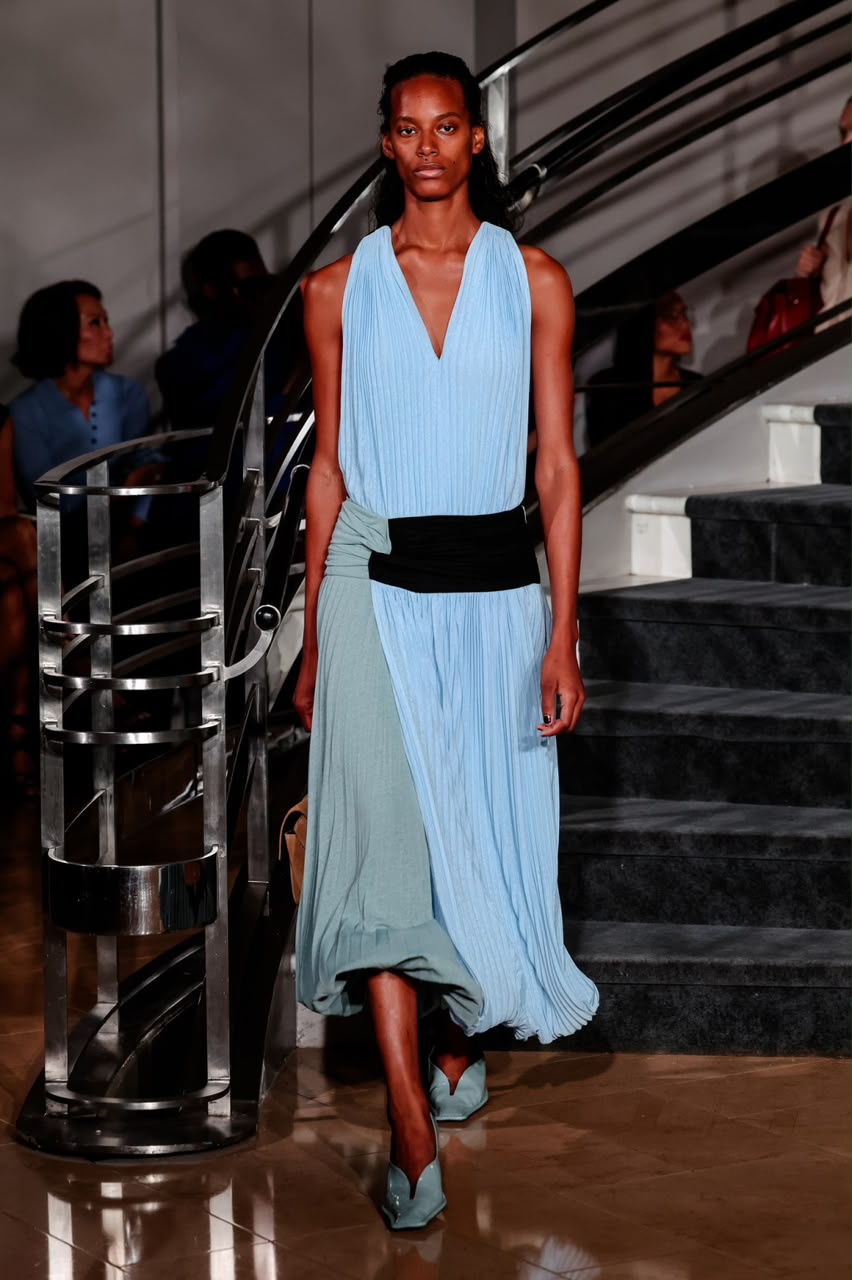
After the February and March shows of the fall/winter collection, fashion Week is back with much buzz for the spring/summer counterpart with stops in Copenhagen, Seoul, Milan, London, Paris, and New York. Copenhagen and Seoul happened earlier in September, London is currently in motion, and Paris and Milan are set to pop off for the exciting week.
Fashion weeks are always an exciting time for new energy to be injected into the mainstream. Designers decide what trends dominate the industry through their collections and what stories are told through their spectacular shows. New York Fashion Week Spring-Summer wrapped up in mid-September after the showing of 63 shows. The week featured regulars like Tory Burch and Sandy Liang and emerging designers, Miss Clare Sullivan, Zoe Gustavia Anna Whalen and more. We rounded up 10 of our favourite moments at the New York Fashion Week.
1. Proenza Schouler
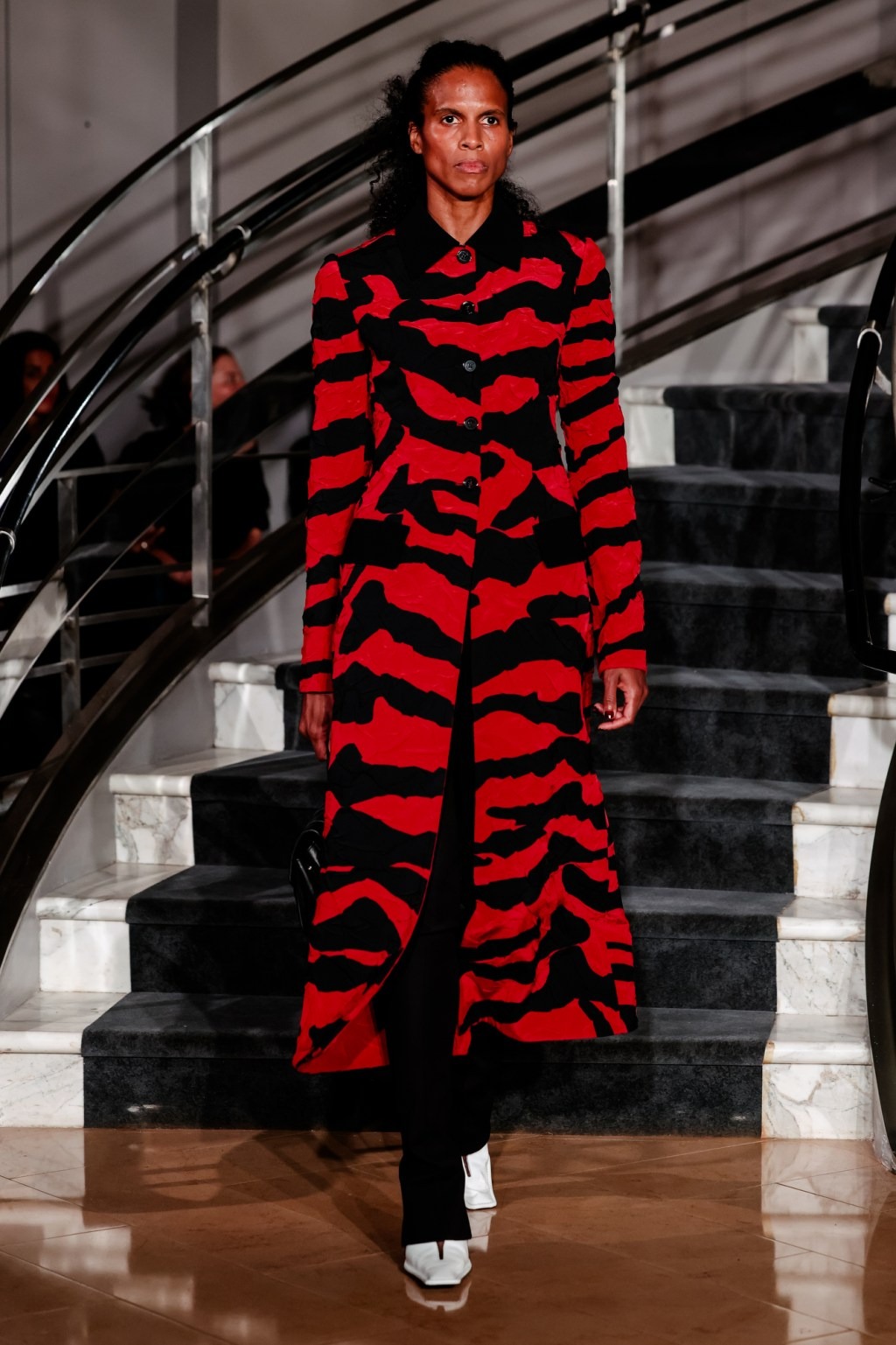
Is the animal print back? Proenza Schouler begs the question in their collection. This is the second collection the designer, Rachel Scott, is making for the brand and the drapery found across the dresses on the runway is excellent. Scott told WWD, “The woman of New York kind of reflects the city, they kind of reflect each other.”
Evening-style dresses were paired with utilitarian bags and the use of chrome yellow as a pop of colour tied into the spirit of rebirth that is the spring season. The Proenza Schouler woman in the show is one who isn't bound by rules. She makes fashion work for herself and not the other way around. If the point isn't clear with the multiple suits and perfectly silhouetted dresses, then, the tiger print in multiple colours and style would show you who a Proenza Schouler woman is.
2. Diotima
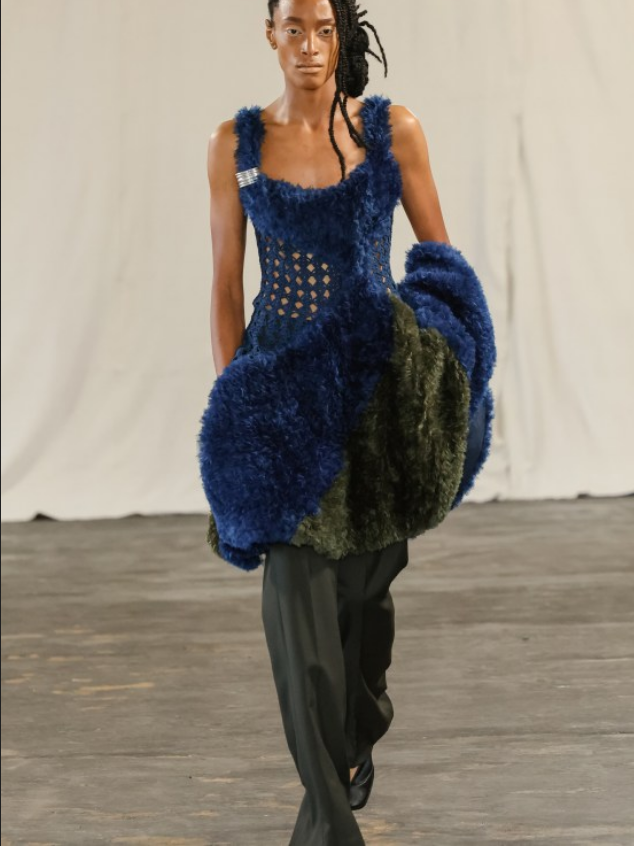
Rachel Scott's Diotima has always had a strong relationship with craft, but for Spring/Summer 2027, that relationship felt almost elemental. Inspired by her connection to the Caribbean Sea and the women she imagined across its history, Scott built a collection around movement, memory and the tension between beauty and something much heavier underneath it. She was thinking about the sea not only as something beautiful, but as a burial ground for ancestors.
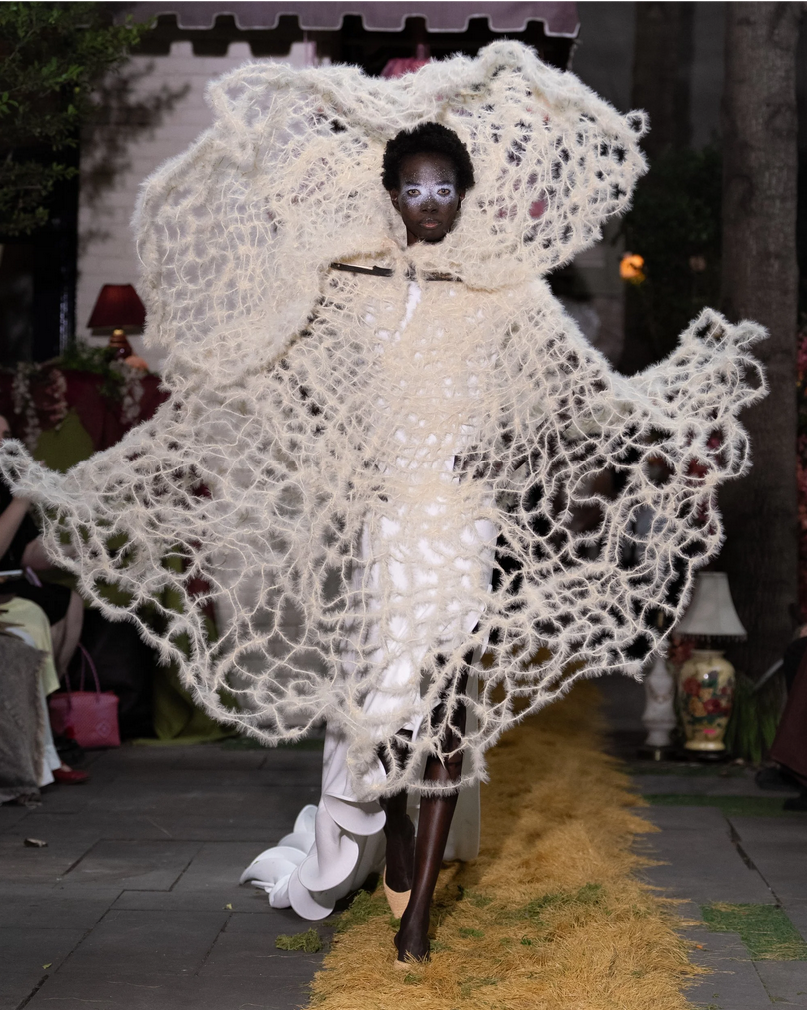
That tension translated beautifully into the clothes. Jamaican hand-crochet appeared alongside increasingly sophisticated tailoring, while organza was manipulated into three-dimensional forms that looked almost aquatic. Long coats finished with dense ruffles moved like waves, while dresses hugged the body before breaking away into dramatic textures. There was also a sensuality to the collection, particularly in the body-skimming dresses with cascading ruffles.
Diotima has never treated craft as an afterthought, and SS27 pushes that idea further. Scott is proving that handmade techniques can occupy the same space as sharp tailoring and eveningwear without losing their cultural character. The collection feels like a maturation of Diotima without abandoning what made the label interesting in the first place.
3. Thom Browne
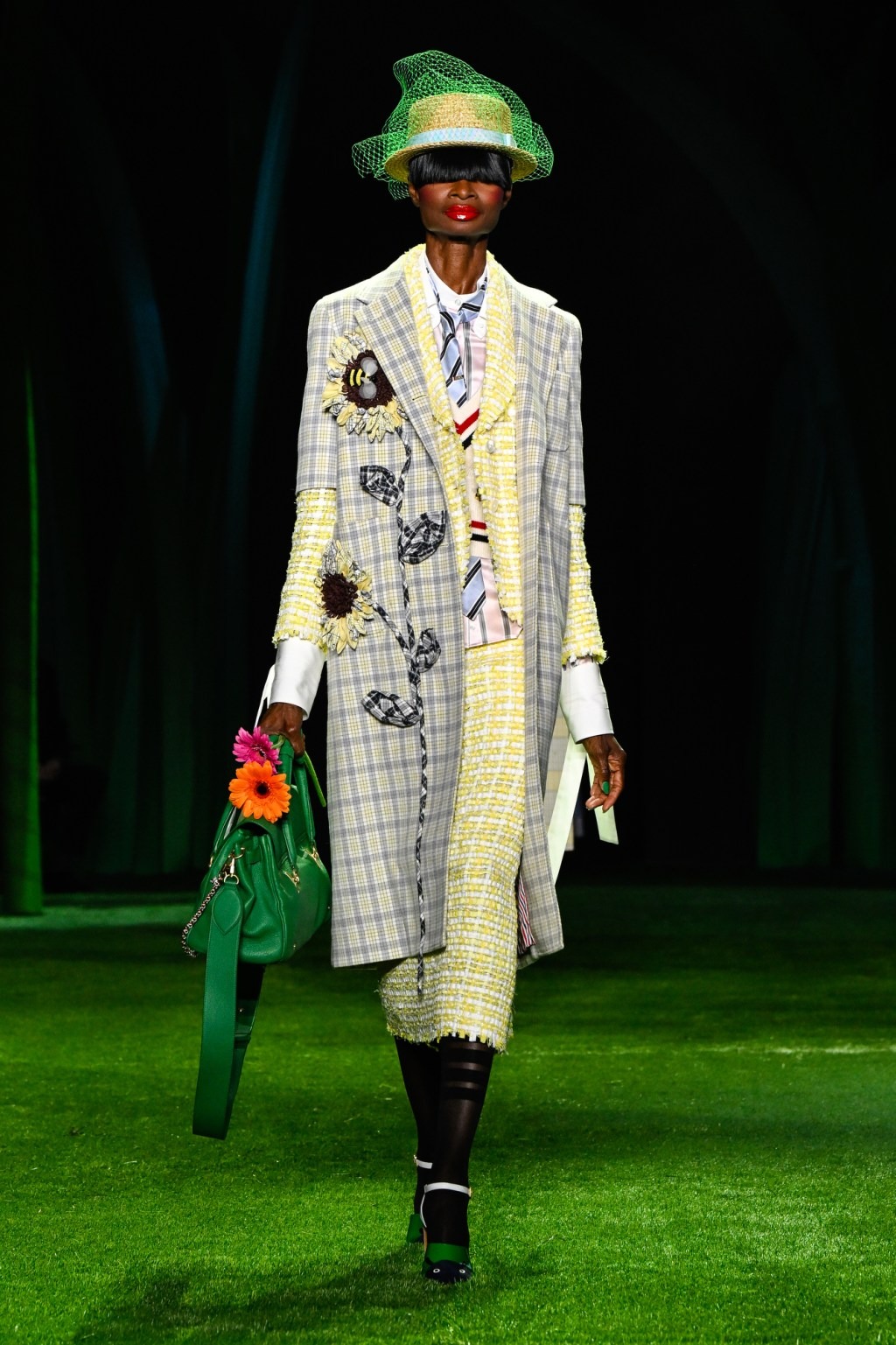
The show was rightfully titled, Metamorphosis, and Thom Browne pieces were backdropped into comically large installations of garden elements. This set design choice immediately reminded me of the Chanel Haute Couture Fall/Winter show in Paris earlier this year.
The show began with majestic dancers in tulle and colourful patterns and one of the dancers was put in a cocoon, mimicking a butterfly's chrysalis. In this collection, Thom Browne drove the metamorphosis point home. The models wore mini bowl cuts and bold lipsticks, perhaps a visual reference to bugs. Multiple nature motifs appeared throughout this collection, from ants creeping on suits to butterfly wing print being featured as patterns on clothes and bags while actual butterflies adorned shoes.
The show showed a use of layering in preppy suits that is unsurprising for Thom Browne. The clothes moved fluidly and many pieces blurred the lines between the beginning of one layer and the end of the other. Statement dresses with a dramatic hip cut referenced the lady bug and many other insects. The collection's ambitious use of colour and patterns is a reflection of the beauty of nature and it is a perfect reminder as we are bearing witness to a worsening climate crisis. Thom Browne told W Magazine backstage after the show, "For me, it was a very naive childhood story, and I thought it would bring smiles to everybody’s face."
4. Bad Binch TONGTONG
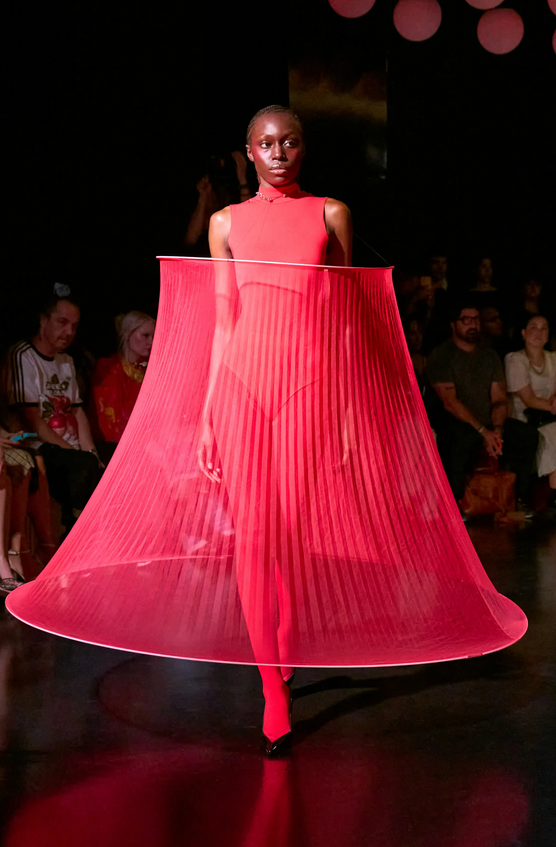
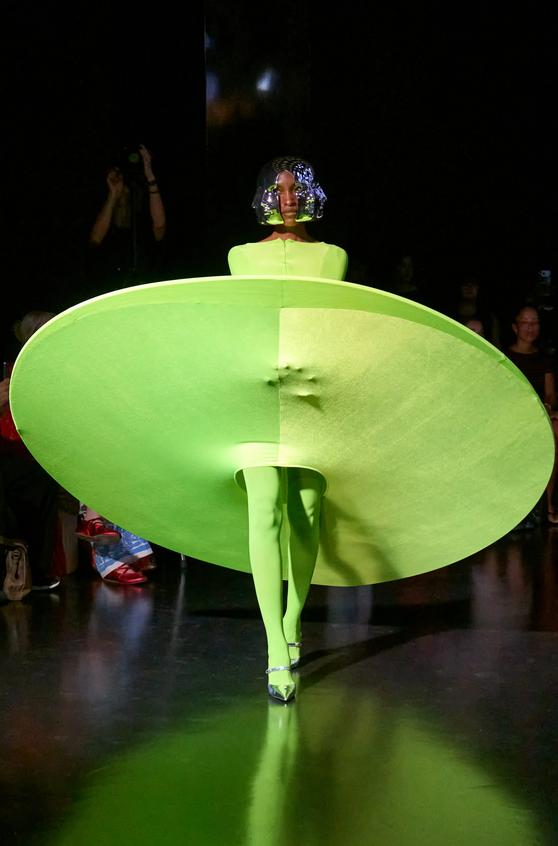
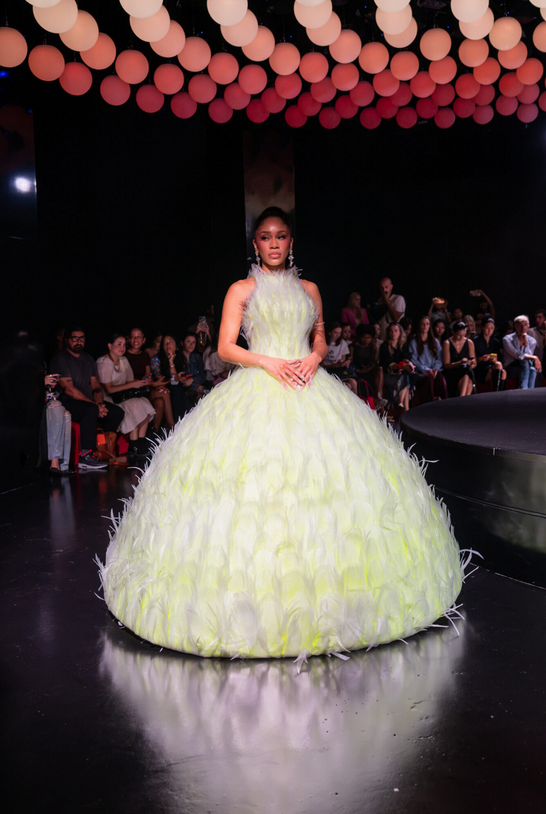
Bad Binch TONGTONG did not seem particularly interested in the idea that clothes should behave themselves. Terrence Zhou's return to the runway after two years made that very clear. Presented at New York's Balloon Museum, the Spring/Summer 2027 collection turned the human body into something closer to a moving sculpture, with garments expanding, floating and distorting the shape underneath them.
Neoprene, shredded packaging foam and exaggerated hoops became wildly oversized silhouettes, while one of the show's most dramatic looks appeared to hover around Saweetie's body rather than simply sit on it. Elsewhere, Zhou brought the collection back down to earth with ruched bodycon skirts, ruffled tops and sporty pieces in bright blue and green. Those more wearable looks gave the collection somewhere to land after all the spectacle.
What makes the brand interesting is that the clothes don't necessarily ask to be understood before they are enjoyed. They are funny, strange and deliberately excessive. In an industry increasingly obsessed with whether a look will perform online, Zhou seems perfectly comfortable making clothes that demand to be seen in motion.
5. Sandy Liang
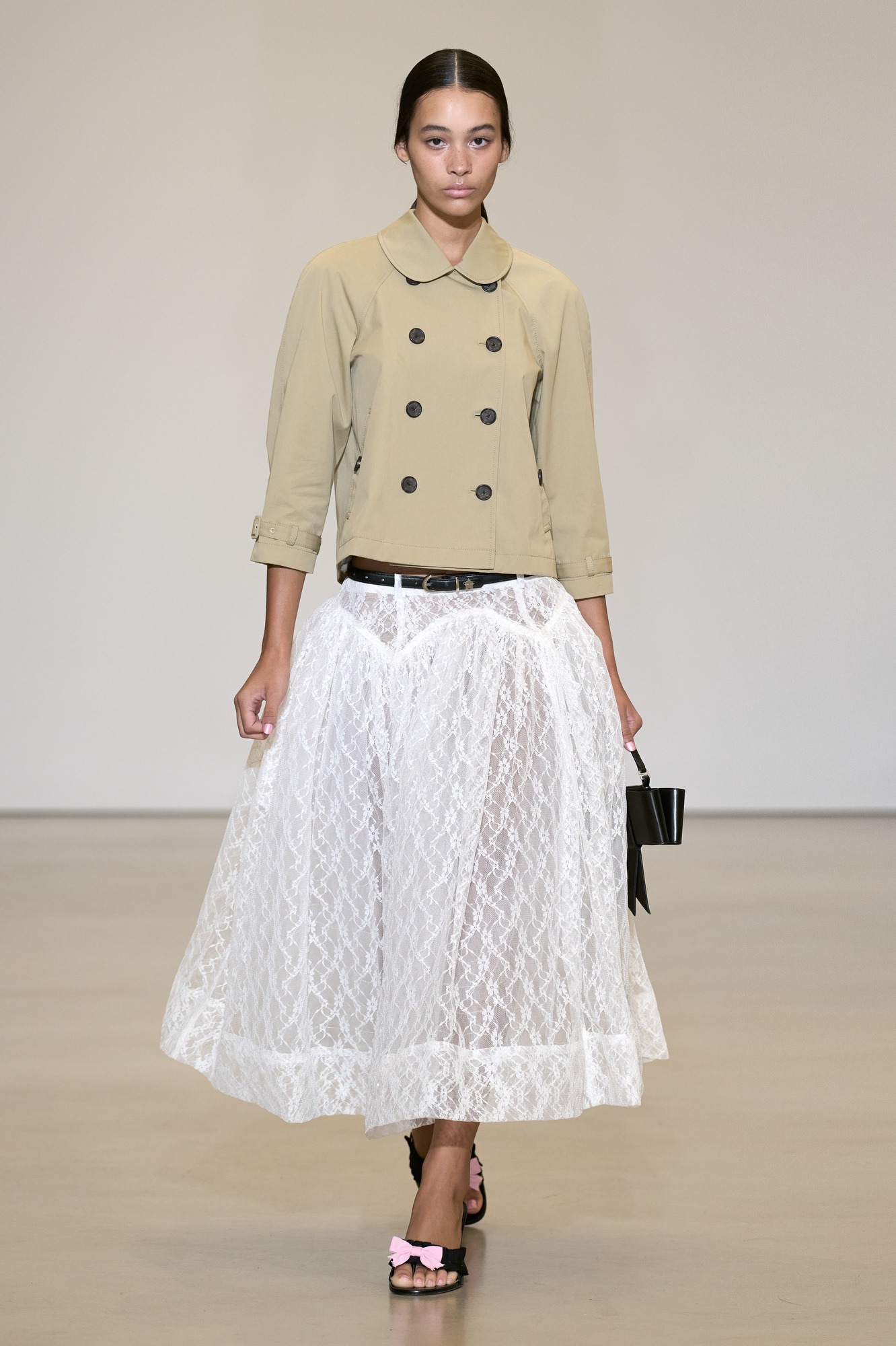
After the Sandy Liang and Cou Cou Intimates collaboration was announced last month, I expected nothing but childlike nostalgia at her NYFW show. Sandy Liang brought a large-size medieval castle to the centre of her show, and the models worked around it. It felt like a representation of the ever magical presence of your childhood, that is still present in the room with you even as you grow older.
The designer is known to capture coquette details in a modern woman and her spring/summer collection is no different. Liang proves the creative genius she is by pairing ugly workwear and athleisure with girly elements like satin, lace, and tulle. It's perfect for the grit of New York. Her use of the lime green in several pieces in the collection is gorgeous and revitalising. A skirt with too many pockets and a purse detail that resembles a fanny pack made several appearances in the show. The collection is everything you would experience in a Sandy Liang show; glitter, pink, and lots of bows.
6. LaQuan Smith
In a push not to abandon the woman who made his clothes famous, this time around LaQuan Smith chose to simply give her more hours in the day. For SS27, the designer looked beyond the party dress and built a wardrobe that could move between the daytime and the after-hours without losing the sex appeal that has become synonymous with his name.
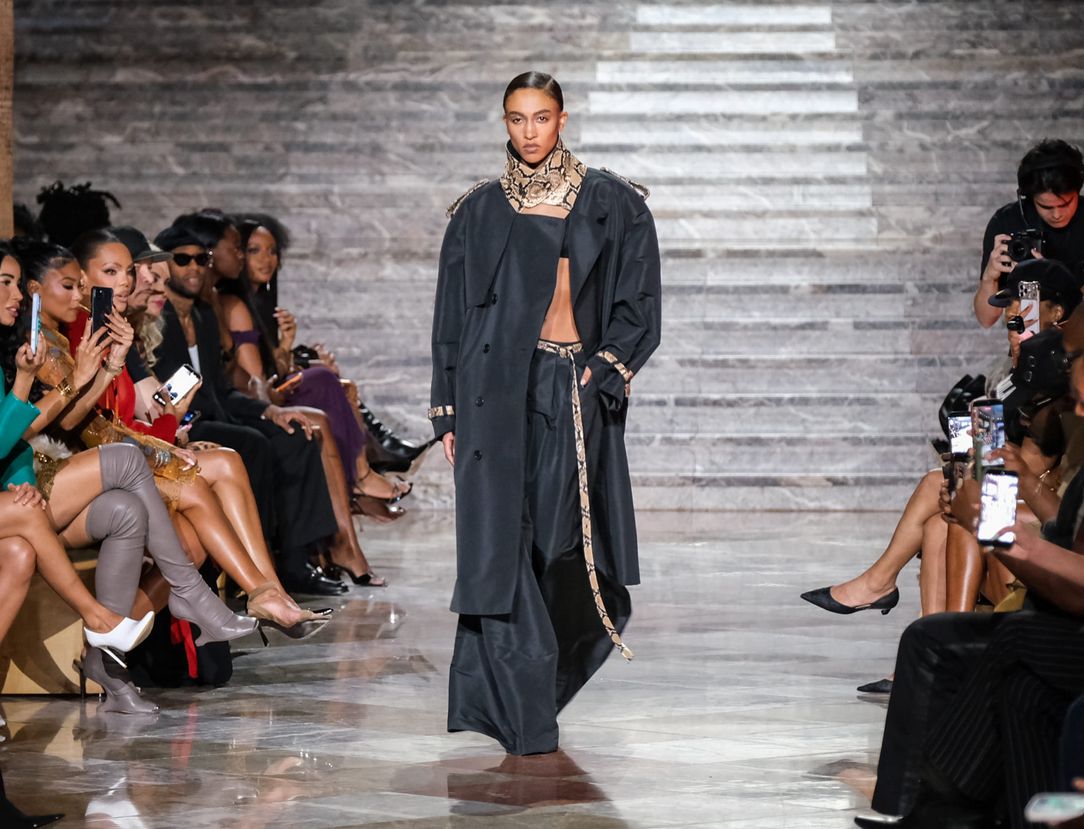
The collection worked through contradiction. Fluffy skirts met sporty windbreakers, delicate pieces sat alongside tougher outerwear, and Smith's usual body-conscious glamour was joined by tailoring and denim. Even the animal prints played with that tension, with Bambi-like spots meeting the fierceness of cheetah and embossed python pushing jackets and skirts into sculptural shapes.
The eveningwear still knows how to make an entrance. A barely-there orange gown floated down the runway, while a sparkling gown created with Children of Blood and Bone offered another cinematic moment. But the more interesting development was Smith's “bombshell suiting,” particularly dark denim sets that could be zipped and unzipped to change their shape. An ode to perhaps Smith’s years spent mastering the language of nightlife, this season’s presentation felt like an attempt to make that language work beyond midnight.
7. Carolina Herrera
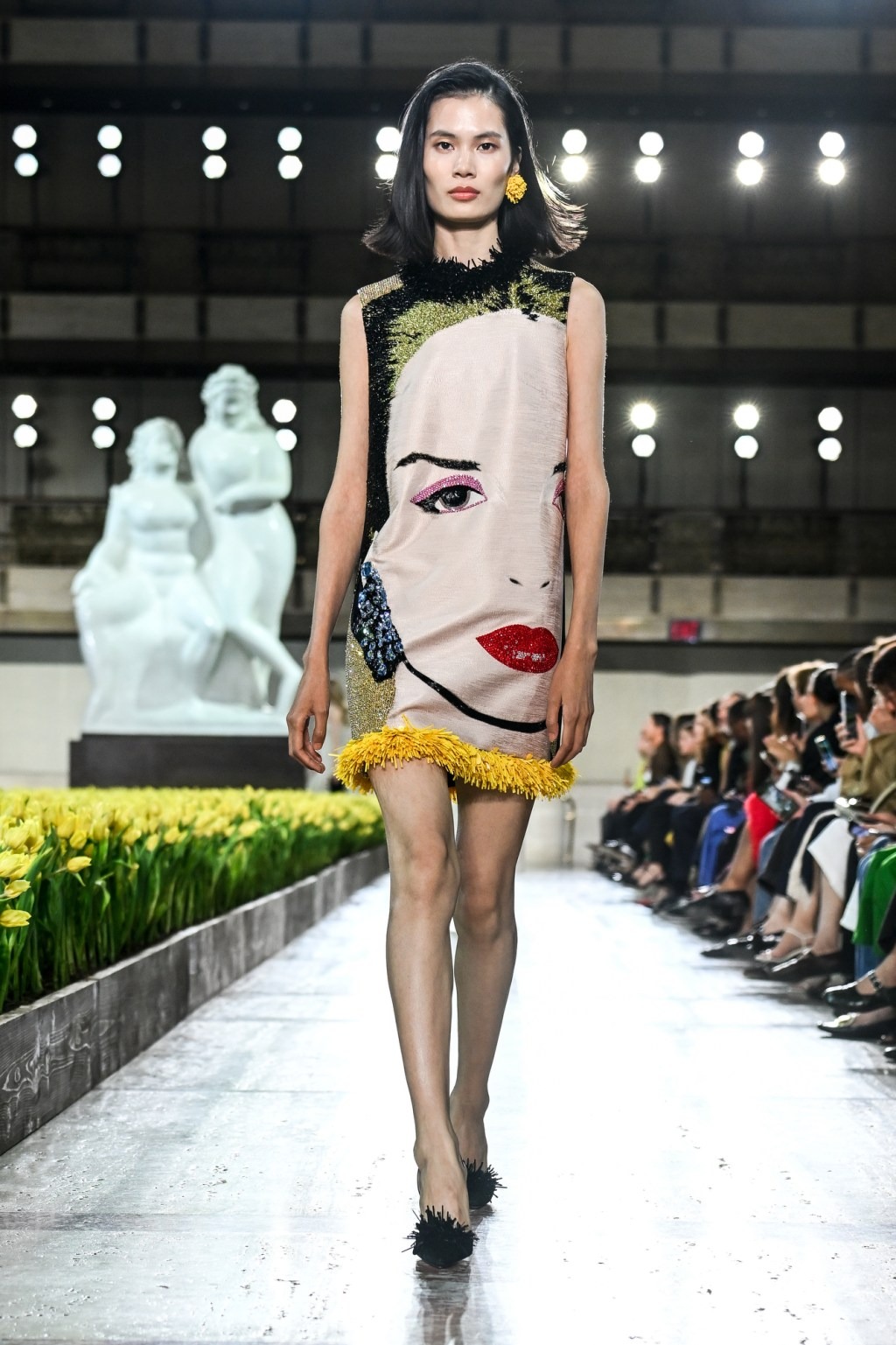
The 45th anniversary of Carolina Herrera told the tale of a liberated, independent woman. Carolina Herrera handed the creative keys to Wes Gordon eight years ago and their 2027 spring/summer collection showcased a series of colours; ranging from yellow to red and pastels.
Polka dots dotted the entire collection and fur trims were a recurring moment. Accessories like head scarves and fluffy earrings also saw a time at the runway. The generous use of yellow brought so much energy into the show, especially against the 28,798 yellow tulips(originally 28,800 but Gordon handed two tulips to his children, Henry and Georgia) generously planted in the venue.
The gracious movement of the pieces alluded to a woman on the go. Several graphical pieces were shown in this collection including the face of a young Carolina Herrera, who was also present in the show, in a style that's reminiscent of the pop art era. The print of one of a The New Yorker magazine cover also made appearances on several pieces.
The illustration was of the New York skyline and it was made by the artist, Lonni Sui Johnson. The magazine was published in 1981, the day of Carolina Herrera runway debut in New York. Wes Gordon told The New Yorker about this full-circle moment, "For this collection, that is of the city we love, It's our great privilege to be able to include The New Yorker." The New Yorker has a worldwide circulation of over 1.3 million people, according to The Guardian.
8. Pipenco
Pipenco's Spring/Summer 2027 collection begins with a woman who is supposed to scare you. Lorena Pipenco looked to Muma Pădurii, the “Mother of the Forest” from Romanian folklore, for a collection about a figure whose frightening appearance hides her role as a protector of the forest and the life within it.
That duality gave the collection its most interesting quality. The clothes were not simply trying to make folklore look pretty. Sculptural forms wrapped around the body like armour, while branch-like details gave some of the looks an almost creature-like quality. The silhouettes could feel imposing at first glance, but there was softness underneath the drama. Pipenco used the tension between protection and vulnerability as a design language rather than treating them as opposing ideas.
It is a particularly interesting approach to folklore because the collection does not seem trapped in the past. Instead, Muma Pădurii becomes a way of thinking about the modern woman; intimidating when necessary, protective by nature and softer than her exterior might suggest, proving that fashion can take a story from another time without turning it into costume.
9. Khaite
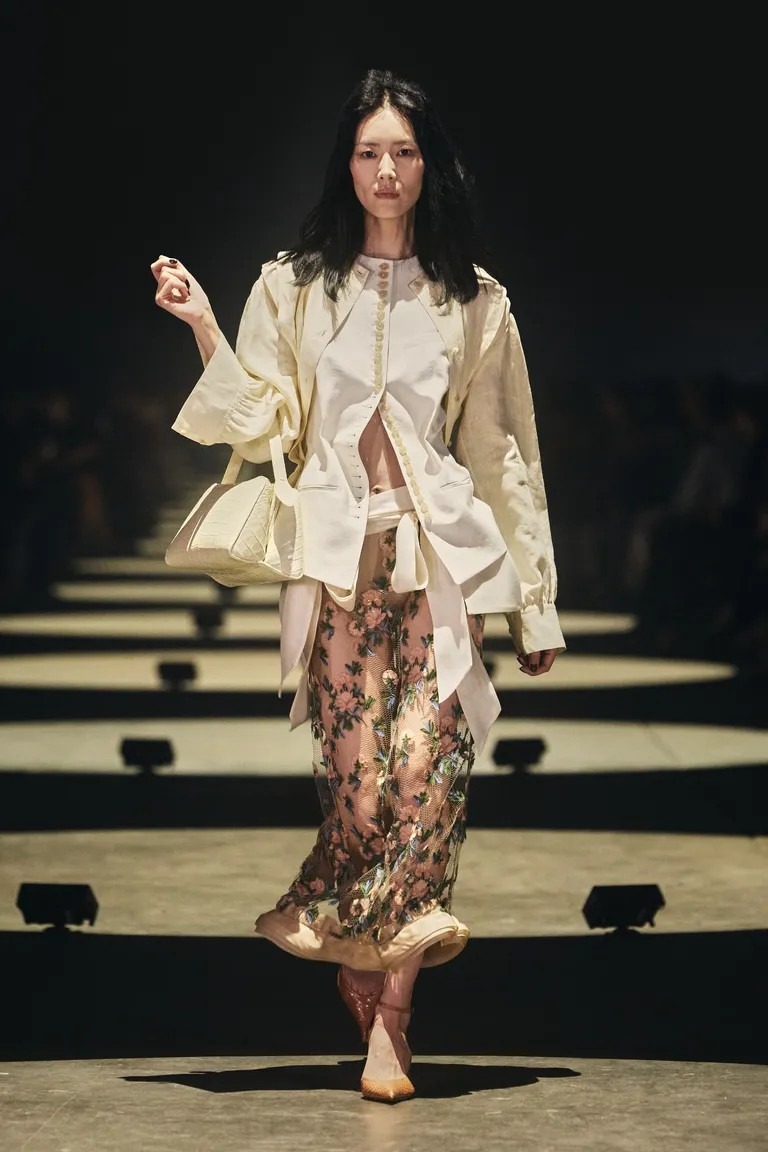
Khaite NYFW SS27 opened with Kaia Gerber confidently strutting on the theatrically lit industrial runway. She evoked a woman on a mission in a white bra and an unzipped black skirt. Her hair was messy, a trait that was common among the Khaite girls of the SS27 show.
The show was a monochromatic tell-all of the fluidity of womanhood. The creative director, Catherine Holstein, juxtaposed the flowy dresses against an undone head of hair and a seemingly biting personality. This made the model lineup look more like a coven of witches than glamorous women in the industry.
The minor detail of the model's nails being painted dark is a testament to the wild woman theory of Khaite SS27. If there's one trend that the Khaite show wants you to take home, it's to wear your underwear publicly. Bras remained a focal point across a few pieces as a standout piece or it was used in creative styling. Sheer dresses and skirts with green and pink floral embellishments also got a moment on the runway. The show was a nice balance of structured pieces and loose, flowy ones. To Khaite, the summer and spring of 2027 is the year you free the nipple and live vicariously.
10. Cult Gaia
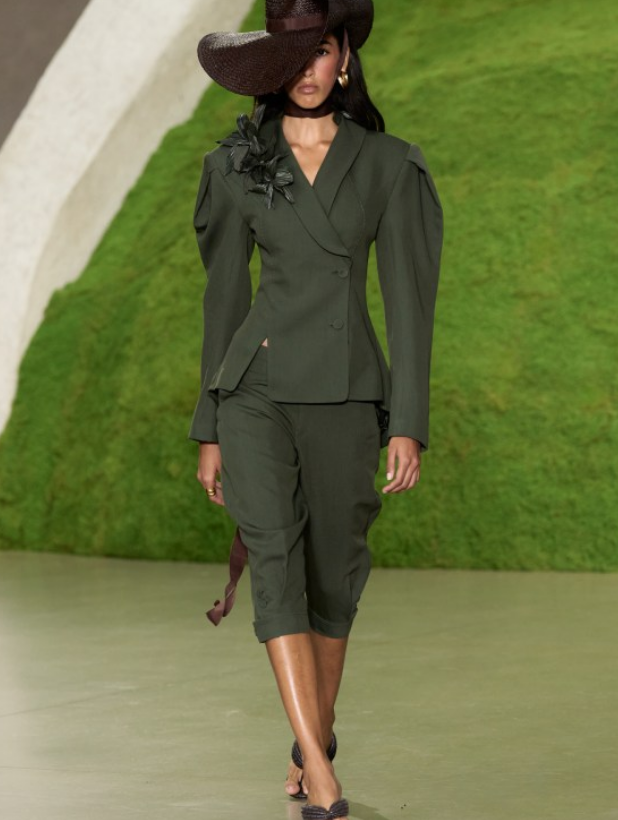
Beginning in mourning and ending in celebration, Cult Gaia's SS27 collection, titled Behesht – the Persian word for heaven – is Jasmin Larian Hekmat's meditation on the loss of her grandmother, Mommy Aghdas, earlier this year. But this wasn't a collection interested in staying in grief. Instead, Hekmat explored what happens when beauty begins to return after a difficult period.
The shift was visible on the runway. The opening looks were darker and more restrained, including a deep olive suit with a sculpted shoulder and capri trousers, before the collection gradually loosened into plissé dresses, sheer floral separates and shimmering metallic pieces. A gold chainmail skirt brought some much-needed drama, while Hekmat's growing interest in menswear showed up through a relaxed black linen suit, fringed tweed shorts and a plum plissé shirt with a built-in tie.
What makes the collection particularly compelling is how Hekmat plays with opposites. Hard, architectural shapes meet fabrics that move with the body. Dark tailoring gives way to romantic florals. The clothes can feel protective in one moment and completely exposed in the next. It is a visual language that mirrors the collection's central idea: something beautiful can emerge from a place that once felt barren.
The finale made that idea almost literal. Hand-painted silk gowns, dip-dyed to resemble feathers, floated down the runway as pink flower petals fell from above. It could have easily become too sentimental, but the spectacle worked because the clothes had already taken the audience through the transformation. Cult Gaia's SS27 woman isn't simply dressing for a vacation or a night out. She's coming out the other side of something – and looking good while she does it.
Cover Credits: Rodin Banica/WWD


.png)

