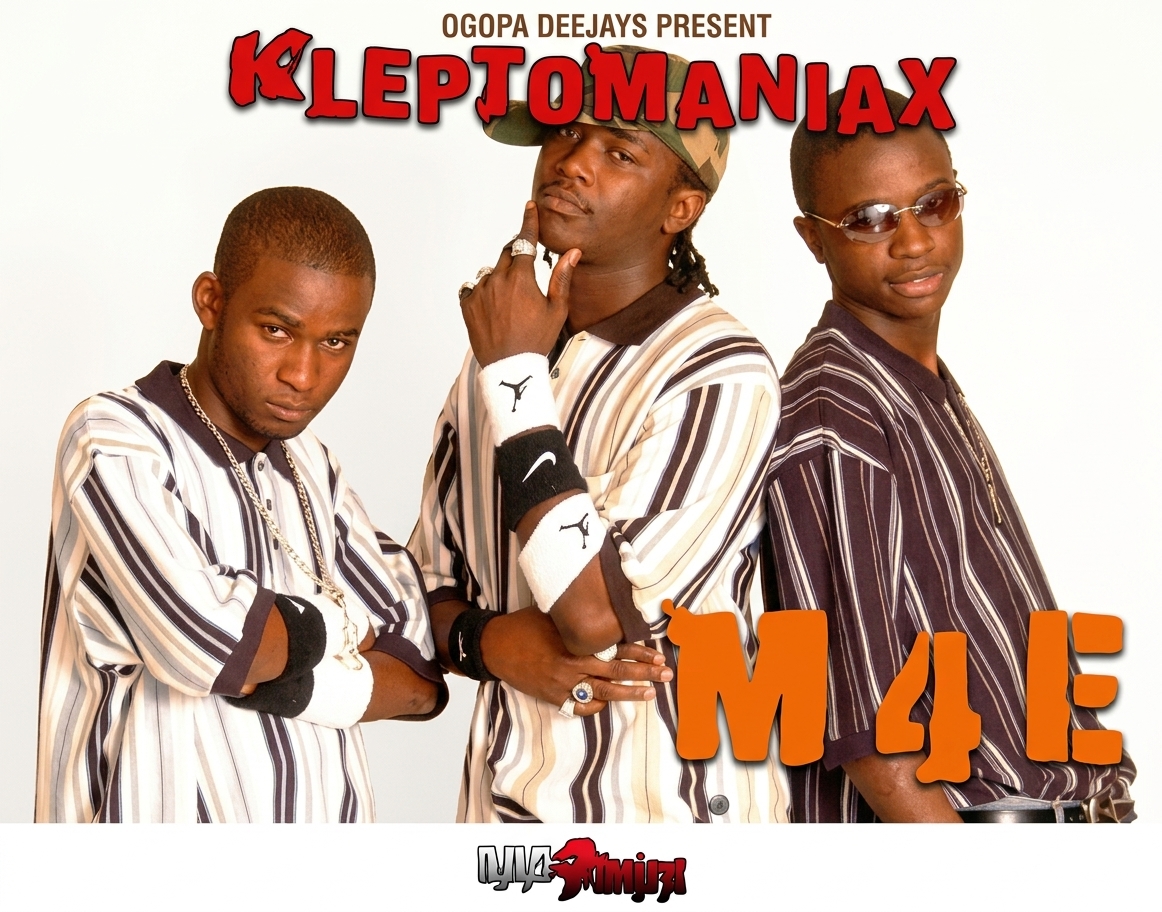
Blast From the Past: M4E (Maniax 4 Ever) by Kleptomaniax

Authored by

Kenyan music in the early 2000s was a game of competing sounds, shifting allegiances and artists fighting to define what the country’s hip-hop should and would sound like. 

At the centre of it all was Kleptomaniax, the Nairobi trio of Nyashinski, Collo (Collins Majale) and Roba (Robert Manyasa). Having emerged from the same high school, Nairobi School, in the late 1990s, the group found a home at Ogopa Deejays, where they helped popularise Kapuka — a dance-oriented sound that would become synonymous with the era. Their music was catchy, irreverent and unapologetically Kenyan, but not everyone was ready to give it its flowers.

Released in January 2005, M4E (Maniax 4 Ever) arrived at a time when Kenyan urban music was finding its feet and its voice. Across 15 tracks, Kleptomaniax moved between hip-hop, pop and the dance-floor rhythms that made Kapuka a cultural force. Songs like “Freak It", “Haree” and "Swing” captured the trio’s playful approach to music, making room for rap without sacrificing the hooks and infectious energy that kept listeners coming back. But beyond the hits and party-ready production, the album was also released at a time when Kapuka’s growing popularity had some hip-hop purists questioning whether the sound deserved to be taken seriously.

The debate was hardly new. As the sound gained popularity, some hip-hop purists questioned the legitimacy of the commercially successful sound associated with Ogopa Deejays. For artists like Kleptomaniax, the criticism raised questions about whether music made for the dance floor could command the same respect as more traditional forms of hip-hop. Rather than shy away from the conversation, the trio confronted it in their music. “What Is Kapuka”made the genre itself a subject, while “Tuendelee" would become one of their most memorable responses to the critics.

Released as a single in 2004 before appearing on M4E, “Tuendelee” – Swahili for ‘let’s continue’ – captured the group's refusal to let the debate dictate their direction. The song became associated with the tensions between Kapuka artists and hip-hop purists, turning a dispute over sound and credibility into a defining moment in Kenyan music history. Its message was simple, but its staying power was anything but: keep moving, keep making music and let the work speak for itself.

YetTuendelee outlived the controversy that helped make it famous. Its impact lay not only in the shots fired or the arguments it fuelled, but also in what it represented for a generation of Kenyan artists determined to make music on their own terms. The song helped cement Kleptomaniax's place in the country's musical memory, carrying the spirit of an era when local artists were testing the boundaries between hip-hop and pop, commercial appeal and cultural credibility. More than two decades later, its title still feels like a fitting instruction for an industry that continues to evolve.

Elsewhere on M4E, the group showed that their appeal extended beyond the controversies surrounding Kapuka. The album's collaborations, including “Au Sio” featuring Mr. Lenny and “Sichimbiki” featuring BIGPIN, reflected a scene built on shared sounds and creative exchange. Across the project, Kleptomaniax embraced the freedom to experiment, making music that could soundtrack a night out while remaining rooted in the language, humour and rhythms of home. They were not simply chasing a trend; they were helping shape the sound of Kenyan youth culture at a time when the local industry was becoming increasingly confident in its own identity.

Photo Credit: Nyashinski Deezer Profile

The group's journey would eventually take its members in different directions, with Nyashinski later establishing a successful solo career. But M4E remains an important chapter in the story of Kleptomaniax and the wider evolution of Kenyan popular music. It recalls a time when every new release could shift the conversation, when disagreements over genre became part of the culture and when artists were carving out space for sounds that did not always fit neatly into existing definitions.

Kleptomaniax may have had their share of critics, but history has been kind to the sound they helped build. If the years have softened the edges of the old rivalries, they have done little to dull the music. With M4E, the trio captured a scene in motion; with Tuendelee, they gave it a soundtrack for pushing forward. Sometimes the best response is not to stop and argue, but to keep making noise.

Cover: Kleptomaniax Album image

Blast From the Past: M4E (Maniax 4 Ever) by Kleptomaniax

Authored by
This is some text inside of a div block.

Kenyan music in the early 2000s was a game of competing sounds, shifting allegiances and artists fighting to define what the country’s hip-hop should and would sound like. 

At the centre of it all was Kleptomaniax, the Nairobi trio of Nyashinski, Collo (Collins Majale) and Roba (Robert Manyasa). Having emerged from the same high school, Nairobi School, in the late 1990s, the group found a home at Ogopa Deejays, where they helped popularise Kapuka — a dance-oriented sound that would become synonymous with the era. Their music was catchy, irreverent and unapologetically Kenyan, but not everyone was ready to give it its flowers.

Released in January 2005, M4E (Maniax 4 Ever) arrived at a time when Kenyan urban music was finding its feet and its voice. Across 15 tracks, Kleptomaniax moved between hip-hop, pop and the dance-floor rhythms that made Kapuka a cultural force. Songs like “Freak It", “Haree” and "Swing” captured the trio’s playful approach to music, making room for rap without sacrificing the hooks and infectious energy that kept listeners coming back. But beyond the hits and party-ready production, the album was also released at a time when Kapuka’s growing popularity had some hip-hop purists questioning whether the sound deserved to be taken seriously.

The debate was hardly new. As the sound gained popularity, some hip-hop purists questioned the legitimacy of the commercially successful sound associated with Ogopa Deejays. For artists like Kleptomaniax, the criticism raised questions about whether music made for the dance floor could command the same respect as more traditional forms of hip-hop. Rather than shy away from the conversation, the trio confronted it in their music. “What Is Kapuka”made the genre itself a subject, while “Tuendelee" would become one of their most memorable responses to the critics.

Released as a single in 2004 before appearing on M4E, “Tuendelee” – Swahili for ‘let’s continue’ – captured the group's refusal to let the debate dictate their direction. The song became associated with the tensions between Kapuka artists and hip-hop purists, turning a dispute over sound and credibility into a defining moment in Kenyan music history. Its message was simple, but its staying power was anything but: keep moving, keep making music and let the work speak for itself.

YetTuendelee outlived the controversy that helped make it famous. Its impact lay not only in the shots fired or the arguments it fuelled, but also in what it represented for a generation of Kenyan artists determined to make music on their own terms. The song helped cement Kleptomaniax's place in the country's musical memory, carrying the spirit of an era when local artists were testing the boundaries between hip-hop and pop, commercial appeal and cultural credibility. More than two decades later, its title still feels like a fitting instruction for an industry that continues to evolve.

Elsewhere on M4E, the group showed that their appeal extended beyond the controversies surrounding Kapuka. The album's collaborations, including “Au Sio” featuring Mr. Lenny and “Sichimbiki” featuring BIGPIN, reflected a scene built on shared sounds and creative exchange. Across the project, Kleptomaniax embraced the freedom to experiment, making music that could soundtrack a night out while remaining rooted in the language, humour and rhythms of home. They were not simply chasing a trend; they were helping shape the sound of Kenyan youth culture at a time when the local industry was becoming increasingly confident in its own identity.

Photo Credit: Nyashinski Deezer Profile

The group's journey would eventually take its members in different directions, with Nyashinski later establishing a successful solo career. But M4E remains an important chapter in the story of Kleptomaniax and the wider evolution of Kenyan popular music. It recalls a time when every new release could shift the conversation, when disagreements over genre became part of the culture and when artists were carving out space for sounds that did not always fit neatly into existing definitions.

Kleptomaniax may have had their share of critics, but history has been kind to the sound they helped build. If the years have softened the edges of the old rivalries, they have done little to dull the music. With M4E, the trio captured a scene in motion; with Tuendelee, they gave it a soundtrack for pushing forward. Sometimes the best response is not to stop and argue, but to keep making noise.

Cover: Kleptomaniax Album image

This is some text inside of a div block.

Blast From the Past: M4E (Maniax 4 Ever) by Kleptomaniax

Authored by

Kenyan music in the early 2000s was a game of competing sounds, shifting allegiances and artists fighting to define what the country’s hip-hop should and would sound like. 

At the centre of it all was Kleptomaniax, the Nairobi trio of Nyashinski, Collo (Collins Majale) and Roba (Robert Manyasa). Having emerged from the same high school, Nairobi School, in the late 1990s, the group found a home at Ogopa Deejays, where they helped popularise Kapuka — a dance-oriented sound that would become synonymous with the era. Their music was catchy, irreverent and unapologetically Kenyan, but not everyone was ready to give it its flowers.

Released in January 2005, M4E (Maniax 4 Ever) arrived at a time when Kenyan urban music was finding its feet and its voice. Across 15 tracks, Kleptomaniax moved between hip-hop, pop and the dance-floor rhythms that made Kapuka a cultural force. Songs like “Freak It", “Haree” and "Swing” captured the trio’s playful approach to music, making room for rap without sacrificing the hooks and infectious energy that kept listeners coming back. But beyond the hits and party-ready production, the album was also released at a time when Kapuka’s growing popularity had some hip-hop purists questioning whether the sound deserved to be taken seriously.

The debate was hardly new. As the sound gained popularity, some hip-hop purists questioned the legitimacy of the commercially successful sound associated with Ogopa Deejays. For artists like Kleptomaniax, the criticism raised questions about whether music made for the dance floor could command the same respect as more traditional forms of hip-hop. Rather than shy away from the conversation, the trio confronted it in their music. “What Is Kapuka”made the genre itself a subject, while “Tuendelee" would become one of their most memorable responses to the critics.

Released as a single in 2004 before appearing on M4E, “Tuendelee” – Swahili for ‘let’s continue’ – captured the group's refusal to let the debate dictate their direction. The song became associated with the tensions between Kapuka artists and hip-hop purists, turning a dispute over sound and credibility into a defining moment in Kenyan music history. Its message was simple, but its staying power was anything but: keep moving, keep making music and let the work speak for itself.

YetTuendelee outlived the controversy that helped make it famous. Its impact lay not only in the shots fired or the arguments it fuelled, but also in what it represented for a generation of Kenyan artists determined to make music on their own terms. The song helped cement Kleptomaniax's place in the country's musical memory, carrying the spirit of an era when local artists were testing the boundaries between hip-hop and pop, commercial appeal and cultural credibility. More than two decades later, its title still feels like a fitting instruction for an industry that continues to evolve.

Elsewhere on M4E, the group showed that their appeal extended beyond the controversies surrounding Kapuka. The album's collaborations, including “Au Sio” featuring Mr. Lenny and “Sichimbiki” featuring BIGPIN, reflected a scene built on shared sounds and creative exchange. Across the project, Kleptomaniax embraced the freedom to experiment, making music that could soundtrack a night out while remaining rooted in the language, humour and rhythms of home. They were not simply chasing a trend; they were helping shape the sound of Kenyan youth culture at a time when the local industry was becoming increasingly confident in its own identity.

Photo Credit: Nyashinski Deezer Profile

The group's journey would eventually take its members in different directions, with Nyashinski later establishing a successful solo career. But M4E remains an important chapter in the story of Kleptomaniax and the wider evolution of Kenyan popular music. It recalls a time when every new release could shift the conversation, when disagreements over genre became part of the culture and when artists were carving out space for sounds that did not always fit neatly into existing definitions.

Kleptomaniax may have had their share of critics, but history has been kind to the sound they helped build. If the years have softened the edges of the old rivalries, they have done little to dull the music. With M4E, the trio captured a scene in motion; with Tuendelee, they gave it a soundtrack for pushing forward. Sometimes the best response is not to stop and argue, but to keep making noise.

Cover: Kleptomaniax Album image

Other Stories
London
London
Lagos
London
Newyork
London
Shop
Join the community.
You are now subscribed to receive updates.
Oops! Something went wrong while submitting the form.
Subscribe