.svg)

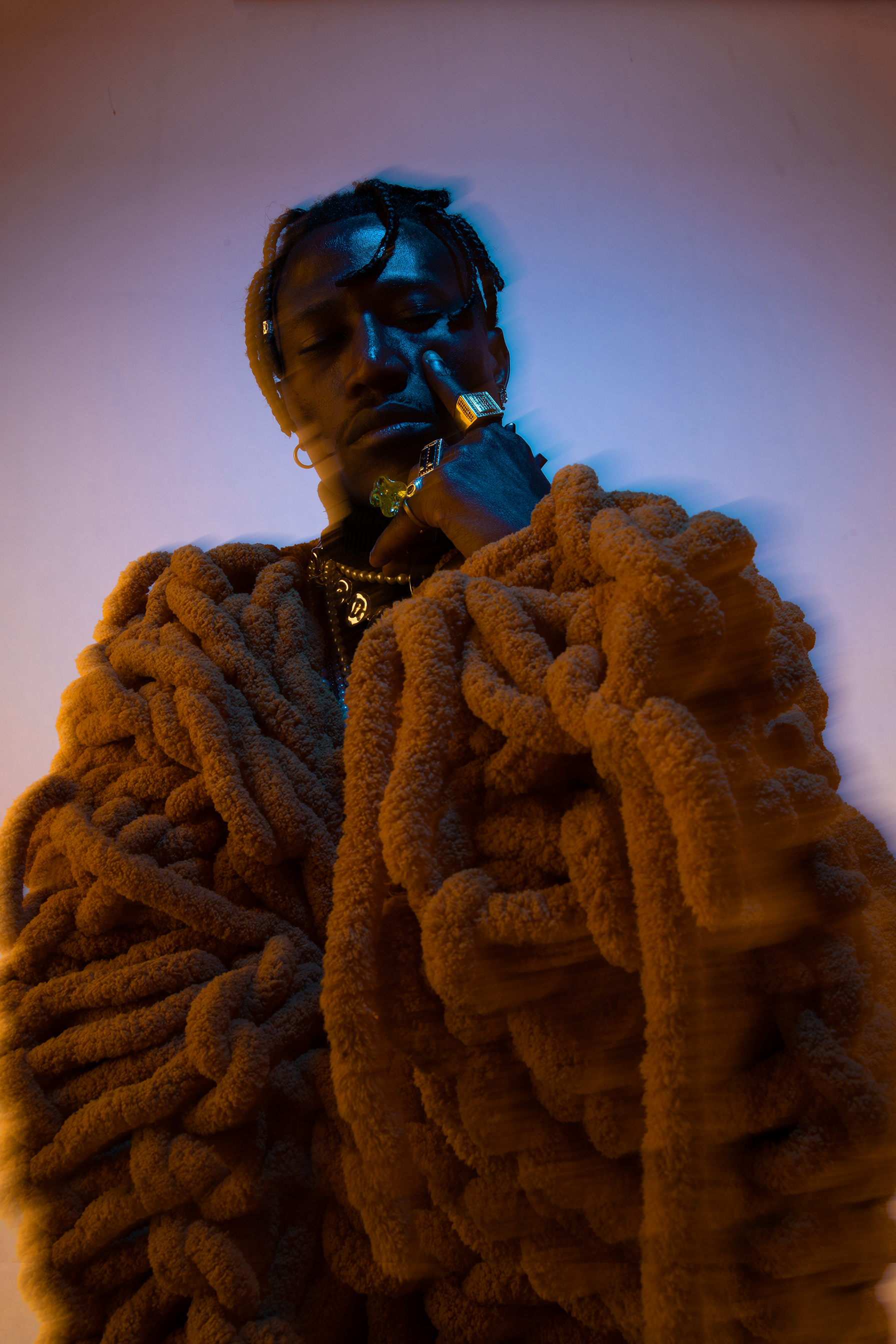
Few artists have shaped Kenya’s hip-hop conversation as consistently as Octopizzo. The bar-spitting veteran’s career has grown from the streets of Kibera into a body of work spanning music, culture and social impact. From the raw ambition of S.O.N. (Strugglers of Nairobi) to the socially conscious Refugeenius, the genre-bending Jungle Fever and the coastal romance of Lamu Nights, he has spent nearly two decades refusing to sit still.
Earlier this year came In The Meantime, a project that, even in its title, suggested a pause between what had been and what was still coming. Now, that “meantime” has given way to his ninth studio album, IBRAHYMN – a more introspective body of work that finds the rapper looking inward at identity, faith, mortality, power, youth and what it means to grow older on the continent.
Debuting at number one on the Apple Music Top Albums in Kenya chart, IBRAHYMN marks another evolution in Octopizzo’s already expansive catalogue. Across its 14 tracks, the album reaches beyond Kenya, bringing together artists and influences from across the continent while keeping Nairobi firmly at its centre.
That wider ambition carries into the album’s visual rollout, with Octopizzo treating its music videos as extensions of the world he is building around the record rather than simple accompaniments to the songs. The result is a project that feels increasingly interested in image, identity and mythology as much as it is in bars.
It is also a natural progression for an artist whose work has long stretched beyond music. Through the Octopizzo Foundation, his creative platform has become a vehicle for youth development and community work, giving another dimension to the questions of purpose and legacy that run through IBRAHYMN. More aptly the album arrives at a point where the music heavyweight appears less interested in proving that he can rap than in asking what the music is supposed to mean after the proving is done.
Conversing with Deeds, Octopizzo reflects on IBRAHYMN, creative reinvention, the changing landscape of African hip-hop, his relationship with Kibera, the responsibility that comes with growing older and what he ultimately hopes his catalogue will leave behind.
Stanley for Deeds: For readers discovering you and your music for the first time, how do you introduce yourself at this stage of your life and career?
I’m Octopizzo. I’m an artist, but I’ve never really seen myself as just a musician. I’m a product of Kibera, of Nairobi, of Africa and of every experience that tried to break me and somehow became material for the music.
At this stage of my life, I’m less interested in introducing myself through titles and more interested in what I’ve built. I’m a storyteller, a student of life, a father, a creative, a social entrepreneur, and somebody who has spent over a decade turning survival into sound.
I came from a place where sometimes having a dream was already an act of rebellion. So everything I’ve done since has been about proving that where you come from can inform your story without defining your destination. I’m still Octopizzo, just with more scars, more wisdom, more questions and a much bigger canvas.
IBRAHYMN arrives after more than a decade of albums, experiments and reinventions. What did you want this project to say or explore that you hadn’t already said before?
IBRAHYMN is not me trying to prove that I can rap. I’ve already had that conversation with myself a long time ago. This album is me asking bigger questions. What happens when the kid who was once fighting to be heard finally gets the microphone and realizes the world is much bigger than his own struggle?
I wanted to explore identity, faith, rebellion, mortality, Africa, power, youth, culture and the contradictions of becoming a man in this continent. There’s a lot of my younger self in the album, but there’s also the voice of somebody who has lived long enough to understand that sometimes the greatest flex is self-awareness.
IBRAHYMN is a spiritual conversation disguised as a hip-hop record. It’s me talking to the unknown, talking to Africa, talking to the streets, talking to the younger generation and sometimes talking to myself.
There’s a real sense of movement across the album, sonically and geographically, with collaborators from Kenya and different parts of Africa. Was there a conscious intention to make IBRAHYMN feel like more than a Kenyan hip-hop record?
Absolutely. I love Kenya deeply, but I don’t believe my imagination should stop at the border. Africa is not a collection of separate markets to me. It’s one massive cultural organism with different accents, different rhythms, different histories but a shared heartbeat.
So IBRAHYMN was always supposed to travel. I wanted Nairobi to be the home base, but I wanted the music to have passports. You can hear Kenya in it, but you can also hear Lagos, Accra, Dakar, Johannesburg, Kampala even places that don’t have a physical coordinate in the music but exist in the spirit of it. Hip-hop taught me that the block could become the world. Now Africa has to understand that the continent can become the block.
You’ve brought artists like Nneka, Young Lunya and AraTheJay into this project. What are you hearing in African artists outside Kenya right now that excites you, and what makes you want to bring someone into your world creatively?
What excites me is that African artists are no longer waiting for somebody outside Africa to validate what we already know. There’s hunger. There’s experimentation. There’s identity. You have young artists who are taking traditional sounds, street language, electronic music, hip-hop, Afrobeats, alternative music and completely disrespecting the idea that they have to choose one box. That’s exciting to me.
When I bring somebody into my world, I’m not looking for somebody who sounds like me. I’m looking for somebody who has something I don’t have. I want friction. I want chemistry. I want somebody to walk into the room with a completely different DNA and somehow we create a third language together. That’s how culture grows, not through imitation, but through collision.
You’ve moved through very different musical worlds over the years. Do you see that as constant reinvention, or are you simply following wherever your curiosity takes you?
I think reinvention is what happens when you refuse to die creatively. I’ve never been interested in making the same album twice. Chocolate city was one version of me. Jungle Fever was another. Lamu Nights was another. Refugeenius was another. IBRAHYMN is another chapter. But I don’t necessarily wake up saying, “Today I’m going to reinvent myself.” I follow curiosity.
If something makes me uncomfortable, I want to understand it. If a sound scares me, I want to touch it. If somebody tells me, “You can’t do that,” sometimes that’s exactly where I want to go. The only thing that has remained constant is that I refuse to let the audience know what I’m going to do next.
When you listen back to Namba Nane now, what do you hear in that younger Octopizzo that still exists in the artist you are today and what feels completely foreign?
I hear hunger. That kid was hungry for recognition, hungry for escape, hungry to prove that somebody from Kibera could stand on a stage and command the room. That hunger is still here. What has changed is what I’m hungry for.
Back then, I wanted the world to know my name. Today, I want the work to mean something after my name is no longer the headline. The younger Octopizzo was fighting to be seen. The man I am today is more interested in seeing. That’s probably the biggest difference.
How much of the music you make today is driven by who you are now, versus the younger version of yourself who had something to prove?
The younger version of me still sits in the studio sometimes. He’s still angry. Still ambitious. Still asking, “Are they going to respect us now?” But I don’t let him drive the car anymore.
Today I make music from a place of choice rather than desperation. When you’re young, you create because you need the world to acknowledge your existence. As you grow older, you start creating because you have something to say. That’s a completely different energy. I don’t need every room to accept me anymore. I just need to remain honest when I enter it.
You’ve spent much of your career turning lived experience into music. Does storytelling become harder or easier when you have more life behind you to draw from?
It becomes harder, because the older you get, the more you understand the weight of the truth. When I was younger, I could tell a story and just bleed on the microphone. Now I understand that every story has people attached to it. Families. Children. Memories. Consequences. Sometimes the truth isn’t just yours to tell.
But at the same time, life gives you more layers. When you’re twenty, heartbreak is heartbreak. At forty, you understand that heartbreak can be about your father, your family members, your children, your country, your younger self, the person you became, or the person you never got to become. So the stories become deeper. You stop just describing what happened.
You start asking why it happened, what it changed, who it made you, and what you’re supposed to do with the scars. That’s where storytelling becomes almost spiritual.
You’ve watched several generations of Kenyan artists come through. What does this generation understand about the industry that yours had to learn the hard way and what do younger artists sometimes underestimate?
This generation understands ownership of attention better than we did. They understand social media. They understand personal branding. They understand that you don’t necessarily need a gatekeeper to reach an audience anymore. We came up knocking on doors. They can build their own door. But sometimes they underestimate the difference between attention and legacy. Going viral is not a career. A million views can happen overnight. Building something that still matters ten years later is a different game.
The algorithm can introduce you to the world, but it cannot give you discipline. You still have to develop the craft. You still have to understand contracts. You still have to protect your publishing. You still have to know your value. You have to learn how to survive when the cameras disappear. The streets can make you famous. But longevity requires structure.
Kenyan artists are increasingly collaborating across the continent. Do you think we’re beginning to understand the size of the African market, or are there still ways Kenyan music could think bigger?
I think we’re beginning to understand it, but we’re still standing at the entrance of the building. Africa is massive. The mistake is thinking that success means becoming popular in Kenya and then hoping somebody in Nigeria, South Africa or Ghana notices you.
We need to think continentally from the beginning. Why can’t a Kenyan artist build an audience in Dakar? Why can’t a producer from Kibera be making records for artists in Lagos? Why can’t Nairobi become a major export hub for African culture? We need stronger infrastructure around distribution, publishing, touring, festivals, licensing and intellectual property. Because the talent is not the problem. The talent has never been the problem. The question is whether we can build the systems around the talent that allow African creativity to circulate like African music already does in our streets.
Your story is inseparable from Kibera, but your career has taken you far beyond it. How has your relationship with home changed as your world has expanded?
Kibera stopped being just a place a long time ago. It became a language. I can travel to Copenhagen, Lagos, Paris, Accra, Berlin or New York, and somehow I still carry that dusty road from Mashimoni with me. The older I get, the more I understand that home isn’t necessarily where you sleep. Sometimes home is the lens through which you see the world. Kibera taught me observation. It taught me resilience. It taught me how to find beauty in places where people only see struggle. And the further I travel, the more I appreciate what it gave me. I used to want to escape Kibera. Now I realize I was supposed to expand Kibera into the world.

Your work through the Octopizzo Foundation has become an important part of your story beyond music. At what point did being an artist start feeling like more than making music?
When you come from a place where you’ve personally seen the problems, it’s difficult to just become successful and pretend you don’t see them anymore. Music gave me a microphone. But eventually I realized a microphone can describe a problem without necessarily changing it. So I started asking myself: What can I actually build? That’s where the Foundation became important. Whether we’re working around education, water, food security, creative opportunities, refugees or young people, the philosophy is simple: dignity first. I don’t believe in saving people.
I believe in creating conditions where people can save themselves. Because I know what it feels like to have somebody look at you and see your circumstances before they see your potential. I want the young person growing up in Kibera to understand that their postcode is not a prophecy.

After all these years, what do you still feel you haven’t figured out creatively? And when you eventually look back at the full Octopizzo catalogue and everything you’ve built around it, what do you hope people understand?
I haven’t figured out how to make the perfect record. And I hope I never do. Because the moment you think you’ve figured everything out, curiosity dies. I’m still trying to understand how far I can stretch hip-hop. How African can it become? How experimental can it become? How much truth can a song hold before it becomes uncomfortable?
And when people eventually look back at this catalogue, I don’t want them to see a guy who made a lot of music. I want them to see a document of a time. A kid from Kibera growing into a man while Kenya was changing around him. I want them to hear Nairobi before it became whatever Nairobi becomes tomorrow. I want them to hear the youth, the anger, the laughter, the politics, the love, the poverty, the ambition, the contradictions, the African dream.
Because ultimately, that’s what I’ve been doing all these years. Documenting the journey. Not just my journey. Ours. And if, years from now, somebody plays an Octopizzo record and says, “This is what it felt like to be young, African and alive in that era,” then I think I did what I came here to do.
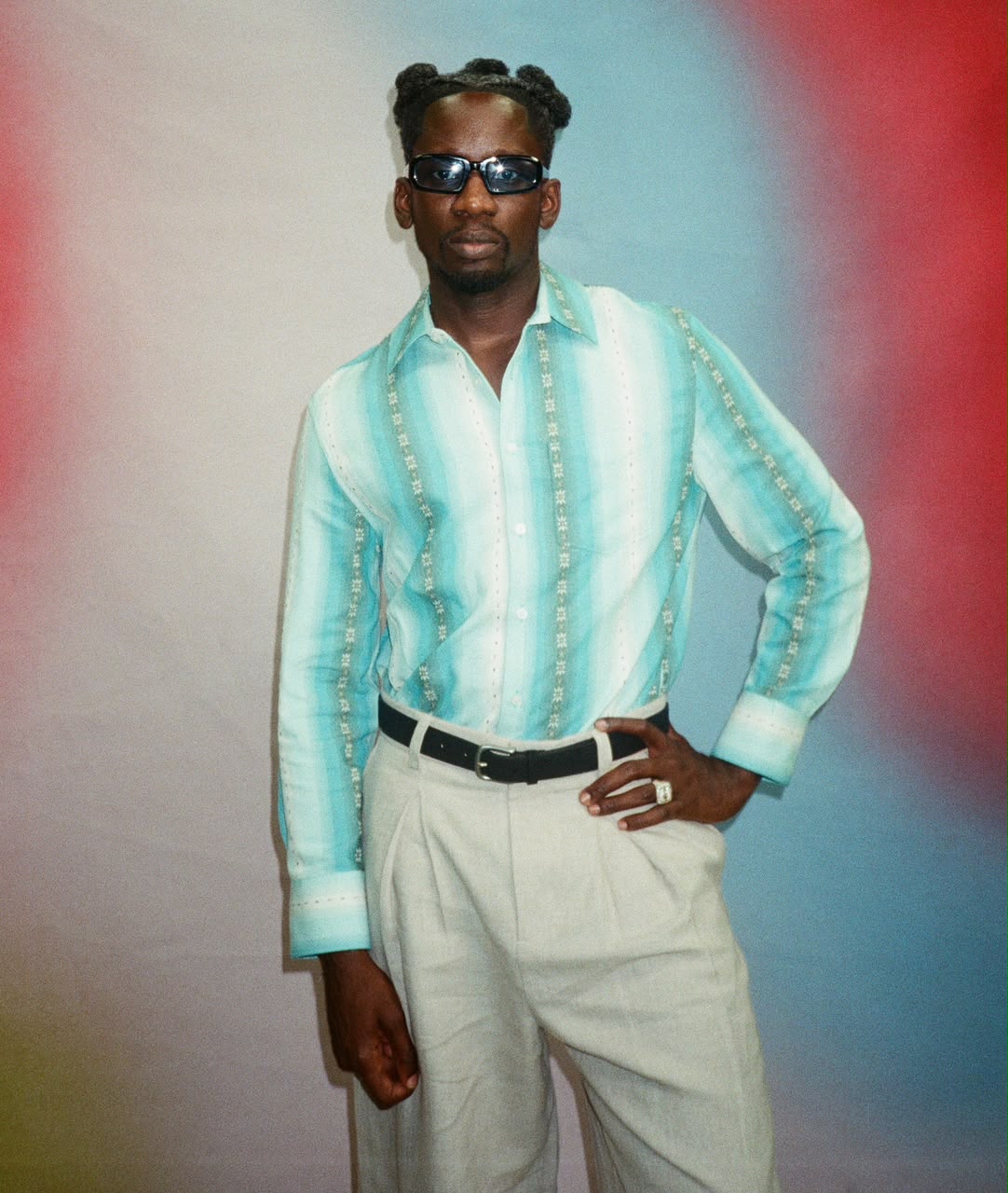
Cover : Courtesy of Octopizzo
.JPG)


.png)

