Corteiz x Gabriel Moses: When the Concept Outweighs the Collection

Authored by

The cultural logic of Corteiz x Gabriel Moses was never the question. Gabriel Moses is the Nigerian-British filmmaker and photographer whose brooding, precise visual language has shaped how a generation of Black British culture sees itself.From his short films to his editorial work, his lens carries a specific kind of authority that very few of his contemporaries have earned. He has directed for Corteiz, shot Rihanna, Lauryn Hill , Usher, Dave, Skepta, Rema, Louis Vuitton, Travis Scott , Wizkid and Solange received a co-sign from Pharrell Williams, and built a visual world so distinct that when his name is attached to something, it arrives with a reputation that precedes the work itself. Corteiz, the London streetwear label founded by Clint, built its empire not on advertising or accessibility but on community, scarcity, and a studied refusal to perform for anyone outside its own world. Two creatives who have never needed external validation to know their own worth. What a collaboration like this has to answer for is what it actually puts in your hands, and on that front, this one has less to say than it should. 

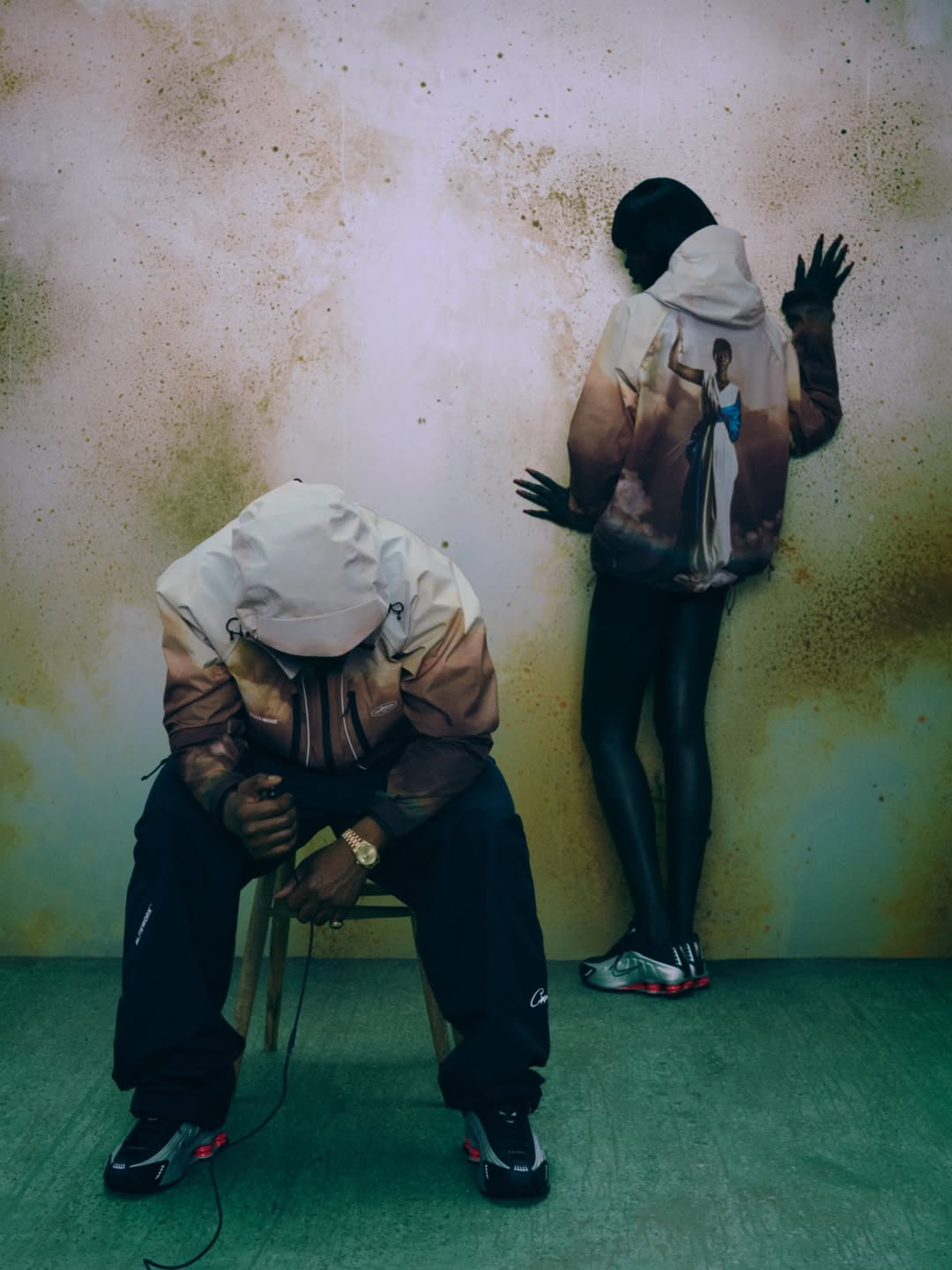
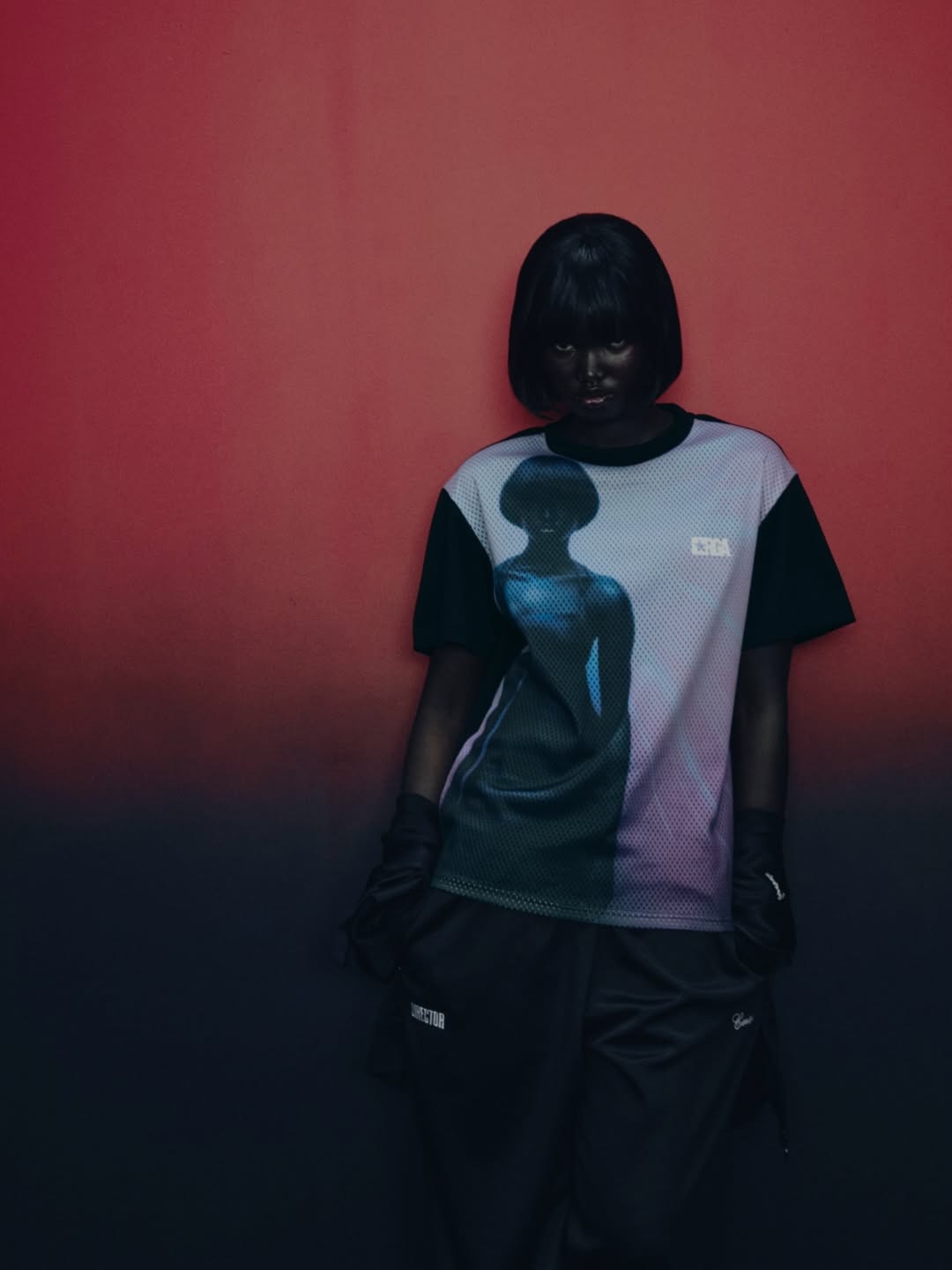
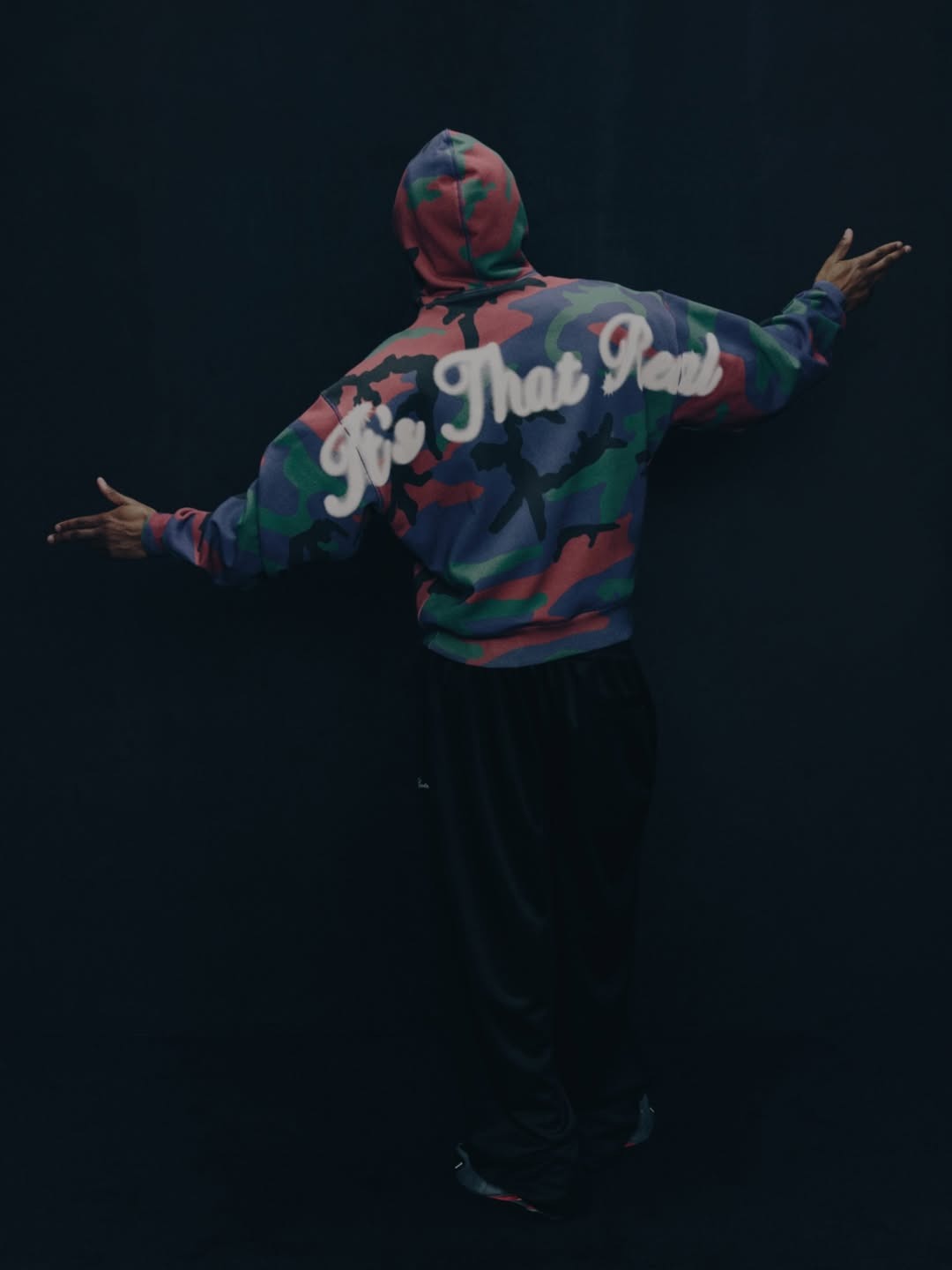
The collection, available Friday, May 1 2026, at 7 p.m. London time on the Corteiz website centres on windbreakers carrying printed photographic imagery, Moses’ visual archive translated directly onto outerwear. His Torch Lady motif, the Columbia Pictures logo redrawn as a Black woman holding the flame, appears on the back of one piece. Alongside it: a Pan-African colourway windbreaker, a camo hoodie reading “It’s that real” in script on the back, a “Regina” track jacket, a “Director” piece, and a CRGA cap.
Credit: Corteiz x Gabriel Moses

The campaign, shot by Moses and starring Moses, is exactly what you would expect. Brooding, precise, cinematic. South London walls. Bodies pressed against concrete. Within hours of posting to Instagram, it had pulled 23.2K likes. The images earned every one of them.

But images and garments are different things. Moses' Torch Lady is a loaded symbol, a deliberate rewriting of whose likeness gets to represent power and cultural authority. In his films, his photography, his editorial work, that image carries context and arrives with the full weight of his practice behind it. On the back of a windbreaker, that context does not automatically transfer. What was once a statement becomes a print. What was once a reclamation becomes something you can sell out in four minutes on a website. 

It borrows the cultural weight of both names without doing the design work to justify the borrowing. Printed photography on outerwear is not a new idea. “Regina” on the back of a track jacket gestures at meaning without committing to one. The garments feel like they arrived at the concept and stopped there, as if the pairing itself was enough and the clothes were secondary.

Corteiz has always understood that the product has to match the mythology. The Nike collaboration delivered because Moses’ direction gave it a visual language they could live inside. Here, the visual language is doing all the heavy lifting while the clothes stand behind it, hoping proximity is enough.
Credit: Corteiz x Gabriel Moses

The most telling piece in the collection is the camo hoodie reading "It's That Real" across the back. It is a declaration wearing the shape of an argument. But a slogan on a hoodie only works when the garment earns the words. This one does not. It assumes the cultural weight of both names will carry the claim across the finish line. For a collection built around an image as specific and loaded as the Torch Lady, that is the one thing it should never have relied on.

IG: @ffeistyhuman
Corteiz x Gabriel Moses: When the Concept Outweighs the Collection

Authored by
This is some text inside of a div block.

The cultural logic of Corteiz x Gabriel Moses was never the question. Gabriel Moses is the Nigerian-British filmmaker and photographer whose brooding, precise visual language has shaped how a generation of Black British culture sees itself.From his short films to his editorial work, his lens carries a specific kind of authority that very few of his contemporaries have earned. He has directed for Corteiz, shot Rihanna, Lauryn Hill , Usher, Dave, Skepta, Rema, Louis Vuitton, Travis Scott , Wizkid and Solange received a co-sign from Pharrell Williams, and built a visual world so distinct that when his name is attached to something, it arrives with a reputation that precedes the work itself. Corteiz, the London streetwear label founded by Clint, built its empire not on advertising or accessibility but on community, scarcity, and a studied refusal to perform for anyone outside its own world. Two creatives who have never needed external validation to know their own worth. What a collaboration like this has to answer for is what it actually puts in your hands, and on that front, this one has less to say than it should. 

The collection, available Friday, May 1 2026, at 7 p.m. London time on the Corteiz website centres on windbreakers carrying printed photographic imagery, Moses’ visual archive translated directly onto outerwear. His Torch Lady motif, the Columbia Pictures logo redrawn as a Black woman holding the flame, appears on the back of one piece. Alongside it: a Pan-African colourway windbreaker, a camo hoodie reading “It’s that real” in script on the back, a “Regina” track jacket, a “Director” piece, and a CRGA cap.

Credit: Corteiz x Gabriel Moses

The campaign, shot by Moses and starring Moses, is exactly what you would expect. Brooding, precise, cinematic. South London walls. Bodies pressed against concrete. Within hours of posting to Instagram, it had pulled 23.2K likes. The images earned every one of them.

But images and garments are different things. Moses' Torch Lady is a loaded symbol, a deliberate rewriting of whose likeness gets to represent power and cultural authority. In his films, his photography, his editorial work, that image carries context and arrives with the full weight of his practice behind it. On the back of a windbreaker, that context does not automatically transfer. What was once a statement becomes a print. What was once a reclamation becomes something you can sell out in four minutes on a website. 

It borrows the cultural weight of both names without doing the design work to justify the borrowing. Printed photography on outerwear is not a new idea. “Regina” on the back of a track jacket gestures at meaning without committing to one. The garments feel like they arrived at the concept and stopped there, as if the pairing itself was enough and the clothes were secondary.

Corteiz has always understood that the product has to match the mythology. The Nike collaboration delivered because Moses’ direction gave it a visual language they could live inside. Here, the visual language is doing all the heavy lifting while the clothes stand behind it, hoping proximity is enough.

Credit: Corteiz x Gabriel Moses

The most telling piece in the collection is the camo hoodie reading "It's That Real" across the back. It is a declaration wearing the shape of an argument. But a slogan on a hoodie only works when the garment earns the words. This one does not. It assumes the cultural weight of both names will carry the claim across the finish line. For a collection built around an image as specific and loaded as the Torch Lady, that is the one thing it should never have relied on.

IG: @ffeistyhuman
This is some text inside of a div block.

Corteiz x Gabriel Moses: When the Concept Outweighs the Collection

Authored by

The cultural logic of Corteiz x Gabriel Moses was never the question. Gabriel Moses is the Nigerian-British filmmaker and photographer whose brooding, precise visual language has shaped how a generation of Black British culture sees itself.From his short films to his editorial work, his lens carries a specific kind of authority that very few of his contemporaries have earned. He has directed for Corteiz, shot Rihanna, Lauryn Hill , Usher, Dave, Skepta, Rema, Louis Vuitton, Travis Scott , Wizkid and Solange received a co-sign from Pharrell Williams, and built a visual world so distinct that when his name is attached to something, it arrives with a reputation that precedes the work itself. Corteiz, the London streetwear label founded by Clint, built its empire not on advertising or accessibility but on community, scarcity, and a studied refusal to perform for anyone outside its own world. Two creatives who have never needed external validation to know their own worth. What a collaboration like this has to answer for is what it actually puts in your hands, and on that front, this one has less to say than it should. 

The collection, available Friday, May 1 2026, at 7 p.m. London time on the Corteiz website centres on windbreakers carrying printed photographic imagery, Moses’ visual archive translated directly onto outerwear. His Torch Lady motif, the Columbia Pictures logo redrawn as a Black woman holding the flame, appears on the back of one piece. Alongside it: a Pan-African colourway windbreaker, a camo hoodie reading “It’s that real” in script on the back, a “Regina” track jacket, a “Director” piece, and a CRGA cap.

Credit: Corteiz x Gabriel Moses

The campaign, shot by Moses and starring Moses, is exactly what you would expect. Brooding, precise, cinematic. South London walls. Bodies pressed against concrete. Within hours of posting to Instagram, it had pulled 23.2K likes. The images earned every one of them.

But images and garments are different things. Moses' Torch Lady is a loaded symbol, a deliberate rewriting of whose likeness gets to represent power and cultural authority. In his films, his photography, his editorial work, that image carries context and arrives with the full weight of his practice behind it. On the back of a windbreaker, that context does not automatically transfer. What was once a statement becomes a print. What was once a reclamation becomes something you can sell out in four minutes on a website. 

It borrows the cultural weight of both names without doing the design work to justify the borrowing. Printed photography on outerwear is not a new idea. “Regina” on the back of a track jacket gestures at meaning without committing to one. The garments feel like they arrived at the concept and stopped there, as if the pairing itself was enough and the clothes were secondary.

Corteiz has always understood that the product has to match the mythology. The Nike collaboration delivered because Moses’ direction gave it a visual language they could live inside. Here, the visual language is doing all the heavy lifting while the clothes stand behind it, hoping proximity is enough.

Credit: Corteiz x Gabriel Moses

The most telling piece in the collection is the camo hoodie reading "It's That Real" across the back. It is a declaration wearing the shape of an argument. But a slogan on a hoodie only works when the garment earns the words. This one does not. It assumes the cultural weight of both names will carry the claim across the finish line. For a collection built around an image as specific and loaded as the Torch Lady, that is the one thing it should never have relied on.

IG: @ffeistyhuman
Other Stories
London
London
Lagos
London
Newyork
London
Shop
Join the community.
You are now subscribed to receive updates.
Oops! Something went wrong while submitting the form.