Fally Ipupa: The Artist Africa Knew Before the World Did.

Authored by

In August 2010, a teenage Wizkid posted on X: “I like Fally Ipupa’s music nd style!! lol.. tho I don’t understand wat he say’s bt d tin jst sweet!..” A year later, in October 2011, he was back: “gatto do something wit fally ipupa too!!…” He eventually did - on 'Yakuza', roughly a decade ago. Now they have 'Jam'. Some things are simply inevitable.

West Africa has always felt the pull of Fally Ipupa’s sound travelling across borders, subverting language and cultural barriers for years before any formal introduction was necessary. “Jam” is one of those moments.​​​​​​​​​​​​​​​​

For the West African listener encountering Fally Ipupa properly for the first time, the context matters. Often referred to as the “Prince of Rumba,” Fally is a Congolese musician known for his tenor vocals and his fusion of Congolese rumba, soukous and ndombolo.  This year marks 20 years of his solo career which began with the 2006 release of his debut studio album Droit Chemin. Set to honour 20 years of relentless hits, he is set to release his eighth studio album, XX with performing two back-to-back sold out shows at the Stade de France.  
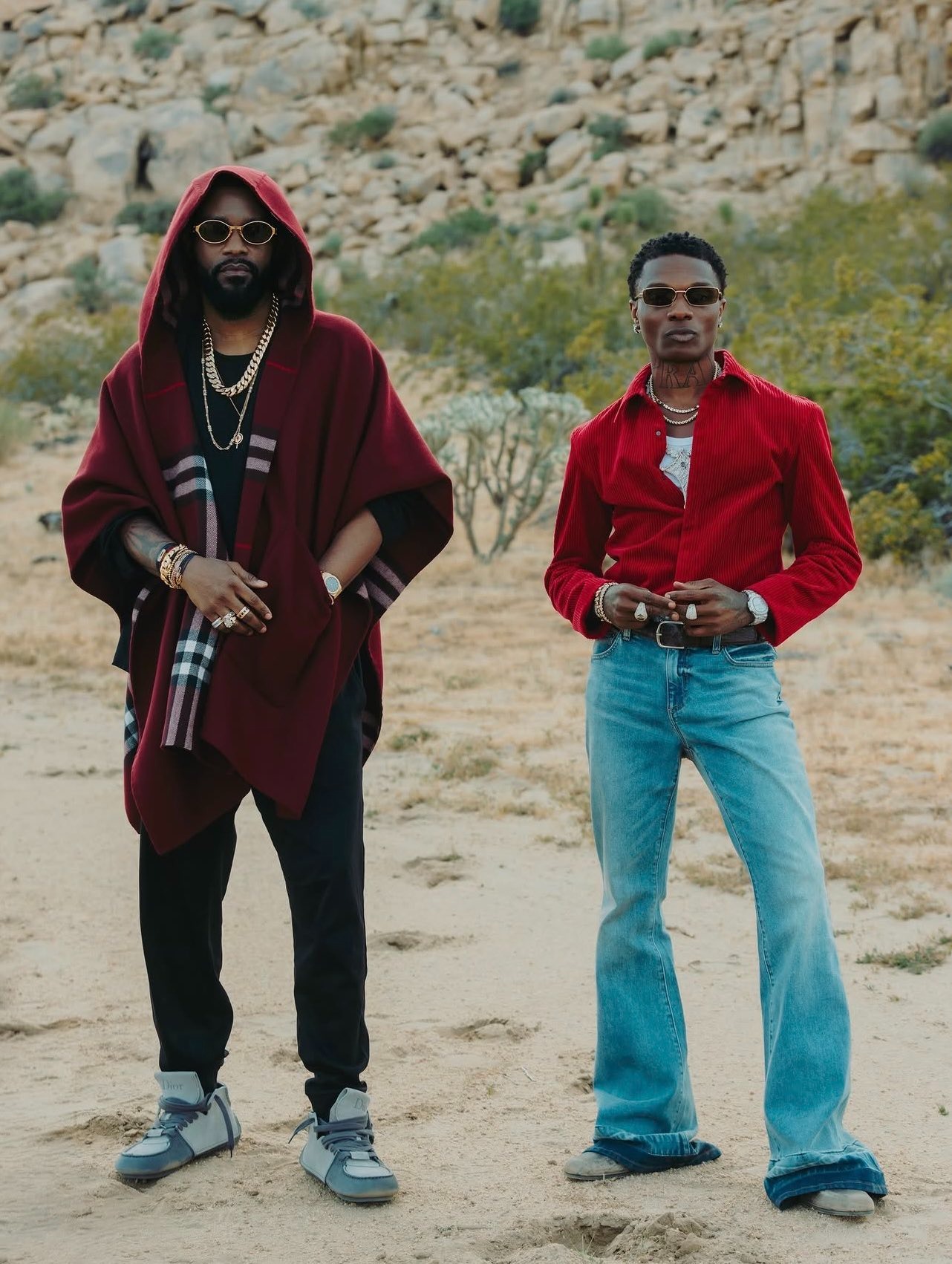
Credit: Fally Ipupa and Wizkid

“Jam” sits within XX as  a reunion of sorts, the two artists having last worked together roughly a decade ago on ‘Yakuza’.  But those old tweets reframe the collaboration entirely. Wizkid’s admiration for Fally did not begin in a studio. That is the most honest kind of appreciation there is, and ‘Jam’ sounds like the product of it.

The song does not rush. Fally’s vocal runs carry the weight of the track while Wizkid moves alongside them, unhurried, his delivery fitting the soukous-influenced rhythm rather than pulling against it.  Producer Trésor Riziki keeps the production clean, blending organic and electronic textures without crowding the space the vocalists need.  The soukous-influenced rhythm underneath is the kind that the body recognises before the mind does - familiar on first listen, satisfying on every listen after. The hook is simple and stubborn. It stays.It does not demand anything except attention, and it rewards that attention without making a fuss about it.

When fans found those old tweets and replied “Now we have Jam” -  they were marking something beyond a release. Fally Ipupa has spent two decades being one of the most significant artists on this continent. That this is many people's first proper encounter with him says less about the music and more about the walls that have kept African scenes from fully hearing each other.

IG:@ffeistyhuman

Fally Ipupa: The Artist Africa Knew Before the World Did.

Authored by
This is some text inside of a div block.

In August 2010, a teenage Wizkid posted on X: “I like Fally Ipupa’s music nd style!! lol.. tho I don’t understand wat he say’s bt d tin jst sweet!..” A year later, in October 2011, he was back: “gatto do something wit fally ipupa too!!…” He eventually did - on 'Yakuza', roughly a decade ago. Now they have 'Jam'. Some things are simply inevitable.

West Africa has always felt the pull of Fally Ipupa’s sound travelling across borders, subverting language and cultural barriers for years before any formal introduction was necessary. “Jam” is one of those moments.​​​​​​​​​​​​​​​​

For the West African listener encountering Fally Ipupa properly for the first time, the context matters. Often referred to as the “Prince of Rumba,” Fally is a Congolese musician known for his tenor vocals and his fusion of Congolese rumba, soukous and ndombolo.  This year marks 20 years of his solo career which began with the 2006 release of his debut studio album Droit Chemin. Set to honour 20 years of relentless hits, he is set to release his eighth studio album, XX with performing two back-to-back sold out shows at the Stade de France.  

Credit: Fally Ipupa and Wizkid

“Jam” sits within XX as  a reunion of sorts, the two artists having last worked together roughly a decade ago on ‘Yakuza’.  But those old tweets reframe the collaboration entirely. Wizkid’s admiration for Fally did not begin in a studio. That is the most honest kind of appreciation there is, and ‘Jam’ sounds like the product of it.

The song does not rush. Fally’s vocal runs carry the weight of the track while Wizkid moves alongside them, unhurried, his delivery fitting the soukous-influenced rhythm rather than pulling against it.  Producer Trésor Riziki keeps the production clean, blending organic and electronic textures without crowding the space the vocalists need.  The soukous-influenced rhythm underneath is the kind that the body recognises before the mind does - familiar on first listen, satisfying on every listen after. The hook is simple and stubborn. It stays.It does not demand anything except attention, and it rewards that attention without making a fuss about it.

When fans found those old tweets and replied “Now we have Jam” -  they were marking something beyond a release. Fally Ipupa has spent two decades being one of the most significant artists on this continent. That this is many people's first proper encounter with him says less about the music and more about the walls that have kept African scenes from fully hearing each other.
IG:@ffeistyhuman

This is some text inside of a div block.

Fally Ipupa: The Artist Africa Knew Before the World Did.

Authored by

In August 2010, a teenage Wizkid posted on X: “I like Fally Ipupa’s music nd style!! lol.. tho I don’t understand wat he say’s bt d tin jst sweet!..” A year later, in October 2011, he was back: “gatto do something wit fally ipupa too!!…” He eventually did - on 'Yakuza', roughly a decade ago. Now they have 'Jam'. Some things are simply inevitable.

West Africa has always felt the pull of Fally Ipupa’s sound travelling across borders, subverting language and cultural barriers for years before any formal introduction was necessary. “Jam” is one of those moments.​​​​​​​​​​​​​​​​

For the West African listener encountering Fally Ipupa properly for the first time, the context matters. Often referred to as the “Prince of Rumba,” Fally is a Congolese musician known for his tenor vocals and his fusion of Congolese rumba, soukous and ndombolo.  This year marks 20 years of his solo career which began with the 2006 release of his debut studio album Droit Chemin. Set to honour 20 years of relentless hits, he is set to release his eighth studio album, XX with performing two back-to-back sold out shows at the Stade de France.  

Credit: Fally Ipupa and Wizkid

“Jam” sits within XX as  a reunion of sorts, the two artists having last worked together roughly a decade ago on ‘Yakuza’.  But those old tweets reframe the collaboration entirely. Wizkid’s admiration for Fally did not begin in a studio. That is the most honest kind of appreciation there is, and ‘Jam’ sounds like the product of it.

The song does not rush. Fally’s vocal runs carry the weight of the track while Wizkid moves alongside them, unhurried, his delivery fitting the soukous-influenced rhythm rather than pulling against it.  Producer Trésor Riziki keeps the production clean, blending organic and electronic textures without crowding the space the vocalists need.  The soukous-influenced rhythm underneath is the kind that the body recognises before the mind does - familiar on first listen, satisfying on every listen after. The hook is simple and stubborn. It stays.It does not demand anything except attention, and it rewards that attention without making a fuss about it.

When fans found those old tweets and replied “Now we have Jam” -  they were marking something beyond a release. Fally Ipupa has spent two decades being one of the most significant artists on this continent. That this is many people's first proper encounter with him says less about the music and more about the walls that have kept African scenes from fully hearing each other.

IG:@ffeistyhuman

Other Stories
London
London
Lagos
London
Newyork
London
Shop
Join the community.
You are now subscribed to receive updates.
Oops! Something went wrong while submitting the form.