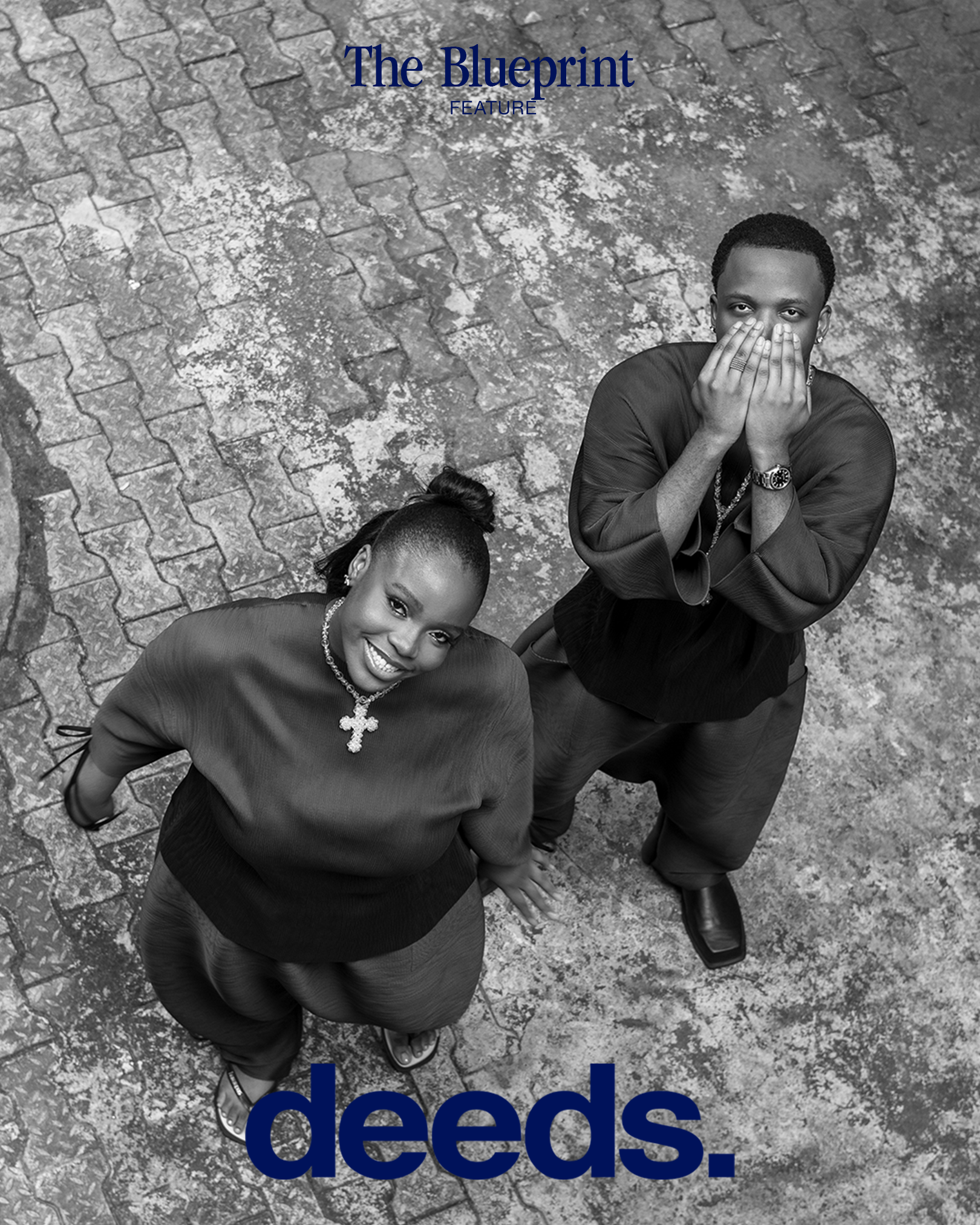
In Conversation with Akin and Morenike: The Ultimate Nightlife Blueprint

Authored by

In Lagos’ multibillion naira nightlife scene, siblings Akinyinka and Morenike are carving out a distinct identity with The Blueprint. Three years into their journey, the duo have grown their party experience into a major nightlife attraction, drawing crowds of up to 3,000 people at the Lagos Polo Club and expanding to London. Their vision is simple: to create unforgettable experiences built around music, hospitality and community.

Behind the packed dance floors is a story of family, teamwork and ambition. In this conversation with Deeds, the siblings discuss the challenges of building The Blueprint, the lessons they’ve learnt along the way and their plans to take the experience beyond Lagos.

For people meeting you both for the first time, who are you, and who’s older?

Akin: I’m Akin. People call me BadboyAkin or Gunner, depending on how close you are to me.
Morenike:
I’m Morenike, but everyone calls me Mo.

People sometimes get confused about who is older, but Akin is older.

Whose idea was it to name it “The Blueprint,” and what does it actually mean to you both?

A: The idea was actually mine, but it was originally for another project I was working on. So when we were brainstorming names, Mo reminded me about it and it was literally a lightbulb moment. I was like, “Woah, that’s it.”

Akinyinka is front of house, Morenike is behind the scenes. Was there ever a moment either of you tried to be the other, and what did that teach you?

M: Honestly, not really. We both know where our strengths lie. There are obviously certain aspects of both roles that we work on collaboratively, but there’s a clear understanding of who does what.

For example, I’ll work with some of the talent because that naturally intertwines with some of my back-end responsibilities, while Akin will work with the production team on things that directly affect the customer experience.

So honestly, it works because there’s a clear understanding and there are boundaries. We know what each other is good at and we trust each other to do those things.

Your parents told you to always have each other’s backs. What does that lesson look like on a bad day at Lagos Polo Club with 3,000 people watching?

A: I think it looks like supporting the other person as much as possible. Especially when you have a small team, there’s so much work that goes into making sure everything runs properly. You can’t say, “This is Mo’s role, so Mo is going to handle it.”

Mo probably has a million and one other things she’s trying to focus on, so if I see that a worker isn’t doing something Mo asked them to do in a meeting prior, I have to step in and fix it before it becomes a wider issue. And vice versa.

I think that’s really what it looks like. It’s just holding my sister up at every point in time, the same way she would do for me.

M: I think last year is probably the best example. During setup, which is more my area of expertise, so many things were going wrong. Because we have such a small team, everyone in the team had to step in, even our father, to make sure things weren’t all falling solely on my back.

It’s very easy to say, “This isn’t done because Mo hasn’t done what she needs to do,” when actually it’s usually not one person’s problem.

Then once the event starts and the issues become more front of house, I leave my back-end tasks and start filling in there. Akin is only one person, so he can’t deal with every customer issue individually. And because people know the faces of the brand, they naturally want to speak directly to Akin.

So I’m stepping in and saying, “You can also talk to me. What’s your issue? How can I resolve it?”

I’m just filling in. I’m not letting everything pile onto one person. I think that’s what being protective of each other looks like for us.

There’s a common assumption about family-run businesses, that once siblings are in charge, anyone who isn’t blood eventually gets burned or pushed out. Is that a myth you’ve had to actively work against? And if so, what principles or values at The Blueprint make sure it doesn’t happen?
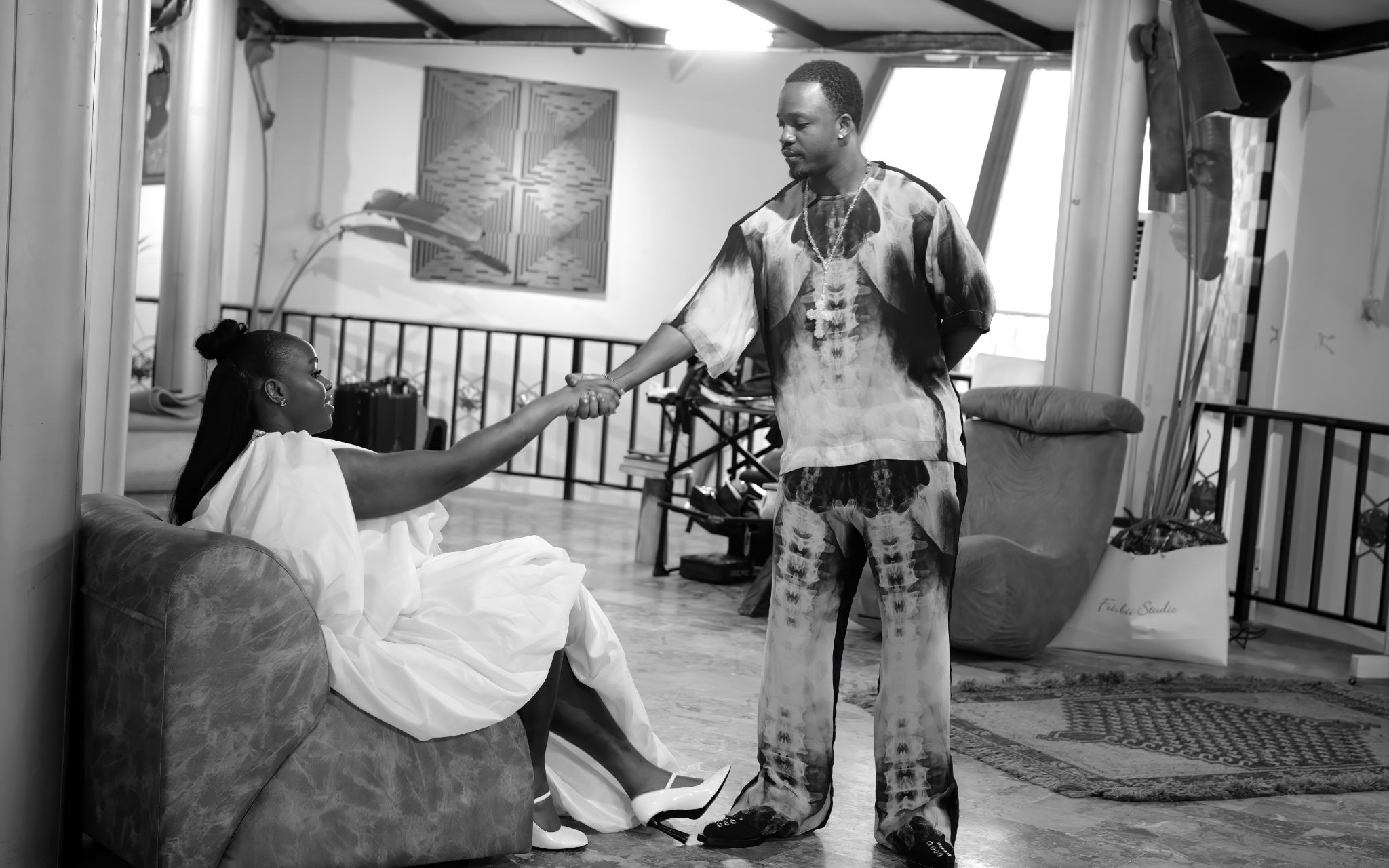
M: I think there’s something very unique about the Blueprint team. We’re quite a small team, and Akin and I handpicked everyone. They were friends who have essentially turned into family.

So we don’t necessarily have that feeling of “two people against one” just because Akin and I are siblings. Sometimes Mino and I have one opinion and the boys have a completely different opinion. We don’t force alignment just because we’re family.

It’s a very neutral playground, and I think that works for us.

Don’t get me wrong, we’ve had issues within the team, but we’re very communicative and we’re able to work through things. Things aren’t always perfect, but to the best of our ability, we try to make the space as safe as possible for everyone.

Most importantly, we don’t let the fact that we’re family come above the vision for The Blueprint.

Akin: Funny enough, The Blueprint itself is a little family. We actually have cousins on the team, and another member who we’ve known since primary school. We’ve known each other for 10–15 years in total.

So I don’t necessarily think that because there’s no blood relation in a business, it automatically makes things tricky. We’re already a little family.

Like any family, of course we fight and have disagreements, but like my sister said, the overarching goal is The Blueprint, the vision for The Blueprint and what we want it to become.

We don’t let disagreements or misunderstandings get in the way of that goal. We always try to keep that balance and make sure that the vision remains the focal point at every point in time.

‍You chose to refund a significant amount of money last year rather than explain the problem away. Walk us through that decision as it was happening, not in hindsight.

A: One thing we’ve always maintained from the jump is that The Blueprint focuses mainly on the experience. The experience will always be the most important thing for us. Your party doesn’t run without the customers.

That night, I faced a lot of backlash from people who didn’t have the best experience, and there were certain things that people simply wouldn’t expect to see if they went to a club.

Funny enough, our dad was there with us from 7pm until 7am the next morning. We had a conversation just by the main polo stand where we said, “You know what? When tomorrow morning comes, we need to take note of the people who didn’t have the best experience and refund their money.”

Profit has never been the main thing for us.

I think the reason The Blueprint was born in the first place was to give people an experience they hadn’t seen before, that they weren’t used to having. So it was important for us to make people happy, even in that little way.

It was about showing good faith. Basically saying, “Look, this was a mess-up, but this isn’t going to happen the next time you come back.”

M: For me, once the event started, we saw gaps in certain areas that weren’t as tidy or didn’t go as perfectly as we wanted them to. And on the night, we were already receiving feedback.

So, like my brother said, it became a question of, “We can’t let this be the lasting memory these people have of The Blueprint.”

Our profit is not the end goal. It’s about making sure people come and have the best time.

Once the party was done, we followed up with the people whose names we had taken on the night and did what we could for them. Any complaints or feedback that came afterwards, we handled in the moment.

Because, like I said, it’s about the experience. We always want to leave people with the impression that we put our customers first because that is genuinely the truth.

It’s not something we say and don’t do. If we’re going to talk the talk, we have to walk the walk. That’s what it came down to.‍

What’s one part of being siblings that building this business protected, and what’s one part it puts at risk?

M: I think the biggest thing being siblings protected is the vision.

We don’t have the situation of dragging over percentages, who owns what, profits and all the financial things that can sometimes come up with external business partners. We have a shared vision, a shared goal and an understanding that is very clear.

We’re able to stay on the same page.

The part I would say it puts at risk is probably financing and connections. Our networks can naturally overlap because we know a lot of the same people and have access to a lot of the same pool.

So in that sense, we don’t necessarily have two completely separate networks that we can pull from.

But at the same time, there are two of us. We can put two sets of ideas on the table, think through different options and then decide what works best.

So there are pros and cons, but all in all, it worked.

A: I’m only going to answer the risk part because I think my sister covered the first part really well.

Mo and I are extremely close, so I would say that relationship is probably the part that was put at risk the most.

When you’re doing business, even with people who aren’t family, there’s always the risk of egos coming into play. One person might want to take credit for most of the work, be the whole face of the brand or whatever the case may be.

But I think being able to share and understand that one doesn’t work without the other is probably the most beautiful part about it.

I would say the relationship was the thing that could have been put at risk the most. But, like we’ve always said, our dad has always told us that it’s both of us against the world at the end of the day.

We understand that maintaining that point of view will always make us stay together, no matter what.

You didn’t build a team by finding people exactly like you. What’s the most useful disagreement you’ve had with someone on your team, one that actually changed how The Blueprint works?

M: I think the most useful disagreements we’ve had have been around respecting people’s roles.

Sometimes there’s a tendency to want to do what somebody else can do simply because you have that skill set, even though that isn’t necessarily your role within The Blueprint.

We’ve had to come to an understanding that this is what I do within this infrastructure, this is what you do, and everyone’s role is important.

Everyone has their own part to play, and all those parts work hand in hand with each other.

I think that’s what has allowed us to become a well-oiled machine.

Some brands feel pressure to have a fully formed stance on diversity and representation early on. At year three, is that a conversation you’re already having internally, or is it something you’re still growing into?

A: I think diversity… I don’t even want to say it has always been important to us, because it naturally happens.

We have two wonderful women within our team and three men. Even the people we work with come from all different walks of life.

We don’t really separate the two things. It doesn’t matter to us what you look like or where you come from. If you’re able to do the work properly, then you do the work properly.

Even with our DJ lineups, we’ve always had a mix of women and men from different backgrounds, and that’s something we’ve maintained throughout the three events we’ve had.

We’ll continue to do that for as long as The Blueprint is alive.

Diversity isn’t something we look at as this magical thing we need to manufacture. For us, it just is. It happens naturally.

What’s the theme for this year’s Blueprint, and how did you land on it? And zooming out, three years in and already pulling numbers people who’ve been at this for ten years are doing, what does “the future” actually look like for you two?

M: The funny thing is, we never really have a theme for The Blueprint.

We have a theme for the experience or the setup, how we want the space to look and feel visually, but we don’t put a theme on the actual event because we want people to make it what they want it to be.

That’s what The Blueprint is.

We set the space, and you make the space what you want it to feel like. You can have three different tables and they can all have three completely different experiences because the space is what you make it.

It can be more chill if you want it to be, or it can be more energetic. It’s really about what people want it to be.

Even with our posters, if you look back, they’ve always had very clean lines and a neutral visual language. We leave room for interpretation. Everyone takes what they want from it.

But it will always be a space where you come, the foundation is set for a fantastic time, and you decide which direction you want to take it in.

In terms of where we want The Blueprint to go, the vision has always been for it to be an event that people specifically travel for.

That’s something we’ve already done once with London, but we want to take it even further. We want to be able to pick a completely random city and have people say, “The Blueprint is happening there, I’m going.”

We’re really grateful for everyone who has supported us and come along for the journey, and we’re working hard to make this year an even better experience.

A: The vision has always been bigger than just doing it in Lagos. Lagos is obviously extremely important to us because it’s where we started, but we want to get to a point where people hear “The Blueprint” and they’re flying into that particular city or country specifically for the party.

So we’re working extremely hard towards that. We’re putting ourselves out there a lot more, thinking outside the box and setting new standards.

I already have plans in my head. Maybe New York next summer, maybe taking it back to London and giving them a Part Two.

There are definitely things in the works.

We also want to extend The Blueprint beyond just parties. I won’t talk too much about that right now, but Mo, I and the rest of the team are working extremely hard to be everything that we can be.

And that’s exactly what The Blueprint is. That’s what we’ll continue to be for as long as we’re doing this.

‍Aside from accountability and transparency, what should brands expect from working with The Blueprint?
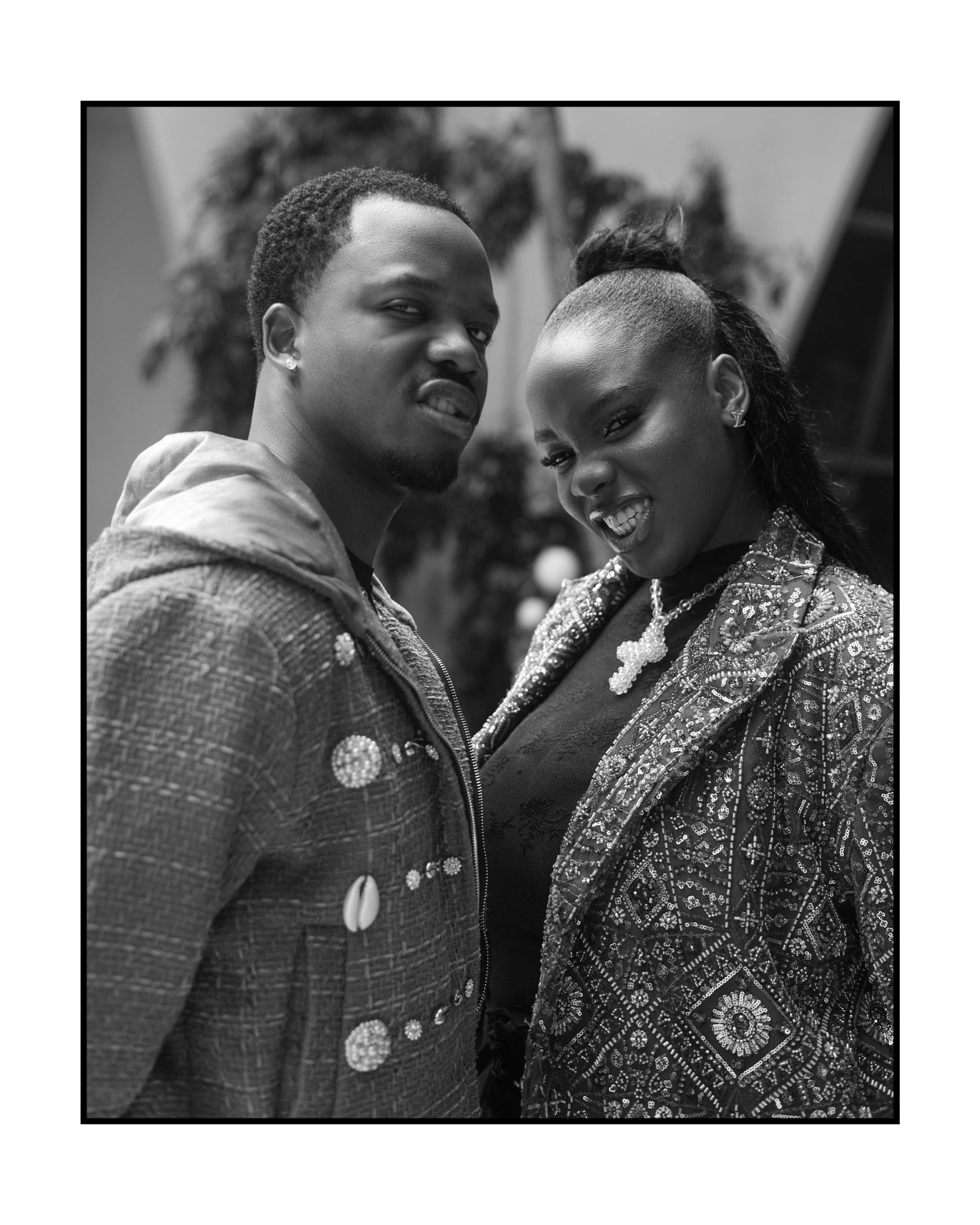
M: An elevated experience.

One thing we’re very good at as a team is thinking beyond the surface. With a lot of things we see within the Nigerian entertainment space, it can sometimes feel like the same thing in different formats.

We’re trying to change what that looks like and what that feels like.

When we’re integrating brands, concepts or people into our events, it’s not just about giving them a stand or having a drinks company show up and put their logo somewhere.

It’s about asking, “How can we make this feel different? How can we make it look different? How can we try something new?”

It doesn’t always work out perfectly, but one thing you will come to a Blueprint event and experience is something you haven’t experienced before.

Even in our first year, we introduced the mirror concept. People were used to seeing a backdrop and a photographer, so we changed it to allow people to take pictures of themselves.

We knew people would actually find that more useful, but we also wanted to present it in a way that they could appreciate. We all love a mirror. We all love a moment.

That’s what we do. We take what already exists, make a slight tweak and find a way to make it feel better.

For me, it’s innovation and continuity. When something works, we keep it. We don’t always feel the need to change something just for the sake of saying we’ve done something new. We build on what works.

I guess that’s why The Blueprint has been able to grow the way it has.

A: I think one thing brands can expect from working with The Blueprint is a team that understands the hospitality space from start to finish.

We’re people who go out a lot in Lagos, and we notice the cracks. We notice the things people complain about, and whenever we do our own events, we try to fill those gaps.

We have a very good understanding of what people like. We’re constantly listening to conversations about what people don’t like when they go to certain events, clubs or experiences, and we take those things into account.

The Blueprint sits at the intersection of a rave and a club, so we take experiences from both and merge them into one. We’re constantly asking ourselves, “What are the things people might have complained about somewhere else, and how can we correct those mistakes here?”

I think understanding your customers and understanding the business you’re in is very key, and that’s something the Blueprint team does very well.

We all understand our different roles within the company: myself as CEO, my sister as COO and Creative Director, our CFO and Business Development Director, our head of marketing and media, and we make sure those different roles actually show up in the events.

At the end of the day, brands aren’t just working with an event company. They’re working with a team that understands the customer, understands the culture and understands how to turn an idea into an experience.

CREDIT: 
Production: Deeds Studio production
Dir/Producer: @jh40_
PHOTOGRAPHER: @uwaga.jpg
Lead Stylist: @lovefromjulez
Assistant stylist @Wolfman.man
MUA: @beautiepalms
Outfits:Eleven Sixteen and LFJ (LoveFromJulez)
@elevensixteen (Green and Red Jackets)
@offeriing  (Chains) 
In Conversation with Akin and Morenike: The Ultimate Nightlife Blueprint

Authored by
This is some text inside of a div block.

In Lagos’ multibillion naira nightlife scene, siblings Akinyinka and Morenike are carving out a distinct identity with The Blueprint. Three years into their journey, the duo have grown their party experience into a major nightlife attraction, drawing crowds of up to 3,000 people at the Lagos Polo Club and expanding to London. Their vision is simple: to create unforgettable experiences built around music, hospitality and community.

Behind the packed dance floors is a story of family, teamwork and ambition. In this conversation with Deeds, the siblings discuss the challenges of building The Blueprint, the lessons they’ve learnt along the way and their plans to take the experience beyond Lagos.

For people meeting you both for the first time, who are you, and who’s older?

Akin: I’m Akin. People call me BadboyAkin or Gunner, depending on how close you are to me.
Morenike:
I’m Morenike, but everyone calls me Mo.

People sometimes get confused about who is older, but Akin is older.

Whose idea was it to name it “The Blueprint,” and what does it actually mean to you both?

A: The idea was actually mine, but it was originally for another project I was working on. So when we were brainstorming names, Mo reminded me about it and it was literally a lightbulb moment. I was like, “Woah, that’s it.”

Akinyinka is front of house, Morenike is behind the scenes. Was there ever a moment either of you tried to be the other, and what did that teach you?

M: Honestly, not really. We both know where our strengths lie. There are obviously certain aspects of both roles that we work on collaboratively, but there’s a clear understanding of who does what.

For example, I’ll work with some of the talent because that naturally intertwines with some of my back-end responsibilities, while Akin will work with the production team on things that directly affect the customer experience.

So honestly, it works because there’s a clear understanding and there are boundaries. We know what each other is good at and we trust each other to do those things.

Your parents told you to always have each other’s backs. What does that lesson look like on a bad day at Lagos Polo Club with 3,000 people watching?

A: I think it looks like supporting the other person as much as possible. Especially when you have a small team, there’s so much work that goes into making sure everything runs properly. You can’t say, “This is Mo’s role, so Mo is going to handle it.”

Mo probably has a million and one other things she’s trying to focus on, so if I see that a worker isn’t doing something Mo asked them to do in a meeting prior, I have to step in and fix it before it becomes a wider issue. And vice versa.

I think that’s really what it looks like. It’s just holding my sister up at every point in time, the same way she would do for me.

M: I think last year is probably the best example. During setup, which is more my area of expertise, so many things were going wrong. Because we have such a small team, everyone in the team had to step in, even our father, to make sure things weren’t all falling solely on my back.

It’s very easy to say, “This isn’t done because Mo hasn’t done what she needs to do,” when actually it’s usually not one person’s problem.

Then once the event starts and the issues become more front of house, I leave my back-end tasks and start filling in there. Akin is only one person, so he can’t deal with every customer issue individually. And because people know the faces of the brand, they naturally want to speak directly to Akin.

So I’m stepping in and saying, “You can also talk to me. What’s your issue? How can I resolve it?”

I’m just filling in. I’m not letting everything pile onto one person. I think that’s what being protective of each other looks like for us.

There’s a common assumption about family-run businesses, that once siblings are in charge, anyone who isn’t blood eventually gets burned or pushed out. Is that a myth you’ve had to actively work against? And if so, what principles or values at The Blueprint make sure it doesn’t happen?

M: I think there’s something very unique about the Blueprint team. We’re quite a small team, and Akin and I handpicked everyone. They were friends who have essentially turned into family.

So we don’t necessarily have that feeling of “two people against one” just because Akin and I are siblings. Sometimes Mino and I have one opinion and the boys have a completely different opinion. We don’t force alignment just because we’re family.

It’s a very neutral playground, and I think that works for us.

Don’t get me wrong, we’ve had issues within the team, but we’re very communicative and we’re able to work through things. Things aren’t always perfect, but to the best of our ability, we try to make the space as safe as possible for everyone.

Most importantly, we don’t let the fact that we’re family come above the vision for The Blueprint.

Akin: Funny enough, The Blueprint itself is a little family. We actually have cousins on the team, and another member who we’ve known since primary school. We’ve known each other for 10–15 years in total.

So I don’t necessarily think that because there’s no blood relation in a business, it automatically makes things tricky. We’re already a little family.

Like any family, of course we fight and have disagreements, but like my sister said, the overarching goal is The Blueprint, the vision for The Blueprint and what we want it to become.

We don’t let disagreements or misunderstandings get in the way of that goal. We always try to keep that balance and make sure that the vision remains the focal point at every point in time.

‍You chose to refund a significant amount of money last year rather than explain the problem away. Walk us through that decision as it was happening, not in hindsight.

A: One thing we’ve always maintained from the jump is that The Blueprint focuses mainly on the experience. The experience will always be the most important thing for us. Your party doesn’t run without the customers.

That night, I faced a lot of backlash from people who didn’t have the best experience, and there were certain things that people simply wouldn’t expect to see if they went to a club.

Funny enough, our dad was there with us from 7pm until 7am the next morning. We had a conversation just by the main polo stand where we said, “You know what? When tomorrow morning comes, we need to take note of the people who didn’t have the best experience and refund their money.”

Profit has never been the main thing for us.

I think the reason The Blueprint was born in the first place was to give people an experience they hadn’t seen before, that they weren’t used to having. So it was important for us to make people happy, even in that little way.

It was about showing good faith. Basically saying, “Look, this was a mess-up, but this isn’t going to happen the next time you come back.”

M: For me, once the event started, we saw gaps in certain areas that weren’t as tidy or didn’t go as perfectly as we wanted them to. And on the night, we were already receiving feedback.

So, like my brother said, it became a question of, “We can’t let this be the lasting memory these people have of The Blueprint.”

Our profit is not the end goal. It’s about making sure people come and have the best time.

Once the party was done, we followed up with the people whose names we had taken on the night and did what we could for them. Any complaints or feedback that came afterwards, we handled in the moment.

Because, like I said, it’s about the experience. We always want to leave people with the impression that we put our customers first because that is genuinely the truth.

It’s not something we say and don’t do. If we’re going to talk the talk, we have to walk the walk. That’s what it came down to.‍

What’s one part of being siblings that building this business protected, and what’s one part it puts at risk?

M: I think the biggest thing being siblings protected is the vision.

We don’t have the situation of dragging over percentages, who owns what, profits and all the financial things that can sometimes come up with external business partners. We have a shared vision, a shared goal and an understanding that is very clear.

We’re able to stay on the same page.

The part I would say it puts at risk is probably financing and connections. Our networks can naturally overlap because we know a lot of the same people and have access to a lot of the same pool.

So in that sense, we don’t necessarily have two completely separate networks that we can pull from.

But at the same time, there are two of us. We can put two sets of ideas on the table, think through different options and then decide what works best.

So there are pros and cons, but all in all, it worked.

A: I’m only going to answer the risk part because I think my sister covered the first part really well.

Mo and I are extremely close, so I would say that relationship is probably the part that was put at risk the most.

When you’re doing business, even with people who aren’t family, there’s always the risk of egos coming into play. One person might want to take credit for most of the work, be the whole face of the brand or whatever the case may be.

But I think being able to share and understand that one doesn’t work without the other is probably the most beautiful part about it.

I would say the relationship was the thing that could have been put at risk the most. But, like we’ve always said, our dad has always told us that it’s both of us against the world at the end of the day.

We understand that maintaining that point of view will always make us stay together, no matter what.

You didn’t build a team by finding people exactly like you. What’s the most useful disagreement you’ve had with someone on your team, one that actually changed how The Blueprint works?

M: I think the most useful disagreements we’ve had have been around respecting people’s roles.

Sometimes there’s a tendency to want to do what somebody else can do simply because you have that skill set, even though that isn’t necessarily your role within The Blueprint.

We’ve had to come to an understanding that this is what I do within this infrastructure, this is what you do, and everyone’s role is important.

Everyone has their own part to play, and all those parts work hand in hand with each other.

I think that’s what has allowed us to become a well-oiled machine.

Some brands feel pressure to have a fully formed stance on diversity and representation early on. At year three, is that a conversation you’re already having internally, or is it something you’re still growing into?

A: I think diversity… I don’t even want to say it has always been important to us, because it naturally happens.

We have two wonderful women within our team and three men. Even the people we work with come from all different walks of life.

We don’t really separate the two things. It doesn’t matter to us what you look like or where you come from. If you’re able to do the work properly, then you do the work properly.

Even with our DJ lineups, we’ve always had a mix of women and men from different backgrounds, and that’s something we’ve maintained throughout the three events we’ve had.

We’ll continue to do that for as long as The Blueprint is alive.

Diversity isn’t something we look at as this magical thing we need to manufacture. For us, it just is. It happens naturally.

What’s the theme for this year’s Blueprint, and how did you land on it? And zooming out, three years in and already pulling numbers people who’ve been at this for ten years are doing, what does “the future” actually look like for you two?

M: The funny thing is, we never really have a theme for The Blueprint.

We have a theme for the experience or the setup, how we want the space to look and feel visually, but we don’t put a theme on the actual event because we want people to make it what they want it to be.

That’s what The Blueprint is.

We set the space, and you make the space what you want it to feel like. You can have three different tables and they can all have three completely different experiences because the space is what you make it.

It can be more chill if you want it to be, or it can be more energetic. It’s really about what people want it to be.

Even with our posters, if you look back, they’ve always had very clean lines and a neutral visual language. We leave room for interpretation. Everyone takes what they want from it.

But it will always be a space where you come, the foundation is set for a fantastic time, and you decide which direction you want to take it in.

In terms of where we want The Blueprint to go, the vision has always been for it to be an event that people specifically travel for.

That’s something we’ve already done once with London, but we want to take it even further. We want to be able to pick a completely random city and have people say, “The Blueprint is happening there, I’m going.”

We’re really grateful for everyone who has supported us and come along for the journey, and we’re working hard to make this year an even better experience.

A: The vision has always been bigger than just doing it in Lagos. Lagos is obviously extremely important to us because it’s where we started, but we want to get to a point where people hear “The Blueprint” and they’re flying into that particular city or country specifically for the party.

So we’re working extremely hard towards that. We’re putting ourselves out there a lot more, thinking outside the box and setting new standards.

I already have plans in my head. Maybe New York next summer, maybe taking it back to London and giving them a Part Two.

There are definitely things in the works.

We also want to extend The Blueprint beyond just parties. I won’t talk too much about that right now, but Mo, I and the rest of the team are working extremely hard to be everything that we can be.

And that’s exactly what The Blueprint is. That’s what we’ll continue to be for as long as we’re doing this.

‍Aside from accountability and transparency, what should brands expect from working with The Blueprint?

M: An elevated experience.

One thing we’re very good at as a team is thinking beyond the surface. With a lot of things we see within the Nigerian entertainment space, it can sometimes feel like the same thing in different formats.

We’re trying to change what that looks like and what that feels like.

When we’re integrating brands, concepts or people into our events, it’s not just about giving them a stand or having a drinks company show up and put their logo somewhere.

It’s about asking, “How can we make this feel different? How can we make it look different? How can we try something new?”

It doesn’t always work out perfectly, but one thing you will come to a Blueprint event and experience is something you haven’t experienced before.

Even in our first year, we introduced the mirror concept. People were used to seeing a backdrop and a photographer, so we changed it to allow people to take pictures of themselves.

We knew people would actually find that more useful, but we also wanted to present it in a way that they could appreciate. We all love a mirror. We all love a moment.

That’s what we do. We take what already exists, make a slight tweak and find a way to make it feel better.

For me, it’s innovation and continuity. When something works, we keep it. We don’t always feel the need to change something just for the sake of saying we’ve done something new. We build on what works.

I guess that’s why The Blueprint has been able to grow the way it has.

A: I think one thing brands can expect from working with The Blueprint is a team that understands the hospitality space from start to finish.

We’re people who go out a lot in Lagos, and we notice the cracks. We notice the things people complain about, and whenever we do our own events, we try to fill those gaps.

We have a very good understanding of what people like. We’re constantly listening to conversations about what people don’t like when they go to certain events, clubs or experiences, and we take those things into account.

The Blueprint sits at the intersection of a rave and a club, so we take experiences from both and merge them into one. We’re constantly asking ourselves, “What are the things people might have complained about somewhere else, and how can we correct those mistakes here?”

I think understanding your customers and understanding the business you’re in is very key, and that’s something the Blueprint team does very well.

We all understand our different roles within the company: myself as CEO, my sister as COO and Creative Director, our CFO and Business Development Director, our head of marketing and media, and we make sure those different roles actually show up in the events.

At the end of the day, brands aren’t just working with an event company. They’re working with a team that understands the customer, understands the culture and understands how to turn an idea into an experience.

CREDIT: 
Production: Deeds Studio production
Dir/Producer: @jh40_
PHOTOGRAPHER: @uwaga.jpg
Lead Stylist: @lovefromjulez
Assistant stylist @Wolfman.man
MUA: @beautiepalms
Outfits:Eleven Sixteen and LFJ (LoveFromJulez)
@elevensixteen (Green and Red Jackets)
@offeriing  (Chains) 
This is some text inside of a div block.

In Conversation with Akin and Morenike: The Ultimate Nightlife Blueprint

Authored by

In Lagos’ multibillion naira nightlife scene, siblings Akinyinka and Morenike are carving out a distinct identity with The Blueprint. Three years into their journey, the duo have grown their party experience into a major nightlife attraction, drawing crowds of up to 3,000 people at the Lagos Polo Club and expanding to London. Their vision is simple: to create unforgettable experiences built around music, hospitality and community.

Behind the packed dance floors is a story of family, teamwork and ambition. In this conversation with Deeds, the siblings discuss the challenges of building The Blueprint, the lessons they’ve learnt along the way and their plans to take the experience beyond Lagos.

For people meeting you both for the first time, who are you, and who’s older?

Akin: I’m Akin. People call me BadboyAkin or Gunner, depending on how close you are to me.
Morenike:
I’m Morenike, but everyone calls me Mo.

People sometimes get confused about who is older, but Akin is older.

Whose idea was it to name it “The Blueprint,” and what does it actually mean to you both?

A: The idea was actually mine, but it was originally for another project I was working on. So when we were brainstorming names, Mo reminded me about it and it was literally a lightbulb moment. I was like, “Woah, that’s it.”

Akinyinka is front of house, Morenike is behind the scenes. Was there ever a moment either of you tried to be the other, and what did that teach you?

M: Honestly, not really. We both know where our strengths lie. There are obviously certain aspects of both roles that we work on collaboratively, but there’s a clear understanding of who does what.

For example, I’ll work with some of the talent because that naturally intertwines with some of my back-end responsibilities, while Akin will work with the production team on things that directly affect the customer experience.

So honestly, it works because there’s a clear understanding and there are boundaries. We know what each other is good at and we trust each other to do those things.

Your parents told you to always have each other’s backs. What does that lesson look like on a bad day at Lagos Polo Club with 3,000 people watching?

A: I think it looks like supporting the other person as much as possible. Especially when you have a small team, there’s so much work that goes into making sure everything runs properly. You can’t say, “This is Mo’s role, so Mo is going to handle it.”

Mo probably has a million and one other things she’s trying to focus on, so if I see that a worker isn’t doing something Mo asked them to do in a meeting prior, I have to step in and fix it before it becomes a wider issue. And vice versa.

I think that’s really what it looks like. It’s just holding my sister up at every point in time, the same way she would do for me.

M: I think last year is probably the best example. During setup, which is more my area of expertise, so many things were going wrong. Because we have such a small team, everyone in the team had to step in, even our father, to make sure things weren’t all falling solely on my back.

It’s very easy to say, “This isn’t done because Mo hasn’t done what she needs to do,” when actually it’s usually not one person’s problem.

Then once the event starts and the issues become more front of house, I leave my back-end tasks and start filling in there. Akin is only one person, so he can’t deal with every customer issue individually. And because people know the faces of the brand, they naturally want to speak directly to Akin.

So I’m stepping in and saying, “You can also talk to me. What’s your issue? How can I resolve it?”

I’m just filling in. I’m not letting everything pile onto one person. I think that’s what being protective of each other looks like for us.

There’s a common assumption about family-run businesses, that once siblings are in charge, anyone who isn’t blood eventually gets burned or pushed out. Is that a myth you’ve had to actively work against? And if so, what principles or values at The Blueprint make sure it doesn’t happen?

M: I think there’s something very unique about the Blueprint team. We’re quite a small team, and Akin and I handpicked everyone. They were friends who have essentially turned into family.

So we don’t necessarily have that feeling of “two people against one” just because Akin and I are siblings. Sometimes Mino and I have one opinion and the boys have a completely different opinion. We don’t force alignment just because we’re family.

It’s a very neutral playground, and I think that works for us.

Don’t get me wrong, we’ve had issues within the team, but we’re very communicative and we’re able to work through things. Things aren’t always perfect, but to the best of our ability, we try to make the space as safe as possible for everyone.

Most importantly, we don’t let the fact that we’re family come above the vision for The Blueprint.

Akin: Funny enough, The Blueprint itself is a little family. We actually have cousins on the team, and another member who we’ve known since primary school. We’ve known each other for 10–15 years in total.

So I don’t necessarily think that because there’s no blood relation in a business, it automatically makes things tricky. We’re already a little family.

Like any family, of course we fight and have disagreements, but like my sister said, the overarching goal is The Blueprint, the vision for The Blueprint and what we want it to become.

We don’t let disagreements or misunderstandings get in the way of that goal. We always try to keep that balance and make sure that the vision remains the focal point at every point in time.

‍You chose to refund a significant amount of money last year rather than explain the problem away. Walk us through that decision as it was happening, not in hindsight.

A: One thing we’ve always maintained from the jump is that The Blueprint focuses mainly on the experience. The experience will always be the most important thing for us. Your party doesn’t run without the customers.

That night, I faced a lot of backlash from people who didn’t have the best experience, and there were certain things that people simply wouldn’t expect to see if they went to a club.

Funny enough, our dad was there with us from 7pm until 7am the next morning. We had a conversation just by the main polo stand where we said, “You know what? When tomorrow morning comes, we need to take note of the people who didn’t have the best experience and refund their money.”

Profit has never been the main thing for us.

I think the reason The Blueprint was born in the first place was to give people an experience they hadn’t seen before, that they weren’t used to having. So it was important for us to make people happy, even in that little way.

It was about showing good faith. Basically saying, “Look, this was a mess-up, but this isn’t going to happen the next time you come back.”

M: For me, once the event started, we saw gaps in certain areas that weren’t as tidy or didn’t go as perfectly as we wanted them to. And on the night, we were already receiving feedback.

So, like my brother said, it became a question of, “We can’t let this be the lasting memory these people have of The Blueprint.”

Our profit is not the end goal. It’s about making sure people come and have the best time.

Once the party was done, we followed up with the people whose names we had taken on the night and did what we could for them. Any complaints or feedback that came afterwards, we handled in the moment.

Because, like I said, it’s about the experience. We always want to leave people with the impression that we put our customers first because that is genuinely the truth.

It’s not something we say and don’t do. If we’re going to talk the talk, we have to walk the walk. That’s what it came down to.‍

What’s one part of being siblings that building this business protected, and what’s one part it puts at risk?

M: I think the biggest thing being siblings protected is the vision.

We don’t have the situation of dragging over percentages, who owns what, profits and all the financial things that can sometimes come up with external business partners. We have a shared vision, a shared goal and an understanding that is very clear.

We’re able to stay on the same page.

The part I would say it puts at risk is probably financing and connections. Our networks can naturally overlap because we know a lot of the same people and have access to a lot of the same pool.

So in that sense, we don’t necessarily have two completely separate networks that we can pull from.

But at the same time, there are two of us. We can put two sets of ideas on the table, think through different options and then decide what works best.

So there are pros and cons, but all in all, it worked.

A: I’m only going to answer the risk part because I think my sister covered the first part really well.

Mo and I are extremely close, so I would say that relationship is probably the part that was put at risk the most.

When you’re doing business, even with people who aren’t family, there’s always the risk of egos coming into play. One person might want to take credit for most of the work, be the whole face of the brand or whatever the case may be.

But I think being able to share and understand that one doesn’t work without the other is probably the most beautiful part about it.

I would say the relationship was the thing that could have been put at risk the most. But, like we’ve always said, our dad has always told us that it’s both of us against the world at the end of the day.

We understand that maintaining that point of view will always make us stay together, no matter what.

You didn’t build a team by finding people exactly like you. What’s the most useful disagreement you’ve had with someone on your team, one that actually changed how The Blueprint works?

M: I think the most useful disagreements we’ve had have been around respecting people’s roles.

Sometimes there’s a tendency to want to do what somebody else can do simply because you have that skill set, even though that isn’t necessarily your role within The Blueprint.

We’ve had to come to an understanding that this is what I do within this infrastructure, this is what you do, and everyone’s role is important.

Everyone has their own part to play, and all those parts work hand in hand with each other.

I think that’s what has allowed us to become a well-oiled machine.

Some brands feel pressure to have a fully formed stance on diversity and representation early on. At year three, is that a conversation you’re already having internally, or is it something you’re still growing into?

A: I think diversity… I don’t even want to say it has always been important to us, because it naturally happens.

We have two wonderful women within our team and three men. Even the people we work with come from all different walks of life.

We don’t really separate the two things. It doesn’t matter to us what you look like or where you come from. If you’re able to do the work properly, then you do the work properly.

Even with our DJ lineups, we’ve always had a mix of women and men from different backgrounds, and that’s something we’ve maintained throughout the three events we’ve had.

We’ll continue to do that for as long as The Blueprint is alive.

Diversity isn’t something we look at as this magical thing we need to manufacture. For us, it just is. It happens naturally.

What’s the theme for this year’s Blueprint, and how did you land on it? And zooming out, three years in and already pulling numbers people who’ve been at this for ten years are doing, what does “the future” actually look like for you two?

M: The funny thing is, we never really have a theme for The Blueprint.

We have a theme for the experience or the setup, how we want the space to look and feel visually, but we don’t put a theme on the actual event because we want people to make it what they want it to be.

That’s what The Blueprint is.

We set the space, and you make the space what you want it to feel like. You can have three different tables and they can all have three completely different experiences because the space is what you make it.

It can be more chill if you want it to be, or it can be more energetic. It’s really about what people want it to be.

Even with our posters, if you look back, they’ve always had very clean lines and a neutral visual language. We leave room for interpretation. Everyone takes what they want from it.

But it will always be a space where you come, the foundation is set for a fantastic time, and you decide which direction you want to take it in.

In terms of where we want The Blueprint to go, the vision has always been for it to be an event that people specifically travel for.

That’s something we’ve already done once with London, but we want to take it even further. We want to be able to pick a completely random city and have people say, “The Blueprint is happening there, I’m going.”

We’re really grateful for everyone who has supported us and come along for the journey, and we’re working hard to make this year an even better experience.

A: The vision has always been bigger than just doing it in Lagos. Lagos is obviously extremely important to us because it’s where we started, but we want to get to a point where people hear “The Blueprint” and they’re flying into that particular city or country specifically for the party.

So we’re working extremely hard towards that. We’re putting ourselves out there a lot more, thinking outside the box and setting new standards.

I already have plans in my head. Maybe New York next summer, maybe taking it back to London and giving them a Part Two.

There are definitely things in the works.

We also want to extend The Blueprint beyond just parties. I won’t talk too much about that right now, but Mo, I and the rest of the team are working extremely hard to be everything that we can be.

And that’s exactly what The Blueprint is. That’s what we’ll continue to be for as long as we’re doing this.

‍Aside from accountability and transparency, what should brands expect from working with The Blueprint?

M: An elevated experience.

One thing we’re very good at as a team is thinking beyond the surface. With a lot of things we see within the Nigerian entertainment space, it can sometimes feel like the same thing in different formats.

We’re trying to change what that looks like and what that feels like.

When we’re integrating brands, concepts or people into our events, it’s not just about giving them a stand or having a drinks company show up and put their logo somewhere.

It’s about asking, “How can we make this feel different? How can we make it look different? How can we try something new?”

It doesn’t always work out perfectly, but one thing you will come to a Blueprint event and experience is something you haven’t experienced before.

Even in our first year, we introduced the mirror concept. People were used to seeing a backdrop and a photographer, so we changed it to allow people to take pictures of themselves.

We knew people would actually find that more useful, but we also wanted to present it in a way that they could appreciate. We all love a mirror. We all love a moment.

That’s what we do. We take what already exists, make a slight tweak and find a way to make it feel better.

For me, it’s innovation and continuity. When something works, we keep it. We don’t always feel the need to change something just for the sake of saying we’ve done something new. We build on what works.

I guess that’s why The Blueprint has been able to grow the way it has.

A: I think one thing brands can expect from working with The Blueprint is a team that understands the hospitality space from start to finish.

We’re people who go out a lot in Lagos, and we notice the cracks. We notice the things people complain about, and whenever we do our own events, we try to fill those gaps.

We have a very good understanding of what people like. We’re constantly listening to conversations about what people don’t like when they go to certain events, clubs or experiences, and we take those things into account.

The Blueprint sits at the intersection of a rave and a club, so we take experiences from both and merge them into one. We’re constantly asking ourselves, “What are the things people might have complained about somewhere else, and how can we correct those mistakes here?”

I think understanding your customers and understanding the business you’re in is very key, and that’s something the Blueprint team does very well.

We all understand our different roles within the company: myself as CEO, my sister as COO and Creative Director, our CFO and Business Development Director, our head of marketing and media, and we make sure those different roles actually show up in the events.

At the end of the day, brands aren’t just working with an event company. They’re working with a team that understands the customer, understands the culture and understands how to turn an idea into an experience.

CREDIT: 
Production: Deeds Studio production
Dir/Producer: @jh40_
PHOTOGRAPHER: @uwaga.jpg
Lead Stylist: @lovefromjulez
Assistant stylist @Wolfman.man
MUA: @beautiepalms
Outfits:Eleven Sixteen and LFJ (LoveFromJulez)
@elevensixteen (Green and Red Jackets)
@offeriing  (Chains) 
Other Stories
London
London
Lagos
London
Newyork
London
Shop
Join the community.
You are now subscribed to receive updates.
Oops! Something went wrong while submitting the form.
Subscribe