Who Gets to See Ghana’s History?

Authored by

More than 1,300 reels of film documenting Ghana’s independence era survive, according to the production synopsis of The Eyes of Ghana. Yet most have never been seen by a Ghanaian audience. Director Ben Proudfoot told Ghana’s national broadcaster (GBC) that the finished documentary draws on approximately 15 minutes of archival footage.

According to AllHipHop’s account of the interview, Proudfoot estimated that more than 300 hours of original negatives remain in a London vault, where age and chemical decay threaten their survival. The distance between what survives and what can be seen is the question the film raises. An archive may be preserved, but when it remains beyond the reach of the people whose history it records, preservation means less than it should.

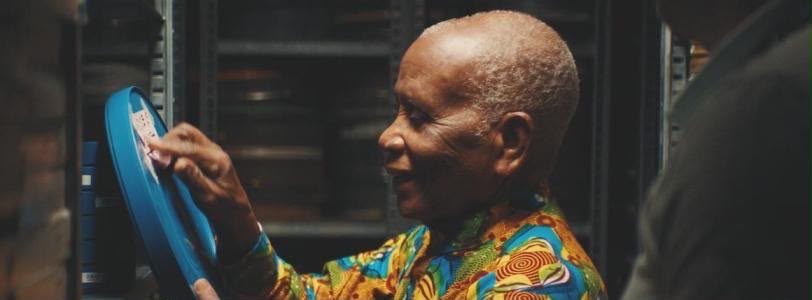
Chris Hesse, born in Osu, Accra, began his professional career in 1954 and worked within the film establishment that would become the Ghana Film Industry Corporation, according to Graphic Online. From 1956 until Kwame Nkrumah’s overthrow in 1966, Hesse served as the official cinematographer for the president and his government. His work spanned Ghana’s independence in 1957 and the decade that followed. 

Hesse was reportedly travelling abroad with Nkrumah when the coup took place on February 24, 1966. The documentary’s synopsis recounts how Nkrumah’s opponents sought to destroy the filmed record of his rule, and how Hesse managed to preserve the reels. The footage matters as historical evidence: it records a defining period from within the state itself, while the circumstances surrounding its survival raise questions about who gets to preserve, control, and interpret a nation’s visual history.

‍

The Eyes of Ghana, directed by Proudfoot and executive produced by Barack and Michelle Obama, follows Hesse and the young filmmaker Anita Afonu as she plans a public screening of his work at the Rex, an outdoor cinema described in the film’s notes as badly in need of repair. The production also includes American streamer IShowSpeed, whose real name is Darren Watkins Jr. Graphic Online reports that he joined after visiting Ghana earlier this year and exploring his Ghanaian ancestry. 

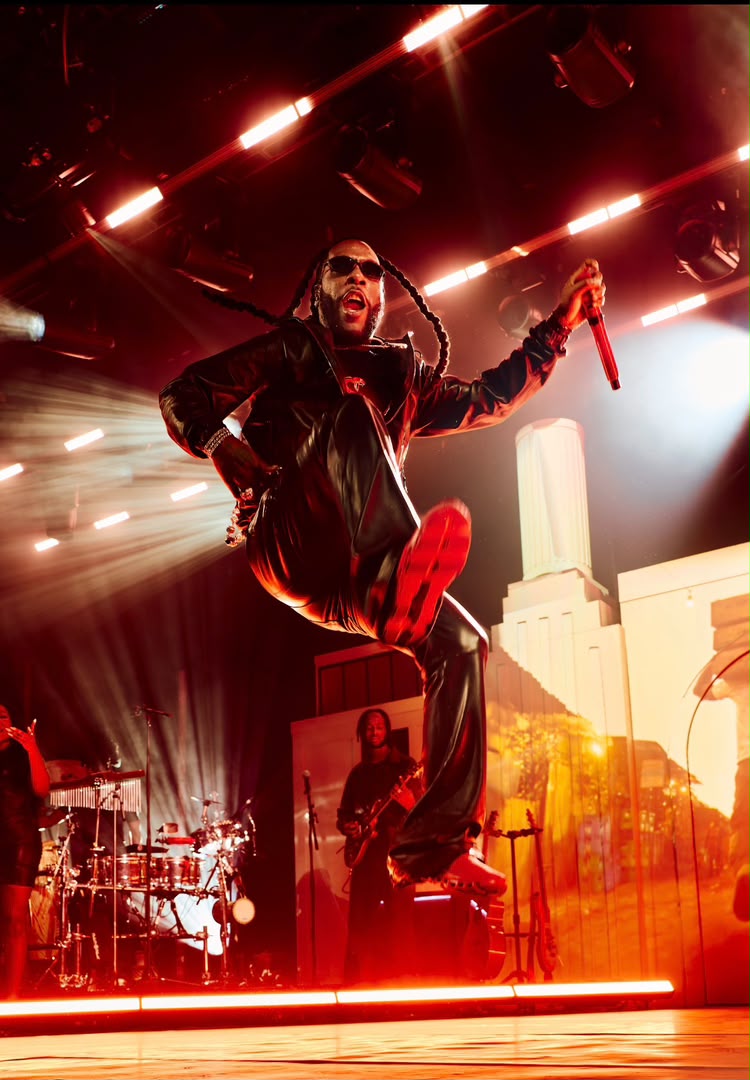
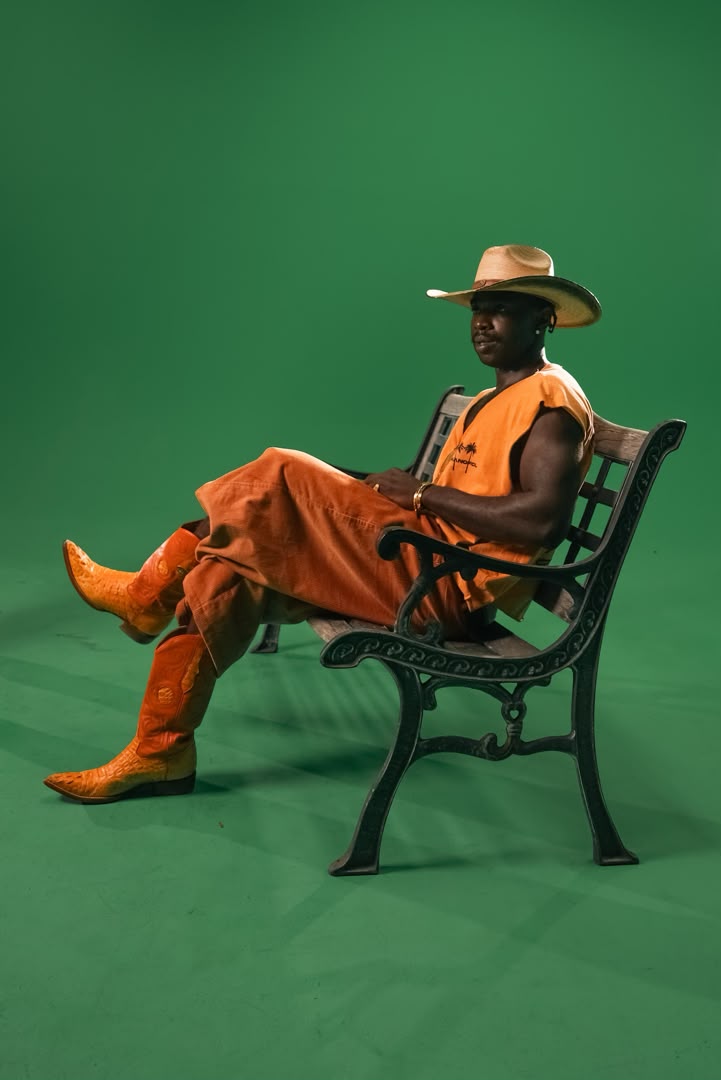
During his Speed Does Africa tour, Watkins visited Kwame Nkrumah Memorial Park in Accra, a site that also appears in the documentary. In announcing his involvement, he said he was proud to “bring his story to my community.” Graphic Online puts his following at more than 200 million across platforms, suggesting that his participation could introduce the film to younger audiences unfamiliar with Hesse and his archive. 

The two forms of visibility offer a striking contrast: Hesse’s reels preserve an image of Ghana for future generations, while Watkins’ platform can bring that image before audiences who might never seek out a documentary. 

The film premiered at the Toronto International Film Festival in September 2025 and won an audience award at the Hamptons International Film Festival. Its stated ambition is to bring Hesse’s footage to a new generation, but the archive’s recovery remains far from complete. Truthdig reports that most of Hesse’s work has not been scanned, and that the roughly 15 minutes restored for the documentary’s screening were drawn from reels still held in England.

For Afonu, the problem began in film school. In an interview with The Produced, she recalled studying Italian, German, Soviet, and Hollywood cinema while seeing “nothing from my own home.” She also said she first entered the Rex while attending film school, after hearing about the cinema for years before it closed. In the same interview, she explained that the negatives were sent to London because Ghana lacked the facilities to store them, and described her hope of bringing digital copies back to Ghana. 

A 2013 interview with the African Women in Cinema blog shows that these concerns predate the documentary. Discussing state-held films stored in England, Afonu said access was nearly impossible for Ghanaian researchers and filmmakers, prompting her to start an initiative to digitise them. Her short documentary Perished Diamonds (2012) explored the deterioration of celluloid held by the Ghana Film Industry Corporation.

Preservation, digitisation, cataloguing, research access, and public screening are distinct tasks, and Hesse’s archive remains far from the end of that chain. The originals are stored in conditions Ghana was unable to provide, but Proudfoot’s warning about decay makes clear that their survival is not guaranteed. Digitisation has covered only a fraction of the collection. Wikipedia reports that some reels were scanned for the production itself, while Africa Briefing notes that the documentary’s synopsis does not specify how many have been digitised, where every original is held, or what access Ghanaian researchers will have. The public record also leaves unanswered questions about who controls the material and who is permitted to use it. Afonu told the Hawai’i International Film Festival that she hoped the documentary’s success would attract support for the full archive. In that sense, the film is also making a case for funding the collection it brings to public attention.

The Rex’s restoration during production demonstrates what a physical space can offer: somewhere for the footage to be seen. But a restored cinema without films to screen leaves a gap in another form. Likewise, a digitised archive without a catalogue, a public venue, or a sustainable funding model may remain inaccessible, even if its reels have been rescued.

The film is also a selection of history, and critics differ in their assessment of how it handles Nkrumah’s legacy. IndieWire reads it as a tribute to cinema’s power to change the world. POV Magazine argues that the documentary does not entirely sidestep the criticism that Nkrumah was a dictator, noting a scene in which a student asks Hesse about the former leader’s record. Truthdig, by contrast, calls the portrait shallow, arguing that Hesse’s own history is sanitised and that the film glosses over his continued work for the government that ousted Nkrumah. Sinema Focus similarly argues that Proudfoot plays it safe with a contested legacy, favouring tribute over critique.

The reviews differ in their severity, but they point to a shared limitation: the documentary is a portrait of a man and an archive, built around footage recorded by someone who worked within one political era. An official cinematographer’s images inevitably reflect the vantage point from which they were made. The footage offers a record of the state, but it cannot stand in for every perspective on it. The histories that might complicate this account, including those recorded by other filmmakers and people outside the government, belong to a wider archive the documentary does not explore.

What Ghanaian filmmakers, students, and historians stand to gain from Hesse’s reels is concrete: footage from a formative period of the country’s history to study, cite, and reinterpret. Afonu’s account of learning cinema from everywhere except home captures what an accessible archive could change. The documentary has reached Ghanaian audiences in stages. 

On April 17, Hesse and Proudfoot attended a screening at the University of Media, Arts and Communication’s Institute of Film and Television. A free screening was scheduled at Kwame Nkrumah Memorial Park for October 31, three days after the documentary’s one-night run in US and Canadian cinemas. In mid-October, YEN reported that no African theatrical release had been announced.

Meaningful preservation must extend beyond screenings: digitising more of the 300 hours of footage, publishing a catalogue, clarifying who holds the originals and who can access them, and securing funding beyond the attention one film can generate. The film leaves a plain question for Ghana, which is who will be able to see what survived.

Cover Credit: Breakwater Studios
‍

Who Gets to See Ghana’s History?

Authored by
This is some text inside of a div block.

More than 1,300 reels of film documenting Ghana’s independence era survive, according to the production synopsis of The Eyes of Ghana. Yet most have never been seen by a Ghanaian audience. Director Ben Proudfoot told Ghana’s national broadcaster (GBC) that the finished documentary draws on approximately 15 minutes of archival footage.

According to AllHipHop’s account of the interview, Proudfoot estimated that more than 300 hours of original negatives remain in a London vault, where age and chemical decay threaten their survival. The distance between what survives and what can be seen is the question the film raises. An archive may be preserved, but when it remains beyond the reach of the people whose history it records, preservation means less than it should.

Chris Hesse, born in Osu, Accra, began his professional career in 1954 and worked within the film establishment that would become the Ghana Film Industry Corporation, according to Graphic Online. From 1956 until Kwame Nkrumah’s overthrow in 1966, Hesse served as the official cinematographer for the president and his government. His work spanned Ghana’s independence in 1957 and the decade that followed. 

Hesse was reportedly travelling abroad with Nkrumah when the coup took place on February 24, 1966. The documentary’s synopsis recounts how Nkrumah’s opponents sought to destroy the filmed record of his rule, and how Hesse managed to preserve the reels. The footage matters as historical evidence: it records a defining period from within the state itself, while the circumstances surrounding its survival raise questions about who gets to preserve, control, and interpret a nation’s visual history.

‍

The Eyes of Ghana, directed by Proudfoot and executive produced by Barack and Michelle Obama, follows Hesse and the young filmmaker Anita Afonu as she plans a public screening of his work at the Rex, an outdoor cinema described in the film’s notes as badly in need of repair. The production also includes American streamer IShowSpeed, whose real name is Darren Watkins Jr. Graphic Online reports that he joined after visiting Ghana earlier this year and exploring his Ghanaian ancestry. 

During his Speed Does Africa tour, Watkins visited Kwame Nkrumah Memorial Park in Accra, a site that also appears in the documentary. In announcing his involvement, he said he was proud to “bring his story to my community.” Graphic Online puts his following at more than 200 million across platforms, suggesting that his participation could introduce the film to younger audiences unfamiliar with Hesse and his archive. 

The two forms of visibility offer a striking contrast: Hesse’s reels preserve an image of Ghana for future generations, while Watkins’ platform can bring that image before audiences who might never seek out a documentary. 

The film premiered at the Toronto International Film Festival in September 2025 and won an audience award at the Hamptons International Film Festival. Its stated ambition is to bring Hesse’s footage to a new generation, but the archive’s recovery remains far from complete. Truthdig reports that most of Hesse’s work has not been scanned, and that the roughly 15 minutes restored for the documentary’s screening were drawn from reels still held in England.

For Afonu, the problem began in film school. In an interview with The Produced, she recalled studying Italian, German, Soviet, and Hollywood cinema while seeing “nothing from my own home.” She also said she first entered the Rex while attending film school, after hearing about the cinema for years before it closed. In the same interview, she explained that the negatives were sent to London because Ghana lacked the facilities to store them, and described her hope of bringing digital copies back to Ghana. 

A 2013 interview with the African Women in Cinema blog shows that these concerns predate the documentary. Discussing state-held films stored in England, Afonu said access was nearly impossible for Ghanaian researchers and filmmakers, prompting her to start an initiative to digitise them. Her short documentary Perished Diamonds (2012) explored the deterioration of celluloid held by the Ghana Film Industry Corporation.

Preservation, digitisation, cataloguing, research access, and public screening are distinct tasks, and Hesse’s archive remains far from the end of that chain. The originals are stored in conditions Ghana was unable to provide, but Proudfoot’s warning about decay makes clear that their survival is not guaranteed. Digitisation has covered only a fraction of the collection. Wikipedia reports that some reels were scanned for the production itself, while Africa Briefing notes that the documentary’s synopsis does not specify how many have been digitised, where every original is held, or what access Ghanaian researchers will have. The public record also leaves unanswered questions about who controls the material and who is permitted to use it. Afonu told the Hawai’i International Film Festival that she hoped the documentary’s success would attract support for the full archive. In that sense, the film is also making a case for funding the collection it brings to public attention.

The Rex’s restoration during production demonstrates what a physical space can offer: somewhere for the footage to be seen. But a restored cinema without films to screen leaves a gap in another form. Likewise, a digitised archive without a catalogue, a public venue, or a sustainable funding model may remain inaccessible, even if its reels have been rescued.

The film is also a selection of history, and critics differ in their assessment of how it handles Nkrumah’s legacy. IndieWire reads it as a tribute to cinema’s power to change the world. POV Magazine argues that the documentary does not entirely sidestep the criticism that Nkrumah was a dictator, noting a scene in which a student asks Hesse about the former leader’s record. Truthdig, by contrast, calls the portrait shallow, arguing that Hesse’s own history is sanitised and that the film glosses over his continued work for the government that ousted Nkrumah. Sinema Focus similarly argues that Proudfoot plays it safe with a contested legacy, favouring tribute over critique.

The reviews differ in their severity, but they point to a shared limitation: the documentary is a portrait of a man and an archive, built around footage recorded by someone who worked within one political era. An official cinematographer’s images inevitably reflect the vantage point from which they were made. The footage offers a record of the state, but it cannot stand in for every perspective on it. The histories that might complicate this account, including those recorded by other filmmakers and people outside the government, belong to a wider archive the documentary does not explore.

What Ghanaian filmmakers, students, and historians stand to gain from Hesse’s reels is concrete: footage from a formative period of the country’s history to study, cite, and reinterpret. Afonu’s account of learning cinema from everywhere except home captures what an accessible archive could change. The documentary has reached Ghanaian audiences in stages. 

On April 17, Hesse and Proudfoot attended a screening at the University of Media, Arts and Communication’s Institute of Film and Television. A free screening was scheduled at Kwame Nkrumah Memorial Park for October 31, three days after the documentary’s one-night run in US and Canadian cinemas. In mid-October, YEN reported that no African theatrical release had been announced.

Meaningful preservation must extend beyond screenings: digitising more of the 300 hours of footage, publishing a catalogue, clarifying who holds the originals and who can access them, and securing funding beyond the attention one film can generate. The film leaves a plain question for Ghana, which is who will be able to see what survived.

Cover Credit: Breakwater Studios
‍

This is some text inside of a div block.

Who Gets to See Ghana’s History?

Authored by

More than 1,300 reels of film documenting Ghana’s independence era survive, according to the production synopsis of The Eyes of Ghana. Yet most have never been seen by a Ghanaian audience. Director Ben Proudfoot told Ghana’s national broadcaster (GBC) that the finished documentary draws on approximately 15 minutes of archival footage.

According to AllHipHop’s account of the interview, Proudfoot estimated that more than 300 hours of original negatives remain in a London vault, where age and chemical decay threaten their survival. The distance between what survives and what can be seen is the question the film raises. An archive may be preserved, but when it remains beyond the reach of the people whose history it records, preservation means less than it should.

Chris Hesse, born in Osu, Accra, began his professional career in 1954 and worked within the film establishment that would become the Ghana Film Industry Corporation, according to Graphic Online. From 1956 until Kwame Nkrumah’s overthrow in 1966, Hesse served as the official cinematographer for the president and his government. His work spanned Ghana’s independence in 1957 and the decade that followed. 

Hesse was reportedly travelling abroad with Nkrumah when the coup took place on February 24, 1966. The documentary’s synopsis recounts how Nkrumah’s opponents sought to destroy the filmed record of his rule, and how Hesse managed to preserve the reels. The footage matters as historical evidence: it records a defining period from within the state itself, while the circumstances surrounding its survival raise questions about who gets to preserve, control, and interpret a nation’s visual history.

‍

The Eyes of Ghana, directed by Proudfoot and executive produced by Barack and Michelle Obama, follows Hesse and the young filmmaker Anita Afonu as she plans a public screening of his work at the Rex, an outdoor cinema described in the film’s notes as badly in need of repair. The production also includes American streamer IShowSpeed, whose real name is Darren Watkins Jr. Graphic Online reports that he joined after visiting Ghana earlier this year and exploring his Ghanaian ancestry. 

During his Speed Does Africa tour, Watkins visited Kwame Nkrumah Memorial Park in Accra, a site that also appears in the documentary. In announcing his involvement, he said he was proud to “bring his story to my community.” Graphic Online puts his following at more than 200 million across platforms, suggesting that his participation could introduce the film to younger audiences unfamiliar with Hesse and his archive. 

The two forms of visibility offer a striking contrast: Hesse’s reels preserve an image of Ghana for future generations, while Watkins’ platform can bring that image before audiences who might never seek out a documentary. 

The film premiered at the Toronto International Film Festival in September 2025 and won an audience award at the Hamptons International Film Festival. Its stated ambition is to bring Hesse’s footage to a new generation, but the archive’s recovery remains far from complete. Truthdig reports that most of Hesse’s work has not been scanned, and that the roughly 15 minutes restored for the documentary’s screening were drawn from reels still held in England.

For Afonu, the problem began in film school. In an interview with The Produced, she recalled studying Italian, German, Soviet, and Hollywood cinema while seeing “nothing from my own home.” She also said she first entered the Rex while attending film school, after hearing about the cinema for years before it closed. In the same interview, she explained that the negatives were sent to London because Ghana lacked the facilities to store them, and described her hope of bringing digital copies back to Ghana. 

A 2013 interview with the African Women in Cinema blog shows that these concerns predate the documentary. Discussing state-held films stored in England, Afonu said access was nearly impossible for Ghanaian researchers and filmmakers, prompting her to start an initiative to digitise them. Her short documentary Perished Diamonds (2012) explored the deterioration of celluloid held by the Ghana Film Industry Corporation.

Preservation, digitisation, cataloguing, research access, and public screening are distinct tasks, and Hesse’s archive remains far from the end of that chain. The originals are stored in conditions Ghana was unable to provide, but Proudfoot’s warning about decay makes clear that their survival is not guaranteed. Digitisation has covered only a fraction of the collection. Wikipedia reports that some reels were scanned for the production itself, while Africa Briefing notes that the documentary’s synopsis does not specify how many have been digitised, where every original is held, or what access Ghanaian researchers will have. The public record also leaves unanswered questions about who controls the material and who is permitted to use it. Afonu told the Hawai’i International Film Festival that she hoped the documentary’s success would attract support for the full archive. In that sense, the film is also making a case for funding the collection it brings to public attention.

The Rex’s restoration during production demonstrates what a physical space can offer: somewhere for the footage to be seen. But a restored cinema without films to screen leaves a gap in another form. Likewise, a digitised archive without a catalogue, a public venue, or a sustainable funding model may remain inaccessible, even if its reels have been rescued.

The film is also a selection of history, and critics differ in their assessment of how it handles Nkrumah’s legacy. IndieWire reads it as a tribute to cinema’s power to change the world. POV Magazine argues that the documentary does not entirely sidestep the criticism that Nkrumah was a dictator, noting a scene in which a student asks Hesse about the former leader’s record. Truthdig, by contrast, calls the portrait shallow, arguing that Hesse’s own history is sanitised and that the film glosses over his continued work for the government that ousted Nkrumah. Sinema Focus similarly argues that Proudfoot plays it safe with a contested legacy, favouring tribute over critique.

The reviews differ in their severity, but they point to a shared limitation: the documentary is a portrait of a man and an archive, built around footage recorded by someone who worked within one political era. An official cinematographer’s images inevitably reflect the vantage point from which they were made. The footage offers a record of the state, but it cannot stand in for every perspective on it. The histories that might complicate this account, including those recorded by other filmmakers and people outside the government, belong to a wider archive the documentary does not explore.

What Ghanaian filmmakers, students, and historians stand to gain from Hesse’s reels is concrete: footage from a formative period of the country’s history to study, cite, and reinterpret. Afonu’s account of learning cinema from everywhere except home captures what an accessible archive could change. The documentary has reached Ghanaian audiences in stages. 

On April 17, Hesse and Proudfoot attended a screening at the University of Media, Arts and Communication’s Institute of Film and Television. A free screening was scheduled at Kwame Nkrumah Memorial Park for October 31, three days after the documentary’s one-night run in US and Canadian cinemas. In mid-October, YEN reported that no African theatrical release had been announced.

Meaningful preservation must extend beyond screenings: digitising more of the 300 hours of footage, publishing a catalogue, clarifying who holds the originals and who can access them, and securing funding beyond the attention one film can generate. The film leaves a plain question for Ghana, which is who will be able to see what survived.

Cover Credit: Breakwater Studios

‍

Other Stories
London
London
Lagos
London
Newyork
London
Shop
Join the community.
You are now subscribed to receive updates.
Oops! Something went wrong while submitting the form.
Subscribe