.svg)

%20(1).jpeg)
There’s a certain form of nostalgia stitched into the world of Kwasi Paul. It’s not the polished, trend-driven nostalgia fashion often romanticises, but something much warmer and more lived-in. It’s the kind found in old family photo albums with folded edges, inherited stories passed down over time, heirloom weaving techniques, and memories that refuse to disappear.
“What I like to tell everybody is that Kwasi Paul is my personal diary,” says Sam Boakye, founder and creative director of Kwasi Paul, over a call earlier this month. “A reflection of my upbringing, living in a space I like to call the in-between.” At the time of speaking to Boakye, he'd been moving through “different time zones,” but his voice sharpens the moment he begins talking about the brand. Kwasi Paul, he tells me, is less a fashion label than it is a diary. It’s built from the emotional contradictions of being Ghanaian-American, raised between the Bronx, Queens, and West African culture.
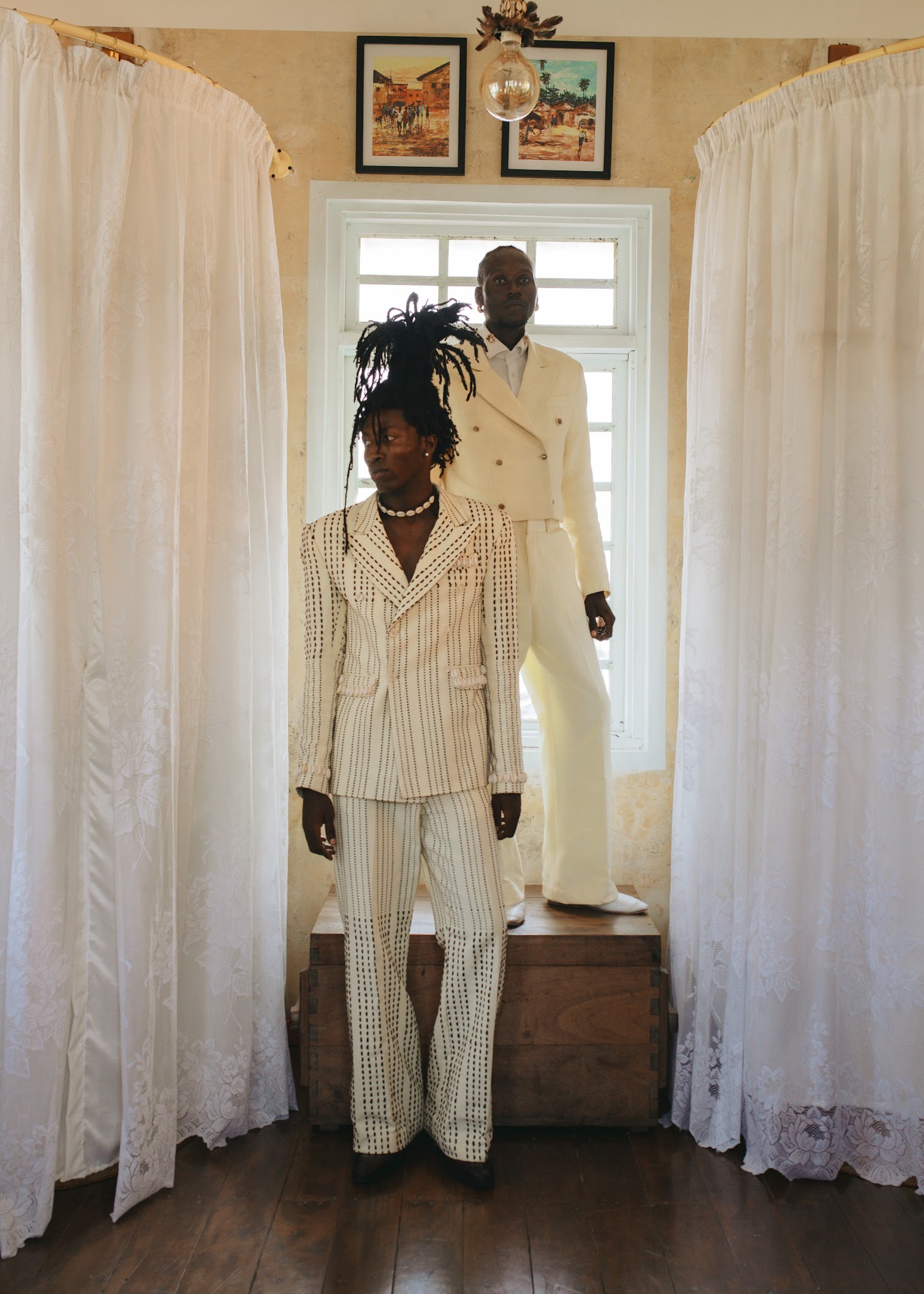
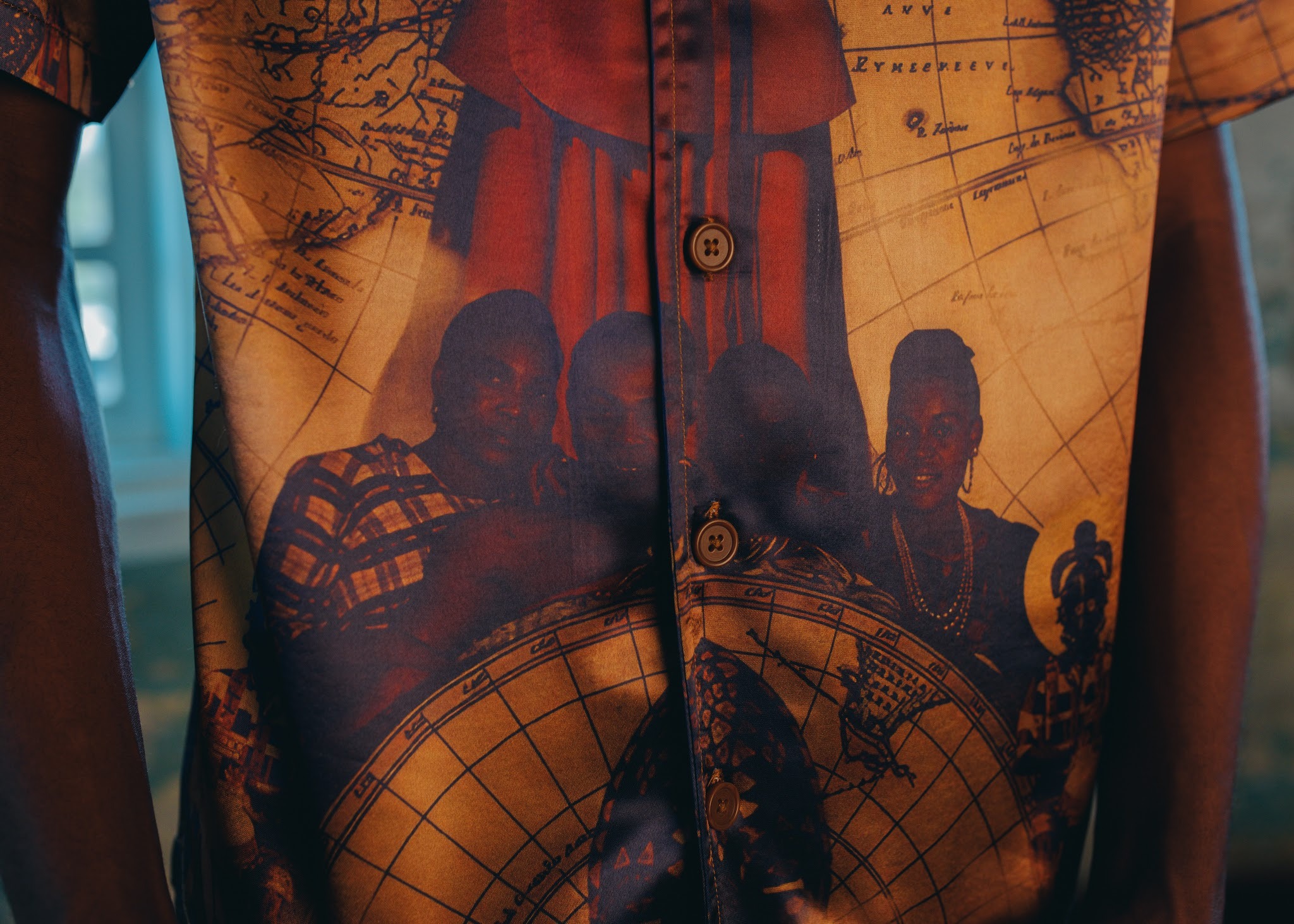
Born in the Bronx and raised in Queens by Ghanaian parents, Boakye describes the brand as an extension of that duality that's both African and American, traditional and contemporary, and deeply personal yet communal. That in-between feeling exists everywhere in the brand’s language. Across Kwasi Paul’s universe, cowrie shell embellishments sit beside sharply tailored coats, heirloom-woven cotton is transformed into contemporary menswear, and family portraits are embedded into garments. Much of the brand’s visual language pulls directly from the textures of memory, from music and childhood nostalgia to the emotional residue of growing up across cultures.
“It’s luxury,” Boakye says later, pausing briefly before clarifying, “but it’s not luxury European-coded. It’s luxury African diaspora with real culture, real meaning, real history.”
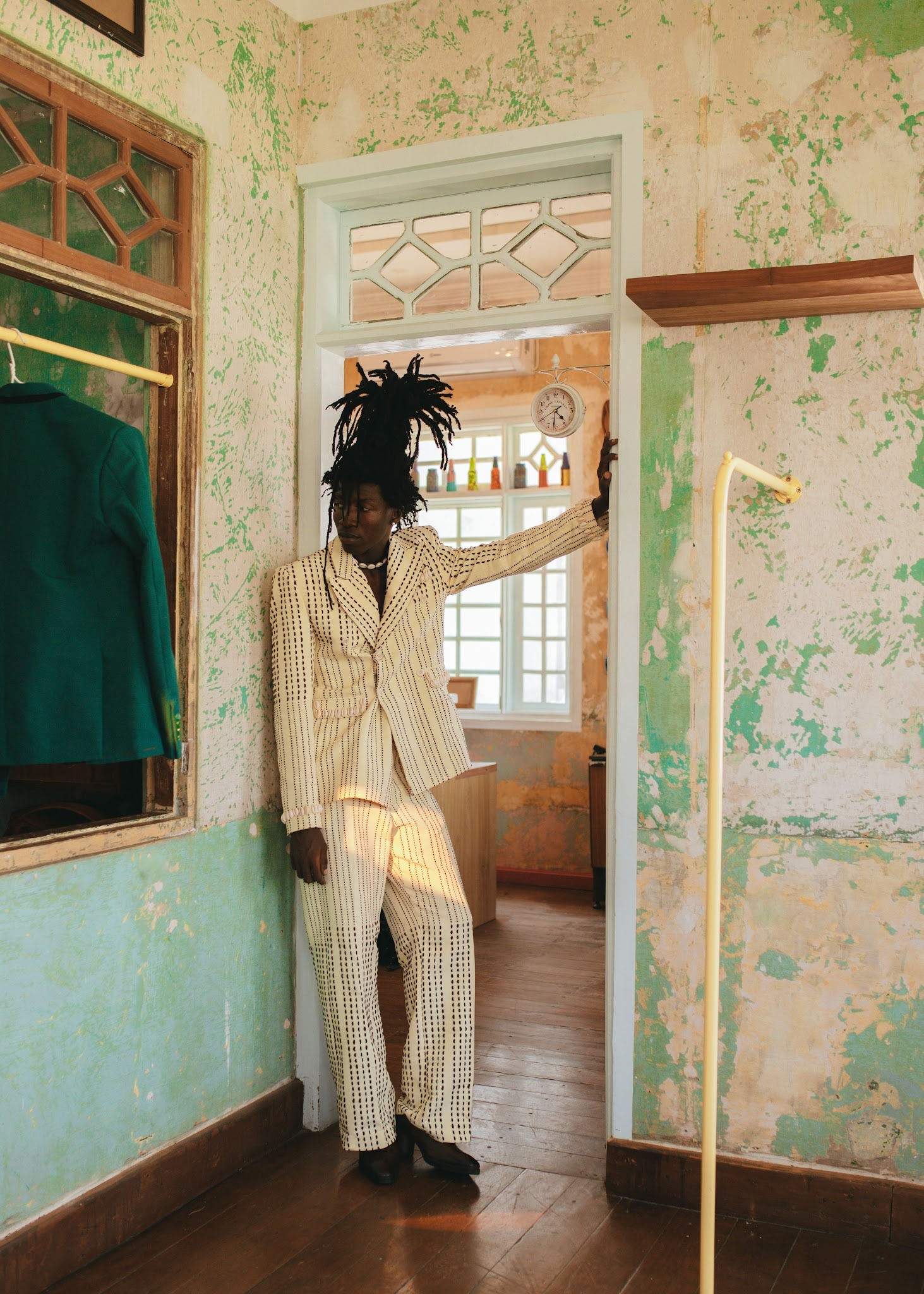
What makes Kwasi Paul most compelling is not just the craftsmanship, though that’s certainly part of it. It’s the emotional intentionality underneath it all. Every collection feels like a preservation exercise and an attempt to archive memory before it slips away. His latest collection, Keepsakes, leans furthest into that intimacy yet, drawing from childhood innocence, Anansi stories, books, games, family photographs, and folklore to reconstruct what Boakye describes as “child joy” in the middle of an increasingly exhausting world.
“The world is obviously a shitshow at the current moment,” he tells me bluntly. “So sometimes I like to get lost in the past. Specifically when I was a child.”
That emotional honesty runs throughout our conversation. Fashion, for Boakye, is about storytelling, time travel, and building a world expansive enough for diaspora identity to exist without explanation.
Below, Boakye speaks to Deeds Magazine about music as memory, rejecting creative boxes, childhood nostalgia, and why Kwasi Paul is only just getting started.
Hi Sam – Tell me a little bit about yourself and how Kwasi Paul came to be.
Sam Boakye: I was born in the Bronx and raised in Queens. I’m first-generation by way of Ghana, West Africa. I actually got into fashion through a friend, and over time I developed a strong passion for it and decided I wanted to create something more personal. That’s how Kwasi Paul came about.
What I like to tell everybody is that Kwasi Paul is my personal diary. It’s a reflection of my upbringing, living in a space I call “the in-between,” being influenced by two different worlds. A lot of what you see is direct influence from the diaspora and West African culture, but there’s also a lot of New York personality and Western influence in the DNA of the brand too.
It’s really a combination of my experiences and also curiosity. I’m always thinking about: what does the world look like in the future? And how do I implement that into my design world?
That idea of a “personal diary” feels really central to the brand. As Kwasi Paul has grown, has that relationship changed for you at all?
Sam Boakye: I think it’s still personal, but it’s more of a public diary now. By sharing my experiences and being vulnerable through my art, people now have access to it. Fashion became my outlet. And once you start doing collections, you realise so many people share the same experiences, the same beliefs, and the same views that are relatable. So yeah, it went from being a personal diary into a public diary.
How would you describe the world of Kwasi Paul to somebody discovering the brand for the first time?
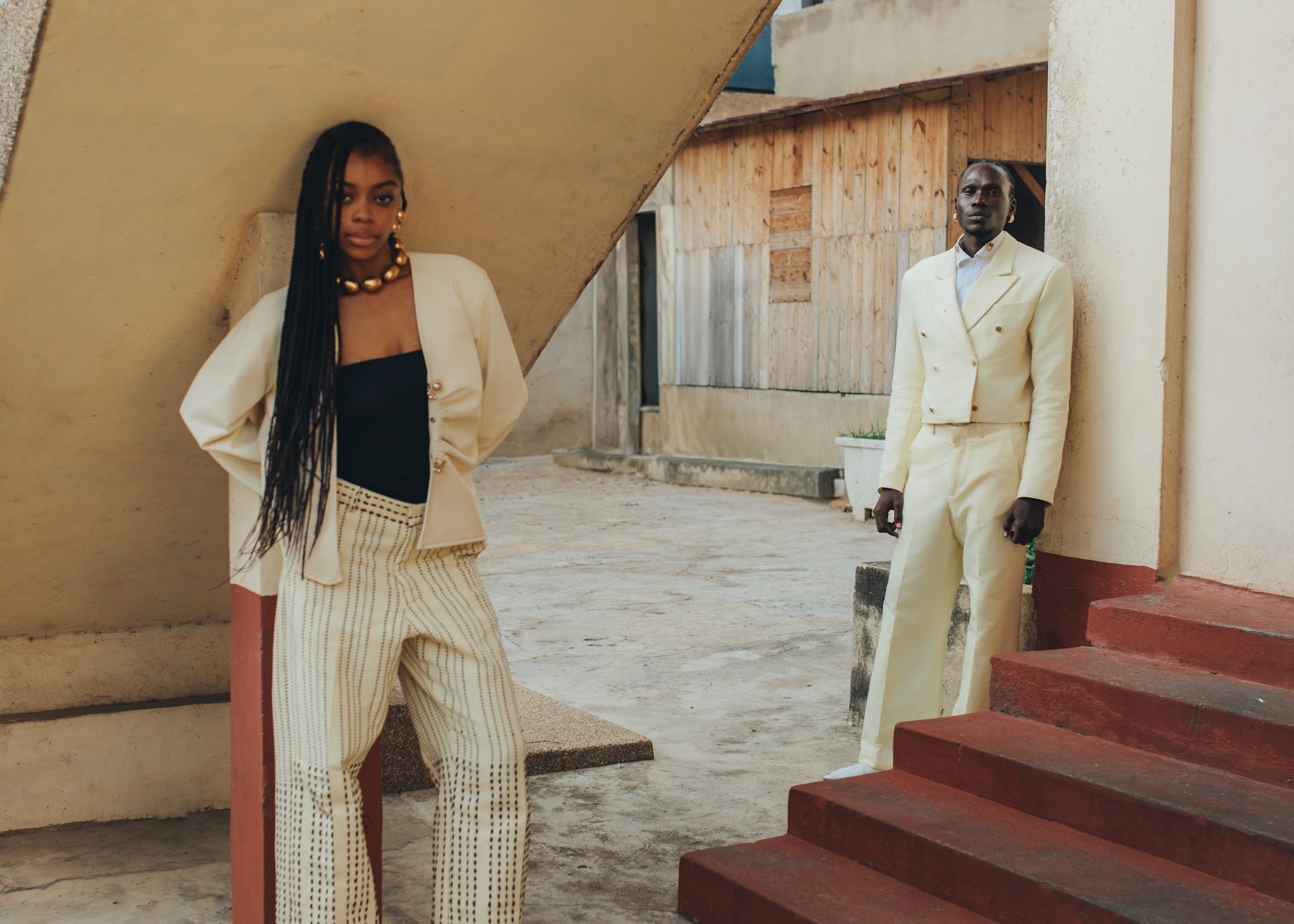
Sam Boakye: Somebody told me recently that it’s for the person who wants to walk into a room and draw attention without doing too much. It’s innovative leadership through cuts, craftsmanship, and styling.
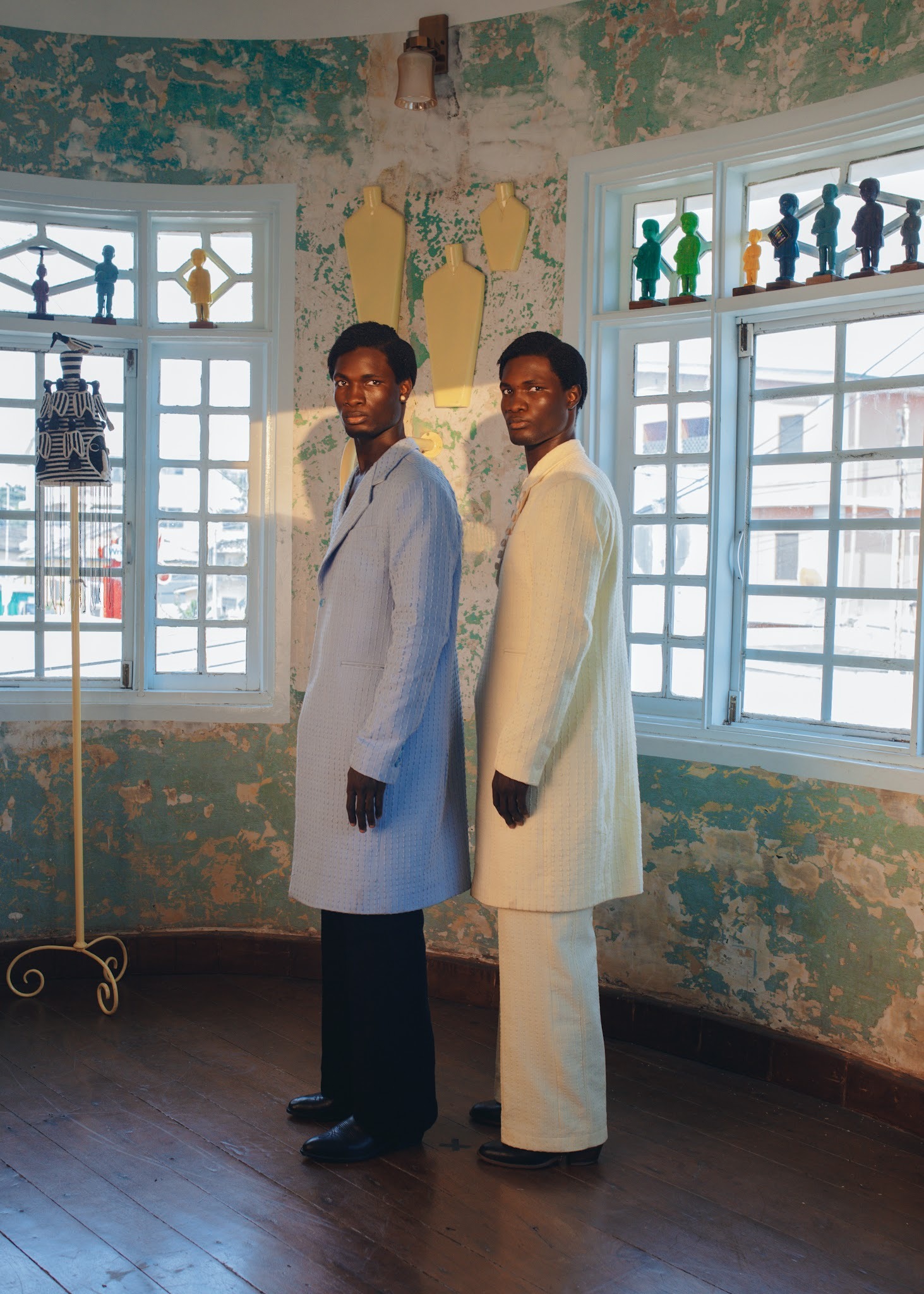
There’s a bit of 70s flair, maybe some 80s and 90s references too, and classic gentleman-like menswear tailoring. But what really makes it unique is the fabric. We work a lot with heirloom-woven cotton, which has existed across West Africa for centuries, so the story is already rich.
We also create our own patterns and use colour combinations that aren’t always popular. Sometimes you’ll find cowrie shell embellishments or portraits of my family and buttons. It’s really a combination of many things existing together.
There’s a very intentional sense of world-building in the collections and campaigns. What perspective guides that?
Sam Boakye: That’s a good question. I guess my perspective has always been creating a lifestyle for people within the diaspora. I don’t like being put into a box. Sometimes, especially when you come from both worlds, people try to place you into either category. Like, okay, I’m a Black designer or I’m an African designer. But technically, I’m both, right? I’m African-American.
So I think my perspective is really about not being boxed in creatively. If I were to describe the world of Kwasi Paul, it’s a free world for people of the diaspora and allies of the diaspora. It’s an acquired taste too. It’s luxury, but it’s not luxury European-coded. It’s luxury African diaspora — real culture, real meaning, real history. I’m always thinking about innovation too. How do we continue taking what we know, our culture and history, and continue to innovate it in ways that still feel fresh while still holding onto that history tag?
What’s interesting is that even when you speak about clothes, you speak about them emotionally first. When you’re beginning a collection, where does that process usually start for you?
Sam Boakye: The story. Always the story.
I’ll sit down and think about what’s happening in the world right now, what happened in the past, and how I can create something that represents the future. Once the story is there, then we develop the garments around it.
Most of our pieces are made from heirloom-woven textiles, but after that we start building the colour story, the stitching, and the silhouettes around the narrative. Music is a huge part of that too. I usually create playlists for collections because music really sets the mood. It helps me understand what the world of the collection feels like emotionally. It’s kind of like writing the first journal entry. Like, what are we going to write about today?
You mentioned music there, and it seems deeply tied to the brand, especially with Diaspora FM. What role does sound play in your creative process?
Sam Boakye: Music helps me time travel.
If I’m listening to Teddy Pendergrass or Barry White, it takes me back to when my pops used to play those records all the time. Then I start thinking about what I was seeing around me during those years, what influenced me visually, emotionally, culturally.
Sometimes I’ll listen to traditional highlife music from before I was even born and imagine myself in that era through family photo albums and stories. I’m definitely an old soul, so a lot of what I listen to are classics. Music allows me to travel emotionally, and that rhythm influences the silhouettes too. It shapes the entire mood of the collection.

Your latest collection, Keepsakes, feels especially emotional. What was the starting point for that project?
Sam Boakye: Keepsakes was very personal. I wanted to tap into a childlike spirit.
As we get older, we lose ourselves a bit. We get caught up in work and responsibilities, and the world is obviously a shitshow right now. So sometimes I like to revisit the past, specifically childhood, because that was when everything felt innocent and pure. I wanted the collection to feel like joy and nostalgia. I pulled from things I kept dear to my heart as a kid: my grandmother’s photographs, my parents’ photo albums, games I used to play, books I used to read, all the way down to Ghanaian folklore like Anansi stories.
Then the research became about memory, family, and storytelling. We started thinking about how Anansi connects to weaving and memory itself. So Keepsakes became this folklore-inspired collection centred around childhood joy and emotional escape.
Now that Keepsakes is out in the world, what’s next for Kwasi Paul?
Sam Boakye: Honestly, the world-building is only just beginning.
People know us for the clothes and the tailoring right now, but I want to continue expanding the universe around the brand. We’re working on new collections, new silhouettes, and different forms of storytelling beyond fashion too. We’re about to release an animation project connected to Keepsakes, which I’m excited about. More than anything, I just want to keep having fun and continue sharing dialogue with the world through Kwasi Paul.
Kwasi Paul SS26 collection is available for order at www.kwasipaul.com


.png)

