Inside the Brand: Abela

Authored by

The story of the two Benin brothers paving their own way into Parisian fashion

For a long time, Paris has been known as the capital city of fashion. Every season, every year, through carefully planned and scheduled fashion weeks, the most sought-after household names gather to showcase their newest collections to the fashion world. However, on the opposite side of the whole gist, glamour, and prestige, there lies a suburb Afro-diasporic community gradually bubbling to the surface and weaving its own fashion identity. They, too, show up to culturally relevant events, often scattered across the Parisian streets to showcase their elegant designs and immaculate style. It is in the midst of this cross-cultural gathering that young locals found their own labels, driven by a strong passion to express their creativity through clothing.

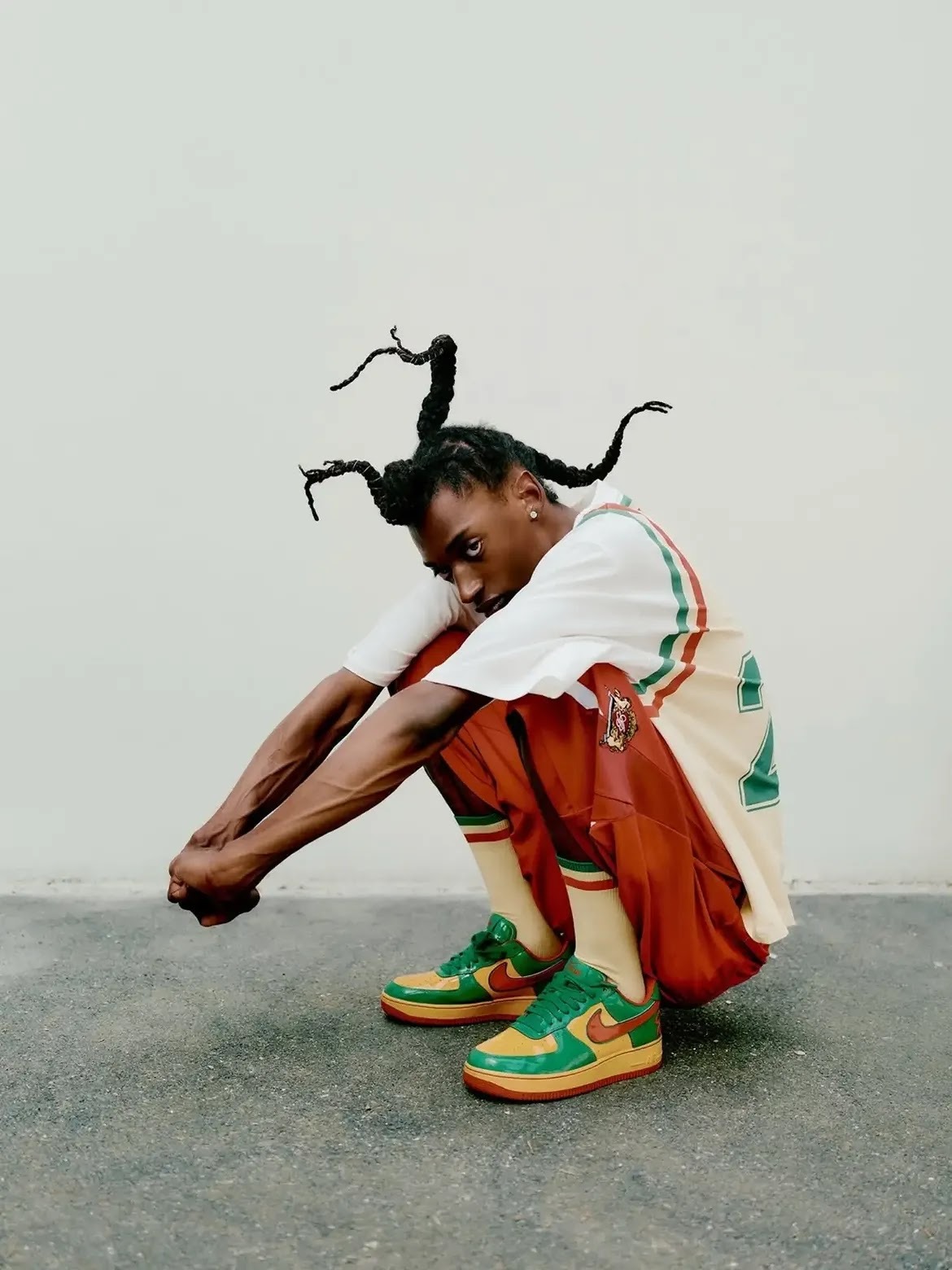
Abela, a fashion brand by two Benin brothers, Ousba and Oluwafèmi, is the newest exception to the rule, building a lasting impact. In their latest campaign “Diary of a Summer vol. 1,” customers are invited not only to purchase from their collection but also to engage with their stylistic universe. The result? Abela doesn’t just sell mere garments; it is wrapped in a colouring book where the public becomes a part of the storytelling, and for those who were in search of a Parisian brand for all, they may now belong.
Deeds Magazine sat down with Abela’s founders to discuss their journey thus far and plans for the near future.

Growing up in the suburbs of Cergy (95th district), the brothers Ousba (25) and Fèmi (30) of Nigerian and Benin descent seemingly had the whole world before them. While style was somewhat important, football was king, as Paris Saint-Germain quickly became the brothers’ favourite team. “We were the only ones with those backgrounds,” commented Ousba when asked about the dominance of Francophone African migrants in neighbourhoods like theirs. As siblings 5 years apart, this meant their shared goals required patience before they would eventually intertwine. “Every time I went outside, I had to bring my brother with me. We got closer later in life,” said Fèmi when describing their relationship back then.

Like many other children of African descent, even while residing in the Occident, certain ideals by their parents still applied. Both first ventured into separate studies of business, before Ousba dropped out and followed through a scholarship in fashion. “Fashion wasn't a choice; our father was against the Arts,” explained Fèmi about the decision to pursue business despite a growing interest in fashion. “It had to be something like science, law, or accounting,” added Ousba. “He was afraid we wouldn’t make a lot of money. We did everything they said we should, so they let us start Abela,” Fèmi described the long journey toward their own brand.

In an intricate personal ritual, fashion still found its way into their lives, mainly through their mother and her business ventures. “My mother used to have a thrift shop in Benin; we were heavily influenced by the diverse culture,” said Fèmi when reminiscing about his earliest memories of clothes. During their long visits every two years, the brothers absorbed not only their mother’s thrift store but also the markets surrounding them. What stuck out most were the bootleg sections, reinterpreting football teams in African attire. Although restricted, the brothers were still raised by their parents to be individual thinkers. “Our parents always encouraged us to be different from everyone,” explained Fémi.
In an oversaturated market where fashion brands seemingly pop out every other week, an eye for detail becomes crucial, and the need for purpose and essence. The brothers seem to have perfected it from the get-go. Abela is a word that translates to candle in Yoruba, a nod to their cultural background. “The name came about in 3 different ideas; the candle reflects our life cycle, depending on the brightness of the flame, it represents whether everything is good or bad. Lastly, if you were to compare a candle to a human being, we are all made of different designs, different colours, and scent,” elaborated Ousba on the reasoning for selecting this particular brand name.

Even at community gatherings, every angle is well thought out. “During a pop-up, we used omoba imagery, the king's child. Also, the music being played was West African. We had objects with Adinkra, a symbol used in West Africa. Most things that we do are to preserve our roots,” explained Fèmi. On the exact usage of symbols, Ousba clarified, “The changing room had wood with Adinkra symbols during the pop-up. To understand where we come from, but also show our background smoothly. I want my people to understand how rich our culture is.”

For the brothers, the clothes must speak just as much as their setting, from the selected models to the campaign itself. They draw inspiration from old MTV video clips they would watch as children.“Abela is like a big playground, showing grown men can be happy and enjoy themselves,” said Ousba when describing the visual language of the brand. The characters that embody their clothes play into the world they created. “It's a feeling; the energy they transmit matches the brand,” said Fèmi when asked how they went about selecting the right models. “People that look like us,” emphasized Ousba.

In its minimalistic approach, Abela manages to capture the eye through an understanding of layers and how to attach them with depth. “The clothes that we create are a reflection of the way we dress, and we never dress loud. No big logos, no monographs. The shape, the way the clothes fall on people- that's what stands out for us most,” said Fèmi.

Perhaps a surprising revelation was their take on streetwear. Often perceived in a negative connotation due to its basic appeal, Fèmi made sure to distance itself from the coined label, “We don't label ourselves as streetwear. The way we source our clothes is not mainly streetwear; it is elevated clothes. You can have a business meeting in our clothes or go outside casually.”

For future endeavours, the brothers remain hopeful. “In the next few years, we want to become a brand for everyone,” said Ousba when asked about what he envisions for Abela. “To show every young child of the diaspora, you can do whatever you want,” added Fèmi. Perhaps the burning candle Abela symbolizes also represents a glimmer of light for Paris’ suburban young community, filled with promising children just like Ousba and Fèmi once were, imbued with the possibility of the brightest of futures. 

Inside the Brand: Abela

Authored by
This is some text inside of a div block.

The story of the two Benin brothers paving their own way into Parisian fashion

For a long time, Paris has been known as the capital city of fashion. Every season, every year, through carefully planned and scheduled fashion weeks, the most sought-after household names gather to showcase their newest collections to the fashion world. However, on the opposite side of the whole gist, glamour, and prestige, there lies a suburb Afro-diasporic community gradually bubbling to the surface and weaving its own fashion identity. They, too, show up to culturally relevant events, often scattered across the Parisian streets to showcase their elegant designs and immaculate style. It is in the midst of this cross-cultural gathering that young locals found their own labels, driven by a strong passion to express their creativity through clothing.

Abela, a fashion brand by two Benin brothers, Ousba and Oluwafèmi, is the newest exception to the rule, building a lasting impact. In their latest campaign “Diary of a Summer vol. 1,” customers are invited not only to purchase from their collection but also to engage with their stylistic universe. The result? Abela doesn’t just sell mere garments; it is wrapped in a colouring book where the public becomes a part of the storytelling, and for those who were in search of a Parisian brand for all, they may now belong.
Deeds Magazine sat down with Abela’s founders to discuss their journey thus far and plans for the near future.

Growing up in the suburbs of Cergy (95th district), the brothers Ousba (25) and Fèmi (30) of Nigerian and Benin descent seemingly had the whole world before them. While style was somewhat important, football was king, as Paris Saint-Germain quickly became the brothers’ favourite team. “We were the only ones with those backgrounds,” commented Ousba when asked about the dominance of Francophone African migrants in neighbourhoods like theirs. As siblings 5 years apart, this meant their shared goals required patience before they would eventually intertwine. “Every time I went outside, I had to bring my brother with me. We got closer later in life,” said Fèmi when describing their relationship back then.

Like many other children of African descent, even while residing in the Occident, certain ideals by their parents still applied. Both first ventured into separate studies of business, before Ousba dropped out and followed through a scholarship in fashion. “Fashion wasn't a choice; our father was against the Arts,” explained Fèmi about the decision to pursue business despite a growing interest in fashion. “It had to be something like science, law, or accounting,” added Ousba. “He was afraid we wouldn’t make a lot of money. We did everything they said we should, so they let us start Abela,” Fèmi described the long journey toward their own brand.

In an intricate personal ritual, fashion still found its way into their lives, mainly through their mother and her business ventures. “My mother used to have a thrift shop in Benin; we were heavily influenced by the diverse culture,” said Fèmi when reminiscing about his earliest memories of clothes. During their long visits every two years, the brothers absorbed not only their mother’s thrift store but also the markets surrounding them. What stuck out most were the bootleg sections, reinterpreting football teams in African attire. Although restricted, the brothers were still raised by their parents to be individual thinkers. “Our parents always encouraged us to be different from everyone,” explained Fémi.

In an oversaturated market where fashion brands seemingly pop out every other week, an eye for detail becomes crucial, and the need for purpose and essence. The brothers seem to have perfected it from the get-go. Abela is a word that translates to candle in Yoruba, a nod to their cultural background. “The name came about in 3 different ideas; the candle reflects our life cycle, depending on the brightness of the flame, it represents whether everything is good or bad. Lastly, if you were to compare a candle to a human being, we are all made of different designs, different colours, and scent,” elaborated Ousba on the reasoning for selecting this particular brand name.

Even at community gatherings, every angle is well thought out. “During a pop-up, we used omoba imagery, the king's child. Also, the music being played was West African. We had objects with Adinkra, a symbol used in West Africa. Most things that we do are to preserve our roots,” explained Fèmi. On the exact usage of symbols, Ousba clarified, “The changing room had wood with Adinkra symbols during the pop-up. To understand where we come from, but also show our background smoothly. I want my people to understand how rich our culture is.”

For the brothers, the clothes must speak just as much as their setting, from the selected models to the campaign itself. They draw inspiration from old MTV video clips they would watch as children.“Abela is like a big playground, showing grown men can be happy and enjoy themselves,” said Ousba when describing the visual language of the brand. The characters that embody their clothes play into the world they created. “It's a feeling; the energy they transmit matches the brand,” said Fèmi when asked how they went about selecting the right models. “People that look like us,” emphasized Ousba.

In its minimalistic approach, Abela manages to capture the eye through an understanding of layers and how to attach them with depth. “The clothes that we create are a reflection of the way we dress, and we never dress loud. No big logos, no monographs. The shape, the way the clothes fall on people- that's what stands out for us most,” said Fèmi.

Perhaps a surprising revelation was their take on streetwear. Often perceived in a negative connotation due to its basic appeal, Fèmi made sure to distance itself from the coined label, “We don't label ourselves as streetwear. The way we source our clothes is not mainly streetwear; it is elevated clothes. You can have a business meeting in our clothes or go outside casually.”

For future endeavours, the brothers remain hopeful. “In the next few years, we want to become a brand for everyone,” said Ousba when asked about what he envisions for Abela. “To show every young child of the diaspora, you can do whatever you want,” added Fèmi. Perhaps the burning candle Abela symbolizes also represents a glimmer of light for Paris’ suburban young community, filled with promising children just like Ousba and Fèmi once were, imbued with the possibility of the brightest of futures. 
This is some text inside of a div block.

Inside the Brand: Abela

Authored by

The story of the two Benin brothers paving their own way into Parisian fashion

For a long time, Paris has been known as the capital city of fashion. Every season, every year, through carefully planned and scheduled fashion weeks, the most sought-after household names gather to showcase their newest collections to the fashion world. However, on the opposite side of the whole gist, glamour, and prestige, there lies a suburb Afro-diasporic community gradually bubbling to the surface and weaving its own fashion identity. They, too, show up to culturally relevant events, often scattered across the Parisian streets to showcase their elegant designs and immaculate style. It is in the midst of this cross-cultural gathering that young locals found their own labels, driven by a strong passion to express their creativity through clothing.

Abela, a fashion brand by two Benin brothers, Ousba and Oluwafèmi, is the newest exception to the rule, building a lasting impact. In their latest campaign “Diary of a Summer vol. 1,” customers are invited not only to purchase from their collection but also to engage with their stylistic universe. The result? Abela doesn’t just sell mere garments; it is wrapped in a colouring book where the public becomes a part of the storytelling, and for those who were in search of a Parisian brand for all, they may now belong.
Deeds Magazine sat down with Abela’s founders to discuss their journey thus far and plans for the near future.

Growing up in the suburbs of Cergy (95th district), the brothers Ousba (25) and Fèmi (30) of Nigerian and Benin descent seemingly had the whole world before them. While style was somewhat important, football was king, as Paris Saint-Germain quickly became the brothers’ favourite team. “We were the only ones with those backgrounds,” commented Ousba when asked about the dominance of Francophone African migrants in neighbourhoods like theirs. As siblings 5 years apart, this meant their shared goals required patience before they would eventually intertwine. “Every time I went outside, I had to bring my brother with me. We got closer later in life,” said Fèmi when describing their relationship back then.

Like many other children of African descent, even while residing in the Occident, certain ideals by their parents still applied. Both first ventured into separate studies of business, before Ousba dropped out and followed through a scholarship in fashion. “Fashion wasn't a choice; our father was against the Arts,” explained Fèmi about the decision to pursue business despite a growing interest in fashion. “It had to be something like science, law, or accounting,” added Ousba. “He was afraid we wouldn’t make a lot of money. We did everything they said we should, so they let us start Abela,” Fèmi described the long journey toward their own brand.

In an intricate personal ritual, fashion still found its way into their lives, mainly through their mother and her business ventures. “My mother used to have a thrift shop in Benin; we were heavily influenced by the diverse culture,” said Fèmi when reminiscing about his earliest memories of clothes. During their long visits every two years, the brothers absorbed not only their mother’s thrift store but also the markets surrounding them. What stuck out most were the bootleg sections, reinterpreting football teams in African attire. Although restricted, the brothers were still raised by their parents to be individual thinkers. “Our parents always encouraged us to be different from everyone,” explained Fémi.

In an oversaturated market where fashion brands seemingly pop out every other week, an eye for detail becomes crucial, and the need for purpose and essence. The brothers seem to have perfected it from the get-go. Abela is a word that translates to candle in Yoruba, a nod to their cultural background. “The name came about in 3 different ideas; the candle reflects our life cycle, depending on the brightness of the flame, it represents whether everything is good or bad. Lastly, if you were to compare a candle to a human being, we are all made of different designs, different colours, and scent,” elaborated Ousba on the reasoning for selecting this particular brand name.

Even at community gatherings, every angle is well thought out. “During a pop-up, we used omoba imagery, the king's child. Also, the music being played was West African. We had objects with Adinkra, a symbol used in West Africa. Most things that we do are to preserve our roots,” explained Fèmi. On the exact usage of symbols, Ousba clarified, “The changing room had wood with Adinkra symbols during the pop-up. To understand where we come from, but also show our background smoothly. I want my people to understand how rich our culture is.”

For the brothers, the clothes must speak just as much as their setting, from the selected models to the campaign itself. They draw inspiration from old MTV video clips they would watch as children.“Abela is like a big playground, showing grown men can be happy and enjoy themselves,” said Ousba when describing the visual language of the brand. The characters that embody their clothes play into the world they created. “It's a feeling; the energy they transmit matches the brand,” said Fèmi when asked how they went about selecting the right models. “People that look like us,” emphasized Ousba.

In its minimalistic approach, Abela manages to capture the eye through an understanding of layers and how to attach them with depth. “The clothes that we create are a reflection of the way we dress, and we never dress loud. No big logos, no monographs. The shape, the way the clothes fall on people- that's what stands out for us most,” said Fèmi.

Perhaps a surprising revelation was their take on streetwear. Often perceived in a negative connotation due to its basic appeal, Fèmi made sure to distance itself from the coined label, “We don't label ourselves as streetwear. The way we source our clothes is not mainly streetwear; it is elevated clothes. You can have a business meeting in our clothes or go outside casually.”

For future endeavours, the brothers remain hopeful. “In the next few years, we want to become a brand for everyone,” said Ousba when asked about what he envisions for Abela. “To show every young child of the diaspora, you can do whatever you want,” added Fèmi. Perhaps the burning candle Abela symbolizes also represents a glimmer of light for Paris’ suburban young community, filled with promising children just like Ousba and Fèmi once were, imbued with the possibility of the brightest of futures. 
Other Stories
London
London
Lagos
London
Newyork
London
Shop
Join the community.
You are now subscribed to receive updates.
Oops! Something went wrong while submitting the form.