The Nigerians of BoF 500

Authored by

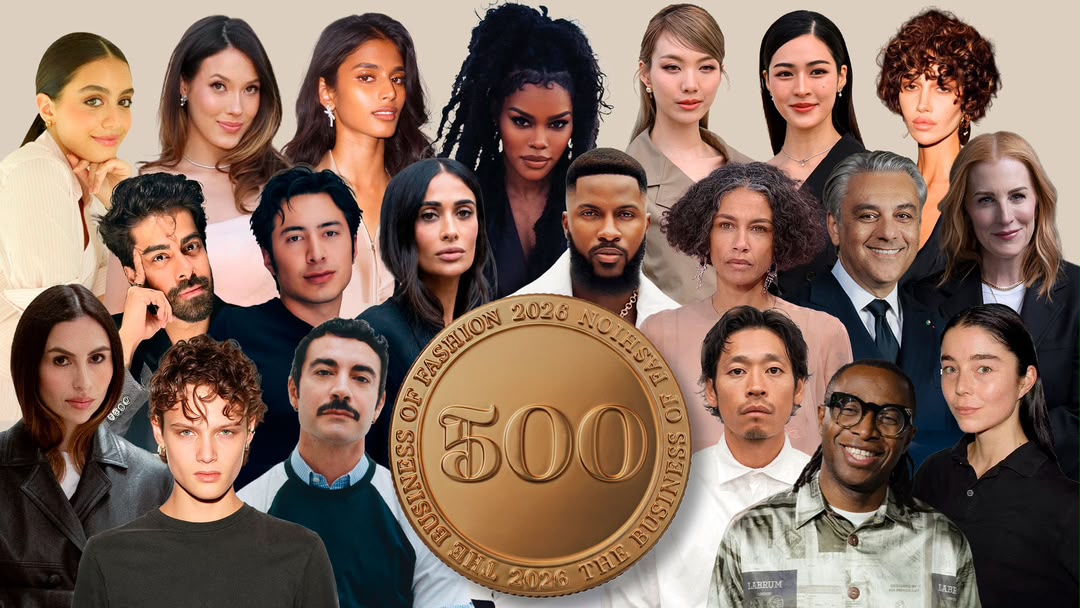
Every year, during the fashion calendar, The Business of Fashion announces the newest members of the BoF 500, its index of people shaping the global fashion industry. This year’s class adds 100 new members from 33 countries and 48 nationalities, bringing the total to 1,713 people from 104 nationalities. 

Among the Sub-Saharan African inductees this year is Dr. Akin Faminu, a Lagos-based medical doctor who built a second career as a men’s fashion content creator. BoF describes him as a creator who has helped put Nigerian menswear on the global radar. His inclusion is the latest in a growing list of Nigerian and Nigerian-linked creatives who have appeared in the index over the years. Looking at that record raises a bigger question than any individual announcement: what does recognition from one of fashion’s most influential global publications actually mean once the announcement is over?

The BoF 500 launched in 2013 as an editorially curated index, not a ranking. New members are selected through nominations from existing members, industry research and editorial deliberation, with the criteria covering leadership, creativity, innovation and impact across eight categories: Designers, Executives, Media, Retailers, Entrepreneurs, Creative Class, Models and Muses, and Catalysts. BoF is one major global fashion publication making an editorial judgment about influence, and that distinction matters when considering what the index represents. It records the people a particular institution has identified as significant at a particular moment. It is not a census of who matters in fashion, and it was never designed to be one.

The Nigerian presence on the list across thirteen years covers a range that is itself an argument about what influence in fashion can look like. Omoyemi Akerele, founder of Style House Files and Lagos Fashion Week, was among the earliest Nigerian inclusions. By then, she had spent years building the institutional infrastructure around Nigerian fashion, creating platforms and spaces through which designers could present their work to international audiences. Reni Folawiyo built Alara, Lagos’ most significant luxury concept store, bringing international and Nigerian designers into the same retail context while creating a distinct expression of Nigerian taste and luxury. Adebayo Oke-Lawal built Orange Culture around gender, Nigerian aesthetics and streetwear, and later developed The Orange Mentorship, with grants, mentorship and education initiatives designed to give emerging designers access to resources and guidance. Ireti Zaccheaus built Street Souk into a major streetwear convention, connecting Nigerian streetwear culture with diaspora audiences and international brands.
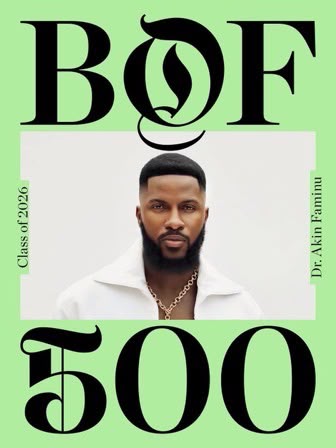
image credit: Akin Faminu (BOF500 2026)

The photographers on the list offer another way of thinking about influence. Stephen Tayo built a practice documenting Nigerian fashion and culture with a visual language rooted in the places and people he was photographing. Gabriel Moses, born in South London to Nigerian parents, became the youngest photographer to shoot a Dazed cover and expanded his work into directing, moving between Nike campaigns and fashion editorial. Their inclusion reflects the role images play in shaping how fashion is seen and understood. The same is true of the musicians. Burna Boy and Ayra Starr were recognised not as designers, but as artists whose relationships with fashion have become closely tied to how their identities are presented and consumed. Grace Ladoja, cultural strategist, founder of Metallic Inc. and the Homecoming Festival, represents another form of influence, building connections between Nigerian music, talent and global cultural audiences. Together, these inclusions show how broadly fashion's influence can extend, from the people making clothes to those shaping the images, music and cultural spaces around them.

What the Nigerian members share is not the list itself, but the work that preceded it and continued afterwards. Akerele did not build Lagos Fashion Week because BoF named her. Oke-Lawal did not establish The Orange Mentorship in response to recognition from a global publication. Tayo did not develop his photographic practice to become legible to international fashion media. The recognition followed work that was already underway, shaping the spaces these creatives occupied and, in some cases, creating new ones. This is not a criticism of the BoF 500. It is a distinction that helps explain what the index can actually do. It can identify work that has gained significance and place it within a global fashion context. What it cannot do is create that influence, and treating recognition as the source of it misses the work that made the recognition possible in the first place.

There is also the question of what the list cannot see. The BoF 500 reflects a global fashion publication’s view of influence, which means its field of vision is shaped by what becomes visible to international fashion media: work presented at major fashion weeks, covered by publications with global reach or able to travel beyond its immediate context. It is less equipped to capture the manufacturers and tailors, fabric traders, independent retailers, editors working within Nigerian publications and designers building distribution without international press. These are the people who keep the wider fashion ecosystem functioning without necessarily entering the spaces where global fashion media is looking. The creatives who appear on the BoF 500 often depend on that infrastructure too. The index captures a portion of Nigerian fashion’s influence, and a significant one, but it is a portion, not the whole picture.

The 2026 class brings Faminu into a community of Nigerian creatives whose presence on the list spans institutional founders, independent designers, photographers, musicians, cultural strategists and a doctor who built a second career around menswear. What connects them is not the index itself, but the work that made their recognition possible: designing, building, photographing, curating and documenting. The BoF 500 records that influence at a particular moment. The work that gives it meaning happens before the announcement and continues long after it.

Cover Credit: BOF500 2026

‍

The Nigerians of BoF 500

Authored by
This is some text inside of a div block.

Every year, during the fashion calendar, The Business of Fashion announces the newest members of the BoF 500, its index of people shaping the global fashion industry. This year’s class adds 100 new members from 33 countries and 48 nationalities, bringing the total to 1,713 people from 104 nationalities. 

Among the Sub-Saharan African inductees this year is Dr. Akin Faminu, a Lagos-based medical doctor who built a second career as a men’s fashion content creator. BoF describes him as a creator who has helped put Nigerian menswear on the global radar. His inclusion is the latest in a growing list of Nigerian and Nigerian-linked creatives who have appeared in the index over the years. Looking at that record raises a bigger question than any individual announcement: what does recognition from one of fashion’s most influential global publications actually mean once the announcement is over?

The BoF 500 launched in 2013 as an editorially curated index, not a ranking. New members are selected through nominations from existing members, industry research and editorial deliberation, with the criteria covering leadership, creativity, innovation and impact across eight categories: Designers, Executives, Media, Retailers, Entrepreneurs, Creative Class, Models and Muses, and Catalysts. BoF is one major global fashion publication making an editorial judgment about influence, and that distinction matters when considering what the index represents. It records the people a particular institution has identified as significant at a particular moment. It is not a census of who matters in fashion, and it was never designed to be one.

The Nigerian presence on the list across thirteen years covers a range that is itself an argument about what influence in fashion can look like. Omoyemi Akerele, founder of Style House Files and Lagos Fashion Week, was among the earliest Nigerian inclusions. By then, she had spent years building the institutional infrastructure around Nigerian fashion, creating platforms and spaces through which designers could present their work to international audiences. Reni Folawiyo built Alara, Lagos’ most significant luxury concept store, bringing international and Nigerian designers into the same retail context while creating a distinct expression of Nigerian taste and luxury. Adebayo Oke-Lawal built Orange Culture around gender, Nigerian aesthetics and streetwear, and later developed The Orange Mentorship, with grants, mentorship and education initiatives designed to give emerging designers access to resources and guidance. Ireti Zaccheaus built Street Souk into a major streetwear convention, connecting Nigerian streetwear culture with diaspora audiences and international brands.

image credit: Akin Faminu (BOF500 2026)

The photographers on the list offer another way of thinking about influence. Stephen Tayo built a practice documenting Nigerian fashion and culture with a visual language rooted in the places and people he was photographing. Gabriel Moses, born in South London to Nigerian parents, became the youngest photographer to shoot a Dazed cover and expanded his work into directing, moving between Nike campaigns and fashion editorial. Their inclusion reflects the role images play in shaping how fashion is seen and understood. The same is true of the musicians. Burna Boy and Ayra Starr were recognised not as designers, but as artists whose relationships with fashion have become closely tied to how their identities are presented and consumed. Grace Ladoja, cultural strategist, founder of Metallic Inc. and the Homecoming Festival, represents another form of influence, building connections between Nigerian music, talent and global cultural audiences. Together, these inclusions show how broadly fashion's influence can extend, from the people making clothes to those shaping the images, music and cultural spaces around them.

What the Nigerian members share is not the list itself, but the work that preceded it and continued afterwards. Akerele did not build Lagos Fashion Week because BoF named her. Oke-Lawal did not establish The Orange Mentorship in response to recognition from a global publication. Tayo did not develop his photographic practice to become legible to international fashion media. The recognition followed work that was already underway, shaping the spaces these creatives occupied and, in some cases, creating new ones. This is not a criticism of the BoF 500. It is a distinction that helps explain what the index can actually do. It can identify work that has gained significance and place it within a global fashion context. What it cannot do is create that influence, and treating recognition as the source of it misses the work that made the recognition possible in the first place.

There is also the question of what the list cannot see. The BoF 500 reflects a global fashion publication’s view of influence, which means its field of vision is shaped by what becomes visible to international fashion media: work presented at major fashion weeks, covered by publications with global reach or able to travel beyond its immediate context. It is less equipped to capture the manufacturers and tailors, fabric traders, independent retailers, editors working within Nigerian publications and designers building distribution without international press. These are the people who keep the wider fashion ecosystem functioning without necessarily entering the spaces where global fashion media is looking. The creatives who appear on the BoF 500 often depend on that infrastructure too. The index captures a portion of Nigerian fashion’s influence, and a significant one, but it is a portion, not the whole picture.

The 2026 class brings Faminu into a community of Nigerian creatives whose presence on the list spans institutional founders, independent designers, photographers, musicians, cultural strategists and a doctor who built a second career around menswear. What connects them is not the index itself, but the work that made their recognition possible: designing, building, photographing, curating and documenting. The BoF 500 records that influence at a particular moment. The work that gives it meaning happens before the announcement and continues long after it.

Cover Credit: BOF500 2026
‍

This is some text inside of a div block.

The Nigerians of BoF 500

Authored by

Every year, during the fashion calendar, The Business of Fashion announces the newest members of the BoF 500, its index of people shaping the global fashion industry. This year’s class adds 100 new members from 33 countries and 48 nationalities, bringing the total to 1,713 people from 104 nationalities. 

Among the Sub-Saharan African inductees this year is Dr. Akin Faminu, a Lagos-based medical doctor who built a second career as a men’s fashion content creator. BoF describes him as a creator who has helped put Nigerian menswear on the global radar. His inclusion is the latest in a growing list of Nigerian and Nigerian-linked creatives who have appeared in the index over the years. Looking at that record raises a bigger question than any individual announcement: what does recognition from one of fashion’s most influential global publications actually mean once the announcement is over?

The BoF 500 launched in 2013 as an editorially curated index, not a ranking. New members are selected through nominations from existing members, industry research and editorial deliberation, with the criteria covering leadership, creativity, innovation and impact across eight categories: Designers, Executives, Media, Retailers, Entrepreneurs, Creative Class, Models and Muses, and Catalysts. BoF is one major global fashion publication making an editorial judgment about influence, and that distinction matters when considering what the index represents. It records the people a particular institution has identified as significant at a particular moment. It is not a census of who matters in fashion, and it was never designed to be one.

The Nigerian presence on the list across thirteen years covers a range that is itself an argument about what influence in fashion can look like. Omoyemi Akerele, founder of Style House Files and Lagos Fashion Week, was among the earliest Nigerian inclusions. By then, she had spent years building the institutional infrastructure around Nigerian fashion, creating platforms and spaces through which designers could present their work to international audiences. Reni Folawiyo built Alara, Lagos’ most significant luxury concept store, bringing international and Nigerian designers into the same retail context while creating a distinct expression of Nigerian taste and luxury. Adebayo Oke-Lawal built Orange Culture around gender, Nigerian aesthetics and streetwear, and later developed The Orange Mentorship, with grants, mentorship and education initiatives designed to give emerging designers access to resources and guidance. Ireti Zaccheaus built Street Souk into a major streetwear convention, connecting Nigerian streetwear culture with diaspora audiences and international brands.

image credit: Akin Faminu (BOF500 2026)

The photographers on the list offer another way of thinking about influence. Stephen Tayo built a practice documenting Nigerian fashion and culture with a visual language rooted in the places and people he was photographing. Gabriel Moses, born in South London to Nigerian parents, became the youngest photographer to shoot a Dazed cover and expanded his work into directing, moving between Nike campaigns and fashion editorial. Their inclusion reflects the role images play in shaping how fashion is seen and understood. The same is true of the musicians. Burna Boy and Ayra Starr were recognised not as designers, but as artists whose relationships with fashion have become closely tied to how their identities are presented and consumed. Grace Ladoja, cultural strategist, founder of Metallic Inc. and the Homecoming Festival, represents another form of influence, building connections between Nigerian music, talent and global cultural audiences. Together, these inclusions show how broadly fashion's influence can extend, from the people making clothes to those shaping the images, music and cultural spaces around them.

What the Nigerian members share is not the list itself, but the work that preceded it and continued afterwards. Akerele did not build Lagos Fashion Week because BoF named her. Oke-Lawal did not establish The Orange Mentorship in response to recognition from a global publication. Tayo did not develop his photographic practice to become legible to international fashion media. The recognition followed work that was already underway, shaping the spaces these creatives occupied and, in some cases, creating new ones. This is not a criticism of the BoF 500. It is a distinction that helps explain what the index can actually do. It can identify work that has gained significance and place it within a global fashion context. What it cannot do is create that influence, and treating recognition as the source of it misses the work that made the recognition possible in the first place.

There is also the question of what the list cannot see. The BoF 500 reflects a global fashion publication’s view of influence, which means its field of vision is shaped by what becomes visible to international fashion media: work presented at major fashion weeks, covered by publications with global reach or able to travel beyond its immediate context. It is less equipped to capture the manufacturers and tailors, fabric traders, independent retailers, editors working within Nigerian publications and designers building distribution without international press. These are the people who keep the wider fashion ecosystem functioning without necessarily entering the spaces where global fashion media is looking. The creatives who appear on the BoF 500 often depend on that infrastructure too. The index captures a portion of Nigerian fashion’s influence, and a significant one, but it is a portion, not the whole picture.

The 2026 class brings Faminu into a community of Nigerian creatives whose presence on the list spans institutional founders, independent designers, photographers, musicians, cultural strategists and a doctor who built a second career around menswear. What connects them is not the index itself, but the work that made their recognition possible: designing, building, photographing, curating and documenting. The BoF 500 records that influence at a particular moment. The work that gives it meaning happens before the announcement and continues long after it.

Cover Credit: BOF500 2026
‍

Other Stories
London
London
Lagos
London
Newyork
London
Shop
Join the community.
You are now subscribed to receive updates.
Oops! Something went wrong while submitting the form.
Subscribe