After playing for the first time, a player named Ola Lateef scored more than 800,000 points and wrote, “This is my first time playing a Nigerian-made game.” Ijeoma Shalom Rayhamen, a Nigerian developer based in the UK, saw the post and recognised an idea she had been thinking about for years: what would a life simulation game look like if its world were shaped by Lagos? Lagos Run gave her the final push to pursue that idea. What she built from it is the more interesting story.
Lagos Life launched on October 1. In eight days, it had reached 4.3 million total players, with more than 70,000 people online simultaneously and more than 10 million all-time visits. The game runs in a browser, with no download, login or paywall required.
There’s a wider context here. One Million Checkboxes, a viral browser game covered by The Washington Post and The New York Times in 2024, attracted approximately 400,000 unique visitors over its two-week run before shutting down. The Sims 4, the life simulation game Lagos Life explicitly drew from, peaked at 96,000 concurrent players on Steam in October 2022. Lagos Life’s rapid growth put it among the most striking recent examples of independent game development, built by a Nigerian developer and launched without the backing of a major publisher. These are not Nigerian gaming numbers. They are independent game development numbers, measured against any standard.
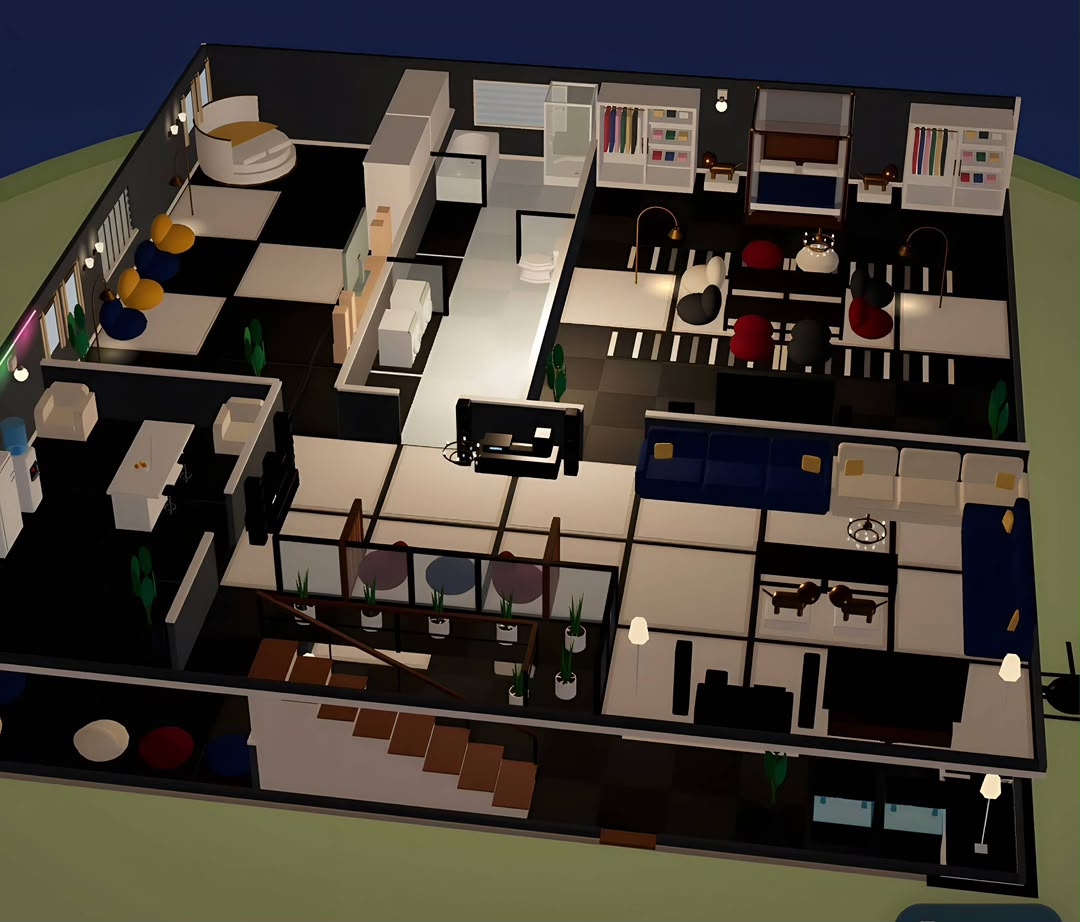
Rayhamen grew up playing The Sims 3. The game gives you a world to furnish and inhabit, social mechanics to navigate, and a life to build through choices about work, relationships and money. Lagos Life takes that structure and rebuilds it around Lagos. Players create a character, enter a shared virtual city and face a choice before anything else has happened: “Nepo or Lapo.” Nepo offers a wealthy beginning; Lapo starts players off poor. The choice establishes class as part of the world they enter, before they have found a job, earned money or made any other decision. It is the game's first statement about life in Lagos, where a person's starting point can shape the choices available to them.
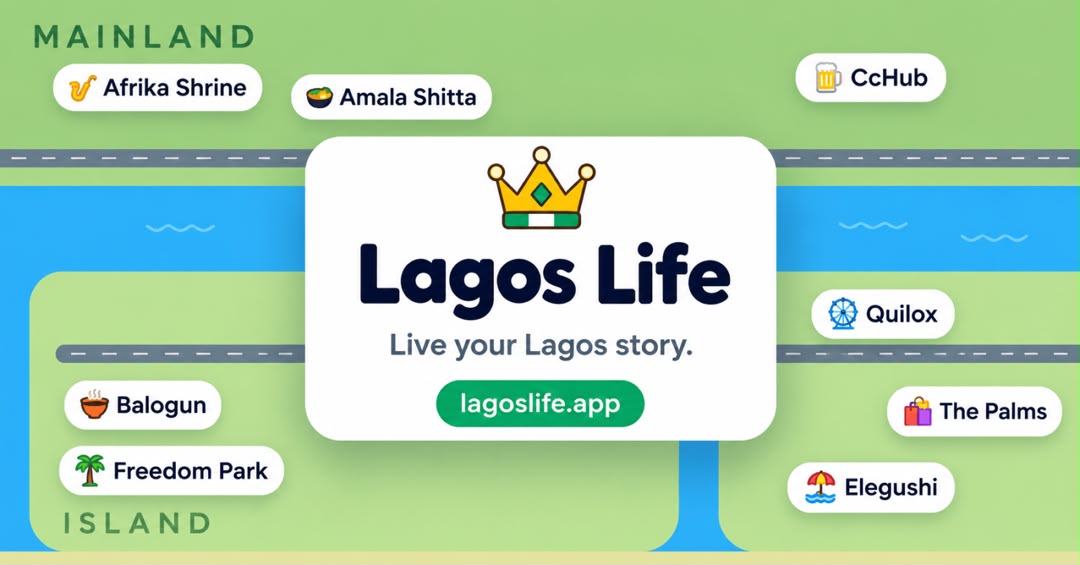
From there, players find jobs, earn and spend Naira, buy food to restore their energy before returning to work, socialise with other players in real time, move through 28 named locations and eventually compete in governor elections. The game's economy runs on Naira, its soundtrack features Nigerian music, and its virtual billboards offer real brands advertising space.
When an exploit allowed players to duplicate money, Rayhamen reset the illegitimate funds and gave every player ₦100,000 in virtual cash as an apology. Even this incident brought questions of money, fairness and accountability into the experience. Lagos Life builds its world around the systems and social realities that shape everyday life, then gives players room to navigate them.
Cultural Mechanics
Lagos Life does not define “Nepo or Lapo” or tell the player why buying food matters before returning to work. The game assumes cultural knowledge and builds from it. Players who recognise the references can move through the mechanics without needing them translated for an outside audience. Starting as Lapo and earning money to access other parts of the game turns economic conditions into something the player has to navigate rather than observe. The game takes experiences that already exist outside the screen and gives them rules, consequences and mechanics. Playing through those systems offers something different from simply seeing Lagos represented on screen.
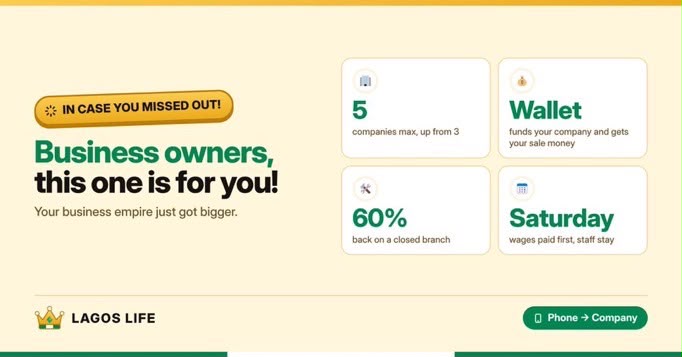
Since its launch, Lagos Life has expanded beyond Lagos itself. Players can now fly between Lagos, Abuja and Port Harcourt, establish homes in different cities and pursue careers across a growing range of industries. The game has also expanded into education, family life and business ownership, allowing players to take courses, build companies, hire staff, apply for jobs and invest. Its political system lets players compete for public office, while its social features bring other players into the lives they are building. The game has also become a space for commercial activity and entertainment.
Just last week, Fireboy DML used Lagos Life to promote his album ZUKO!, with an in-game treasure hunt leading players to his virtual mansion. These additions have turned the game into something more expansive than a simulation of daily life in Lagos. Players can build careers, raise families, participate in politics and engage with brands and artists inside a world that continues to grow beyond its original city.
After Lagos Life crossed one million players, and variations followed. Other developers began adapting the format to different cities and contexts, extending the idea of a browser-based life simulation built around a specific place. The format proved easy to reproduce. What made the original distinctive was harder to carry across. Life simulation has existed for decades, with The Sims building entire worlds around the choices people make about work, money and relationships. Lagos Life’s defining detail was the question of class it placed before the player had done anything at all.
Rayhamen built Lagos Life from the UK, drawing on the life simulation games she grew up playing and the example of a Nigerian-made game that showed Lagos could become a shared virtual world. She gave players who had never played a Nigerian-made game before a way to recognise familiar parts of Lagos in a world they could interact with. The details matter because they shape how players experience the city, from the money they earn to the class position they begin with. By making “Nepo or Lapo” the player's first decision, Rayhamen put a question about the realities of Lagos at the centre of the game from the start.
Cover Credit: Lagos Life App