.svg)

%20(1).jpeg)
LADIPOE has been making the case for technical rap in Nigerian music for over a decade - patiently, consistently, and without compromising the craft that defines him. Born Ladipo Eso, he studied Biology and Chemistry at the University of North Carolina before returning to Lagos to pursue music, a decision that surprised people then and continues to inform his work now. His debut album T.A.P (Talk About Poe) established him as one of the most lyrically rigorous voices in Afrobeats' ecosystem. Revival, his sophomore project, deepens that argument - a Pan-African record that pulls collaborators from Nigeria, South Africa, the UK and the US, and opens with a voice note from his mother. We spoke about craft, conviction, and what it actually takes to lead a revival.
For anyone reading this and discovering you for the first time, how would you introduce yourself and your music?
I'm Ladipoe, the leader of the revival, and I write lifelines.
You studied Biology and Chemistry in the United States before coming back to Nigeria to rap. What was that decision like choosing art over what most people would consider the safer path?
It wasn't a single decision. It's something that happened over time. You know, I got my degree. I also went and got a job and eventually I did come back to Nigeria and also got a job here too. So I was doing that while also pursuing musical aspirations. And over time, you know I went back to school again, came back, and I eventually made the choice to choose one over the other. But pretty much all the while I was pursuing music, I was working. When I decided to choose between the two was when I got signed, because I now felt at this point in time, I had to do it professionally. I had to do it just only music if I wanted to, like, take advantage of being a side artist. That's the first time I made that decision where it was only music that I was doing, so it wasn't a quick decision. It's just that my creative life started to become the main part of my life over time.
You call yourself the “Leader of the Revival.” That’s a bold claim in a landscape where Nigerian hip-hop still struggles for the mainstream attention Afrobeats gets automatically. What are you actually reviving and who are you reviving it for?
I think my revival is not about the genres, not even about the music. It's itself. It's about self. It's about identity. It's about who you are as a person and who you need to become to do the things in life that you are meant to do. And for me, I'm in music, so it's more about self, not about hip hop, not about Afrobeats, not about Nigerian music per se. It's about the person.
You are one of the most technically gifted rappers in Nigerian music, operating in a space that consistently rewards melody and hooks over bars. How do you navigate that tension without compromising what makes you distinctly you?
It's because believing that the value of this thing is not based on its popularity, maybe that's not the accurate thing to say. Think of what I want to say. I think that people ask this question that you're asking because, you know, they feel like there's some kind of competition because people like that, you know, you can only choose one. Because people like…What did you say? Melody and what was it?
Hook over Bars.
Melodies and hooks over bars. Maybe people ask this question because they feel like if people like that, it means they don't like bars, you know, or lyrics. And by bars, what they are just talking about is like lyrics and things that have meaning, punchlines and stuff like that and wordplay. But I think because I don't see it in black and white, I feel like this is an audience that likes many, many things. And they have wild taste and they're really smart, you know, and there's people who are seeking things, that want things just like me. And when you really think about it, because I feel like I like what I like and I'm probably not the only one. I'm not the only one just like me who likes these things, because I really believe that. That's why I know that it's. That's how I navigate it. Because I know that there's other people that like this stuff out there in the world. Sophia there’s almost 300 million people in Nigeria. If a lot of them like hooks and choruses, melody, there's still how many millions that would like, you know what else is out there? At the end of the day, we are not eating rice every day? You know, everybody likes different things.
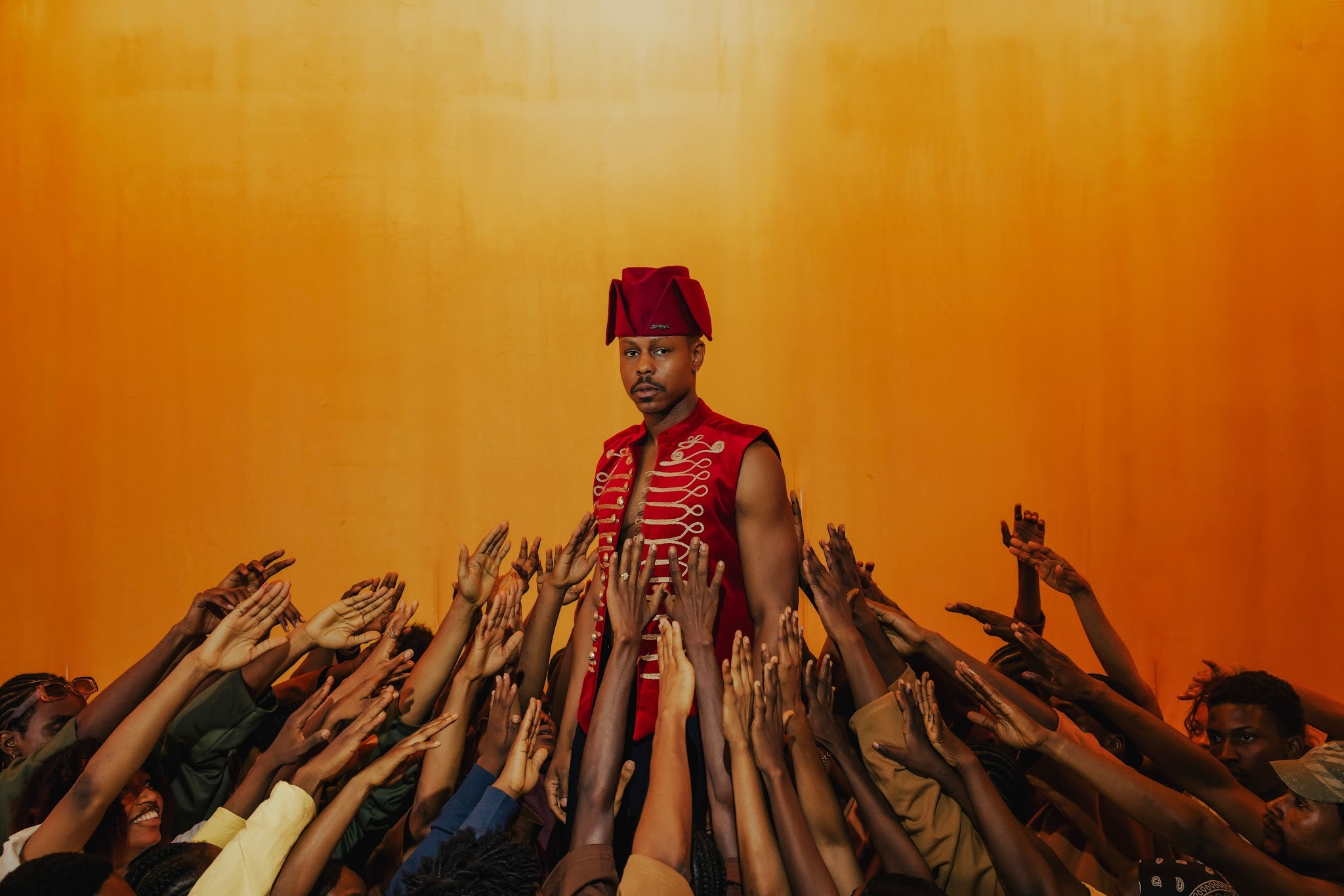
Revival has a Pan-African outlook - collaborations spanning Nigeria, South Africa, the UK and the US. How intentional was it to make the album feel like an African conversation rather than just a Nigerian one?
You know, it was, I'd say it was intentional. It was mainly organic. It really happened organically. And I think the reason why it has a Pan African feel is because that's the nature of my life and my career. Music has kind of taken me beyond the shores of my country and as a result, I'm meeting people from different spaces now and just reflecting on my music. So it was kind of. It was organic, but at the same time, even me, I only realized it maybe like a few months before we dropped the album, like everybody's from different places, you know. But yeah, I think it's more of a true reflection of where my music is at and where it has taken me as opposed to. Hey, man, I had to make sure that they know that it's Pan African.
But yeah, this time was organic.
“Motho Waka” with Maglera Doe Boy stood out as a genuine cross-continental rap moment. What excites you about the growing connections between rap scenes across Africa?
You said, what excites me about growing. Right. I think it's always been there. I actually think these connections have always been there. Even before our own contemporary music industry, dating back to the artists that came before us. I think they've always had these collaborations with their brothers and sisters in different African countries. And I think what excites me is that it's still alive. If anything, I don't just think it's growing. I think it's always been there and it's still alive. And I'm happy to contribute my own songs into these connections. Long established connections, you know, the relationship musically between Africa, I mean, Nigeria and South Africa is deep. Everybody knows this, you know, so this is me adding another one to it, you know. And between Nigeria and Ghana, everybody knows. I mean, I think what excites me is one, that they're still alive and two, there's more that we can bring in to make the show. Connecting now with new places, I think will be even more. That'll be exciting to me. Places that people are not used to seeing, you know? Yeah, that could be interesting.
Actually I do like the song, it’s something I can hum anywhere..
It's such a groovy song. What I've noticed is that now that the album is out, you know, before people heard it as a single, but now they're hearing it inside the album with other tracks. And I think they're appreciating it even more because after many people, they don't even know when their waist is starting to move, when Motho Waka's bass line comes inside.
The opening track “Chosen” ends with a voice note from your mother. That’s a deeply personal creative decision. What made you include that moment on the album?
They found each other. I'd had this message, you know, like, I see people joking online. Anybody that sends Ladipoe voice note is in trouble, they're going to be looking for their voice on the album. But It really isn't like that. And I know rappers have a reputation of doing that, you know, but for me, it was a message I'd always kept with me when. When she sent it, I had kept it with me because it felt important for my own spirit. And it just made sense for a song that talked about being chosen to let you know. Sophia, when you're making music, there's the music, there's the lyrics. I'm always seeking to find more ways to bring you into my world until there's layers to it. So this message and voice from somebody else is another way of letting people understand how I know I'm chosen.
Should I say it’s also a reminder?
Exactly. And, you know, the biggest thing now is if, let's say you're listening to it and it makes you feel chosen, ah! Something powerful is really happening, you know, and I think that's really the biggest part of it. And the most amazing part of music is the fact that somebody can own this song in a way where they're not thinking about me, thinking about themselves.
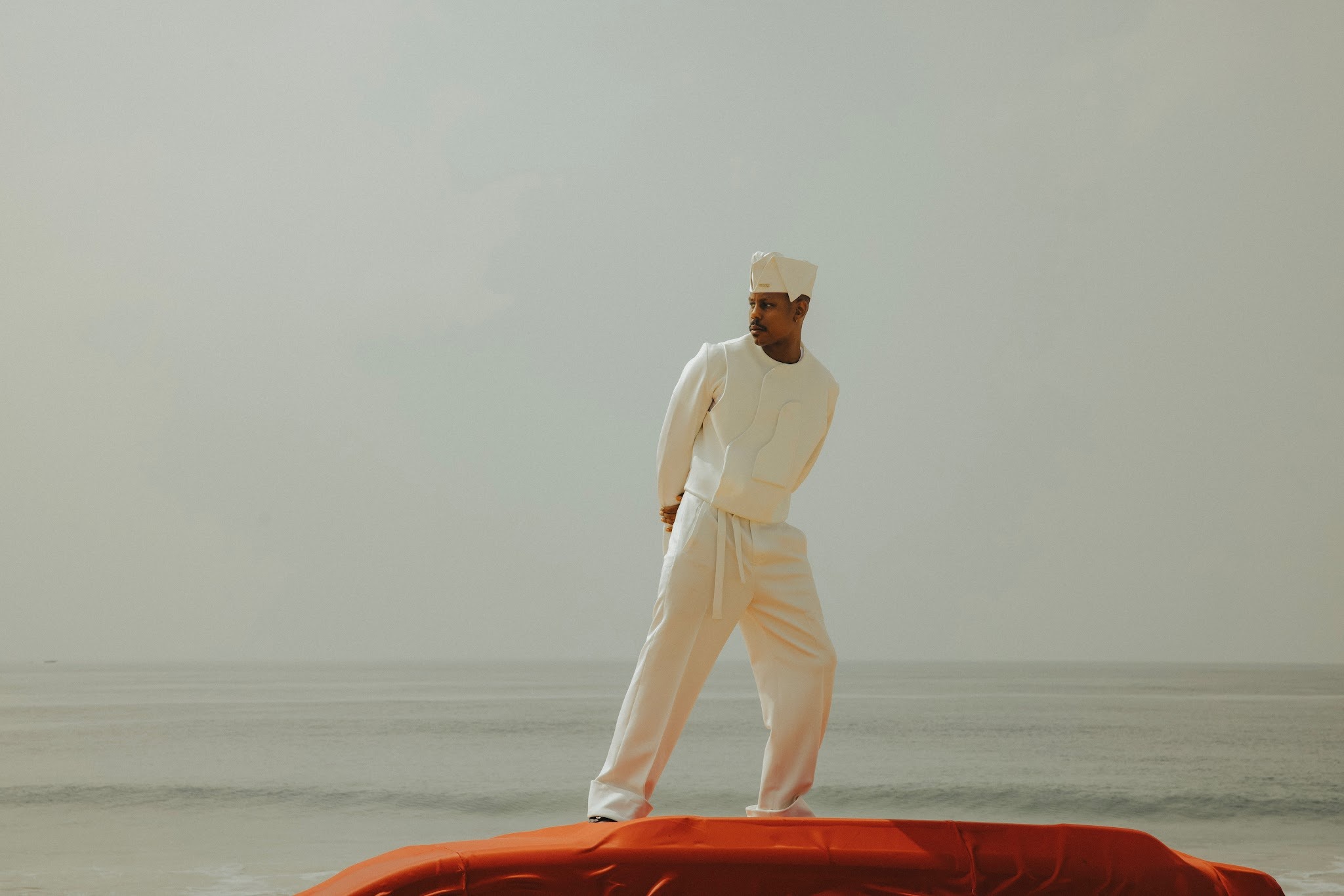
Revival tackles fatherhood as one of its themes. How has becoming a father changed what you want to say with your music?
I mean, has it changed? I don't think it's changed things. It added to it. It added more of a perspective of the world. To my music. I just wasn't capable of seeing before, you know. I care about my son in a very specific way that I don't know if you can feel that way, unless you actually do have. I'm sure there's ways you can feel something similar. It opens up a whole new way of thinking about the world and thinking about what is important in the world, you know? So, yes. It added to my music.
Actually I swapped this number eight question because I was very unsure. I had to go back to the album's description. Then I saw Father. Of course, I was like, I don't want to pass wrong information. So it was surprising to know that you are a father.
I hear that a lot. But yeah, life happens, right? Life is happening to people. The songs that you like and, you know, between this article you write and the next article you write, stuff happens, right? Yeah, you know, exactly.
African artists are reaching global audiences at an unprecedented rate. In your view, what does it truly take for an African rapper not an Afrobeats artist, a rapper to compete on the world stage while remaining authentic?
I think that now, you asked this question last time and I said all the things that it really does take. You need to have an unshakable vision. You need to have a team that sees that vision. You have to have a direction that you know you guys are going and alignments. All of those kind of things are true. And. But even before that, you need to have a mindset that has never asked this question that you're asking me. Like, you should not need to ask yourself, what do I need to do? How do I need to be? To be global. You are that already. All it's missing is maybe visibility by default.
You already have what it takes to be an artist. I mean, there's certain artists that I think cross the threshold of being gifted. And it's like, you already have what it takes to be on a global stage. What you're missing is visibility. And I say that because before the thinking was, I can't even imagine how it would be if I knew so I was on the level of Drake or these things are like, because we couldn't when we're younger. We couldn't see how it was possible. That's a kind of thinking that doesn't even need to exist anymore. I guess what I'm trying to say is that I don't really think about the idea of being global. I think more of how far can I push my music? And I know that my music belongs in every room. Yeah, I know that. Like, I already know that. I already know I can walk into that room. I fit in those settings. I already know that. I don't think to myself, how do I need to balance authenticity? I already know. I came prepared for that. So it's like, the only way to do that is to know the music you make as an artist, keep making that music and pushing it as far as it can go. Period. There's nothing like going global. Like, you push as far as you can go. When you're in that space, you'll know what to do. I don't know. I feel like I haven't answered it in a way that you can fully. I fully understand what I'm trying to say, but I just know that I don't ask myself this question.
Yeah, I do. I do understand. It's just more of how the audience will receive it.
Yes, exactly. I don't exactly. I don't know how we're gonna translate it in a way that they can get it, But I feel like for an artist to stay authentic and be global, they should not have to ask themselves, how do I go global? They just need to be authentic and push it as far as they can go and connect the dots where they can. If you know where you want to go, you're always aiming for that direction.
But you don't have to change a single thing about yourself. And when you ask yourself this question, it almost feels like you need to change something to balance. No, no. Just be you. That music is what it is.
Like this popular saying, I am him.
Yes. It's now a matter of timing. And if you see Sophia, let's not take luck. Luck, but it's not just luck is just opportunity and timing. The opportunity came and we were ready.
How do they say this? Preparedness? Yeah, I think that is it.
Yes, yes, exactly. That's it. I think that's it. If you stay true to who you are, you will be prepared. And also, you have to be caught doing in motion, caught doing something. I think the only thing an artist needs to do is to be themselves and be actively doing what it is you love to do the best. So when the timing is right, you will be prepared to take advantage of it. That's your center.
As we wrap up - what do you want people to understand about Revival that a first listen might not fully capture?
You have all it takes to lead your own revival.
IG: @sophiannadozie


.png)

