.svg)

The Tabi first appeared at Maison Margiela’s 1988 show, with its split toe drawn from the Japanese tabi sock. It was an odd proposition for Western fashion at the time, dividing the foot down the middle and looking deliberately out of place among the shoes then being shown. Margiela put it into production anyway. Nearly four decades later, the Tabi remains in the house’s collections and has become one of fashion’s most recognisable shoes.
You do not have to know Martin Margiela’s name to recognise a Tabi. That may be its most fitting legacy. The shoe has endured on its own terms, much like the designer who created it, who spent his career making sure the clothes were seen before he was.
Martin Margiela founded the house in 1988 and did not give a single interview as himself throughout his time there. He communicated through his team, signed correspondence with “we” instead of “I”, and sometimes attended his own shows in disguise, sitting among the audience without being recognised. The house’s white label followed the same thinking. Four white stitches held a plain white rectangle in place, with no name visible from the outside, and the label was designed to be removed. It was a small detail, but it said a great deal about how Margiela wanted his clothes to be seen. The work came first, he left the house in 2009 without a public farewell, and the house continued without him. The Tabis stayed, so did the four stitches.
In the years between Margiela’s departure and now, the fashion industry moved in almost the opposite direction. Social media turned designers into personalities, with their lives becoming part of the brands they represented. Behind-the-scenes content became a marketing tool in its own right, and showing the process became almost as important as showing the finished collection. Luxury houses began selling a sense of access: the designer’s point of view, the studio, the fittings, the people behind the clothes. Louis Vuitton hired Pharrell Williams and made his visibility part of the house’s identity. Bottega Veneta became closely associated with the sensibility of its creative director. The thinking was simple enough: show people more, bring them closer, and they become more invested in the brand. Maison Margiela, under Glenn Martens since 2020, kept its distance.
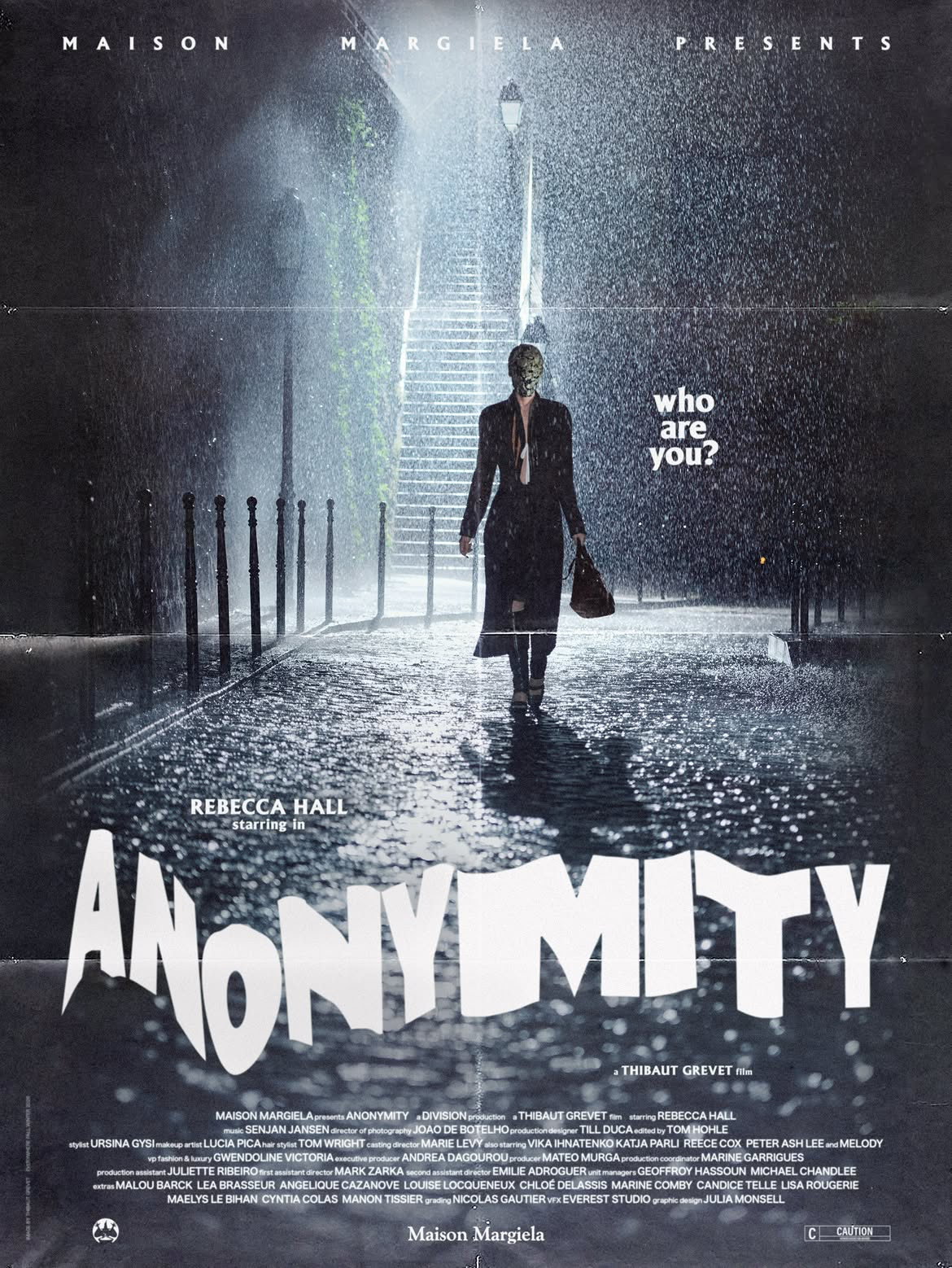
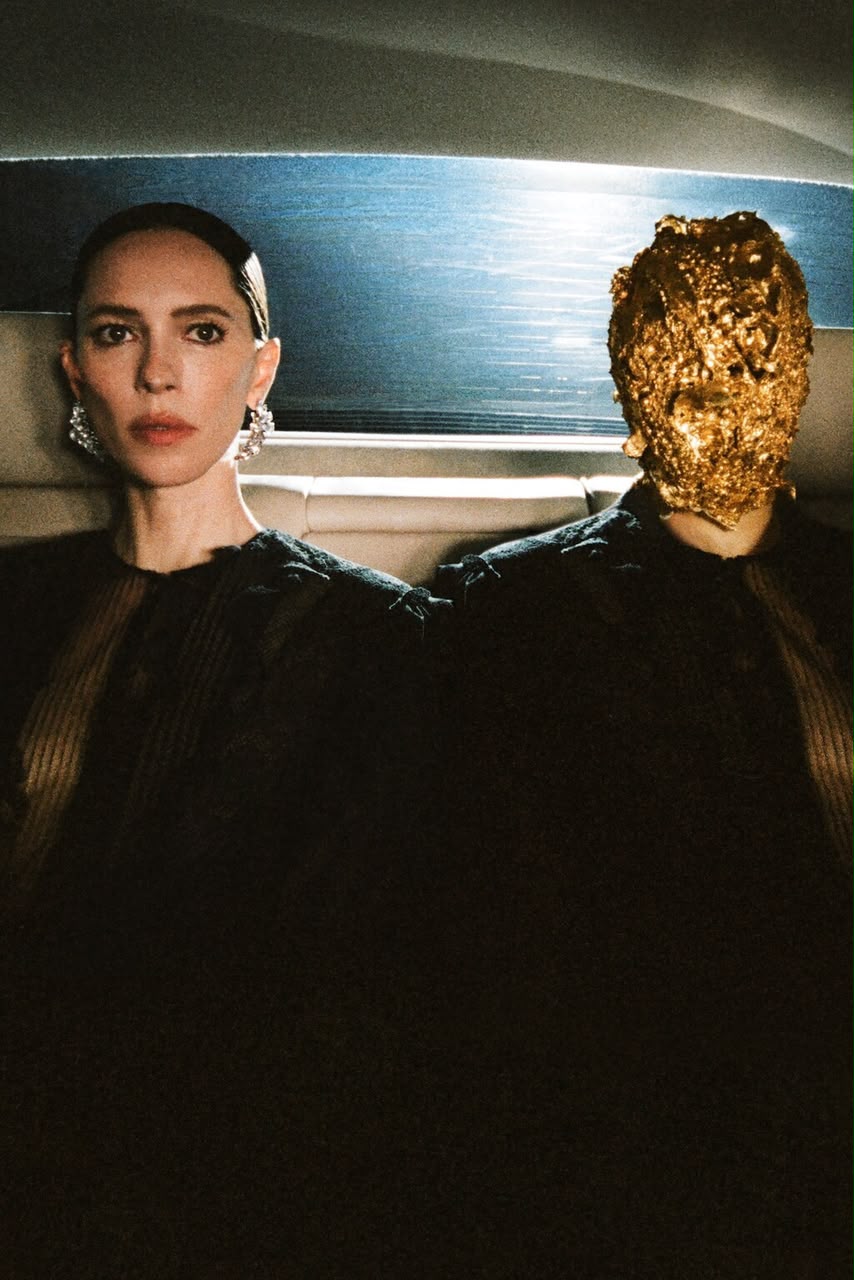
Anonymity is Maison Margiela’s FW26 campaign, presented as a trailer for a psychological thriller that does not exist. Directed by Thibaut Grevet and starring Rebecca Hall, the film follows an actress preparing for a role who begins encountering a masked version of herself dressed in the same clothes.
Each mask was handcrafted at the Maison Margiela Paris atelier using pieces from the Artisanal collection, the house’s most labour-intensive line, which is made by hand from found objects and recycled materials. As the film progresses, it becomes difficult to tell which version of the woman is real.
Hall described the experience of making it as capturing “a funny war always going on between one's identity as a figure in the public eye and one's desire to disappear.” The collection arrived in stores on September 9, 2026, while the film continues to circulate online as a trailer for a film that was never made.
The mask has been part of Margiela’s vocabulary since before there was a Margiela. At the house’s first show in 1988, models’ faces were obscured, sometimes with hair, sometimes through shadow and staging that kept attention away from the person wearing the clothes. The clothes were what the audience was meant to look at.
The Artisanal masks in Anonymity carry that same idea 38 years later, but they are being presented to a very different kind of audience. In 1988, fashion images could take weeks to reach people through magazines and newspapers. In 2026, a campaign can reach millions within hours, competing with everything else on their screens for attention. The mask does more than hide the face now. It gives the image something to hold onto.
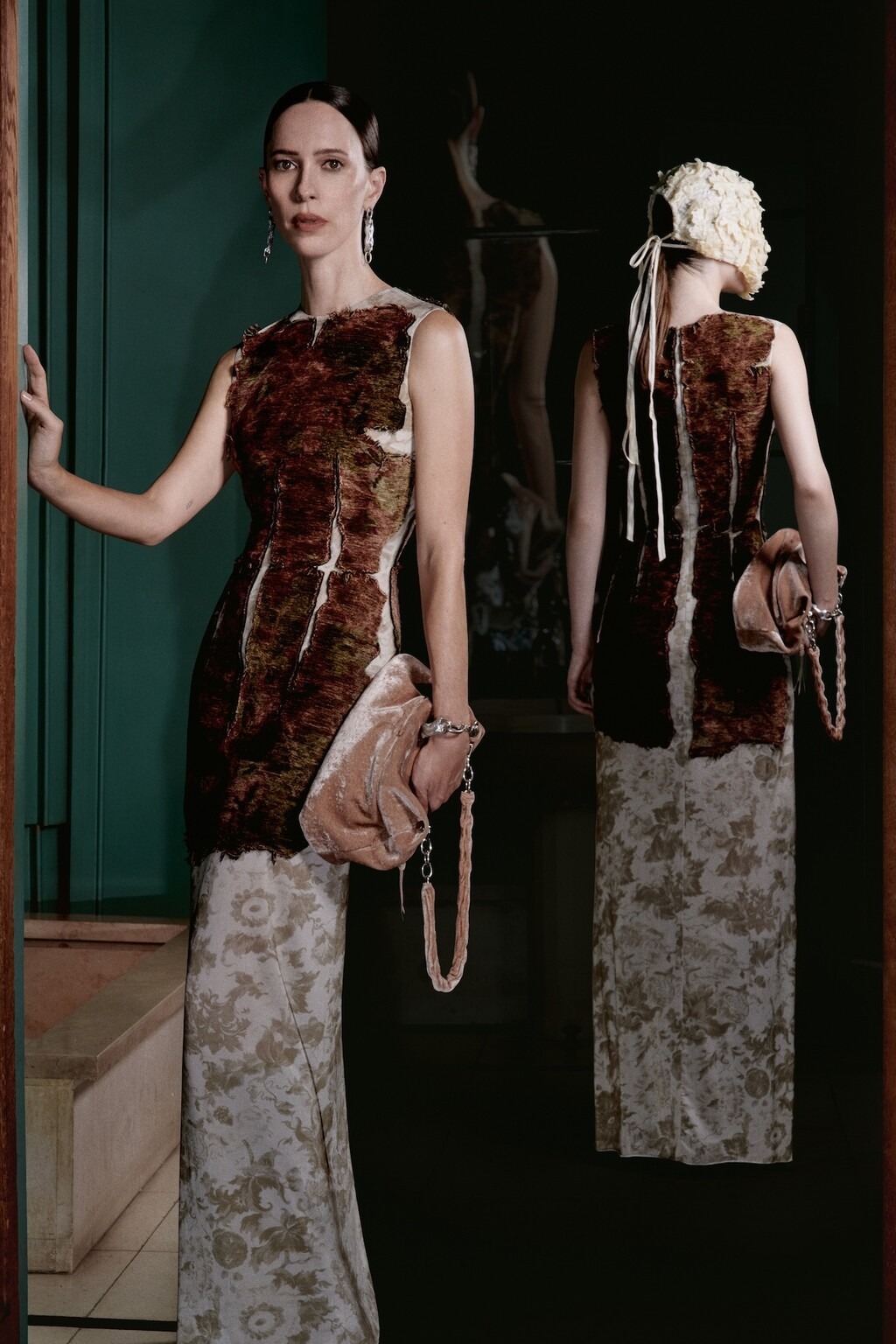
Anonymity is not simply a return to the founding gestures of a house built by a man who preferred to stay out of view. Martens has been at Margiela long enough to establish his own relationship with those codes. He keeps returning to them because they still make sense for the house, not because they belong to its history. The idea is that what a designer chooses not to show can say as much as what they put in front of you. A refusal to explain can leave room for the audience to make its own connections. The unfinished film, the mask that never comes off, the label designed to be cut out all work in a similar way. Margiela gives you part of the story and leaves you to figure out the rest.
The Tabi is still in the collection, Martin Margiela has still not given an interview, and the white label is still designed to be removed, just as Anonymity is a campaign built around a film that will never exist. In an industry that has spent the last decade rewarding visibility above almost every other quality, Maison Margiela has spent 38 years returning to the same idea in different forms: that choosing not to show everything can be a position of its own, and that a position held for long enough can become a legacy.
Glenn Martens did not invent that idea; he inherited it from a designer who made himself invisible and left the Tabis behind as proof that the work could speak without him. With Anonymity, Martens has taken that same principle and placed it in a visual culture where being seen has become almost impossible to escape.
Cover Credit: Maison Margiela


.png)

