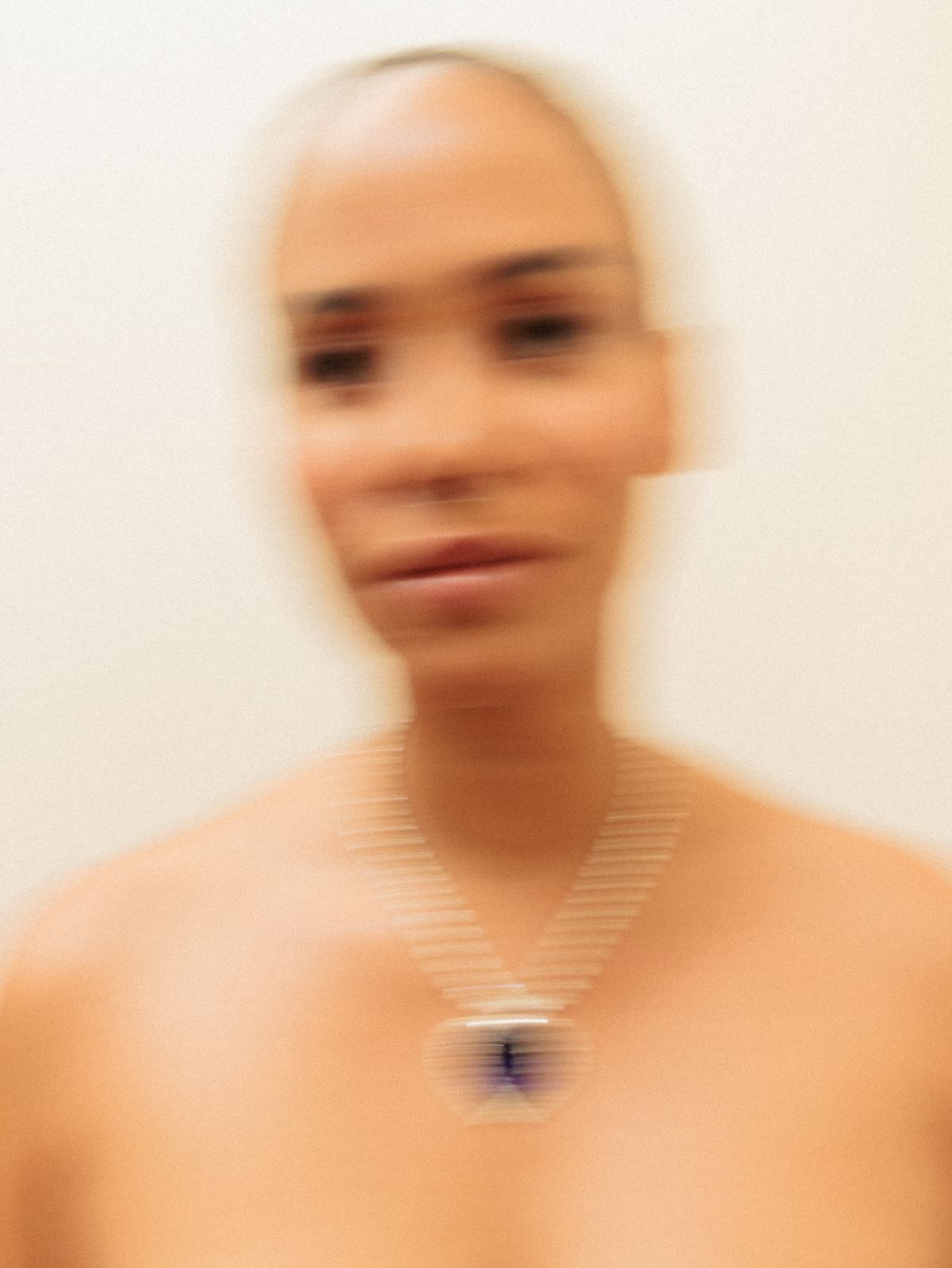
MAYRA ANDRADE INTERVIEW

Authored by

Some countries announce themselves through politics. Others through cinema, fashion or music. Cape Verde has always done it through people.

Long before millions watched its football team challenge the world's biggest nations, generations of Cape Verdeans had quietly built an outsized cultural legacy. Musicians, writers, artists and storytellers carried the country's identity far beyond the Atlantic, introducing the world to a place many couldn't even find on a map.

Few voices have done that more beautifully than Mayra Andrade.

Across nearly two decades, she has refused easy categorisation. Morna, batuque, Brazilian rhythms, jazz, Afro-pop and electronic textures coexist naturally in her work, never as trends but as reflections of a life lived between continents.

Now, as Cape Verde experiences perhaps the defining cultural moment in its modern history, Andrade finds herself witnessing something she once could only imagine: the world finally paying attention.

For Deeds, this conversation became less about football and more about what happens when a nation finally steps into global view.

Your music feels intimate without ever becoming confessional. How do you decide what parts of yourself belong in your songs and what remains private?

A: I found the first question quite interesting about it being intimate not confessional, it is interesting because it took me years to stop talking about my own stories, about finding the angle and I realize when I talk about very deep things I’ve found a way to talk about them but in a way that people can project their own stories, so it’s a little bit coded (laughs) maybe it’s a journey of embracing my vulnerability and accepting to call an egg an egg, a giraffe a giraffe not making it so poetic that you actually don’t know what I’m talking about. I think it’s a process, maturing and finding and just embracing who we are and al the things that happen to us and just accepting to be vulnerable in front of the world. I’m still finding out where I want to show this vulnerability and where I don’t.

Cape Verde is experiencing a remarkable moment on the world stage with the national team's historic World Cup campaign. You've been very vocal in celebrating the team online. What has it been like watching the country unite around this moment? 

A: Watching the team goes, I mean I think the world already understands that it goes way beyond football. When we watch our team entering the stadium, we think about all the hustle, we think about the resilience, we think about the sacrifices, we think about, I mean, I think about how precious each and every human being is because, I mean, in Cape Verde, we really managed to do things without support, without having the structure to support it. And it makes me really proud.

You know, I’m from this generation that had to explain to every single being where Cape Verde was. And with the rise of Cesare Evra in the 90’s, some people really like a lot of people discovered Cape Verde, so it’s a bit more known now.

But like after the World Cup or during this World Cup, it’s just a different stage. There us nothing that can compare to the visibility that the World Cup gives you, right? But what I’m trying to say is for us, it’s really way, way, way more than sports. It’s us finally showing the world that we exist, our worth, our history, our culture, our unity.

I think its amazing that Cape Verde you know, as an archipelago, managed to be so united as a nation. And we say that the diaspora is the 11th island of Cape Verde, meaning that we are permanently connected to the diaspora of Cape Verde. We say they are our sons and the daughters of the islands that live abroad, but they are part of us. They are not cut from us, they are not excluded from us. Like we feed from them, they feed from us right? So that’s the dynamic with Cape Verde and all Cape Verdeans in the world. So it’s a pride beyond what words could express. Like yeah, I’m so happy I’m going to be there to experience something that I know will be memorable.
You described the team's opening result as a moment that showed "the greatness of Cape Verde." What does greatness mean to you beyond football? 

A: So, third question, I want to mention greatness. For me, it has to do with the impact you have on peoples lives, right? Ad the example of Cape Verde World Cup, it really will have, it’s already having a big impact in people’s lives, in the economy, in representation, in the way, you know, young kids will dream their future, right? That’s greatness. It’s about staying true to your values I guess.

I never really measured greatness through numbers and awards, to be honest. It’s way more on how you impact people’s lives, but also people’s hearts with your art or with the example you show in whatever field you are.

If you could create the soundtrack for this chapter in Cape Verde's sporting history, what would you want it to sound like?

A: Well, if I could create a soundtrack, for this moment, there would be a long one because the world is so divers in styles and rhythms. To probably start with something very intimate, maybe melancholic like Armana, and then the tempo would increase, you know, maybe a Coladera. And then we would start with, w would go to Funana and then a Batuku and a Tabanca an then we would play songs from the carnival. I mean, there is such diversity of rhythms and sometimes people talk about Morna and Coladera because these are styles that Cesare Evra made more popular. But it’s wider than that and it’s really, really so rich. So, yeah, I don’t know exactly.

I’m sorry, it’s so late that I’ve spent the whole day travelling, so I might not be the most inspired right now for the soundtrack.

Music has always been one of Cape Verde's greatest cultural exports. Do you feel this World Cup is allowing the rest of the world to discover another side of Cape Verde?

A: Yeah, absolutely. I mean, for many people, Cape Word really starts with music, but now they can also discover our ethnic needs, our culture, our resilience, our talents, our ambition as well.

 I hope that, I mean, ambition is something that Cape Hurricanes sometimes struggle with because sometimes the size of the country has really an impact on the size of what you can dream for yourself. And I really hope that all this Cinderella story that is happening in the World Cup

 contributes to create a new caliber to the way we allow ourselves to dream and to have ambition but yeah overall I hope this curiosity leads people to explore our culture more deeply because yeah there is so much richness and I mean the human experience there is very unique it's very very unique I'm very proud of that.

Cape Verde has always existed between continents, African by geography, yet deeply connected to Europe, Latin America and the diaspora. How has that in-between identity shaped you creatively?

A:  Cape Verde has always existed between continents, but I have also lived in several countries from the age of six. I've experienced Cape Verde in my childhood, in my teenage years, and I've also lived in five different countries.
Having the opportunity to observe, experience and value Cape Word from inside, but also from outside really shaped the way I value my culture, but also it really made me very permeable to other cultures, other flavors, other sounds. And that has kind of always been my mission. Music is a gift from God. And I've always known that I was here to do something different in the capability of music, right? And I think that I'm still building what this means, right? By every album, every show, every personal growth, it really reflects on how I think about my creativity. So it's both like, you know, something that has to do with my roots, but also a very personal journey, right?
Are there sounds from your childhood that still find their way into your music without you consciously intending them to?

A:  that's a good one um i mean the sound and the rhythm of our national language creole is for sure a big print in the sound of my music just because the way we express our emotions and our culture and our history just comes across stronger and more powerful and deeper when it's sang and expressed in our national language. It's also a very beautiful language, which really helps with the musical side of things. Then I could mention the Ferrinho. which is this percussion, like this iron that we play with a knife, that it's used in Funana. I really tried to bring that. I was probably one of the first artists that did that outside of the groups of Funaná, so I really mixed it with other genres. And I also like playing the txabeta, which is played traditionally in the batuku. So you have women sitting in circles playing the batuku. It's like, I don't know, like a plastic bag with some fabric inside and we clap on that and we make a polyrhythmical... uh music yeah uh so yeah i would say the creole the fahim the chabeta and um I mean, also the cavaquinho, you know, the Cape Verdean cavaquinho is really special. The way our musicians play the guitar, I can, I could recognize it in a second. Like I never mix, like if I'm somewhere and a Cape Verdean song starts playing, just the guitar, I can tell if it's Brazilian or if it's Cape Verdean or if it's Cuban, right? So that means we have a special prince. Our DNA is very clear and very easy for me to identify. So I really try to bring that essence in my music, no matter how the production goes. I always try to have that identity in it. But at the same time, I don't want that to represent like a limit to me. I don't want that to keep me closed in you know in a sound I want to explore but I also want to bring my culture my nation my history my identity to the world and that's pretty much something that defines a Cape Verdean we're always representing Cape Verde no matter what we do because

We were so unknown to the world. I remember in my childhood, sometimes they would ask me where I came from in school, in the different countries where I lived. They would bring a map and ask me to show where my country was, and there wasn't Cape Verde in the map, literally. That has a way of impacting the way you do things in life.

You've always embraced Creole in your music. Do you think preserving language is also a form of preserving identity?

A:  Yes, absolutely. It's a way of preserving our identity. It's also a powerful bridge between Cape Verde and its diaspora. Because Cape Verdeans from the US, they don't speak Portuguese. They speak English and Creole. Cape Verdeans from the Netherlands, they speak Dutch and Creole. From Portugal, they speak Portuguese and Creole. From France, they speak French and Creole. This language, it really is what unites us.

Your visual language has evolved beautifully over the years. How intentional is fashion in communicating who you are as an artist?

A:  Question 9. It's interesting that you have observed that. It is a conscious movement that happened when I released Manga. I really wanted the visuals to match the sound and who I am. So I really don't follow trends, to be honest, for the sake of it, but I do like style, I do like elegance, and I love comfort. I love feeling feminine and powerful and comfortable in what I wear. So, I mean, I started a few years ago, right? So it's... i must say that where i come from we don't really think about fashion when we talk about music but i understood throughout the years how important that is and i'm taking pleasure at discovering you know interesting pieces that tell stories and celebrate craftsmanship and things like that but it is it's a it's really a powerful way of amplifying the emotions the mood and the message of the songs, but also it's like another layer of revealing ourselves to the world and to the people that are watching us.

Is there an element of Cape Verdean craftsmanship, textiles or aesthetics that you still think deserves greater international recognition?

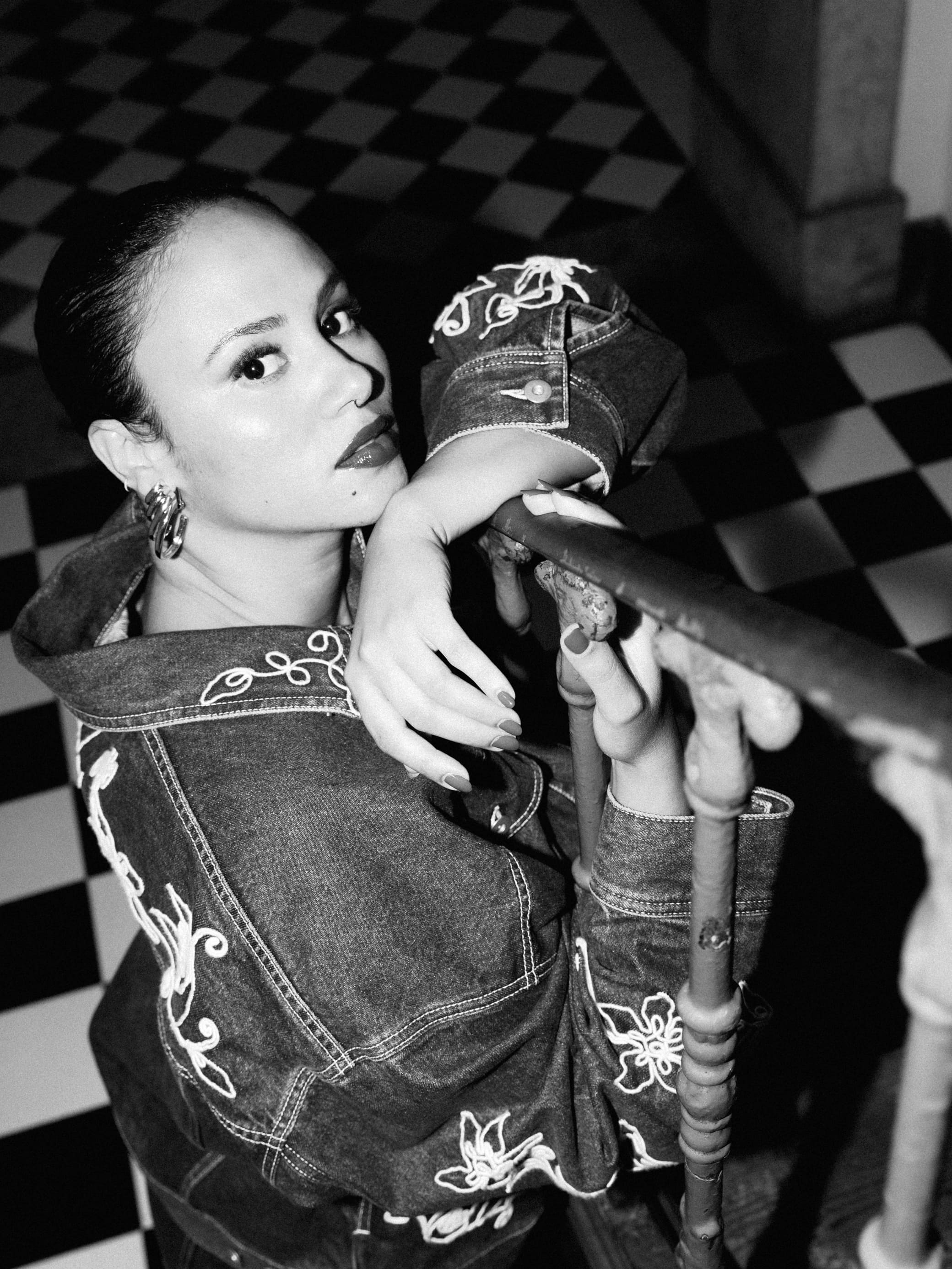
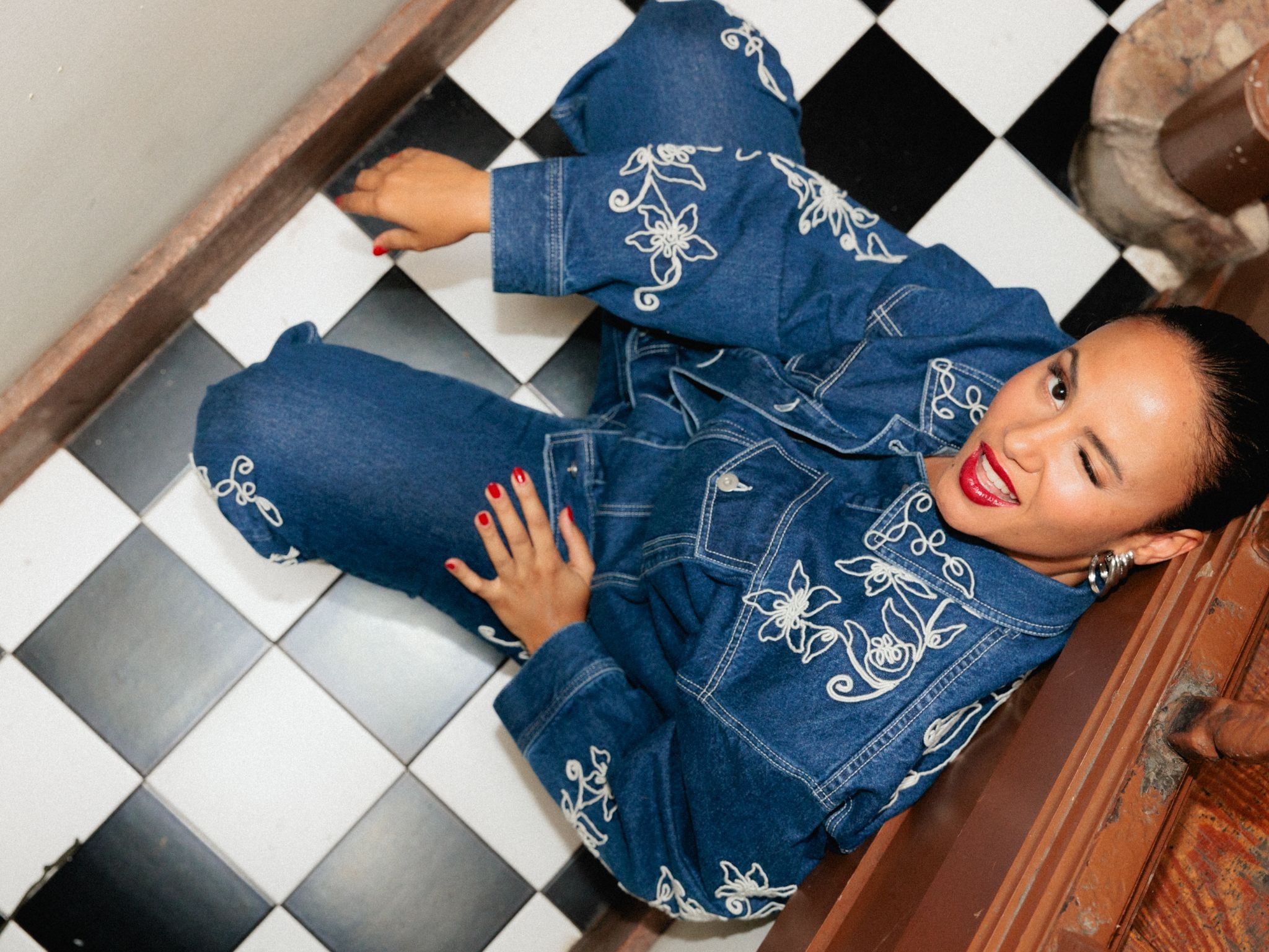
A: Yes, our, uh, weaving traditions and embroidery are really beautiful. Inherits, uh, from probably from Guinea-Bissau, I would say. Uh, very few people do it now in the old way, uh, the genuine way. Uh, there is a, a designer, a Cape Verdean designer who does a great job at using it and incorporating it in her pieces, which is Angela Brito. Angela Brito has been living in Brazil for over twenty years. She's the first, um, female Black designer who has her spot at São Paulo Fashion Week, and she spends months every year in Cape Verde because it's where she finds her inspiration, and she's doing an amazing job at that.

What do you hope people understand about Mayra Andrade now that they perhaps misunderstood ten years ago?

A: Eleven. Uh, I think people have-- I'm, I'm very private about my personal life and, um, I like to have certain boundaries because I grew up being so exposed, uh, to, to the audience. Uh, at the same time, I was lucky enough to start my career before social media. So, um, in that sense, it was easier to find out who we were, right? Wi-without having it all distorted by social media. But at the same time, today, social media allows you to have so much more access to your fans and your fans to you, right? So I would say that people always get very surprised on how funny I am. Like, I am funny. [chuckles] And, um, and I'm warm. But because I protect myself, um, a lot, I might come across as a, a bit more distant or cold or I don't know. Not everyone thinks that, but some-- I see how often people are surprised when they get to know me, you know. Um, so may-maybe that because when it comes to my music, I think I've always made it very clear that freedom is very important to me and that integrity is really important to me, and that's the only way I can look back and really be proud of any song I have recorded. So yeah, I mean, we-- I grew up in the public eye, right? I started my career at the age of fifteen. Not my professional career, but my first show in Cape Verde, uh, was like a big show when I was fifteen. So you, you learn how to protect yourself, right? And it's also part of my personality. Um, but yeah, I think the most important thing, uh, comes across well, which is the energy in my voice, the, the, the love that I have for the people that love music and support my music, um, the love that I have for people that embrace Cape Verde. Uh, and I mean, I just love humans in general. I love the fact that music can-- makes us feel so much closer to each other. Uh, and I feel really, really lucky and blessed to have received this gift. So, you know, whatever was, uh, not understood ten years ago, um, still has the time to be understood in the future. I'm always growing and changing as well. So I guess it's a work in process thing. I don't know if my answer makes much sense, but it's so late [chuckles] and I've been traveling the whole day, so I hope it does. Thank you so much. Tt-tu
ReEncanto isn't simply a live album as it feels almost like a conversation between the artist you were twenty years ago and the woman you are today. What surprised you most about revisiting your own songs?

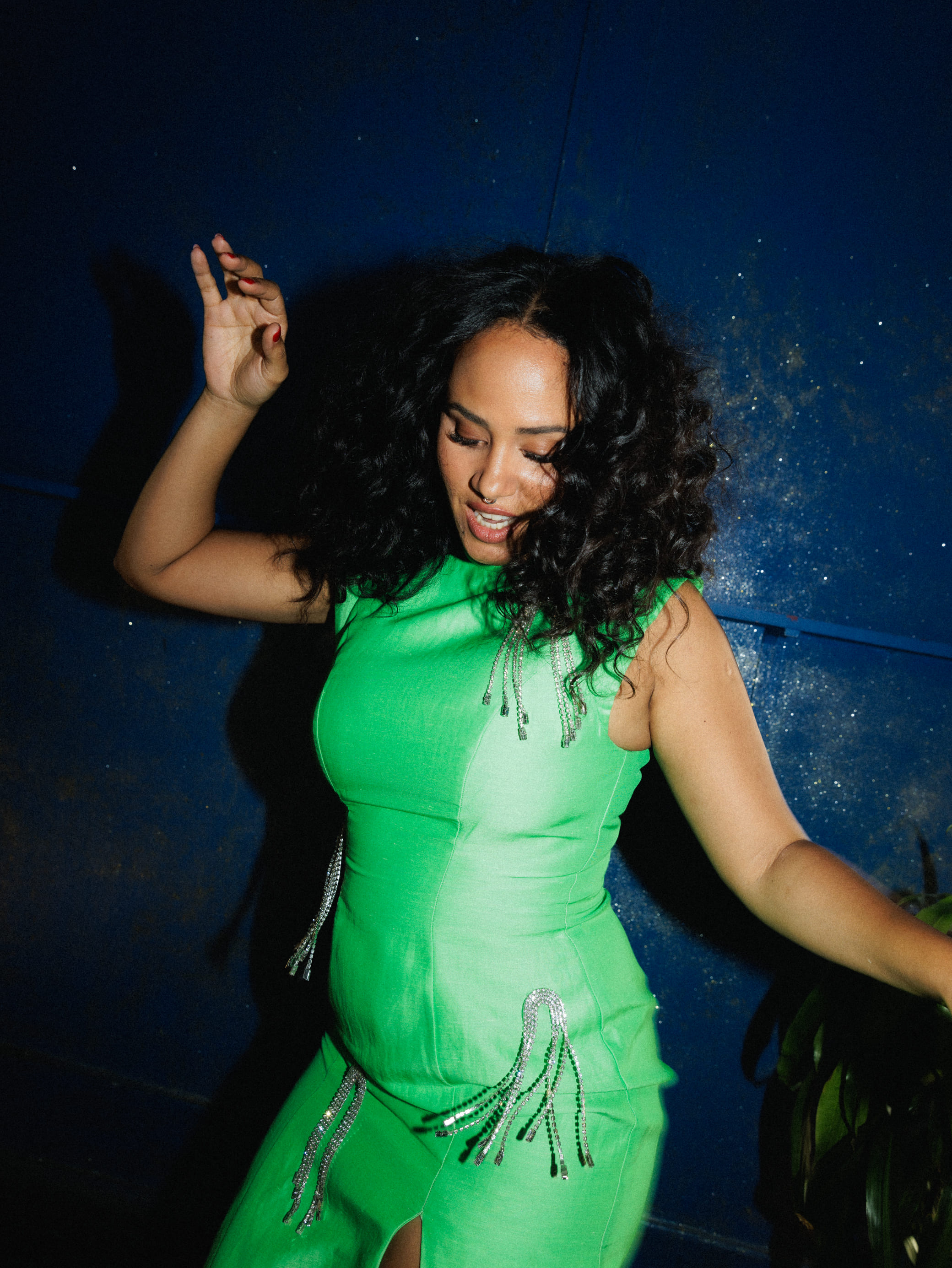
A: Um, that project is so important to me because, uh, it's like a tree that fed my spirit when, when I had the last to give, or that's what I thought. It came after I became a mother. Actually, I created this project whilst I was pregnant, but then I toured the whole world with it, and I recorded the live album with my daughter. She was, like, five months old. I was exclusively breastfeeding and traveling the world with her. So it was really, like, challenging times, but it reconnected me with something even deeper and more spiritual within my music. Um, I realized that the songs had grown with me. Uh, I realized that becoming a mother gave new layers and new depth to my voice. And I was really proud to see that I could sing songs that I composed twenty years ago, ten years ago, five years ago, and they would still make sense. They would still tell a beautiful story in a beautiful way, and that made me feel very proud. I think I made those songs grow a little bit more because I like saying that we start by recording an album, and then we tour. But then after the, after the tour ends, we realize that we didn't really know how to sing those songs and that now the intention and the, the, the, the magnitude of the emotion, uh, has reached a different level by the end of the tour because you've made so many shows, right? So Re-Encanto was a bit of an opportunity to tell the stories with a new voice, right? It's, it's, it's the re-enchantment. It's rediscovering my own voice and rediscovering my own songs and, and feed from them, which was really a beautiful, beautiful experience to do

Your music effortlessly moves between morna, Afro-pop, Brazilian influences, jazz and electronic textures. Do genres still matter to you, or are they simply languages for telling different stories?

A: The genres are like different languages, right? We could use different languages in one song, and that would, that would still work, right? It's, um, it's more a way of organizing music than creating. Although, in my case, because I still know... I, I, I mean, because I know that the world has so much to discover about our music, I still say, "Okay, I want this to be a funaná, I want that to be a batuque, or I want this to be a morna." Because we are still being discovered. We are still creating and writing new chapters of our music. Uh, yeah. So I don't know if it matters. I, I, I'm not, I was never very interested at analyzing where influences came from where, you know. Like, I absorb something personal comes out, and then you guys analyze what that is or how does that sound.

Tell us about your next era  and what we can expect from your next project.

A: Well, I am for sure entering a new chapter of my life and of my music, and I must say that I fear-- that I feel, sorry, uh, even more fearless. I think that comes with motherhood. We realize how powerful we are. Um, I think it comes with maturity. Uh, we realize that we don't have to, you know, we, we don't have to please everybody. We don't have to explain ourselves that much. Uh, I just want to allow myself to experiment more and more, and it's more important for me to find a sound that is more and more aligned with what I am, how I feel, and what's the-- and what, what is the, the blueprint that I wanna live, that I wanna give to the world, especially in such challenging times. Yeah. But I'm very positive and very, very confident about the fact that that's probably, probably gonna be my best album. This year is, is about writing the next album. It's about forming a new team. So it's renewal, renewal, renewal.
MAYRA ANDRADE INTERVIEW

Authored by
This is some text inside of a div block.

Some countries announce themselves through politics. Others through cinema, fashion or music. Cape Verde has always done it through people.

Long before millions watched its football team challenge the world's biggest nations, generations of Cape Verdeans had quietly built an outsized cultural legacy. Musicians, writers, artists and storytellers carried the country's identity far beyond the Atlantic, introducing the world to a place many couldn't even find on a map.

Few voices have done that more beautifully than Mayra Andrade.

Across nearly two decades, she has refused easy categorisation. Morna, batuque, Brazilian rhythms, jazz, Afro-pop and electronic textures coexist naturally in her work, never as trends but as reflections of a life lived between continents.

Now, as Cape Verde experiences perhaps the defining cultural moment in its modern history, Andrade finds herself witnessing something she once could only imagine: the world finally paying attention.

For Deeds, this conversation became less about football and more about what happens when a nation finally steps into global view.

Your music feels intimate without ever becoming confessional. How do you decide what parts of yourself belong in your songs and what remains private?

A: I found the first question quite interesting about it being intimate not confessional, it is interesting because it took me years to stop talking about my own stories, about finding the angle and I realize when I talk about very deep things I’ve found a way to talk about them but in a way that people can project their own stories, so it’s a little bit coded (laughs) maybe it’s a journey of embracing my vulnerability and accepting to call an egg an egg, a giraffe a giraffe not making it so poetic that you actually don’t know what I’m talking about. I think it’s a process, maturing and finding and just embracing who we are and al the things that happen to us and just accepting to be vulnerable in front of the world. I’m still finding out where I want to show this vulnerability and where I don’t.

Cape Verde is experiencing a remarkable moment on the world stage with the national team's historic World Cup campaign. You've been very vocal in celebrating the team online. What has it been like watching the country unite around this moment? 

A: Watching the team goes, I mean I think the world already understands that it goes way beyond football. When we watch our team entering the stadium, we think about all the hustle, we think about the resilience, we think about the sacrifices, we think about, I mean, I think about how precious each and every human being is because, I mean, in Cape Verde, we really managed to do things without support, without having the structure to support it. And it makes me really proud.

You know, I’m from this generation that had to explain to every single being where Cape Verde was. And with the rise of Cesare Evra in the 90’s, some people really like a lot of people discovered Cape Verde, so it’s a bit more known now.

But like after the World Cup or during this World Cup, it’s just a different stage. There us nothing that can compare to the visibility that the World Cup gives you, right? But what I’m trying to say is for us, it’s really way, way, way more than sports. It’s us finally showing the world that we exist, our worth, our history, our culture, our unity.

I think its amazing that Cape Verde you know, as an archipelago, managed to be so united as a nation. And we say that the diaspora is the 11th island of Cape Verde, meaning that we are permanently connected to the diaspora of Cape Verde. We say they are our sons and the daughters of the islands that live abroad, but they are part of us. They are not cut from us, they are not excluded from us. Like we feed from them, they feed from us right? So that’s the dynamic with Cape Verde and all Cape Verdeans in the world. So it’s a pride beyond what words could express. Like yeah, I’m so happy I’m going to be there to experience something that I know will be memorable.

You described the team's opening result as a moment that showed "the greatness of Cape Verde." What does greatness mean to you beyond football? 

A: So, third question, I want to mention greatness. For me, it has to do with the impact you have on peoples lives, right? Ad the example of Cape Verde World Cup, it really will have, it’s already having a big impact in people’s lives, in the economy, in representation, in the way, you know, young kids will dream their future, right? That’s greatness. It’s about staying true to your values I guess.

I never really measured greatness through numbers and awards, to be honest. It’s way more on how you impact people’s lives, but also people’s hearts with your art or with the example you show in whatever field you are.

If you could create the soundtrack for this chapter in Cape Verde's sporting history, what would you want it to sound like?

A: Well, if I could create a soundtrack, for this moment, there would be a long one because the world is so divers in styles and rhythms. To probably start with something very intimate, maybe melancholic like Armana, and then the tempo would increase, you know, maybe a Coladera. And then we would start with, w would go to Funana and then a Batuku and a Tabanca an then we would play songs from the carnival. I mean, there is such diversity of rhythms and sometimes people talk about Morna and Coladera because these are styles that Cesare Evra made more popular. But it’s wider than that and it’s really, really so rich. So, yeah, I don’t know exactly.

I’m sorry, it’s so late that I’ve spent the whole day travelling, so I might not be the most inspired right now for the soundtrack.

Music has always been one of Cape Verde's greatest cultural exports. Do you feel this World Cup is allowing the rest of the world to discover another side of Cape Verde?

A: Yeah, absolutely. I mean, for many people, Cape Word really starts with music, but now they can also discover our ethnic needs, our culture, our resilience, our talents, our ambition as well.

 I hope that, I mean, ambition is something that Cape Hurricanes sometimes struggle with because sometimes the size of the country has really an impact on the size of what you can dream for yourself. And I really hope that all this Cinderella story that is happening in the World Cup

 contributes to create a new caliber to the way we allow ourselves to dream and to have ambition but yeah overall I hope this curiosity leads people to explore our culture more deeply because yeah there is so much richness and I mean the human experience there is very unique it's very very unique I'm very proud of that.

Cape Verde has always existed between continents, African by geography, yet deeply connected to Europe, Latin America and the diaspora. How has that in-between identity shaped you creatively?

A:  Cape Verde has always existed between continents, but I have also lived in several countries from the age of six. I've experienced Cape Verde in my childhood, in my teenage years, and I've also lived in five different countries.
Having the opportunity to observe, experience and value Cape Word from inside, but also from outside really shaped the way I value my culture, but also it really made me very permeable to other cultures, other flavors, other sounds. And that has kind of always been my mission. Music is a gift from God. And I've always known that I was here to do something different in the capability of music, right? And I think that I'm still building what this means, right? By every album, every show, every personal growth, it really reflects on how I think about my creativity. So it's both like, you know, something that has to do with my roots, but also a very personal journey, right?

Are there sounds from your childhood that still find their way into your music without you consciously intending them to?

A:  that's a good one um i mean the sound and the rhythm of our national language creole is for sure a big print in the sound of my music just because the way we express our emotions and our culture and our history just comes across stronger and more powerful and deeper when it's sang and expressed in our national language. It's also a very beautiful language, which really helps with the musical side of things. Then I could mention the Ferrinho. which is this percussion, like this iron that we play with a knife, that it's used in Funana. I really tried to bring that. I was probably one of the first artists that did that outside of the groups of Funaná, so I really mixed it with other genres. And I also like playing the txabeta, which is played traditionally in the batuku. So you have women sitting in circles playing the batuku. It's like, I don't know, like a plastic bag with some fabric inside and we clap on that and we make a polyrhythmical... uh music yeah uh so yeah i would say the creole the fahim the chabeta and um I mean, also the cavaquinho, you know, the Cape Verdean cavaquinho is really special. The way our musicians play the guitar, I can, I could recognize it in a second. Like I never mix, like if I'm somewhere and a Cape Verdean song starts playing, just the guitar, I can tell if it's Brazilian or if it's Cape Verdean or if it's Cuban, right? So that means we have a special prince. Our DNA is very clear and very easy for me to identify. So I really try to bring that essence in my music, no matter how the production goes. I always try to have that identity in it. But at the same time, I don't want that to represent like a limit to me. I don't want that to keep me closed in you know in a sound I want to explore but I also want to bring my culture my nation my history my identity to the world and that's pretty much something that defines a Cape Verdean we're always representing Cape Verde no matter what we do because

We were so unknown to the world. I remember in my childhood, sometimes they would ask me where I came from in school, in the different countries where I lived. They would bring a map and ask me to show where my country was, and there wasn't Cape Verde in the map, literally. That has a way of impacting the way you do things in life.

You've always embraced Creole in your music. Do you think preserving language is also a form of preserving identity?

A:  Yes, absolutely. It's a way of preserving our identity. It's also a powerful bridge between Cape Verde and its diaspora. Because Cape Verdeans from the US, they don't speak Portuguese. They speak English and Creole. Cape Verdeans from the Netherlands, they speak Dutch and Creole. From Portugal, they speak Portuguese and Creole. From France, they speak French and Creole. This language, it really is what unites us.

Your visual language has evolved beautifully over the years. How intentional is fashion in communicating who you are as an artist?

A:  Question 9. It's interesting that you have observed that. It is a conscious movement that happened when I released Manga. I really wanted the visuals to match the sound and who I am. So I really don't follow trends, to be honest, for the sake of it, but I do like style, I do like elegance, and I love comfort. I love feeling feminine and powerful and comfortable in what I wear. So, I mean, I started a few years ago, right? So it's... i must say that where i come from we don't really think about fashion when we talk about music but i understood throughout the years how important that is and i'm taking pleasure at discovering you know interesting pieces that tell stories and celebrate craftsmanship and things like that but it is it's a it's really a powerful way of amplifying the emotions the mood and the message of the songs, but also it's like another layer of revealing ourselves to the world and to the people that are watching us.

Is there an element of Cape Verdean craftsmanship, textiles or aesthetics that you still think deserves greater international recognition?

A: Yes, our, uh, weaving traditions and embroidery are really beautiful. Inherits, uh, from probably from Guinea-Bissau, I would say. Uh, very few people do it now in the old way, uh, the genuine way. Uh, there is a, a designer, a Cape Verdean designer who does a great job at using it and incorporating it in her pieces, which is Angela Brito. Angela Brito has been living in Brazil for over twenty years. She's the first, um, female Black designer who has her spot at São Paulo Fashion Week, and she spends months every year in Cape Verde because it's where she finds her inspiration, and she's doing an amazing job at that.

What do you hope people understand about Mayra Andrade now that they perhaps misunderstood ten years ago?

A: Eleven. Uh, I think people have-- I'm, I'm very private about my personal life and, um, I like to have certain boundaries because I grew up being so exposed, uh, to, to the audience. Uh, at the same time, I was lucky enough to start my career before social media. So, um, in that sense, it was easier to find out who we were, right? Wi-without having it all distorted by social media. But at the same time, today, social media allows you to have so much more access to your fans and your fans to you, right? So I would say that people always get very surprised on how funny I am. Like, I am funny. [chuckles] And, um, and I'm warm. But because I protect myself, um, a lot, I might come across as a, a bit more distant or cold or I don't know. Not everyone thinks that, but some-- I see how often people are surprised when they get to know me, you know. Um, so may-maybe that because when it comes to my music, I think I've always made it very clear that freedom is very important to me and that integrity is really important to me, and that's the only way I can look back and really be proud of any song I have recorded. So yeah, I mean, we-- I grew up in the public eye, right? I started my career at the age of fifteen. Not my professional career, but my first show in Cape Verde, uh, was like a big show when I was fifteen. So you, you learn how to protect yourself, right? And it's also part of my personality. Um, but yeah, I think the most important thing, uh, comes across well, which is the energy in my voice, the, the, the love that I have for the people that love music and support my music, um, the love that I have for people that embrace Cape Verde. Uh, and I mean, I just love humans in general. I love the fact that music can-- makes us feel so much closer to each other. Uh, and I feel really, really lucky and blessed to have received this gift. So, you know, whatever was, uh, not understood ten years ago, um, still has the time to be understood in the future. I'm always growing and changing as well. So I guess it's a work in process thing. I don't know if my answer makes much sense, but it's so late [chuckles] and I've been traveling the whole day, so I hope it does. Thank you so much. Tt-tu

ReEncanto isn't simply a live album as it feels almost like a conversation between the artist you were twenty years ago and the woman you are today. What surprised you most about revisiting your own songs?

A: Um, that project is so important to me because, uh, it's like a tree that fed my spirit when, when I had the last to give, or that's what I thought. It came after I became a mother. Actually, I created this project whilst I was pregnant, but then I toured the whole world with it, and I recorded the live album with my daughter. She was, like, five months old. I was exclusively breastfeeding and traveling the world with her. So it was really, like, challenging times, but it reconnected me with something even deeper and more spiritual within my music. Um, I realized that the songs had grown with me. Uh, I realized that becoming a mother gave new layers and new depth to my voice. And I was really proud to see that I could sing songs that I composed twenty years ago, ten years ago, five years ago, and they would still make sense. They would still tell a beautiful story in a beautiful way, and that made me feel very proud. I think I made those songs grow a little bit more because I like saying that we start by recording an album, and then we tour. But then after the, after the tour ends, we realize that we didn't really know how to sing those songs and that now the intention and the, the, the, the magnitude of the emotion, uh, has reached a different level by the end of the tour because you've made so many shows, right? So Re-Encanto was a bit of an opportunity to tell the stories with a new voice, right? It's, it's, it's the re-enchantment. It's rediscovering my own voice and rediscovering my own songs and, and feed from them, which was really a beautiful, beautiful experience to do

Your music effortlessly moves between morna, Afro-pop, Brazilian influences, jazz and electronic textures. Do genres still matter to you, or are they simply languages for telling different stories?

A: The genres are like different languages, right? We could use different languages in one song, and that would, that would still work, right? It's, um, it's more a way of organizing music than creating. Although, in my case, because I still know... I, I, I mean, because I know that the world has so much to discover about our music, I still say, "Okay, I want this to be a funaná, I want that to be a batuque, or I want this to be a morna." Because we are still being discovered. We are still creating and writing new chapters of our music. Uh, yeah. So I don't know if it matters. I, I, I'm not, I was never very interested at analyzing where influences came from where, you know. Like, I absorb something personal comes out, and then you guys analyze what that is or how does that sound.

Tell us about your next era  and what we can expect from your next project.

A: Well, I am for sure entering a new chapter of my life and of my music, and I must say that I fear-- that I feel, sorry, uh, even more fearless. I think that comes with motherhood. We realize how powerful we are. Um, I think it comes with maturity. Uh, we realize that we don't have to, you know, we, we don't have to please everybody. We don't have to explain ourselves that much. Uh, I just want to allow myself to experiment more and more, and it's more important for me to find a sound that is more and more aligned with what I am, how I feel, and what's the-- and what, what is the, the blueprint that I wanna live, that I wanna give to the world, especially in such challenging times. Yeah. But I'm very positive and very, very confident about the fact that that's probably, probably gonna be my best album. This year is, is about writing the next album. It's about forming a new team. So it's renewal, renewal, renewal.

This is some text inside of a div block.

MAYRA ANDRADE INTERVIEW

Authored by

Some countries announce themselves through politics. Others through cinema, fashion or music. Cape Verde has always done it through people.

Long before millions watched its football team challenge the world's biggest nations, generations of Cape Verdeans had quietly built an outsized cultural legacy. Musicians, writers, artists and storytellers carried the country's identity far beyond the Atlantic, introducing the world to a place many couldn't even find on a map.

Few voices have done that more beautifully than Mayra Andrade.

Across nearly two decades, she has refused easy categorisation. Morna, batuque, Brazilian rhythms, jazz, Afro-pop and electronic textures coexist naturally in her work, never as trends but as reflections of a life lived between continents.

Now, as Cape Verde experiences perhaps the defining cultural moment in its modern history, Andrade finds herself witnessing something she once could only imagine: the world finally paying attention.

For Deeds, this conversation became less about football and more about what happens when a nation finally steps into global view.

Your music feels intimate without ever becoming confessional. How do you decide what parts of yourself belong in your songs and what remains private?

A: I found the first question quite interesting about it being intimate not confessional, it is interesting because it took me years to stop talking about my own stories, about finding the angle and I realize when I talk about very deep things I’ve found a way to talk about them but in a way that people can project their own stories, so it’s a little bit coded (laughs) maybe it’s a journey of embracing my vulnerability and accepting to call an egg an egg, a giraffe a giraffe not making it so poetic that you actually don’t know what I’m talking about. I think it’s a process, maturing and finding and just embracing who we are and al the things that happen to us and just accepting to be vulnerable in front of the world. I’m still finding out where I want to show this vulnerability and where I don’t.

Cape Verde is experiencing a remarkable moment on the world stage with the national team's historic World Cup campaign. You've been very vocal in celebrating the team online. What has it been like watching the country unite around this moment? 

A: Watching the team goes, I mean I think the world already understands that it goes way beyond football. When we watch our team entering the stadium, we think about all the hustle, we think about the resilience, we think about the sacrifices, we think about, I mean, I think about how precious each and every human being is because, I mean, in Cape Verde, we really managed to do things without support, without having the structure to support it. And it makes me really proud.

You know, I’m from this generation that had to explain to every single being where Cape Verde was. And with the rise of Cesare Evra in the 90’s, some people really like a lot of people discovered Cape Verde, so it’s a bit more known now.

But like after the World Cup or during this World Cup, it’s just a different stage. There us nothing that can compare to the visibility that the World Cup gives you, right? But what I’m trying to say is for us, it’s really way, way, way more than sports. It’s us finally showing the world that we exist, our worth, our history, our culture, our unity.

I think its amazing that Cape Verde you know, as an archipelago, managed to be so united as a nation. And we say that the diaspora is the 11th island of Cape Verde, meaning that we are permanently connected to the diaspora of Cape Verde. We say they are our sons and the daughters of the islands that live abroad, but they are part of us. They are not cut from us, they are not excluded from us. Like we feed from them, they feed from us right? So that’s the dynamic with Cape Verde and all Cape Verdeans in the world. So it’s a pride beyond what words could express. Like yeah, I’m so happy I’m going to be there to experience something that I know will be memorable.

You described the team's opening result as a moment that showed "the greatness of Cape Verde." What does greatness mean to you beyond football? 

A: So, third question, I want to mention greatness. For me, it has to do with the impact you have on peoples lives, right? Ad the example of Cape Verde World Cup, it really will have, it’s already having a big impact in people’s lives, in the economy, in representation, in the way, you know, young kids will dream their future, right? That’s greatness. It’s about staying true to your values I guess.

I never really measured greatness through numbers and awards, to be honest. It’s way more on how you impact people’s lives, but also people’s hearts with your art or with the example you show in whatever field you are.

If you could create the soundtrack for this chapter in Cape Verde's sporting history, what would you want it to sound like?

A: Well, if I could create a soundtrack, for this moment, there would be a long one because the world is so divers in styles and rhythms. To probably start with something very intimate, maybe melancholic like Armana, and then the tempo would increase, you know, maybe a Coladera. And then we would start with, w would go to Funana and then a Batuku and a Tabanca an then we would play songs from the carnival. I mean, there is such diversity of rhythms and sometimes people talk about Morna and Coladera because these are styles that Cesare Evra made more popular. But it’s wider than that and it’s really, really so rich. So, yeah, I don’t know exactly.

I’m sorry, it’s so late that I’ve spent the whole day travelling, so I might not be the most inspired right now for the soundtrack.

Music has always been one of Cape Verde's greatest cultural exports. Do you feel this World Cup is allowing the rest of the world to discover another side of Cape Verde?

A: Yeah, absolutely. I mean, for many people, Cape Word really starts with music, but now they can also discover our ethnic needs, our culture, our resilience, our talents, our ambition as well.

 I hope that, I mean, ambition is something that Cape Hurricanes sometimes struggle with because sometimes the size of the country has really an impact on the size of what you can dream for yourself. And I really hope that all this Cinderella story that is happening in the World Cup

 contributes to create a new caliber to the way we allow ourselves to dream and to have ambition but yeah overall I hope this curiosity leads people to explore our culture more deeply because yeah there is so much richness and I mean the human experience there is very unique it's very very unique I'm very proud of that.

Cape Verde has always existed between continents, African by geography, yet deeply connected to Europe, Latin America and the diaspora. How has that in-between identity shaped you creatively?

A:  Cape Verde has always existed between continents, but I have also lived in several countries from the age of six. I've experienced Cape Verde in my childhood, in my teenage years, and I've also lived in five different countries.
Having the opportunity to observe, experience and value Cape Word from inside, but also from outside really shaped the way I value my culture, but also it really made me very permeable to other cultures, other flavors, other sounds. And that has kind of always been my mission. Music is a gift from God. And I've always known that I was here to do something different in the capability of music, right? And I think that I'm still building what this means, right? By every album, every show, every personal growth, it really reflects on how I think about my creativity. So it's both like, you know, something that has to do with my roots, but also a very personal journey, right?

Are there sounds from your childhood that still find their way into your music without you consciously intending them to?

A:  that's a good one um i mean the sound and the rhythm of our national language creole is for sure a big print in the sound of my music just because the way we express our emotions and our culture and our history just comes across stronger and more powerful and deeper when it's sang and expressed in our national language. It's also a very beautiful language, which really helps with the musical side of things. Then I could mention the Ferrinho. which is this percussion, like this iron that we play with a knife, that it's used in Funana. I really tried to bring that. I was probably one of the first artists that did that outside of the groups of Funaná, so I really mixed it with other genres. And I also like playing the txabeta, which is played traditionally in the batuku. So you have women sitting in circles playing the batuku. It's like, I don't know, like a plastic bag with some fabric inside and we clap on that and we make a polyrhythmical... uh music yeah uh so yeah i would say the creole the fahim the chabeta and um I mean, also the cavaquinho, you know, the Cape Verdean cavaquinho is really special. The way our musicians play the guitar, I can, I could recognize it in a second. Like I never mix, like if I'm somewhere and a Cape Verdean song starts playing, just the guitar, I can tell if it's Brazilian or if it's Cape Verdean or if it's Cuban, right? So that means we have a special prince. Our DNA is very clear and very easy for me to identify. So I really try to bring that essence in my music, no matter how the production goes. I always try to have that identity in it. But at the same time, I don't want that to represent like a limit to me. I don't want that to keep me closed in you know in a sound I want to explore but I also want to bring my culture my nation my history my identity to the world and that's pretty much something that defines a Cape Verdean we're always representing Cape Verde no matter what we do because

We were so unknown to the world. I remember in my childhood, sometimes they would ask me where I came from in school, in the different countries where I lived. They would bring a map and ask me to show where my country was, and there wasn't Cape Verde in the map, literally. That has a way of impacting the way you do things in life.

You've always embraced Creole in your music. Do you think preserving language is also a form of preserving identity?

A:  Yes, absolutely. It's a way of preserving our identity. It's also a powerful bridge between Cape Verde and its diaspora. Because Cape Verdeans from the US, they don't speak Portuguese. They speak English and Creole. Cape Verdeans from the Netherlands, they speak Dutch and Creole. From Portugal, they speak Portuguese and Creole. From France, they speak French and Creole. This language, it really is what unites us.

Your visual language has evolved beautifully over the years. How intentional is fashion in communicating who you are as an artist?

A:  Question 9. It's interesting that you have observed that. It is a conscious movement that happened when I released Manga. I really wanted the visuals to match the sound and who I am. So I really don't follow trends, to be honest, for the sake of it, but I do like style, I do like elegance, and I love comfort. I love feeling feminine and powerful and comfortable in what I wear. So, I mean, I started a few years ago, right? So it's... i must say that where i come from we don't really think about fashion when we talk about music but i understood throughout the years how important that is and i'm taking pleasure at discovering you know interesting pieces that tell stories and celebrate craftsmanship and things like that but it is it's a it's really a powerful way of amplifying the emotions the mood and the message of the songs, but also it's like another layer of revealing ourselves to the world and to the people that are watching us.

Is there an element of Cape Verdean craftsmanship, textiles or aesthetics that you still think deserves greater international recognition?

A: Yes, our, uh, weaving traditions and embroidery are really beautiful. Inherits, uh, from probably from Guinea-Bissau, I would say. Uh, very few people do it now in the old way, uh, the genuine way. Uh, there is a, a designer, a Cape Verdean designer who does a great job at using it and incorporating it in her pieces, which is Angela Brito. Angela Brito has been living in Brazil for over twenty years. She's the first, um, female Black designer who has her spot at São Paulo Fashion Week, and she spends months every year in Cape Verde because it's where she finds her inspiration, and she's doing an amazing job at that.

What do you hope people understand about Mayra Andrade now that they perhaps misunderstood ten years ago?

A: Eleven. Uh, I think people have-- I'm, I'm very private about my personal life and, um, I like to have certain boundaries because I grew up being so exposed, uh, to, to the audience. Uh, at the same time, I was lucky enough to start my career before social media. So, um, in that sense, it was easier to find out who we were, right? Wi-without having it all distorted by social media. But at the same time, today, social media allows you to have so much more access to your fans and your fans to you, right? So I would say that people always get very surprised on how funny I am. Like, I am funny. [chuckles] And, um, and I'm warm. But because I protect myself, um, a lot, I might come across as a, a bit more distant or cold or I don't know. Not everyone thinks that, but some-- I see how often people are surprised when they get to know me, you know. Um, so may-maybe that because when it comes to my music, I think I've always made it very clear that freedom is very important to me and that integrity is really important to me, and that's the only way I can look back and really be proud of any song I have recorded. So yeah, I mean, we-- I grew up in the public eye, right? I started my career at the age of fifteen. Not my professional career, but my first show in Cape Verde, uh, was like a big show when I was fifteen. So you, you learn how to protect yourself, right? And it's also part of my personality. Um, but yeah, I think the most important thing, uh, comes across well, which is the energy in my voice, the, the, the love that I have for the people that love music and support my music, um, the love that I have for people that embrace Cape Verde. Uh, and I mean, I just love humans in general. I love the fact that music can-- makes us feel so much closer to each other. Uh, and I feel really, really lucky and blessed to have received this gift. So, you know, whatever was, uh, not understood ten years ago, um, still has the time to be understood in the future. I'm always growing and changing as well. So I guess it's a work in process thing. I don't know if my answer makes much sense, but it's so late [chuckles] and I've been traveling the whole day, so I hope it does. Thank you so much. Tt-tu

ReEncanto isn't simply a live album as it feels almost like a conversation between the artist you were twenty years ago and the woman you are today. What surprised you most about revisiting your own songs?

A: Um, that project is so important to me because, uh, it's like a tree that fed my spirit when, when I had the last to give, or that's what I thought. It came after I became a mother. Actually, I created this project whilst I was pregnant, but then I toured the whole world with it, and I recorded the live album with my daughter. She was, like, five months old. I was exclusively breastfeeding and traveling the world with her. So it was really, like, challenging times, but it reconnected me with something even deeper and more spiritual within my music. Um, I realized that the songs had grown with me. Uh, I realized that becoming a mother gave new layers and new depth to my voice. And I was really proud to see that I could sing songs that I composed twenty years ago, ten years ago, five years ago, and they would still make sense. They would still tell a beautiful story in a beautiful way, and that made me feel very proud. I think I made those songs grow a little bit more because I like saying that we start by recording an album, and then we tour. But then after the, after the tour ends, we realize that we didn't really know how to sing those songs and that now the intention and the, the, the, the magnitude of the emotion, uh, has reached a different level by the end of the tour because you've made so many shows, right? So Re-Encanto was a bit of an opportunity to tell the stories with a new voice, right? It's, it's, it's the re-enchantment. It's rediscovering my own voice and rediscovering my own songs and, and feed from them, which was really a beautiful, beautiful experience to do

Your music effortlessly moves between morna, Afro-pop, Brazilian influences, jazz and electronic textures. Do genres still matter to you, or are they simply languages for telling different stories?

A: The genres are like different languages, right? We could use different languages in one song, and that would, that would still work, right? It's, um, it's more a way of organizing music than creating. Although, in my case, because I still know... I, I, I mean, because I know that the world has so much to discover about our music, I still say, "Okay, I want this to be a funaná, I want that to be a batuque, or I want this to be a morna." Because we are still being discovered. We are still creating and writing new chapters of our music. Uh, yeah. So I don't know if it matters. I, I, I'm not, I was never very interested at analyzing where influences came from where, you know. Like, I absorb something personal comes out, and then you guys analyze what that is or how does that sound.

Tell us about your next era  and what we can expect from your next project.

A: Well, I am for sure entering a new chapter of my life and of my music, and I must say that I fear-- that I feel, sorry, uh, even more fearless. I think that comes with motherhood. We realize how powerful we are. Um, I think it comes with maturity. Uh, we realize that we don't have to, you know, we, we don't have to please everybody. We don't have to explain ourselves that much. Uh, I just want to allow myself to experiment more and more, and it's more important for me to find a sound that is more and more aligned with what I am, how I feel, and what's the-- and what, what is the, the blueprint that I wanna live, that I wanna give to the world, especially in such challenging times. Yeah. But I'm very positive and very, very confident about the fact that that's probably, probably gonna be my best album. This year is, is about writing the next album. It's about forming a new team. So it's renewal, renewal, renewal.

Other Stories
London
London
Lagos
London
Newyork
London
Shop
Join the community.
You are now subscribed to receive updates.
Oops! Something went wrong while submitting the form.