Nikita Kering' Is Betting on Parts of Herself She Once Hid

Authored by

The first time this writer heard Nikita Kering’, she was already singing with the kind of conviction that made it easy to forget how young she was. 

Happy With You,” her debut 2018 single, arrived when she was just 16, introducing audiences to a young Kenyan R&B and pop singer-songwriter whose voice seemed far older than her years. 

Nearly a decade in, her music still carries that same immediacy. But Kering’ has spent the years since growing far beyond that girl to a more intimate, assured fully-fledged artist who isn’t afraid to say exactly what she means.

That evolution has unfolded across three EPs, A Side of Me, The Other Side and this year’s The Lick Back that finds her leaning further into self-possession, desire, vulnerability and the freedom to speak from a place of greater personal clarity. 

In 2021, just three years after her breakthrough, Kering’ became the first-ever East African musician selected for Apple Music’s Africa Rising programme, another benchmark of how quickly her career was expanding beyond home. Since then, she continued to build a catalogue around her distinctive RnB sensibilities while drawing from pop, Afrobeats, dancehall and the sounds of her roots – all feats she has done without a full-length studio album to her name yet and a gap she hopes to finally close next year.

Deeds caught up with the Kenyan singer-songwriter to talk about growing into her voice, embracing the parts of herself she once kept hidden, the evolving identity of Kenyan music, and what comes next for an artist who is still discovering just how much she has to say.

Stanley for Deeds: How is your day going so far? 

My day is great. I just came back from a getaway, so just kind of back with a lot of work.

Your music has been around for more than five years now, but songs like “Never Let You Go” and “Ex” still feel remarkably current. How does it feel knowing people are still returning to those songs years later? 

So cute. Thank you so much. 

You’ve been making music since you were very young. When did music stop feeling like something you were naturally good at and start feeling like something you had something to say through?

I guess from just being a talent to being almost like a channel or a platform for expression, right? I'd say probably when I was around 16. It's kind of my mom that pushed me and pressured me into writing my own music. I really used to think that I can't write my own music. So she used to just tell me, you can just try. And so that's when it happened. It stopped being about music school, stopped being about just vocal ability. But it started to be about like, who is she? Because the only way people can really know who I am is to connect with me really, was through using my music as a space where I could give my thoughts and opinions on certain things, where I can share my emotions. People could tell the kind of person that I am through my music. And so yeah, I'd say around that time and then it also became a business, so it was kind of just trying to balance the two.
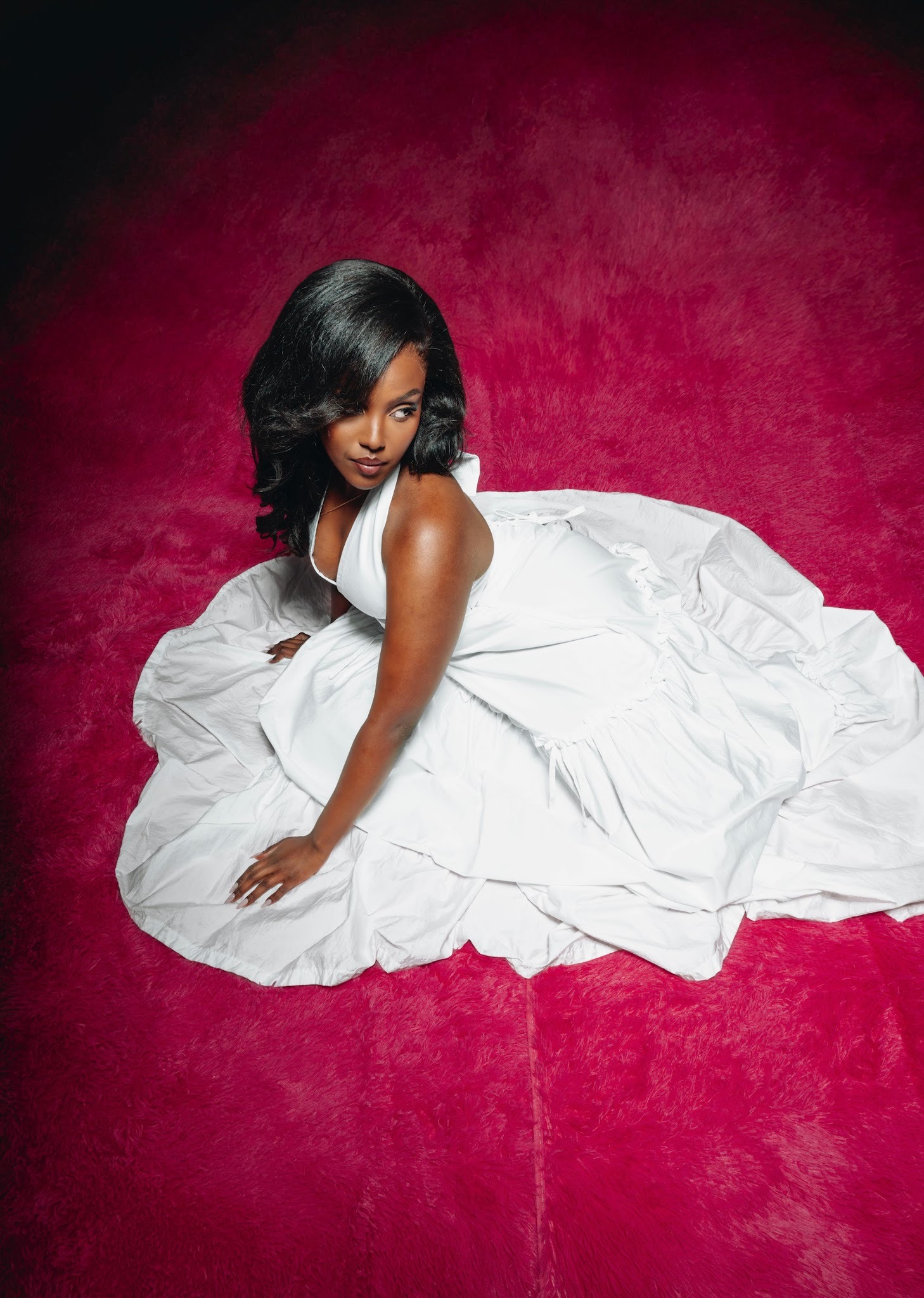
Cover Credit: Nikita Kering’/Tofauti Vibes

Fans can hear different versions of you across A Side of Me, The Other Side and your newer work. Which version feels furthest from who you are now?

I'd say the first EP. I'm only saying that because it just makes sense for that to be so, given that that was the youngest version of me. And I allow myself to really immerse myself into my eras or phases, like I really live in the moment. And so, A Side of Me may be the furthest to who I am now, but it was very authentic to who I was then, right?

You’ve grown up in public ever since the Emmy Kosgei days we discovered you and that audience has grown up alongside you. What part of your evolution do you think people haven’t quite caught up with yet?

People haven't yet seen that side of me that doesn't really care, the side of me that is aggressive and speaks up for herself. And I think with The Lick Back, the people who are the closest fans that are listening to the music deeply and listening to the lyrics, they can see that.

But what I've seen is my music really takes a long time for people to catch up to. I don't know what it is about the music, because when I drop it at first, no one ever really gets it. Then a year comes, okay, everyone is now on the Nikita Kering’ hype and blah, blah, blah. So I would just say, perhaps the people who listen to my music at a more surface level haven't really gotten to see the side of me that is a little bit more outspoken and doesn't shy away from the truth.

So you feel like sleeper hits/albums are a good thing?

A hundred percent I think sleeper albums are the best because the majority of people then who are discovering are actually in a quest to discover, rather than the people who just were listening to it because it had hype at the moment. You'll find that people who are listening to an album a year after and had never listened to it probably were like, okay, this album had gotten good reviews let me see it for myself and there isn't that noise at the time that they're listening.

So I'm for it and the whole sleeper concept has really built and sustained my longevity that I've had because then people are still able to experience music of three, four years ago right now. And in fact, if you want to look at TikTok and stuff like that, there's people that I'm seeing still discovering “Ex.” There's a performance I did in Ethiopia months ago of a song that came out years ago that's trending right now. So that just tells you that rediscovery is amazing because even as I perform songs I sang five years ago today, they're still relevant. And I feel like that's how music is supposed to be.

People are always listening. Is there a song you've written that you understand differently now than when you wrote it?

I actually don't. I don't think I have an answer to that because I don't really listen to my own songs. I just perform them. After I sing them, now it's in the hands of the people I made it for.

You write quite openly about love, heartbreak, and desire. Do you really understand what you're feeling or do you need to understand it before you can?

 I don't think I internalize my feelings before writing music. I kind of just go with the flow. So I would say I discover my feelings after the fact.

When a melody or lyric comes to you, do you usually know what the song is about, or does the song tell you as you go? 

Yeah, it definitely tells me, but it depends. Different songs, different approaches. When I initially write it, sometimes I know what I'm trying to talk about, but for the most part, it always reveals itself. 

For instance, the “Niwache” song, the line that you sang, was actually the first line I came up with in the whole song. I only had that, and nothing else. And then I sent that to the producer, and we built from that. So already that kind of tells me this song is probably about someone who's playing games, someone who's doing like a cycle back and forth type of thing. 

Cover Credit: Nikita Kering’/Tofauti Vibes

What emotions do you find the easiest to sing about, but hardest to actually live through?

I think the pain from heartbreak; because we hear about it so much, we watch a lot of movies, we interact with each other, our friends go through it and the pieces of heartbreak; the crying at night, people's life moving on and yours is kind of stuck. We know those little pieces, so I'd say heartbreak is very easy to write, yet very difficult to go through.

When you're going through it, the process is so profound and you get so immersed in it that those feelings never really leave you and that's why perhaps it's very easy to describe them because literally, you live inside those feelings so immensely and so vividly that I guess you can't forget.

Your latest EP feels like another step into your artistic evolution. What did making The Lick Back reveal about the artist you're becoming?

I would say that it reveals less to me about the artist that I'm becoming, but more so the person that I'm becoming because my art is directly linked to my personal experiences and to who I am and how I'm feeling. So I think it's just a reflection of somebody growing up, finally becoming a woman. Being able to speak out for myself because that's some of the things I struggled with a lot as a young person. Like I’m finally grown up and out of being that timid young girl who is scared of voicing her opinions and is scared of saying the wrong thing at the wrong time. It's just shown me how much I am actually growing and if I thought that I wasn't growing I can now see it in my music from also experimenting with different sounds.

You’ve experimented with different sounds and languages throughout your catalogue. Is there a version of yourself you can express musically that you can’t quite access in everyday life?

The sensual part of me, mainly because I find that society isn't very forgiving with women. Sometimes when it comes to freely expressing your sensuality and yourself. That’s something that I've been able to put in my music, even in collaborations such as Motto, I feel as though if I was to transcribe that and tell it to people word for word, everyone would be like, what the hell is this girl saying? 

We are also at a time when Kenyan music is drawing increasingly from across the continent while also developing its own new identities. What does the Kenyan sound look like to you today?

I think that Kenyan sound looks like a Kenyan person that grew up in Kenya or was exposed to Kenyan culture, presenting it in the way that they understood it. I don't think there's any way that it's supposed to sound. I just think that if you took part in being Kenyan in any way and you're expressing that musically, I think that's Kenyan music.

I think the exposure to the difference in cultures and even different music and how you choose to interpret that is exactly what makes it Kenyan, because the thing is, that culture is just a bunch of people that sat together and behaved and acted a certain type of way. It wasn't influenced by any sort of DNA or anything. We are just a couple of people that settled on this part of the earth and started to do things in this manner. And that became culture. So I think with music, it's the same. I'm glad the exact rule applies.

And what do you think Kenyan artists or creatives are doing exceptionally well right now and what are they still getting wrong?

Let me start by saying that finally, there's some kind of trend where there's a lot more Kenyan musicians making Kenyan music that is inspired by their own cultures. So when I look at Kodongklan, Kosta Ojuang, Elsie Wameno or Zaituni, all of these people are not only inspired by, for example, the Nairobi culture or the Swahili language. They have embraced who they are and where they come from. And even through my EP and what I was doing with the intro with Sofiya Nzau. 

We have unlocked a new level to even more content by allowing ourselves to access our own cultures because I genuinely believe that we are spiritually connected to where we are from. I myself come from the Nandi community, and I know my clan and exactly where we come from. And there are stories our parents teach us about our clan and the things that we used to do and our strengths. And I can see that coming out now, even being in Nairobi or traveling around the world, I can understand.

So I would say how we are attaching ourselves or rather how we are holding on to our history is really important and I think that is something that we're doing so right because it makes the pot overflow. It will consistently pour out more and more content because we're not just Kenyans, we're not just Kalenjins, we're not just Nandis, we're not just Taitas, we come from this home. And the deeper you go into who you are, the more there is to find and the more of that DNA will show through your music making it even way more unique than perhaps someone that was just following some trends, right?

Yeah and at the end of the day, like creativity, music continues. Music has been around for maybe a few thousand years and maybe even more, but I mean in terms of like proper proper structured songs and stuff like that, it can't end here. It has to keep going and how does it? We have to keep finding new inspirations and that means going deeper into your culture while at the same time going wider into the future and wider into exposing yourself. How can my culture mesh into this? How can we intermarry different cultures to create a new art form? And that discovery is what I'm seeing in Kenyan music and not just music/artistic space, because even with fine arts, even with culinary arts, with people like Denis Ombachi, turning things like managu and terere into cold salads, you know, that kind of stuff. That's why people like that are still relevant, because it's innovation. And innovation doesn't necessarily mean that you have to come up with something from thin air. Sometimes it just means taking this thing, taking this other thing, and blending them together to create a new thing.

Because that's exactly how humans evolve. It's a mother and a father coming together to create something new. And if you yourself see yourself as a new being, as a new creation, then that, I think, reflects creativity. That you've taken this that was already in existence, and this other thing, and you're putting them together, and you're literally just consistently creating something new every time. And I think that's amazing. In terms of what I feel like Kenyan artists are doing wrong, I don't know what Kenyan artists And I don't think I will ever come out and say anyone is doing anything wrong creatively because I see artists who are making “bubblegum” music being shunned upon, but we are listening to it.

That is an art form in itself. For example, there's calculus and then there's freaking one plus one. And without one plus one, there would have never been calculus. Like both of those things are necessary. Sometimes life doesn't have to be so complex. People don't have to do the right thing all the time. And so I would never, ever comment on what I think someone should do or shouldn't do creatively. What I think I would say is how hard are you working to make this into something proper? Because you can turn something very stupid into something amazing and something that is worth sharing to the world as a representation of Kenya music. What I would say artists are doing wrong on the other side of things is not knowing how to protect this art that they are creating, is not knowing how to correctly monetize it. Those are now the things I can speak on because I can see exactly how my input would benefit them.

Cover Credit: Nikita Kering’/Tofauti Vibes

What do you admire about the next generation of East African artists coming up alongside you?

I applaud my fellow artists because they’ve kept going because I've seen and experienced crazy things, and there's times where I've genuinely sat down and was just like, bro, I don't think I can do this anymore. I can imagine that all these different artists have probably been in the same exact space where they felt like giving up. But the choice to continue, to me, that is the most amazing, brilliant thing. And I'm so proud of all of them.

And I support in the ways that I can. When I speak to upcoming artists, when I talk to Bridget Blue, when I speak to so and so; I sit with these people, and all I do is encourage them and tell people, you should try this and try that. My hand is never closed. It's always open to giving and that's why I believe that I keep receiving, because I don't tie that information to myself. I don't believe in gatekeeping, because I really genuinely believe that we can all coexist. And I know people that are so worried about gatekeeping and stuff, they're copycats because they know they copied something and they know it's not authentic enough to sustain, but because I know what I'm coming with is so original, I'll never be worried about what anyone else is doing or that they're doing better than me.

I'm so proud of each and every one of my fellow artists and I wish them all the best and I have generally given upcoming artists opportunities way more than I've even given anyone else and I don't talk about it, I don't post about it, I don't go out there wanting anyone to lick my bum about it, I'm just out here and I know one day, should I help the right person, and they're grateful, they're gonna come out and they're gonna be like, you know what, I appreciate Nikita because she helped me get here, she helped me get there, but I don't even do it for the applause, I don't do it so that they can say, I do it because it's just the right thing to do. And why not? 

Your music influences have ranged from Rose Muhando and Nigerian pop to American R&B with people like Rihanna. When you're creating, do you think about those influences, or have they become so deeply embedded that they just come out in the way you create your own music? 

I see inspiration kind of like taking a test. You read for your exam, and when you're in the exam room sitting with your paper, you're not thinking about every single thing that you read. You read the question, and you hope that the answer will flow to you depending on how prepared you are.

How I relate it to making my music is if I am genuinely, I've listened to the music, I've taken it in, I've meditated with it, I do not need to go over my notes again. I just write, and it will show. There is a way that your brain is able to divide or to compartmentalize different ideas and how they would apply into your different ideas. You never have to be listening to other songs at the same time in order to make that happen. 

You just have to constantly feed yourself with the material, and then it will show in the music, because if you then do the former, what's going to happen is you're just going to plagiarize. So even when I'm making a song and I can hear like, okay, this song kind of sounds like, let me give an example, Diamonds by Rihanna. The one thing you're not allowed to do at that one instance is play that song because then you're going to start copying. That's how I do it. 

Speaking of influences, are there any people that are on your dream collaboration list? 

I think I only have one person on my dream collaboration list right now, and that's Dave. I really like Dave. His song, Raindance with Tems is amazing. But I think if I were to make a song with Dave it would never be a commercial song. I wouldn't waste my opportunity on that.  I would want to drain him of every little bit of niche creativity he has in him, because that's how I fell in love with Dave. I didn't really get exposed to Dave through the commercial song.
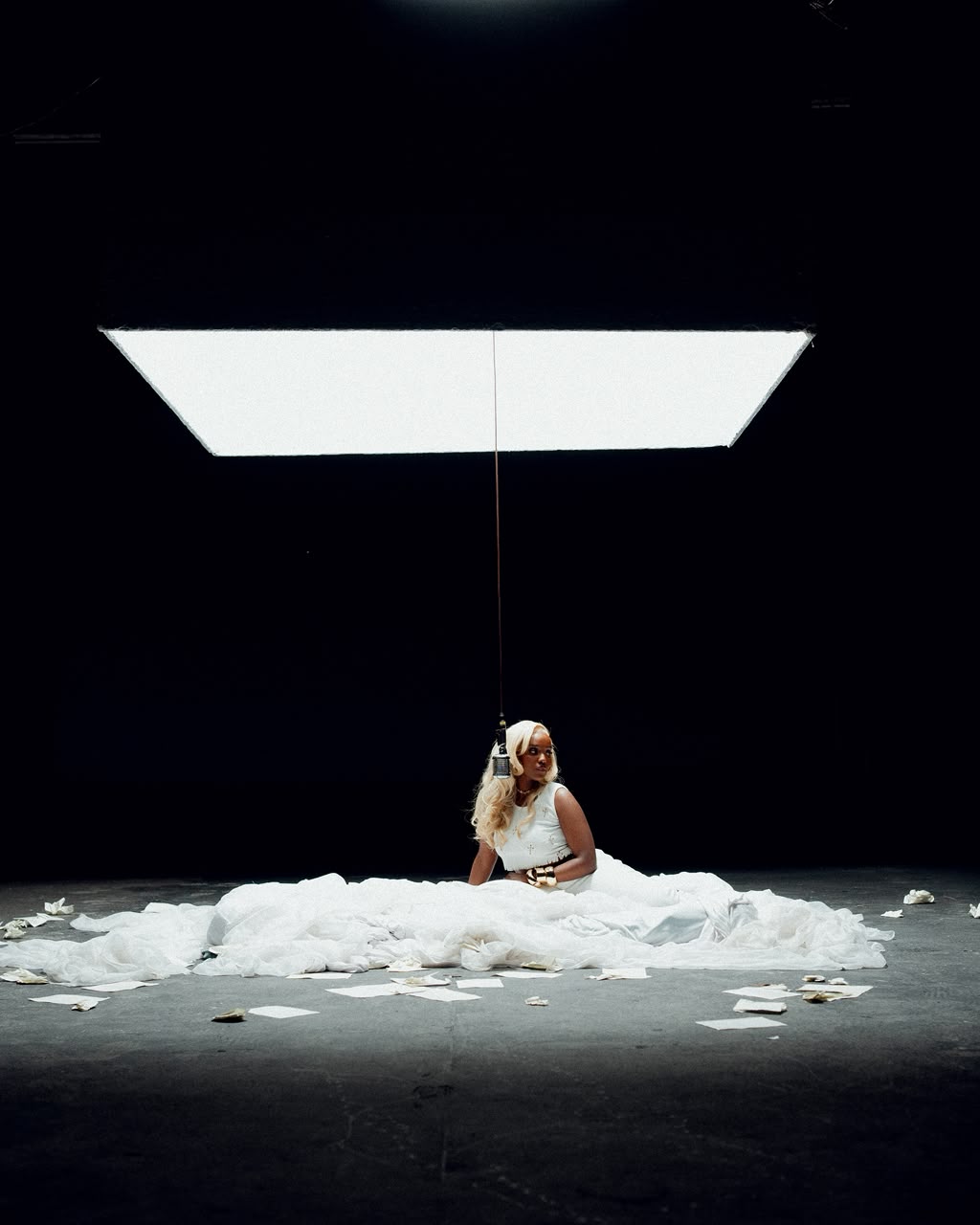
Cover Credit: Nikita Kering’/Tofauti Vibes

What can fans look forward to next? Is there anything else in the book? An unreleased project before the year ends that you want to bless them with?

There's definitely gonna be some songs out before the year ends, but, in terms of a whole project, no. I'm not gonna lie and say that. I really hope to release my debut album next year though.

For the Peaches and Cream event, I would say that's gonna be the best show of the year yet, actually the best of my life yet. So if anyone is waiting to attend my concert, and they don't know which one to attend, because I know there's a couple, they need to attend that one.

Finally, if we remove Nikita Kering’ the public persona that people know, what would you want to discover next just for yourself? 

I really just want to see how far I can push my entrepreneurial side. I'm just about to launch one of my businesses, aside from Nikita Kering’, because I'm not going to be publicizing it, and I just want to see that I can actually manage a huge business and not lose my mind.


Cover Credit: Nikita Kering’/Tofauti Vibes
Nikita Kering' Is Betting on Parts of Herself She Once Hid

Authored by
This is some text inside of a div block.

The first time this writer heard Nikita Kering’, she was already singing with the kind of conviction that made it easy to forget how young she was. 

Happy With You,” her debut 2018 single, arrived when she was just 16, introducing audiences to a young Kenyan R&B and pop singer-songwriter whose voice seemed far older than her years. 

Nearly a decade in, her music still carries that same immediacy. But Kering’ has spent the years since growing far beyond that girl to a more intimate, assured fully-fledged artist who isn’t afraid to say exactly what she means.

That evolution has unfolded across three EPs, A Side of Me, The Other Side and this year’s The Lick Back that finds her leaning further into self-possession, desire, vulnerability and the freedom to speak from a place of greater personal clarity. 

In 2021, just three years after her breakthrough, Kering’ became the first-ever East African musician selected for Apple Music’s Africa Rising programme, another benchmark of how quickly her career was expanding beyond home. Since then, she continued to build a catalogue around her distinctive RnB sensibilities while drawing from pop, Afrobeats, dancehall and the sounds of her roots – all feats she has done without a full-length studio album to her name yet and a gap she hopes to finally close next year.

Deeds caught up with the Kenyan singer-songwriter to talk about growing into her voice, embracing the parts of herself she once kept hidden, the evolving identity of Kenyan music, and what comes next for an artist who is still discovering just how much she has to say.

Stanley for Deeds: How is your day going so far? 

My day is great. I just came back from a getaway, so just kind of back with a lot of work.

Your music has been around for more than five years now, but songs like “Never Let You Go” and “Ex” still feel remarkably current. How does it feel knowing people are still returning to those songs years later? 

So cute. Thank you so much. 

You’ve been making music since you were very young. When did music stop feeling like something you were naturally good at and start feeling like something you had something to say through?

I guess from just being a talent to being almost like a channel or a platform for expression, right? I'd say probably when I was around 16. It's kind of my mom that pushed me and pressured me into writing my own music. I really used to think that I can't write my own music. So she used to just tell me, you can just try. And so that's when it happened. It stopped being about music school, stopped being about just vocal ability. But it started to be about like, who is she? Because the only way people can really know who I am is to connect with me really, was through using my music as a space where I could give my thoughts and opinions on certain things, where I can share my emotions. People could tell the kind of person that I am through my music. And so yeah, I'd say around that time and then it also became a business, so it was kind of just trying to balance the two.

Cover Credit: Nikita Kering’/Tofauti Vibes

Fans can hear different versions of you across A Side of Me, The Other Side and your newer work. Which version feels furthest from who you are now?

I'd say the first EP. I'm only saying that because it just makes sense for that to be so, given that that was the youngest version of me. And I allow myself to really immerse myself into my eras or phases, like I really live in the moment. And so, A Side of Me may be the furthest to who I am now, but it was very authentic to who I was then, right?

You’ve grown up in public ever since the Emmy Kosgei days we discovered you and that audience has grown up alongside you. What part of your evolution do you think people haven’t quite caught up with yet?

People haven't yet seen that side of me that doesn't really care, the side of me that is aggressive and speaks up for herself. And I think with The Lick Back, the people who are the closest fans that are listening to the music deeply and listening to the lyrics, they can see that.

But what I've seen is my music really takes a long time for people to catch up to. I don't know what it is about the music, because when I drop it at first, no one ever really gets it. Then a year comes, okay, everyone is now on the Nikita Kering’ hype and blah, blah, blah. So I would just say, perhaps the people who listen to my music at a more surface level haven't really gotten to see the side of me that is a little bit more outspoken and doesn't shy away from the truth.

So you feel like sleeper hits/albums are a good thing?

A hundred percent I think sleeper albums are the best because the majority of people then who are discovering are actually in a quest to discover, rather than the people who just were listening to it because it had hype at the moment. You'll find that people who are listening to an album a year after and had never listened to it probably were like, okay, this album had gotten good reviews let me see it for myself and there isn't that noise at the time that they're listening.

So I'm for it and the whole sleeper concept has really built and sustained my longevity that I've had because then people are still able to experience music of three, four years ago right now. And in fact, if you want to look at TikTok and stuff like that, there's people that I'm seeing still discovering “Ex.” There's a performance I did in Ethiopia months ago of a song that came out years ago that's trending right now. So that just tells you that rediscovery is amazing because even as I perform songs I sang five years ago today, they're still relevant. And I feel like that's how music is supposed to be.

People are always listening. Is there a song you've written that you understand differently now than when you wrote it?

I actually don't. I don't think I have an answer to that because I don't really listen to my own songs. I just perform them. After I sing them, now it's in the hands of the people I made it for.

You write quite openly about love, heartbreak, and desire. Do you really understand what you're feeling or do you need to understand it before you can?

 I don't think I internalize my feelings before writing music. I kind of just go with the flow. So I would say I discover my feelings after the fact.

When a melody or lyric comes to you, do you usually know what the song is about, or does the song tell you as you go? 

Yeah, it definitely tells me, but it depends. Different songs, different approaches. When I initially write it, sometimes I know what I'm trying to talk about, but for the most part, it always reveals itself. 

For instance, the “Niwache” song, the line that you sang, was actually the first line I came up with in the whole song. I only had that, and nothing else. And then I sent that to the producer, and we built from that. So already that kind of tells me this song is probably about someone who's playing games, someone who's doing like a cycle back and forth type of thing. 

Cover Credit: Nikita Kering’/Tofauti Vibes

What emotions do you find the easiest to sing about, but hardest to actually live through?

I think the pain from heartbreak; because we hear about it so much, we watch a lot of movies, we interact with each other, our friends go through it and the pieces of heartbreak; the crying at night, people's life moving on and yours is kind of stuck. We know those little pieces, so I'd say heartbreak is very easy to write, yet very difficult to go through.

When you're going through it, the process is so profound and you get so immersed in it that those feelings never really leave you and that's why perhaps it's very easy to describe them because literally, you live inside those feelings so immensely and so vividly that I guess you can't forget.

Your latest EP feels like another step into your artistic evolution. What did making The Lick Back reveal about the artist you're becoming?

I would say that it reveals less to me about the artist that I'm becoming, but more so the person that I'm becoming because my art is directly linked to my personal experiences and to who I am and how I'm feeling. So I think it's just a reflection of somebody growing up, finally becoming a woman. Being able to speak out for myself because that's some of the things I struggled with a lot as a young person. Like I’m finally grown up and out of being that timid young girl who is scared of voicing her opinions and is scared of saying the wrong thing at the wrong time. It's just shown me how much I am actually growing and if I thought that I wasn't growing I can now see it in my music from also experimenting with different sounds.

You’ve experimented with different sounds and languages throughout your catalogue. Is there a version of yourself you can express musically that you can’t quite access in everyday life?

The sensual part of me, mainly because I find that society isn't very forgiving with women. Sometimes when it comes to freely expressing your sensuality and yourself. That’s something that I've been able to put in my music, even in collaborations such as Motto, I feel as though if I was to transcribe that and tell it to people word for word, everyone would be like, what the hell is this girl saying? 

We are also at a time when Kenyan music is drawing increasingly from across the continent while also developing its own new identities. What does the Kenyan sound look like to you today?

I think that Kenyan sound looks like a Kenyan person that grew up in Kenya or was exposed to Kenyan culture, presenting it in the way that they understood it. I don't think there's any way that it's supposed to sound. I just think that if you took part in being Kenyan in any way and you're expressing that musically, I think that's Kenyan music.

I think the exposure to the difference in cultures and even different music and how you choose to interpret that is exactly what makes it Kenyan, because the thing is, that culture is just a bunch of people that sat together and behaved and acted a certain type of way. It wasn't influenced by any sort of DNA or anything. We are just a couple of people that settled on this part of the earth and started to do things in this manner. And that became culture. So I think with music, it's the same. I'm glad the exact rule applies.

And what do you think Kenyan artists or creatives are doing exceptionally well right now and what are they still getting wrong?

Let me start by saying that finally, there's some kind of trend where there's a lot more Kenyan musicians making Kenyan music that is inspired by their own cultures. So when I look at Kodongklan, Kosta Ojuang, Elsie Wameno or Zaituni, all of these people are not only inspired by, for example, the Nairobi culture or the Swahili language. They have embraced who they are and where they come from. And even through my EP and what I was doing with the intro with Sofiya Nzau. 

We have unlocked a new level to even more content by allowing ourselves to access our own cultures because I genuinely believe that we are spiritually connected to where we are from. I myself come from the Nandi community, and I know my clan and exactly where we come from. And there are stories our parents teach us about our clan and the things that we used to do and our strengths. And I can see that coming out now, even being in Nairobi or traveling around the world, I can understand.

So I would say how we are attaching ourselves or rather how we are holding on to our history is really important and I think that is something that we're doing so right because it makes the pot overflow. It will consistently pour out more and more content because we're not just Kenyans, we're not just Kalenjins, we're not just Nandis, we're not just Taitas, we come from this home. And the deeper you go into who you are, the more there is to find and the more of that DNA will show through your music making it even way more unique than perhaps someone that was just following some trends, right?

Yeah and at the end of the day, like creativity, music continues. Music has been around for maybe a few thousand years and maybe even more, but I mean in terms of like proper proper structured songs and stuff like that, it can't end here. It has to keep going and how does it? We have to keep finding new inspirations and that means going deeper into your culture while at the same time going wider into the future and wider into exposing yourself. How can my culture mesh into this? How can we intermarry different cultures to create a new art form? And that discovery is what I'm seeing in Kenyan music and not just music/artistic space, because even with fine arts, even with culinary arts, with people like Denis Ombachi, turning things like managu and terere into cold salads, you know, that kind of stuff. That's why people like that are still relevant, because it's innovation. And innovation doesn't necessarily mean that you have to come up with something from thin air. Sometimes it just means taking this thing, taking this other thing, and blending them together to create a new thing.

Because that's exactly how humans evolve. It's a mother and a father coming together to create something new. And if you yourself see yourself as a new being, as a new creation, then that, I think, reflects creativity. That you've taken this that was already in existence, and this other thing, and you're putting them together, and you're literally just consistently creating something new every time. And I think that's amazing. In terms of what I feel like Kenyan artists are doing wrong, I don't know what Kenyan artists And I don't think I will ever come out and say anyone is doing anything wrong creatively because I see artists who are making “bubblegum” music being shunned upon, but we are listening to it.

That is an art form in itself. For example, there's calculus and then there's freaking one plus one. And without one plus one, there would have never been calculus. Like both of those things are necessary. Sometimes life doesn't have to be so complex. People don't have to do the right thing all the time. And so I would never, ever comment on what I think someone should do or shouldn't do creatively. What I think I would say is how hard are you working to make this into something proper? Because you can turn something very stupid into something amazing and something that is worth sharing to the world as a representation of Kenya music. What I would say artists are doing wrong on the other side of things is not knowing how to protect this art that they are creating, is not knowing how to correctly monetize it. Those are now the things I can speak on because I can see exactly how my input would benefit them.

Cover Credit: Nikita Kering’/Tofauti Vibes

What do you admire about the next generation of East African artists coming up alongside you?

I applaud my fellow artists because they’ve kept going because I've seen and experienced crazy things, and there's times where I've genuinely sat down and was just like, bro, I don't think I can do this anymore. I can imagine that all these different artists have probably been in the same exact space where they felt like giving up. But the choice to continue, to me, that is the most amazing, brilliant thing. And I'm so proud of all of them.

And I support in the ways that I can. When I speak to upcoming artists, when I talk to Bridget Blue, when I speak to so and so; I sit with these people, and all I do is encourage them and tell people, you should try this and try that. My hand is never closed. It's always open to giving and that's why I believe that I keep receiving, because I don't tie that information to myself. I don't believe in gatekeeping, because I really genuinely believe that we can all coexist. And I know people that are so worried about gatekeeping and stuff, they're copycats because they know they copied something and they know it's not authentic enough to sustain, but because I know what I'm coming with is so original, I'll never be worried about what anyone else is doing or that they're doing better than me.

I'm so proud of each and every one of my fellow artists and I wish them all the best and I have generally given upcoming artists opportunities way more than I've even given anyone else and I don't talk about it, I don't post about it, I don't go out there wanting anyone to lick my bum about it, I'm just out here and I know one day, should I help the right person, and they're grateful, they're gonna come out and they're gonna be like, you know what, I appreciate Nikita because she helped me get here, she helped me get there, but I don't even do it for the applause, I don't do it so that they can say, I do it because it's just the right thing to do. And why not? 

Your music influences have ranged from Rose Muhando and Nigerian pop to American R&B with people like Rihanna. When you're creating, do you think about those influences, or have they become so deeply embedded that they just come out in the way you create your own music? 

I see inspiration kind of like taking a test. You read for your exam, and when you're in the exam room sitting with your paper, you're not thinking about every single thing that you read. You read the question, and you hope that the answer will flow to you depending on how prepared you are.

How I relate it to making my music is if I am genuinely, I've listened to the music, I've taken it in, I've meditated with it, I do not need to go over my notes again. I just write, and it will show. There is a way that your brain is able to divide or to compartmentalize different ideas and how they would apply into your different ideas. You never have to be listening to other songs at the same time in order to make that happen. 

You just have to constantly feed yourself with the material, and then it will show in the music, because if you then do the former, what's going to happen is you're just going to plagiarize. So even when I'm making a song and I can hear like, okay, this song kind of sounds like, let me give an example, Diamonds by Rihanna. The one thing you're not allowed to do at that one instance is play that song because then you're going to start copying. That's how I do it. 

Speaking of influences, are there any people that are on your dream collaboration list? 

I think I only have one person on my dream collaboration list right now, and that's Dave. I really like Dave. His song, Raindance with Tems is amazing. But I think if I were to make a song with Dave it would never be a commercial song. I wouldn't waste my opportunity on that.  I would want to drain him of every little bit of niche creativity he has in him, because that's how I fell in love with Dave. I didn't really get exposed to Dave through the commercial song.

Cover Credit: Nikita Kering’/Tofauti Vibes

What can fans look forward to next? Is there anything else in the book? An unreleased project before the year ends that you want to bless them with?

There's definitely gonna be some songs out before the year ends, but, in terms of a whole project, no. I'm not gonna lie and say that. I really hope to release my debut album next year though.

For the Peaches and Cream event, I would say that's gonna be the best show of the year yet, actually the best of my life yet. So if anyone is waiting to attend my concert, and they don't know which one to attend, because I know there's a couple, they need to attend that one.

Finally, if we remove Nikita Kering’ the public persona that people know, what would you want to discover next just for yourself? 

I really just want to see how far I can push my entrepreneurial side. I'm just about to launch one of my businesses, aside from Nikita Kering’, because I'm not going to be publicizing it, and I just want to see that I can actually manage a huge business and not lose my mind.


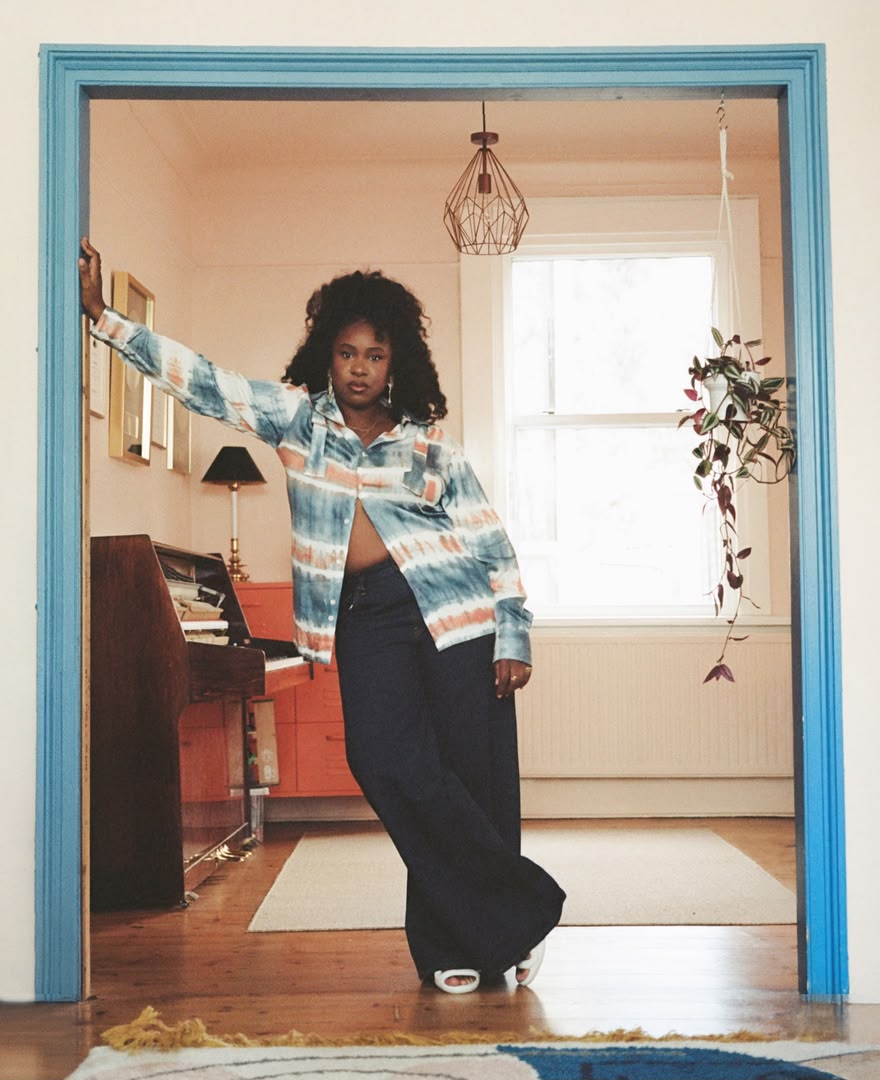
Cover Credit: Nikita Kering’/Tofauti Vibes
This is some text inside of a div block.

Nikita Kering' Is Betting on Parts of Herself She Once Hid

Authored by

The first time this writer heard Nikita Kering’, she was already singing with the kind of conviction that made it easy to forget how young she was. 

Happy With You,” her debut 2018 single, arrived when she was just 16, introducing audiences to a young Kenyan R&B and pop singer-songwriter whose voice seemed far older than her years. 

Nearly a decade in, her music still carries that same immediacy. But Kering’ has spent the years since growing far beyond that girl to a more intimate, assured fully-fledged artist who isn’t afraid to say exactly what she means.

That evolution has unfolded across three EPs, A Side of Me, The Other Side and this year’s The Lick Back that finds her leaning further into self-possession, desire, vulnerability and the freedom to speak from a place of greater personal clarity. 

In 2021, just three years after her breakthrough, Kering’ became the first-ever East African musician selected for Apple Music’s Africa Rising programme, another benchmark of how quickly her career was expanding beyond home. Since then, she continued to build a catalogue around her distinctive RnB sensibilities while drawing from pop, Afrobeats, dancehall and the sounds of her roots – all feats she has done without a full-length studio album to her name yet and a gap she hopes to finally close next year.

Deeds caught up with the Kenyan singer-songwriter to talk about growing into her voice, embracing the parts of herself she once kept hidden, the evolving identity of Kenyan music, and what comes next for an artist who is still discovering just how much she has to say.

Stanley for Deeds: How is your day going so far? 

My day is great. I just came back from a getaway, so just kind of back with a lot of work.

Your music has been around for more than five years now, but songs like “Never Let You Go” and “Ex” still feel remarkably current. How does it feel knowing people are still returning to those songs years later? 

So cute. Thank you so much. 

You’ve been making music since you were very young. When did music stop feeling like something you were naturally good at and start feeling like something you had something to say through?

I guess from just being a talent to being almost like a channel or a platform for expression, right? I'd say probably when I was around 16. It's kind of my mom that pushed me and pressured me into writing my own music. I really used to think that I can't write my own music. So she used to just tell me, you can just try. And so that's when it happened. It stopped being about music school, stopped being about just vocal ability. But it started to be about like, who is she? Because the only way people can really know who I am is to connect with me really, was through using my music as a space where I could give my thoughts and opinions on certain things, where I can share my emotions. People could tell the kind of person that I am through my music. And so yeah, I'd say around that time and then it also became a business, so it was kind of just trying to balance the two.

Cover Credit: Nikita Kering’/Tofauti Vibes

Fans can hear different versions of you across A Side of Me, The Other Side and your newer work. Which version feels furthest from who you are now?

I'd say the first EP. I'm only saying that because it just makes sense for that to be so, given that that was the youngest version of me. And I allow myself to really immerse myself into my eras or phases, like I really live in the moment. And so, A Side of Me may be the furthest to who I am now, but it was very authentic to who I was then, right?

You’ve grown up in public ever since the Emmy Kosgei days we discovered you and that audience has grown up alongside you. What part of your evolution do you think people haven’t quite caught up with yet?

People haven't yet seen that side of me that doesn't really care, the side of me that is aggressive and speaks up for herself. And I think with The Lick Back, the people who are the closest fans that are listening to the music deeply and listening to the lyrics, they can see that.

But what I've seen is my music really takes a long time for people to catch up to. I don't know what it is about the music, because when I drop it at first, no one ever really gets it. Then a year comes, okay, everyone is now on the Nikita Kering’ hype and blah, blah, blah. So I would just say, perhaps the people who listen to my music at a more surface level haven't really gotten to see the side of me that is a little bit more outspoken and doesn't shy away from the truth.

So you feel like sleeper hits/albums are a good thing?

A hundred percent I think sleeper albums are the best because the majority of people then who are discovering are actually in a quest to discover, rather than the people who just were listening to it because it had hype at the moment. You'll find that people who are listening to an album a year after and had never listened to it probably were like, okay, this album had gotten good reviews let me see it for myself and there isn't that noise at the time that they're listening.

So I'm for it and the whole sleeper concept has really built and sustained my longevity that I've had because then people are still able to experience music of three, four years ago right now. And in fact, if you want to look at TikTok and stuff like that, there's people that I'm seeing still discovering “Ex.” There's a performance I did in Ethiopia months ago of a song that came out years ago that's trending right now. So that just tells you that rediscovery is amazing because even as I perform songs I sang five years ago today, they're still relevant. And I feel like that's how music is supposed to be.

People are always listening. Is there a song you've written that you understand differently now than when you wrote it?

I actually don't. I don't think I have an answer to that because I don't really listen to my own songs. I just perform them. After I sing them, now it's in the hands of the people I made it for.

You write quite openly about love, heartbreak, and desire. Do you really understand what you're feeling or do you need to understand it before you can?

 I don't think I internalize my feelings before writing music. I kind of just go with the flow. So I would say I discover my feelings after the fact.

When a melody or lyric comes to you, do you usually know what the song is about, or does the song tell you as you go? 

Yeah, it definitely tells me, but it depends. Different songs, different approaches. When I initially write it, sometimes I know what I'm trying to talk about, but for the most part, it always reveals itself. 

For instance, the “Niwache” song, the line that you sang, was actually the first line I came up with in the whole song. I only had that, and nothing else. And then I sent that to the producer, and we built from that. So already that kind of tells me this song is probably about someone who's playing games, someone who's doing like a cycle back and forth type of thing. 

Cover Credit: Nikita Kering’/Tofauti Vibes

What emotions do you find the easiest to sing about, but hardest to actually live through?

I think the pain from heartbreak; because we hear about it so much, we watch a lot of movies, we interact with each other, our friends go through it and the pieces of heartbreak; the crying at night, people's life moving on and yours is kind of stuck. We know those little pieces, so I'd say heartbreak is very easy to write, yet very difficult to go through.

When you're going through it, the process is so profound and you get so immersed in it that those feelings never really leave you and that's why perhaps it's very easy to describe them because literally, you live inside those feelings so immensely and so vividly that I guess you can't forget.

Your latest EP feels like another step into your artistic evolution. What did making The Lick Back reveal about the artist you're becoming?

I would say that it reveals less to me about the artist that I'm becoming, but more so the person that I'm becoming because my art is directly linked to my personal experiences and to who I am and how I'm feeling. So I think it's just a reflection of somebody growing up, finally becoming a woman. Being able to speak out for myself because that's some of the things I struggled with a lot as a young person. Like I’m finally grown up and out of being that timid young girl who is scared of voicing her opinions and is scared of saying the wrong thing at the wrong time. It's just shown me how much I am actually growing and if I thought that I wasn't growing I can now see it in my music from also experimenting with different sounds.

You’ve experimented with different sounds and languages throughout your catalogue. Is there a version of yourself you can express musically that you can’t quite access in everyday life?

The sensual part of me, mainly because I find that society isn't very forgiving with women. Sometimes when it comes to freely expressing your sensuality and yourself. That’s something that I've been able to put in my music, even in collaborations such as Motto, I feel as though if I was to transcribe that and tell it to people word for word, everyone would be like, what the hell is this girl saying? 

We are also at a time when Kenyan music is drawing increasingly from across the continent while also developing its own new identities. What does the Kenyan sound look like to you today?

I think that Kenyan sound looks like a Kenyan person that grew up in Kenya or was exposed to Kenyan culture, presenting it in the way that they understood it. I don't think there's any way that it's supposed to sound. I just think that if you took part in being Kenyan in any way and you're expressing that musically, I think that's Kenyan music.

I think the exposure to the difference in cultures and even different music and how you choose to interpret that is exactly what makes it Kenyan, because the thing is, that culture is just a bunch of people that sat together and behaved and acted a certain type of way. It wasn't influenced by any sort of DNA or anything. We are just a couple of people that settled on this part of the earth and started to do things in this manner. And that became culture. So I think with music, it's the same. I'm glad the exact rule applies.

And what do you think Kenyan artists or creatives are doing exceptionally well right now and what are they still getting wrong?

Let me start by saying that finally, there's some kind of trend where there's a lot more Kenyan musicians making Kenyan music that is inspired by their own cultures. So when I look at Kodongklan, Kosta Ojuang, Elsie Wameno or Zaituni, all of these people are not only inspired by, for example, the Nairobi culture or the Swahili language. They have embraced who they are and where they come from. And even through my EP and what I was doing with the intro with Sofiya Nzau. 

We have unlocked a new level to even more content by allowing ourselves to access our own cultures because I genuinely believe that we are spiritually connected to where we are from. I myself come from the Nandi community, and I know my clan and exactly where we come from. And there are stories our parents teach us about our clan and the things that we used to do and our strengths. And I can see that coming out now, even being in Nairobi or traveling around the world, I can understand.

So I would say how we are attaching ourselves or rather how we are holding on to our history is really important and I think that is something that we're doing so right because it makes the pot overflow. It will consistently pour out more and more content because we're not just Kenyans, we're not just Kalenjins, we're not just Nandis, we're not just Taitas, we come from this home. And the deeper you go into who you are, the more there is to find and the more of that DNA will show through your music making it even way more unique than perhaps someone that was just following some trends, right?

Yeah and at the end of the day, like creativity, music continues. Music has been around for maybe a few thousand years and maybe even more, but I mean in terms of like proper proper structured songs and stuff like that, it can't end here. It has to keep going and how does it? We have to keep finding new inspirations and that means going deeper into your culture while at the same time going wider into the future and wider into exposing yourself. How can my culture mesh into this? How can we intermarry different cultures to create a new art form? And that discovery is what I'm seeing in Kenyan music and not just music/artistic space, because even with fine arts, even with culinary arts, with people like Denis Ombachi, turning things like managu and terere into cold salads, you know, that kind of stuff. That's why people like that are still relevant, because it's innovation. And innovation doesn't necessarily mean that you have to come up with something from thin air. Sometimes it just means taking this thing, taking this other thing, and blending them together to create a new thing.

Because that's exactly how humans evolve. It's a mother and a father coming together to create something new. And if you yourself see yourself as a new being, as a new creation, then that, I think, reflects creativity. That you've taken this that was already in existence, and this other thing, and you're putting them together, and you're literally just consistently creating something new every time. And I think that's amazing. In terms of what I feel like Kenyan artists are doing wrong, I don't know what Kenyan artists And I don't think I will ever come out and say anyone is doing anything wrong creatively because I see artists who are making “bubblegum” music being shunned upon, but we are listening to it.

That is an art form in itself. For example, there's calculus and then there's freaking one plus one. And without one plus one, there would have never been calculus. Like both of those things are necessary. Sometimes life doesn't have to be so complex. People don't have to do the right thing all the time. And so I would never, ever comment on what I think someone should do or shouldn't do creatively. What I think I would say is how hard are you working to make this into something proper? Because you can turn something very stupid into something amazing and something that is worth sharing to the world as a representation of Kenya music. What I would say artists are doing wrong on the other side of things is not knowing how to protect this art that they are creating, is not knowing how to correctly monetize it. Those are now the things I can speak on because I can see exactly how my input would benefit them.

Cover Credit: Nikita Kering’/Tofauti Vibes

What do you admire about the next generation of East African artists coming up alongside you?

I applaud my fellow artists because they’ve kept going because I've seen and experienced crazy things, and there's times where I've genuinely sat down and was just like, bro, I don't think I can do this anymore. I can imagine that all these different artists have probably been in the same exact space where they felt like giving up. But the choice to continue, to me, that is the most amazing, brilliant thing. And I'm so proud of all of them.

And I support in the ways that I can. When I speak to upcoming artists, when I talk to Bridget Blue, when I speak to so and so; I sit with these people, and all I do is encourage them and tell people, you should try this and try that. My hand is never closed. It's always open to giving and that's why I believe that I keep receiving, because I don't tie that information to myself. I don't believe in gatekeeping, because I really genuinely believe that we can all coexist. And I know people that are so worried about gatekeeping and stuff, they're copycats because they know they copied something and they know it's not authentic enough to sustain, but because I know what I'm coming with is so original, I'll never be worried about what anyone else is doing or that they're doing better than me.

I'm so proud of each and every one of my fellow artists and I wish them all the best and I have generally given upcoming artists opportunities way more than I've even given anyone else and I don't talk about it, I don't post about it, I don't go out there wanting anyone to lick my bum about it, I'm just out here and I know one day, should I help the right person, and they're grateful, they're gonna come out and they're gonna be like, you know what, I appreciate Nikita because she helped me get here, she helped me get there, but I don't even do it for the applause, I don't do it so that they can say, I do it because it's just the right thing to do. And why not? 

Your music influences have ranged from Rose Muhando and Nigerian pop to American R&B with people like Rihanna. When you're creating, do you think about those influences, or have they become so deeply embedded that they just come out in the way you create your own music? 

I see inspiration kind of like taking a test. You read for your exam, and when you're in the exam room sitting with your paper, you're not thinking about every single thing that you read. You read the question, and you hope that the answer will flow to you depending on how prepared you are.

How I relate it to making my music is if I am genuinely, I've listened to the music, I've taken it in, I've meditated with it, I do not need to go over my notes again. I just write, and it will show. There is a way that your brain is able to divide or to compartmentalize different ideas and how they would apply into your different ideas. You never have to be listening to other songs at the same time in order to make that happen. 

You just have to constantly feed yourself with the material, and then it will show in the music, because if you then do the former, what's going to happen is you're just going to plagiarize. So even when I'm making a song and I can hear like, okay, this song kind of sounds like, let me give an example, Diamonds by Rihanna. The one thing you're not allowed to do at that one instance is play that song because then you're going to start copying. That's how I do it. 

Speaking of influences, are there any people that are on your dream collaboration list? 

I think I only have one person on my dream collaboration list right now, and that's Dave. I really like Dave. His song, Raindance with Tems is amazing. But I think if I were to make a song with Dave it would never be a commercial song. I wouldn't waste my opportunity on that.  I would want to drain him of every little bit of niche creativity he has in him, because that's how I fell in love with Dave. I didn't really get exposed to Dave through the commercial song.

Cover Credit: Nikita Kering’/Tofauti Vibes

What can fans look forward to next? Is there anything else in the book? An unreleased project before the year ends that you want to bless them with?

There's definitely gonna be some songs out before the year ends, but, in terms of a whole project, no. I'm not gonna lie and say that. I really hope to release my debut album next year though.

For the Peaches and Cream event, I would say that's gonna be the best show of the year yet, actually the best of my life yet. So if anyone is waiting to attend my concert, and they don't know which one to attend, because I know there's a couple, they need to attend that one.

Finally, if we remove Nikita Kering’ the public persona that people know, what would you want to discover next just for yourself? 

I really just want to see how far I can push my entrepreneurial side. I'm just about to launch one of my businesses, aside from Nikita Kering’, because I'm not going to be publicizing it, and I just want to see that I can actually manage a huge business and not lose my mind.


Cover Credit: Nikita Kering’/Tofauti Vibes
Other Stories
London
London
Lagos
London
Newyork
London
Shop
Join the community.
You are now subscribed to receive updates.
Oops! Something went wrong while submitting the form.
Subscribe