.svg)

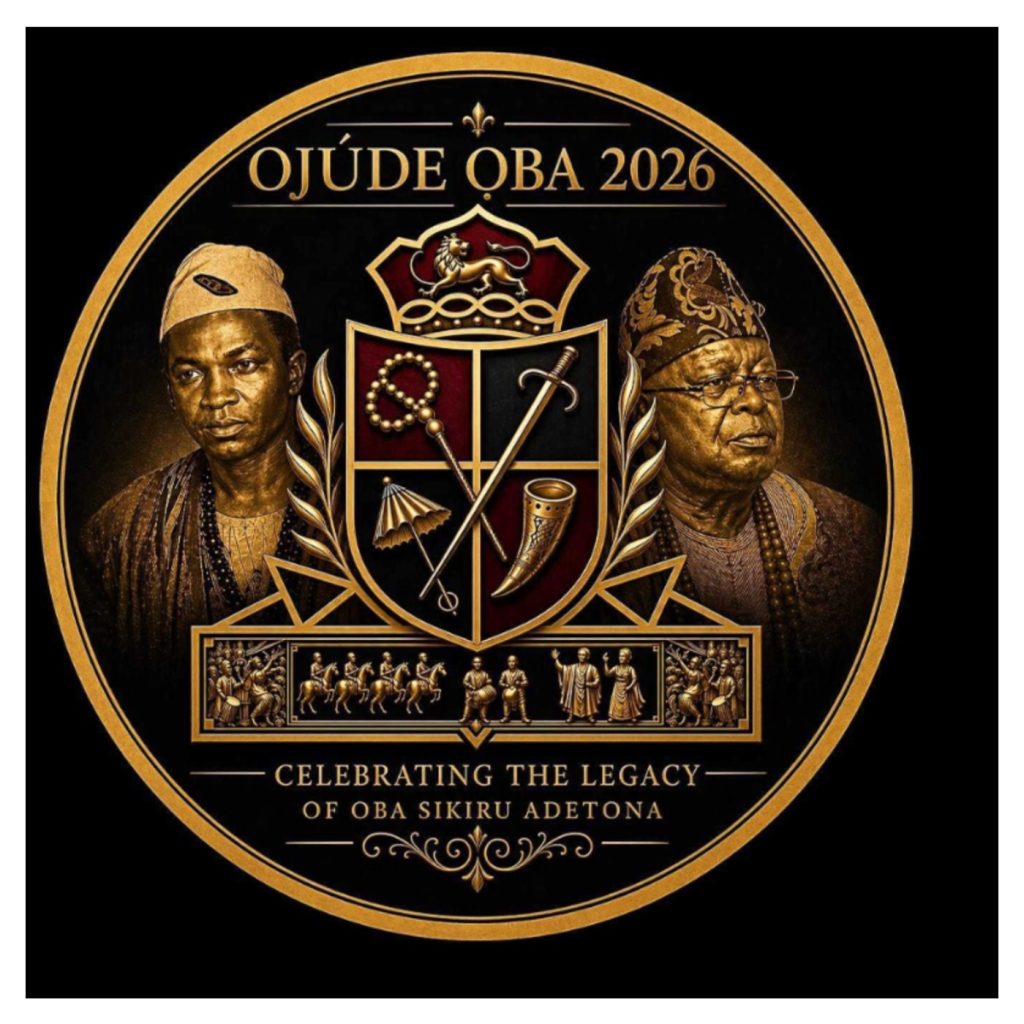
As early as 7am every third day after Eid al-Kabir, Ijebuland, Ogun State, awakens to celebrate the Ojude Oba festival. Ojude Oba (meaning "the king's forecourt), was known as far back as the 1800s to be a modest gathering of Muslim faithfuls in Ijebuland expressing gratitude to the Awujale for allowing them to practice Islam freely. However, since 2024, when the festival gained wide social notoriety, Ojude Oba has become a phenomenon bigger than the festival itself, sparking up conversations about wealth, culture, and fashion. However, the internet portrays Ojude Oba by focusing more on the Baloguns (warlords), respected family figures and older culture custodians. Little attention is given to the younger generation who are expected to inherit it. This then questions the sustainability of Ojude Oba in the hands of the contemporary younger custodians, asking what parts will they preserve, inherit and reshape.
We started the search for answers at a 7am breakfast we were invited to interview Otunba Abiodun Onanuga, the Giwa (head) of the Bobakeye Okunrin Akile-Ijebu, one of the many age grades in Ijebuland, for, as it turned out, our only meal for the day. Rich with common party food staples like rice and stew, eba and Ijebu egusi stew as well as bread and egg, the breakfast was probably one of many such pre-Ojude Oba ritual held by regberegbe(s), the age-grade groups behind the Ojude Oba's continued existence.
Aside from the delicacies and watching people eat shoulder to shoulder, we were able to catch a glimpse of the business partnerships, friendships and careers, each built over more than thirty years, expressing themselves. For the generation at this breakfast, Ojude Oba was more than showing off their culture’s uniqueness, but a chance to come together to celebrate the religion and traditions that had built the close-knit community of Ijebuland in a spectacular way and to give thanks for this. But what do the younger generation know?
As though sensing he needed more time to prepare for the festival, Otunba Onanuga suggested we come meet him at the stadium, where the festival was to take place. On our way there, we were able to take in the city’s transformation. From the Awujale Royal archway, built by Otunba’s egbe, the pulse of Ijebuland itself was palpable. Hairdressers were busily creating elaborate hairstyles and cornrows for last-minute attendees of the festival, roadside shoemakers were stitching the worn-out shoes of those responsible for putting up tents and canopies in place overnight, and market stalls were moaning beneath mountains of merchandise and faux jewellery they sold, erected by owners to tap into the economic value that came with being at Ojude Oba.
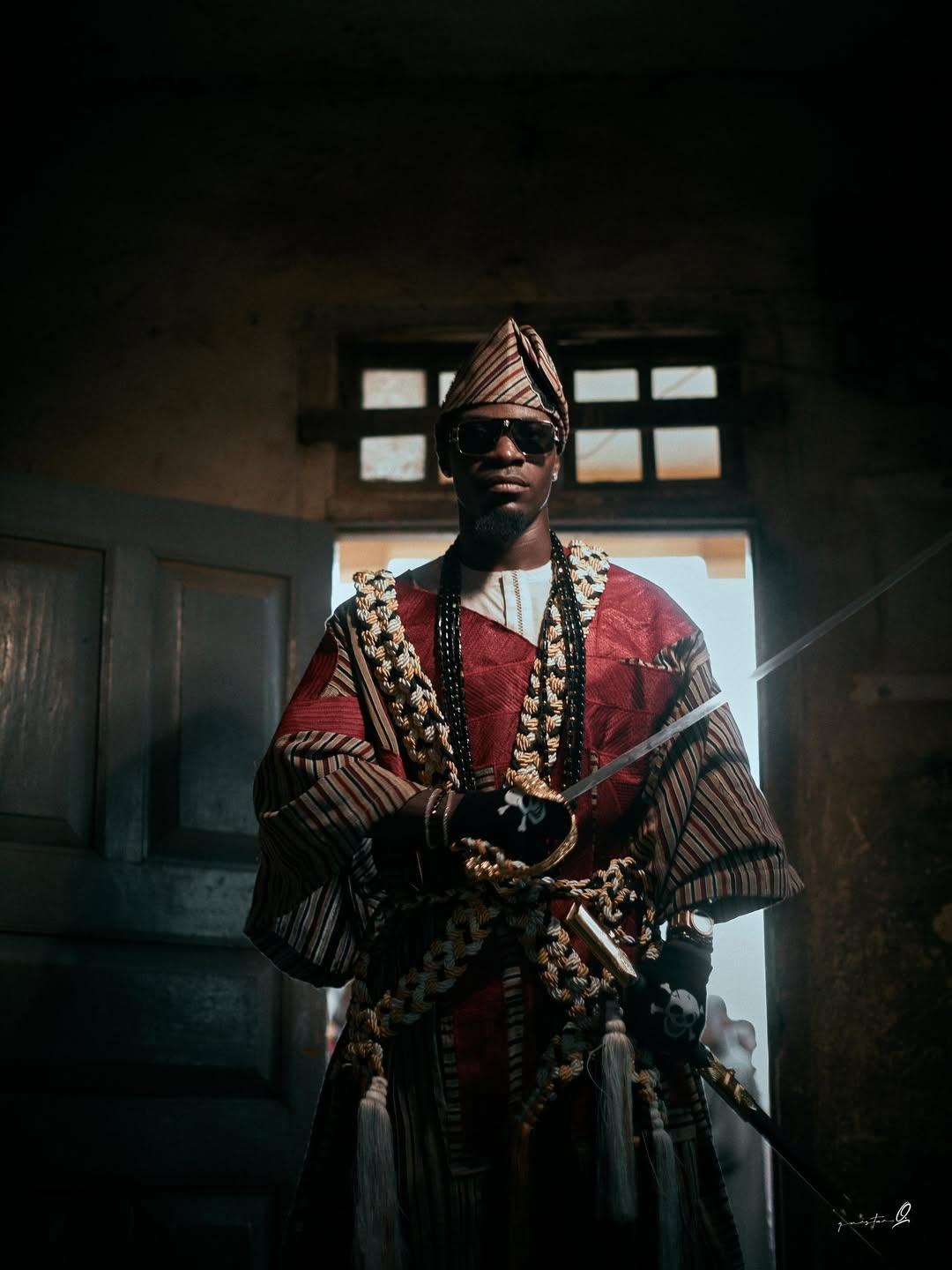
We were just in time to catch the grand entrances of the various regberegbes, both male and female, and all adorned with chieftaincy beads and symbolic wooden staffs, gaits that reflect their cultural pride, and aso-oke that commands the attention of onlookers. There’s also no forgetting the shots fired from locally made guns, which sent white smoke into the air to tell the audience of the arrival of each Balogun family. This is Ojude Oba, more than 100 years old, run by an older generation with their years of cultural experience, knowledge and wisdom.
This was definitely intimidating to us as outsiders looking in, but it seems, in conversation with Tadenikawo Alatishe, a descendant of the Balogun Alatishe family, one of the many families behind, at his ancestral home in preparation for his yearly horse riding showcase, his generation is also up to the task. “Ojude Oba means me carrying out my forefathers' legacy because they fought for Balogun and us Alatishe, who is the longest reigning Balogun in Ijebuland, so Ojude Oba means me carrying on the pride of my forefathers.” This coincides with what Fasanmi Afolabi of the Osi Balogun Adesoye, better known as Folastag, tells us. “Ojude Oba feels like Christmas to me. It's a tradition, and because it's something I have experienced for over 20 years, it's almost like a part of me. It's something I look forward to every year”
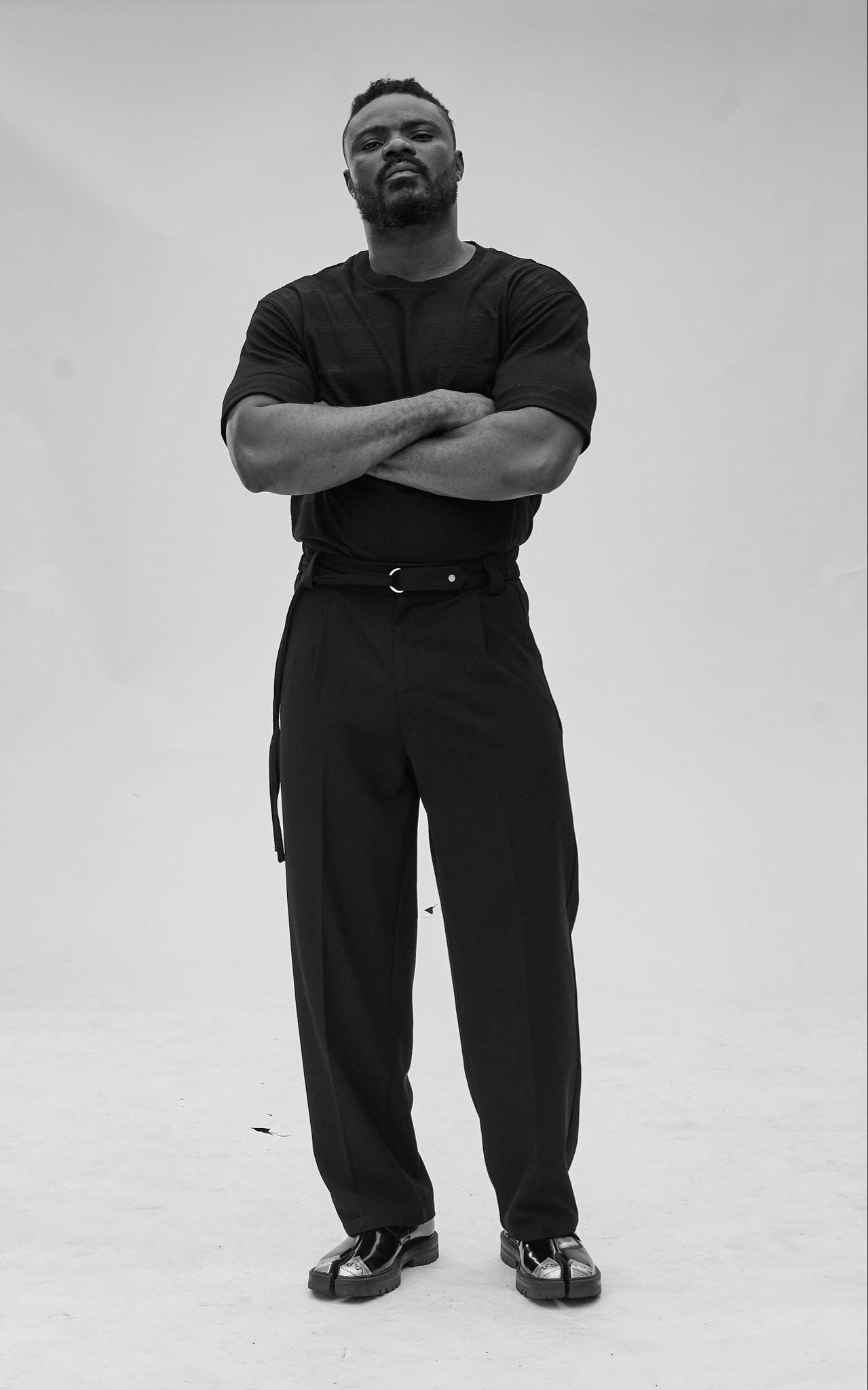
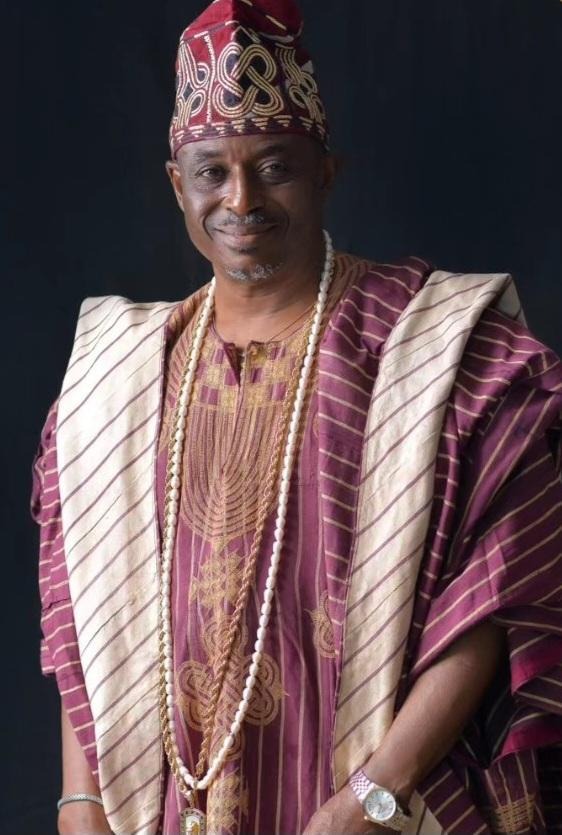
Otunba Onanuga gave us a bigger picture.“It has been in existence for over 200 years. It's an age-long thing handed from generation to generation, and our group started coming here to pay homage to the Awujale of Ijebuland 30 years ago. The objective and main purpose is to appreciate God and to come and show appreciation and solidarity with our king, the Awujale, the paramount ruler of Ijebuland”. From these responses, we notice that beyond the public celebration, Ojude Oba is a festival that displays familial legacy, personal attachment, and cultural responsibility that members of the younger generation hold themselves to as it concerns Ojude Oba.
Yet, optimism is easier to declare than verify. Younger generations reinterpret traditions rather than inheriting them unchanged, like how we’ve reinvented traditional marriage rites with unconventional wedding choices such as shorter ceremonies and smaller guest lists. This then asks if love for tradition, lacking the deep institutional knowledge of elders, would be enough for Ojude Oba to survive into the next generation. Tadenikawo believes, presently, that the festival matters to the youths just as much, seeing as they “didn’t care so much about Ojude Oba, only the elders. But for the past few years, like 4 - 5 years ago, there’s been encouragement for the youths because if there are no youths involved, the festival would die off. If you check, there are young people riding horses now”.
Folastag tells us he is just as confident, although from a pragmatic perspective. “I feel like it can survive the generations to come, especially with the pickup it had with social media, where young people thrive a lot. I feel like young people are looking to tap into it more because it's exciting: the horses, the clothes, as well as the vibes that come with it”. His photographs defined Ojude Oba’s virality in 2024, bringing the festival to the attention of audiences outside Nigeria. Otunba Onanuga answers that “It is a day when all the sons and daughters of Ijebuland all over the world come to appreciate the king, and we have taken it to another level. Ojude Oba has come of age now as an international festival exhibiting our cultural values...”
The economics also bear mentioning, as preparation for the festival takes place months prior. Calls are placed to fashion designers and tailors, and preparations are made for accommodation. The horses for the event are sourced from the famed equestrian markets of Kano and Maiduguri. Nigeria’s economy hasn’t been a favorable one in recent years, yet for the elders, this does not seem to diminish their ability to move between economic and financial shelves with the ease of muscle memory to orchestrate the festival. Tadenikawo believes that his generation is also up to task because, as he tells us, “they’ll be able to because, for you to come from a royal family, even though you may not be financially capable, your family would be willing to support you”. Folastag equally supports this notion, noting how young people are always ready to spend on “things that are not like Ojude Oba, young people spend on them. Things that'll get people to talk,” further mentioning that “A lot of people save like a whole year just to be a part of it”.
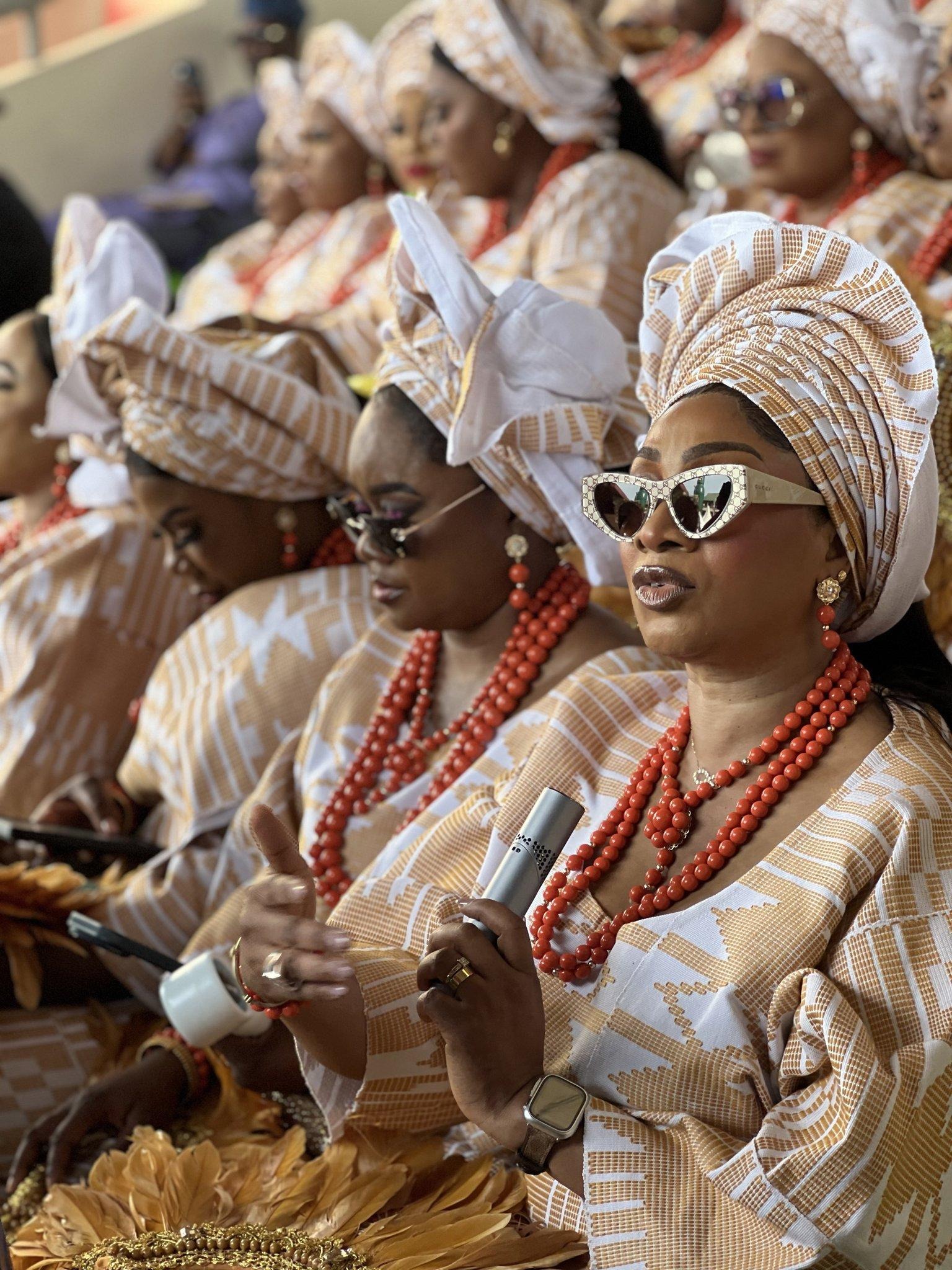
For Otunba Onanuga, the expenditure matters little compared to the economic value that comes with the festival itself, as Ojude Oba, “If you know the commercial value it adds to Ijebuland, it is immeasurable. It is a festival that generates revenue for the locals. The apparel we’re wearing now, for example, is made and sewn in Ijebuland. And those people making the apparel, you can imagine how much they’ll make. I can tell you that the tailors who made our clothes must have collected over ₦1,000,000,000, and so also many other people”. This then reminds me of the hairdressers and jewellery sellers we saw earlier in the day. Ojude Oba means more than cultural duty. Rather, it is an economic institution that sustains livelihoods, one that the younger generation can’t imagine life without and are ready to do what it takes for its survival.
If there is one thing Ojude Oba has demonstrated in recent years, which we also noticed, it’s that tradition can not exist in isolation from change, which Tadenikawo traces to “2024 was the year Ojude Oba garnered a lot of recognition. From the onset, the festival didn’t really have a lot of outside interest. Only people from Ijebu were interested until Folastag took pictures of Farouq Oreagba in 2024, and it went viral. In 2025, the virality brought so much crowd that everywhere was choked; people and horses fainted”. While the increased attention has elevated Ojude Oba's profile far beyond Ijebuland, it has also introduced concerns about managing a festival that now attracts audiences much larger than those it was originally designed to accommodate.
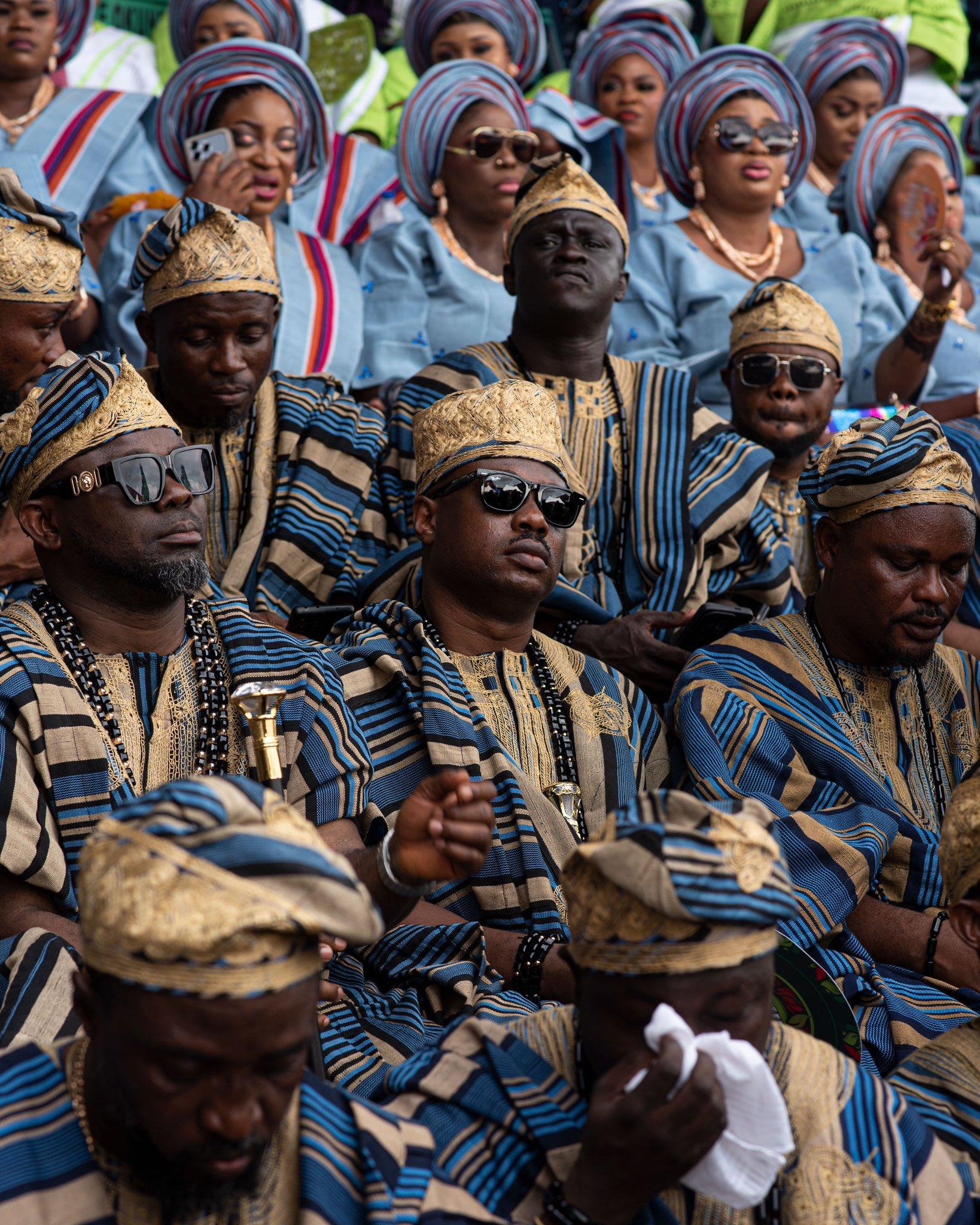
Folastag, who is responsible for that virality, shares a similar observation. “The changes I have noticed are both good and bad. In terms of good, the festival is bigger, wider and louder now. A lot of people want to be a part of it. The bad part is that people just want to join for clout, especially people who don’t even know the story behind it. Another bad thing might be that the space is getting smaller. I am hoping that next year, they find a bigger spot to make it happen.”
For Otunba Onanuga, however, the most important change lies not in virality but in participation. He points to the increasing involvement of younger people as evidence that the festival continues to resonate across generations. “The younger people are getting more interested by the day. You can see that the regberegbe continues to spring up. Now, we came out 30 years ago, and you can imagine how many more egbes that have come out after us. Now we have over 50 regberegbes now, and that is 50 main branches, and there’s over 100 groups within the regberegbe. That is to let you know that the younger ones are getting more and more interested, and we’re passing down those values to them.” These replies tell us that while Ojude Oba may look different from how it did decades ago, its ability to attract new participants remains one of its greatest strengths. However, the challenge is not whether change will come, but how it will be managed.
Asking each of them what should change and what shouldn’t, an agreement can be implied, firstly, from Folastag, who feels that preserving the essence of the festival is important, seeing as “a lot of parts may not change because it is what it is: it is tradition; it is culture. By the time you start removing some parts and fine-tuning it, we would lose the essence of Ojude Oba itself, and it might start becoming something else.”
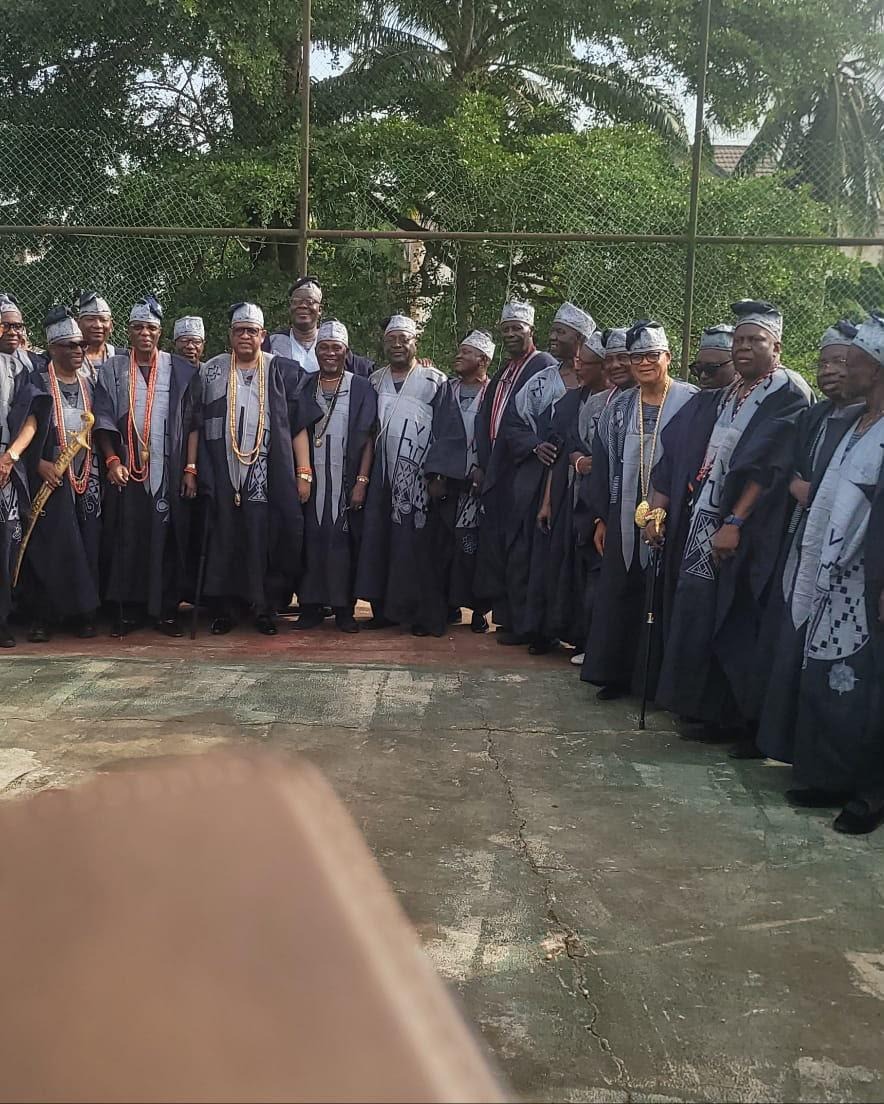
Rather than changing the traditions themselves, Tadenikawo believes attention should focus on accommodating more participants and spectators. “We are talking to the committee to expand the venue since more people are attending the event. Before, people rode on horses for prestige and position; now, everyone wants to ride for the fun of it,” describing to us how the motivations of participants may evolve, even when the traditions themselves remain intact. Otunba Onanuga impressed on us the fact that evolution is not something to be resisted but embraced. “We’ll continue to improve. Ojude Oba is a dynamic festival which continues to improve year after year. What we did last year is different from what we are doing this year, and what we’ll do the year after would be better than this year.” Taken together, these perspectives suggest that the future of Ojude Oba lies in balancing continuity with adaptation through preserving the values that define the festival while responding to the realities of its growing popularity.
This balance becomes even more important when considering the future generations that will inherit the festival in years to come. Beyond participation, the question remains: what will make future generations feel that Ojude Oba belongs to them rather than simply being a tradition passed down by their elders? Otunba Onanuga believes the answer lies in embracing the possibilities of how quickly our world changes. “The world is growing more [technologically]. 30 years ago, we didn’t have social media. Nowadays, social media is coming in. We don’t know what is going to come in the next couple of years.” Folastag believes that attachment to the festival is often built through experience and participation over time. “The excitement, the joy, the nostalgia that comes with it, because for me now, every year, I’m always around in Ijebu. This year is the first time I’m coming to the event on the day of the event. I’m usually around 2 weeks prior. I was like, I didn’t want to come, but calls were coming in that won’t I come? And because I’ve been a part of it as a child and they’ve seen me over time participate in it, they still want me to be a part of it. I feel like if more people add to it, I feel more young people would want to join and be part of it.”
For Tadenikawo, however, the future of Ojude Oba ultimately depends on knowledge and continuity. “We have like 26 families, 18 Eleshins, non-Baloguns who followed the lead of the Baloguns in ancient wars, and then 10 Baloguns. Until the early 2000s, there was no distinction between them. So, the younger generations would need to inherit it from their forefathers to be able to know of the traditions of the festival that existed before they were conceived; that way, it stays intact and still feels like their own.” In many ways, their responses arrive at the same conclusion: either through technology, participation or inherited knowledge, Ojude Oba would continue. More importantly, future generations would be eager to inherit Ojude Oba based on the precedent already laid down. The horses will continue to ride, the regberegbes will continue to gather, homage will still be paid to the Awujale and, more importantly, the next generation will remain eager to carry it on, suggesting very interesting times ahead for Ojude Oba.
IG: @anuhola_,@muyiwavstheopp


.png)

