.svg)

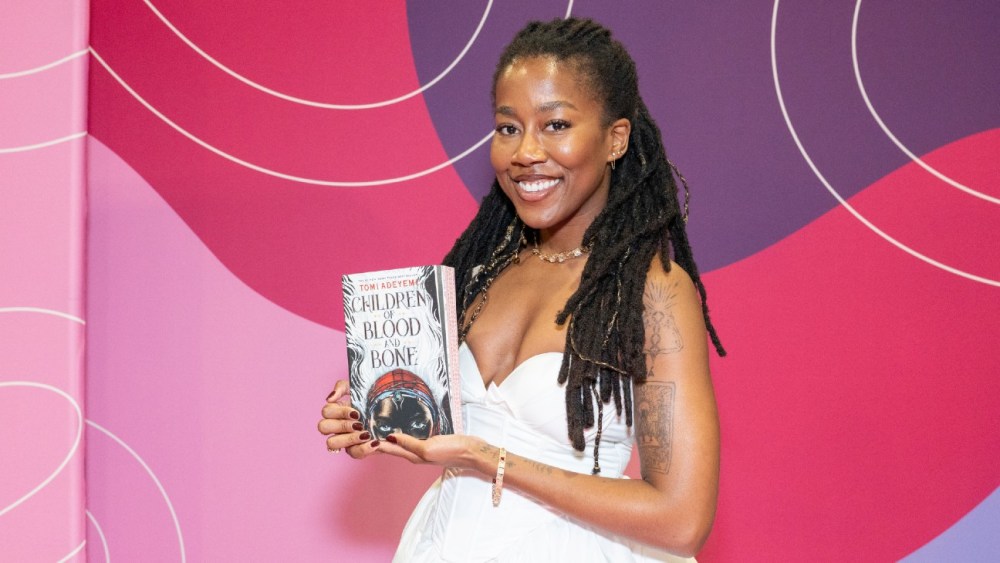
The public fallout surrounding Tomi Adeyemi's film adaptation has dominated headlines. But the project's turbulent journey to the screen reveals the complicated bargain between Black storytelling and the limits of creative control inside Hollywood.
With only months left before Children of Blood and Bone arrives in cinemas, the fantasy epic has caught headlines recently when author Tomi Adeyemi publicly announced that she was distancing herself from the film adaptation of the novel that made her one of contemporary fantasy's most exciting new voices. In a series of Tiktok posts, Adeyemi said she would neither promote nor watch the finished film, describing years of emotional strain during the adaptation process before declaring that she was "officially separating" herself from the project. What followed was a wave of online speculation after she shared screenshots of private messages exchanged with one of the cast members, actor Amandla Stenberg; reigniting conversations about casting, colourism and creative disagreements that had lingered around the adaptation for years.

For context, Children of Blood and Bone isn’t just another film adaptation. From the moment Hollywood began competing for its rights in 2017, the award-winning literary work has stood for something larger: one of the first blockbuster fantasy franchises rooted unapologetically in Yoruba cosmology, West African history and Black cultural memory. It arrived carrying enormous expectations–not only as a commercial property but as a cultural milestone that many hoped would do for African-inspired fantasy what Black Panther had done for superhero cinema.
With almost 9 years in, the journey from page to screen has become an unusually revealing case study of what happens when culturally specific Black stories enter Hollywood's blockbuster machine. In an industry coupled with studio mergers, production delays, fan expectations, colourism debates and ultimately, the uneasy limits of authorial control once hundreds of millions of dollars begin shaping a creative vision. The recent fallout only simply makes those tensions impossible to ignore.
After its publication in 2018, Children of Blood and Bone became an instant commercial hit and a massive fan favorite. Drawing from Yoruba spirituality and West African traditions, Adeyemi imagined the kingdom of Orïsha, where magic had been violently erased and a new generation fought to reclaim what had been stolen. While the novel embraced familiar fantasy conventions–a chosen hero, political conflict and epic quest–it distinguished itself through a world rarely afforded such scale in mainstream publishing.
Readers found dragons, kings and revolution, but they also found names, belief systems and histories that reflected African traditions rather than medieval Europe. At a time when publishing was slowly beginning to embrace more diverse fantasy worlds, Children of Blood and Bone became proof that Black-centred speculative fiction could achieve both critical acclaim and commercial success.
And Hollywood noticed almost immediately. Before the novel had even reached bookstore shelves, Fox 2000 acquired the adaptation rights in what quickly became one of publishing's most talked-about film deals. It seemed like the ideal trajectory: an acclaimed debut novel, a major studio investment and an opportunity to build a large-scale fantasy franchise led predominantly by Black actors.
Then came Disney's acquisition of 21st Century Fox. Like many projects caught within the merger, Children of Blood and Bone entered a prolonged period of uncertainty and development slowing. Years passed with little visible progress leaving fans wondering whether one of the decade's most anticipated Black fantasy adaptations would ever materialise.
Eventually the project found new life at Paramount Pictures, with filmmaker Gina Prince-Bythewood taking over directing duties. Known for balancing intimate character work with large-scale action in films such as The Woman King and The Old Guard, Prince-Bythewood appeared to many fans to be a reassuring choice. Paramount assembled an expansive ensemble cast featuring Thuso Mbedu as Zélie, Tosin Cole as Tzain, Damson Idris as Inan, Amandla Stenberg as Amari, alongside veterans including Viola Davis, Idris Elba, Cynthia Erivo and Chiwetel Ejiofor.

Children of Blood and Bone's (from left) Chiwetel Ejiofor, Regina King, Gina Prince-Bythewood, Thuso Mbedu, Amandla Stenberg, and Damson Idris arrive for the Paramount Pictures 2026 CinemaCon presentation at The Colosseum at Caesars Palace in Las Vegas. Candice Ward/Getty Images
But the adaptation became the subject of intense debate on how it would represent the very cultures that inspired it, way before production even began. The loudest conversations centred on colourism. Many readers had long understood Zélie as a visibly dark-skinned heroine whose appearance carried political significance within Adeyemi's world. Fans scrutinised every casting announcement through that lens, questioning whether Hollywood's longstanding preference for lighter-skinned Black women was once again shaping the visual language of a story explicitly rooted in African identity. Others defended the casting choices, arguing that reducing actors to skin tone ignored their performances and reinforced another form of gatekeeping. Neither side was really arguing only about casting.
Their arguments about representation–not simply whether Black actors had been cast, but which Black bodies continue to be seen as commercially desirable, globally marketable and worthy of occupying the centre of blockbuster fantasy–echoed conversations that have followed Hollywood for decades, where diversity is often easier to celebrate than specificity. Understanding the core of Children of Blood and Bone is to know that it promised more than representation but rather cultural translation, a subject that hasn’t historically been Hollywood’s forte.
The challenge is not unique to Children of Blood and Bone. It is built into the economics of blockbuster filmmaking itself. Hollywood has become increasingly willing to finance stories centred on non-Western cultures, but those stories often must pass through production systems designed to maximise global accessibility. The goal is not necessarily to erase cultural specificity but to make it immediately legible to audiences across dozens of international markets. In practice, that can mean familiar narrative beats, recognisable character archetypes and emotional arcs that fit comfortably within the conventions of contemporary franchise cinema.
There is nothing inherently wrong with a three-act structure or the hero's journey. Most stories, regardless of their cultural origins, share common narrative patterns. The tension emerges when the industrial demands of blockbuster filmmaking begin to outweigh the rhythms, philosophies and worldviews that make a particular mythology distinct in the first place.
Yoruba cosmology has never simply been a collection of fantastical creatures or magical powers. It is a living spiritual tradition built around interconnected relationships between ancestors, deities, nature and community. Its cosmology resists neat binaries of good versus evil, often privileging balance, reciprocity and moral complexity over singular heroes destined to save the world alone like those often depicted in the West.
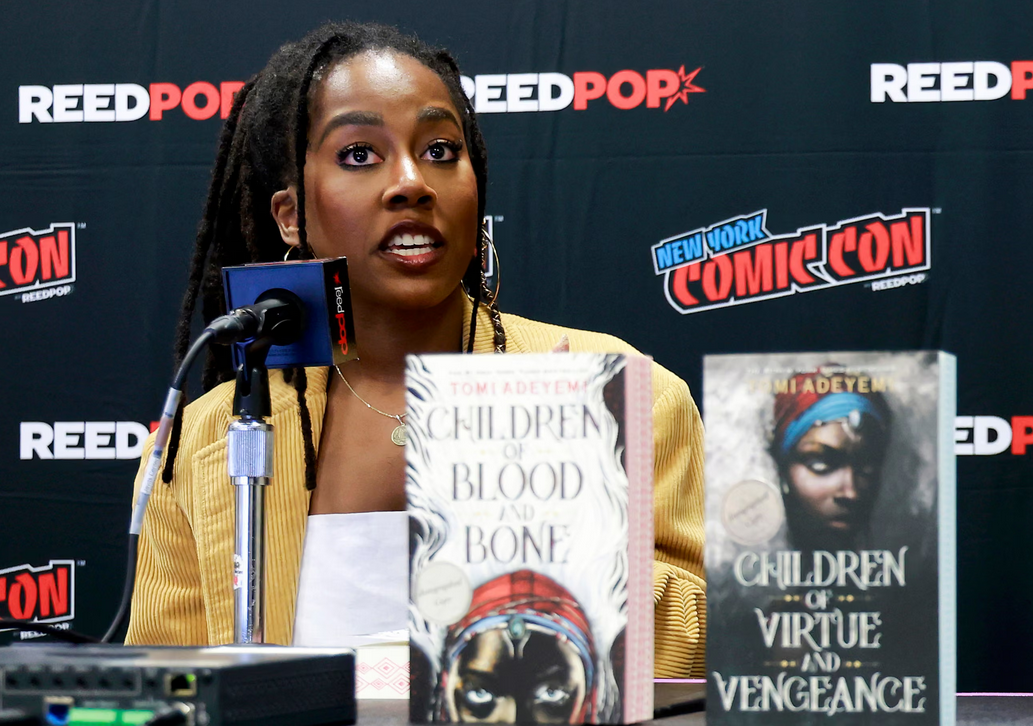
Adeyemi's novels draw inspiration from that tradition while creating their own fictional universe. They are not direct retellings of Yoruba mythology, but they borrow its philosophical texture–its understanding of power, lineage and spiritual inheritance. Translating that texture into a two-hour blockbuster is an enormous creative challenge. It requires more than reproducing African-inspired costumes or landscapes. It asks whether Hollywood's dominant storytelling language is capable of accommodating worldviews that were never designed around Western narrative assumptions.
That question has followed countless adaptations before this one. What makes Children of Blood and Bone particularly revealing is that the conversation has been very public.
The same is true of the debates surrounding colourism. Much of the online discourse reduced the controversy to a question of whether individual actors were "right" or "wrong" for their roles. But beneath those arguments seats a deeper frustration about visual politics. For many readers, the appearance of characters like Zélie was never incidental. Dark skin was not merely descriptive; it carried symbolic weight in a story deeply concerned with power, hierarchy and oppression.
Hollywood's history has made audiences especially sensitive to those choices. For decades, darker-skinned Black women have struggled for equal visibility in leading roles, while lighter-skinned performers have often been positioned as more commercially palatable within global entertainment industries. Whether or not one believes the casting of Children of Blood and Bone reinforces that pattern, the intensity of the reaction demonstrates how audiences increasingly understand representation as a question of nuance rather than numbers.
It is no longer enough for a film to say it centres Black characters. Viewers are asking which Black identities are centred, whose features are considered beautiful, whose bodies are considered heroic and which versions of Blackness continue to be celebrated while others are shunned.
That shift reflects a growing sophistication among audiences. Representation is no longer measured simply by presence. It is measured by precision. Yet perhaps the most revealing development arrived only last week, when Adeyemi herself stepped away from the project. For years, the adaptation had been presented as an example of meaningful collaboration between a bestselling Black author and a major Hollywood studio.
Adeyemi received executive producer credit and was initially involved in developing the screenplay. From the outside, it appeared to embody the industry's evolving commitment to giving creators greater influence over adaptations of their work.
Her public statements however, complicated that narrative. While the details of what occurred behind the scenes remain known only to those directly involved, Adeyemi's decision to distance herself from the finished film stating, “...I can’t keep being hurt and attacked behind the scenes,” highlights an uncomfortable reality about contemporary franchise filmmaking: participation does not necessarily equal control.

An executive producer credit can signal involvement, advocacy or consultation, but it rarely grants final authority over a production of this scale. Once a project enters that all too well ecosystem of studio executives, financiers, producers and international distribution strategies, authors inevitably become one voice among many. Creative decisions are negotiated through commercial priorities, production logistics and the collective interests of an enormous filmmaking apparatus.
That does not mean studios inevitably compromise artistic integrity, nor does it mean Children of Blood and Bone cannot emerge as an exceptional film. Cinema is filled with masterpieces born from difficult productions and creative disagreements. Audiences should ultimately judge the adaptation on its own merits rather than on speculation surrounding its development.
But the production's history remains instructive regardless of the film's eventual reception. In many ways, Children of Blood and Bone exposes/is exposing the paradox facing Black creators in Hollywood today. The industry has become more willing than ever to invest in stories rooted in the continent’s culture. Yet those stories still enter institutions built around commercial imperatives that often diffuse individual creative authority.
One thing we can finally agree on however is that visibility is expanding but power remains negotiated. Children of Blood and Bone may still become the landmark fantasy adaptation many readers have hoped for since 2018. It may introduce millions of viewers to an African-inspired world unlike anything previously attempted at this scale. It may prove that stories rooted in motherland traditions can thrive within the commercial architecture of global blockbuster cinema.



.png)

