.svg)

.JPG)
Haute Couture Week has always been fashion's grandest stage. It’s where fantasy, craftsmanship and artistry collide in ways that ready-to-wear simply cannot. However, this season in Paris, the most memorable collections were not necessarily the loudest.
There were, of course, moments of spectacle: glowing latex gowns, sculptural silhouettes that defied gravity, and dramatic entrances worthy of couture's theatrical reputation. But beyond the visual extravagance, many designers returned entirely to craft. Hand embroidery, experimental textiles, centuries-old techniques and sculptural construction took precedence over gimmick, making this one of the strongest couture seasons in the past few years.
It also felt like a pivotal week for some of fashion's biggest houses. Jonathan Anderson continued defining a new era at Dior, Pierpaolo Piccioli made his highly anticipated couture debut at Balenciaga, while Daniel Roseberry once again proved why Schiaparelli is one of the most exciting maisons working today. Beyond the established names, Rahul Mishra continued making a compelling case for why couture's future is becoming increasingly global. If there was one takeaway from the week, it was that couture is no longer simply about excess. It is about execution.
Rahul Mishra delivered the week's strongest collection
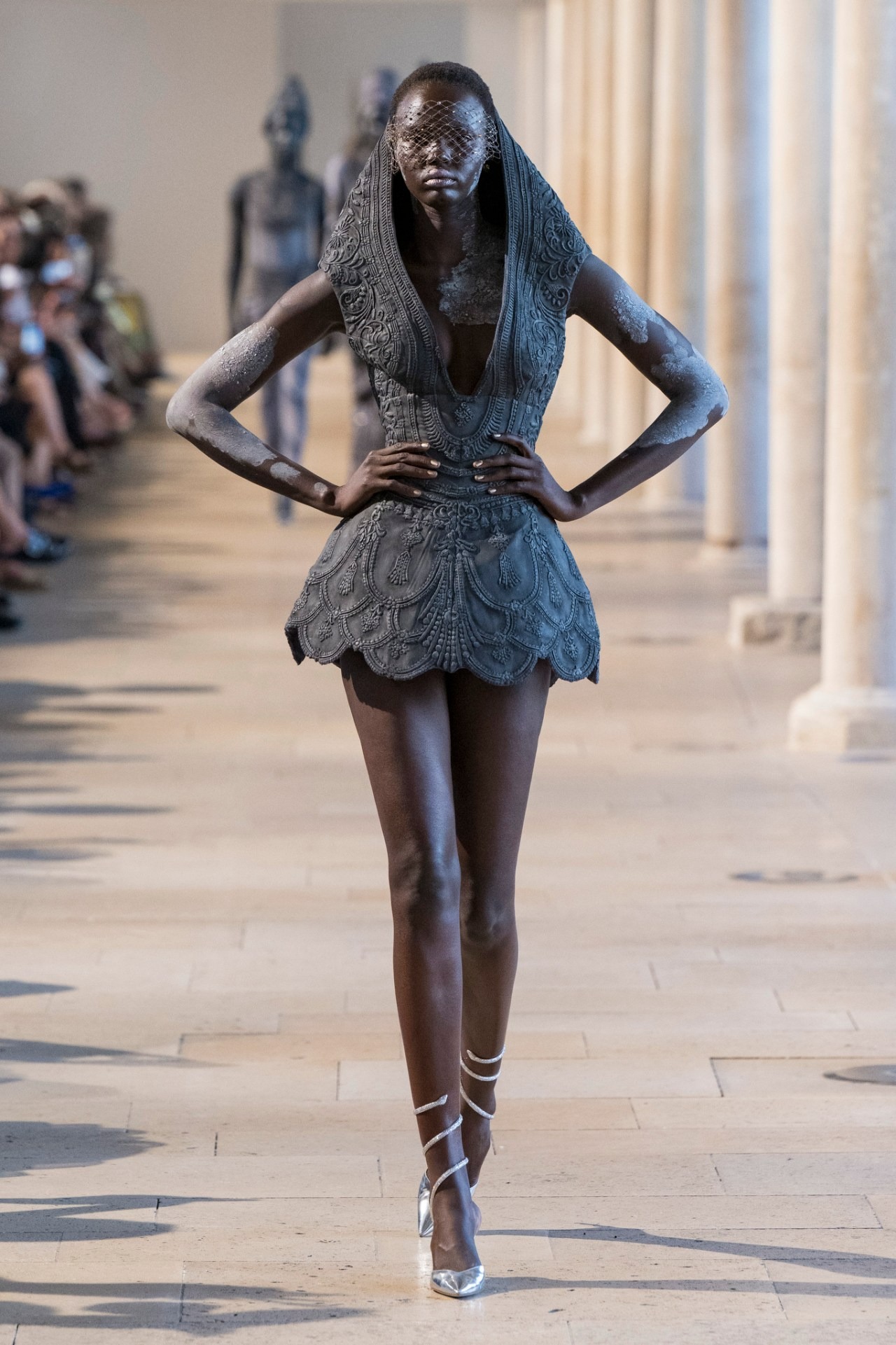
Among an exceptionally strong schedule, Rahul Mishra's Devi: The Eternal Muse stood apart.
Inspired by India's ancient temple sculptures and the eternal feminine, the collection transformed couture into sculpture through thousands of hours of hand embroidery. Mishra built breathtaking garments through accumulation and layers upon layers of zardozi, dabka, crystals and bugle beads until the surfaces appeared carved.
What made the collection so successful was not just the level of craftsmanship, though that was extraordinary. It was the discipline behind it. Couture embroidery can easily become excessive, overwhelming the silhouette beneath. Mishra avoided that trap entirely. Every embellishment served the garment's structure, creating movement, depth and dimension without ever feeling ornamental for ornament's sake.
Collaborations with clay artisan Sumant Kumar, milliner Stephen Jones and Tanishq Natural Diamonds reinforced the collection's commitment to celebrating Indian craftsmanship across multiple disciplines.
Perhaps most importantly, Mishra continues to challenge traditional ideas of where couture excellence originates. He doesn’t position Indian craftsmanship as an influence on European couture, but places it at the very centre of the conversation. At a time when luxury fashion increasingly speaks about global craftsmanship, Mishra is one of the few designers genuinely redefining what the couture canon can look like.
Schiaparelli remains couture's greatest risk-taker

Daniel Roseberry has built Schiaparelli into one of Paris' most consistently fascinating houses because he refuses to think about clothing conventionally. His Autumn/Winter 2026 collection, The Call of the Void, emerged from a period of creative uncertainty, prompting Roseberry to abandon familiar techniques in favour of complete experimentation. Latex replaced silk, silicone became fabric, sculpted paint formed garments, while preserved flowers, shells and treated fish scales found unexpected new life through couture. The collection felt almost extraterrestrial. Models emerged like surreal sea creatures, glowing from within as sculptural silhouettes twisted and reshaped the human form.
What makes Roseberry's work compelling is that every season begins with a completely different question, continuously reinventing Schiaparelli's visual language.
That said, there were moments where the concept threatened to overshadow the clothes themselves. Certain looks functioned more successfully as sculptural objects than wearable couture. But perhaps that is precisely the point. Schiaparelli has never existed to produce conventional elegance. It exists to provoke curiosity.
Few designers working today embrace creative risk with this level of conviction.
Jonathan Anderson's Dior is beginning to find its rhythm
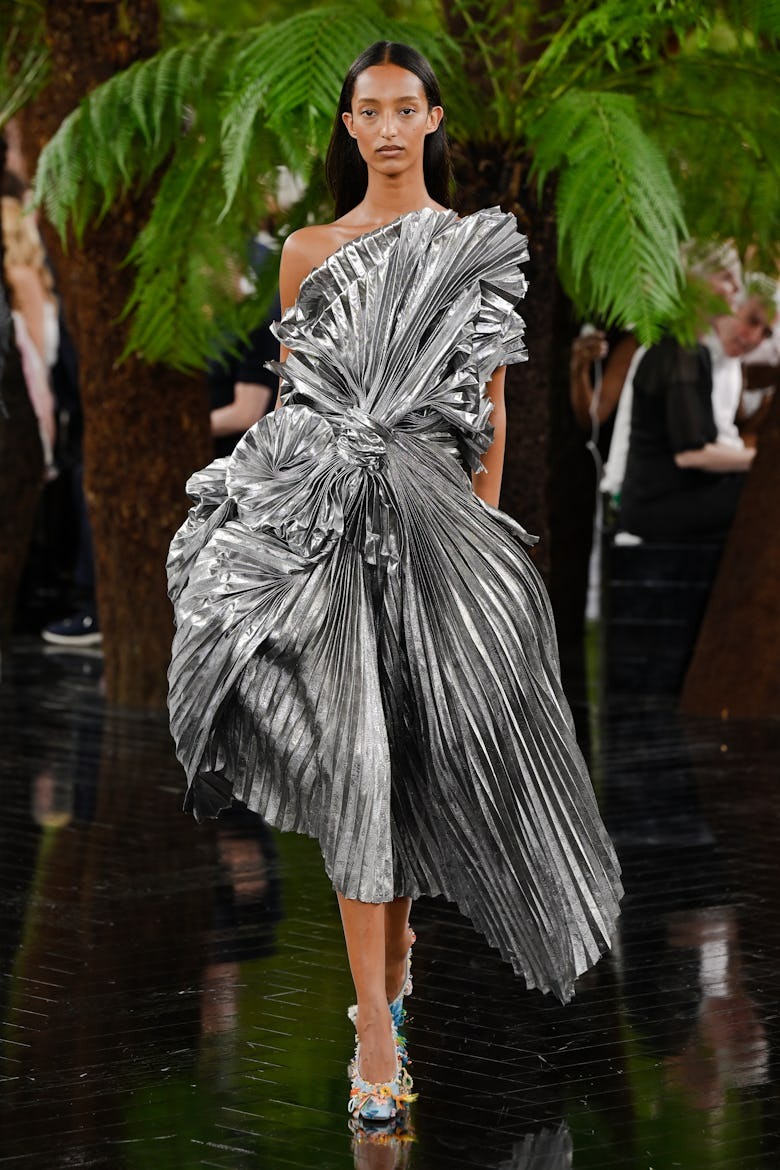
Jonathan Anderson's second couture collection for Dior felt considerably more assured than his first. Drawing inspiration from American sculptor Lynda Benglis, the collection translated sculptural form into clothing through elaborate draping, hand-plissé, metallic textiles and richly manipulated fabrics. Floral appliqués, sparkling tweeds and cascading fringe transformed the runway into something resembling a moving gallery exhibition.
Anderson also continued exploring Dior's relationship with global craftsmanship, incorporating eighteenth-century Indian chintz, floral references inspired by Gujarat and jewellery produced by artisans working between Jaipur and France.
The collection succeeded because it never became overwhelmed by its references. Benglis' work informed the clothes without becoming literal, while the textile experimentation felt genuinely integrated rather than academically researched.
Still, Anderson appears to be searching for Dior couture's emotional identity. The technical accomplishment is unquestionable, but there were moments where the intellectual framework felt stronger than the garments themselves. His ready-to-wear collections already possess remarkable confidence; couture may simply require more time before its emotional language becomes equally distinct.
Nevertheless, Dior continues moving in an exciting direction under his leadership.
Pierpaolo Piccioli brings romance back to Balenciaga

Few collections arrived with higher expectations than Pierpaolo Piccioli's couture debut at Balenciaga. Known for transforming Valentino through colour and emotion, Piccioli approached Cristóbal. Balenciaga's legacy without attempting to imitate either the founder or his immediate predecessor, Demna. Instead, he introduced warmth.
Electric pinks, luminous greens, saturated oranges and sweeping monochromatic tailoring softened Balenciaga's architectural precision without compromising its sculptural integrity. Hooded cloaks, dramatic feathered gowns, exaggerated hourglass silhouettes and fluid eveningwear demonstrated Piccioli's remarkable understanding of couture volume.
The collection also introduced notable technological innovations. Three-dimensional body scanning allowed the atelier to create entirely new mannequins for leather construction, while Amsilk, a bioengineered silk alternative developed through protein engineering, offered an intriguing glimpse into couture's evolving relationship with material science.
At times, those technological developments risked becoming a larger talking point than the clothes themselves. Fortunately, Piccioli's strongest looks required no explanation. Their beauty lay in proportion, movement and impeccable construction. His Balenciaga feels refreshingly sincere.
One of the most interesting threads connecting this couture week's collections was their relationship with materials. Roseberry experimented with silicone and latex. Anderson manipulated metallic textiles into sculptural forms. Piccioli introduced bioengineered silk alternatives. Rahul Mishra elevated centuries-old embroidery into architectural construction. Designers increasingly approached it as something capable of evolving through collaboration, technology and experimentation. It also reinforced an important distinction between haute couture and luxury ready-to-wear. Couture remains one of the few spaces within fashion where designers are still afforded the time, resources and atelier expertise to genuinely experiment.
If there was one critique of the season, it was that a handful of collections still equated complexity with impact. Couture can sometimes fall into the trap of demonstrating technical ability simply because it can, layering embellishment upon embellishment until craftsmanship begins to obscure silhouette.
However, these selected collections resisted that temptation. Rahul Mishra exercised remarkable restraint despite extraordinary embroidery. Dior allowed sculptural techniques to enhance rather than dominate the garments. Even Balenciaga, despite its dramatic palette, remained grounded in impeccable tailoring. Only Schiaparelli occasionally crossed into theatrical excess, though the house has arguably earned that creative freedom. Roseberry understands that couture should sometimes feel unsettling as much as beautiful.
Paris Haute Couture Week reminded us why couture continues to occupy such a unique place within fashion. Collectively, the week suggested that couture is entering a fascinating new chapter. Designers no longer seem interested in proving how extravagant they can be. Instead, they're asking a more compelling question: how can extraordinary craftsmanship make us look at clothing differently?
This season offered several convincing answers.


.png)

