.svg)

On Monday last week I woke up sizzling with excitement over the 79th British Academy Film Awards (BAFTA). In the days and weeks before, I had engaged friends and film enthusiasts in effervescent conversations regarding the awards—which is perhaps an elegant way of saying I trotted out my predictions to anyone who cared to listen. On the night of the show, I considered staying up to follow the event, but the prospect of getting updates alongside the discordant tweets I knew awaited me the next morning seemed more alluring.
At the crack of dawn, as shafts of amber-hued sunlight pushed through my blinds, I grabbed my phone and immediately typed in the keywords: “BAFTA,” “Winners.” What popped up left me completely shell-shocked. Award shows, by their very nature, tend to elicit drama but not even in my wildest dreams did I imagine a white man yelling the N-word at two black actors. In hindsight, foreclosing the possibility of this terrible gaffe seems a tad too generous on my part. John Davidson, the offender, suffers from Tourette’s and has been known to hurl obscenities especially when the situation demands utmost civility.
In the hours that followed, the scandal filled up my social media timeline. Opinions were split between indicting Davidson and defending him. Amid the bedlam, one thing became clear: in this case, there are no easy answers, no tidy narratives with a clear aggressor and victim. Like the BAFTA controversy, the other topics I interrogate in this installment of Pop Takes—an original column in which I interrogate some of the most culturally relevant Pop culture topics—defy easy resolutions. Against the backdrop of an endlessly polarized political landscape, I hope that in working through these topics, walking the tightrope between showing empathy and holding on to our values, we’re reminded of the importance of applying nuance to situations and defying the tyranny of binary logic: two truths can, and very often do, coexist.
Unpacking The BAFTA Debacle
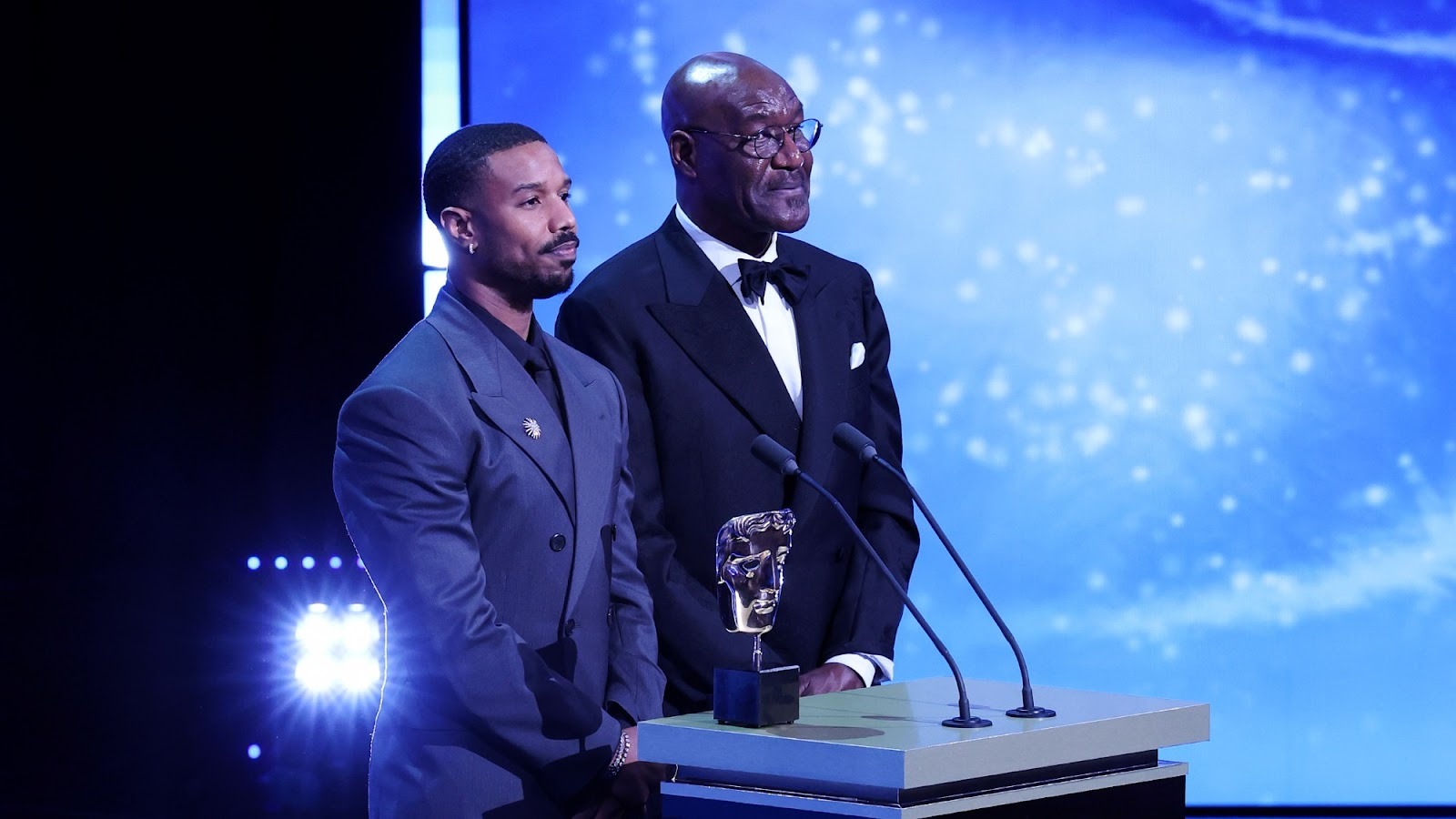
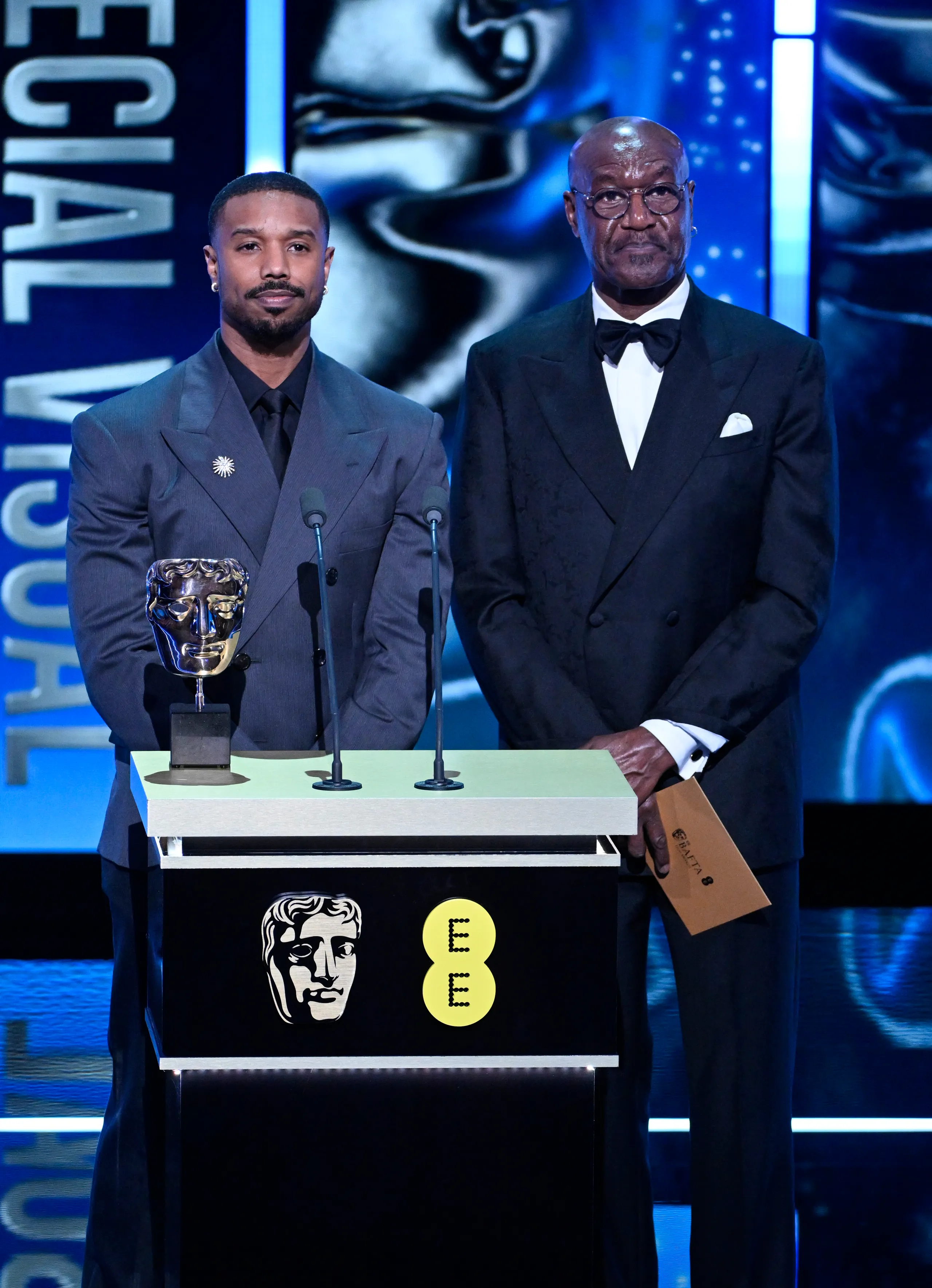
Dressed in crisp dark suits, Michael B. Jordan and Delroy Lindo stood behind the lectern, poised to deliver the first BAFTA of the night when a word drifted from behind the hall—40 rows behind the stage—sending the 2,700-seater hall filled with the crème de la creme of the movie business into an eerie silence. Those few seconds of silence seemed to last for ages and while Jordan would retain his characteristic stoicism, Lindo's jaw slacked with bracing alacrity, his mouth a door wide ajar. Tourette Syndrome activist John Davidson had blurted out the N-word, putatively spurred on by his implacable tics. Davidson was in attendance for the film ‘I Swear’, nominated in several categories, and inspired by his life. Expectedly this incident has left social media simmering with forceful debates, recriminations, and polemics. Why was Davidson allowed access to a microphone when his tics are a matter of public knowledge? Is Tourette’s syndrome simply a smokescreen for what appeared to be unvarnished racism? What is the path forward from all of this?
This is a conversation that resists simplistic resolutions, the binary logic we love to apply when adjudicating cultural events. It is first important to revisit what Tourette’s Syndrome is. The neurodevelopmental condition, which affects less than 1 percent of the global population, is characterized by involuntary movement and sounds—essentially your body acting in defiance of you. Davidson’s variant of the disorder, characterized by profane outbursts, is much rarer, affecting about 10-20% of the general Tourette Syndrome population.
Davidson’s history of Tourette-induced swearing is however well-documented. Years ago, as he received his MBE, he yelled “(expletive) the Queen.” He once blurted “You’re going to die” while on a visit to a woman with cancer. During the BAFTA awards, Davidson blurted out about 10 offensive words in total, including calling this year’s host Alan Cumming a pedophile. All of which is to say despite how offensive and disconcerting it was to hear that word sully a high point for two exemplary Black men, especially during Black History Month, the available evidence suggests that it wasn’t his intention to say the word.
Nonetheless, two truths can coexist. We can acknowledge that Davidson's faux-pas issued from his disorder whilst also recognizing the damage it caused. As someone with OCD, I know firsthand how debilitating mental illness can be. But I find it extremely curious that Davidson has at no point made an attempt to issue an apology to the people his actions directly affected. He has made a show of asserting his innocence, claiming to be distraught and explaining that he has no control over his tics and calling out the BAFTA team for placing a microphone so close to him knowing how spontaneous and his tics can be. He has expressed his consternation at the whole debacle airing on television. Before the show, the BAFTA team reportedly assured him that his tics would be excised from the broadcast footage. There’s much to be said about how poorly the BAFTA team and the BBC, which broadcast the event, have handled all of this. Consider that Akinola Davies' speech was cut short, in the broadcast, to exclude the parts in which he calls for a free Palestine but they saw it fit to broadcast the N-word to the world. Nonetheless, the path to reconciliation begins with the ways in which one’s actions, accidental or otherwise, have caused harm and then issuing an earnest apology.
Nigerian Ace Singer Simi Finds Herself in a Controversy
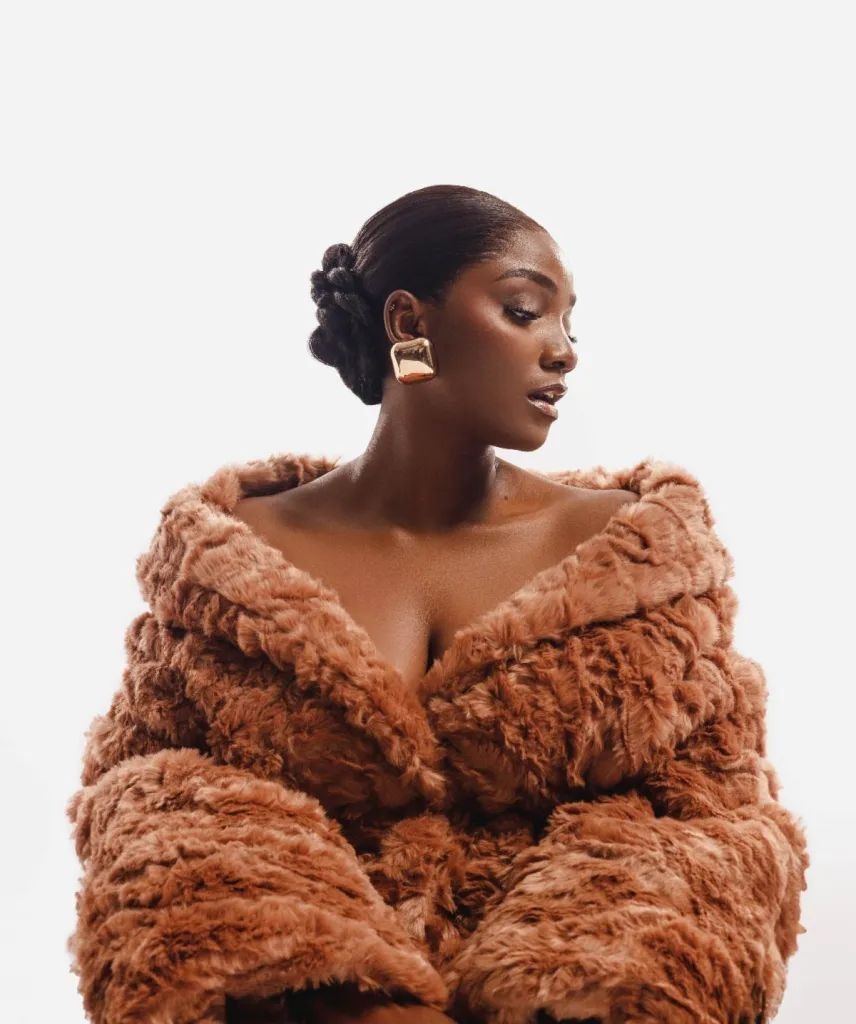
For some two weeks now Nigerian singer Simi has found herself at the heart of a roiling controversy. This month in Nigeria, several victims of rape or assault have called out their abusers on social media. Each call-out sent waves of sadness, grief, and anger reverberating across the country, setting off a reckoning on social media. And while many of the nation’s celebrities largely steered clear of the conversation, Simi bravely bemoaned the endemic sexual violence in the country through a bracingly heartfelt tweet in which she called for the nation to stop raping its women. “Women are terrified to go out. Women in their homes are not safe either. Ask your sisters. Ask your female friends and your girlfriends. Ask your wives. We're not all crazy. STOP RAPING WOMEN!!” The tweet partly reads. Before long, her comments section had morphed into something resembling a marauding mob: essentially composed of men denigrating her for myriad inane reasons. Days after, however, the story would take a surprisingly dreadful turn.
Internet sleuths exhumed pedophilic tweets the singer had posted on a lark years ago, many of them well over a decade old. The fallout was immediate and, as one would expect, chaotic, leaving many who had rallied behind her earlier at a loss for what to do. Many of the problematic tweets have been deleted now and Simi has issued a statement addressing the issue. In it she pushes against the narrative that she was depraved, arguing that—at 23 years of age, when she made most of those tweets—she was “cheeky” and tweeted everything that happened in her life. Suffice it to say the statement only served to exacerbate the scandal.
It goes without saying that the events of the past few days are incredibly sensitive and require nuance to untangle. Misogyny, rape, and pedophilia are great evils that somehow perform an elaborate tango in this convoluted scandal. Further complicating matters is the fact that the sleuths who surfaced Simi’s disturbing tweets did so not out of concern but as retribution for the tweets in which she condemns rape. Nonetheless, the two truths, once again, can coexist. Simi must be commended for standing in solidarity with victims of assault, especially in defiance of the rabid misogyny that’s increasingly prevalent online. But we must also condemn her deeply disturbing tweets, because turning a blind eye to them would make us no different from those who sit on the sidelines when issues of social justice are being addressed.
Is Pitchfork Biased Against Black Music?
Three recent reviews from the cheeky and irreverent internet-native music publication Pitchfork have revived an age-old question: Does Pitchfork have a bias against black music and musicians? The platform recently published scathing reviews of J Cole’s ‘The Fall Off,’ Brent Faiyaz’s ‘Icon,’ and Baby Keem’s ‘Casino.’ Responding to Pitchfork rating his album a 5.8 wrote on his Instagram Stories: “Ay Pitchfork I'm sorry for not paying ya'll but can I get an honest album review just 1 time for the 1 time?”
It’s well known that Pitchfork, despite its storied history and generally respected critical tone, hasn’t historically been the best arbiter of Black music. The platform tends to favor experimental and artistically ambitious music, which means its Best New Music section is often graced by left-field, avant-garde offerings. The platform, like most others, has also just begun to include more Black and minority groups within its editorial team. Nonetheless, suggesting a bias against Black music is disingenuous. In February alone, three of the six projects in its Best New Albums’ category have been Rap albums. Ella Mai’s ‘Do You Still Love Me?’ received favorable ratings and a song from the project was featured in the Best New Song category. Seeing some of the most anticipated projects by Black artists get crushed might give the impression that the publication has a bias towards Black music. But zooming out reveals a more nuanced picture. Could it be that these projects, whose enormous marketing budgets have all but ensured that they are up in our faces, aren’t all that impressive?


.png)

