.svg)

Following Coachella weekend 1 which unfolded over three days at the sun-soaked Empire Polo Club in Indio, California, the internet has been abuzz with glossy videos of music stars performing to crowds stretching into the horizon. As is now tradition, fans, many of whom followed the performances through timely clips circulated on social media, have spent the past few days engaging in spirited conversation about the performances that moved them the most. Sabrina Carpenter’s opening-day performance, which saw her deftly whizz through hits like “Espresso” and “House Tour” against the backdrop of a flamboyant stage decked out with a diorama of Los Angeles’ hilly terrain, has earned high praise for its delightfully theatrical mien. Meanwhile her blithe dismissal of a fan’s zaghrouta—a shrill ululation used in some Arab cultures to express excitement—as “weird” has earned her, perhaps, an equal amount of backlash.
Performances by other acts—everyone from Iggy Pop to Young Thug and Offset, who was wheeled onto the stage a week after being shot in the foot—have similarly sparked a litany of reactions. Nonetheless, none of the performers has polarized the internet as intensely as Justin Bieber. On a sleek stage replete with curves and a dim ambiance that brings to mind a Star Wars set, the prince of Pop sang along to some of his biggest hits playing through a live-streamed YouTube feed, projected on the large screen behind him. His performance, the most-viewed in Coachella’s history, has split viewers in half, and set a litany of conversations in motion.
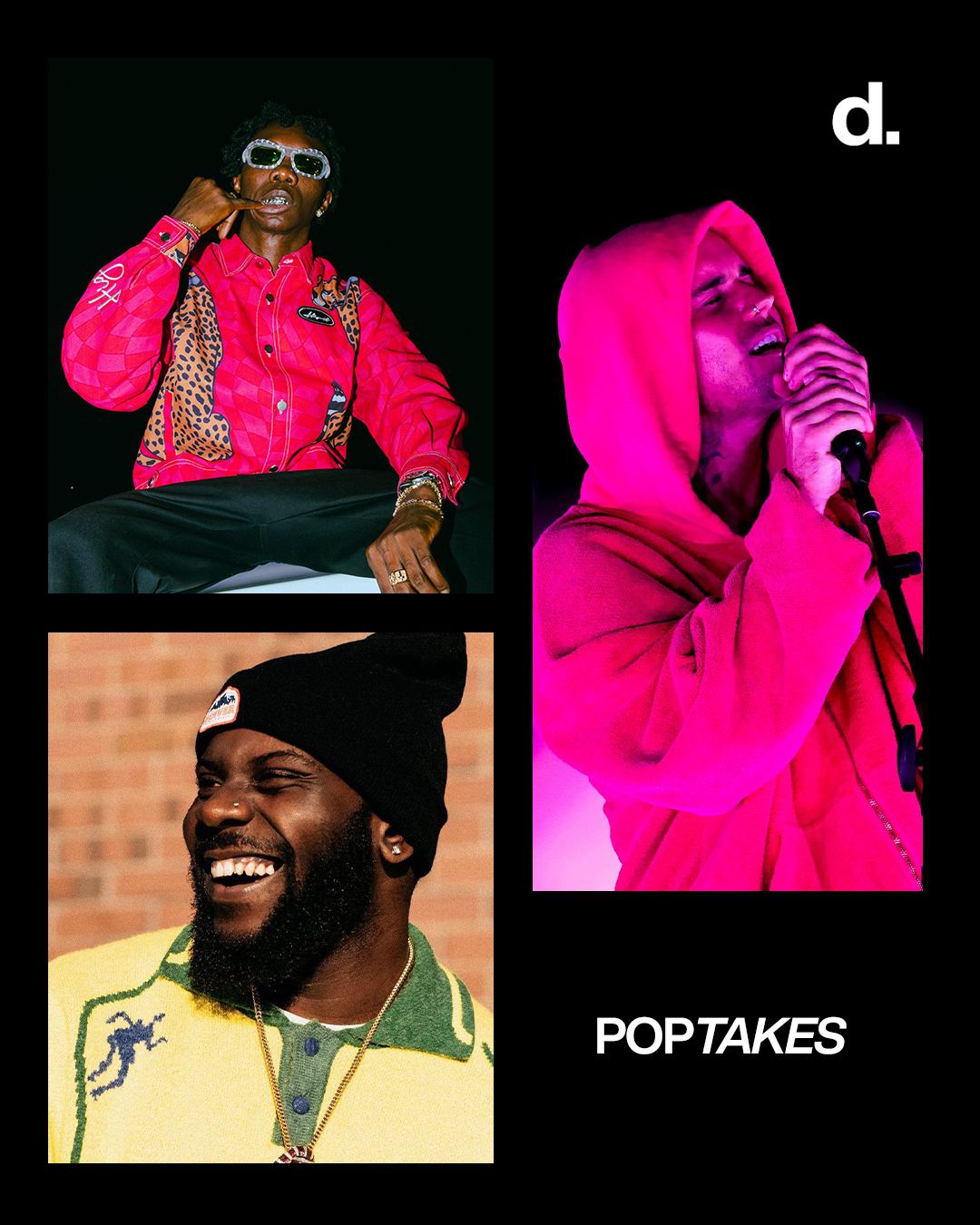
Last week also brought with it a surprising new turn to the long-running hostility between Nigerian rappers Odumodublvck and Blaqbonez. Last year, the former friends began exchanging subliminal disses on social media. The tensions between them have since ballooned into a spate of scathing diss tracks and, more recently, a devastating play by Odumodublvck, which is either brutally genius or underhanded, depending on who you ask.
In this installment of PopTakes, I pull apart the conflicting opinions attending Justin Bieber’s Coachella performance as well as Odumodublvck and Blaqbonez’s long-running beef as a point of departure.
Justin Bieber’s Coachella Performance Was a Full Circle Moment
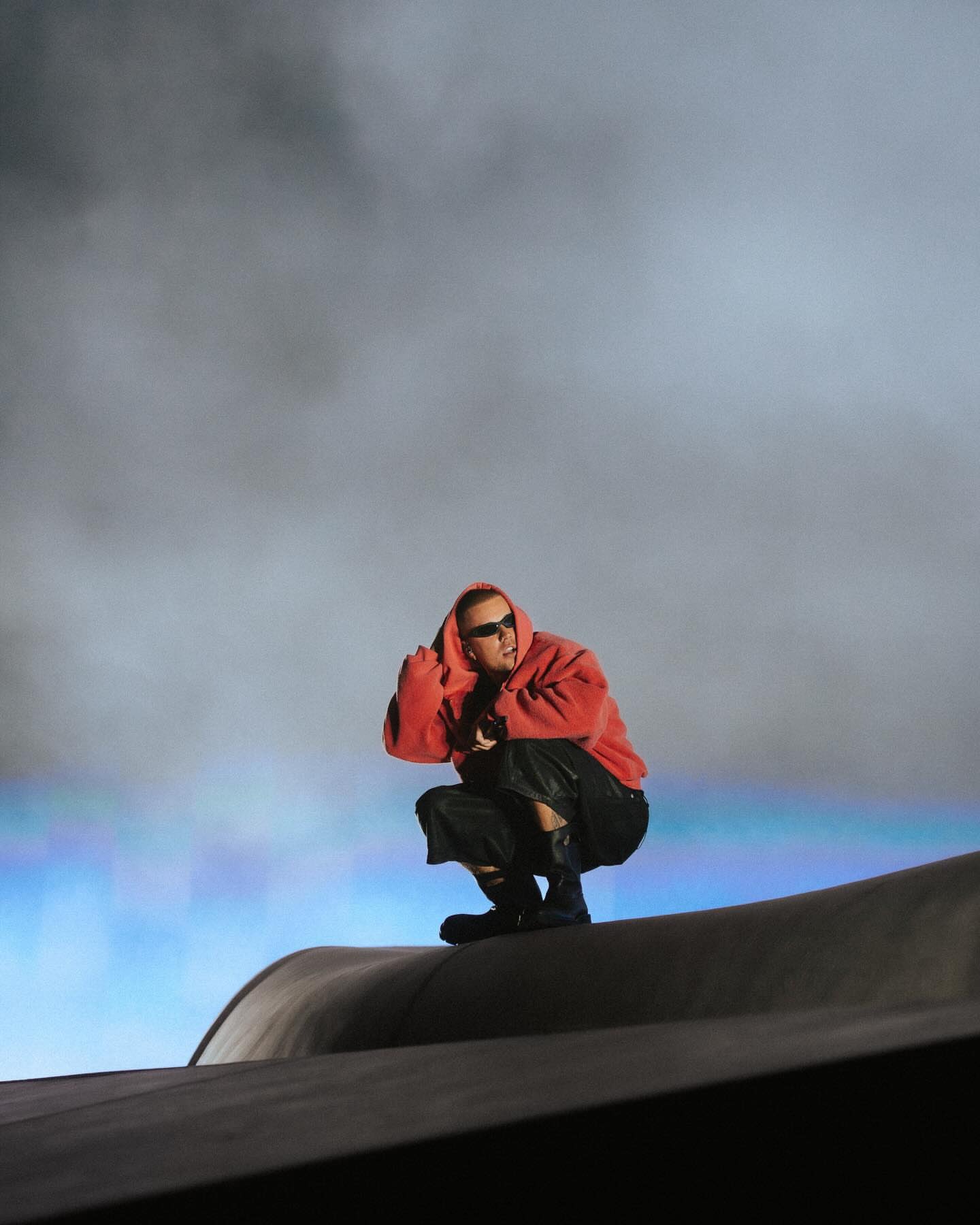
Justin Bieber took the Coachella stage wearing an oversized peach hoodie and dark baggy pants to offer stirring performances of numbers from his 7th studio album Swag, which finds him luxuriating in a sedate, stripped-down universe where longing and earnest self-excavation exist in a charming equilibrium. Just when fans had begun to wonder if he’d perform any catalog songs, he plopped behind a traditional streaming setup, and performed some of the biggest songs from his catalog, many of which were requests from fans who had tuned into his YouTube live stream. The symbolism is hard to miss: a performance perfectly calibrated for the streaming era. The performance also doubles as a callback to his early days, when he leapfrogged to the center of the global zeitgeist after several of his chintzy YouTube videos went viral.
Any discussion of a Justin Bieber performance reliably generates conflicting opinions, in part, due to his hectoring stardom and his influence on popular culture over the years. There’s something about cheering on or scrutinizing the action of a global star who came of age before all our eyes. All of this notwithstanding, Bieber’s Coachella performance has unleashed a level of debate we haven’t seen in several years. At least, not since 2023, when Frank Ocean clambered onto the stage an hour after his performance was scheduled to begin, performed unexpected reworks of fan favorites, ended the show abruptly and pulled out of his scheduled second week performance. Fans have characterized Bieber’s Coachella performance as a charming journey down memory lane. Meanwhile, his critics have called it lazy and uninspired. Where were the pyrotechnics, backup dancers, live bands, elaborate stage design, and similar elements fans have come to reliably expect from a Coachella headliner?
What this line of criticism misses is that spectacle doesn’t necessarily translate to a good performance. More than spectacle, a great show deploys poignant and considered storytelling to bring the audience into an artist’s world. Bieber remains one of the few holdouts from an era of pop culture when discovery still felt organic and communal to audiences. We all watched him upload cover after cover on YouTube until he began his surreal jaunt to the zenith of popular culture. All of us who watched his rise, hold years of memories in our hearts, memories that trace back to his early days as a YouTube cover artist. Many fans and critics have reported feeling strangely heartened by the performance. A recent GQ interview described it as “thrilling and cathartic.” In Chris Willman’s review of the show for Variety Australia, he describes it as “a trip down memory lane.” In the hands of another artist, a meta karaoke show might have struggled to resonate but for Bieber, it hits all the right notes precisely because it feels authentic to him and harks back to a shared experience with his fans.
As Odumodublvck and Blaqbonez's beef reaches a Fever Pitch, the Nigerian Hip Hop Scene Reckons With An Uncomfortable Question
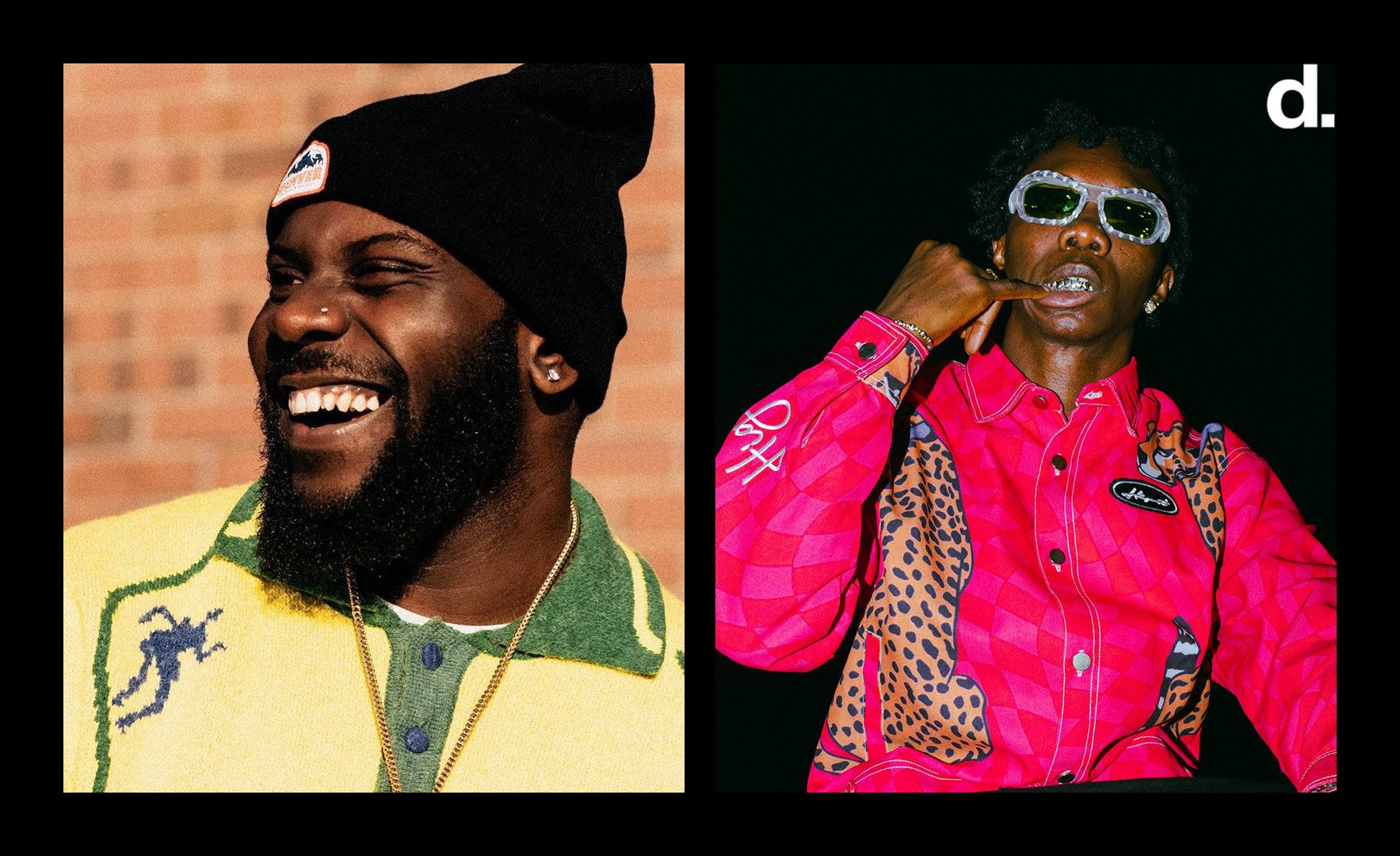
In light of recent events in the Nigerian Hip Hop scene, we find ourselves reckoning with the uncomfortable question of whether beefs—historically a major prong of Hip Hop’s upholstery—are beneficial to the culture. Last week, “ACL,” Blaqbonez’s diss track on which he bitterly decimates Odumodublvck, disappeared from streaming platforms. As the ensuing bedlam settled, word spread that Odumodublvck had exploited a loophole in the licensing agreement for the beat, purchased it for himself, and took down the song.
This situation illustrates the state of beef culture in Hip Hop today. They have evolved from a lyrical sparring session to something much darker. In Jay Z’s widely-circulated interview with GQ’s Frazier Tharpe a few weeks ago, he ardently comments on the current state of the once sacred pillar of Hip Hop saying, “We love the excitement and I love the sparring, but in this day and age there’s so much negative stuff that comes with it that you almost wish it didn’t happen”.
Exchanging diss tracks no longer suffices and increasingly rap beefs translate into harmful real-world consequences. Much has been said about how the beef between Drake and Kendrick Lamar galvanized an increasingly lethargic Hip Hop scene. What many forget, however, is that at the height of the beef, a security guard was seriously injured in a drive-by shooting outside Drake's Toronto mansion, and an OVO store in London was also vandalized. The beef between Odumodublvck and Blaqbonez has similarly resulted in skirmishes between members of their respective camps.
The excitement supplied by rap beefs now appears to be fleeting. Just as the Drake-Kendrick beef has not slowed down Hip Hop’s retrenchment from the American mainstream, despite its short-term gains, Odumodublvck and Blaqbonez’s beef has not translated into lasting wins for either party. Which brings us to the question of what purpose beef serves today in Hip Hop? Hip Hop heads might chafe at the suggestion that beef culture might be a net-negative in today’s world but that appears to be the case. Collaboration, like Jay Z suggests, might be a more effective strategy for achieving success.


.png)

