.svg)

.JPG)
There was a time when music videos demanded patience. You watched them from beginning to end because the visual itself felt like an event. Directors treated music videos like miniature films, complete with story arcs, emotional pacing, costume changes, dramatic pauses, and cinematic reveals. Whether it was the glossy spectacle of early 2000s hip-hop or the aspirational storytelling that shaped older Afrobeats visuals, music videos once existed as experiences meant to hold a viewer’s attention for four uninterrupted minutes.

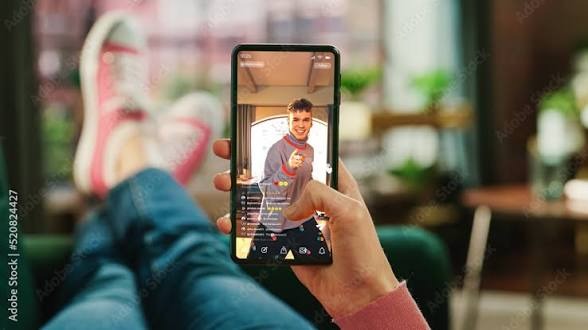
Today, many music videos seem designed for a completely different audience; people scrolling with one thumb.
Across Afrobeats, hip-hop, and pop music, directors are increasingly creating visuals that are not just meant to be watched, but redistributed. The modern music video now lives across TikTok clips, Instagram Reels, reaction edits, fan pages, and repost accounts. In many cases, the most important moment in a music video is no longer the ending or storyline. It is the fifteen-second clip that survives outside the video itself.
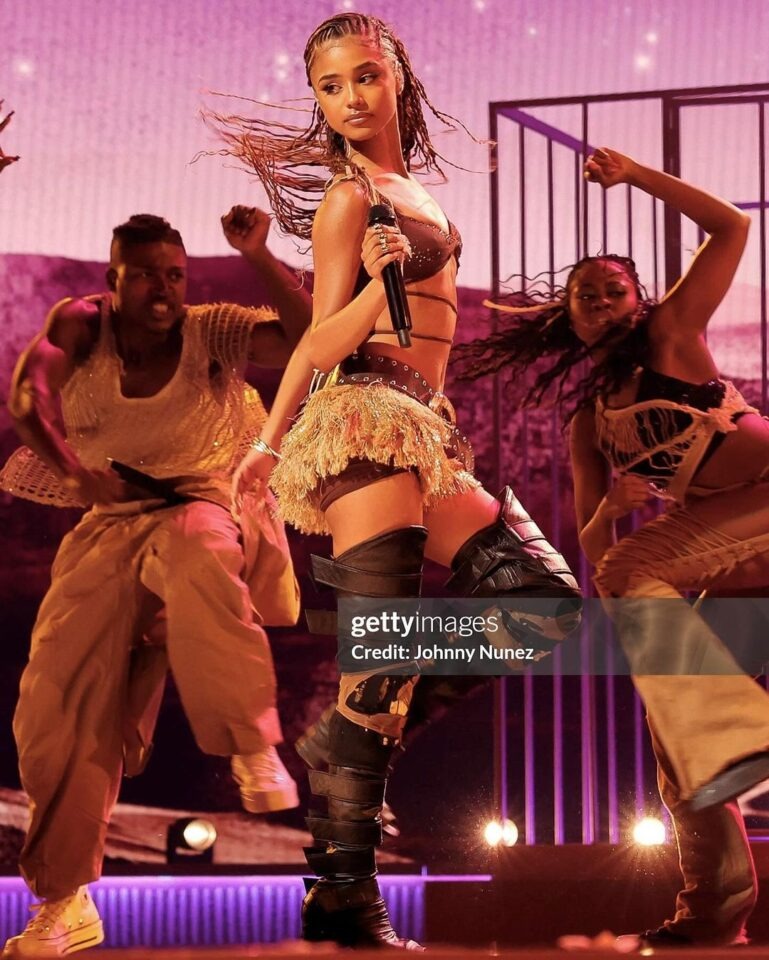
The shift is impossible to ignore. Asake’s visuals often thrive through chaotic crowd scenes, surreal transitions, repetitive choreography, and highly stylized frames that feel engineered for replayability. Rema has mastered dramatic imagery and fashion-forward aesthetics that frequently circulate online as standalone screenshots. Tyla’s visual appeal is deeply tied to movement, rhythm, and dance culture, making her videos naturally adaptable to short-form platforms.
This visual language extends beyond Afrobeats. In hip-hop, artists like Playboi Carti and Travis Scott lean into hyperactive editing styles, distorted visuals, chaotic lighting, and imagery that mirrors the pace of internet consumption itself. The audience has changed, and directors are adapting accordingly. A listener rarely experiences music in one place anymore. A song might first appear as a dance challenge on TikTok, then show up in a meme compilation on X, before eventually leading someone to the full video on YouTube weeks later. Music videos are no longer expected to function only as complete narratives. They must now survive fragmentation. Every frame has to compete for attention independently.
This is perhaps why modern visuals feel faster, louder, and overstimulating than before. Rapid cuts, exaggerated colour grading, dramatic transitions, choreographed “viral moments”, and instantly recognizable aesthetics now dominate contemporary music videos. Directors understand that if a visual cannot generate conversation online within seconds, audiences may never engage with the full piece at all.The traditional music video rewarded immersion. Videos unfolded slowly, allowing emotion, storytelling, and symbolism to build naturally. Older hip-hop and R&B visuals often relied on cinematic narratives that mirrored film culture. Early Afrobeats visuals also leaned heavily into aspirational storytelling, luxury imagery, romance, nightlife, and carefully paced performance scenes. Now, the emphasis is increasingly placed on replayability rather than narrative depth.
This is not necessarily a bad thing. In many ways, short-form culture has pushed directors to become more inventive as audiences consume visuals so quickly; artists are experimenting more boldly with fashion, choreography, editing, animation, humour, and unconventional camera work. Internet culture rewards visual distinctiveness, and many directors are responding with more daring creative choices. For African artists especially, this shift has opened new possibilities. Virality allows artists to travel globally without relying entirely on traditional media systems. A dance clip, transition sequence, or striking visual frame can circulate across continents within hours. Artists no longer need audiences to sit through entire interviews or television appearances to gain recognition. Sometimes, one visually memorable moment is enough. Yet something has undeniably been lost alongside this evolution.
Narrative-driven music videos are becoming increasingly rare. The slower pacing that once allowed viewers to emotionally connect with visuals is disappearing beneath rapid editing and constant stimulation. Some videos feel built for the algorithm, not for the story. Even the structure of music itself has started to change in response. Songs are shorter. Hooks arrive faster. Beat switches happen earlier. Visuals now mirror the same urgency. The goal is no longer simply to create art that resonates emotionally, but content that survives circulation. The modern music video exists in an era where attention itself has become currency. Maybe that is why today’s visuals often feel disjointed. Directors are no longer creating solely for television screens or YouTube premieres. They are creating for phone screens, repost culture, fan edits, and infinite scrolling timelines. The “moment” now matters more than the sequence.
This does not mean music videos are dying. Maybe they are simply evolving into a new visual language altogether.
A generation raised online does not necessarily remember entire music videos the way previous generations did. They remember frames. A dance move. A transition. A facial expression. A fashion look. A screenshot. A ten-second clip attached to a trending sound. The clip itself has become part of the storytelling process. In that sense, directors are not just filming for music anymore. They are filming for circulation. They are creating visuals designed to move through the internet at the same speed as culture itself. And perhaps the real question is no longer whether music videos are losing depth. The more uncomfortable question is whether virality has become our generation’s preferred form of storytelling.
Photo credit: Adobe stock


.png)

