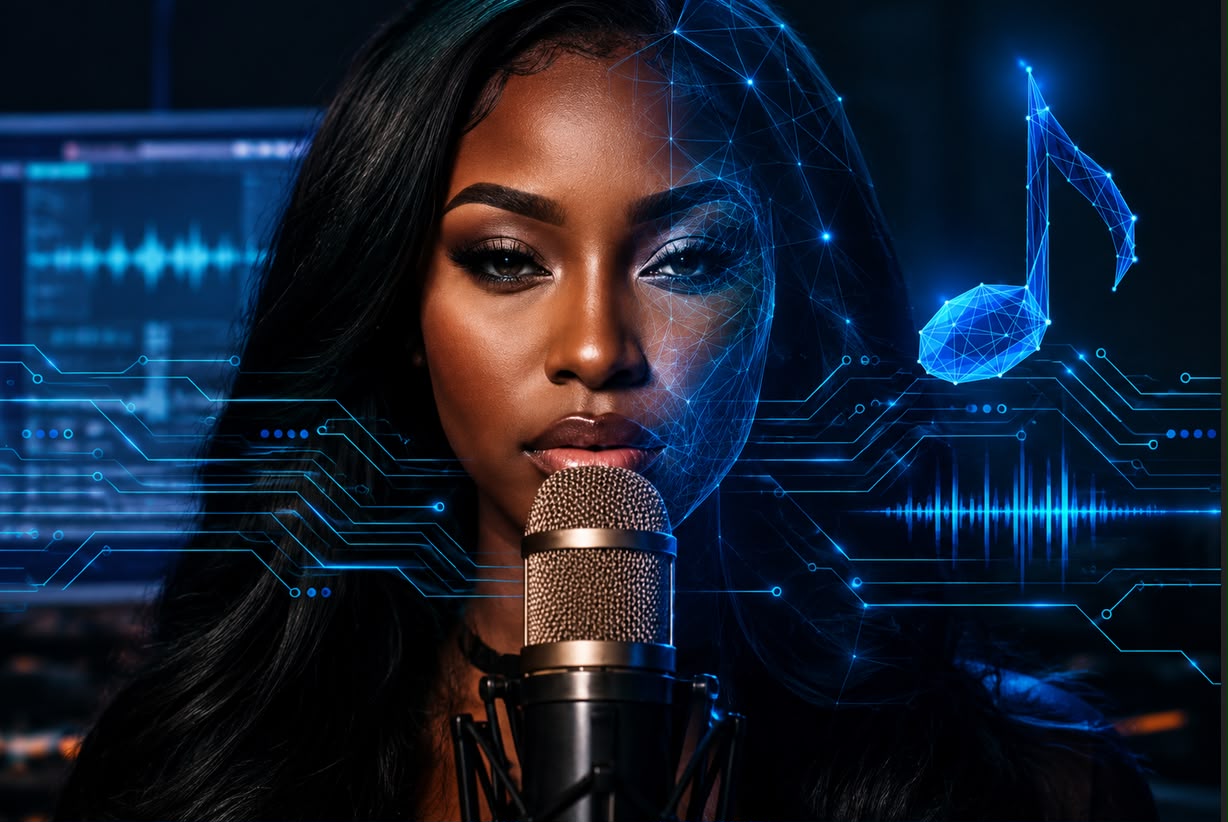
Should Music Stay Human? The Missing Piece in the AI Music Era

Authored by

We have all had that moment when a song finds us before we find the artist behind it. It might be a few seconds in a TikTok or Instagram Reel, the kind of hook that refuses to leave your head for a few days. The discovery feels intimate even though it happened through an algorithm. 

Now, imagine finally finding the song, only to discover that the voice you have been trying to place belongs to nobody at all.

AI-generated music has moved from an experimental corner of the internet into the mainstream music ecosystem, with synthetic and AI-assisted acts appearing on charts, artists incorporating generative tools into their work and streaming platforms confronting an unprecedented volume of machine-made uploads

In June 2025, Deezer said fully AI-generated tracks accounted for more than half of all new music delivered to the platform on some days, with the service receiving nearly 90,000 such tracks daily. Although fully AI-generated music still represented only a small share of actual music streams, at that time, its sheer volume was enough to force the industry to confront what happens when making music becomes something that can be done almost endlessly.

The development has inevitably revived an old argument about technology and music. Every major technological shift has initially unsettled the people whose work it changes, from drum machines and synthesisers to sampling, Auto-Tune and, more recently, streaming. 
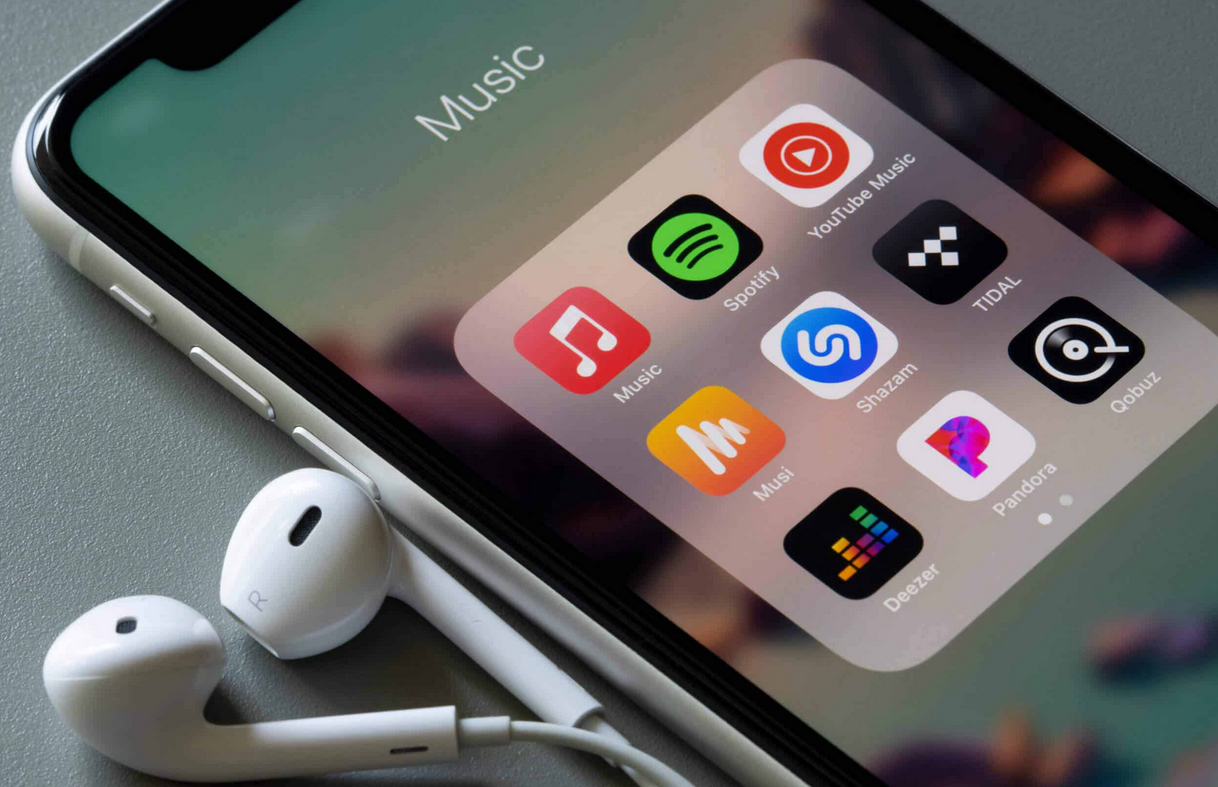
Photo| Shutterstock

Streaming was once criticised by artists and independent musicians who feared that a system built around unlimited access would devalue recorded music and make it harder to earn a sustainable living. Those concerns did not prevent streaming from becoming the dominant way much of the world consumes music; instead, the industry gradually built its business around it, even as debates over royalties, algorithms and artist compensation continue.

Is it Time to Regulate?

AI is obviously not the same technological or economic phenomenon, but streaming offers a useful warning about what happens when an industry treats a disruptive technology as something it can simply react to later. By the time the music business established the structures through which streaming would operate, the technology had already fundamentally changed how music was distributed and consumed. AI is still at an earlier stage, which means artists, labels, platforms and regulators have an opportunity to decide what kinds of participation, consent and compensation should be expected before synthetic music becomes as ordinary as a Spotify release.

Black music has a particular reason to be attentive to that conversation because technological change has always been woven into its evolution. Drum machines helped shape the rhythms of hip-hop and R&B, synthesisers transformed production, sampling became an artistic language of its own and Auto-Tune eventually became an expressive tool rather than simply a piece of corrective software. 

The difference with generative AI is that the technology does not merely expand what a human artist can do; it can draw from existing music, generate new material and, in some cases, imitate voices and styles closely enough to make the distinction between influence, assistance and replacement increasingly difficult to establish.

Tyga's latest album, $TARFACE, placed that tension directly in the public eye. After initially discussing the project largely in terms of its analogue equipment and '80s-inspired sound, Tyga later confirmed that AI had been used as a tool during production, specifically mentioning the generation of '80s-style synthesiser parts and a guitar solo while maintaining that the songwriting and vocals were completely his. He compared the technology to Auto-Tune and argued that artists should adapt to where music technology is going. The response demonstrated how quickly the presence of AI can become part of an argument about artistic credibility. 

Tyga's position is not shared by everyone however. Dr. Dre has taken a more openly pragmatic view, describing AI as another tool for creativity and comparing people who see it as an existential threat to those who would once have opposed drum machines. Coming from a producer whose career has been built around technological experimentation as much as musical instinct, his argument reflects a long-standing reality of music production: new tools do not necessarily eliminate the artist who uses them, but they can change what the artist is expected to contribute.

That contrast is precisely where Tiffany Ngige, an A&R at Unhurdmusic, sees the enduring value of human artists. For her, a label is not investing in a song alone but in whether there is an entire world around an artist that can be developed, from their identity and community to their relationship with an audience, personality, values and lived experiences. She argues that those things are fundamental to the music business precisely because it remains, at its core, a people business.

If AI makes it possible to create an endless amount of music then the scarce commodity becomes the artist themselves; their perspective, emotional depth and ability to connect with people,” Ngige tells Deeds.

She also points to something that can be difficult for generative systems to replicate convincingly: the accidents of human creativity. For instance a vocal crack that was never supposed to make the final recording, an unexpected take, a spontaneous lyric or an imperfect moment in the studio as the very things that gives a record its emotional character.

Those moments are not necessarily the result of an artist deliberately choosing imperfection; they emerge from the unpredictable experience of human beings making something together.

That does not mean the A&R sees AI as inherently destructive. In fact, she believes it has already begun democratising music-making, particularly for independent and emerging artists who may not have access to expensive studios, engineers or producers. AI stem splitters, for example, can allow artists to isolate vocals and instruments for remixing, sampling, experimentation or analysis, giving musicians ways to explore ideas that might previously have required considerably more money and technical access.

Her concern is what happens when the tool stops serving the creative decision and begins making the creative decision itself. If artists begin using the same systems to generate music optimised around what algorithms already reward, the industry could find itself with more music but less distinction between the people making it. In that scenario, convenience and volume could become more valuable commercially than risk, experimentation or individual perspective.

“There’s a line between using technology to realise your creative vision and allowing technology to become the creative vision,” she says, something that becomes even more complicated when audiences cannot tell whether the human contribution they believe they are hearing actually exists.

Fenix Flexin's “Rubberz” became one of the year's most striking examples of that uncertainty after the song climbed to No. 58 on the Billboard Hot 100 while listeners questioned whether its unusual vocal performance and production had been generated using AI. Flexin has denied that the song was AI-generated, and the controversy remains unresolved, but the fact that a song could become a significant charting hit while listeners were simultaneously debating whether the credited artist had actually made the recording himself points to a new problem for the industry. Authenticity is becoming something audiences may feel compelled to investigate rather than simply assume.

Pushing Back on IP Theft 

It is one thing for an artist to use AI themselves; it is another when their music is used without their knowledge or consent. R&B singer-songwriter SZA has spoken forcefully about discovering that 238 of her songs appeared in material identified as being used to train AI systems, including songs she believed could include unreleased work. Her anger points to a different side of the debate from artists such as Tyga and Dr. Dre, not as a user of AI herself yet large chunks of her catalogue have become part of the material from which machines learn without her permission.

Mary J. Blige's own recent experience with Suno, an AI music creation platform, exposed another dimension of the same problem. The company released an advertisement that made it appear as though Blige was endorsing an AI-generated R&B song, only to withdraw the campaign after discovering that the person who negotiated the deal had falsely claimed to represent her. The incident goes to show that the threat posed by AI is not limited to copying a recording or generating a synthetic vocal; an artist's name, likeness, credibility and cultural authority are also increasingly becoming part of the technology's commercial machinery without their consent.

For the music industry, these developments have made regulation increasingly difficult to postpone. The International Federation of the Phonographic Industry (IFPI) introduced principles this year for determining the eligibility of recordings developed using generative technology for official charts, while industry organisations have also moved toward distinguishing between music that is substantially human-made but AI-assisted and recordings in which generative AI creates the primary creative material. 

Streaming platforms are developing their own approaches as well, namely platforms like Tidal which announced that fully AI-generated tracks would be labelled and excluded from royalty payments, while Spotify and other platforms have introduced measures targeting unauthorised vocal impersonation and mass-uploaded AI music.
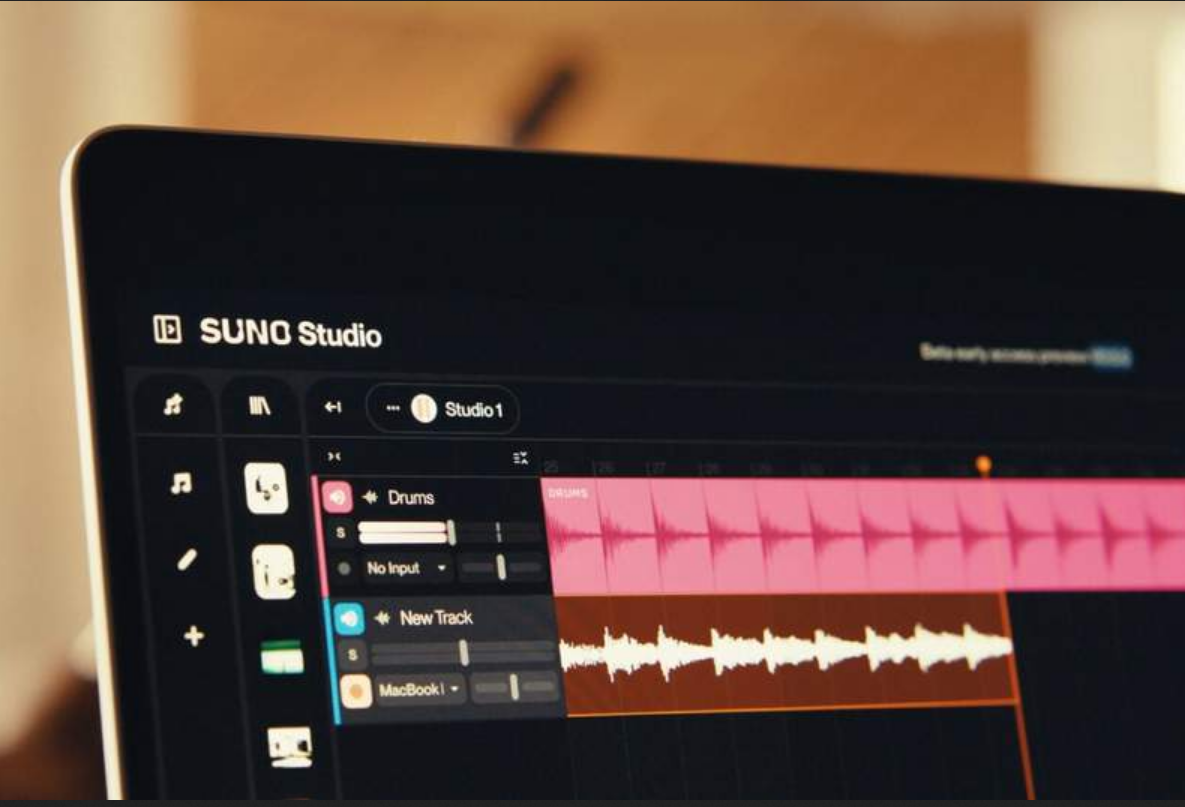
Credit | Suno

Responses that suggest the industry is beginning to recognise the central issue of how unstoppable AI is and draft measures to protect the people whose work, voices and audiences make the music business valuable as it is and give it meaningful control over how AI participates in it.

This becomes even more urgent for African music. AI could give artists across the continent access to production possibilities that were previously limited by money, geography or industry connections. At the same time, African music is increasingly valuable within a global cultural economy, which means the continent's artists have to think carefully about who controls the technologies learning from their music, how cultural material is incorporated into those systems and whether the economic value generated from that material returns to the communities that created it.

Ngige believes the answer should not be to reject the technology outright. Instead, she argues that AI can remain useful as long as artists retain control over the creative decisions that give their work meaning – which ultimately determines whether AI becomes another chapter in music's long history of technological adaptation or something more disruptive to the people who make/have made the industry function.

The temptation will be to measure that disruption in the simplest terms of how many AI songs are uploaded, how many are streamed, how many appear on charts and how much money can be made from producing them. But those measurements risk overlooking the thing that has always made music more than an efficiently manufactured product. A song carries the perspective of the person who wrote it, the experiences that shaped the performance, the decisions made in a studio and the relationship that develops between an artist and the people who listen to them. At the core, music is and has always been inherently human.

If AI eventually makes it possible to generate an effectively infinite supply of competent music, that abundance may make those human qualities more important rather than less. As Ngige puts it, when music becomes easier to generate at enormous volume, “authenticity becomes a lot harder to fake.” The challenge for the industry, then, is not simply deciding how much AI it can tolerate, but making sure that in its pursuit of efficiency it does not lose sight of why audiences cared about the human artists in the first place.

Cover Credit: Courtesy of Getty Images. 

Graphic treatment and AI composition by Stanley Kilonzo. 
Should Music Stay Human? The Missing Piece in the AI Music Era

Authored by
This is some text inside of a div block.

We have all had that moment when a song finds us before we find the artist behind it. It might be a few seconds in a TikTok or Instagram Reel, the kind of hook that refuses to leave your head for a few days. The discovery feels intimate even though it happened through an algorithm. 

Now, imagine finally finding the song, only to discover that the voice you have been trying to place belongs to nobody at all.

AI-generated music has moved from an experimental corner of the internet into the mainstream music ecosystem, with synthetic and AI-assisted acts appearing on charts, artists incorporating generative tools into their work and streaming platforms confronting an unprecedented volume of machine-made uploads

In June 2025, Deezer said fully AI-generated tracks accounted for more than half of all new music delivered to the platform on some days, with the service receiving nearly 90,000 such tracks daily. Although fully AI-generated music still represented only a small share of actual music streams, at that time, its sheer volume was enough to force the industry to confront what happens when making music becomes something that can be done almost endlessly.

The development has inevitably revived an old argument about technology and music. Every major technological shift has initially unsettled the people whose work it changes, from drum machines and synthesisers to sampling, Auto-Tune and, more recently, streaming. 

Photo| Shutterstock

Streaming was once criticised by artists and independent musicians who feared that a system built around unlimited access would devalue recorded music and make it harder to earn a sustainable living. Those concerns did not prevent streaming from becoming the dominant way much of the world consumes music; instead, the industry gradually built its business around it, even as debates over royalties, algorithms and artist compensation continue.

Is it Time to Regulate?

AI is obviously not the same technological or economic phenomenon, but streaming offers a useful warning about what happens when an industry treats a disruptive technology as something it can simply react to later. By the time the music business established the structures through which streaming would operate, the technology had already fundamentally changed how music was distributed and consumed. AI is still at an earlier stage, which means artists, labels, platforms and regulators have an opportunity to decide what kinds of participation, consent and compensation should be expected before synthetic music becomes as ordinary as a Spotify release.

Black music has a particular reason to be attentive to that conversation because technological change has always been woven into its evolution. Drum machines helped shape the rhythms of hip-hop and R&B, synthesisers transformed production, sampling became an artistic language of its own and Auto-Tune eventually became an expressive tool rather than simply a piece of corrective software. 

The difference with generative AI is that the technology does not merely expand what a human artist can do; it can draw from existing music, generate new material and, in some cases, imitate voices and styles closely enough to make the distinction between influence, assistance and replacement increasingly difficult to establish.

Tyga's latest album, $TARFACE, placed that tension directly in the public eye. After initially discussing the project largely in terms of its analogue equipment and '80s-inspired sound, Tyga later confirmed that AI had been used as a tool during production, specifically mentioning the generation of '80s-style synthesiser parts and a guitar solo while maintaining that the songwriting and vocals were completely his. He compared the technology to Auto-Tune and argued that artists should adapt to where music technology is going. The response demonstrated how quickly the presence of AI can become part of an argument about artistic credibility. 

Tyga's position is not shared by everyone however. Dr. Dre has taken a more openly pragmatic view, describing AI as another tool for creativity and comparing people who see it as an existential threat to those who would once have opposed drum machines. Coming from a producer whose career has been built around technological experimentation as much as musical instinct, his argument reflects a long-standing reality of music production: new tools do not necessarily eliminate the artist who uses them, but they can change what the artist is expected to contribute.

That contrast is precisely where Tiffany Ngige, an A&R at Unhurdmusic, sees the enduring value of human artists. For her, a label is not investing in a song alone but in whether there is an entire world around an artist that can be developed, from their identity and community to their relationship with an audience, personality, values and lived experiences. She argues that those things are fundamental to the music business precisely because it remains, at its core, a people business.

If AI makes it possible to create an endless amount of music then the scarce commodity becomes the artist themselves; their perspective, emotional depth and ability to connect with people,” Ngige tells Deeds.

She also points to something that can be difficult for generative systems to replicate convincingly: the accidents of human creativity. For instance a vocal crack that was never supposed to make the final recording, an unexpected take, a spontaneous lyric or an imperfect moment in the studio as the very things that gives a record its emotional character.

Those moments are not necessarily the result of an artist deliberately choosing imperfection; they emerge from the unpredictable experience of human beings making something together.

That does not mean the A&R sees AI as inherently destructive. In fact, she believes it has already begun democratising music-making, particularly for independent and emerging artists who may not have access to expensive studios, engineers or producers. AI stem splitters, for example, can allow artists to isolate vocals and instruments for remixing, sampling, experimentation or analysis, giving musicians ways to explore ideas that might previously have required considerably more money and technical access.

Her concern is what happens when the tool stops serving the creative decision and begins making the creative decision itself. If artists begin using the same systems to generate music optimised around what algorithms already reward, the industry could find itself with more music but less distinction between the people making it. In that scenario, convenience and volume could become more valuable commercially than risk, experimentation or individual perspective.

“There’s a line between using technology to realise your creative vision and allowing technology to become the creative vision,” she says, something that becomes even more complicated when audiences cannot tell whether the human contribution they believe they are hearing actually exists.

Fenix Flexin's “Rubberz” became one of the year's most striking examples of that uncertainty after the song climbed to No. 58 on the Billboard Hot 100 while listeners questioned whether its unusual vocal performance and production had been generated using AI. Flexin has denied that the song was AI-generated, and the controversy remains unresolved, but the fact that a song could become a significant charting hit while listeners were simultaneously debating whether the credited artist had actually made the recording himself points to a new problem for the industry. Authenticity is becoming something audiences may feel compelled to investigate rather than simply assume.

Pushing Back on IP Theft 

It is one thing for an artist to use AI themselves; it is another when their music is used without their knowledge or consent. R&B singer-songwriter SZA has spoken forcefully about discovering that 238 of her songs appeared in material identified as being used to train AI systems, including songs she believed could include unreleased work. Her anger points to a different side of the debate from artists such as Tyga and Dr. Dre, not as a user of AI herself yet large chunks of her catalogue have become part of the material from which machines learn without her permission.

Mary J. Blige's own recent experience with Suno, an AI music creation platform, exposed another dimension of the same problem. The company released an advertisement that made it appear as though Blige was endorsing an AI-generated R&B song, only to withdraw the campaign after discovering that the person who negotiated the deal had falsely claimed to represent her. The incident goes to show that the threat posed by AI is not limited to copying a recording or generating a synthetic vocal; an artist's name, likeness, credibility and cultural authority are also increasingly becoming part of the technology's commercial machinery without their consent.

For the music industry, these developments have made regulation increasingly difficult to postpone. The International Federation of the Phonographic Industry (IFPI) introduced principles this year for determining the eligibility of recordings developed using generative technology for official charts, while industry organisations have also moved toward distinguishing between music that is substantially human-made but AI-assisted and recordings in which generative AI creates the primary creative material. 

Streaming platforms are developing their own approaches as well, namely platforms like Tidal which announced that fully AI-generated tracks would be labelled and excluded from royalty payments, while Spotify and other platforms have introduced measures targeting unauthorised vocal impersonation and mass-uploaded AI music.

Credit | Suno

Responses that suggest the industry is beginning to recognise the central issue of how unstoppable AI is and draft measures to protect the people whose work, voices and audiences make the music business valuable as it is and give it meaningful control over how AI participates in it.

This becomes even more urgent for African music. AI could give artists across the continent access to production possibilities that were previously limited by money, geography or industry connections. At the same time, African music is increasingly valuable within a global cultural economy, which means the continent's artists have to think carefully about who controls the technologies learning from their music, how cultural material is incorporated into those systems and whether the economic value generated from that material returns to the communities that created it.

Ngige believes the answer should not be to reject the technology outright. Instead, she argues that AI can remain useful as long as artists retain control over the creative decisions that give their work meaning – which ultimately determines whether AI becomes another chapter in music's long history of technological adaptation or something more disruptive to the people who make/have made the industry function.

The temptation will be to measure that disruption in the simplest terms of how many AI songs are uploaded, how many are streamed, how many appear on charts and how much money can be made from producing them. But those measurements risk overlooking the thing that has always made music more than an efficiently manufactured product. A song carries the perspective of the person who wrote it, the experiences that shaped the performance, the decisions made in a studio and the relationship that develops between an artist and the people who listen to them. At the core, music is and has always been inherently human.

If AI eventually makes it possible to generate an effectively infinite supply of competent music, that abundance may make those human qualities more important rather than less. As Ngige puts it, when music becomes easier to generate at enormous volume, “authenticity becomes a lot harder to fake.” The challenge for the industry, then, is not simply deciding how much AI it can tolerate, but making sure that in its pursuit of efficiency it does not lose sight of why audiences cared about the human artists in the first place.

Cover Credit: Courtesy of Getty Images. 

Graphic treatment and AI composition by Stanley Kilonzo. 
This is some text inside of a div block.

Should Music Stay Human? The Missing Piece in the AI Music Era

Authored by

We have all had that moment when a song finds us before we find the artist behind it. It might be a few seconds in a TikTok or Instagram Reel, the kind of hook that refuses to leave your head for a few days. The discovery feels intimate even though it happened through an algorithm. 

Now, imagine finally finding the song, only to discover that the voice you have been trying to place belongs to nobody at all.

AI-generated music has moved from an experimental corner of the internet into the mainstream music ecosystem, with synthetic and AI-assisted acts appearing on charts, artists incorporating generative tools into their work and streaming platforms confronting an unprecedented volume of machine-made uploads

In June 2025, Deezer said fully AI-generated tracks accounted for more than half of all new music delivered to the platform on some days, with the service receiving nearly 90,000 such tracks daily. Although fully AI-generated music still represented only a small share of actual music streams, at that time, its sheer volume was enough to force the industry to confront what happens when making music becomes something that can be done almost endlessly.

The development has inevitably revived an old argument about technology and music. Every major technological shift has initially unsettled the people whose work it changes, from drum machines and synthesisers to sampling, Auto-Tune and, more recently, streaming. 

Photo| Shutterstock

Streaming was once criticised by artists and independent musicians who feared that a system built around unlimited access would devalue recorded music and make it harder to earn a sustainable living. Those concerns did not prevent streaming from becoming the dominant way much of the world consumes music; instead, the industry gradually built its business around it, even as debates over royalties, algorithms and artist compensation continue.

Is it Time to Regulate?

AI is obviously not the same technological or economic phenomenon, but streaming offers a useful warning about what happens when an industry treats a disruptive technology as something it can simply react to later. By the time the music business established the structures through which streaming would operate, the technology had already fundamentally changed how music was distributed and consumed. AI is still at an earlier stage, which means artists, labels, platforms and regulators have an opportunity to decide what kinds of participation, consent and compensation should be expected before synthetic music becomes as ordinary as a Spotify release.

Black music has a particular reason to be attentive to that conversation because technological change has always been woven into its evolution. Drum machines helped shape the rhythms of hip-hop and R&B, synthesisers transformed production, sampling became an artistic language of its own and Auto-Tune eventually became an expressive tool rather than simply a piece of corrective software. 

The difference with generative AI is that the technology does not merely expand what a human artist can do; it can draw from existing music, generate new material and, in some cases, imitate voices and styles closely enough to make the distinction between influence, assistance and replacement increasingly difficult to establish.

Tyga's latest album, $TARFACE, placed that tension directly in the public eye. After initially discussing the project largely in terms of its analogue equipment and '80s-inspired sound, Tyga later confirmed that AI had been used as a tool during production, specifically mentioning the generation of '80s-style synthesiser parts and a guitar solo while maintaining that the songwriting and vocals were completely his. He compared the technology to Auto-Tune and argued that artists should adapt to where music technology is going. The response demonstrated how quickly the presence of AI can become part of an argument about artistic credibility. 

Tyga's position is not shared by everyone however. Dr. Dre has taken a more openly pragmatic view, describing AI as another tool for creativity and comparing people who see it as an existential threat to those who would once have opposed drum machines. Coming from a producer whose career has been built around technological experimentation as much as musical instinct, his argument reflects a long-standing reality of music production: new tools do not necessarily eliminate the artist who uses them, but they can change what the artist is expected to contribute.

That contrast is precisely where Tiffany Ngige, an A&R at Unhurdmusic, sees the enduring value of human artists. For her, a label is not investing in a song alone but in whether there is an entire world around an artist that can be developed, from their identity and community to their relationship with an audience, personality, values and lived experiences. She argues that those things are fundamental to the music business precisely because it remains, at its core, a people business.

If AI makes it possible to create an endless amount of music then the scarce commodity becomes the artist themselves; their perspective, emotional depth and ability to connect with people,” Ngige tells Deeds.

She also points to something that can be difficult for generative systems to replicate convincingly: the accidents of human creativity. For instance a vocal crack that was never supposed to make the final recording, an unexpected take, a spontaneous lyric or an imperfect moment in the studio as the very things that gives a record its emotional character.

Those moments are not necessarily the result of an artist deliberately choosing imperfection; they emerge from the unpredictable experience of human beings making something together.

That does not mean the A&R sees AI as inherently destructive. In fact, she believes it has already begun democratising music-making, particularly for independent and emerging artists who may not have access to expensive studios, engineers or producers. AI stem splitters, for example, can allow artists to isolate vocals and instruments for remixing, sampling, experimentation or analysis, giving musicians ways to explore ideas that might previously have required considerably more money and technical access.

Her concern is what happens when the tool stops serving the creative decision and begins making the creative decision itself. If artists begin using the same systems to generate music optimised around what algorithms already reward, the industry could find itself with more music but less distinction between the people making it. In that scenario, convenience and volume could become more valuable commercially than risk, experimentation or individual perspective.

“There’s a line between using technology to realise your creative vision and allowing technology to become the creative vision,” she says, something that becomes even more complicated when audiences cannot tell whether the human contribution they believe they are hearing actually exists.

Fenix Flexin's “Rubberz” became one of the year's most striking examples of that uncertainty after the song climbed to No. 58 on the Billboard Hot 100 while listeners questioned whether its unusual vocal performance and production had been generated using AI. Flexin has denied that the song was AI-generated, and the controversy remains unresolved, but the fact that a song could become a significant charting hit while listeners were simultaneously debating whether the credited artist had actually made the recording himself points to a new problem for the industry. Authenticity is becoming something audiences may feel compelled to investigate rather than simply assume.

Pushing Back on IP Theft 

It is one thing for an artist to use AI themselves; it is another when their music is used without their knowledge or consent. R&B singer-songwriter SZA has spoken forcefully about discovering that 238 of her songs appeared in material identified as being used to train AI systems, including songs she believed could include unreleased work. Her anger points to a different side of the debate from artists such as Tyga and Dr. Dre, not as a user of AI herself yet large chunks of her catalogue have become part of the material from which machines learn without her permission.

Mary J. Blige's own recent experience with Suno, an AI music creation platform, exposed another dimension of the same problem. The company released an advertisement that made it appear as though Blige was endorsing an AI-generated R&B song, only to withdraw the campaign after discovering that the person who negotiated the deal had falsely claimed to represent her. The incident goes to show that the threat posed by AI is not limited to copying a recording or generating a synthetic vocal; an artist's name, likeness, credibility and cultural authority are also increasingly becoming part of the technology's commercial machinery without their consent.

For the music industry, these developments have made regulation increasingly difficult to postpone. The International Federation of the Phonographic Industry (IFPI) introduced principles this year for determining the eligibility of recordings developed using generative technology for official charts, while industry organisations have also moved toward distinguishing between music that is substantially human-made but AI-assisted and recordings in which generative AI creates the primary creative material. 

Streaming platforms are developing their own approaches as well, namely platforms like Tidal which announced that fully AI-generated tracks would be labelled and excluded from royalty payments, while Spotify and other platforms have introduced measures targeting unauthorised vocal impersonation and mass-uploaded AI music.

Credit | Suno

Responses that suggest the industry is beginning to recognise the central issue of how unstoppable AI is and draft measures to protect the people whose work, voices and audiences make the music business valuable as it is and give it meaningful control over how AI participates in it.

This becomes even more urgent for African music. AI could give artists across the continent access to production possibilities that were previously limited by money, geography or industry connections. At the same time, African music is increasingly valuable within a global cultural economy, which means the continent's artists have to think carefully about who controls the technologies learning from their music, how cultural material is incorporated into those systems and whether the economic value generated from that material returns to the communities that created it.

Ngige believes the answer should not be to reject the technology outright. Instead, she argues that AI can remain useful as long as artists retain control over the creative decisions that give their work meaning – which ultimately determines whether AI becomes another chapter in music's long history of technological adaptation or something more disruptive to the people who make/have made the industry function.

The temptation will be to measure that disruption in the simplest terms of how many AI songs are uploaded, how many are streamed, how many appear on charts and how much money can be made from producing them. But those measurements risk overlooking the thing that has always made music more than an efficiently manufactured product. A song carries the perspective of the person who wrote it, the experiences that shaped the performance, the decisions made in a studio and the relationship that develops between an artist and the people who listen to them. At the core, music is and has always been inherently human.

If AI eventually makes it possible to generate an effectively infinite supply of competent music, that abundance may make those human qualities more important rather than less. As Ngige puts it, when music becomes easier to generate at enormous volume, “authenticity becomes a lot harder to fake.” The challenge for the industry, then, is not simply deciding how much AI it can tolerate, but making sure that in its pursuit of efficiency it does not lose sight of why audiences cared about the human artists in the first place.

Cover Credit: Courtesy of Getty Images. 

Graphic treatment and AI composition by Stanley Kilonzo. 
Other Stories
London
London
Lagos
London
Newyork
London
Shop
Join the community.
You are now subscribed to receive updates.
Oops! Something went wrong while submitting the form.
Subscribe