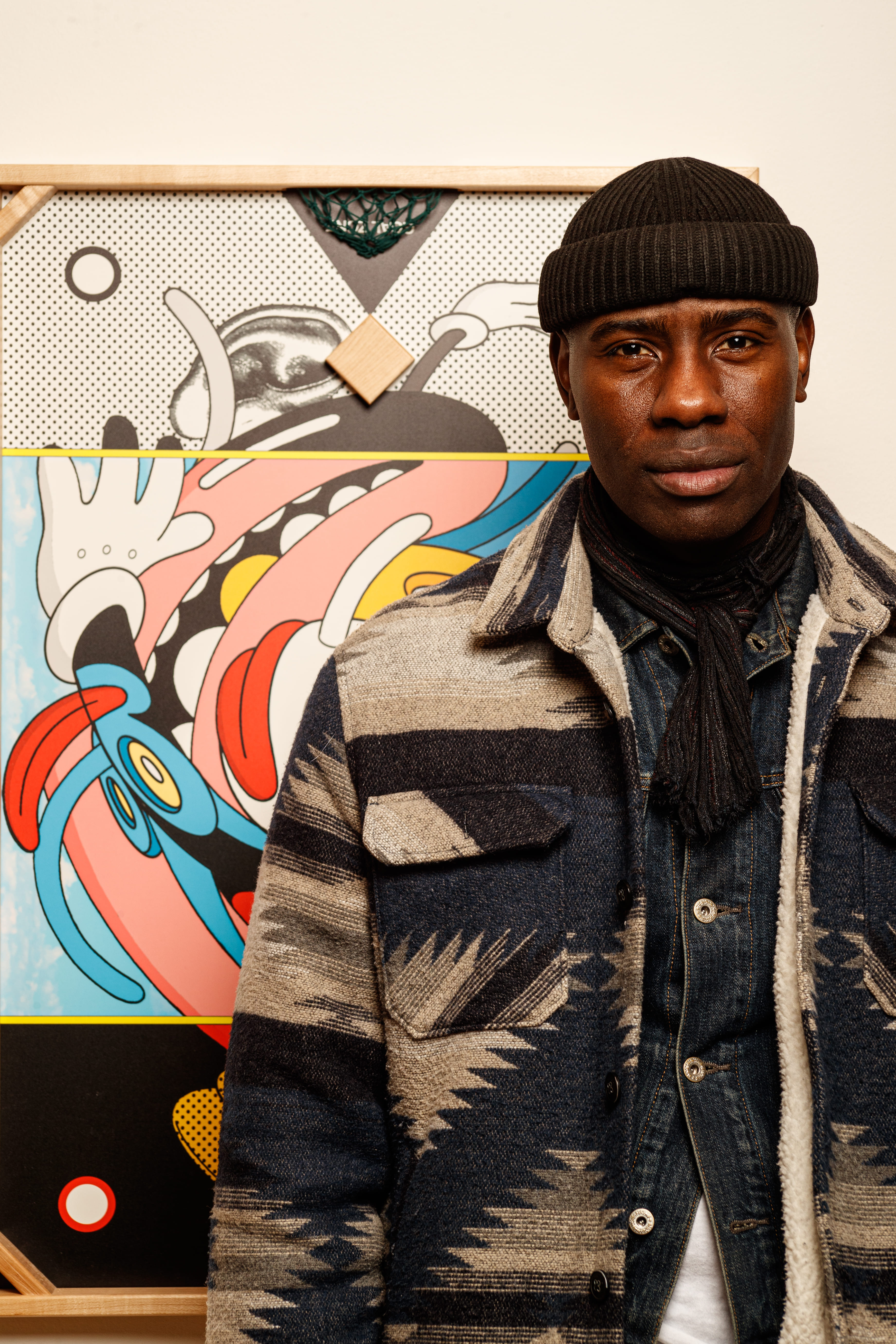
The Board as Canvas: Clarence Ruth on Heritage and Play.

Authored by

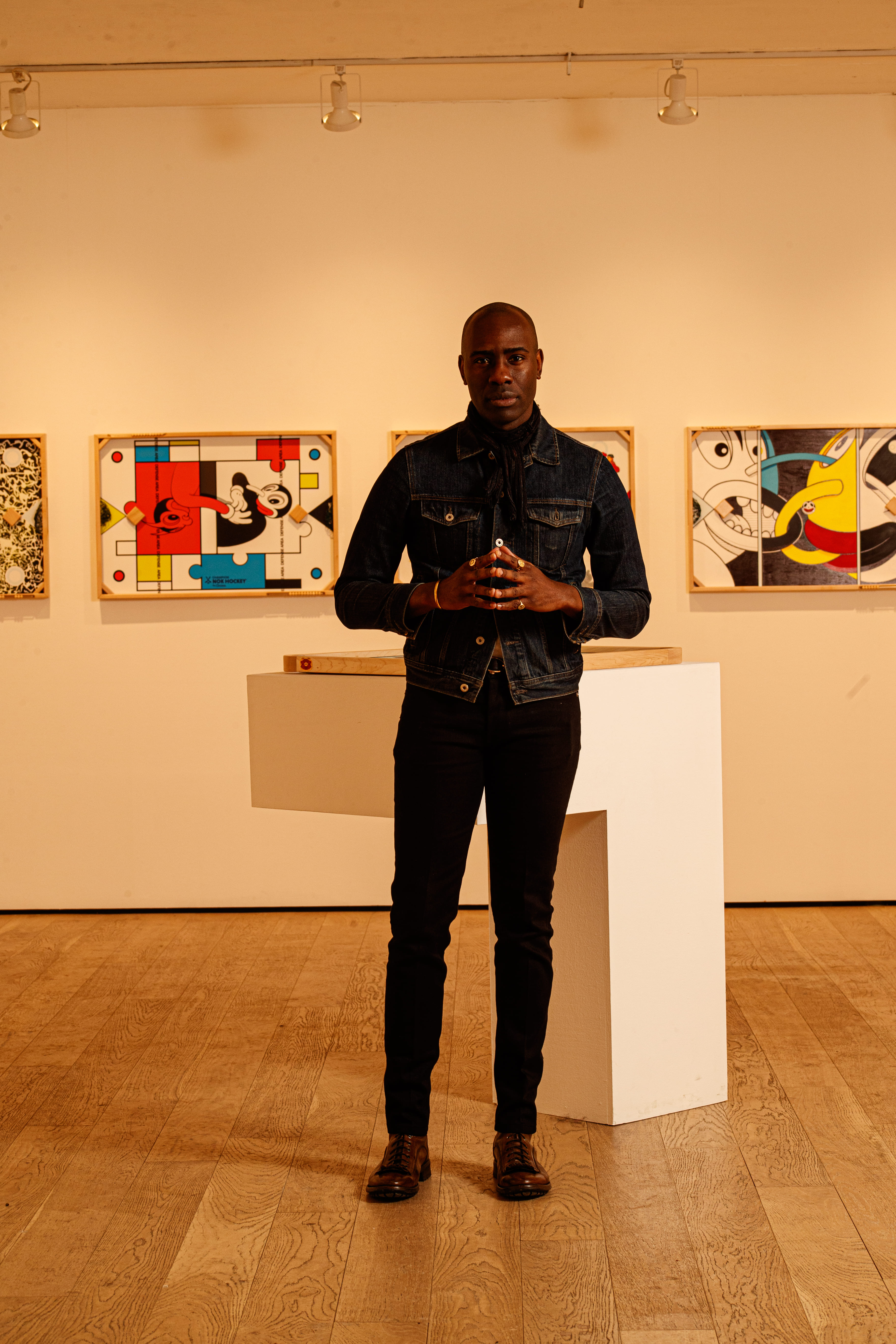
Clarence Ruth is not interested in art that stays behind glass. A multidisciplinary force, spanning fashion collaborations with Mercedes-Benz and Tommy Hilfiger to fine art, Ruth’s latest exhibition at Ki Smith Gallery reimagines the 135-year legacy of the Carrom Company. By transforming vintage gameboards into canvases, he explores the intersection of heritage, communal joy, and the necessity of thinking outside the box.
You’ve mentioned your upbringing in a large household influenced this project. How did those early years shape your view of play as art?
I grew up in a deeply structured, faith-centered household where art became my sanctuary of unstructured thought. We didn’t always have the latest technology, so gameboards like chess and dominoes were how we bonded, they brought us into communion away from screens. In my community, these boards are where elders pass down lessons of strategy and patience. Using them as canvases felt organic, because our leisure and our joy are worthy of being celebrated as legitimate art.
When you look at a vintage 135-year-old Carrom board, do you feel restricted by its history?
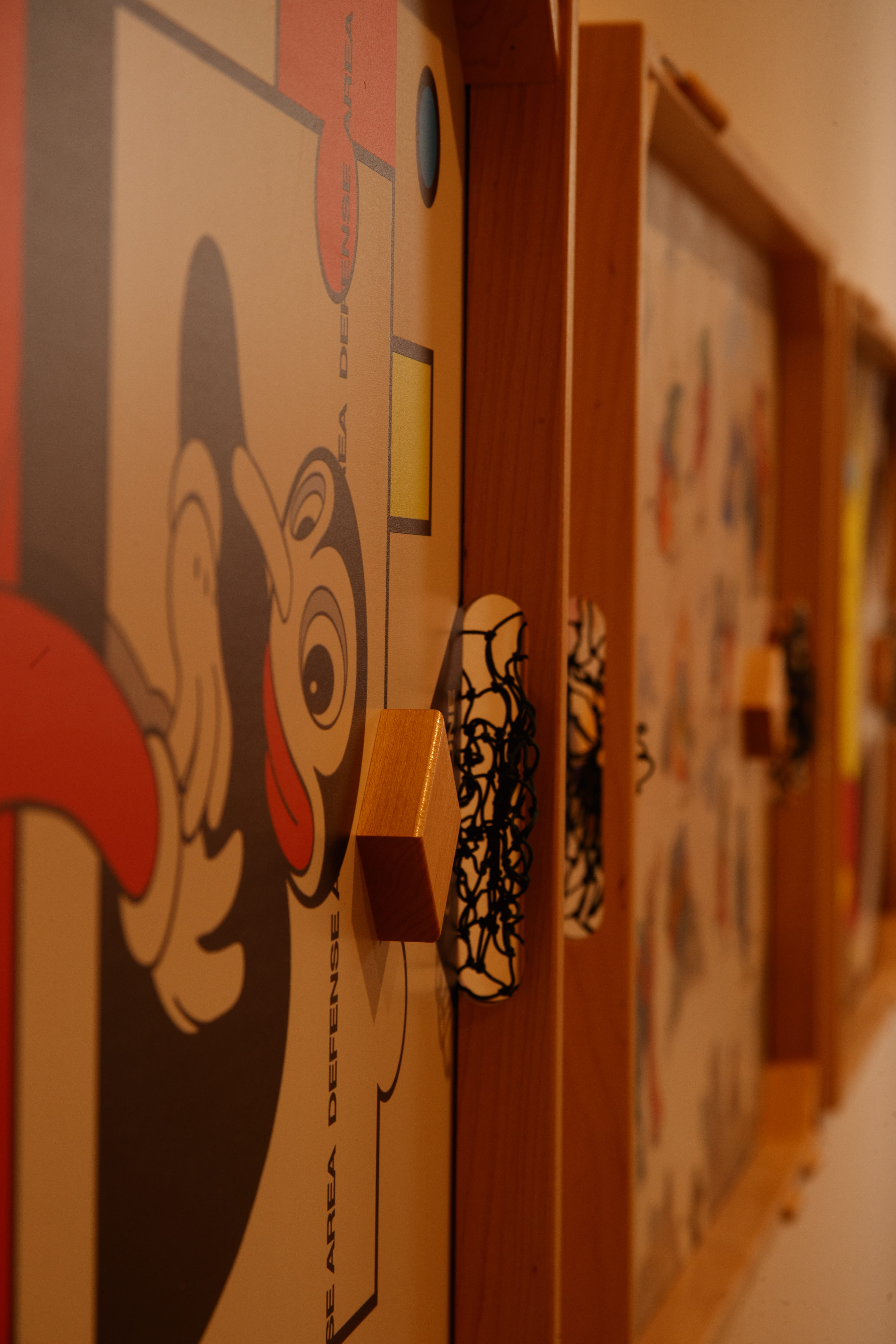
I perceive both its history and its latent possibility. I have deep reverence for the 135 years of heritage and the generations of hands that touched these boards before mine. But I also see an opportunity to layer a contemporary narrative onto that foundation. These boards have already lived meaningful lives, now they get to carry new meanings and ignite different conversations.
What is the essential vibe in your studio to get into the Clarence Ruth headspace?
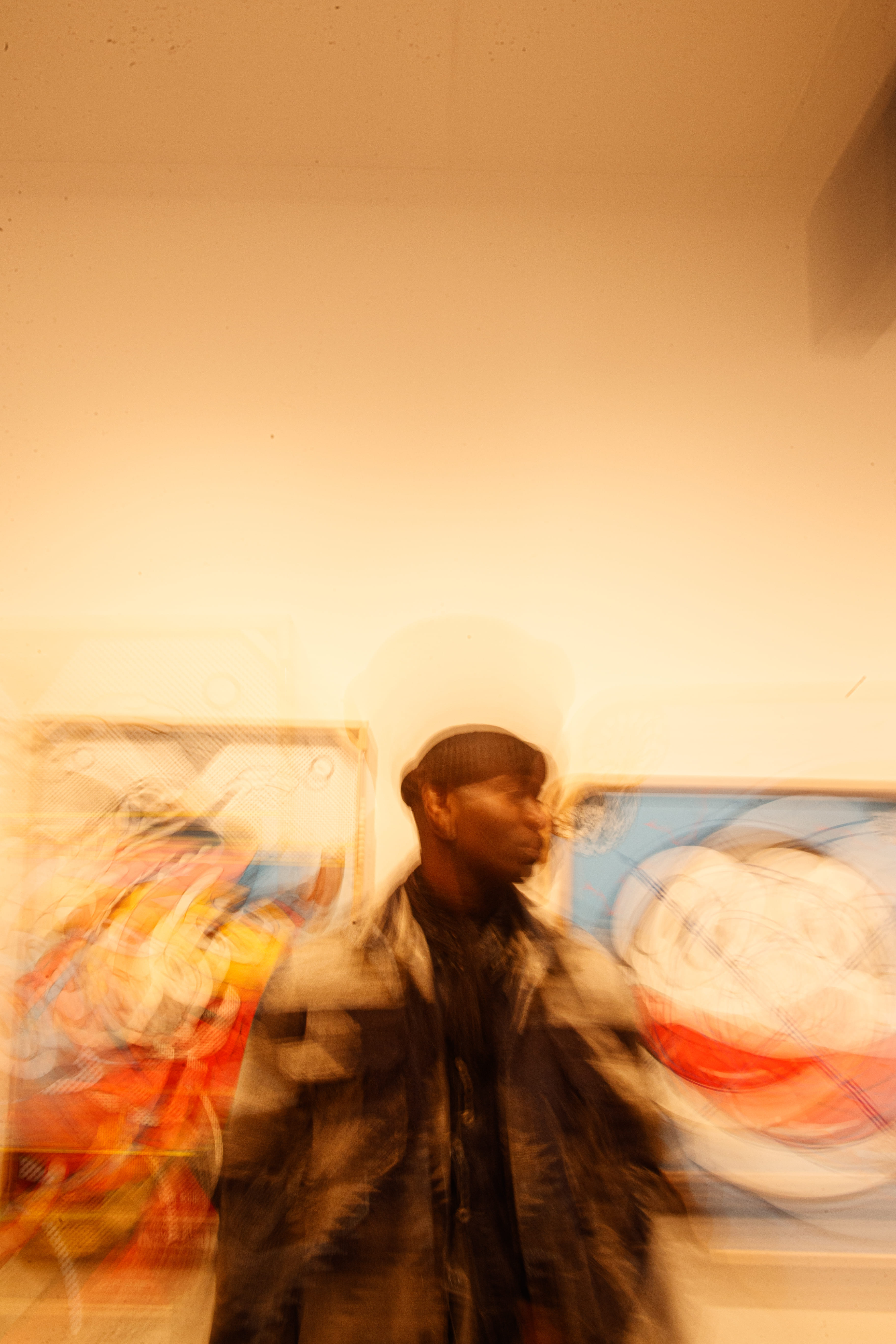
It starts with prayer. to center me and connect me to my purpose. Once I’m immersed, music is the force that carries me forward. Artists like D’Angelo, Keyon Harrold, and Pharoahe Monch create the sonic landscape. Their sophistication and improvisational qualities remind me to stay fluid and responsive to what the work is asking for.
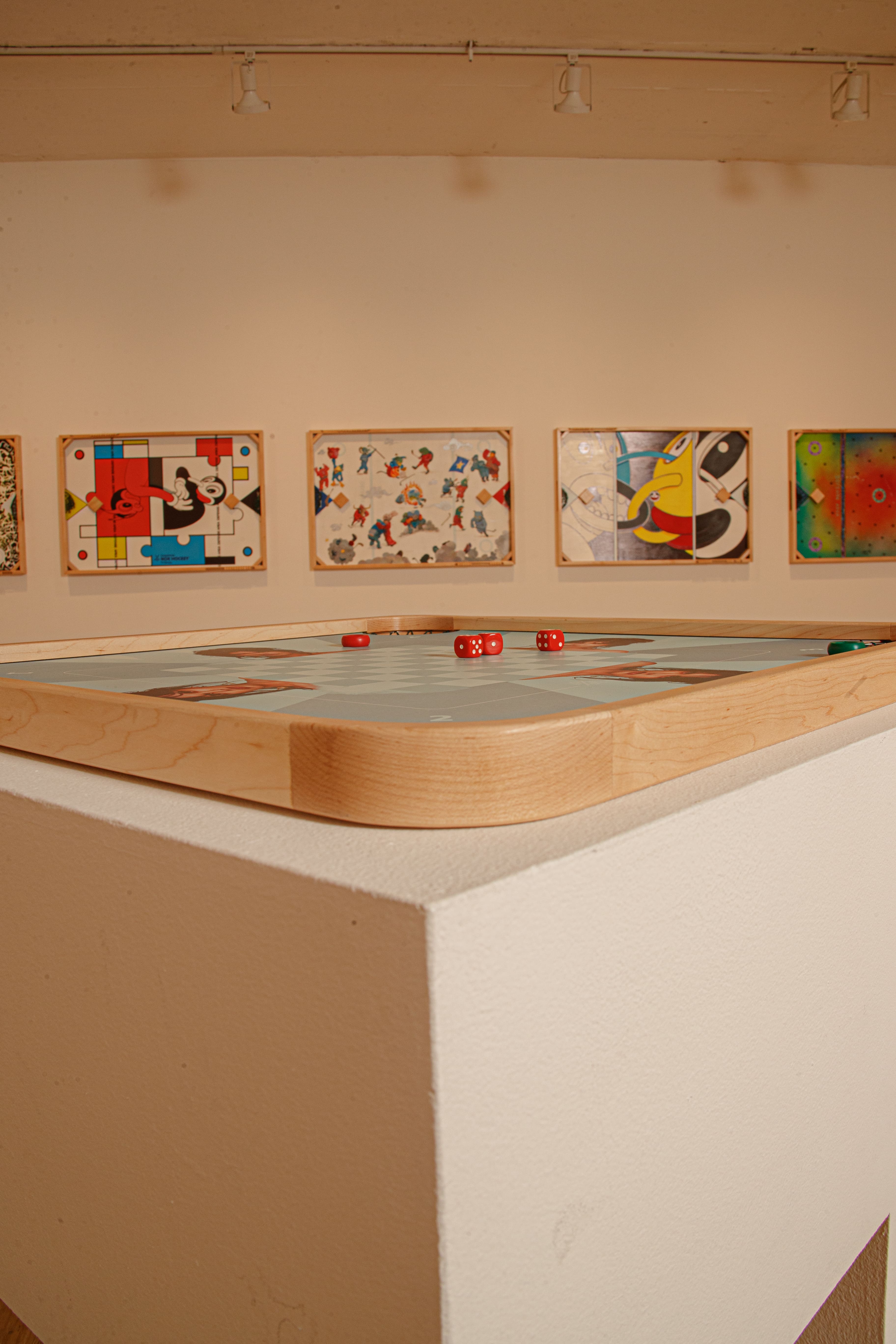
Walking into Ki Smith Gallery, you realise you aren’t just looking at pieces, you’re looking at a reclamation of imaginative freedom. The genius of Clarence Ruth is rooted in his intentionality.
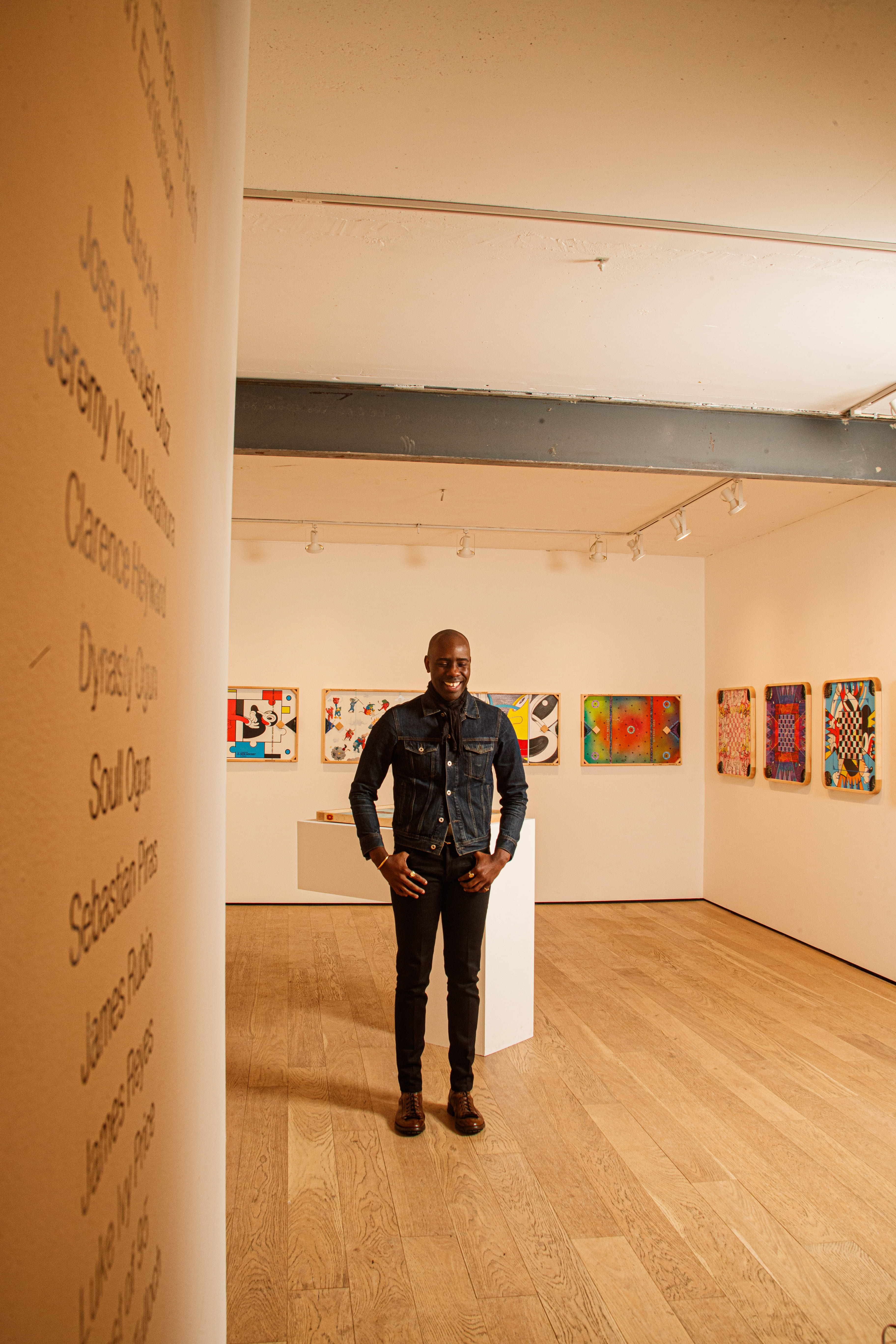
By refusing to stick to a single theme, Ruth ensures that people from all walks of life can connect with at least one piece. While the styles vary from technical precision to soulful sketches, the lack of a uniform aesthetic is the point, it represents our diverse world coming together in one space. If we can all come together on common ground, represented here by the Carrom board, it proves we have much more in common than we think. Ruth is deliberate with these differences. He doesn’t see them as a negative; he uses them to create what he calls a “sustained chaos” that gets people talking and interacting.
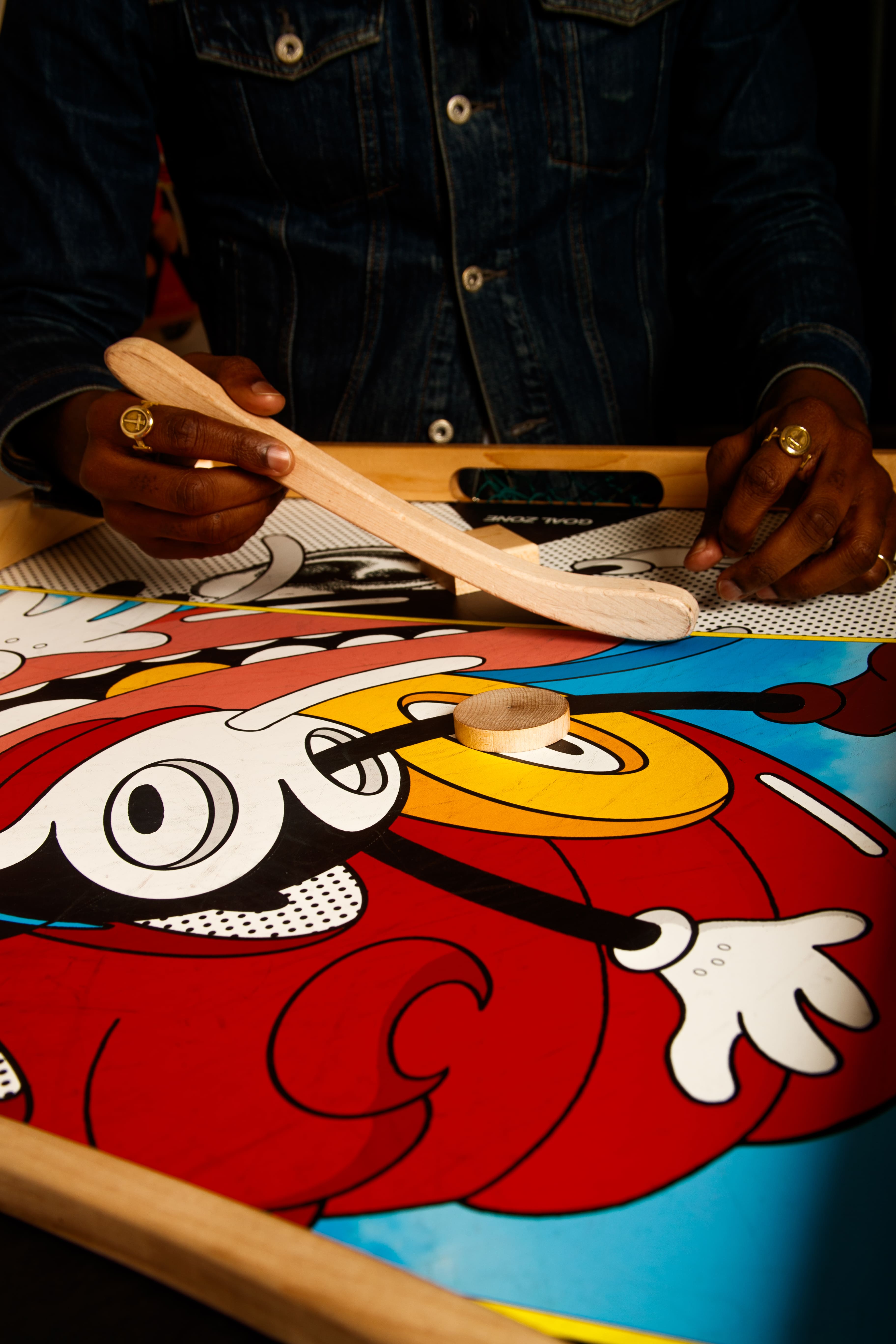
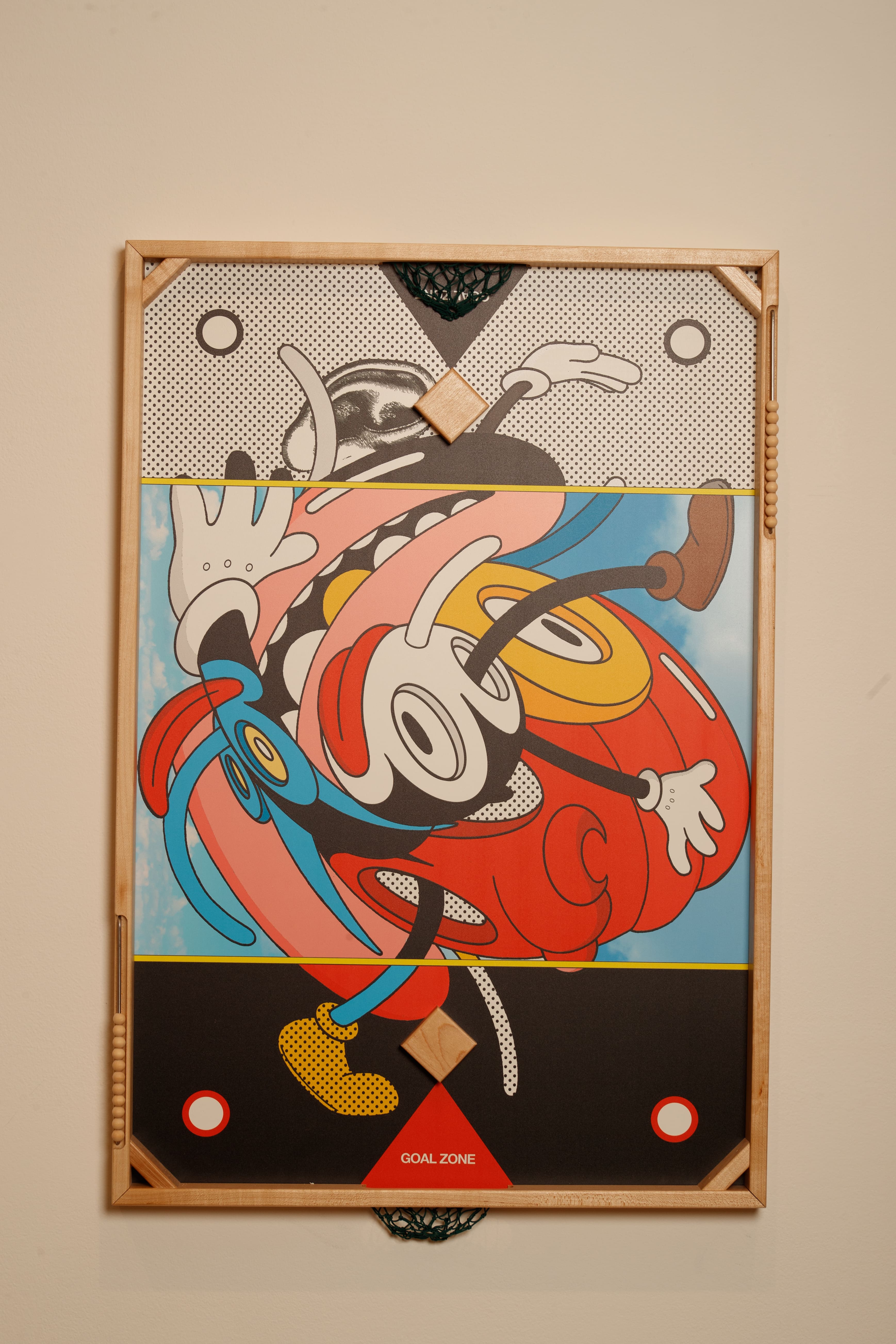
The exhibition also features Knock Hockey boards, which provide a beautiful, framed-canvas feel. Ruth was adamant that these boards retain their playability, they are meant to be touched and felt. In a world where the youth are glued to screens, he is using these boards to encourage us to look at one another and enjoy physical presence.
Clarence Ruth is a true originator. Whether he is designing fashion or painting his “Oreo” series to discuss identity, his work is about expanding beyond narrow categories. This exhibition is a blueprint for the future of creative innovation. As I left the gallery, I was reminded that art is most powerful when it stops being a distant object and starts being a lived experience.

“The artist cannot and must not take anything for granted, but must drive to the very heart of every answer and expose the question the answer hides. I am what time, circumstance, history, have made of me, certainly, but I am also, much more than that. So are we all.” — James Baldwin

Clarence Ruth proves that while the rules of the game are set by the past, the way we choose to play is what creates the future.
All photographs byJelani Warner.

The Board as Canvas: Clarence Ruth on Heritage and Play.

Authored by
This is some text inside of a div block.

Clarence Ruth is not interested in art that stays behind glass. A multidisciplinary force, spanning fashion collaborations with Mercedes-Benz and Tommy Hilfiger to fine art, Ruth’s latest exhibition at Ki Smith Gallery reimagines the 135-year legacy of the Carrom Company. By transforming vintage gameboards into canvases, he explores the intersection of heritage, communal joy, and the necessity of thinking outside the box.

You’ve mentioned your upbringing in a large household influenced this project. How did those early years shape your view of play as art?
I grew up in a deeply structured, faith-centered household where art became my sanctuary of unstructured thought. We didn’t always have the latest technology, so gameboards like chess and dominoes were how we bonded, they brought us into communion away from screens. In my community, these boards are where elders pass down lessons of strategy and patience. Using them as canvases felt organic, because our leisure and our joy are worthy of being celebrated as legitimate art.

When you look at a vintage 135-year-old Carrom board, do you feel restricted by its history?
I perceive both its history and its latent possibility. I have deep reverence for the 135 years of heritage and the generations of hands that touched these boards before mine. But I also see an opportunity to layer a contemporary narrative onto that foundation. These boards have already lived meaningful lives, now they get to carry new meanings and ignite different conversations.

What is the essential vibe in your studio to get into the Clarence Ruth headspace?
It starts with prayer. to center me and connect me to my purpose. Once I’m immersed, music is the force that carries me forward. Artists like D’Angelo, Keyon Harrold, and Pharoahe Monch create the sonic landscape. Their sophistication and improvisational qualities remind me to stay fluid and responsive to what the work is asking for.

Walking into Ki Smith Gallery, you realise you aren’t just looking at pieces, you’re looking at a reclamation of imaginative freedom. The genius of Clarence Ruth is rooted in his intentionality.

By refusing to stick to a single theme, Ruth ensures that people from all walks of life can connect with at least one piece. While the styles vary from technical precision to soulful sketches, the lack of a uniform aesthetic is the point, it represents our diverse world coming together in one space. If we can all come together on common ground, represented here by the Carrom board, it proves we have much more in common than we think. Ruth is deliberate with these differences. He doesn’t see them as a negative; he uses them to create what he calls a “sustained chaos” that gets people talking and interacting.

The exhibition also features Knock Hockey boards, which provide a beautiful, framed-canvas feel. Ruth was adamant that these boards retain their playability, they are meant to be touched and felt. In a world where the youth are glued to screens, he is using these boards to encourage us to look at one another and enjoy physical presence.

Clarence Ruth is a true originator. Whether he is designing fashion or painting his “Oreo” series to discuss identity, his work is about expanding beyond narrow categories. This exhibition is a blueprint for the future of creative innovation. As I left the gallery, I was reminded that art is most powerful when it stops being a distant object and starts being a lived experience.

“The artist cannot and must not take anything for granted, but must drive to the very heart of every answer and expose the question the answer hides. I am what time, circumstance, history, have made of me, certainly, but I am also, much more than that. So are we all.” — James Baldwin

Clarence Ruth proves that while the rules of the game are set by the past, the way we choose to play is what creates the future.
All photographs byJelani Warner.
This is some text inside of a div block.

The Board as Canvas: Clarence Ruth on Heritage and Play.

Authored by

Clarence Ruth is not interested in art that stays behind glass. A multidisciplinary force, spanning fashion collaborations with Mercedes-Benz and Tommy Hilfiger to fine art, Ruth’s latest exhibition at Ki Smith Gallery reimagines the 135-year legacy of the Carrom Company. By transforming vintage gameboards into canvases, he explores the intersection of heritage, communal joy, and the necessity of thinking outside the box.

You’ve mentioned your upbringing in a large household influenced this project. How did those early years shape your view of play as art?
I grew up in a deeply structured, faith-centered household where art became my sanctuary of unstructured thought. We didn’t always have the latest technology, so gameboards like chess and dominoes were how we bonded, they brought us into communion away from screens. In my community, these boards are where elders pass down lessons of strategy and patience. Using them as canvases felt organic, because our leisure and our joy are worthy of being celebrated as legitimate art.

When you look at a vintage 135-year-old Carrom board, do you feel restricted by its history?
I perceive both its history and its latent possibility. I have deep reverence for the 135 years of heritage and the generations of hands that touched these boards before mine. But I also see an opportunity to layer a contemporary narrative onto that foundation. These boards have already lived meaningful lives, now they get to carry new meanings and ignite different conversations.

What is the essential vibe in your studio to get into the Clarence Ruth headspace?
It starts with prayer. to center me and connect me to my purpose. Once I’m immersed, music is the force that carries me forward. Artists like D’Angelo, Keyon Harrold, and Pharoahe Monch create the sonic landscape. Their sophistication and improvisational qualities remind me to stay fluid and responsive to what the work is asking for.

Walking into Ki Smith Gallery, you realise you aren’t just looking at pieces, you’re looking at a reclamation of imaginative freedom. The genius of Clarence Ruth is rooted in his intentionality.

By refusing to stick to a single theme, Ruth ensures that people from all walks of life can connect with at least one piece. While the styles vary from technical precision to soulful sketches, the lack of a uniform aesthetic is the point, it represents our diverse world coming together in one space. If we can all come together on common ground, represented here by the Carrom board, it proves we have much more in common than we think. Ruth is deliberate with these differences. He doesn’t see them as a negative; he uses them to create what he calls a “sustained chaos” that gets people talking and interacting.

The exhibition also features Knock Hockey boards, which provide a beautiful, framed-canvas feel. Ruth was adamant that these boards retain their playability, they are meant to be touched and felt. In a world where the youth are glued to screens, he is using these boards to encourage us to look at one another and enjoy physical presence.

Clarence Ruth is a true originator. Whether he is designing fashion or painting his “Oreo” series to discuss identity, his work is about expanding beyond narrow categories. This exhibition is a blueprint for the future of creative innovation. As I left the gallery, I was reminded that art is most powerful when it stops being a distant object and starts being a lived experience.

“The artist cannot and must not take anything for granted, but must drive to the very heart of every answer and expose the question the answer hides. I am what time, circumstance, history, have made of me, certainly, but I am also, much more than that. So are we all.” — James Baldwin

Clarence Ruth proves that while the rules of the game are set by the past, the way we choose to play is what creates the future.
All photographs byJelani Warner.

Other Stories
London
London
Lagos
London
Newyork
London
Shop
Join the community.
You are now subscribed to receive updates.
Oops! Something went wrong while submitting the form.