.svg)

%20(1).jpg)
Black dating for Gen Z is now made available via the new app Ruut, but does it live up to expectations?
We’ve all been there. When your ex is a hot mess, your favourite eater is having an affair with their married boss, and your secret crush (happily in a committed relationship) isn’t replying to your text messages. For most, this may sound like a disastrous romantic sitcom; however, for Gen Z, it has become their everyday life. Dating, for whatever strange reason, just isn’t the same anymore. A quick statistic would showcase that 57% of single Gen Z adults aged 18-29 are not actively looking for relationships or casual dates.
So, what other options are there but to venture into the bloodthirsty digital world of online dating? Not many. Luckily, Ruut, a promising dating app for the African diaspora, has fallen into the picture via Instagram: “A new space built for Africans in the diaspora to connect, build meaningful relationships, and find their people - wherever they are in the world.” Wow, I am sold! It almost sounds too good to be true. What initially sparked my interest in this particular launched app is that I felt I was the exact target audience, which is rare to find as a member of the African diaspora in the Occident. Let’s be real, unless you’re situated in the big UK, US, or maybe Belgium, your dating pool within black spaces is pretty much invisible.
As a result, some have taken upon themselves to date “outside of their culture,” which is probably the most accessible alternative; however, it is not always ideal, depending on your personal preference or shared values. Another common ordeal, first popularized by millennials, is to date long-distance and eventually settle with someone from your home African country, for example, which, in retrospect, sounds like a marvellous adventure. Still, when you look at the average annual salary of Gen Z, the rising costs of the world economy, and the long-tiring demarche of a spouse visa, it feels like a dream only old money can buy.
This is why the concept of a dating app made specifically for the African diaspora is not actually a terrible idea, because it fills a gap in the market for a long-unanswered space, and it also provides a solution to an existing and growing demand. But that’s where things may get a little bit complicated and feel somewhat not-at-ease, because although you may think you can trust any online application to handle your private data appropriately, match you up with the right person, and eventually fall in love, at times, there is something cynical, near predatory, about the true intention behind some dating apps that prey upon the misfortune and desperateness of individuals to ultimately profit from them.
Deeds Magazine went down the rabbit hole to give you a brutally honest and fully transparent review of Ruut, looking for some background information, potential true intent and overall app experience. That being said, we are not experts or professional detectives by any means, and everything shared must be taken with a grain of salt. This is merely for entertainment purposes, and we do not take responsibility for any misdoings and negative experiences within the app. Also, we are not sponsored or have any relation to the creators of Ruut. Now, shall we?
“The heart takes what it wants, I’m not scared to bleed.” - Steve Lacy, the feeling
What We Know
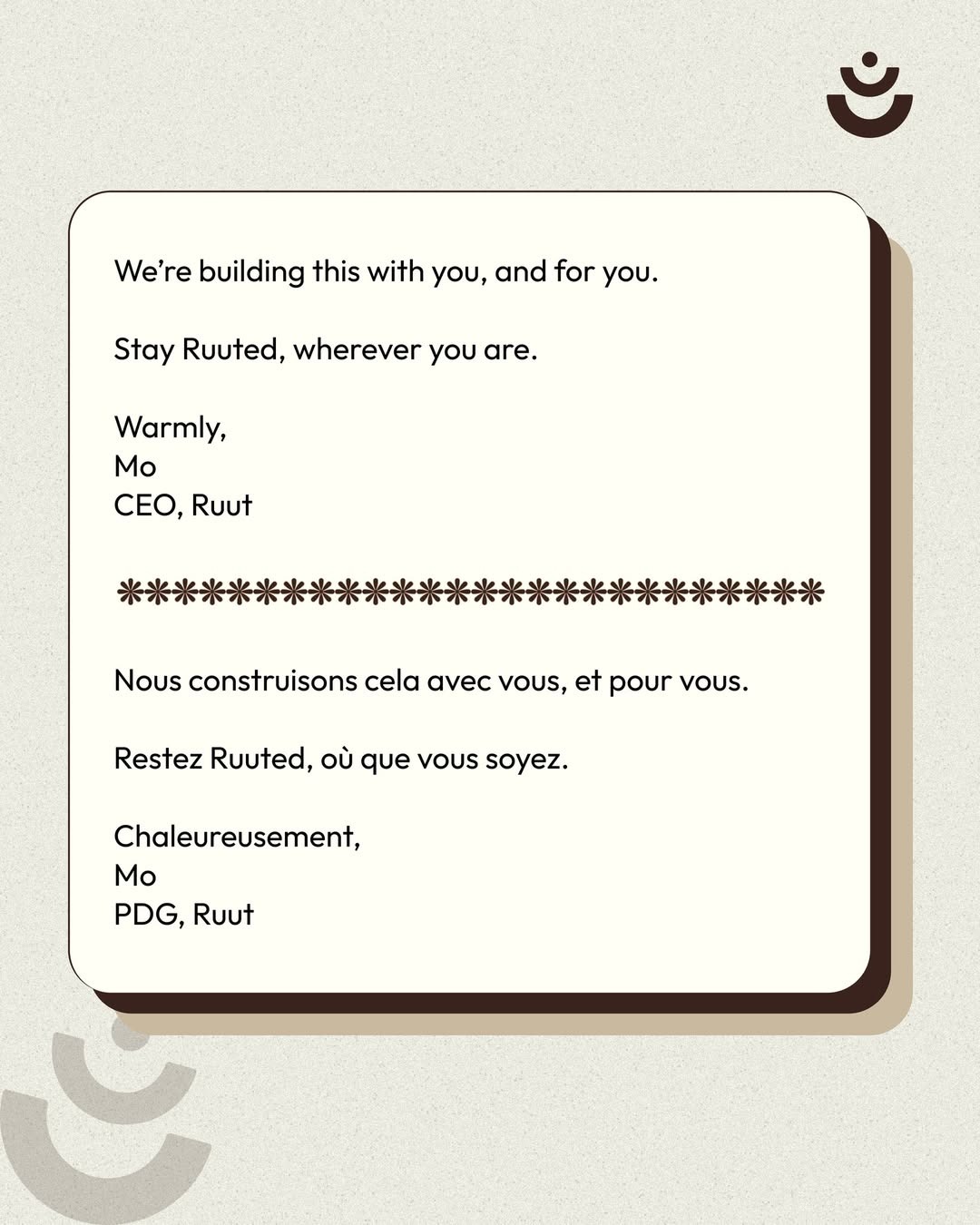
The first thing that came to mind when a Ruut promotional post popped up on my screen via a very well-known African news platform was, “Who is behind this idea?” Not to give the app any early praises; however, behind every brilliant idea, there is always a brilliant mind, and, like most fanatics of this generation, we’re used to the CEO guru model, for example: Steve Jobs representing Apple, Elon Musk representing Tesla, and many more. So when this particular app launched and there was no face to attach to the brand, to connect the dots, I became naturally suspicious.
It’s not that there is anything particularly wrong about wanting your privacy, but why make a public statement without introducing us to the mastermind? That is when we had to dig deep to find the missing puzzles. And the information we found may not build a full picture just yet, but it provides a clearer understanding of the brain behind this project.
What we do know is that Ruut is registered and trademarked through a parent company named TidyHub Technology Inc. since March 16th 2025, hence the founder is most likely a gent nicknamed ‘Slim Moh’ (Perhaps for Mohamed Slim?), a Nigerian immigrant who relocated to Ontario, Canada, under presumably a student visa. From this information alone, we can assume that he was inspired by his own difficulties in the dating market abroad and decided to offer an alternative, aiming at creating a safe space and reconnecting members of the diaspora with one another. However, a second plausible motive when looking through the fragments that the founder has left scattered across the internet is maybe a passive source of income. Hey, we all know it; studying abroad can be expensive, and surely an app that both helps others and can maintain a roof above your head isn’t illegal.
We were not able to find any public information on what the company TidyHub entails, or get a glimpse into the social media life of Slim Moh. As a comrade throughout our investigation stated, “...This your guy, Mohamed Slim, seems like a ghost.”
Lack of Transparency
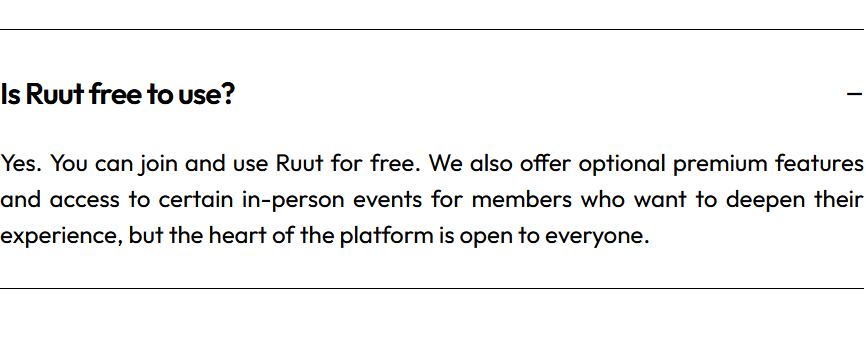
One perk about online platforms, especially for the Gen Z demographic, is that it’s free. Take Facebook, Twitter, Instagram or any social media platform. What do they all have in common? They’re mainly free. Of course, there are some additional features if you would like to sell products, for example, but the majority of the experience comes at zero cost. This is a key reason why we tend to always come back to these apps, even so much that it has developed into a second skin. I could personally not say the same about Ruut.
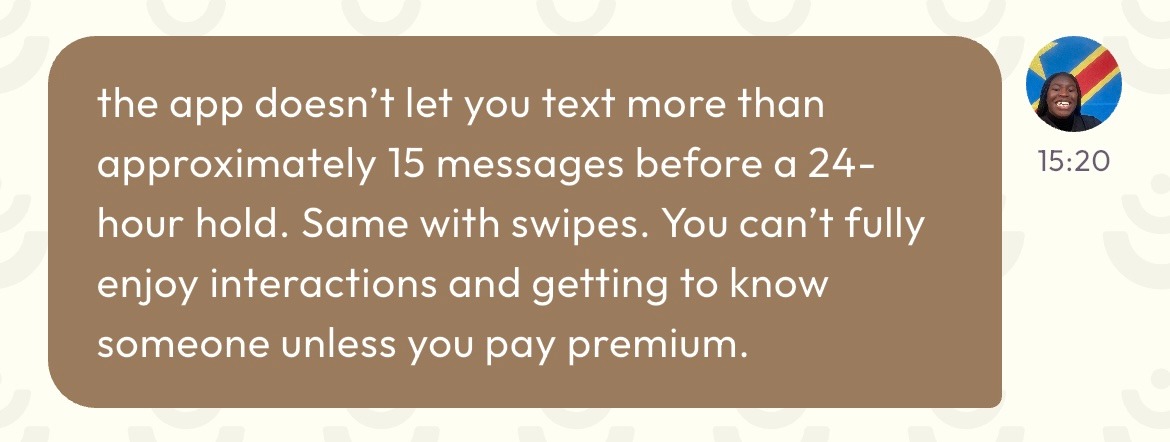
Although it has promoted itself as a platform you may use for free, the experience is unbearably limiting, so that one feels like they have no choice but to upgrade to a premium account. This is because the number of swipes you can make every 24 hours is approximately 20! On top of that, even though some individuals may have hearted your profile, you may not view them, heart them or message them back. This is undeniably frustrating and demands great patience, which I believe a Gen Z user may not have. What I found most frustrating is that when you do finally get a match, you are also limited in the interaction. You are only able to send out approximately 15 messages before being asked to wait another 24 hours. As an app that is supposed to be an alternative to real-life dating, this feels way too slow a process to be seriously considered–for free.
Another thing that we noticed is that there is a descriptive option that permits you to state that you are just looking for a friendship. For some reason, I had convinced myself that maybe this meant you were able to interact with users of the same gender, but nope! The app is strictly female to male, which may not be a direct criticism; however, something that should definitely be looked into. Why limit interactions to female(s) and male(s) when there is the option of meeting new friends? And why not open the range between male and male or female and female, since I’m sure I wouldn’t be the only queer or LGBTQ member who could consider this dating app over others currently available on the market.
Privacy Concerns
To be questioned down to your tribe when registering for their dating app feels awfully specific. It might be a little while since I’ve given online dating any attention; however, I do not remember a profile description being this specific. What I also noticed is that there weren’t any questions around height, body type or eye colour, which I think are more common options that these particular apps tend to use. This made me think, how else is our data being used and then distributed?
This took me to their Terms of Use, section 16: Privacy and Cookies to be precise, which mentions the following: “Third-party cookies and tracking technologies used by analytics providers, advertising partners, or app stores are governed by those third parties’ own privacy and cookie policies. We are not responsible for their practices, but we endeavour to work only with reputable partners and to comply with applicable data protection laws, as described in our Privacy Policy.” In other words, we have no idea how or to whom exactly our data is being distributed, and we have unknowingly agreed to that mystery when we first registered, oops…!
Not to bore you with any more important details; however, they also provide a long list against fraudulent activities. The part where I have trouble understanding is how this is actively being reinforced on the platform. This is because I am sure to have come across at least one AI-generated profile (Allegedly), which I could confirm because of the word ‘Animated’ spelt at the bottom of the image (Allegedly). A male peer, also utilizing the app, has claimed to have seen AI-generated profiles (Allegedly) floating around, which isn’t a great look when you’re trying to build trust and a long-term clientele if they have to question safety this early on.
Finally, from a user-to-user perspective, could we determine that our private information was entirely safe? And the honest answer is no. With the information shared from your profile on display, it was pretty straightforward to find a user’s socials outside of the app, including myself. Also, there are no features to avoid potential catfishing since you can take a screenshot of pretty much everything shared on the application. This is specifically worrisome as a woman because it gives easy access to users with ill intent to target people.
Final Ratings
Even just on optics alone, you can tell that this is a project with a lot of time, care and determination that has been placed behind its final product. We believe, although we could be wrong, that it doesn’t have the main characteristics of a “rug pull.” From the few interactions we’ve had, one could argue without a doubt that active users are seeking a serious connection. So who knows? Perhaps the love of your life is using Ruut as we speak.
So, would we recommend our single readers to use Ruut? The answer is on only one condition, and that is if you’re willing to upgrade to a premium account. Although they claim to have a free option, the restrictions are, in our opinion, just not worth it. Through a recent notification, we know that the Ruut team is actively improving the app. This leaves room for some of our harsh criticisms to be reevaluated.
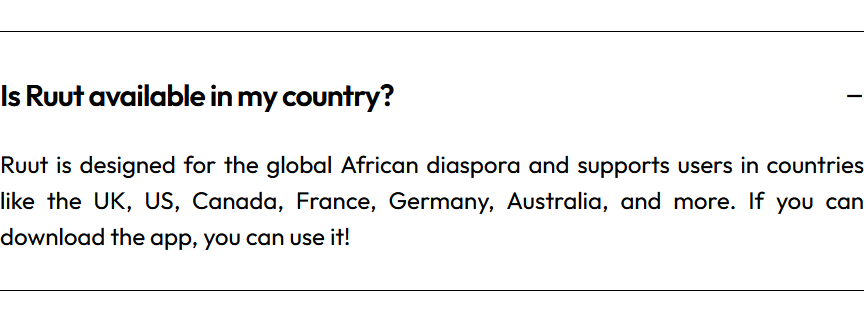
What we hope for the future of Ruut is that Mo and any other executives from the app may seriously consider widening the options in which one may interact with users, including friendships, potential serious relationships with the same sex and toning down the restrictions for free users! This would also mean the possibility, although a little bit more ambitious, of potentially allowing African users from the continent to be a part of the journey, for the simple fact that if we’re speaking geographically, the African continent is closer than Australia, so why not make it available to them as well? Perhaps just wishful thinking.
As a final message, Ruut is an alternative dating app that truly has a lot of potential. We can’t wait to see how it may develop in the near future and the successful stories that will come out of it.
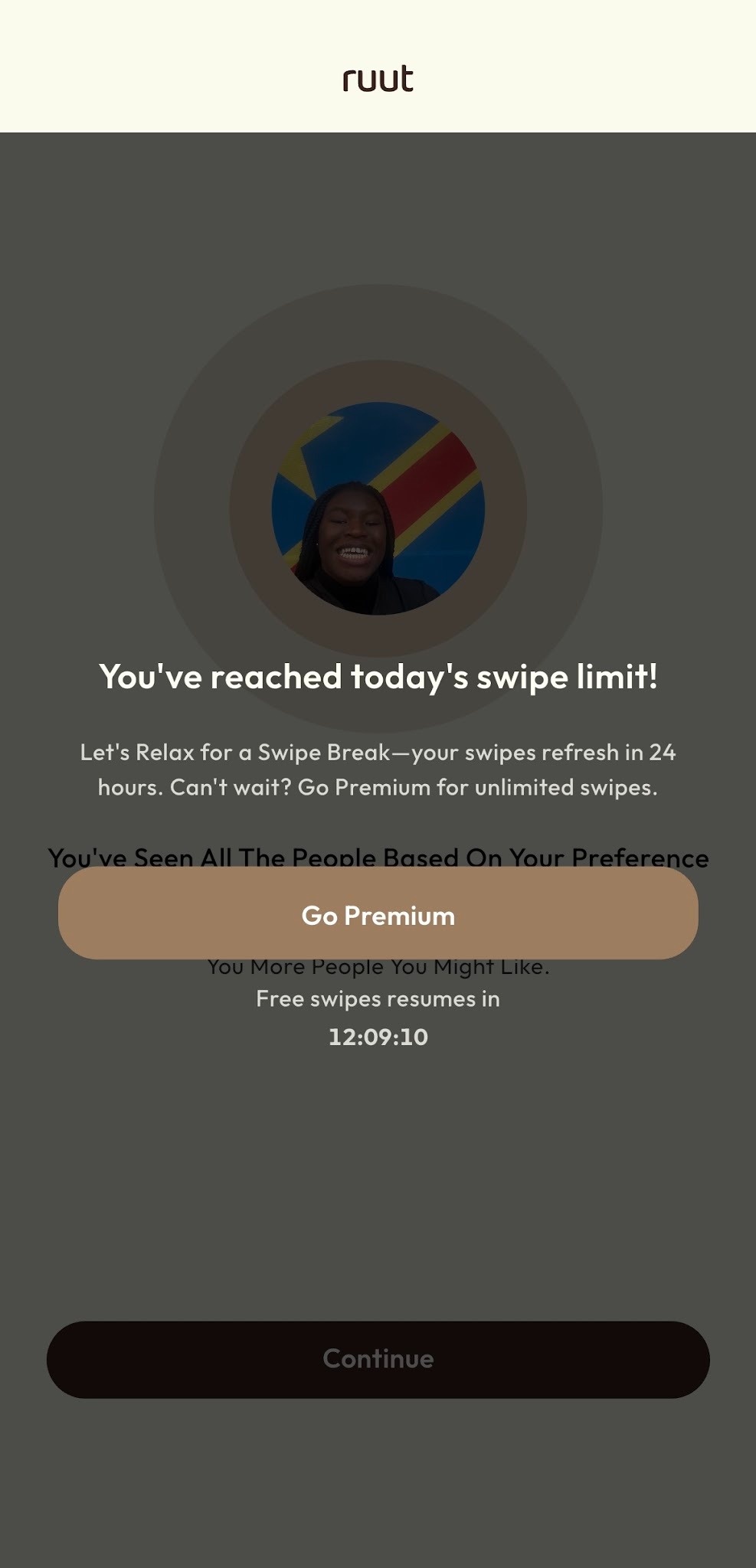
New Update
Our test profile was removed yesterday, that is, before the article was ever published, without any form of explanation. We never upgraded to premium for the sole purpose, as they claim, users may have the option to utilize the app for free. We made sure to obey all of the rules that were made visible. It began with what seemed to be some sort of shadow ban, which only permitted one to upgrade to premium. After the 24 hours were over, there was a little timeframe during which the profile was made available again. At this particular time, a second conversation was opened but never visited. A couple of minutes afterwards (about 10 - 15), the profile was logged out, and since then, we have been unable to log back in.
A few important things to note are that on the last day of experience, two things occurred. First, a notification stated that we ran out of options based on our preferences. That being said, a wider selection was automatically given for us to continue swiping. Secondly, which was done on purpose, we left a message within the app stating that an article was being written about Ruut. We have no proof whatsoever that either reason may have been the cause of our profile’s deletion. We wanted to test whether users’ privacy during chats was considered, which could include the exchange of nudity or “sexting.” Why the second action is particularly significant is that in the Terms of Use, Ruut have stated they have access to chats, and it would only be checked upon, though not limited to, when someone sends a report or a violation of rules. With that in mind, our understanding was that regular chats would not be “spied” and conversations were fully private. It is our belief, however, that talks of an article were detected and, therefore, the reason for the profile ban (allegedly).
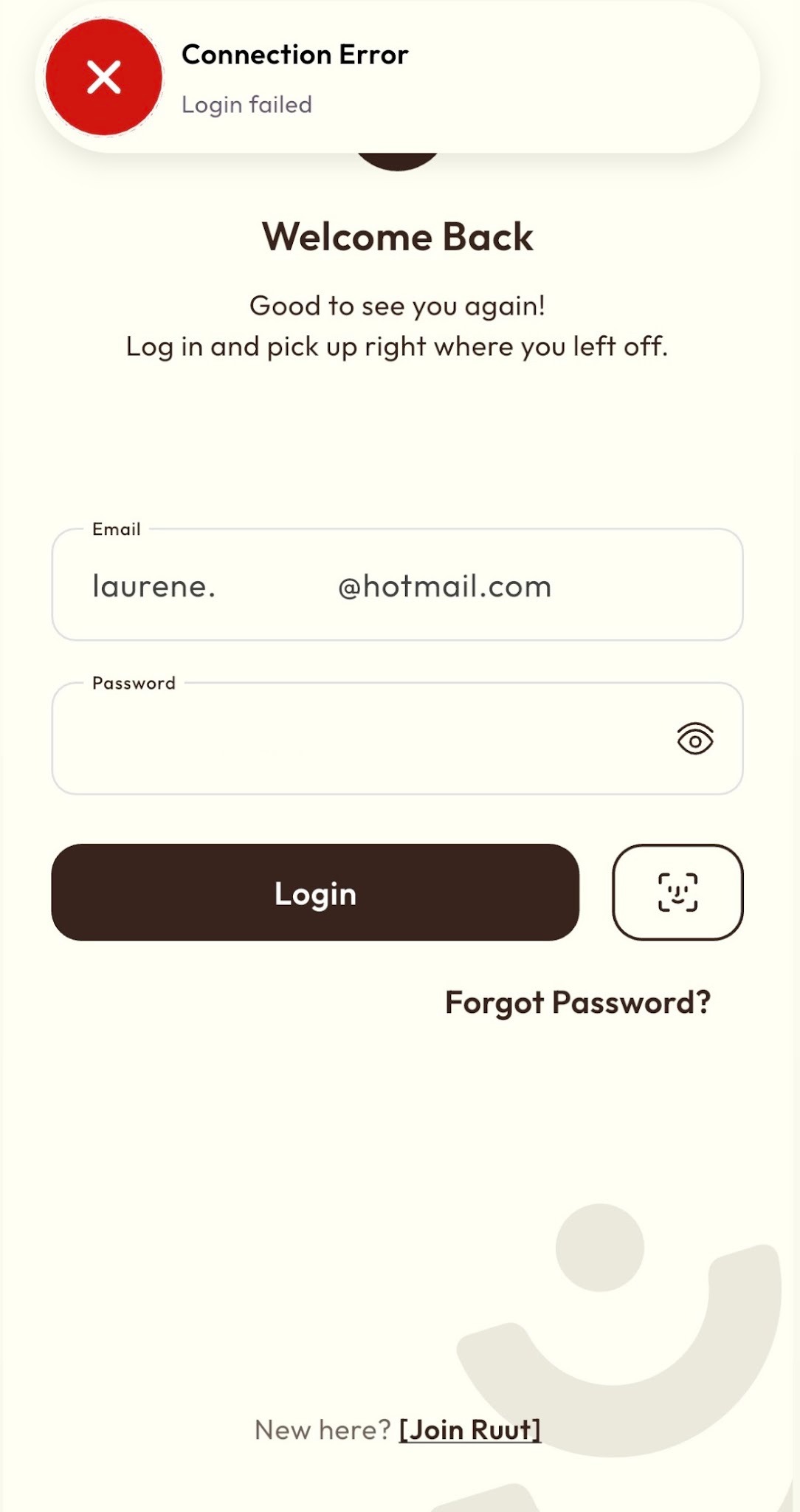
But who knows? For what we can tell, it could have also been resisting the premium upgrade after almost a week of general use and avoiding notification reminders. Thus making the app a stronger case of a potential “rug pull.” This would fall back to our main criticism: the lack of transparency and privacy concerns. You have no control over your profile removal, and what occurs to the data you shared prior, including profile description and conversations in chats. That said, our final verdict remains the same: register for the dating app at your own risk and hopefully, your experience that we would recommend as a premium user may be successful.
Credit: prostooleh on Magnific



.png)

