.svg)

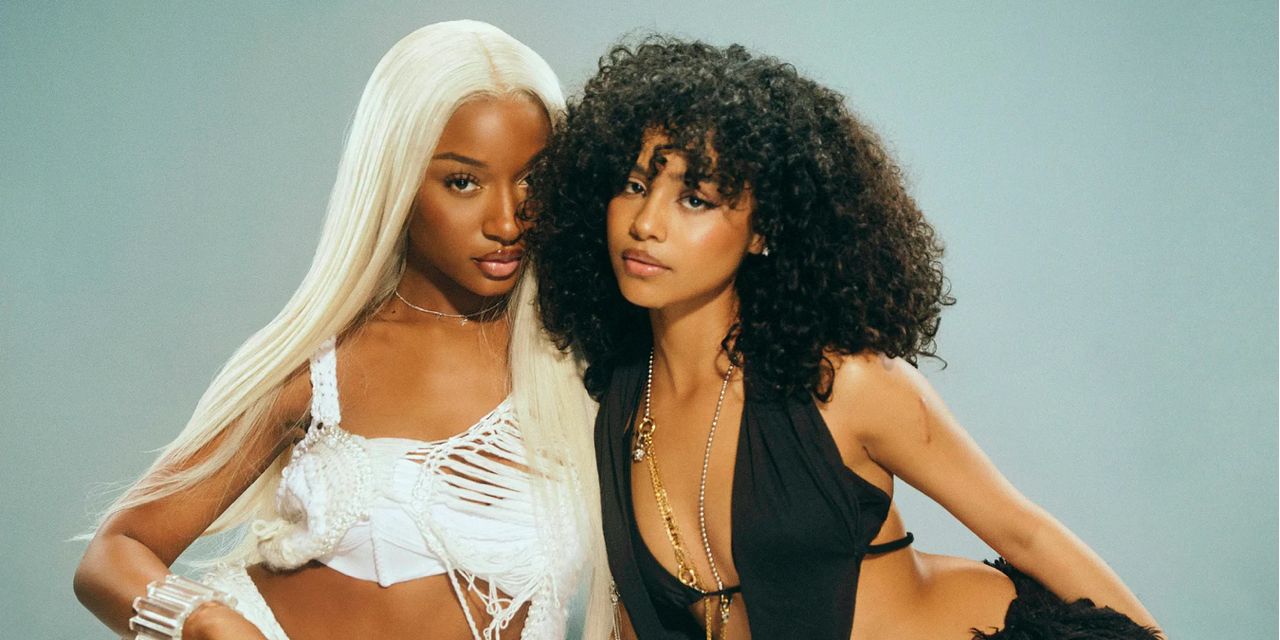
Tyla and Ayra Starr have never needed to announce a rivalry. The internet did it for them.
For years, the two African pop stars have been placed on opposite sides of an imaginary line. There are, admittedly, reasons people see parallels.
Both artists are young African women who have turned music, fashion and performance into global pop currency. Both have built careers around Afropop-adjacent sounds while refusing to remain confined to one genre to reach a level of international visibility where their careers are no longer judged only against other African artists, but against the world's biggest pop stars.
Both of their two latest studio albums add another metric to the comparisons. Tyla’s sophomore, A*Pop is a deliberate expansion of the sound she established with “Water.” At 14-tracks long, it continues to blend amapiano, Afropop, R&B and pop, while incorporating house, electronic production and dancehall.
More importantly, it is her attempt to increasingly use her global platform to foreground the musical culture that made her. South African artists MaWhoo and Babalwa M appear on the album, while her reworking of Liquideep's “Fairytale” connects her current pop world to an older South African musical lineage. The FADER described the album as Tyla taking a more expansive role as both collaborator and cultural emissary, while the Guardian noted her ability to move between genres with the ease of an established pop star.
Starr’s eponymous Starrgirl takes a different route, moving between Afrobeats, R&B, pop, soul and other influences, bringing together collaborators including Wizkid, Zayn Malik, Leon Thomas, Rema and more. Critics dubbed it her most adventurous album yet, noting that Starr stretches beyond the boundaries of her earlier work without abandoning the musical ecosystem that made her a star.
That distinction matters because once placed side by side, what emerges is not two artists copying the same blueprint but ones testing how far African pop can travel without abandoning its roots.
But it could be their career histories that also show why the comparison has become so tempting. Tyla won the inaugural Grammy for Best African Music Performance with her hit single “Water,” in 2024 and won the category again in 2026 with “PUSH 2 START.” Ayra Starr’s “Rush” was nominated in 2024, while collaboration with Wizkid, “Gimme Dat,” was at this year’s awards.
Nevertheless, Starr has plenty of milestones of her own. Signed to Mavin Records, she emerged with 19 & Dangerous in 2021 before expanding her sound and ambitions on The Year I Turned 21, two already acclaimed records that have cemented her place in the genre; an increasingly international résumé, from becoming the first Afrobeats artist to perform on Glastonbury's Pyramid Stage to winning two MOBO Awards in 2025, including Best International Act and her international management partnership with Roc Nation which has expanded her career infrastructure.
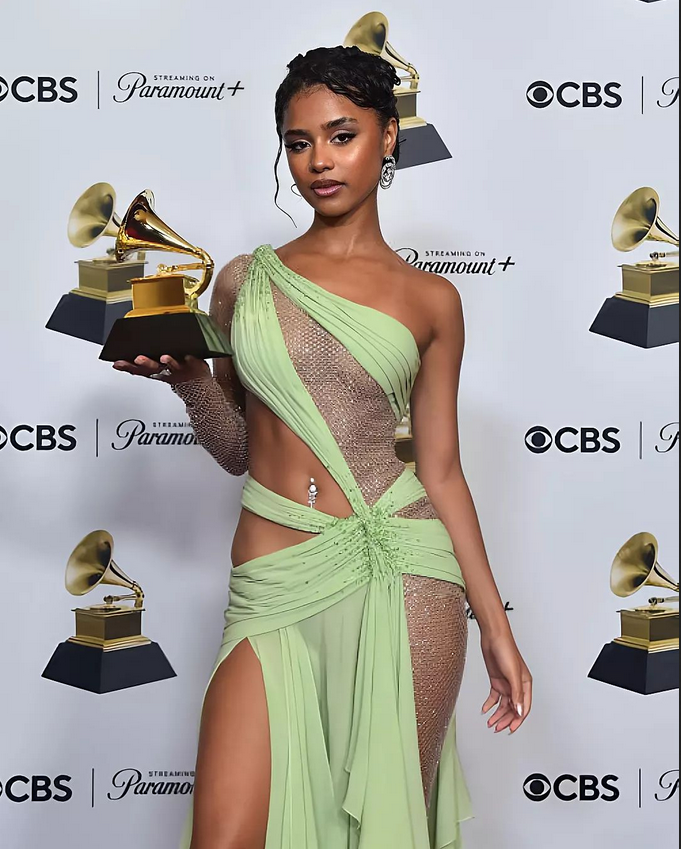
As much as the industry numbers therefore make the two women look like competitors, their actual careers make them look more like parallel examples of what African pop can now produce, which they captured perfectly in their 2023 collaboration, “Girl Next Door.”
Both artists have also adopted elements of the Y2K aesthetic that has dominated contemporary pop, appearing in tiny skirts, crop tops, low-rise silhouettes and deliberately sensual styling. Both use choreography as an important part of their performances. But none of these things belongs to either artist. The internet's treatment of choreography is particularly telling. Tyla's global breakthrough helped make Bacardi-inspired movement recognisable to audiences far beyond South Africa, but it’s not a dance style she invented. It is part of a South African cultural tradition that existed before “Water.” When Ayra incorporates similar movements, therefore, the question cannot simply be whether she copied Tyla. It must also be whether Tyla herself is being treated as the owner of a cultural form that is bigger than her.
The irony is that the accusations have gone both ways. Nigerian audiences have accused Tyla of borrowing from Ayra Starr, while South African audiences have accused Ayra of copying Tyla. The “original” changes according to which fanbase feels its woman has been threatened.
That is not really a plagiarism debate. It is fandom turning cultural exchange into territory. The women are not only compared as musicians. They are compared as women. Who has the better body? Who is sexier? Who dresses better? Who has the more desirable complexion? Who has the more “African” look? Who is more marketable internationally? Who is more original? Who deserves the bigger stage?
That’s never been accidental. The music industry has a long history of placing successful women into artificial competitions. Whether Beyoncé and Rihanna being framed as competing pop empires or Nicki Minaj and Cardi B in the female rap game. Mariah Carey and Whitney Houston were frequently reduced to the question of who had the superior voice. Yet those comparisons rarely function as neutral assessments of artistic differences. Women are expected to prove their greatness relationally.
There is a misogynistic scarcity built into that expectation. As opposed to men, women are more frequently presented as though only one can occupy the position of “queen.” They must be the prettiest, most talented, most successful, most fashionable or most desirable woman in the room and the Tyla-Ayra discourse reproduces that logic almost perfectly.
Their bodies, skin color, clothes and even their relationships with peers is part of the argument. More importantly colourism is especially revealing here. Tyla's lighter complexion has been cited by some critics as evidence of the beauty privileges that can accompany lighter skin in Western mainstream entertainment, while Starr's darker complexion is sometimes invoked as an explanation for why she supposedly receives less international recognition.
Those are legitimate structural questions worth examining, but turning them into ammunition against another Black woman only reproduces the competition that colourism itself helps create.
Then we add nationality — another already combustible comparison. Tyla's career is inseparable from South Africa, a country whose musical influence she has increasingly foregrounded. Yet South Africa's recurring xenophobic violence against African migrants, including Nigerians, has made her nationality politically complicated. In July, Nigeria publicly pressed South Africa to do more to curb attacks against Nigerians and other African migrants, with Reuters reporting deaths and the evacuation of nearly 1,500 Nigerians amid the latest violence.
Most recently when Tyla announced a Lagos stop on her A*POP World Tour, Nigerian social media erupted over whether the concert should go ahead amid the violence. Calls for a boycott followed, and days later the Lagos date disappeared from the tour itinerary. Crucially, there was no public confirmation from Tyla or her management that the removal was directly caused by the xenophobia controversy. The episode did however raise a difficult question about celebrity responsibility. Should she be expected to speak on xenophobia simply because she is South African? Or is that expectation itself unfair, effectively asking an artist to use their platform to become a spokesperson for the behaviour of an entire country?
Her later appearance at the South African Music Awards offered something less direct. Tyla spoke proudly about being African and expressed a desire to see a unified Africa. It was an affirmation of continental solidarity, but not a detailed public condemnation of the attacks that had triggered the Lagos controversy.
Starr's relationship to social issues is equally complicated. Nigeria has its own history of state violence and oppression, most notably the #EndSARS protests against police brutality. Amnesty International documented widespread abuses by the Special Anti-Robbery Squad, including torture, extortion and extrajudicial killings. Yet Starr should not automatically be expected to comment on every Nigerian political crisis simply because she is Nigerian.
But that has never been something new. It is the tension celebrities increasingly face. They do not owe governments political loyalty, but their platforms can become powerful cultural megaphones. When artists become international symbols of their countries, audiences inevitably ask whether representation should come with responsibility.
Rihanna offers another lens on that question, but her relevance to Tyla and Ayra is ultimately more personal. Tyla has openly cited Rihanna as a major inspiration, explaining that seeing someone from outside America achieve global superstardom made her believe she could do the same. On the other hand, Starr has also referenced the Barbadian mogul as her dream collaboration, but her relationship with the superstar has received a more visible public cosign – the Nigerian singer speaking about Rihanna's support and their interactions, particularly her publicly engaging with Starr's music. That distinction became particularly combustible in 2026 when Rihanna used Ayra's “Who's Dat Girl?” in a social-media post after the Met Gala moment involving Tyla. Online, the moment became evidence of a supposed hierarchy: one where Rihanna chose Ayra, therefore Ayra had won. Except she never said that.
The same misogynistic framework that turns Tyla and Ayra into rivals turns every celebrity interaction into a ranking system. A Grammy becomes a score, whilst forgetting some of the greatest artists of our time never won one or did so much later on in their careers. A song post becomes a cosign. A dress becomes evidence of copying. A friendship becomes a strategic alliance. Two women cannot simply exist in the same cultural ecosystem; their proximity must mean someone is winning.
That is why the Tyla-Ayra comparison deserves to be questioned without pretending the similarities do not exist. They are comparable. Their careers intersect. Their aesthetics overlap. Their music sometimes occupies neighbouring territory. Their awards histories give fans genuine material for debate. Their latest albums make for perfectly legitimate critical comparisons.
But comparison becomes misogynistic when it requires one woman to diminish another. The bigger story is that Tyla and Ayra Starr are succeeding during a period in which African music is becoming increasingly central to global pop. One is carrying South African amapiano and its surrounding musical traditions into new spaces. The other is extending Nigerian Afrobeats into a broader pop and R&B universe. Their success does not cancel each other out.
And maybe that’s what the internet finds hardest to accept. There does not have to be one African female pop star. There does not have to be one winner. Perhaps the most radical thing these two women can do is exactly what they appear to be doing: build careers big enough that there is no longer only one space at the top.


.png)

