.svg)

“Street style emerged from Black culture producing fashion — continuously, collectively, and without permission”
There is a particular kind of amnesia that fashion depends on. Every season arrives with the promise of discovery, as if silhouettes appear fully formed or trends are spontaneous. The spectacle thrives on this illusion. By the time an aesthetic becomes the subject of trend forecasting, it has usually lived elsewhere, refined without institutional approval and circulated through communities that were never considered part of fashion’s official archive.
Street style sits squarely within this pattern. It’s easy for cameras to flash and street style to be framed as spontaneous — fashion’s democratic counterpart to the exclusivity of the runway. But the mythology of spontaneity conceals that what is celebrated as street style today is built on a long history of Black cultural invention that extends across Africa and its diaspora.
Black street style has always existed and for many Black communities, fashion was never just presentation. It was evidence of self. A way to hold dignity, and a way to communicate belonging to each other even when broader culture refused to understand. Across the African continent, dress systems functioned as language before Western fashion institutions formed their hierarchies. Textile traditions like kente, mud cloth, and Ankara prints encoded lineage and philosophy through pattern and colour. Adornment was intentional. These were all systems of meaning, and precisely why street style does not begin with trend logic. It begins with presence.
The political stakes of appearance within Black life predates some aspects of what we now recognize as streetstyle. During the 1960s, visual presentation operated as ideological language. The uniform of the Black Panther Party, for example, communicated collective discipline and resistance through leather jackets, berets, and controlled silhouettes, transforming clothing into visual rhetoric. Around the same time, glamour moved through Black music in mainstream media in ways that felt equally political. Watching Diana Ross appear in sequins and immaculate styling, radiant and fully adored on screen, was visibility that felt expansive. These moments did not carry the language of street style at the time, but they established its philosophical groundwork that dressing is assertion.
By the 1970s, expression widened. Funk and disco allowed Black style to move toward joy without abandoning resistance. Artists like Chaka Khan embodied a kind of sensual freedom that translated directly into everyday dressing. Metallic fabrics, platform shoes, dramatic hair, unapologetic colour — these choices felt intentional. Groups such as Parliament-Funkadelic blurred costume and identity completely, proving that exaggeration could be its own form of truth. Street style absorbed that energy.
Across the diaspora, similar logics unfolded. In Congo, La Sape reinterpreted European tailoring through Congolese self-determination. These turned sharply tailored suits into declarations of dignity in postcolonial space. In Jamaica, Rastafarian aesthetics fused spirituality with visibility, natural hair, colour symbolism, and silhouette functioning as political theology. In Black Britain, grime culture transformed tracksuits and sportswear into a language shaped by council estates and youth negotiating surveillance and belonging. None of these were not isolated movements but parallel articulations of the same impulse: to style oneself as a way of claiming space.
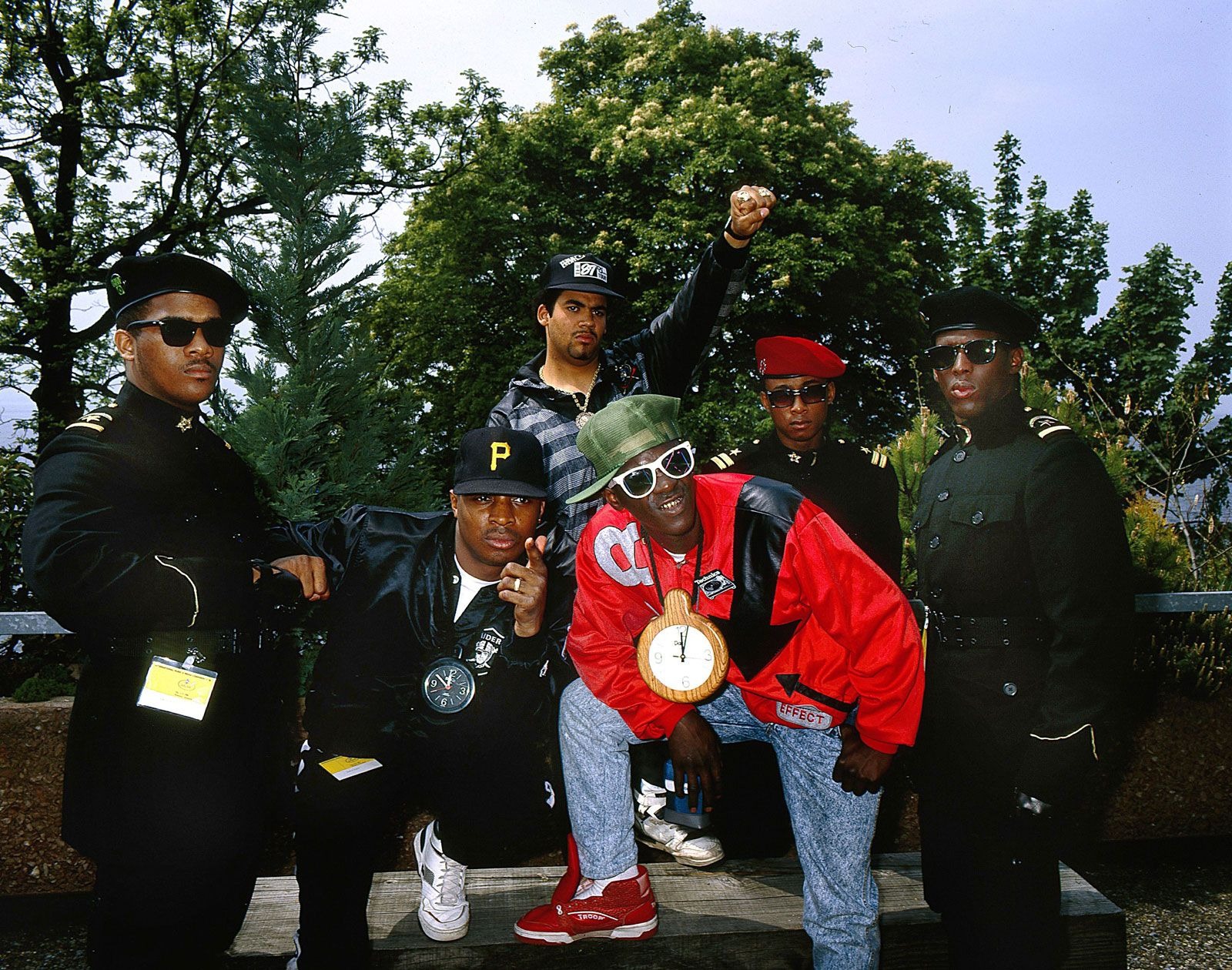
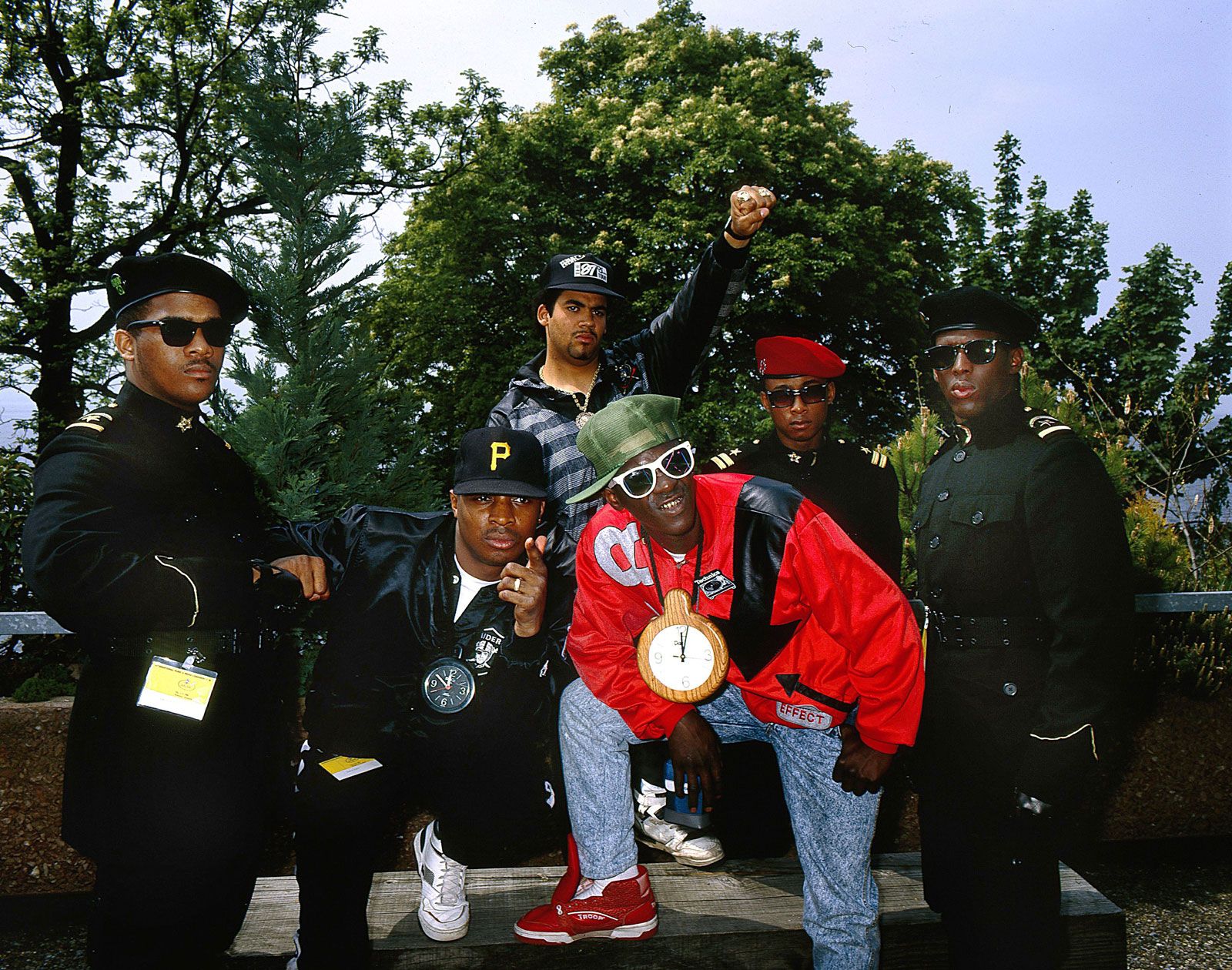
Hip-hop did not invent Black street style, but it changed how the world consumed it. With hip-hop’s emergence in the 1970s New York, the conditions through which these earlier aesthetic impulses would crystallize into what would later be identified as street style. The same sampling logic that structured hip-hop sonically shaped fashion practices, as Black youth repurposed sportswear, workwear, and luxury symbols into expressive uniform. What emerged from block parties and neighbourhood economies eventually rewrote global fashion priorities. Oversized silhouettes, sportswear as everyday luxury, sneakers as status language were not manufactured trends. They reflected resourcefulness and aspiration existing side by side. Garments were stripped of their original intention and reassembled to reflect neighbourhood identity, economic reality, and aspirational imagination simultaneously.
At the same time, oversized garments disrupted traditional tailoring norms, sneakers gained emotional and symbolic weight, and logos were worn with an awareness that blended aspiration with critique.
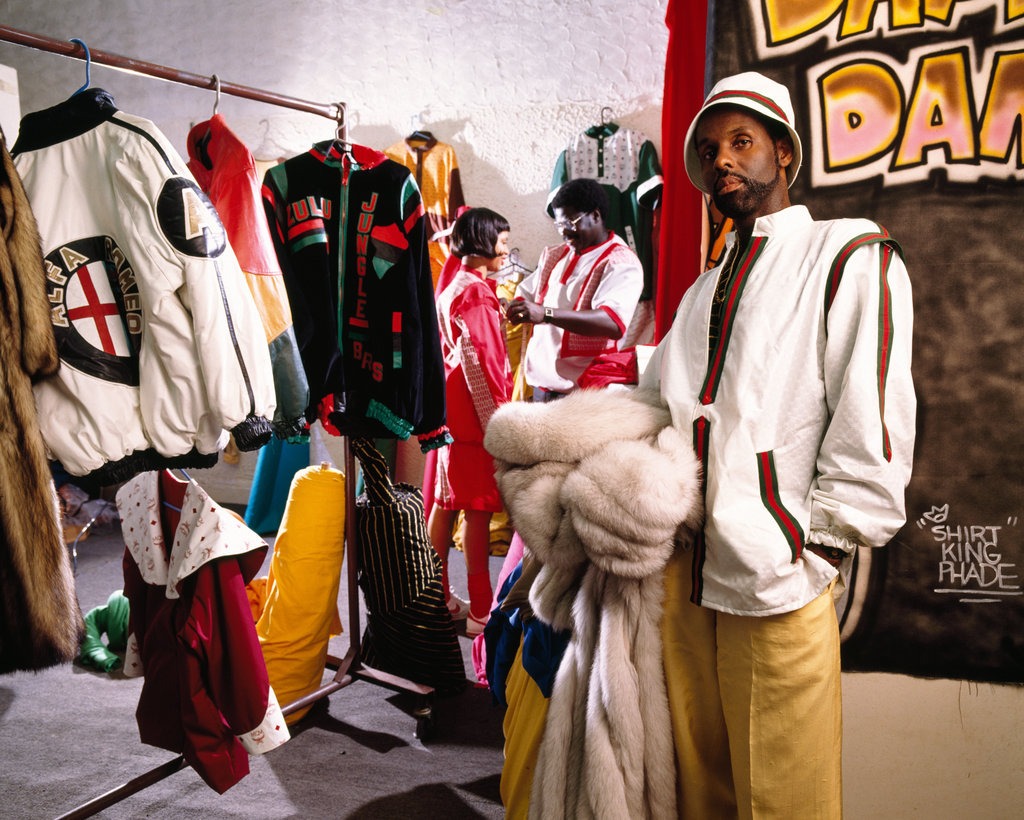
Few figures illustrate the politics of this reinterpretation more clearly than Dapper Dan, whose Harlem atelier reconstructed European luxury monograms into silhouettes tailored to hip-hop life. By remixing visual codes from Gucci and Louis Vuitton, he exposed the contradiction of desiring access to symbols of prestige while being structurally excluded from the institutions producing them. His work was not counterfeit in the cultural sense but theoretical, and decades later, the industry’s collaborations with him confirmed a recurring pattern in which Black creativity is first criminalized, then imitated, and eventually celebrated once economic potential becomes undeniable.
Street style’s authorship is also inseparable from Black queer expression. Ballroom culture created alternative fashion systems in which performance, fantasy, and identity experimentation were required. The visual excess of ballroom — gowns, tailoring, dramatic styling — offered a space where Black and Latinx queer communities could construct visibility outside of societal limitation. Way before gender fluidity became a marketable concept, these communities had already established fashion as a site of self-determined identity instead of fixed categorization.
Sneaker culture is another reference point that shows how street style transforms ordinary objects into narrative artefacts. Michael Jordan and Nike’s partnership catalyzed a whole cultural economy in which sneakers became evidence of participation within a shared cultural conversation.
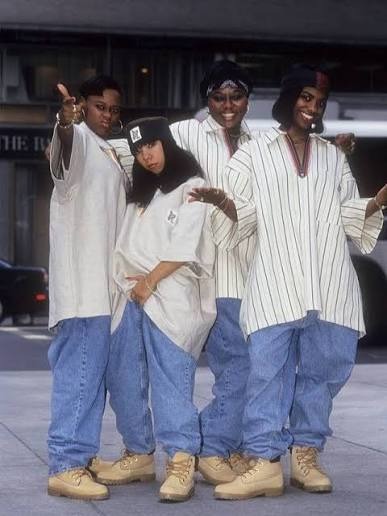
As hip-hop globalized, so too did the aesthetics rooted within it. By the late 1990s and early 2000s, silhouettes and styling practices born in Black neighbourhoods had migrated into editorial fashion, advertising, and luxury design. The transition was however reframed as discoveries rather than translations. This pattern reflects a broader tension within fashion’s relationship to Black creativity: innovation generated within marginalized communities is frequently detached from its origin once it becomes commercially viable. What is celebrated as universal style often began as culturally specific expression shaped by social constraint and creative resourcefulness.
Even today, the cyclical return of oversized denim, tracksuits, visible branding, and customized accessories does not signal nostalgia so much as the persistence of Black cultural archives continually resurfacing. Social media has definitely accelerated this circulation but this oftentimes complicates its authorship. Visibility has increased, but attribution remains uneven, and although street style is omnipresent, it is persistently decontextualized.
Understanding street style as a Black invention therefore requires confronting the politics of recognition embedded within fashion itself. It challenges the assumption that legitimacy originates within institutions and instead locates innovation within lived experience. Street style established the now-dominant belief that individuality could outrank designer authority, that community could function as tastemaker, and that fashion could emerge from improvisation.
What remains radical about the origins of street style is not any particular garment. It was the refusal of Black communities across continents to depend on validation. Fashion often narrates history through singular designers and landmark collections, but street style shows innovation as collective, improvised, and resistant to ownership. And even as luxury fashion still repeatedly mines its aesthetics and corporations convert its imagery into capital, the generative force continues to emerge from Black communities documenting themselves in ways that exceed trend cycles.
To pay attention to Black street style means understanding that fashion’s most compelling ideas rarely begin within institutions. They begin with people dressing themselves for their own lives, their own communities, their own sense of joy and survival. The industry arrives later, reframing what already existed as discovery. But the origin remains intact. Street style emerged from Black culture producing fashion — continuously, collectively, and without permission.
.JPG)


.png)

