.svg)


African Books by African Authors for the African Readers
On March 13th 2025, I participated in a panel discussion where I told attendees that years ago, I set myself on a challenge to read a book from every African country–but I lied. The truth is I only ever bought a fraction of those books and read about three of them. For long, I forgot about the challenge altogether. It was only when I recognized how little I knew about the world beyond my immediate surroundings, that I hoped to revive this pursuit–and this time, share my reading list with others who might feel the same curiosity.
After the panel, a South African author who was also a fellow panelist and on a book tour at the time, asked me which book from his region I had read. For some reason, I could not utter one of my favourite childhood books, ‘Tsotsi’ by Athol Fugard. It hadn’t occurred to me that this book, although the story is set in South Africa, I had never considered it a South African book, per se. Somehow without knowing, I had created those invisible rules in my head about what classifies a book from a specific region.
In that regard, I began thinking of the rules that I wanted to apply to this reading list. Firstly, each author must be the originators of the country they represent. This means no settlers, no diasporic members, no bypassers, etc… Why? Without making this too political; representation matters. By mere coincidence, if a native reader were to stumble upon this article hoping to find an author from their own country, regardless of whether the storyline directly concerns that country, then this should be the place they can.
Secondly, all selected works must be novels. This means no memoirs, anthologies, short stories, or poetry collections. Why such a narrow scope? In my experience, I found that literary niches aren’t for everyone, and to really capture the collective voice of a country, I believe novels tend to speak from the soul of the community in a way a few forms do.
Finally, you will quickly notice that there are exceptions to the rule–or better said, some rules are meant to be broken. As I researched for this project, I realized not all nations have access to or have been granted English translations of their literary works. If this was the case, I must say I’d have far more interesting recommendations to offer. However, I am also aware that not everyone speaks French and if the goal is to reach a global readership, English editions are preferred.
Regardless of whether you agree or disagree with the selections, my hope is that you learn something new–because I certainly did. When we speak of resistance and especially in modern days, nothing rings as true as the AES coalition. I was genuinely surprised to learn how difficult it was to find a fiction story on the great Mali Empire, for example. Novels during the late Sankara’s era, or even an English edition reciting at heart the everyday life in Niger.
Now I know that there are hidden gems out there that for some reasons unknown to me, they did not appear during my research. And so, rather than presenting this article as the ultimate guide, or the one and only list you will find of a book from your country of origin, take this matter as an effort of representation, accessibility and a small step in the right direction; highlighting literature of the motherland and its authors whose voices emerge from it.
.jpg)
1. African Psycho - Alain Mabanckou (Congo)
If I were to create an imaginary hierarchy of African literature that I believe to be the best books ever written, then ‘African Psycho’ by Alain Mabanckou would be on top of the pyramid. There’s nothing more unsettling yet thought-provoking than to be forced into the mind of a psychopath of the Republic of the Congo (Not to mistake with Republic Democratic of the Congo) and coming to the realization towards the final chapter that this individual could possibly live among us. Despite Alain’s sentiment towards my country of origin, the Republic Democratic of the Congo, which reflects throughout his passages, it would be almost disingenuous of me not to recognize this book as what it is–a masterpiece in narrative.
.jpeg)
2. Things Fall Apart - Chinua Achebe (Nigeria)
It wouldn’t be an African literary list without Nigeria A.K.A the giants of Africa were not involved. Some may argue author Wole Soyinka or Chimamanda Ngozi Adichie to be a better representation; however, before you judge my final decision, just hear me out. If you were to select one book, one story, regardless of any series or era, then it would be without a doubt ‘Things Fall Apart’ by the late Chinua Achebe. This debut novel follows a Nigerian family in the pre-colonial era and shows how in its compelling narratives, they ultimately fall into the hands of their opponents. Besides the obvious groundbreaking storytelling, the passage of time is masterfully handled, keeping readers engaged until the very last page.
.jpg)
3. This Mournable Body - Tsitsi Dangarembga (Zimbabwe)
A read that truly shocked me during my earlier attempt at this challenge was ‘This Mournable Body’ by Tsitsi Dangarembga. I must admit that I knew nothing about Zimbabwe’s history prior to reading this book–and like the best stories do, this opened my eyes to an entire new world I had been unfamiliar with. This novel gives a glimpse into the life of an old Zimbabwean woman at the bottom of her luck. Her struggle to make ends meet and secure affordable housing is deeply woven with the country’s history and the social and economic conditions it faced after independence. Perhaps what is the most intriguing aspect of this book is the unexpected turn of events throughout this story, which seemingly transforms the main character who was for long placed at the sidelines of her own story, to the middle point of a totally different narrative.
.jpg)
4. The Scent of the Father - Valentin-Yves Mudimbe (DRC Congo)
Known to many as one of Africa’s greatest minds and Congolese author of ‘The Invention of Africa’, the late Valentin-Yves Mudimbe is a force to reckon with and that I’m afraid I’ve only become aware of his work far too late. Often overlooked in the literary world, his influence is still felt towards the newest generation of Congolese writers wanting to experience just a thread of his excellence. In this case, the exception to the rule applies. The reason I chose this book consisting of essays that I have yet to obtain and read is because of this quote from the description; “For Africa to escape the West, says Mudimbe, it must become aware of what remains Western in the very concepts and forms of thought that allow it to think against the West...” I believe ‘The Scent of the Father’ is only the beginning of a journey through Mudimbe’s large catalogue.
.jpg)
5. The River Between - Ngugi Wa Thiong'o (Kenya)
When it comes to an African pioneer who influenced my work the most without my knowledge, ‘The River Between’ by the late Ngugi Wa Thiong’o still echoes through me. From the very moment I wrote a poem sharing his title, to the time I had the opportunity to purchase this exact book at my own launch, Ngugi’s writing follows me wherever I go and I am still inspired by his words today. I couldn’t possibly do justice with an explanation as I am still unfolding what is a very hard read I must say; however, worth every drop of a tear. It explores the role of christianity forced upon by the early settlers and how this Kenyan tribe is torn to build a new form of existence not only in this period, but also in its future to come. I am of the opinion that if you can get through this work of art, then you can pursue any other works of Ngugi's.
.jpg)
6. The Beautyful Ones Are Not Yet Born - Ayi Kwei Armah (Ghana)
A father of African literature that I’ve surprisingly only heard of this year although I knew of this book years ago is ‘The Beautyful Ones Are Not Yet Born’ by Ayi Kwei Armah. Not to take away from any of his shine; however, for those who are intrigued, I read Ghanaian author Yaa Gyasi’s ‘Homegoing’ as part of the challenge. There’s something gravitating from the title of his debut novel alone, and when you find out that the story is about a man resisting temptations in a quest to preserve his integrity, a whole picture is revealed before you. Unfortunately, I believe Ghana is often overshadowed by their African cousins, namely Nigeria. Which is a fuss because this novel has awfully good reviews.
.jpg)
7. Neighbours - Lilia Momple (Mozambique)
This hits close to home for me because if it wasn’t for a friend that I made along the way who comes from Mozambique, it wouldn’t have sparked a curiosity in this country who I thought was French-speaking; however, it happens to be a Portuguese past colony. Where ‘Neighbours’ by Lilia Mompele fall in line is that it’s a murder story set in Mozambique where a rumour of foreign invasion causes torments to this group of households in the capital city of Maputo. From my understanding as a future reader of this book is that the story urges you to face the country’s complex past and its current state.
.jpg)
8. Allah is Not Obliged - Ahmadou Kourouma (Ivory Coast)
Perhaps a region that doesn’t make much noise in the literary world; however, is vastly known throughout the continent for its booming music is none other than Ivory Coast. I am glad to share ‘Allah is Not Obliged’ by the late Ahmadou Kourouma as I plan on reading this in the feasible future. The story is about a young Ivorian boy who, after his mother’s passing, is seeking a new life in a neighbouring country; however, has fallen victim to the war and is forcibly drafted as a child soldier. He must succumb to unimaginable adversary and it is with the famous words; “ALLAH IS NOT OBLIGED TO BE FAIR ABOUT ALL THE THINGS HE DOES HERE ON EARTH,” that he may find meaning in the suffering.

9. The Heart of Redness - Zakes Mda (South Africa)
As I mentioned before, it would be hard to beat my childhood favourite ‘Tsotsi’ with any South African book I may read moving forward; however, representation matters and certainly in a region with a rich history of destabilization by its settlers. When I came across ‘The Heart of Redness’ by Zakes Mda, it spoke to me. For now, I can not wait to make this read come true. A South African who went on exile during apartheid returns to his home country to find it anew. Followed by an eccentric love story, false promises of a tribe and a deep look at a terrain recoupling after blood was shed for centuries, I think it is a good look into the psyche and spirit of the new South Africa movement.
.jpg)
10. Woman at Point Zero - Nawal El Saadawi (Egypt)
I don’t think there’s a single writer that I’ve watched their short clips on the internet without ever reading their actual work more than this feminist anchor. So when it was time to rekindle this forgotten challenge, I set my eyes on ‘Woman at Point Zero’ by the late Nawal El Saadawi. Only the future will tell when I get the chance to read it. As an Egyptian woman born into a poor family in the countryside, manages to break the shackles of her childhood, she ventures into a life full of lessons. Every relationship she comes across becomes a harsh reminder that, and I quote; “the only free people are those who want nothing, fear nothing and hope for nothing.” The story ends with her finding freedom in her own form of tragic yet realistic ending.
.jpg)
11. Ghost Season - Fatin Abbas (Sudan)
I still remember when I first saw the cover of this debut novel in its German edition. Firstly, it must be said that I have a long deep love story with the nation of Sudan for I believe they are masters in poetry. Although that may be the case, I wasn’t as much familiar with their novels, which I believe would really allow outsiders to penetrate into the depth of its country. So this is a must in due time. ‘Ghost Season’ by Faith Abbas captures the nuances of artificial borders, whether it’d be physical, ethnically or religiously. As tension rises in a town between Sudan and South Sudan, a single dead body brings a group of different individuals there together. The story follows their journey at the midst of a civil conflict.
.jpg)
12. Call and Response - Gothataone Moeng (Botswana)
.jpg)
13. The Purple Violet of Ashaantu - Neshani Andreas (Namibia)
.jpg)
14. The Happy Marriage - Tahar Ben Jelloun (Morocco)
.jpg)
15. The Shadow King - Maaza Mengiste (Ethiopia)
Not to sound like a broken record; however, ‘The Shadow King’ by Maaza Mengiste was one of these few instances where I purchased the book for the challenge and never got around to reading it. As an apology to our beloved readers, I will share a short description instead. It is the beginning of WW2 where the current Ethiopian emperor struggles to defeat the Italians. Only when an orphan who works as his maid offers a plan to maintain their spirit that its people begin to see a glimmer of hope. Lyrically intertwined with Ethiopia's history and women empowerment, it serves as an homage to the forgotten female heroes of history.
.jpg)
16. Silence is My Mother Tongue - Sulaiman Addonia (Eritrea)
.jpg)
17. The Fortune Men - Nadifa Mohamed (Somali)
.jpg)
18. In the United States of Africa - Abdourahman A. Waberi (Djibouti)
.jpg)
19. Weeding the Flowerbeds - Sarah Mkhonza (Eswatini)
.jpg)
20. Baho! - Roland Rugero (Burundi)
.jpg)
21. A Girl Called Eel - Ali Zamir (The Comoros)
.jpg)
22. Three Egg Dilemma - Morabo Morojele (Lesotho)
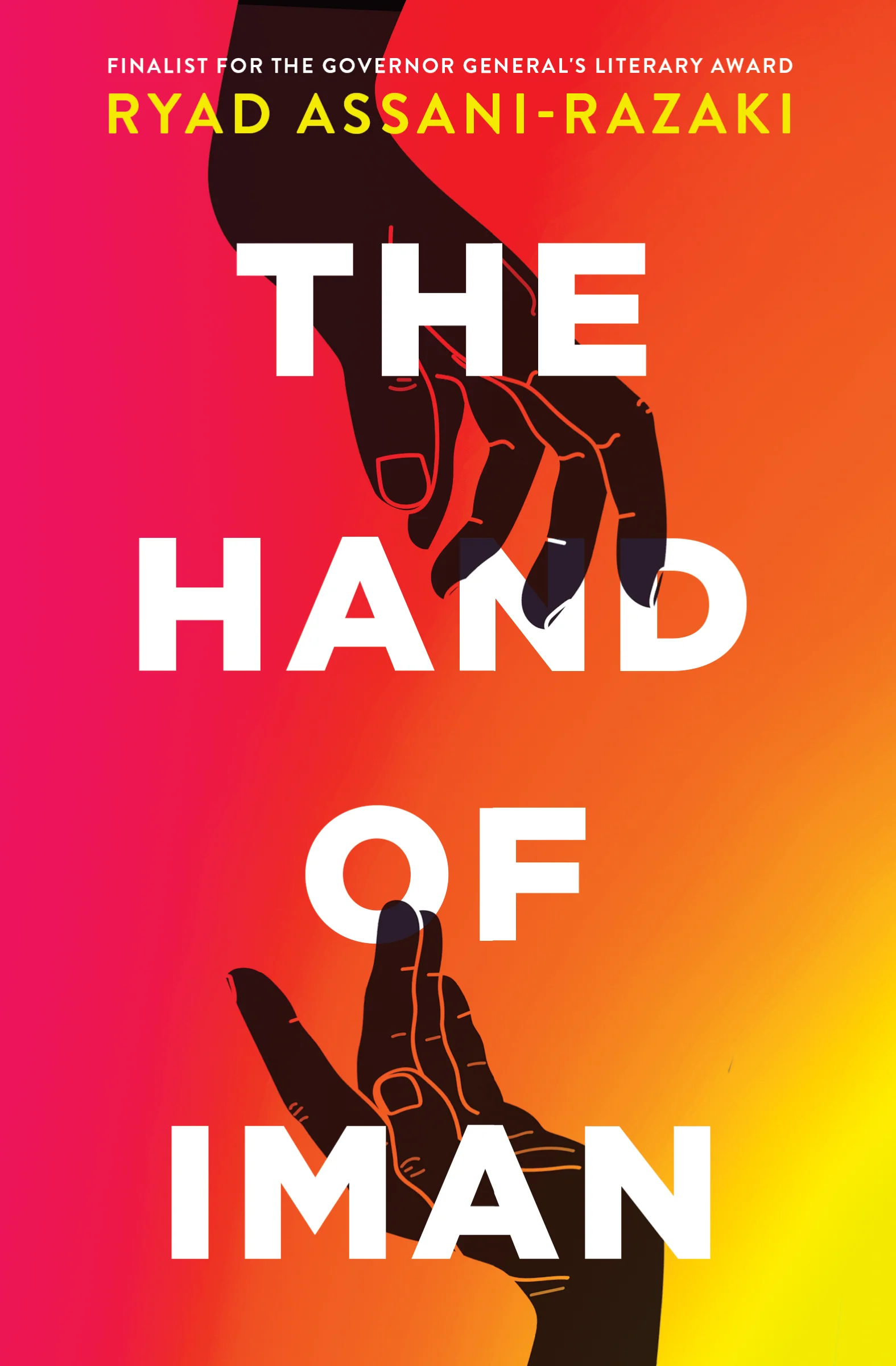
23. The Hand of Iman - Ryad Assani-Razaki (Benin)
.jpg)
24. Michel the Giant An African in Greenland - Tété-Michel Kpomassie (Togo)
.jpg)
25. So Long a Letter - Mariama Bâ (Senegal)
.jpeg)
26. Swing Time - Zadie Smith (Gambia)
From reading the book description alone, you wouldn’t think that it is a story that I’m particularly fond of; however, I have seen‘Swing Time’ by Zadie Smith everywhere that at this point, it’s a must read. It is a dangerous act to read a book solely because of its visual familiarity and it rarely occurs to me to be the case. Two dancers who happen to be friends with one who’s talented and the other is idealistic. What could possibly go wrong? I hope our Gambian readers will give me an E for effort.
.jpg)
27. The Fury and Cries of Women - Angèle Rawiri (Gabon)
.jpg)
28. The Ultimate Tragedy - Abdulai Silá (Guinea-Bissau)
.jpg)
29. Bound to Violence - Yambo Ouologuem (Mali)
.jpg)
30. Told by Starlight in Chad - Joseph Brahim Seid (Chad)
.jpg)
31. The Lazarus Effect - Hawa Jande Golakai (Liberia)
.jpg)
32. Radiance of Tomorrow - Ishmael Beah (Sierra Leone)
.jpg)
33. The Ardent Swarm - Yamen Manai (Tunisia)
.jpg)
34. Harraga - Boualem Sansal (Algeria)
.jpg)
35. My Friends - Hisham Matar (Libya)
.jpg)
36. And Crocodiles are Hungry at Night - Jack Mapanje (Malawi)
.jpg)
37. Edo's Souls - Stella Gaitano (South Sudan)
.jpg)
38. All Your Children, Scattered - Beata Mairesse (Rwanda)
.jpg)
39. By Night The Mountain Burns - Juan Tomás Ávila Laurel (Equaterial Guinea)
.jpg)
40. Co-wives, Co-widows - Adrienne Yabouza (Central Africa Republic)
.jpg)
41. How Beautiful We Were - Imbolo Mbue (Cameroon)
Who’s guilty of having books on her shelf that she never read? I guess that would be me. In all seriousness, ‘How Beautiful We Were’ by Imbolo Blue drew my attention the second I added it to my wishlist. In a fictional village, environmental disasters seem to take place throughout the childhood of a young girl due to the lack of care and greed of a dictatorial regime. The little girl grows into a revolutionalist, while it becomes her living mission to free her people.
.jpg)
42. The Lives and Deaths of Véronique Bangoura - Tierno Monénembo (Guinea)
.jpg)
43. So Distant From My Life - Monique Ilboudo (Burkina Faso)
When you think of the late Thomas Sankara and now-president Ibrahim Traoré of Burkina Faso, the lack of literature by Burkinabé about their history and English editions is not something I would have put two and two together. Thankfully, that is why Monique Ilboudo exists and ‘So Distant From My Life’ sounds as daring as an important story to highlight. A man from a fictional West African place becomes obsessed with the idea of migration. He endures the dangerous route across the Sahara to Morocco, where he is repatriated. His desperation leads him to the encounter of a French widower and as an opportunity unveils, tragedies continue.
.jpg)
44. Desert and the Drum - Mbarek Ould Beyrouk (Mauritania)
.jpg)
45. The Mourning Bird - Mubanga Kalimamukwento (Zambia)
.jpg)
46. The First Woman - Jennifer Nansubuga Makumbi (Uganda)
If you made it this far, even you must admit that I have an impressive collection of unread books. ‘The First Woman’ by Jennifer Nansubuga Makumbi is no different, sitting as a reminder of my shortcomings that can still be rectified in the future. The story follows a young Ugandan teenager who can no longer stay silent about the void she feels inside and demands that her family give answers about the absence of her mother–the woman who brought her to life. To quote; “Her search will take her away from the safety of her prosperous Ugandan family, plunging her into a very different world of magic, tradition, and the haunting legend of 'The First Woman'”.
.jpg)
47. Afterlives - Abdulrazak Gurnah (Tanzania)
.jpg)
48. Beyond the Rice Fields - Naivo (Madagascar)
.jpg)
49. Eve Out of Her Ruins - Ananda Devi (Mauritius)
.jpg)
50. NATIVE DANCE An African Story - Gervásio Kaiser (Sao Tome and Prínciple)
.jpg)
51. The Madwoman of Serrano - Dina Salústio (Cape Verde)
.jpg)
52. In the Net - Hawad (Niger)
This is a bit of a sensitive spot to me because Hawad does not identify as a Nigerien although he was born in what is a modern Niger territory. At this stage, I had to make the difficult decision to still highlight the poetry collection ‘In the Net’ as an exception to the rule due to the fact it is one of the few English editions I came across in this region. Despite the controversy, I have a deeply new-found love for Niger as I spent my summer in New York with an auntie who even showed up to my book presentation in Harlem. It would have been an incomplete list without the giving nature of the Niger people that I’ve come to adore.
.jpg)
53. Contes et poèmes des Seychelles - Antoine Abel (Seychelles)
As they say, beggars can not be choosers and although, I do not believe it is a necessity for every author to translate their work in English, boy did Seychelles sure made it a challenge to me [laugh.] This poetry collection ‘Contes et poèmes des Seychelles’ by Antoine Abel may not appear as a treasure find now; however, only for those who learn to appreciate Google translate in due time.
.jpg)
54. White Can Dance too - Kalaf Epalanga (Angola)
Once again, the world will never get to witness the sweat, blood and tears I had to endure just to find ‘White Can Dance Too’ by Kalaf Epalanga. As a nation that shares past history with my country of origin the Democratic Republic of the Congo, Angola and its people have a special place in my heart. To obtain and read this book when time sees fit would be interesting to view how much we align and differ due to a shared history.





.png)

