Africa's Most Shared Experience Is Still Waiting for Its Netflix Moment

Authored by

Picture this: a school bell rings and students scatter across a sun-baked compound. A senior prefect on patrol, juniors walking in single file past the hostel, and somewhere in the distance a teacher's voice cutting through the noise for morning assembly. This is a scene that millions of Africans across Nigeria, Ghana, Kenya, Uganda, Zimbabwe and beyond lived for years. It is one of the most shared, most vivid, most dramatically rich experiences on the continent. And yet on the biggest screen available -  Netflix -  it has barely been told honestly.

The question is not whether Netflix wants African stories. The platform has made that investment clear. The question is a different, more uncomfortable one: why do producers keep reaching for the elite, sanitised version of that story when the majority of the audience grew up in something far more interesting?

The Proof of Appetite Is Already There

Before anyone commissions a single episode, YouTube has already made the case - with numbers that no pitch deck could argue with.
Credit: Neptune3studios

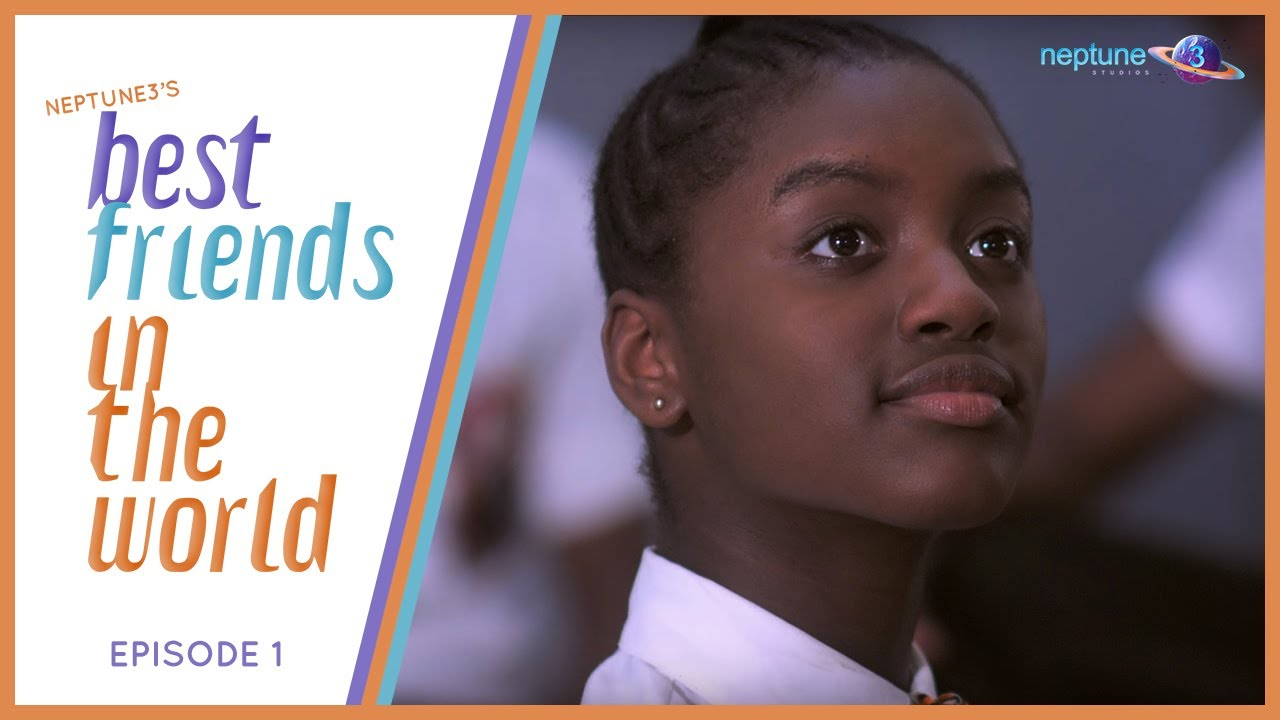
Neptune3Studios -  founded by sisters Jemima Damina, Jesimiel Damina and Jeiel Damina - built 'Best Friends In The World' from the ground up as a secondary school series that skips hyper-sexualisation and grotesque violence to present an honest view of mid-teens finding their identity in a Nigerian school setting. The Senior Year premiere hit one million views within four days of release, trending simultaneously in Nigeria and Ghana. The total view count on the first episode of Best Friends In The World has since crossed 12 million. That is not just a Nigerian audience. That is a Pan-African one.
Credit: Justin UG

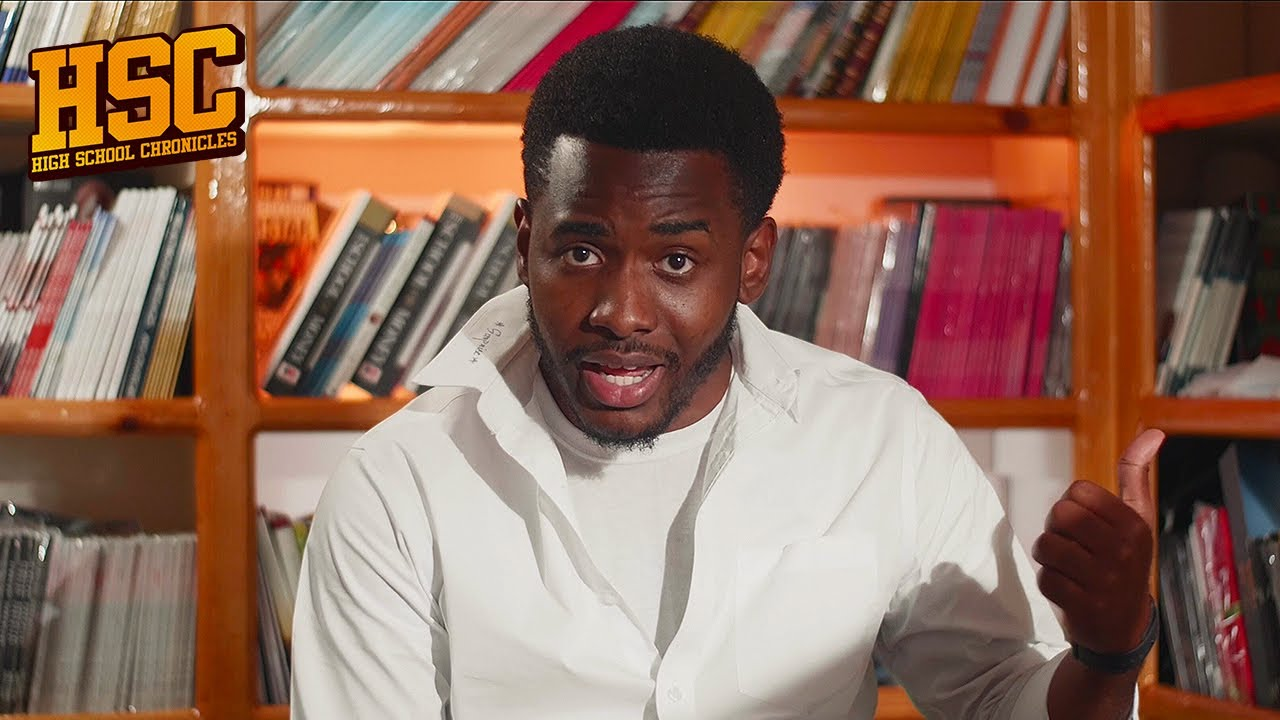
Then there is Justin Chukwudi Ugonna, better known as Justin UG -  multidisciplinary artist, content creator, actor, DJ and founder of dating app Tova. His secondary school content draws from lived experience; those experiences became the foundation of his creative work. His series'High School Chronicles' - featuring Layiwasabi, Maraji and Gilmore - went viral across African X, sparking a conversation that stretched far beyond Nigeria. Justin UG himself has spoken about working on an extended version of Road to High School Chronicles - 8 to 10 episodes of approximately 45 minutes each -  the big project he is currently developing, already in the scripting process. Comments poured in from different places -  all recognising something of themselves in the corridors, the hierarchies, the texture of the show.
The audience is Pan-African. The demand is proven. The only missing piece is a platform willing to back it at the scale it deserves.

What Netflix Gave Us Instead
Credit: Series Cover

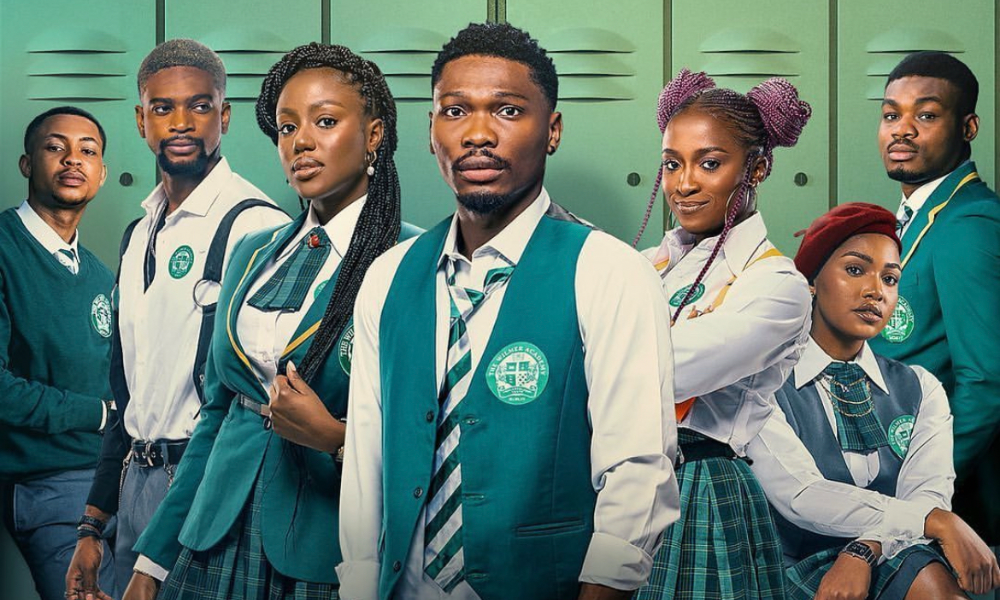
When Netflix released 'Far From Home' in 2022 - its first Nigerian Young Adult original series, produced by Inkblot Productions -  the anticipation was enormous. It was Netflix's millionth Young Adult series about scholarship kids in an elite school, except this time set in Lagos, Nigeria. The potential was there.

What followed was a show that, as critics quickly noted, did not know what it wanted to be. Far From Home had an identity crisis -  it didn't know whether to be a breezy high school story in the vein of similar stories from developed countries, or a commentary on the stark difference between the rich and the poor in Nigeria. In trying to be both, it captured neither. There was a football match sequence accompanied by a cheer squad and a chant that sounded straight out of Hollywood - so similar to High School Musical that it came off as foreign and out of touch to the Nigerian majority who were not privileged to attend schools like Wilmer. For a show meant to appeal to Nigerians, it whitewashed the culture down to the mere pronunciation of the protagonist's name. 
It was, in the most precise sense of the phrase, far from home.
Credit: NdaniTV

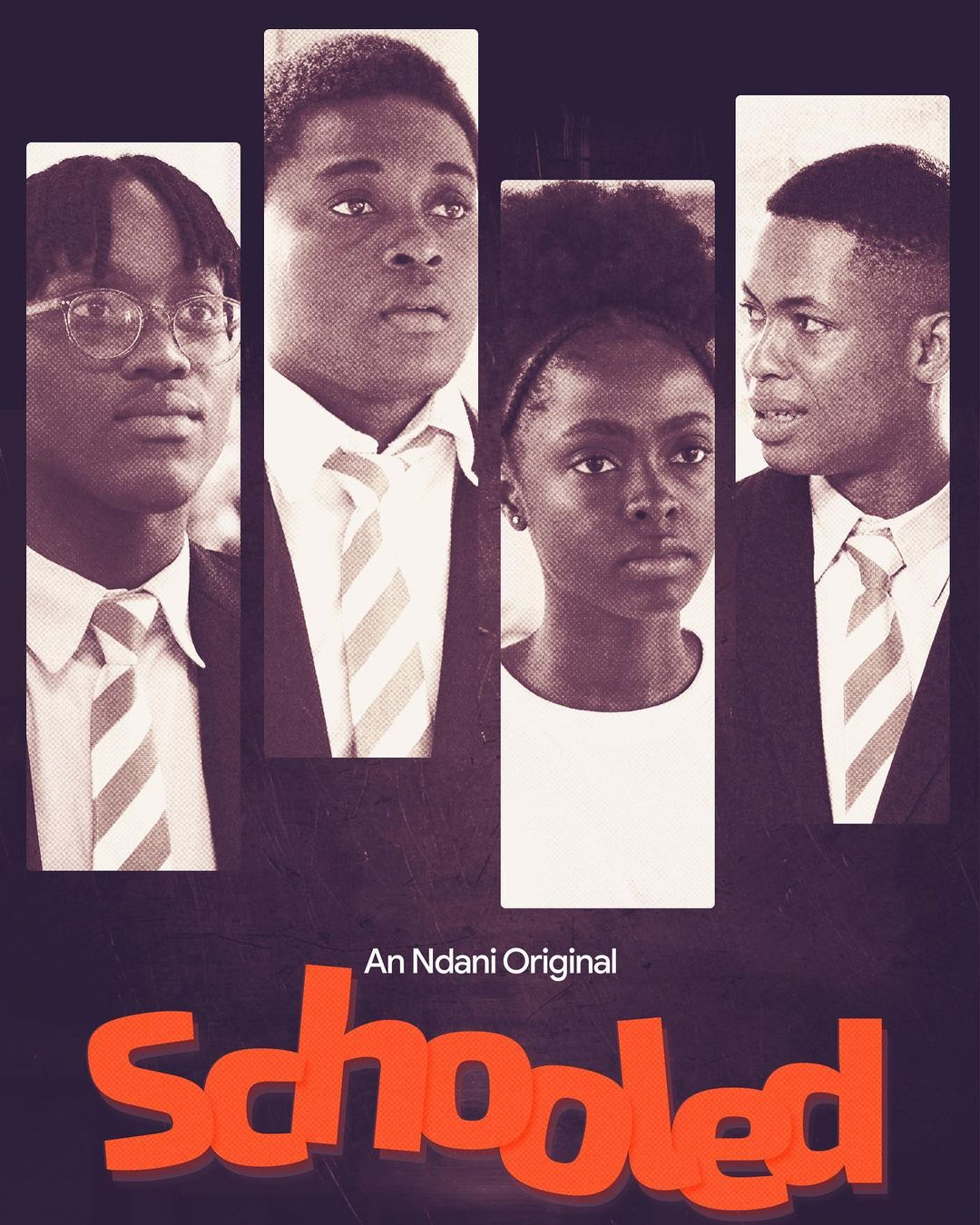
NdaniTV's Schooled came considerably closer -  a series with real texture and stakes that felt recognisably Nigerian. But it was limited by platform and budget in ways that a Netflix production would never have to be. The gap between Schooled's ambition and its resources tells its own story about where the money flows and where it doesn't.

South Africa Proved the Template Works

While Nigerian productions have been reaching for the elite and missing the real, South Africa has been quietly building the model.
Credit: IMDb

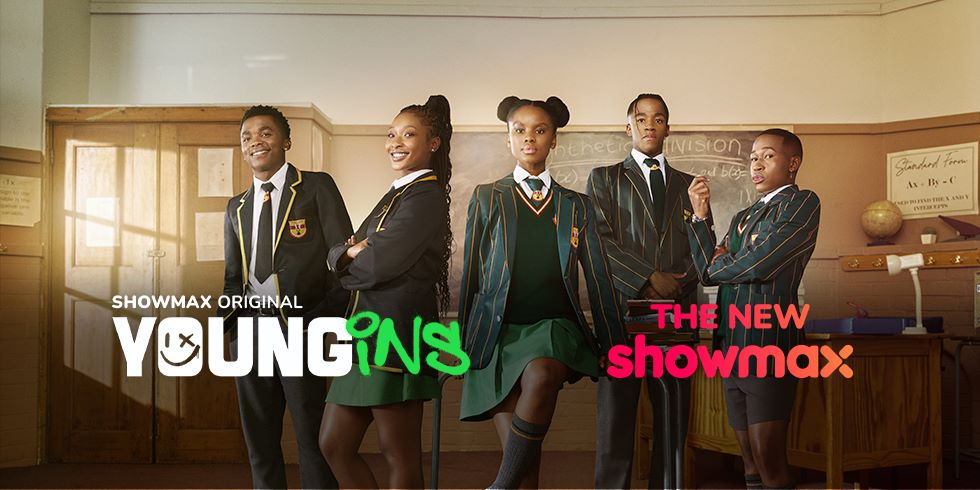
Youngins - the South African series set at a Johannesburg boarding school has subplots. Forbidden romance, family tension, abuse of power. The drama is complex and the characters are layered. But those subplots live inside a school that feels recognisably African. The boarding house dynamics are right. The social hierarchies are right. The language and the world are right. The subplots do not sanitise the container and that is the entire difference. South Africa proved that complexity and authenticity are not in competition. The show won Best South African Streaming Series at the Behind The Scenes Awards proof that authentic storytelling within an African school setting does not just resonate, it gets recognised.
Nigerian producers should be taking notes.

The Class Problem Nobody Is Talking About

Who is making the decisions about what gets produced?
Every major depiction of African secondary school life on a major platform was created for the elite. The scholarship kid infiltrates the rich school. The prestige academy. The one-percenters. And while class tension is a legitimate story worth telling, it is not the only one and it is certainly not the most widely shared. The majority of Africans who went to secondary school did not attend Wilmer Academy. They went to schools with broken ceiling fans and understaffed classrooms, provision boxes from home, inter-house sports that felt like the most important day of the year, WAEC anxiety sitting in the chest for months before results.

When the people commissioning and producing these stories come predominantly from the elite end of that experience, the stories they tell reflect that narrow vantage point. The result is a version of African adolescence that the majority of the audience watches and does not recognise and a version of African storytelling that keeps performing for an imagined global gaze rather than reflecting itself back to the people who actually lived it.

What the Real Story Looks Like

What Skam did for Norway, what Sex Education did for Britain, what Never Have I Ever did for the Indian-American experience, that is what African secondary school deserve. A show that is not afraid of the mess of it. The assembly line at 7:30am. The senior who makes a junior's life miserable for no reason other than hierarchy. The boarding house at night when the generator goes off and everyone is talking in the dark. The visiting day when some parents show up and others don't. The first crush. The rival. The teacher who actually changed things.

These are not small stories. They are the stories that shaped an entire continent's adults. And they are sitting there, largely untold at scale, while producers keep building prestige academies that the majority never attended.

Justin UG built 'High School Chronicles' without a Netflix budget and the internet responded across multiple African countries. Neptune3Studios built 'Best Friends In The World' from the ground up and Ghana was watching alongside Nigeria. The proof of concept does not need to be made - it already exists, on YouTube, with millions of views and no major platform behind it.
@ffeistyhuman

Africa's Most Shared Experience Is Still Waiting for Its Netflix Moment

Authored by
This is some text inside of a div block.

Picture this: a school bell rings and students scatter across a sun-baked compound. A senior prefect on patrol, juniors walking in single file past the hostel, and somewhere in the distance a teacher's voice cutting through the noise for morning assembly. This is a scene that millions of Africans across Nigeria, Ghana, Kenya, Uganda, Zimbabwe and beyond lived for years. It is one of the most shared, most vivid, most dramatically rich experiences on the continent. And yet on the biggest screen available -  Netflix -  it has barely been told honestly.

The question is not whether Netflix wants African stories. The platform has made that investment clear. The question is a different, more uncomfortable one: why do producers keep reaching for the elite, sanitised version of that story when the majority of the audience grew up in something far more interesting?

The Proof of Appetite Is Already There

Before anyone commissions a single episode, YouTube has already made the case - with numbers that no pitch deck could argue with.

Credit: Neptune3studios

Neptune3Studios -  founded by sisters Jemima Damina, Jesimiel Damina and Jeiel Damina - built 'Best Friends In The World' from the ground up as a secondary school series that skips hyper-sexualisation and grotesque violence to present an honest view of mid-teens finding their identity in a Nigerian school setting. The Senior Year premiere hit one million views within four days of release, trending simultaneously in Nigeria and Ghana. The total view count on the first episode of Best Friends In The World has since crossed 12 million. That is not just a Nigerian audience. That is a Pan-African one.

Credit: Justin UG

Then there is Justin Chukwudi Ugonna, better known as Justin UG -  multidisciplinary artist, content creator, actor, DJ and founder of dating app Tova. His secondary school content draws from lived experience; those experiences became the foundation of his creative work. His series'High School Chronicles' - featuring Layiwasabi, Maraji and Gilmore - went viral across African X, sparking a conversation that stretched far beyond Nigeria. Justin UG himself has spoken about working on an extended version of Road to High School Chronicles - 8 to 10 episodes of approximately 45 minutes each -  the big project he is currently developing, already in the scripting process. Comments poured in from different places -  all recognising something of themselves in the corridors, the hierarchies, the texture of the show.
The audience is Pan-African. The demand is proven. The only missing piece is a platform willing to back it at the scale it deserves.

What Netflix Gave Us Instead

Credit: Series Cover

When Netflix released 'Far From Home' in 2022 - its first Nigerian Young Adult original series, produced by Inkblot Productions -  the anticipation was enormous. It was Netflix's millionth Young Adult series about scholarship kids in an elite school, except this time set in Lagos, Nigeria. The potential was there.

What followed was a show that, as critics quickly noted, did not know what it wanted to be. Far From Home had an identity crisis -  it didn't know whether to be a breezy high school story in the vein of similar stories from developed countries, or a commentary on the stark difference between the rich and the poor in Nigeria. In trying to be both, it captured neither. There was a football match sequence accompanied by a cheer squad and a chant that sounded straight out of Hollywood - so similar to High School Musical that it came off as foreign and out of touch to the Nigerian majority who were not privileged to attend schools like Wilmer. For a show meant to appeal to Nigerians, it whitewashed the culture down to the mere pronunciation of the protagonist's name. 
It was, in the most precise sense of the phrase, far from home.

Credit: NdaniTV

NdaniTV's Schooled came considerably closer -  a series with real texture and stakes that felt recognisably Nigerian. But it was limited by platform and budget in ways that a Netflix production would never have to be. The gap between Schooled's ambition and its resources tells its own story about where the money flows and where it doesn't.

South Africa Proved the Template Works

While Nigerian productions have been reaching for the elite and missing the real, South Africa has been quietly building the model.

Credit: IMDb

Youngins - the South African series set at a Johannesburg boarding school has subplots. Forbidden romance, family tension, abuse of power. The drama is complex and the characters are layered. But those subplots live inside a school that feels recognisably African. The boarding house dynamics are right. The social hierarchies are right. The language and the world are right. The subplots do not sanitise the container and that is the entire difference. South Africa proved that complexity and authenticity are not in competition. The show won Best South African Streaming Series at the Behind The Scenes Awards proof that authentic storytelling within an African school setting does not just resonate, it gets recognised.
Nigerian producers should be taking notes.

The Class Problem Nobody Is Talking About

Who is making the decisions about what gets produced?
Every major depiction of African secondary school life on a major platform was created for the elite. The scholarship kid infiltrates the rich school. The prestige academy. The one-percenters. And while class tension is a legitimate story worth telling, it is not the only one and it is certainly not the most widely shared. The majority of Africans who went to secondary school did not attend Wilmer Academy. They went to schools with broken ceiling fans and understaffed classrooms, provision boxes from home, inter-house sports that felt like the most important day of the year, WAEC anxiety sitting in the chest for months before results.

When the people commissioning and producing these stories come predominantly from the elite end of that experience, the stories they tell reflect that narrow vantage point. The result is a version of African adolescence that the majority of the audience watches and does not recognise and a version of African storytelling that keeps performing for an imagined global gaze rather than reflecting itself back to the people who actually lived it.

What the Real Story Looks Like

What Skam did for Norway, what Sex Education did for Britain, what Never Have I Ever did for the Indian-American experience, that is what African secondary school deserve. A show that is not afraid of the mess of it. The assembly line at 7:30am. The senior who makes a junior's life miserable for no reason other than hierarchy. The boarding house at night when the generator goes off and everyone is talking in the dark. The visiting day when some parents show up and others don't. The first crush. The rival. The teacher who actually changed things.

These are not small stories. They are the stories that shaped an entire continent's adults. And they are sitting there, largely untold at scale, while producers keep building prestige academies that the majority never attended.

Justin UG built 'High School Chronicles' without a Netflix budget and the internet responded across multiple African countries. Neptune3Studios built 'Best Friends In The World' from the ground up and Ghana was watching alongside Nigeria. The proof of concept does not need to be made - it already exists, on YouTube, with millions of views and no major platform behind it.
@ffeistyhuman

This is some text inside of a div block.

Africa's Most Shared Experience Is Still Waiting for Its Netflix Moment

Authored by

Picture this: a school bell rings and students scatter across a sun-baked compound. A senior prefect on patrol, juniors walking in single file past the hostel, and somewhere in the distance a teacher's voice cutting through the noise for morning assembly. This is a scene that millions of Africans across Nigeria, Ghana, Kenya, Uganda, Zimbabwe and beyond lived for years. It is one of the most shared, most vivid, most dramatically rich experiences on the continent. And yet on the biggest screen available -  Netflix -  it has barely been told honestly.

The question is not whether Netflix wants African stories. The platform has made that investment clear. The question is a different, more uncomfortable one: why do producers keep reaching for the elite, sanitised version of that story when the majority of the audience grew up in something far more interesting?

The Proof of Appetite Is Already There

Before anyone commissions a single episode, YouTube has already made the case - with numbers that no pitch deck could argue with.

Credit: Neptune3studios

Neptune3Studios -  founded by sisters Jemima Damina, Jesimiel Damina and Jeiel Damina - built 'Best Friends In The World' from the ground up as a secondary school series that skips hyper-sexualisation and grotesque violence to present an honest view of mid-teens finding their identity in a Nigerian school setting. The Senior Year premiere hit one million views within four days of release, trending simultaneously in Nigeria and Ghana. The total view count on the first episode of Best Friends In The World has since crossed 12 million. That is not just a Nigerian audience. That is a Pan-African one.

Credit: Justin UG

Then there is Justin Chukwudi Ugonna, better known as Justin UG -  multidisciplinary artist, content creator, actor, DJ and founder of dating app Tova. His secondary school content draws from lived experience; those experiences became the foundation of his creative work. His series'High School Chronicles' - featuring Layiwasabi, Maraji and Gilmore - went viral across African X, sparking a conversation that stretched far beyond Nigeria. Justin UG himself has spoken about working on an extended version of Road to High School Chronicles - 8 to 10 episodes of approximately 45 minutes each -  the big project he is currently developing, already in the scripting process. Comments poured in from different places -  all recognising something of themselves in the corridors, the hierarchies, the texture of the show.
The audience is Pan-African. The demand is proven. The only missing piece is a platform willing to back it at the scale it deserves.

What Netflix Gave Us Instead

Credit: Series Cover

When Netflix released 'Far From Home' in 2022 - its first Nigerian Young Adult original series, produced by Inkblot Productions -  the anticipation was enormous. It was Netflix's millionth Young Adult series about scholarship kids in an elite school, except this time set in Lagos, Nigeria. The potential was there.

What followed was a show that, as critics quickly noted, did not know what it wanted to be. Far From Home had an identity crisis -  it didn't know whether to be a breezy high school story in the vein of similar stories from developed countries, or a commentary on the stark difference between the rich and the poor in Nigeria. In trying to be both, it captured neither. There was a football match sequence accompanied by a cheer squad and a chant that sounded straight out of Hollywood - so similar to High School Musical that it came off as foreign and out of touch to the Nigerian majority who were not privileged to attend schools like Wilmer. For a show meant to appeal to Nigerians, it whitewashed the culture down to the mere pronunciation of the protagonist's name. 
It was, in the most precise sense of the phrase, far from home.

Credit: NdaniTV

NdaniTV's Schooled came considerably closer -  a series with real texture and stakes that felt recognisably Nigerian. But it was limited by platform and budget in ways that a Netflix production would never have to be. The gap between Schooled's ambition and its resources tells its own story about where the money flows and where it doesn't.

South Africa Proved the Template Works

While Nigerian productions have been reaching for the elite and missing the real, South Africa has been quietly building the model.

Credit: IMDb

Youngins - the South African series set at a Johannesburg boarding school has subplots. Forbidden romance, family tension, abuse of power. The drama is complex and the characters are layered. But those subplots live inside a school that feels recognisably African. The boarding house dynamics are right. The social hierarchies are right. The language and the world are right. The subplots do not sanitise the container and that is the entire difference. South Africa proved that complexity and authenticity are not in competition. The show won Best South African Streaming Series at the Behind The Scenes Awards proof that authentic storytelling within an African school setting does not just resonate, it gets recognised.
Nigerian producers should be taking notes.

The Class Problem Nobody Is Talking About

Who is making the decisions about what gets produced?
Every major depiction of African secondary school life on a major platform was created for the elite. The scholarship kid infiltrates the rich school. The prestige academy. The one-percenters. And while class tension is a legitimate story worth telling, it is not the only one and it is certainly not the most widely shared. The majority of Africans who went to secondary school did not attend Wilmer Academy. They went to schools with broken ceiling fans and understaffed classrooms, provision boxes from home, inter-house sports that felt like the most important day of the year, WAEC anxiety sitting in the chest for months before results.

When the people commissioning and producing these stories come predominantly from the elite end of that experience, the stories they tell reflect that narrow vantage point. The result is a version of African adolescence that the majority of the audience watches and does not recognise and a version of African storytelling that keeps performing for an imagined global gaze rather than reflecting itself back to the people who actually lived it.

What the Real Story Looks Like

What Skam did for Norway, what Sex Education did for Britain, what Never Have I Ever did for the Indian-American experience, that is what African secondary school deserve. A show that is not afraid of the mess of it. The assembly line at 7:30am. The senior who makes a junior's life miserable for no reason other than hierarchy. The boarding house at night when the generator goes off and everyone is talking in the dark. The visiting day when some parents show up and others don't. The first crush. The rival. The teacher who actually changed things.

These are not small stories. They are the stories that shaped an entire continent's adults. And they are sitting there, largely untold at scale, while producers keep building prestige academies that the majority never attended.

Justin UG built 'High School Chronicles' without a Netflix budget and the internet responded across multiple African countries. Neptune3Studios built 'Best Friends In The World' from the ground up and Ghana was watching alongside Nigeria. The proof of concept does not need to be made - it already exists, on YouTube, with millions of views and no major platform behind it.

@ffeistyhuman

Other Stories
London
London
Lagos
London
Newyork
London
Shop
Join the community.
You are now subscribed to receive updates.
Oops! Something went wrong while submitting the form.