.svg)

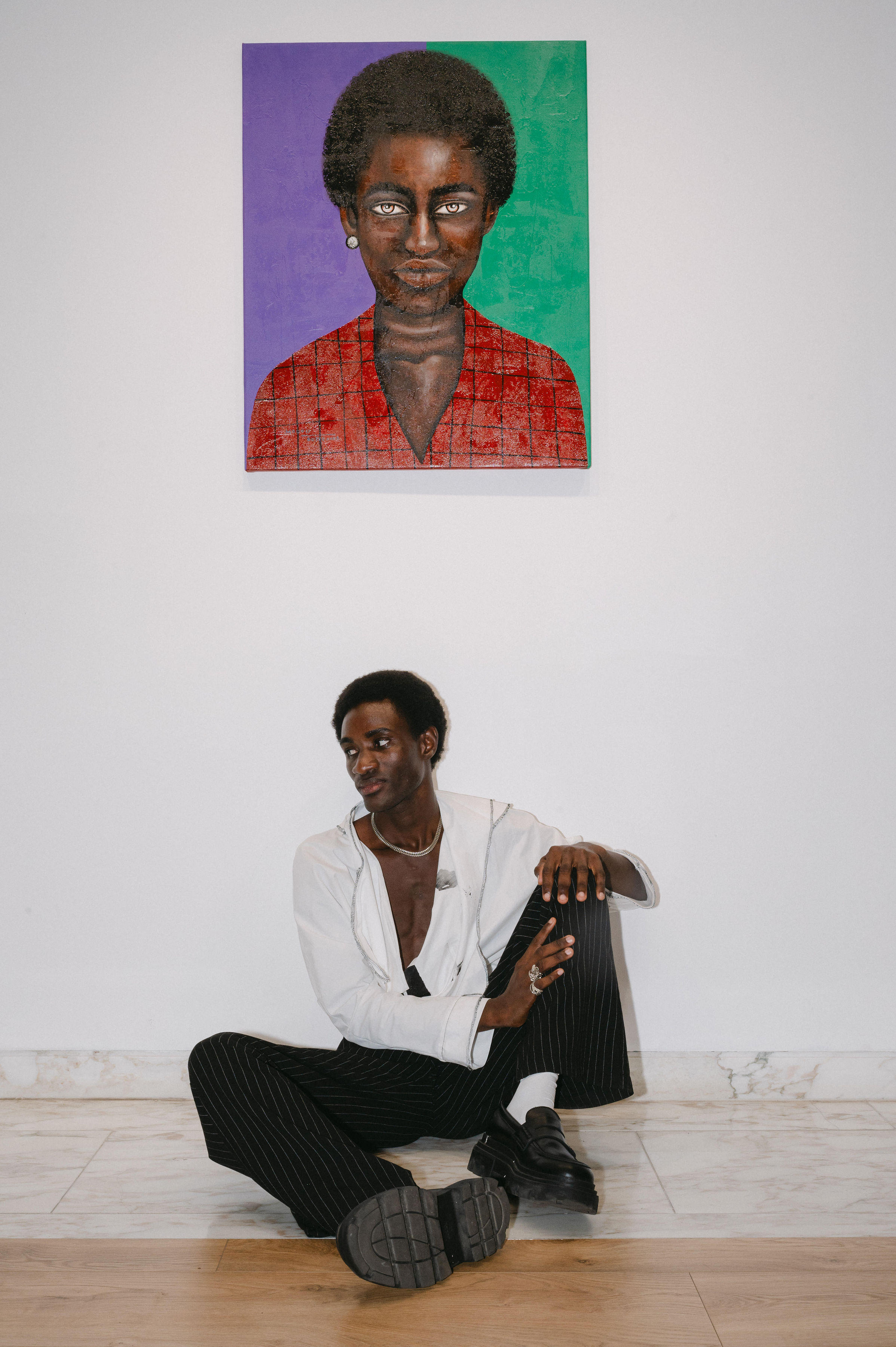
Most contemporary African art circulating in global galleries speaks the language of spectacle, bold, immediate, designed to translate across cultures in a single glance. Modou Gueye's work operates differently. The Senegalese painter builds his canvases around nattes, a Wolof word that refers to both the woven floor mats that anchor Senegalese domestic life and the intricate braided hairstyles passed down through generations of women's hands. These are objects and gestures so embedded in everyday experience they risk becoming invisible, yet Gueye insists they contain entire archives of memory, identity, and care.
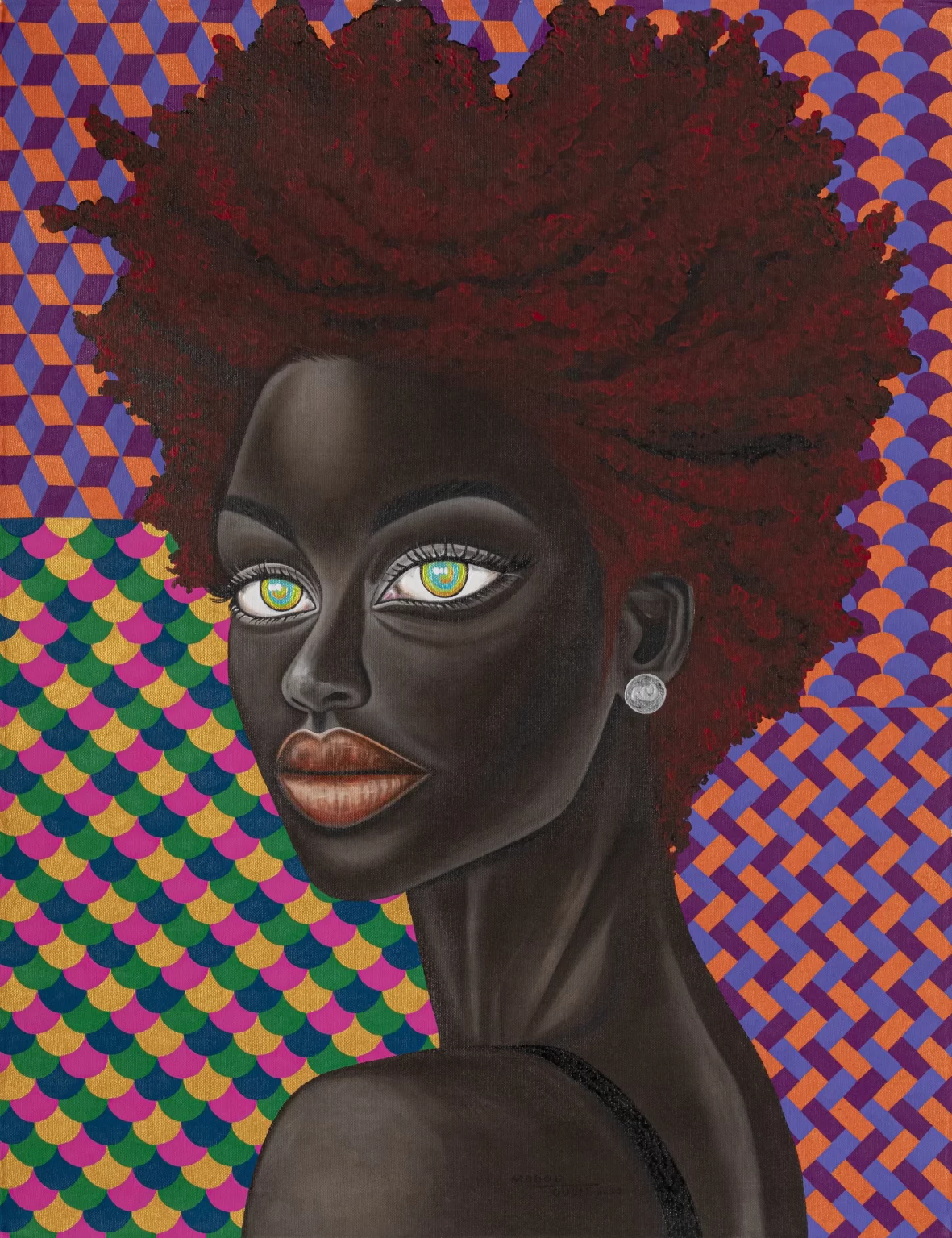
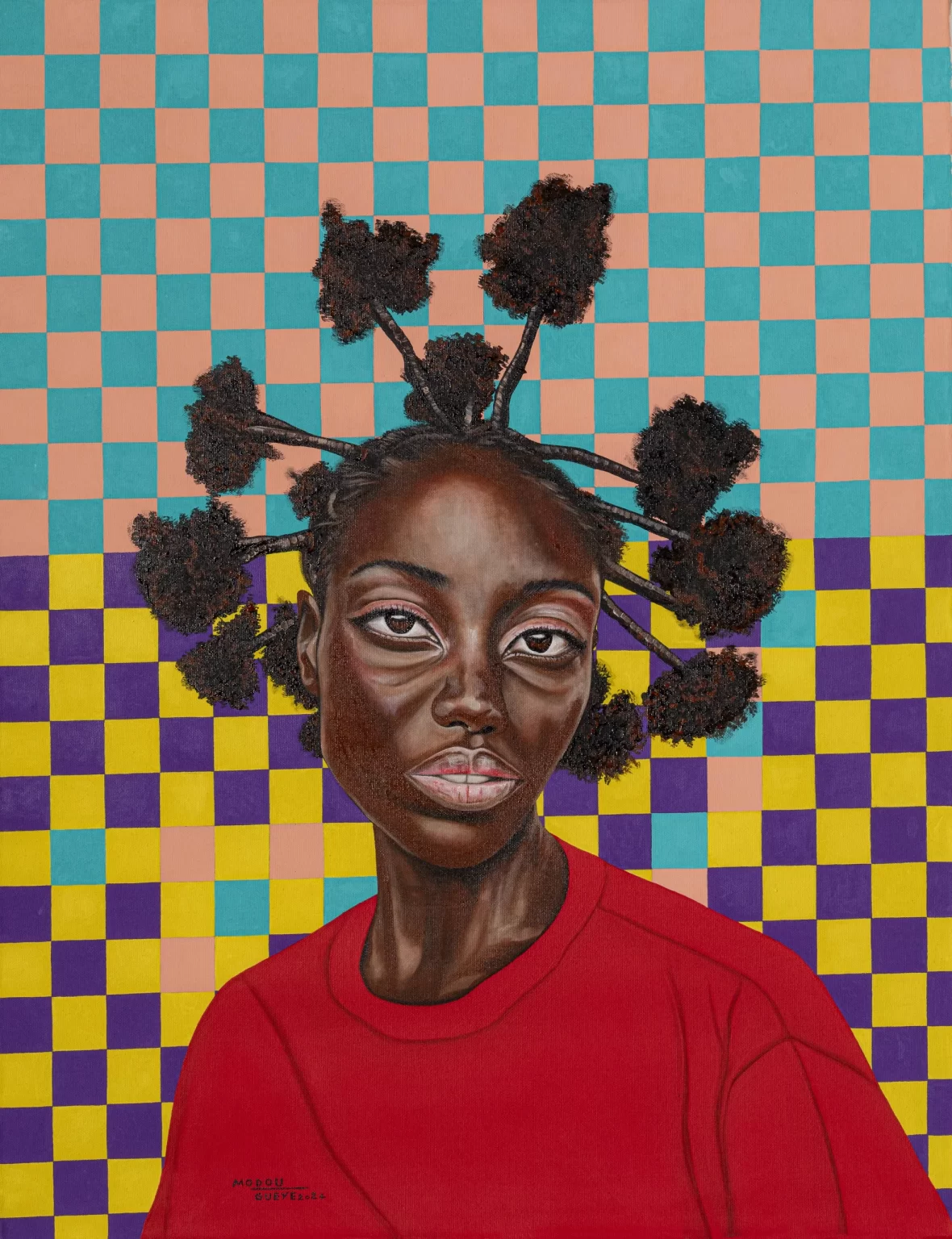
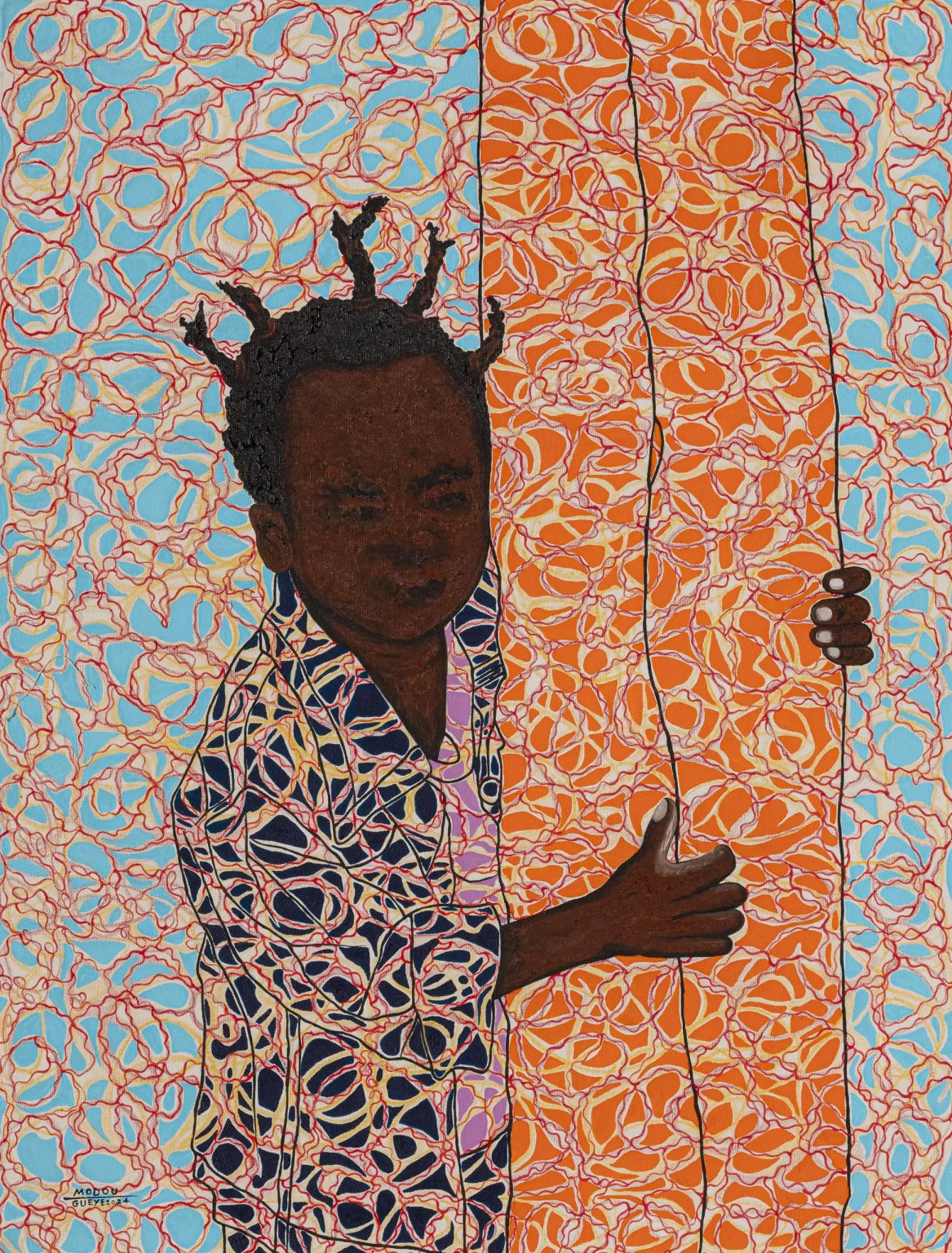
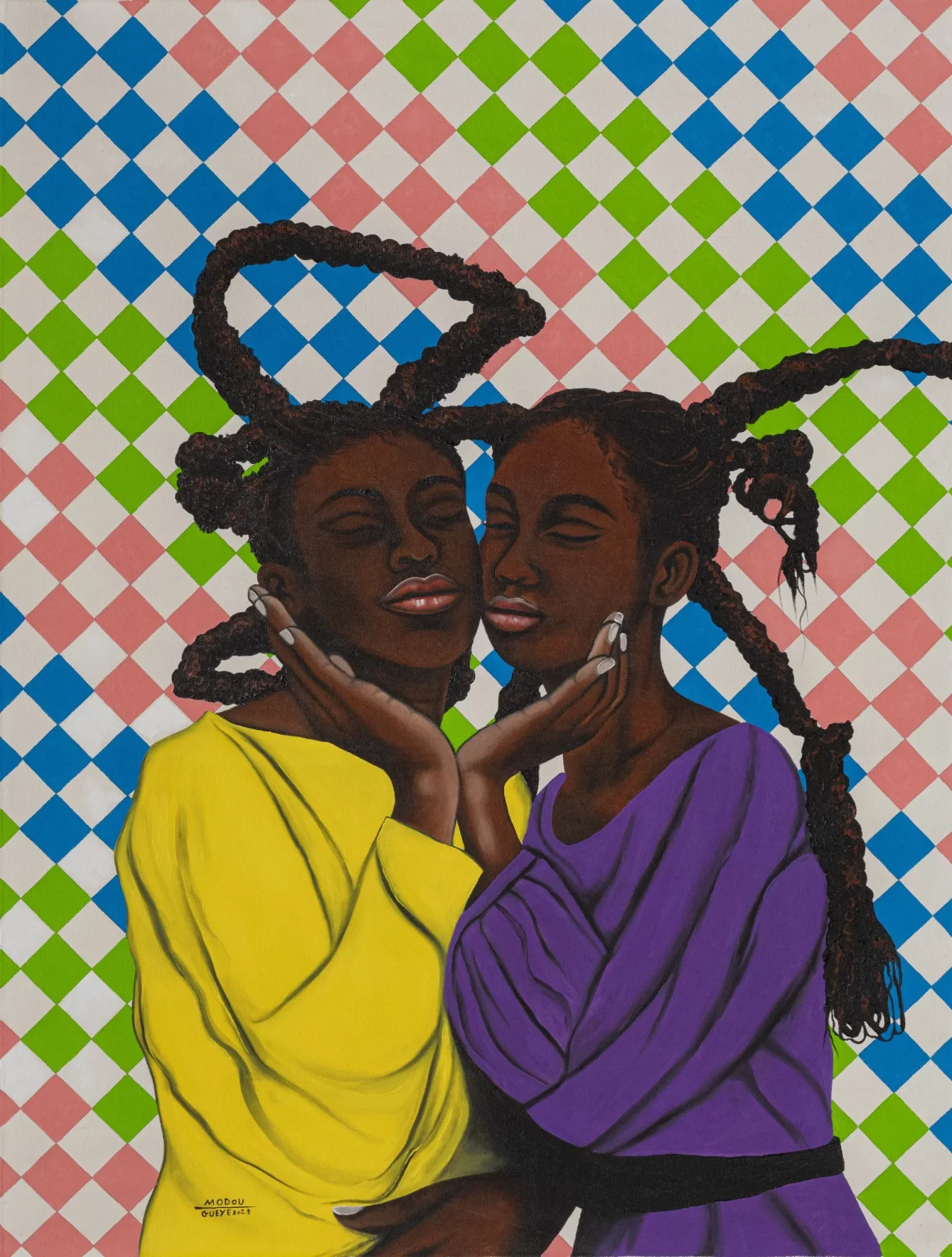
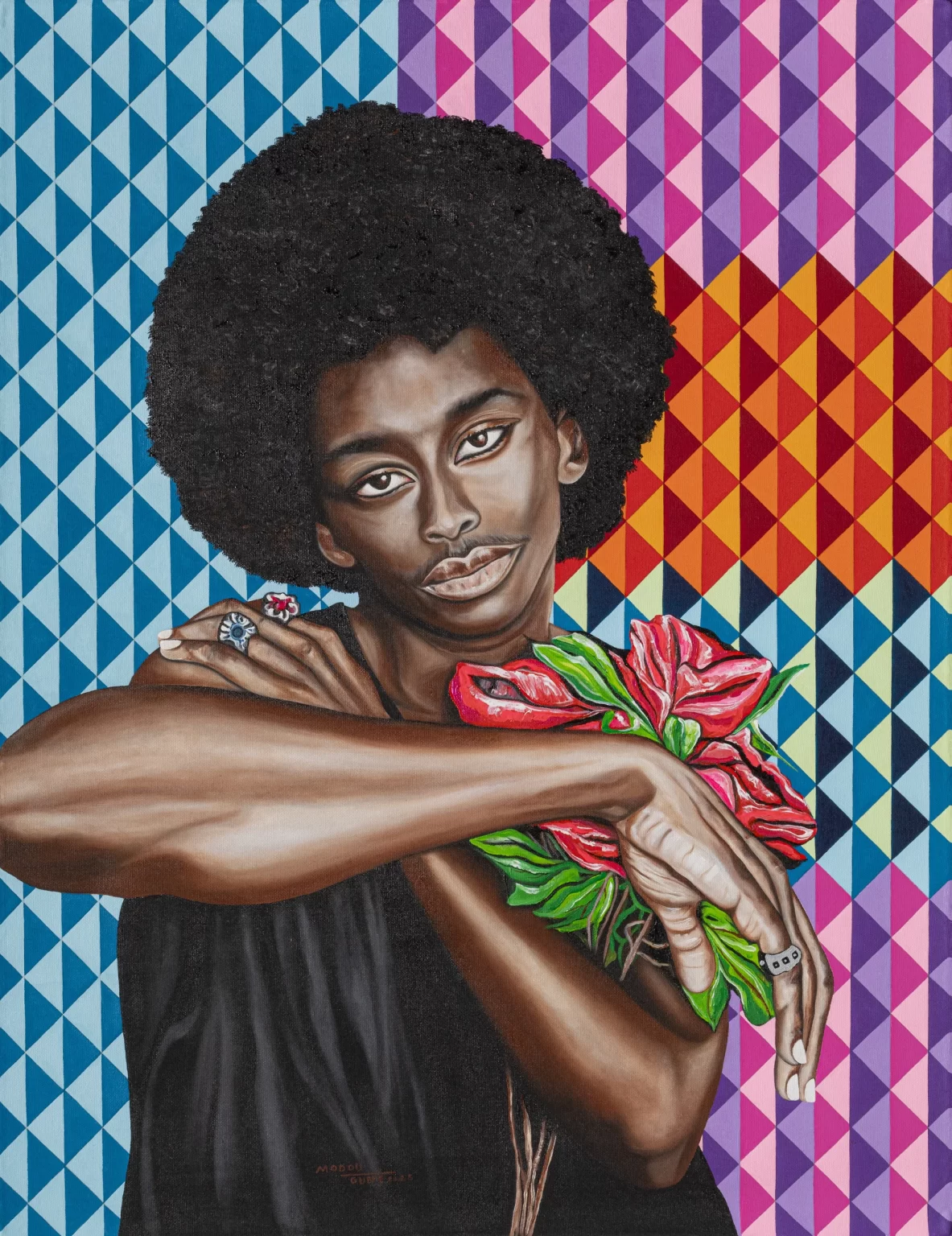
Against vibrant geometric backgrounds that pulse with color, tessellated patterns in orange, purple, yellow, blue his subjects emerge with quiet dignity. A woman holding flowers. Two figures in yellow and purple, their hands gently framing each other's faces. A young girl on a swing, surrounded by the same patterns that might appear on a mat beneath her feet or woven into her hair. The repetition isn't decorative. It's structural, a visual argument that the textures of childhood and the architecture of culture are inseparable.
In Les nattes de mon enfance (The Mats of My Childhood), Gueye positions these everyday acts, the laying out of mats for family gatherings, the patient braiding of hair, as foundational cultural labor, mostly performed by women, mostly unacknowledged. His project doesn't romanticize this labor. It makes visible what Western art institutions have long treated as background, insisting that the spaces where culture is actually built deserve the same attention as the monuments it produces.
This is art as cultural reclamation, but also as intimate reckoning. Gueye paints from memory, which means he paints from love.
Can you introduce yourself and tell us a little about who you are as an artist?
My name is Modou Gueye and I am a Senegalese painter whose work is deeply rooted in memory, childhood, and the quiet strength of my cultural heritage. I grew up surrounded by nattes, both the woven floor mats on which life unfolded, and the braided hairstyles that marked moments of care, identity and belonging.
Today, my art reinterprets these nattes not just as objects or hairstyles, but as living archives of African memory, places where emotions, traditions and stories intertwine. Through color and texture, I try to reconnect the intimate spaces of my upbringing with a contemporary visual language.
What inspired this piece or project?
My project "Les nattes de mon enfance" was born from a need to honor the emotional foundations that shaped me. The woven floor mats of my childhood were more than surfaces: they were social territories, places where families gathered, shared, prayed, argued, dreamed.
And the braided hairstyles of the women around me were equally powerful symbols of beauty, patience, continuity and care. Both forms of braiding taught me the same lesson: Identity is something we weave, thread by thread. This project is my way of bringing those textures, gestures and memories back to life.
What themes or messages do you explore through your work?
I explore themes of memory, identity, resilience, and the intimate architecture of African life. The mat and the braid become metaphors of how we connect:
- How our lives intertwine,
- How our stories are transmitted,
- How beauty emerges from repetition and patience.
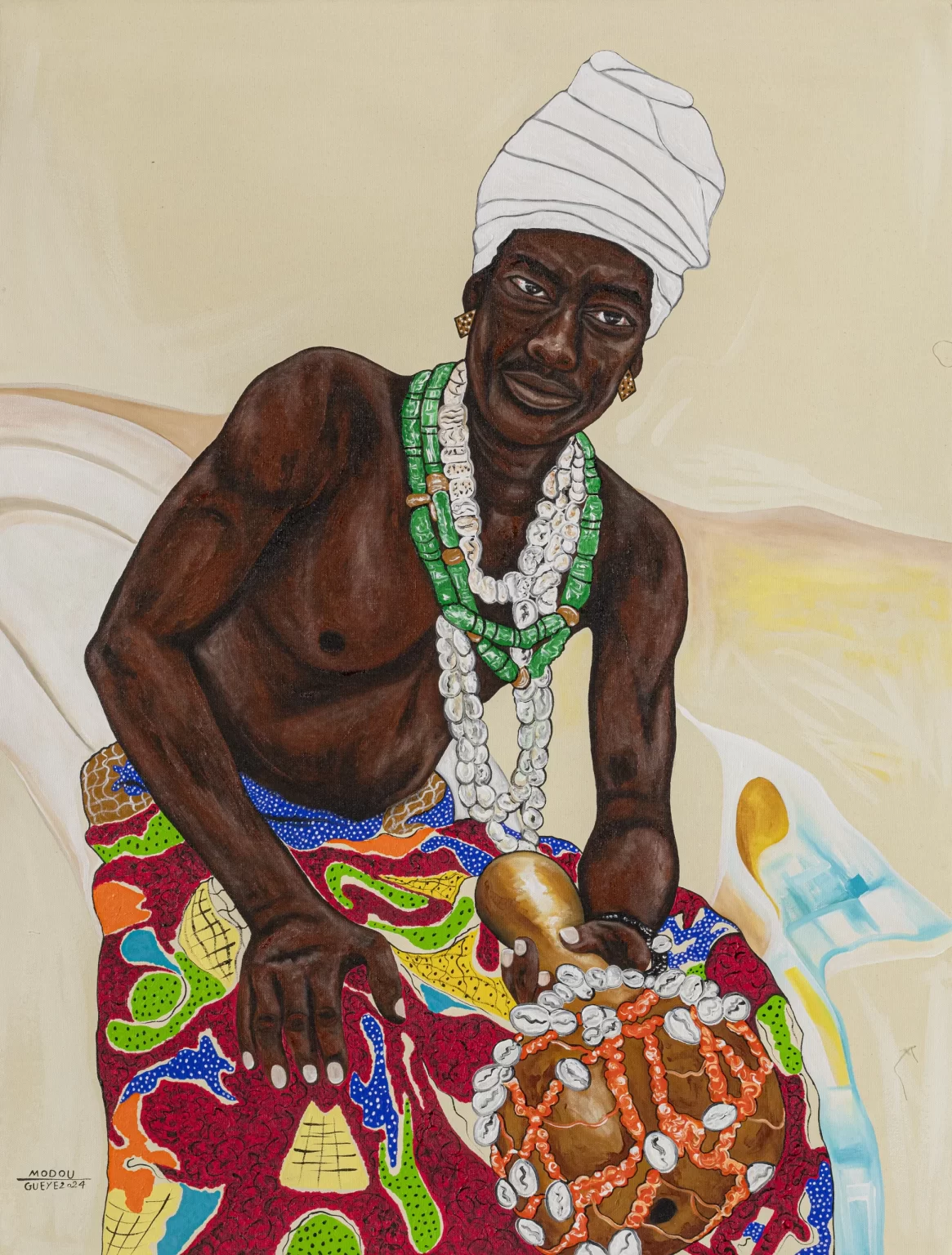
Through vibrant colors and layered compositions, I reflect on heritage, belonging, and the emotional spaces where culture is silently built, often by women whose hands shape the community.
How does your art connect to action or change?
My art seeks to recenter the everyday objects and gestures of African culture, which have often been overlooked or reduced to decoration.
By putting nattes, both the mats and the braids, at the heart of my compositions, I challenge the world to acknowledge their symbolic weight.
It is a way to say: Our domestic spaces matter, our aesthetics matter, our stories matter. This is my contribution to cultural recognition and the preservation of intangible heritage.
Why is it important for you to create art with meaning or impact?
Because art carries memory. And memory shapes identity. Creating meaningful art allows me to protect what could be forgotten, the textures of childhood, the gestures that transmit love, the beauty found in the simplest moments. I want my paintings to act like quiet reminders that African heritage is not only majestic but also profoundly intimate.
Can you share a moment or experience that shaped you as an artist?
I remember sitting on a woven mat next to my grandmother, watching her braid a young girl's hair. The rhythm of her fingers, the softness of the movements, the stories she told while working, those moments taught me everything about patience, dedication and transmission. That day, I understood that creation is an act of care. That memory still guides my art today.
What do you want people to know about you beyond your art?
Beyond my paintings, I am a man who values silence, humility and human connection. I believe in observing deeply, listening carefully and honoring the invisible work that shapes communities, especially the hands that braid hair, weave mats and weave life. My art is not nostalgia. It is a bridge between generations, between memories, between worlds.




.png)

