AT LABRUM LONDON, FODAY DUMBUYA TURNS BRITISH TAILORING INTO A STATEMENT ON MIGRATION

Authored by

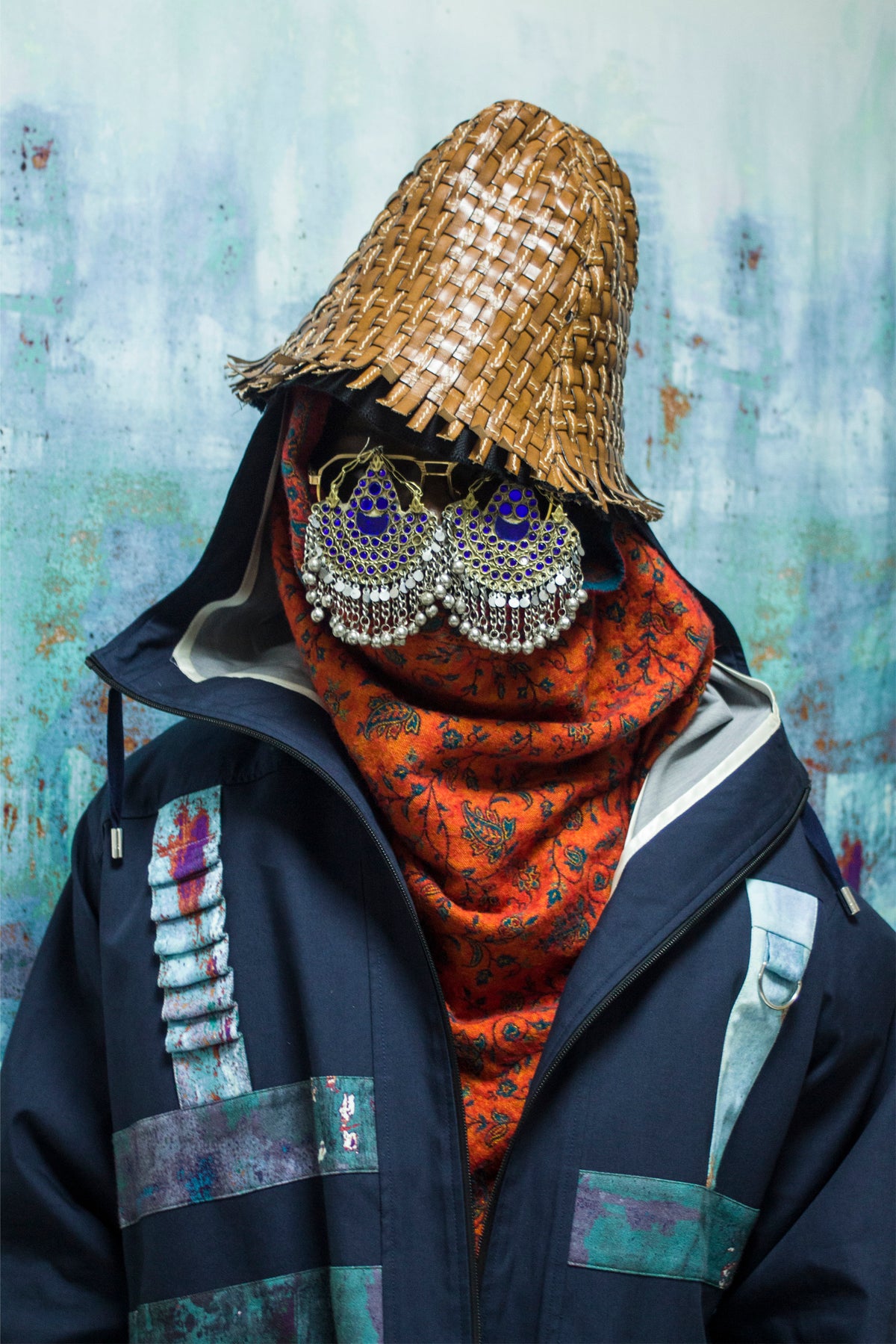
‘By an Immigrant', the tagline embraced by British-Sierra Leonean designer Foday Dumbuya for his menswear brand, Labrum London was punctuated in March with his Autumn/Winter 2026 collection, Threads of Osmosis. Under the gilded ceilings of Westminster's The Great Hall, meters away from the House of Parliament, Dumbuya’s Threads of Osmosis opened with a monologue by British-Nigerian poet, Yomi Sode speaking on how migration should be appreciated as new cultures enrich a place. As the monologue ended, ’70s Ghanaian music selected by British-Ghanaian producer Juls filled the room. Models followed clad in clothes inspired by British tailoring and traditional African fashion. Accordion-shaped hats from Agadez culture of Niger, cowries threaded in their hair and tailored suits made with passport-printed textile littered the runway. Explaining to Fashion Roadman Dumbuya stated it is about[The collection is about]family.. travels. My first time arriving in Sierra Leone, my first passport…all of that is a journey that (Labrum London) tries to record."

At a time of shifting UK immigration policies, this interplay of British tailoring and West African culture staged at London Fashion Week in the building where anti-immigration laws are passed is Dumbuya’s way of utilising fashion as a means of making a bold statement. Through his designs for Labrum London, Dumbuya archives memory and cross-culture mix that happens when people move across borders. In doing so, he also questions why immigrants aren't treated as contributors to a culture  and openly challenges the negative connotations associated with migrants—a stance made strong by ‘By an Immigrant’ the tagline.

“When people look at a brand, they assume it's just fashion, just clothes, but it’s deeper than that because all our stories are intertwined with our culture and community,” he said on conceiving Labrum in 2014.
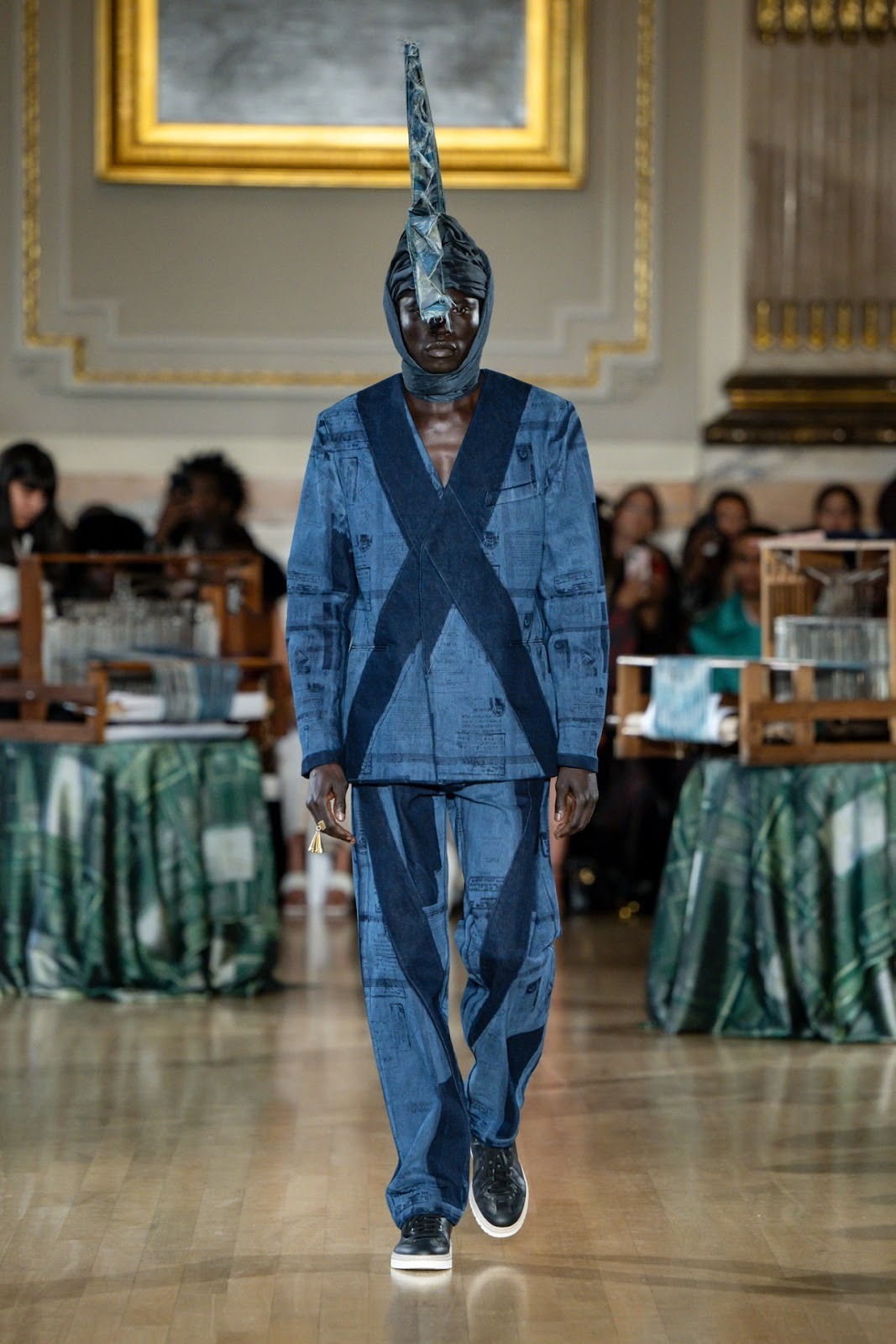
 Credit: WWD 

Dumbuya was born in Sierra Leone and lived in Cyprus till he was 12 years old before his family migrated to London. Though he often credits his first association with fashion to his policeman father, who wore tailored military uniforms, and his classically African-dressed mom—references that can be seen in Labrum collections today—it is his experience of different cultures that often reflects in his designs. Yet, this same migrant identity that sparked his fashion interest also constrained it; “My parents were determined I chose a more stable career,” he told Dazed. ‘.as immigrants themselves, they recognised we faced an uphill battle as it was.’

After graduating with a degree in Information Systems Design, Dumbuya entered fashion first at the ground floor, working at DKNY, then at Nike, before eventually taking courses on pattern making and menswear at London College of Fashion. This training in menswear and sportswear would come to underpin the type of designs Dumbuya built Labrum on—a mix of menswear and activewear. The same year Dumbuya started at the London College of Fashion, he launched Labrum London. 

Dumbuya’s meaning in clothes often comes through in subtle details. St. Giles Blackbirds, for instance, the Spring/Summer 2021 collection for Labrum London, draws on the histories of Black figures in the West, using details like ruffles and African motifs. The collection, which pays tribute to enslaved people, sailors, and soldiers from Sierra Leone who settled in St. Giles’ Fields in London and died in poverty, reimagines their ending by placing them in the clothes of the class that once oppressed them. It now sits in the halls of the London Museum of Art.

Over the years, Labrum London has become known not only for its community-driven ethos but also for its collaborations. Drawing from its sportswear roots, the brand has partnered with Adidas on several occasions to create sneakers and activewear. One notable project collaboration saw them design new jerseys for the Sierra Leone Olympic team.
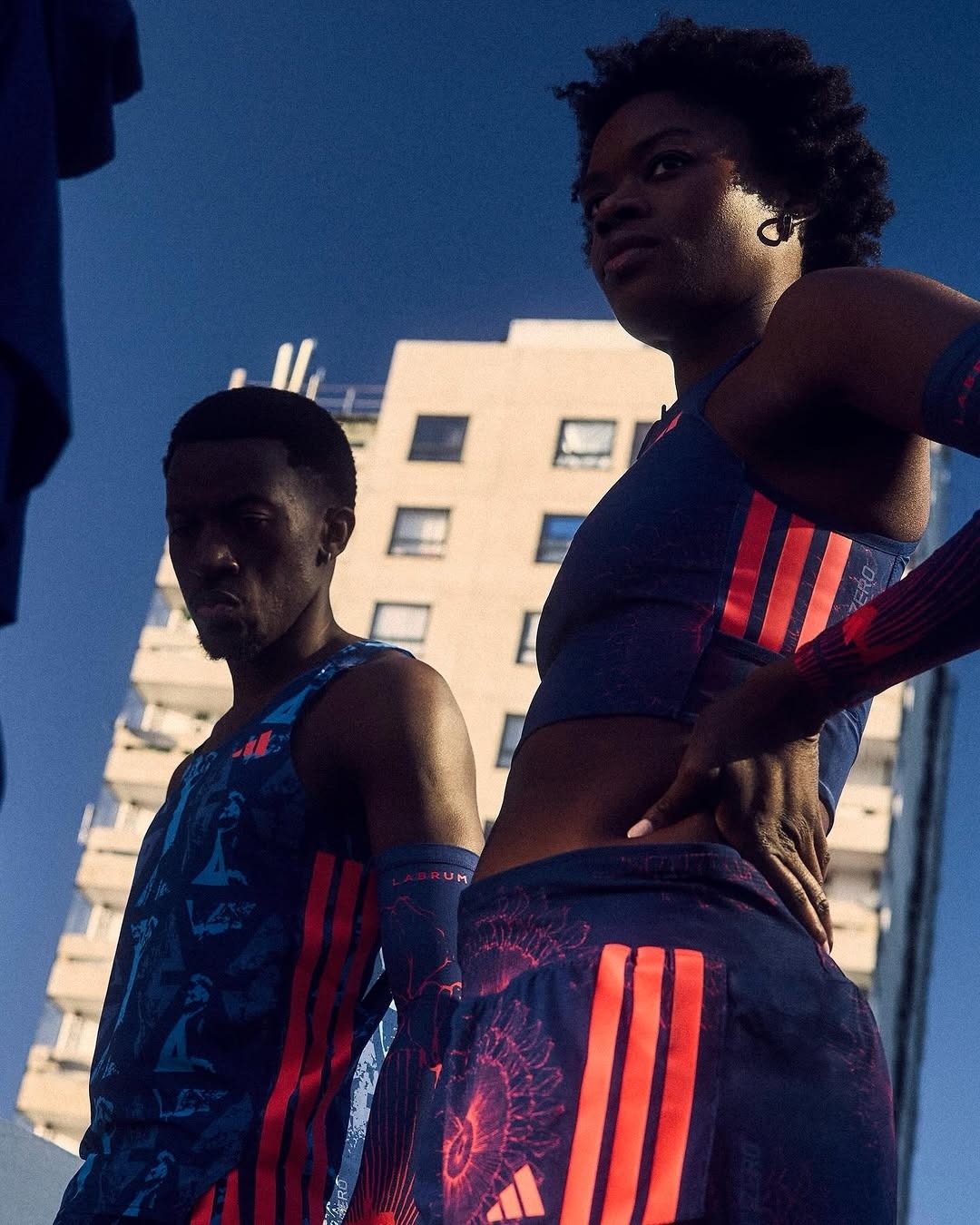
Credit: Labrum London

In 2023, Dumbuya was honored with the Queen Elizabeth II Award for British Design, an award that spotlights young designers making a difference to society. Not only did it reinforce his work at Labrum, but it also threw his name in the international market. “Places like Australia, the USA, and Japan, people that never really knew who I was, now know who I am and know the brand, the aesthetic, and the story that we tell,” Dumbuya told the London College of Fashion. 

Although culturally rooted in African influences, Dumbuya’s work also reflects the other cultures he has encountered as he moved across borders. His AW26 collection uses multiple textures and references garments from different parts of the world. For example, the textile with passport motifs that appears throughout is done on chinese silk.  

As a brand, Labrum is dedicated to presenting Blackness in ways that are rarely seen—tailored, intentional, and expansive. Through British tailoring, it tells West African stories of both past and present, bridging worlds that, as Dumbuya suggests, once felt impossible. In doing so, the brand moves beyond fashion as aesthetics to instead be seen as archive, memory, and resistance, where every stitch carries the weight of movement, identity, and belonging.

@radgalrabi
AT LABRUM LONDON, FODAY DUMBUYA TURNS BRITISH TAILORING INTO A STATEMENT ON MIGRATION

Authored by
This is some text inside of a div block.

‘By an Immigrant', the tagline embraced by British-Sierra Leonean designer Foday Dumbuya for his menswear brand, Labrum London was punctuated in March with his Autumn/Winter 2026 collection, Threads of Osmosis. Under the gilded ceilings of Westminster's The Great Hall, meters away from the House of Parliament, Dumbuya’s Threads of Osmosis opened with a monologue by British-Nigerian poet, Yomi Sode speaking on how migration should be appreciated as new cultures enrich a place. As the monologue ended, ’70s Ghanaian music selected by British-Ghanaian producer Juls filled the room. Models followed clad in clothes inspired by British tailoring and traditional African fashion. Accordion-shaped hats from Agadez culture of Niger, cowries threaded in their hair and tailored suits made with passport-printed textile littered the runway. Explaining to Fashion Roadman Dumbuya stated it is about[The collection is about]family.. travels. My first time arriving in Sierra Leone, my first passport…all of that is a journey that (Labrum London) tries to record."

At a time of shifting UK immigration policies, this interplay of British tailoring and West African culture staged at London Fashion Week in the building where anti-immigration laws are passed is Dumbuya’s way of utilising fashion as a means of making a bold statement. Through his designs for Labrum London, Dumbuya archives memory and cross-culture mix that happens when people move across borders. In doing so, he also questions why immigrants aren't treated as contributors to a culture  and openly challenges the negative connotations associated with migrants—a stance made strong by ‘By an Immigrant’ the tagline.

“When people look at a brand, they assume it's just fashion, just clothes, but it’s deeper than that because all our stories are intertwined with our culture and community,” he said on conceiving Labrum in 2014.

 Credit: WWD 

Dumbuya was born in Sierra Leone and lived in Cyprus till he was 12 years old before his family migrated to London. Though he often credits his first association with fashion to his policeman father, who wore tailored military uniforms, and his classically African-dressed mom—references that can be seen in Labrum collections today—it is his experience of different cultures that often reflects in his designs. Yet, this same migrant identity that sparked his fashion interest also constrained it; “My parents were determined I chose a more stable career,” he told Dazed. ‘.as immigrants themselves, they recognised we faced an uphill battle as it was.’

After graduating with a degree in Information Systems Design, Dumbuya entered fashion first at the ground floor, working at DKNY, then at Nike, before eventually taking courses on pattern making and menswear at London College of Fashion. This training in menswear and sportswear would come to underpin the type of designs Dumbuya built Labrum on—a mix of menswear and activewear. The same year Dumbuya started at the London College of Fashion, he launched Labrum London. 

Dumbuya’s meaning in clothes often comes through in subtle details. St. Giles Blackbirds, for instance, the Spring/Summer 2021 collection for Labrum London, draws on the histories of Black figures in the West, using details like ruffles and African motifs. The collection, which pays tribute to enslaved people, sailors, and soldiers from Sierra Leone who settled in St. Giles’ Fields in London and died in poverty, reimagines their ending by placing them in the clothes of the class that once oppressed them. It now sits in the halls of the London Museum of Art.

Over the years, Labrum London has become known not only for its community-driven ethos but also for its collaborations. Drawing from its sportswear roots, the brand has partnered with Adidas on several occasions to create sneakers and activewear. One notable project collaboration saw them design new jerseys for the Sierra Leone Olympic team.

Credit: Labrum London

In 2023, Dumbuya was honored with the Queen Elizabeth II Award for British Design, an award that spotlights young designers making a difference to society. Not only did it reinforce his work at Labrum, but it also threw his name in the international market. “Places like Australia, the USA, and Japan, people that never really knew who I was, now know who I am and know the brand, the aesthetic, and the story that we tell,” Dumbuya told the London College of Fashion. 

Although culturally rooted in African influences, Dumbuya’s work also reflects the other cultures he has encountered as he moved across borders. His AW26 collection uses multiple textures and references garments from different parts of the world. For example, the textile with passport motifs that appears throughout is done on chinese silk.  

As a brand, Labrum is dedicated to presenting Blackness in ways that are rarely seen—tailored, intentional, and expansive. Through British tailoring, it tells West African stories of both past and present, bridging worlds that, as Dumbuya suggests, once felt impossible. In doing so, the brand moves beyond fashion as aesthetics to instead be seen as archive, memory, and resistance, where every stitch carries the weight of movement, identity, and belonging.

@radgalrabi
This is some text inside of a div block.

AT LABRUM LONDON, FODAY DUMBUYA TURNS BRITISH TAILORING INTO A STATEMENT ON MIGRATION

Authored by

‘By an Immigrant', the tagline embraced by British-Sierra Leonean designer Foday Dumbuya for his menswear brand, Labrum London was punctuated in March with his Autumn/Winter 2026 collection, Threads of Osmosis. Under the gilded ceilings of Westminster's The Great Hall, meters away from the House of Parliament, Dumbuya’s Threads of Osmosis opened with a monologue by British-Nigerian poet, Yomi Sode speaking on how migration should be appreciated as new cultures enrich a place. As the monologue ended, ’70s Ghanaian music selected by British-Ghanaian producer Juls filled the room. Models followed clad in clothes inspired by British tailoring and traditional African fashion. Accordion-shaped hats from Agadez culture of Niger, cowries threaded in their hair and tailored suits made with passport-printed textile littered the runway. Explaining to Fashion Roadman Dumbuya stated it is about[The collection is about]family.. travels. My first time arriving in Sierra Leone, my first passport…all of that is a journey that (Labrum London) tries to record."

At a time of shifting UK immigration policies, this interplay of British tailoring and West African culture staged at London Fashion Week in the building where anti-immigration laws are passed is Dumbuya’s way of utilising fashion as a means of making a bold statement. Through his designs for Labrum London, Dumbuya archives memory and cross-culture mix that happens when people move across borders. In doing so, he also questions why immigrants aren't treated as contributors to a culture  and openly challenges the negative connotations associated with migrants—a stance made strong by ‘By an Immigrant’ the tagline.

“When people look at a brand, they assume it's just fashion, just clothes, but it’s deeper than that because all our stories are intertwined with our culture and community,” he said on conceiving Labrum in 2014.

 Credit: WWD 

Dumbuya was born in Sierra Leone and lived in Cyprus till he was 12 years old before his family migrated to London. Though he often credits his first association with fashion to his policeman father, who wore tailored military uniforms, and his classically African-dressed mom—references that can be seen in Labrum collections today—it is his experience of different cultures that often reflects in his designs. Yet, this same migrant identity that sparked his fashion interest also constrained it; “My parents were determined I chose a more stable career,” he told Dazed. ‘.as immigrants themselves, they recognised we faced an uphill battle as it was.’

After graduating with a degree in Information Systems Design, Dumbuya entered fashion first at the ground floor, working at DKNY, then at Nike, before eventually taking courses on pattern making and menswear at London College of Fashion. This training in menswear and sportswear would come to underpin the type of designs Dumbuya built Labrum on—a mix of menswear and activewear. The same year Dumbuya started at the London College of Fashion, he launched Labrum London. 

Dumbuya’s meaning in clothes often comes through in subtle details. St. Giles Blackbirds, for instance, the Spring/Summer 2021 collection for Labrum London, draws on the histories of Black figures in the West, using details like ruffles and African motifs. The collection, which pays tribute to enslaved people, sailors, and soldiers from Sierra Leone who settled in St. Giles’ Fields in London and died in poverty, reimagines their ending by placing them in the clothes of the class that once oppressed them. It now sits in the halls of the London Museum of Art.

Over the years, Labrum London has become known not only for its community-driven ethos but also for its collaborations. Drawing from its sportswear roots, the brand has partnered with Adidas on several occasions to create sneakers and activewear. One notable project collaboration saw them design new jerseys for the Sierra Leone Olympic team.

Credit: Labrum London

In 2023, Dumbuya was honored with the Queen Elizabeth II Award for British Design, an award that spotlights young designers making a difference to society. Not only did it reinforce his work at Labrum, but it also threw his name in the international market. “Places like Australia, the USA, and Japan, people that never really knew who I was, now know who I am and know the brand, the aesthetic, and the story that we tell,” Dumbuya told the London College of Fashion. 

Although culturally rooted in African influences, Dumbuya’s work also reflects the other cultures he has encountered as he moved across borders. His AW26 collection uses multiple textures and references garments from different parts of the world. For example, the textile with passport motifs that appears throughout is done on chinese silk.  

As a brand, Labrum is dedicated to presenting Blackness in ways that are rarely seen—tailored, intentional, and expansive. Through British tailoring, it tells West African stories of both past and present, bridging worlds that, as Dumbuya suggests, once felt impossible. In doing so, the brand moves beyond fashion as aesthetics to instead be seen as archive, memory, and resistance, where every stitch carries the weight of movement, identity, and belonging.

@radgalrabi

Other Stories
London
London
Lagos
London
Newyork
London
Shop
Join the community.
You are now subscribed to receive updates.
Oops! Something went wrong while submitting the form.