.svg)

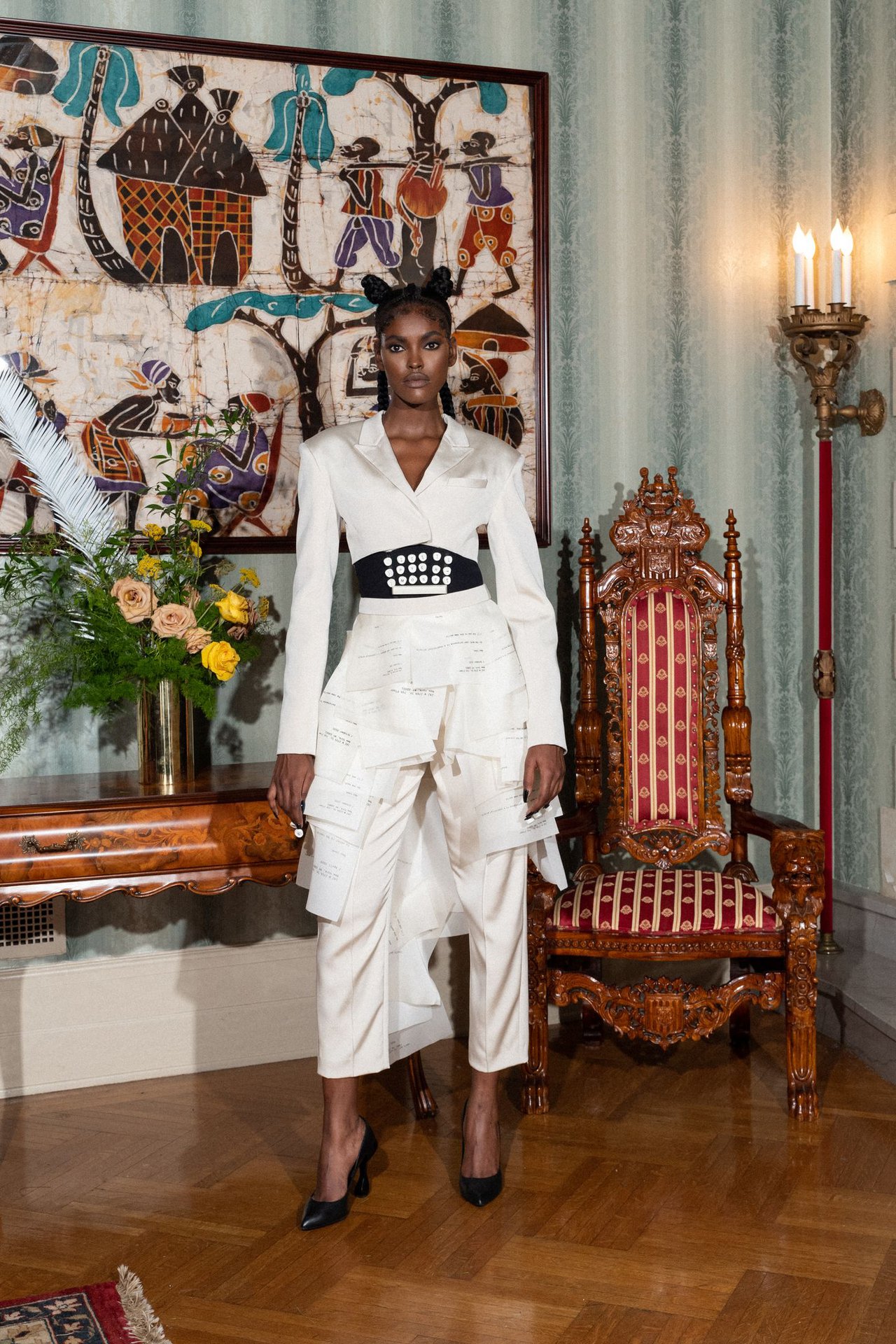
In July 2021, guests gathered on the lawn of Villa Lewaro, the Italianate mansion once owned by pioneering entrepreneur Madam C. J. Walker. A circular runway had been erected in front of the house’s columned façade, surrounded by hundreds of attendees who had returned after storms postponed the show two days earlier.
As the sun settled, activist and former Black Panther Party chairwoman Elaine Brown opened the evening with a speech on Black liberation before the first models appeared. What followed was not a conventional couture presentation. Models walked in sculptural garments shaped like traffic lights, hair rollers, refrigerators and fire escapes — surreal reinterpretations of everyday objects invented by Black innovators. The collection, titled WAT U IZ, was the first haute couture show by Kerby Jean-Raymond for Pyer Moss and paid tribute to Black invention through exaggerated, playful silhouettes that blurred the boundary between fashion, performance and cultural tribute. In that presentation, couture was expansive, and showed Black ingenuity could be rendered with humor, spectacle and pride.
For decades, fashion’s engagement with Blackness has often been filtered through struggle: protest imagery, political symbolism, or narratives of resistance. While these frameworks remain vital, a growing number of designers and fashion houses have insisted on something equally radical — the visibility of Black joy.
In fashion, Black joy functions as an aesthetic language and a cultural intervention. It reframes Black identity away from perpetual trauma and toward celebration, creativity, humor, sensuality, and community. Through runway shows, campaigns, and collaborations, designers have used clothing to stage moments in which Black life is not defined by survival alone, but by pleasure and endless possibility. Across the global diaspora, this framework has emerged in runway shows, campaigns and editorial imagery that challenge the industry’s historical fixation on hardship as the dominant narrative of Black experience.
Few designers have articulated Black joy as deliberately as Kerby Jean-Raymond. Jean-Raymond’s work operates somewhere between fashion show and cultural ceremony.
His “American, Also” runway trilogy reframed American fashion history by foregrounding Black cultural contributions, from gospel music to hip-hop. Rather than simply citing Black history, the presentations staged a collective celebration: live choirs, communal seating and musical performances turned the runway into something resembling a cultural gathering.
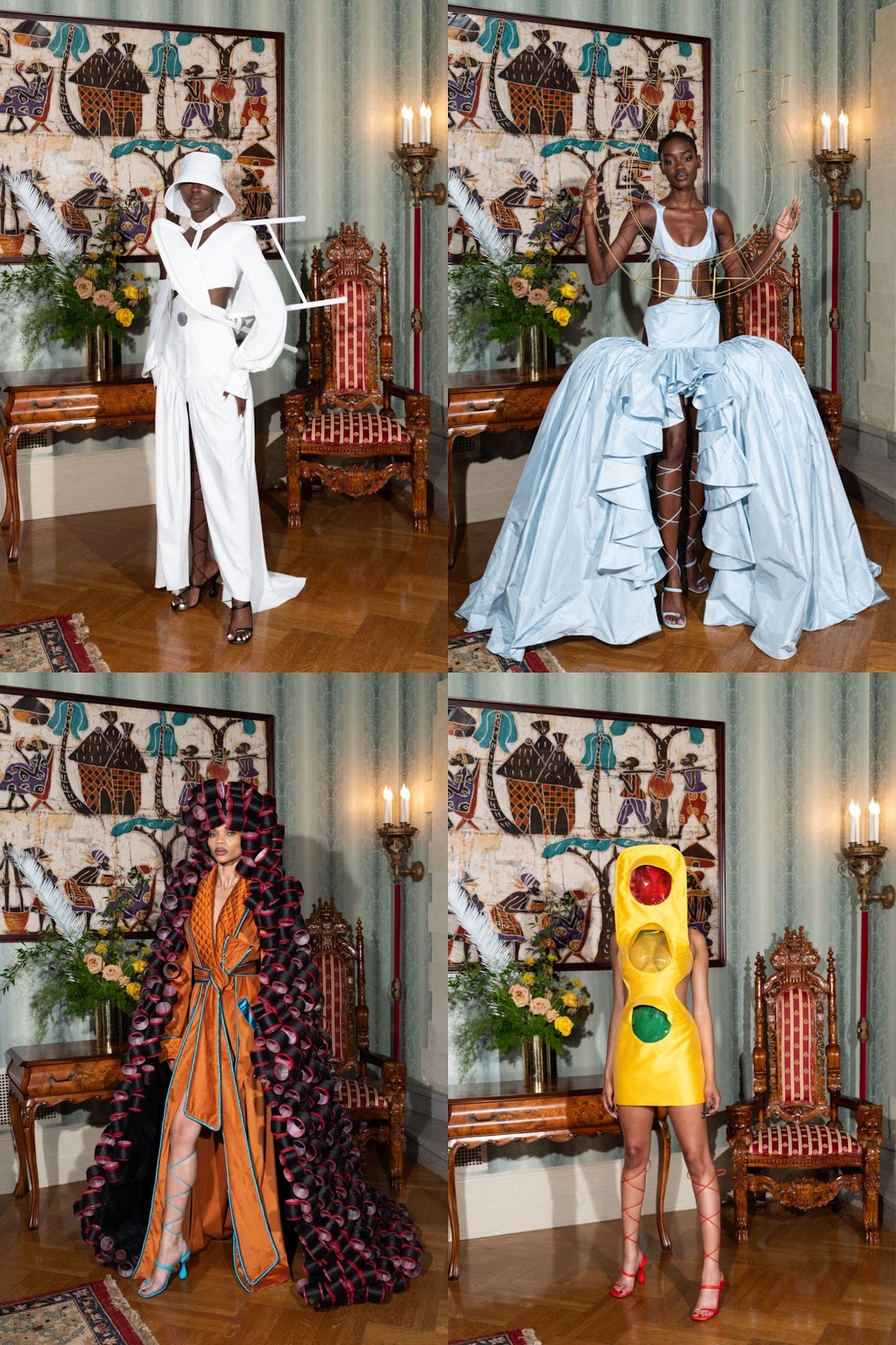
What made Pyer Moss’ haute couture 2021 show significant was its tone. Black innovation was framed as exuberant achievement, and joy was a historiographic method, a way of telling Black history through spectacle, wit and pride. According to the official show notes, the collection was “both a celebration of Black culture as well as a critique of the fixation of others who seek to profit off of Black trauma.”
Within an industry that often aestheticizes Black suffering, Jean-Raymond insisted on something different, and that celebration itself can be a form of archival practice.
While Jean-Raymond stages joy through spectacle, Grace Wales Bonner approaches it through intimacy. The work of Wales Bonner is deeply informed by diasporic research, drawing connections between West African, Caribbean and European histories. Their collections have frequently centred Black masculinity in moments of reflection, beauty and vulnerability. This is significant within fashion history, where Black male representation has oftentimes oscillated between hyper-athleticism and street-coded rebellion. Wales Bonner introduces another register entirely: tenderness.

Wales Bonner is well ahead of the curve. Their campaigns and lookbooks frequently depict Black men lounging, embracing, reading or simply standing in contemplation. The imagery refuses spectacle, instead emphasizing interiority and leisure as aesthetic states. In this context, joy appears less as exuberance and more as ease and a subtle but powerful reimagining of how Black bodies occupy fashion imagery.
Before the contemporary fashion industry began centering Black joy, representations of it can be seen all across Africa.
The culture of La Sape, a movement of impeccably dressed dandies in the Republic of Congo, the Democratic Republic of Congo and some parts of Rwanda, has used clothing as a tool of pride and theatrical expression for decades. Sapeurs are known for their vibrant suits, flamboyant color combinations and highly stylized gestures. But the movement is not only about dressing well. It is a philosophy of dignity and play, developed within contexts shaped by colonial history and economic hardship.

Through fashion, sapeurs transform their everyday streets into stages of joy. Their sartorial performances demonstrate how style can become a form of cultural resilience. In many ways, La Sape embodies the very essence of Black joy in fashion, with clothing as celebration, spectacle and personal sovereignty.
On the other hand, South African designer Thebe Magugu approaches joy through storytelling grounded in place. As founder of Thebe Magugu, Magugu has built collections around narratives drawn from South African history and everyday life with imagery that feels familiar, like kitchens, living rooms and outdoor landscapes. His garments feature bold prints and vibrant colours, but their significance is in the stories embedded within them.
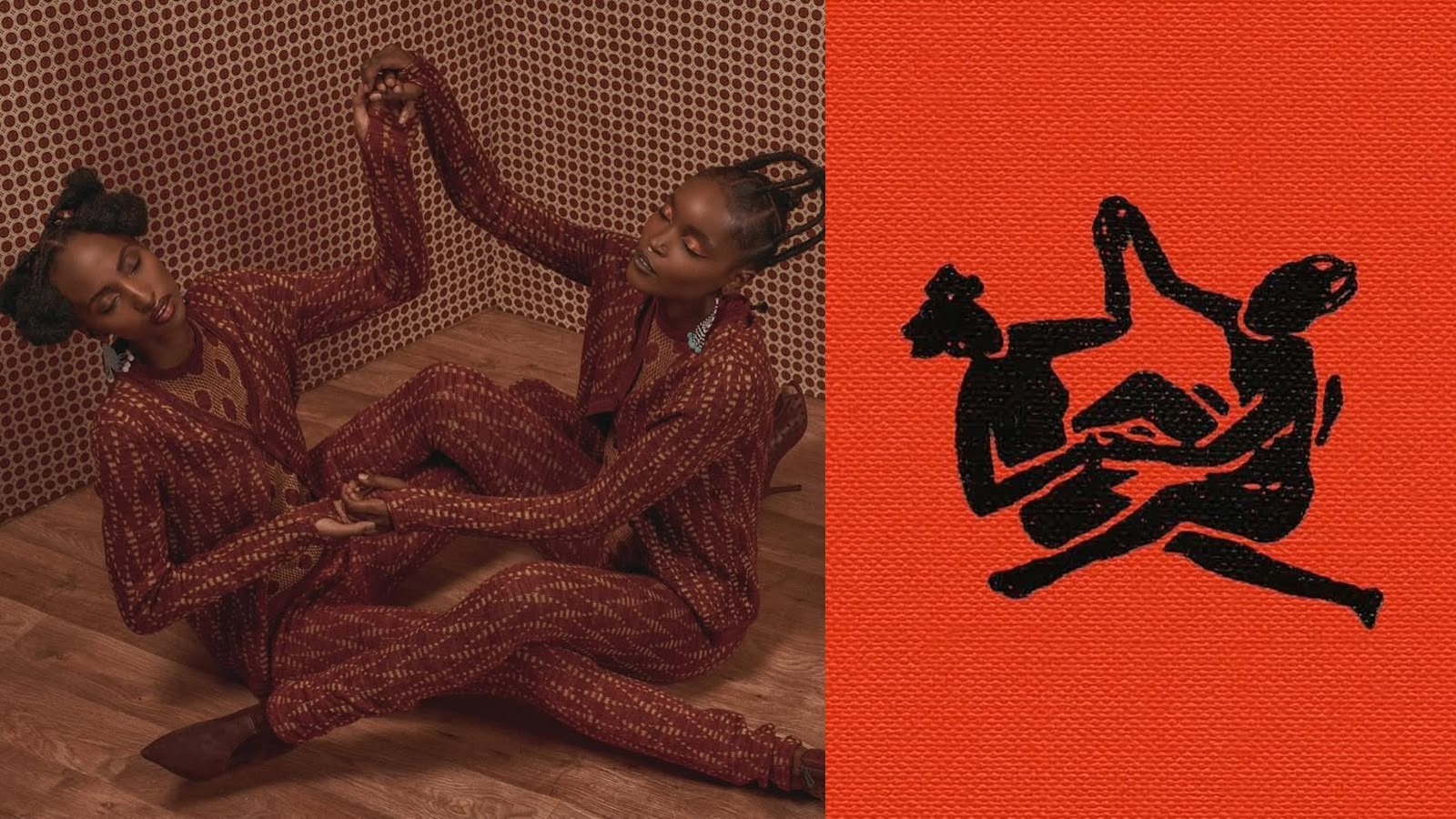
Across collections like African Studies (SS19), Gender Studies (SS21), Folklorics (SS22) and Genealogy (AW23), Thebe Magugu situates joy within narrative, and joy emerges through storytelling — through garments that honor intellectual history, cultural folklore and familial memory. In doing so, Magugu demonstrates how fashion can document everyday Black life not as struggle, but as continuity, creativity and belonging. By foregrounding domestic and communal spaces, Magugu situates joy within daily life. His work suggests that the most radical fashion imagery might simply be Black people existing comfortably within their own cultural worlds.
Fashion campaigns are equally critical when examining how Black joy is articulated across the industry. While runway shows construct conceptual narratives, campaigns circulate those narratives widely. In this sense, campaigns not only promote clothing but also build the aspirational imagery that defines the cultural mood of an era.
One clear example was when photographer Tyler Mitchell shot Beyoncé for the September 2018 cover of Vogue. Mitchell became the first Black photographer to shoot the publication’s September issue in its 125-year history. The imagery departed from fashion’s usual visual drama. Beyoncé appeared in soft natural light, surrounded by flowers, barefoot in grass, her styling stripped back to an almost pastoral simplicity. Mitchell’s broader body of work continues to build this visual language. His photographs depict Black youth riding bicycles, reclining in open fields or resting in warm interiors. Leisure becomes the central aesthetic gesture. In contrast to fashion’s long history of stylized intensity, Mitchell’s images foreground ease and softness that are impossible to overlook.
A different articulation of Black joy can be found in Telfar’s campaigns. Designer Telfar Clemens consistently casts friends, artists and members of his extended creative community. In most of his campaign imagery, individuals appear dancing, laughing and interacting with one another rather than posing in static editorial compositions. The resulting images resemble gatherings or parties more than stoic advertisements, positioning his pieces as something lived collectively. This matters because campaigns help determine fashion’s aspirational narratives. By placing joy, humor and community at the center of their imagery, designers can reshape what aspiration itself looks like.
Fashion has always been an archive of cultural values. What it chooses to highlight, celebrate or ignore ultimately shapes how histories are remembered. For decades, Black creativity has influenced the direction of global style while Black life itself was often framed through narratives of struggle. The growing emphasis on joy is a shift in that visual archive. When designers foreground pleasure, intimacy and celebration, they refuse the idea that Black identity must be mediated through trauma in order to carry cultural weight.
From sapeurs transforming their city streets, to designers like Kerby Jean-Raymond and Thebe Magugu embedding celebration within their collections, fashion becomes a space where Black life can be documented through abundance rather than absence. In this context, Black joy is not just a mood or aesthetic choice. It is a curatorial decision. It asks a fundamental question about the images fashion leaves behind: not only how Black life has struggled, but how it has danced, dressed, gathered and imagined itself otherwise. And perhaps that is the most radical gesture fashion can make, insisting that joy itself should be documented.



.png)

