.svg)

The 2010s Classic African Songs Revisited Through Gen Z
If there were a magical button that could bring me back to a period in time, a music era just for a day, before safely returning to the modern age, then it no doubt has to be the early 2010s. In a time when we were just introduced to the first iPhone, social media platforms were about collecting memories, instead of fabricating them, and everyone was less self-absorbed or micro-online. The earliest tastemakers knew how to test the waters, bringing the vibes organically while getting us hooked to the most legendary dance moves, fashion perks, and community gatherings.
Now that trends evaporate out of thin air and no longer hold the same impact they used to, internet culture tends to recycle the past, claiming it as new, while forgetting what brought us here today. That is what our new content series, Forgotten Jams, is all about: going back in time to reignite a feeling, view the world through a nostalgic lens, and making us whine our waist left and right, even if it is just for one more night.
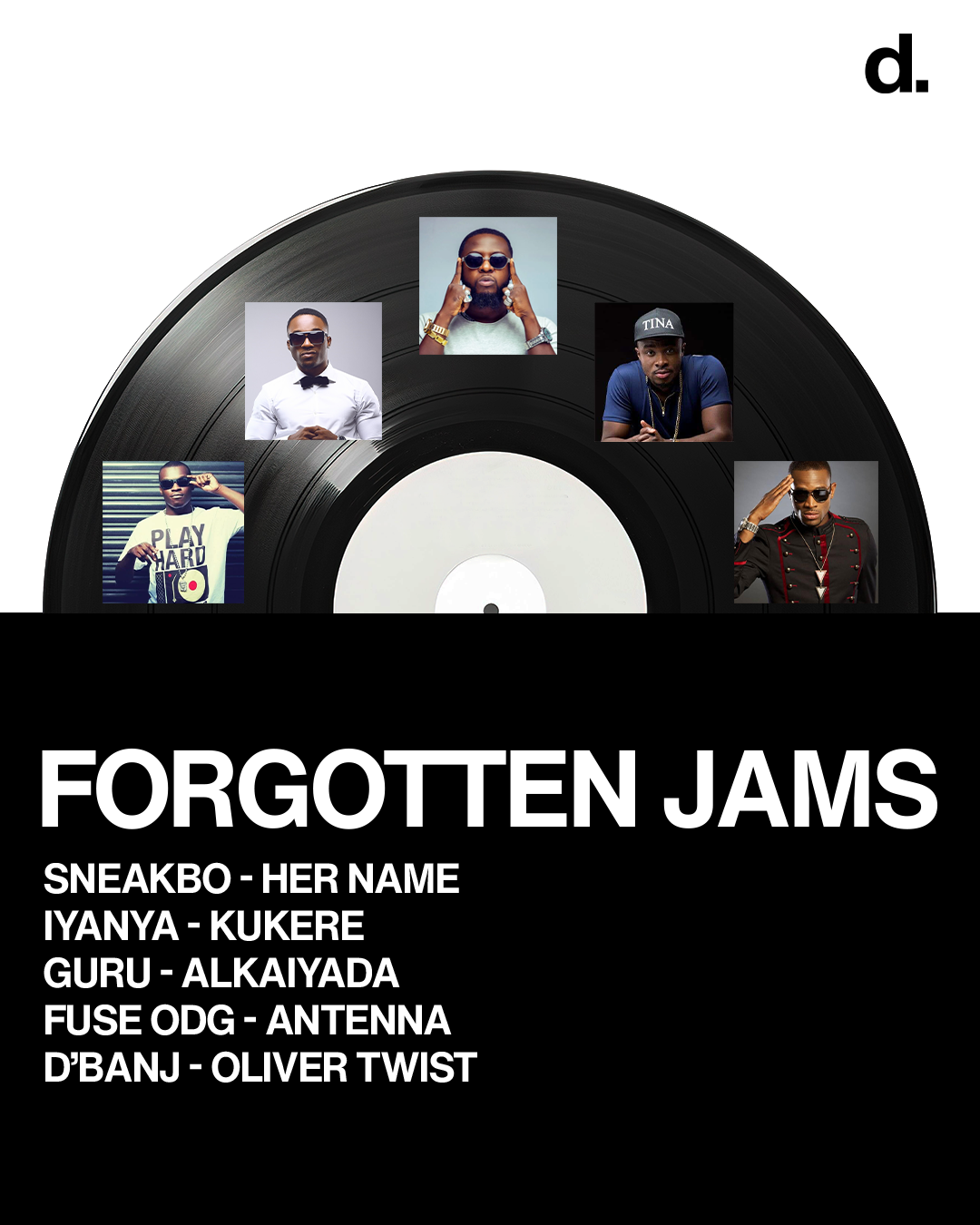
When we tell you that these songs, theese songs, will forever be ingrained in our memories, there’s no exaggeration here. For a lot of Gen Z’s, now young working adults, those are the moments that defined our childhood, whether you were in South London through the wishy-washy weathers, or stuck in Lagos in the sub-Saharan heat. Deeds Magazine carefully selected a list of songs that have the power to revisit your past self and reignite your inner child that hasn’t felt like themselves since the good ol’ days.
Her Name - Sneakbo
For me, one of the artists who defined the early 2010s is none other than Sneakbo. Coming from Brixton, of Nigerian descent, his bangers always felt close to home and a staple to the broader diaspora community in the UK & Europe. Sneakbo’s ability to mix electronic productions with an Afropop flair, and on top of that, rap lyrics that make your head bop, can only be described as chef kiss. ‘Her Name’ in particular stings like glue because nothing could have prepared us non-Igbo speakers, now as grown adults, for the meaning behind some of those lyrics.
To this day, we don’t know why our Nigerian friends could not have warned us what the word “Ashawo” means, and instead danced Azonto along with us when the chorus hit the speakers. That being said, a moment has been had. All confusion can easily be washed away with a glass of gin and a radio anthem.
Kukere - Iyanya
“Visit IROKING.COM for more Nigerian Music” Are we seeing a trend here? This is because music videos dominated the 2010s, and Nigerian artist Iyanya’s ‘Kukere’ is no different. All you needed was a catchy refrain, captivating visuals, and a few dance moves, and you had yourself a hit song. Iyanya sent waves to the dance floor, adored by children and old people alike. Exactly like the Efik language suggests, don’t worry. And that message was felt as soon as we played this song and sang the first lyrics: “All my ladies / All my ladies”. Wow, they don’t make it like this anymore.
If we’re talking about a song that could unify every African nationality because of its universal rhythm, this was the one. Similar to the timeless video, when you stepped out in a Congolese wedding, and this song came up, you knew it was time to leave the stage and let your uncle do his thing. Looking back, Iyanya really created an uncle riddim.
Alkaiyada - Guru
The entire skit by comedian Lil Win was genius. Perhaps a close candidate that could have competed with Azonto moves at the time was the Ghanaian dance Alkayida. Guru’s song was just the cherry on top. Despite the recent controversies that gave this replay button a bad reputation, in the 2010s, this was a go-to for many young Africans. Not only did people dance to this, but it also brought us one of our first clashes between Nigerians and Ghanians. Truthfully, both regions have always wanted to claim they were first and basically argue about who had the culture on lock.
What many may ignore is that in this period, influence was much more fairly distributed, while today the dominant forces reign from Lagos and key figures in South Africa. Our playlists ranged from Kenyan anthems to Nigerian, Ivorian, Ghanaian, Congolese, South African, and so much more. In its recent surge of international recognition, the gates have shrunken, with African artists in less popular regions no longer being able to reach the continent & beyond like the early internet age.
Antenna - Fuse ODG
When British-Ghanaian artist Fuse ODG came into the scene and brought us hit after hit by cleverly watering down Afropop music, so that it may reach a broader audience, ‘Antenna’ symbolises that era at its peak. Coming of age, we realize that although it seemed like songs such as ‘Azonto’ and ‘Million Pound Girl’ were being played around the world, Fuse’s music truly spoke and connected with diaspora communities the most. This is because he used to sing in English, which was really uncommon at the time, without any sort of mix with native languages.
Moreover, we think that his success can be credited to the dance challenges that came along, specifically from a Manchester duet who had us mimicking every single move in our school breaks. It is safe to say that nobody came as close as the reign of Ghanaians in the early 2010s, and Fuse ODG was a key player in amplifying it.
Oliver Twist - D’banj
Looking back, we really have a hard time explaining the phenomenon, which is ‘Oliver Twist’ by Nigerian artist D’Banj. For example, the music video was completely different from what was popular at the time, which had a sombre look similar to the appeal you would get in an American Rap video. The song didn’t come with any memorable dance moves. Aside from the white male dressed in a Peaky Blinders-like outfit, there really weren’t any 2010s elements we were used to attributing to–Still, we were hooked.
To think of it, celebrity culture definitely fell into play here. To have a Kanye West appearance at the time, and at the very last minute of the video, really boosted the popularity of the song. D’Banj was big, but the Americans’ Rap appeal was bigger, and there’s nothing like global influence, such as Black American culture, who have dominated culture since the beginning of Hip-Hop.
Songs and eras may come and go, like falling snow; however, Forgotten Jams is forever, and we have a ton more hits to revisit. Make sure to tune in for our next episode!



.png)

