.svg)

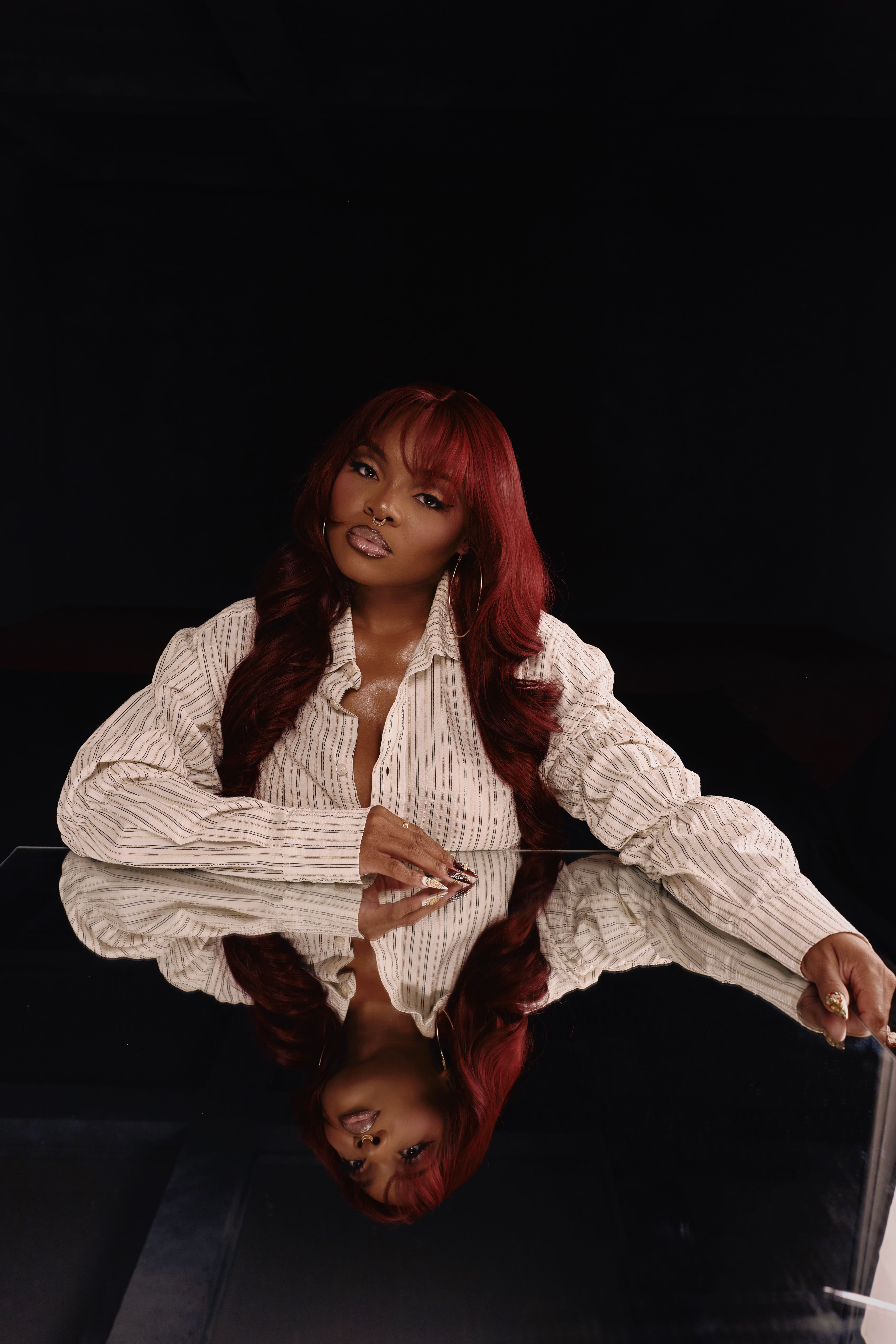
The opening track on Therapy Wasn’t Enough sets the tone for the 11-track album by R&B singer Inayah, chronicling the challenges and realities of her relationship with her fiancé. Throughout, Inayah presents her rawest, most vulnerable self, delivering honest, relatable lyrics, melodies, and production that capture a wide range of emotions.
Therapy Wasn’t Enough is more than just a collection of songs; it's genuine introspection and reflection that also unveil a renewed side of Inayah. Having sung since her youth, her breakout came from a viral cover of Ella Mai’s Boo’d Up, introducing her voice to the masses. Since that moment, her Gospel- and Blues-influenced voice has brought something fresh to R&B.
As a follow-up to 2024’s Wait, There's More, Inayah’s new album clearly shows her artistic and vocal growth. This phase marks a personal transformation, now reflected in her music. In our discussion about her album release, we delve into healing, chasing dreams, singing in church, the album's making, and more.
Hi Inayah, great to meet you. First of all, congratulations on the release of your new album. Starting from the beginning, where did the idea of you wanting to make this particular album begin for you?
So this album is, collectively, almost six years in the making, because it's the story of me and my now-fiancé. It's me sharing the journey of how he and I have learned to do life together, and all the things that entail. Learning how to choose to do life together has been a journey: the ups, the downs, the good, the bad, the ugly, all of that is in this album.
Therapy is a big part of this album, and so even in your experience of going to therapy, and then also sharing and opening up in the way that you have in your music, like, how did you find the experience?
It was challenging. I can't lie about that. My fans know me for real, raw storytelling about real-life events, but I've never been this vulnerable before. I’m proud of my growth on this album. I love all my projects, but Therapy Wasn’t Enough is the first time I can say I’m a grown woman on a record. People often think that being with your soulmate means all is perfect, but love, though beautiful, has its challenges. We chose therapy instead of giving up, but therapy alone wasn’t enough. We had to apply what we learned—therapy is just a tool, one you must use beyond the session. That’s what this is about, and I’m still learning. I don’t have it all figured out.
The song "Choose" was the first single you released for the project. Why did you want that song to kind of represent the album as the first song people heard?
When you look for a good book, you often read the summary on the back to understand what it’s about. Similarly, I felt “Choose” was the summary of this album. It introduces the main themes and emotions of the album, showing the journey and the different stages of love. The song includes moments of grief, anger, ultimatums, love, and a mix of experiences reflected throughout the album.
The song speaks about being put in a situation where you have to choose between your love and relationship and your music. And so even in having that experience and going through that, in chasing and following your dreams but also dealing with the realities of your life and everything else you go for. How have you felt about managing the chase for your dream while balancing everything else?
I have to be honest, I still haven't figured it all out. Maintaining balance is a challenge, and I'm learning as I go. I started as a little girl with a dream and a love for music, and as I grew up, I put in the work to make things happen for myself, with the help of God opening doors for me. I try to disconnect from work when I'm home with my kids and fiancé, and when I leave home, I fully step into my role as an artist. These are truly two different worlds. At home, I'm a mom—cooking, dropping off and picking up the kids, playing basketball with them. I aim to be present in every area where I'm needed. It's a wonderful responsibility, and I do my best to show up for all of them.
How did you find the overall process of making the album?
I had already healed from the story of the album; I wasn't in that space anymore, emotionally, mentally, and in my love life, in my relationship. I thank God we were able to grow past that, but whenever something impacts my life, I write it down and make a song out of it. I had to tell my fiancé, “You know, I'm gonna write about this; I'm gonna write about this challenge that we faced” because it was impactful. I know that if I felt it to the magnitude I felt it, somebody else has got to fill me in on this. Somebody else has, I know, somebody else has dealt with this in their love life, or faced some type of challenge in love. So, although the experience sucked, I knew that there was an assignment in it. When I got back into the studio, I had to re-channel and remember the heartache. I had to mentally take myself back to how I felt in those moments, in order to execute the emotion that you hear on therapy wasn't enough, you know, I was crying all over again. I even got mad all over again, like I just rechanneled all of those emotions in order to, in order to nail it, you know, because it's hard for me to do something that I don't feel.
I was able to get with phenomenal producers that I've always dreamed of working with: Underdogs, Camper, and Ghost. There are so many; it's a dream to get into the studio with producers like that. When I wrapped the album, I went home, lay in bed with my fiancé, and I said, "Hey, you know, we're going to take this, listen to the album from start to finish. I want you to hear it first, you know” and after he listened to it he was sad to realise this is where this is where that moment took you, you know. And, but also at the same time grateful for the growth in the fact that we made it out of that, because a lot of couples don't.
As the album has just come out, and now it is out in the world. How do you feel towards the album now, considering the subject matter is so close to home?
It's a beautiful story. I don't listen to it with shock, like, "wow, we went through that." I listen to it more so with an ear of appreciation rather than, like, damn, we did that. I feel like life is an assignment in itself. When we go through these experiences, for someone in my profession, it's part of our assignment to share them and how we got over them. I'm helping so many people, so I listen to it with the appreciation of, like, man, I hope this heals and helps people who are having the same type of difficulty or dilemma in their love life or in their life in general. I hope this is a guide for them. I hope it gives them whatever answers they're seeking, and I hope they try therapy, you know. I hope that therapy can help save whatever they're going through, but they have to realise that if therapy alone isn't enough, and they still have to put the work
Outside of the storytelling in terms of the lyrics and the subject matters, the production on the album is also very rich, so even in terms of creating the sonic tone and having it match with what you were trying to say, how did you approach that?
I went into the studio knowing exactly what I wanted to feel; I think having great communication with the producer is half the battle. I told each producer how I was feeling and what I wanted the song to feel like. I want the instrument to feel the same way as the emotion that I felt. If I was sad in that moment, I need some kind of slow violin. If I'm angry, I need some 808; I need some bass. If I'm, if I'm trying to be soft and sultry, give me a sweet piano. So I would communicate with the producers to give me an instrument that matched the emotion, and I think they did that really well. The two of us, putting our heads together like that, I think we, we nailed.
What did you want people to get out of this album?
I want them to take away that two things can be true: you can be a lover and a leaver, because, because, honey, I'm both okay. Also, I want them to know that, as cliche as it sounds, anything worth having is worth fighting for. So, you know, give therapy a try if it can save years of history. There's a line in “WTF” which goes 'Is this really what we want? Is this house not a home? I don’t, but you keep blowing up my phone? So it's like if I don't have the idea of.. can this be saved? Can we even make it past this? Some people are opposed to therapy, especially in the black community. Growing up, therapy was one of the best decisions I've ever made for myself and my relationship, but it only works. If you're honest, and it only works if you're going to do the work. You don't just get a reward without the work, and you also just learn how to be a better communicator. The one thing that I've learned from this album, even though I'm the one telling the story, is that there was more benefit in being a listener rather than a talker, you know, because that type of shit don't work when you're trying to do life with somebody.
Going back to your musical beginnings. What would you say was the thing that first initially drew you to music?
So my mama tells this, this story of when I was a baby, I was two years old, and there was the 20th Century Fox theme song that you hear at the beginning of movies, and she said that every time it would come on I could be in the playroom, but then I'll come tee tottering into the other room, running just to catch that intro. So she said she caught it very early on that it was something that really spoke to me, and it was something about that specific melody. She was also a songstress. She used to sing as well. She had musical dreams, so I have to thank her for that guidance and nurturing my gift. She and my Aunt Rosalynn were the two who really took care of my gift. I learned riffs and runs from my Aunt Rosalynn, who was the music director at our church, and they put me in the choir, and I started there. Church is my core; that's where it all started, at Church of God in Christ, and I would travel with the choir, and do you know a bunch of congregation guest appearances, and I ended up taking music into me well into my adult life. I ended up working with a jingle company, which I still work for. I never quit my job; a lot of people are surprised when I say that. And I would play around with that's where I learned how to rap. My brother Terry Allen taught me how to rap, and I remember going home one evening and playing around with Ella Mai's “Bood Up”, and I freestyled to it, and I was like, post this and see, just see, you know, I posted that video. I had about 4,000 followers when I posted that video. I woke up the next morning to over 200,000 followers, quite literally viral overnight. So a lot of people made the mistake of thinking, oh, she just came out of nowhere and went viral, you know, but I have been singing my entire life literally, and then I went on to sign with Empire in early 2020, and I'm still with them today.
Even in your experience of singing in the church and being a part of the choir and then going out and branching out and singing on your own. How did you find that experience in terms of that transition?
It was, but you know, my mama was such a protector of me. She didn't even allow us to listen to secular music until I was an older teen. She really kept a lot of that from us until we got old enough to understand it. And then once I was able to, you know, kind of come into my own, I just one wanted to know what that other side of music was like because I would listen to my mom's blues albums, my mama had Johnny Taylor, Johnny Taylor and Barry White were two blues albums that my mama had, and I was sneaking, playing when she was gone, and that's how I came to fall in love with blues, and then eventually over into R&B, Johnny Taylor is still my favorite male singer until this day. I learned a lot of the structure of storytelling from artists like Johnny Taylor and Barry White, because, you know, blues is stories, And when I was able to, grow into my adult life, and was able to explore different types of music, the R&B side, and then get over into the jingle company, I said I think this is something I would like to do this for a living. I've never seen myself doing anything other than music. God showed me very early on that I would have a career in music. Coming up through gospel, I say, into where I am now, some people would understand the soul in my voice, that background, and I, I got to give it all to church and blues; that's really the core, that's truly the core.
So overall, to wrap up everything. Just in terms of where you are in this space, creatively, musically, etc. What does this moment feel like for you?
I'm in a space where I want to do everything that scares me. I want to conquer it all, you know. I don't want to leave this life with no fears. I want to be able to say I've done all the things, and I've gotten so much inspiration of bravery from this album. Again, because it was a scary thing to speak from such a vulnerable space. So now I want to do other things on my checklist of things that scare me, like skydive. I want to, I want to get in a hot air balloon- things that terrify me. I want to go on a camping trip and actually stay overnight in the mountains. You know, I'm so scared of bugs. I'm super inspired to be brave now because of this album.


.png)

