.svg)

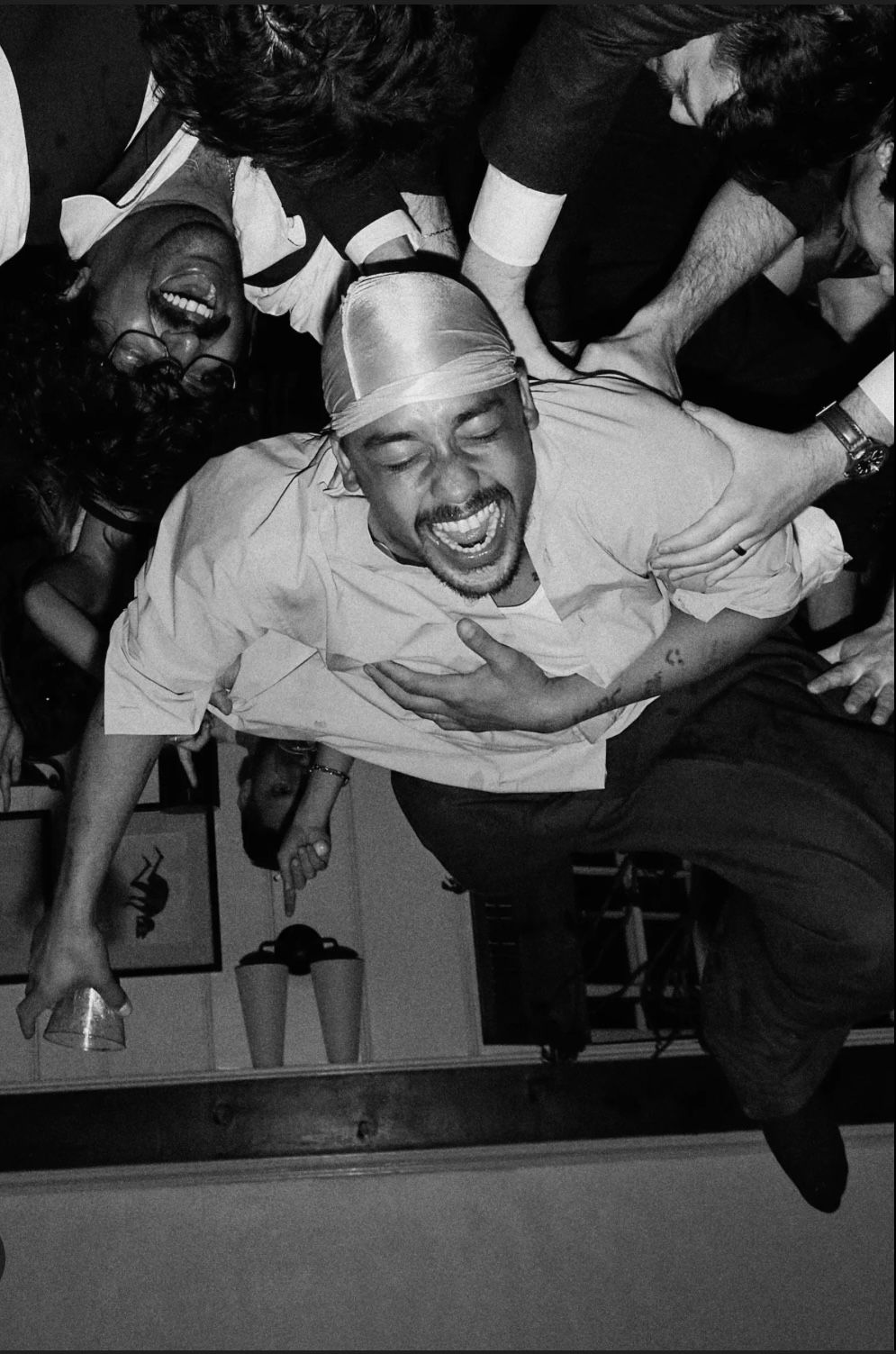
Collapsing tenderness, pain, restraint, and beauty, Dijon’s ‘Baby’ record somehow manages to carry fragmentation and completion all at once.
“I’m rife with contradictory ideas.”
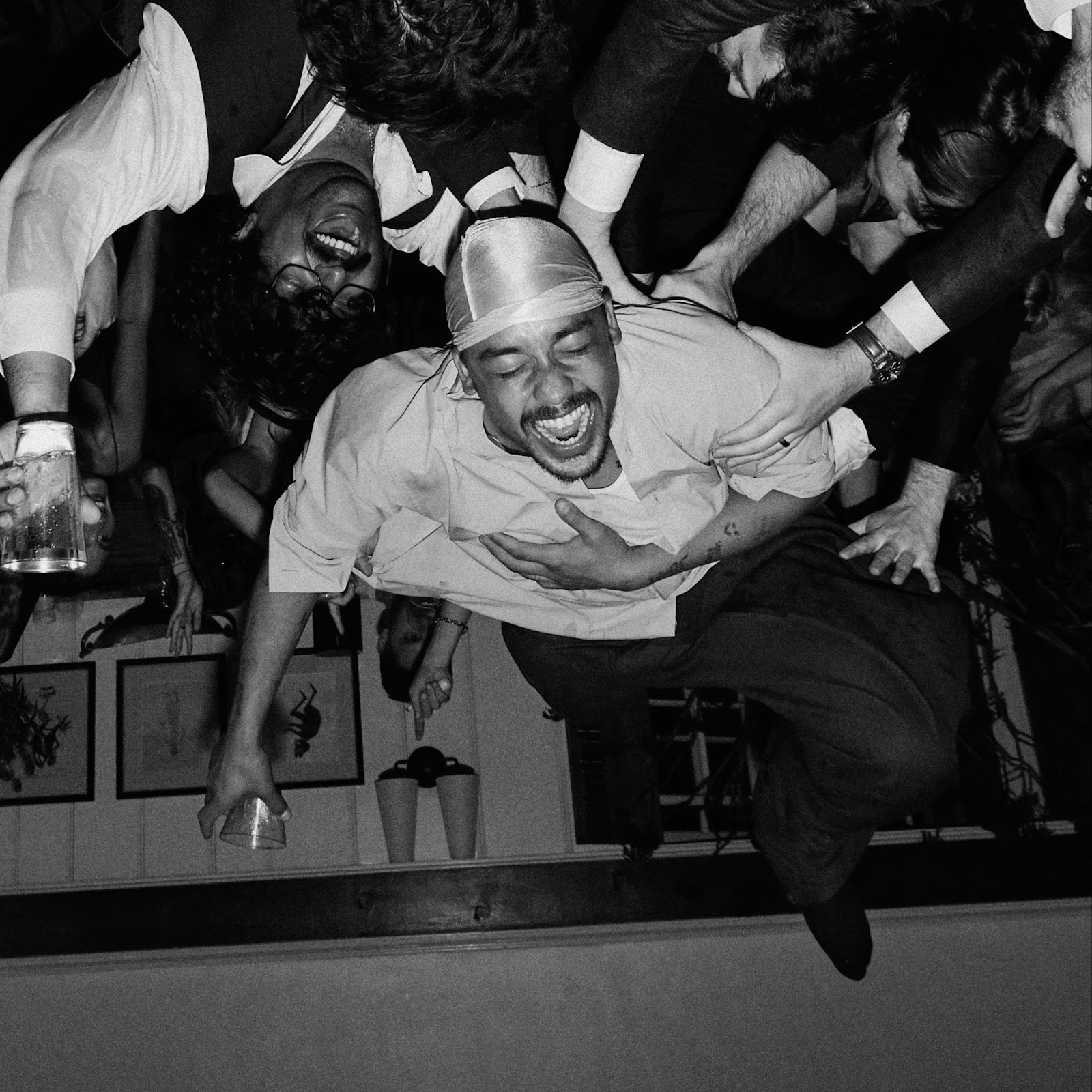
This contradictory essence presents itself in his 2025 album, ‘Baby.’ Listeners are brought into Dijon’s futuristic take on a traditional stomp-clap Americana sound in the first track, ‘Baby!’, then transported two decades in reverse with ‘Another Baby!’ and its nod to 1990s Prince sensibilities. As ‘Yamaha’ fields remnants of a lo-fi, neo-soul nostalgia akin to that end-of-a-movie score feel – we’re then pulled into a textural, grainy experimental folk experience in ‘Kindalove.’ This playful, mosaic music-making refuses the conventional binary of sound. By exploring and dissecting a wide range of influences distinct to his taste, he functions as a sonic filter that outputs a glitchy, avant-garde, spacey final production—pursuing the limitless potential to craft a great record.
Washington state-born, Maryland-bred, and now LA-based artist and producer Dijon Duenas, began his eclectic music journey nearly thirteen years ago with his R&B duo Abhi/Dijon. In 2016, he moved to LA to start his solo career. Inspired by Frank Ocean and heavily emotive R&B lyricism, his single ‘Skin’ reached notable acclaim, now amassing over 62 million plays on Spotify. His inspiration for music ironically came from his own intense criticism of it. While at the University of Maryland, he came to terms with the reality that if he wasn’t putting his own songs out there, he had no business brazenly ranting about the work of others.
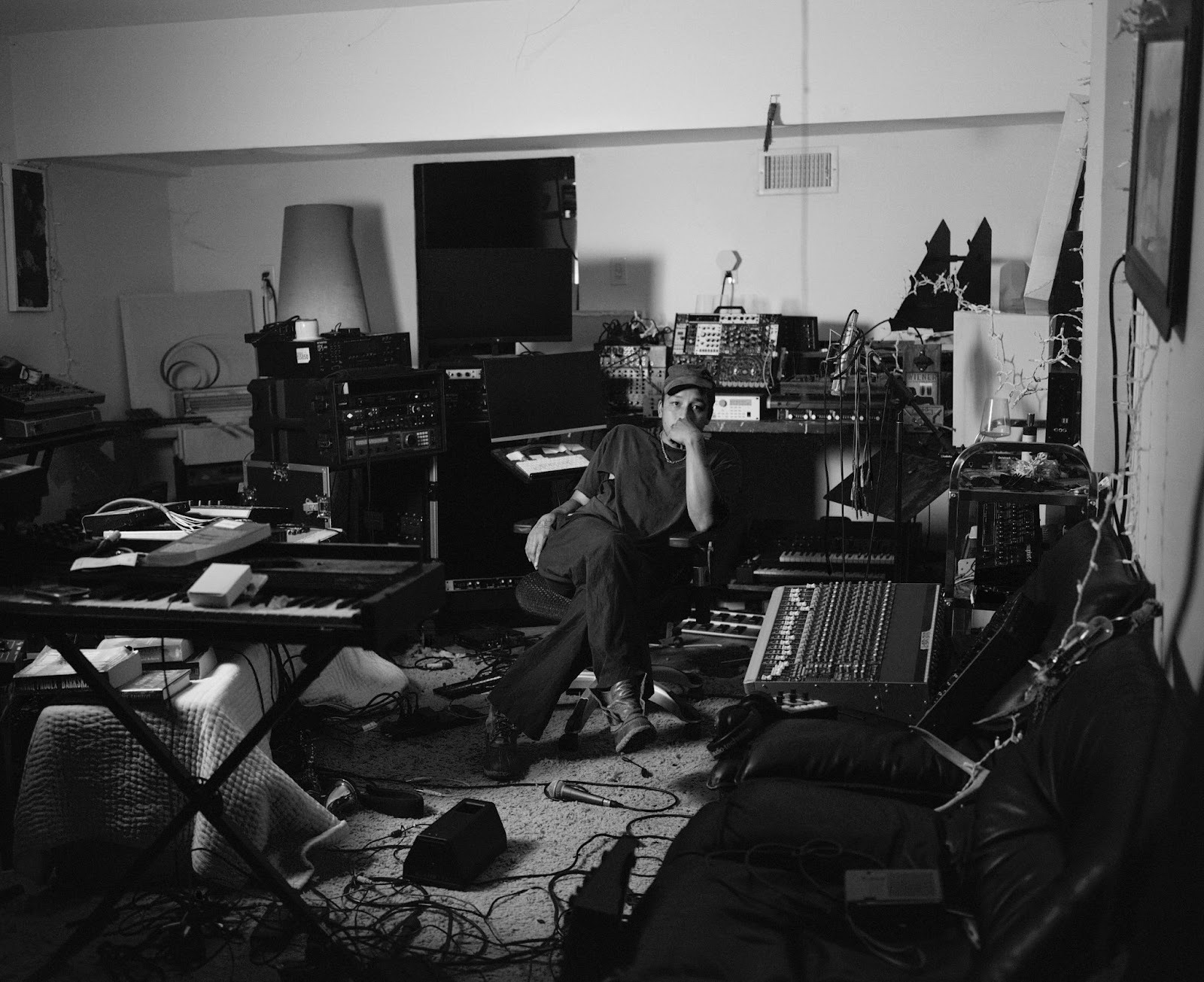
From his One Battle After Another acting debut, in addition to his upcoming musical guest appearance on Saturday Night Live in December, Dijon is closing in on a momentous year– most notably, with his 2026 Grammy nominations announced earlier this month. With nominations for Producer of the Year, Non-Classical, in addition to Album Of The Year for his contributions to Justin Bieber’s ‘SWAG,’ he also had his production hand in Bon Iver’s 'SABLE, fABLE,' co-producing ‘Day One’ featuring both Dijon and Flock of Dimes. Dijon notes that he was able to attach to some version of the vocal idea with the help of Michael Gordon, also known as Mk.gee. The team went through 35 different channels and dissected every stem of the production, unmuting and muting to see which idea worked. In an interview with Zane Lowe, Zane noted that “This was the equivalent of pulling all the tape off the reel, laying it on the ground and deciding to just figure out what you're gonna cut.” The on and off beat cadence in ‘Day One’ was actually a Pro Tools mishap, with Dijon noting,
“It made sense, weirdly, and everyone picked it up and remembered to pause… I'm not smart enough to do stuff like that… [consciously].”
This same DIY versatility in his production technique was paramount while he was in the studio with Justin Bieber’s team for ‘SWAG.’ Collaborating with production powerhouses Carter Lang and Dylan Wiggins, Dijon described the environment as “non-demanding or entitled”, where “unpredictability met comfort.” This way, everyone could bring their natural selves to the table to make something genuinely human. With ‘Daises’, co-produced by both Dijon and Mk.gee, the layering of Mk.gee’s heavily detuned, baritone-esque guitar riffs, along with Dijon’s emotive vocal melodies and intentional spacing between production sequences, guided the build for the record. It became a massive hit, now nearing over 418 million streams on Spotify.
The brashness of the Beastie Boys, to the reverent, sensual, emotive vocal phrasing of D’Angelo, to A Tribe Called Quest’s irregular jazz-inflected chords, all the way to the whimsy, genre-fluid textures of the Dust Brothers, Dijon’s catalogue of inspiration expands extensively across time, genre, and style. Dijon’s music has been described as existing in a liminal space, characterized by out-of-tune pianos, demo-like records, 80s nostalgia, and a simultaneous pop sensibility and inadvertent pop subversion. His music embodies subtle nostalgic undertones and cross-genre sonic montages. The music feels familiar, but difficult to place.
In the interview with Zane Lowe, Dijon shares that he doesn’t actually know when a record is done, but rather “knows when something isn’t good.”
“It’s physiological – you just know when something is wrong.”
Dijon’s first track, ‘Baby!’ was started almost four years ago. Originally meant to be a Shania Twain old-school country storytelling track, Dijon retooled it and broke it down over the piano over the years. This piano breakdown gave rise to a more emotional vocal phrasing than the original demo. ‘Another Baby’s’ heavily Prince-inspired influence jokingly pushes for the idea of another child. Prince’s ‘If I Was Your Girlfriend’ provides a beautiful production mirror to ‘Another Baby’ as both tracks possess similar gritty, transient, atmospheric textures – with punchy, gated reverb on the snares.
Although Dijon did not drop a single before the release of the full album, ‘Yamaha’ was the most listened to song on the record, with over 7 million streams since its release. In this upbeat, cinematic love song, Dijon’s emotive phrasing and vocal inflections give life to the written words in ways that the words alone could not have evoked.
“Baby, I'm in love with this particular emotion / And it’s sweet / You in this particular motion / You shouldn’t hide it, honey / You should own it and show it / Big loving—that’s my heart / And you own it.”
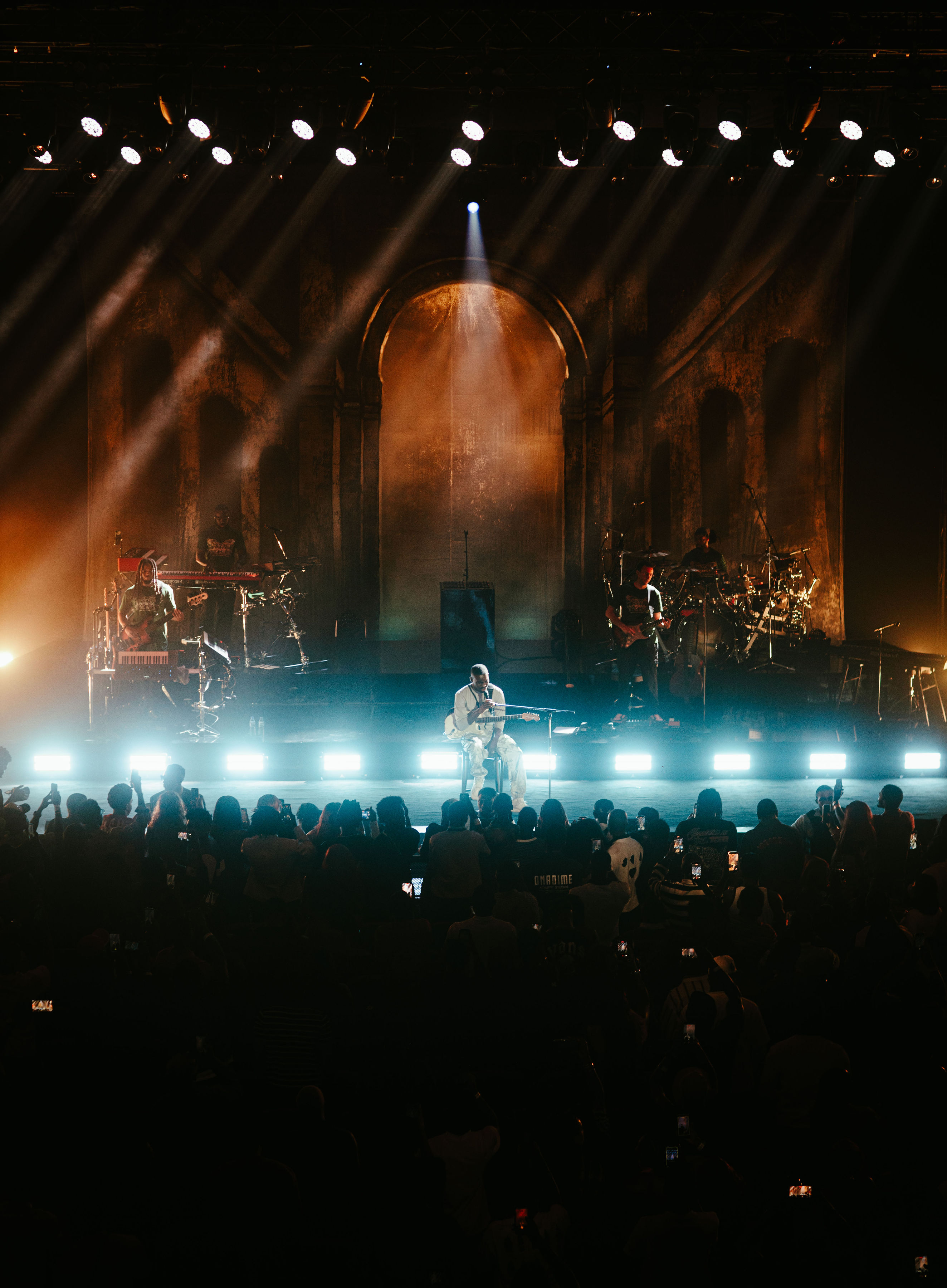
Two weeks before Dijon and his wife’s son was born, ‘Kindalove’ was born. Dijon and his band produced a loop, invited some friends over, and with both of these essentials, everyone started singing into the mic, like the classic days. This is one of the most important ways Dijon masters that sonic sound that feels really close, like you’re in the room – a live show, a tiny desk, making music in the garage. His omnidirectional mic picks up every subtlety in the space – from vocals, to walking, to stomping, to breathing, to clapping. These textures give each song its dimension, picking up sources around the room to shape an audible depth to the sound. This production style works to recapture that sense of intimacy in live performance.
Vocals serve as a utility to give dimension to the record. Most often, the vocals dominate over the instrumentation and sonic production, but for Dijon, these elements are in communication with each other. One isn’t above the other; the vocals are instruments. By speaking and feeding off each other, a vocal collage is created within the narrative of each song—a dialogue, an interweaving storyline.
Not only is his music-making process non-linear, but the music itself also exists on a non-linear plane – making way for special, fluid, genre-bending sounds.
The disorder in process rejects conventionality in favor of awe. By disrupting algorithmic automations and creating novelty, we invite human error.
“I’m still trying to figure this out. Whatever you like about me, I’m still trying to change and undo. I don’t have an understanding of the end.”



.png)

